If you've browsed EV specs or pulled up to a highway charging plaza, you've seen the term DC fast charging — but what does it actually mean, and how does it differ from the outlet in your garage? Understanding the three charging levels, their real-world speeds, and what it costs to charge at each tier is the single most important thing you can learn before buying an electric vehicle.
This guide breaks down DC fast charging, Level 2, and Level 1 with exact kilowatt (kW) figures, miles-per-hour charging rates, home installation costs, and the connector types you'll encounter on every major EV sold in 2026.
The Three EV Charging Levels Explained
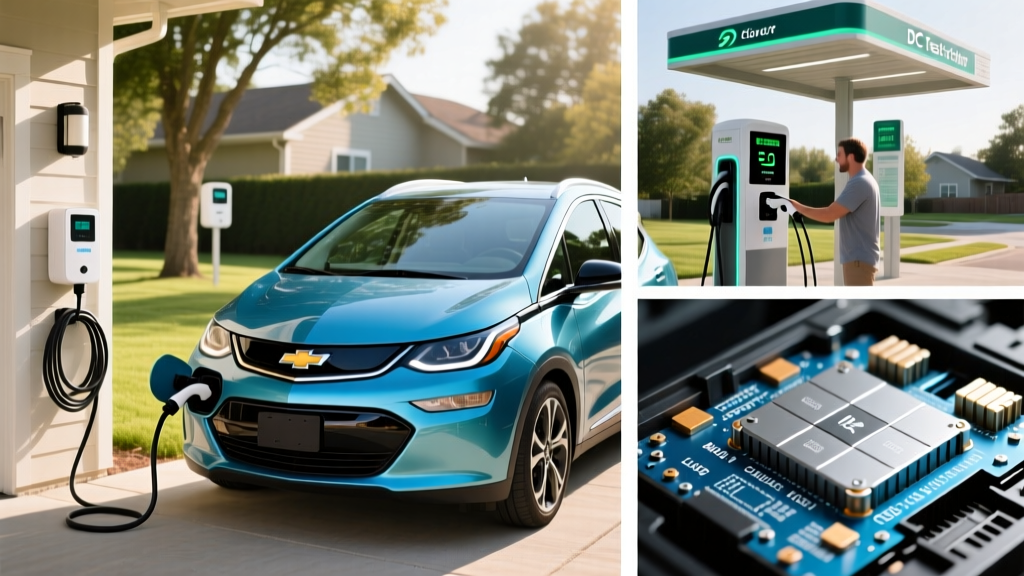
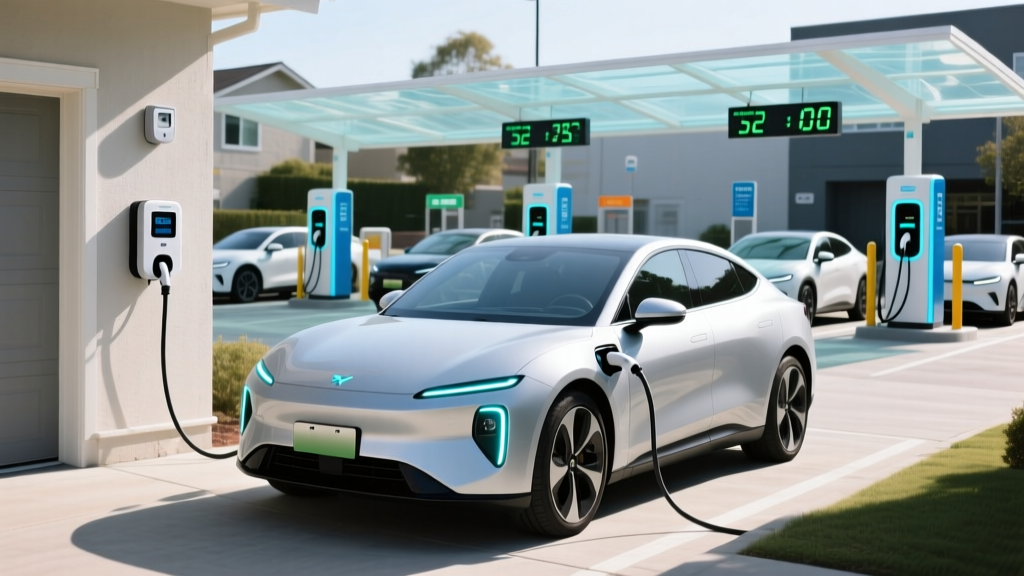
Every EV sold in the U.S. can accept alternating current (AC) power from a standard outlet or a hardwired home station. DC fast charging bypasses the vehicle's onboard AC-to-DC converter entirely, sending direct current straight into the battery pack at far higher power levels. Here's how the three tiers compare:
| Level | Power Source | Typical kW Output | Miles of Range Added per Hour | Primary Use Case |
|---|---|---|---|---|
| Level 1 | 120V household outlet | 1.0–1.4 kW | 3–5 mi/hr | Overnight top-ups, PHEVs, emergencies |
| Level 2 | 240V (dryer-style outlet or hardwired) | 3.3–19.2 kW | 12–75 mi/hr | Daily home and workplace charging |
| DC Fast Charge (Level 3) | 480V+ three-phase commercial supply | 50–400 kW | 150–1,200+ mi/hr (peak) | Road trips, highway corridors, fleet depots |
Critical terminology note: kW (kilowatts) measures power — the rate at which energy flows into your battery. kWh (kilowatt-hours) measures energy — the total capacity of your battery pack. A 75 kWh battery charged at a sustained 75 kW would theoretically fill in one hour. In practice, charging curves taper significantly above 80% state of charge, so real-world times differ.
DC Fast Charging: How It Actually Works
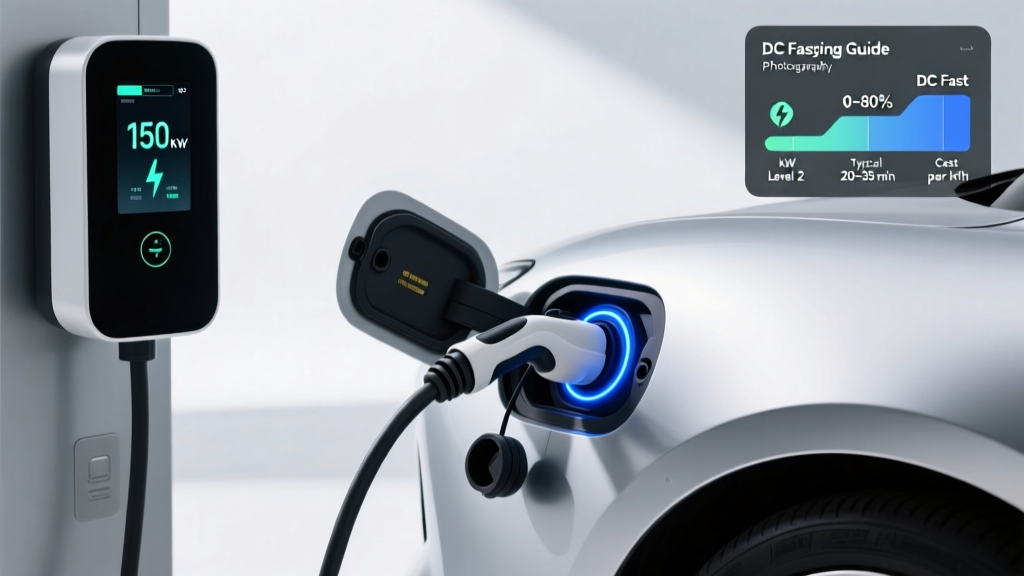
DC fast chargers are large, externally cooled cabinets that convert grid AC power to DC and deliver it directly to your EV's battery management system (BMS). The vehicle and charger negotiate a charge curve — a power profile that starts high when the battery is at a low state of charge and gradually reduces power as the pack fills to protect cell health and manage heat.
This is why manufacturers quote 10–80% charge times rather than 0–100%. Charging from 80% to 100% on a DC fast charger can take as long as the 10–80% session because the BMS throttles power to prevent lithium plating and thermal stress. On a road trip, charging to 80% and driving on is almost always faster than waiting for a full pack.
Real-World 10–80% DC Fast Charging Times
| Vehicle | Battery Capacity (usable) | Peak DC Charge Rate | 10–80% Time (approx.) |
|---|---|---|---|
| Hyundai Ioniq 5 (2025 AWD) | 77.4 kWh (NMC) | 240 kW (800V architecture) | ~18 minutes |
| Tesla Model Y Long Range (2025) | 75 kWh (NMC) | 250 kW | ~22 minutes |
| Ford F-150 Lightning Extended Range | 131 kWh (NMC) | 150 kW | ~41 minutes |
| Chevrolet Equinox EV (2025) | 85 kWh (NMC) | 190 kW | ~24 minutes |
| Rivian R1S Dual-Motor Max Pack | 141 kWh (NMC) | 200 kW | ~42 minutes |
Which Connector Is Compatible With My EV?
The North American EV market has consolidated heavily around the North American Charging Standard (NACS), originally developed by Tesla and now adopted by nearly every major automaker for 2025–2026 model-year vehicles. Here's what you'll find on current EVs:
| Connector Type | Brands Using It (Factory) | AC Level 2 / DC Fast | Adapter Notes |
|---|---|---|---|
| NACS (Tesla standard) | Tesla, Ford, GM, Rivian, Volvo, Polestar, Mercedes, BMW, Hyundai/Kia (2026+) | Both AC & DC | Legacy CCS vehicles can use CCS→NACS adapters at Superchargers |
| CCS1 (Combo) | Hyundai/Kia (2025 and earlier), VW, BMW (pre-2026), some Stellantis | Both AC & DC | NACS→CCS adapters available for Supercharger access (~$200–250) |
| CHAdeMO | Nissan Leaf (discontinued 2025), Mitsubishi Outlander PHEV (legacy) | DC only (J1772 for AC) | Network shrinking; no adapter to NACS for DC charging |
If you're buying a 2026 model-year EV, it will almost certainly ship with a NACS port. If you own a 2023–2025 EV with CCS, manufacturers like Ford and GM now offer NACS adapters that unlock Tesla Supercharger access — a significant practical advantage given the Supercharger network's reliability and coverage.
Home Charger Installation: Requirements and Costs
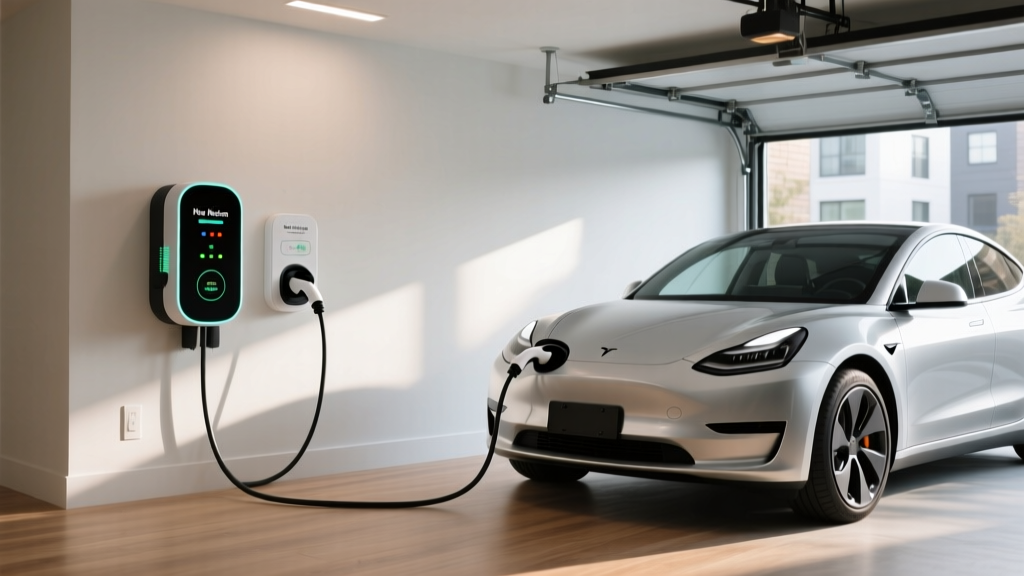
Most EV owners do 80–90% of their charging at home on a Level 2 station. Here's what a typical installation requires and what you should budget.
Electrical Requirements for Level 2 Home Charging
- Voltage: 240V (same as an electric dryer or oven)
- Amperage: 40A circuit for a 32A charger (NEC requires circuits rated 125% of continuous load); 60A circuit for a 48A charger
- Wiring: 6 AWG copper for 40A; 4 AWG copper for 60A (run in conduit if exposed)
- Dedicated circuit: Your EV charger must have its own breaker — no sharing with other appliances
- GFCI protection: Required for outdoor installations and some jurisdictions for indoor (NEC 2020+)
Installation Cost Breakdown
| Component | Simple Install (panel nearby, no upgrade) | Complex Install (long run, sub-panel, or panel upgrade) |
|---|---|---|
| Level 2 EVSE equipment (40A–48A smart charger) | $400–$700 | $400–$700 |
| Electrician labor (2–4 hrs simple / 6–12 hrs complex) | $500–$1,200 | $1,500–$3,500 |
| Permit and inspection | $50–$200 | $100–$300 |
| Electrical panel upgrade (100A→200A, if needed) | N/A | $1,500–$3,500 |
| Total estimated cost | $950–$2,100 | $3,500–$8,000 |
Recommended Home Level 2 Chargers (2025–2026)
ChargePoint Home Flex
- Power output: Up to 12 kW (50A circuit / 40A continuous) on 240V
- Connector: NACS (2025+ models); J1772 with adapter for legacy
- Cable length: 23 feet
- Smart features: Wi-Fi, app scheduling, utility integration, Alexa
- Price: ~$599 (NACS version)
Tesla Wall Connector
- Power output: Up to 11.5 kW (48A continuous on 60A circuit)
- Connector: NACS native
- Cable length: 24 feet
- Smart features: Wi-Fi, OTA updates, power sharing (multiple units), Tesla app
- Price: ~$475
Emporia Level 2 EV Charger
- Power output: Up to 11.5 kW (48A on 60A circuit)
- Connector: J1772 (NACS adapter included)
- Cable length: 24 feet
- Smart features: Wi-Fi, solar integration, energy monitoring, load management
- Price: ~$399
Grizzl-E Smart
- Power output: Up to 10 kW (40A on 50A circuit)
- Connector: J1772 or NACS
- Cable length: 24 feet
- Smart features: OCPP-compatible, app control, adjustable amperage
- Price: ~$549
Charging Cost per Mile: EV vs. Gas
The economics of EV charging depend heavily on where and when you charge. Here's a realistic breakdown using a 3.5 miles/kWh efficiency average (representative of crossovers like the Tesla Model Y and Hyundai Ioniq 5) and a 30 MPG combined gas vehicle as the baseline.
| Charging Scenario | Rate ($/kWh) | Cost per Mile (at 3.5 mi/kWh) | Full 75 kWh Battery Fill |
|---|---|---|---|
| Home off-peak (utility time-of-use, overnight) | $0.08–$0.14 | $0.02–$0.04 | $6.00–$10.50 |
| Home standard residential rate | $0.13–$0.18 | $0.04–$0.05 | $9.75–$13.50 |
| Public Level 2 (workplace, mall, ChargePoint) | $0.20–$0.35 | $0.06–$0.10 | $15.00–$26.25 |
| DC fast charging (Electrify America, EVgo, Tesla) | $0.30–$0.55 | $0.09–$0.16 | $22.50–$41.25 |
| Gas vehicle (30 MPG at $3.40/gal) | $3.40/gallon | $0.11 | $37.40 (equivalent 11-gal tank) |
At home off-peak rates, an EV costs roughly $0.03/mile to "fuel" — about one-quarter the cost of a 30 MPG gas car at $3.40/gallon. Even at DC fast charging rates of $0.45/kWh, the EV is competitive with gasoline on a per-mile basis. The savings compound: a driver covering 12,000 miles/year who charges primarily at home saves approximately $900–$1,100 annually compared to gasoline, per fueleconomy.gov data.
However, if your daily routine forces you to rely exclusively on public DC fast charging at $0.45+/kWh, the cost advantage narrows or disappears. Home charging access remains the single biggest economic factor in EV ownership.
Safety, Electrical Code, and Best Practices
EV charging installations must comply with the National Electrical Code (NEC) Article 625, which governs Electric Vehicle Charging System Equipment. Key safety requirements include:
- Dedicated branch circuit: Your EVSE must be on its own breaker with no shared loads.
- GFCI protection: Required for all outdoor receptacles and in many jurisdictions for indoor EV installations (NEC 2020 and later).
- Outdoor rating: Any charger mounted outside must carry a NEMA 4 (weatherproof) rating. Most quality EVSEs (ChargePoint, Tesla, Grizzl-E) are NEMA 4 rated.
- Cable management: Avoid running charging cables across walkways or driveways where they create trip hazards or can be driven over.
- Ventilation: Not required for EVs (no off-gassing like lead-acid batteries), but the EVSE cabinet itself should have clearance per manufacturer specs.
- Permit and inspection: Most jurisdictions require an electrical permit for a new 240V circuit. The inspection ensures the breaker sizing, wire gauge, grounding, and GFCI protection meet code. Do not skip this — unpermitted work can void homeowners insurance.
Frequently Asked Questions
How much does it cost to install a home EV charger?
A straightforward Level 2 home charger installation (panel nearby, no upgrade needed) typically costs $950–$2,100 including the charger unit, electrician labor, and permit. If your home requires an electrical panel upgrade from 100A to 200A, expect total costs of $3,500–$8,000. Always get a load calculation from a licensed electrician before committing.
How fast will each charging level add range?
Level 1 (120V) adds 3–5 miles of range per hour — adequate for plug-in hybrids with small batteries but impractical for full EVs. Level 2 (240V, 40A–48A) adds 25–40 miles per hour, easily replenishing a daily commute overnight. DC fast charging at 150–250 kW can add 150–300 miles in a 20–30 minute session, making it viable for road trips.
Which connector/charger is compatible with my EV?
For 2025–2026 model-year vehicles, most new EVs use the NACS connector. Earlier models from Hyundai, Kia, VW, and others use CCS1. The Nissan Leaf (now discontinued) used CHAdeMO. Check your vehicle's charge port or owner's manual. Adapters exist to bridge CCS vehicles to NACS Superchargers, but CHAdeMO has no viable DC adapter path to NACS.
How much does charging cost per mile vs. gas?
Home charging at off-peak utility rates costs approximately $0.02–$0.04 per mile — roughly 75% less than a 30 MPG gas car at $3.40/gallon ($0.11/mile). Public DC fast charging at $0.35–$0.55/kWh costs $0.09–$0.16 per mile, comparable to or slightly higher than gasoline. The cost advantage of an EV depends heavily on home charging access.
What electrical upgrades might I need?
Homes with 100A electrical service, older wiring, or panels already near capacity (electric range, dryer, heat pump, AC) may need a panel upgrade to 200A before adding a 40A–60A EV circuit. Some utilities offer managed charging programs that allow smaller panels by dynamically limiting EVSE draw — ask your utility about demand-response incentives, which can offset equipment costs.
Can I install a DC fast charger at home?
Practically, no. DC fast chargers require 480V three-phase commercial power, cost $25,000–$100,000+ for the equipment alone, and need utility-grade infrastructure. Residential DC charging is limited to specialized setups like Tesla Powerwall-integrated systems at very low DC rates. For home use, a 240V Level 2 station is the correct and cost-effective solution.
Does frequent DC fast charging degrade my battery?
Exclusively relying on DC fast charging accelerates battery degradation modestly — studies show approximately 2–5% additional capacity loss over 100,000 miles compared to Level 2-only charging. Modern battery thermal management systems mitigate this significantly. For daily use, Level 2 home charging is gentler on the pack; reserve DC fast charging for road trips, and your battery should retain 85–90%+ of its original capacity at 100,000 miles, well within the federal warranty mandate of 8 years/100,000 miles at 70% capacity retention minimum.