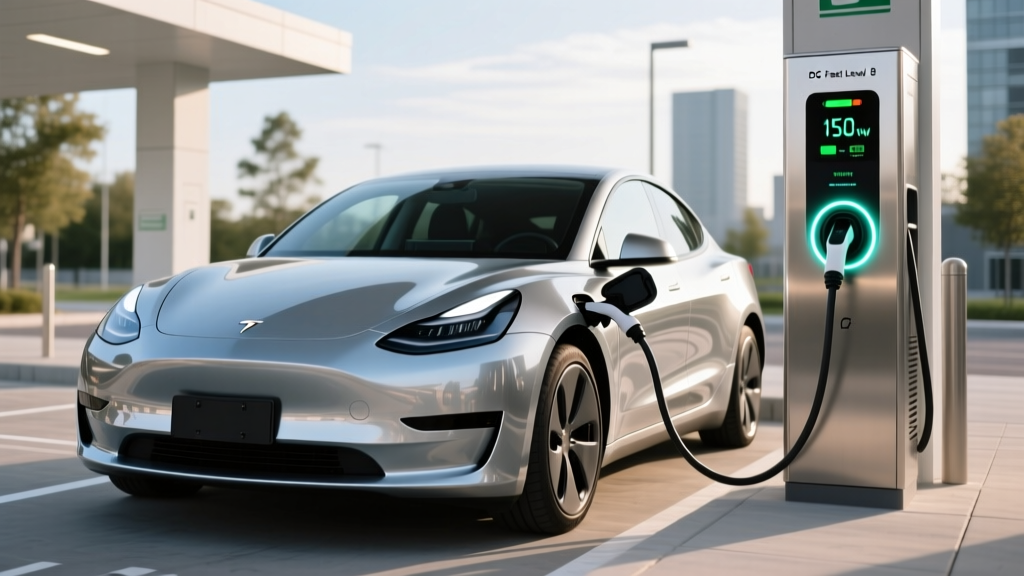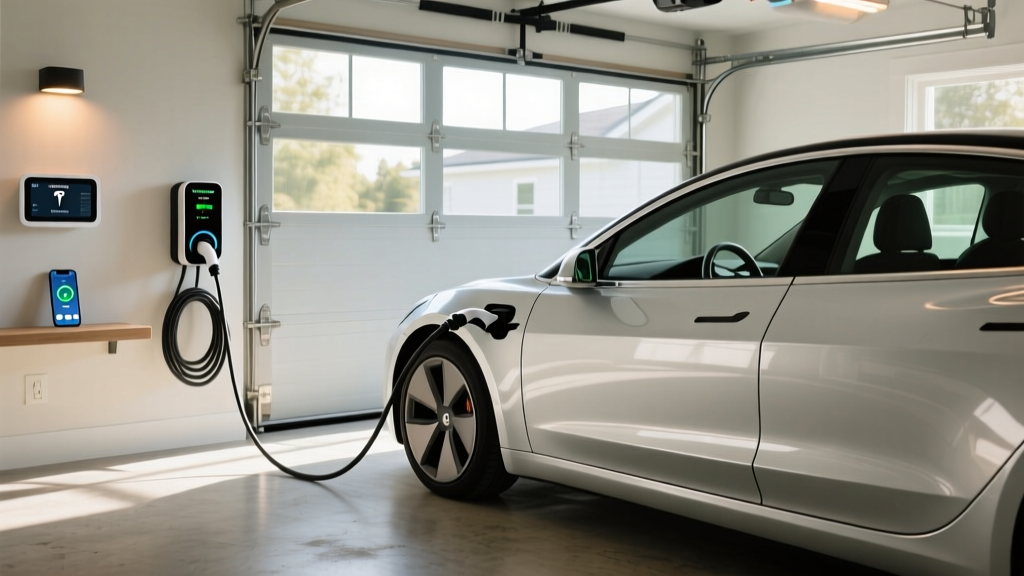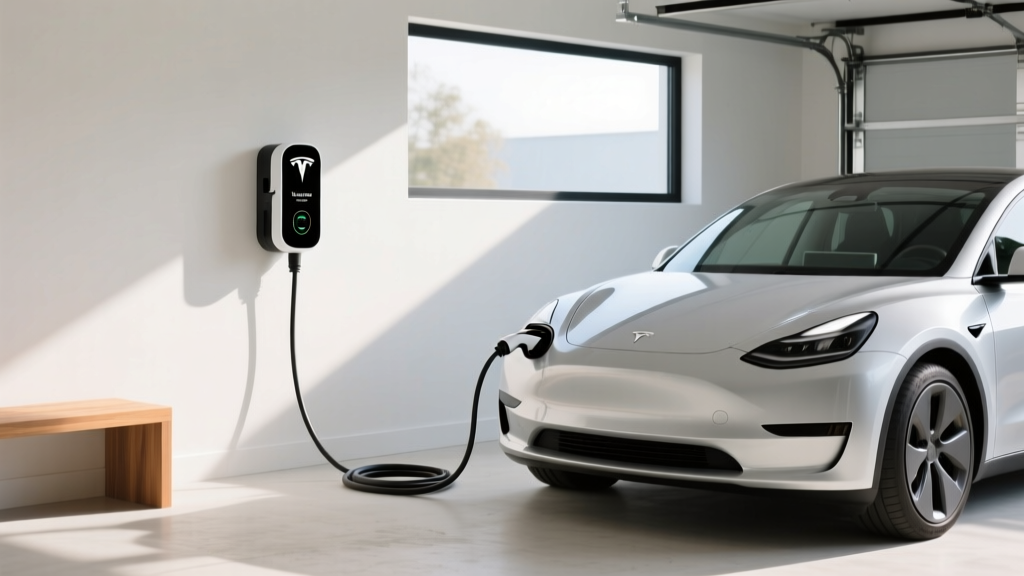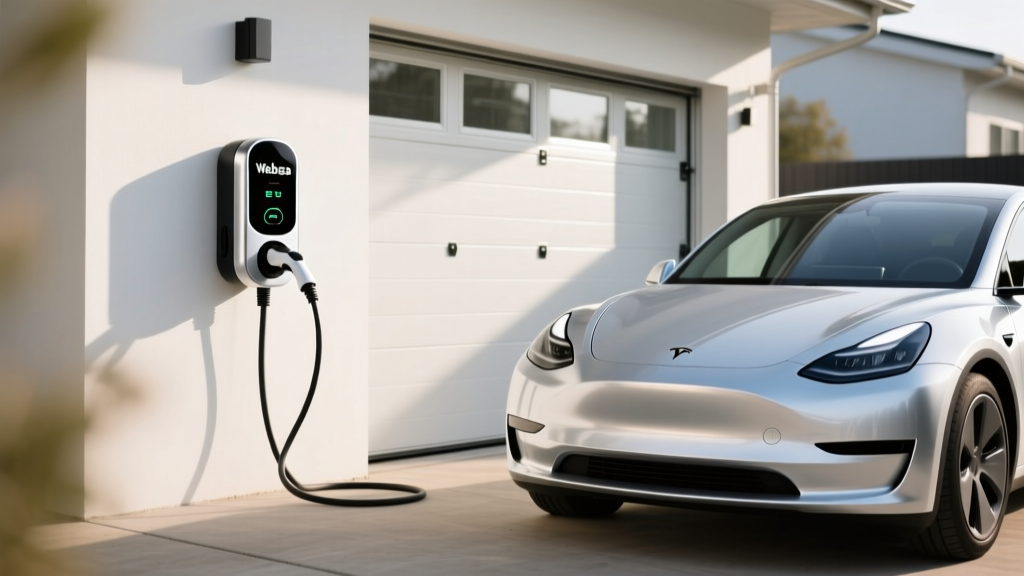
Webasto has been engineering thermal and charging systems for European and North American automakers for decades, and its Level 2 home EV chargers sit in a unique spot: OEM-grade build quality sold directly to consumers. If you have narrowed your home charging search to the Webasto EV charger lineup, this guide covers the exact kilowatt output, installation requirements, real-world costs, and how these units compare to alternatives like ChargePoint, Emporia, and Tesla's Wall Connector.
Webasto EV Charger Lineup: Models and Power Output
Webasto offers two primary residential Level 2 chargers for the North American market. Both deliver 240-volt AC charging, but they differ in amperage, smart features, and connectivity.
Webasto Go
- Power output: 11.5 kW (48 amps)
- Voltage/amperage: 240V / 48A dedicated circuit (60A breaker)
- Connector: J1772 (NACS adapter required for Tesla vehicles)
- Cable length: 20 feet
- Smart features: None — plug-and-charge only, no Wi-Fi or app
- Outdoor rating: NEMA 4 (weatherproof)
- Price: ~$599–$649
- Warranty: 3 years
Webasto Go Live
- Power output: 11.5 kW (48 amps)
- Voltage/amperage: 240V / 48A dedicated circuit (60A breaker)
- Connector: J1772 (NACS adapter required for Tesla vehicles)
- Cable length: 20 feet
- Smart features: Wi-Fi connected, app-based scheduling, energy monitoring, utility demand-response compatible
- Outdoor rating: NEMA 4 (weatherproof)
- Price: ~$699–$749
- Warranty: 3 years
Both units max out at 11.5 kW, which is the practical ceiling for most residential electrical panels without a costly upgrade. The Go Live adds Wi-Fi scheduling — useful if your utility offers time-of-use (TOU) rates and you want to automatically charge during off-peak windows. If you do not need app control, the base Go saves roughly $100 and is equally reliable.
Charging Levels Explained: kW Output and Miles Per Hour
A common mistake among first-time EV buyers is confusing kW (kilowatts — the rate of power delivery, like water pressure from a hose) with kWh (kilowatt-hours — the total energy stored in your battery, like the size of the tank). Your charger's kW rating determines how fast energy flows; your battery's kWh capacity determines how much it holds.
| Level | Voltage | Power (kW) | Miles of Range Per Hour | Typical Use |
|---|---|---|---|---|
| Level 1 | 120V AC | 1.0–1.4 kW | 3–5 mi/hr | Overnight trickle; PHEVs with small batteries |
| Level 2 (Webasto Go/Go Live) | 240V AC | 11.5 kW | 32–44 mi/hr | Daily home charging; full overnight replenishment |
| Level 2 (lower amperage) | 240V AC | 7.2–9.6 kW | 22–35 mi/hr | Homes with limited panel capacity |
| DC Fast Charge | 400–800V DC | 50–350 kW | 150–1,000+ mi/hr (peak) | Road trips; public stations |
At 11.5 kW, the Webasto EV charger adds roughly 37 miles of range per hour for an efficient sedan like the Hyundai Ioniq 6 (which averages about 3.2 miles per kWh) and around 30 miles per hour for a heavier SUV like the Ford F-150 Lightning (roughly 2.6 mi/kWh). A full 10–80% charge on a 77 kWh battery (Ford Mustang Mach-E Extended Range) takes approximately 4.5 to 5 hours at a sustained 11.5 kW. That is comfortably within an overnight window.
Home Installation: Electrical Requirements and Cost Breakdown
The Webasto Go and Go Live both require a 240V, 60-amp dedicated circuit (the charger draws 48 amps continuously; the National Electrical Code requires the breaker to be rated at 125% of continuous load, hence 60A). This is the single most important factor in your total cost.
What Your Electrician Will Evaluate
- Panel capacity: Most modern homes have 200-amp service panels. A 60A circuit consumes 30% of that capacity. If your panel is already near its load limit (common in older homes with electric ranges, dryers, and HVAC), the electrician may recommend a panel upgrade or a load-management device.
- Wire gauge: A 60A circuit requires 6 AWG copper wire (THHN in conduit or NM-B/Romex 6/3). The run from your panel to the charger location determines wire cost.
- Permit: Virtually all jurisdictions require an electrical permit for a new 240V circuit. The permit ensures the work is inspected for code compliance.
- GFCI protection: NEC 2020 and later require GFCI protection for EV charging outlets. The Webasto units hardwire directly, which may exempt them from the GFCI breaker requirement in some jurisdictions — confirm with your local inspector.
- Mounting location: Both Webasto models are NEMA 4 rated for outdoor installation. Garage mounting is simpler and cheaper (shorter wire runs, no weatherproofing extras).
| Component | Low Estimate | High Estimate | Notes |
|---|---|---|---|
| Webasto Go / Go Live unit | $599 | $749 | Base Go vs. Go Live with Wi-Fi |
| Electrician labor (short run, garage) | $400 | $800 | Panel within 20 ft of charger location |
| Electrician labor (long run or outdoor) | $800 | $1,800 | Conduit, trenching, or attic crawl required |
| 60A breaker + 6 AWG wire | $80 | $200 | Material cost varies by run length |
| Electrical permit | $50 | $200 | Varies by municipality |
| Panel upgrade (if needed) | $1,500 | $4,000+ | 100A→200A service upgrade; only if panel is maxed |
| TOTAL (no panel upgrade) | $1,129 | $2,949 | Most homes fall in $1,200–$1,800 range |
| TOTAL (with panel upgrade) | $2,629 | $6,949+ | Older homes with 100A service |
Before committing, request quotes from at least two licensed electricians. Ask specifically whether your panel has enough spare capacity for a 60A breaker. Some utilities offer free pre-installation assessments, and certain states provide rebates of $300–$1,000 toward Level 2 home charger installation — check the Alternative Fuels Data Center for state-level incentives.
Connector Compatibility: NACS, CCS1, and Adapters
The Webasto Go and Go Live ship with a J1772 connector, which is the standard AC charging plug for all non-Tesla EVs sold in North America through 2024. However, the industry has shifted decisively toward the North American Charging Standard (NACS) — the Tesla-designed connector now adopted by Ford, GM, Rivian, Hyundai, Kia, BMW, and most major automakers for 2025 and later models.
| EV Brand / Model Year | Native Connector | Webasto Compatibility | Adapter Needed? |
|---|---|---|---|
| Tesla (all models) | NACS | Compatible with adapter | Yes — J1772-to-NACS (~$100–$200) |
| Ford (2025+ Mach-E, F-150 Lightning) | NACS | Compatible with adapter | Yes — J1772-to-NACS |
| GM (2025+ Equinox EV, Blazer EV, Silverado EV) | NACS | Compatible with adapter | Yes — J1772-to-NACS |
| Hyundai / Kia (2024 and earlier) | CCS1 (J1772 + DC pins) | Directly compatible | No |
| Hyundai / Kia (2025+ Ioniq 5, EV6, EV9) | NACS | Compatible with adapter | Yes — J1772-to-NACS |
| Volkswagen / BMW / older Nissan Leaf | CCS1 or CHAdeMO | Directly compatible (AC portion) | No for AC; CHAdeMO DC is separate |
If you drive a 2025+ NACS-equipped vehicle, the J1772-to-NACS adapter is a small additional cost (~$100–$200 from Tesla or third-party brands like Lectron). Tesla also includes a J1772-to-NACS adapter with newer vehicles. The adapter adds negligible charging loss and does not affect the 11.5 kW output.
Alternatively, if you know you will keep a NACS vehicle long-term, you could consider a NACS-native charger like the Tesla Wall Connector ($475, 11.5 kW), which uses a J1772-to-NACS adapter for older CCS vehicles instead — reversing the adapter direction.
Cost to Charge: Per-Mile Economics vs. Gasoline
Home Level 2 charging with the Webasto is where EV ownership economics shine. The actual cost per mile depends on your local electricity rate and your vehicle's efficiency.
| Scenario | Rate / Price | Vehicle Efficiency | Cost Per Mile |
|---|---|---|---|
| Home off-peak (TOU rate) | $0.09/kWh | 3.0 mi/kWh (e.g., Ioniq 6) | $0.03/mi |
| Home standard rate | $0.16/kWh | 3.0 mi/kWh | $0.053/mi |
| Home standard rate (SUV) | $0.16/kWh | 2.5 mi/kWh (e.g., F-150 Lightning) | $0.064/mi |
| Public Level 2 (ChargePoint, etc.) | $0.25–$0.49/kWh | 3.0 mi/kWh | $0.08–$0.16/mi |
| DC fast charging (Electrify America, EVgo) | $0.35–$0.60/kWh | 3.0 mi/kWh | $0.12–$0.20/mi |
| Gasoline (25 MPG combined) | $3.30/gallon | 25 MPG | $0.132/mi |
| Gasoline (30 MPG combined) | $3.30/gallon | 30 MPG | $0.11/mi |
At national average electricity rates (EIA reports ~$0.16/kWh residential), home charging with the Webasto costs roughly half to one-third the per-mile cost of gasoline. Over 15,000 miles per year, that translates to $800–$1,200 in annual fuel savings versus a 25 MPG gas vehicle.
The Webasto Go Live's scheduling feature becomes financially meaningful here: if your utility charges $0.09/kWh overnight (11 PM–6 AM) versus $0.28/kWh during peak hours, scheduling all charging to off-peak windows can cut your home charging bill by 60% or more.
Webasto vs. Competitors: How Does It Compare?
The Webasto EV charger does not exist in a vacuum. Here is how it stacks up against the most popular Level 2 home chargers at the 11.5 kW tier.
| Feature | Webasto Go Live | Tesla Wall Connector | ChargePoint Home Flex | Emporia Vue V2 |
|---|---|---|---|---|
| Max power | 11.5 kW (48A) | 11.5 kW (48A) | 12.0 kW (50A) | 11.5 kW (48A) |
| Connector | J1772 | NACS | J1772 | J1772 |
| Cable length | 20 ft | 24 ft | 23 ft | 24 ft |
| Wi-Fi / App | Yes | Yes | Yes | Yes |
| Energy monitoring | Yes | Basic | Yes | Yes (whole-home panel integration) |
| Outdoor rated | NEMA 4 | NEMA 4 | NEMA 4 | NEMA 4 |
| Price | ~$699–$749 | ~$475 | ~$649 | ~$599 |
| Warranty | 3 years | 4 years | 3 years | 3 years |
Where Webasto wins: Build quality and OEM pedigree. Webasto supplies charging hardware directly to BMW, Mercedes-Benz, and Volkswagen, and that engineering shows in the unit's thermal management and long-term reliability. The hardwired design eliminates the NEMA 14-50 outlet failure risk that has plagued some plug-in charger installations.
Where Webasto loses: Price and cable length. The Tesla Wall Connector delivers identical 11.5 kW output with a 24-foot cable for $250 less. If you drive a NACS-equipped vehicle, the Wall Connector is the more cost-effective choice. The Emporia V2 also offers whole-home energy monitoring integration at a lower price point.
Safety, Code Compliance, and Installation Best Practices
EV chargers draw sustained high current for hours — far longer than a dryer or oven cycle. This makes proper installation non-negotiable.
Critical Safety Checklist
- Dedicated circuit only: Never share the 60A circuit with other appliances. The NEC requires EVSE to be on a dedicated breaker.
- Hardwire vs. plug: Webasto Go and Go Live are hardwired units. This is actually a safety advantage — hardwired connections avoid the overheating risk associated with NEMA 14-50 receptacles under continuous 48A loads. Some electricians have reported melted 14-50 outlets from competing plug-in chargers.
- Torque specifications: Ensure your electrician uses a torque screwdriver on all terminal connections. Loose connections under high continuous current generate heat and are a leading cause of EV charging fires.
- Outdoor mounting: Both Webasto units are NEMA 4 rated (rain, sleet, snow). However, mount the unit under an eave or carport if possible to reduce UV degradation of the cable over time.
- Wi-Fi security (Go Live): Connect the Go Live to a separate IoT network or guest Wi-Fi rather than your primary home network, as a basic cybersecurity precaution.
Frequently Asked Questions
How much does it cost to install a Webasto EV charger at home?
Expect $1,200–$1,800 total (charger + electrician + permit) for a typical garage installation with a short wire run and an adequate 200A panel. Homes requiring longer conduit runs, outdoor mounting, or a panel upgrade can see costs between $2,500 and $5,000+. The Webasto Go Live unit itself costs approximately $699–$749.
How fast will the Webasto charger add range to my EV?
At 11.5 kW, you gain roughly 30–44 miles of range per hour depending on your vehicle's efficiency. A Hyundai Ioniq 6 (3.6 mi/kWh per fueleconomy.gov) gains about 41 miles per hour, while a Ford F-150 Lightning (2.2 mi/kWh) gains about 25 miles per hour. An overnight session (8 hours) fully replenishes virtually any EV battery from 10% to 100%.
Is the Webasto EV charger compatible with Tesla and NACS vehicles?
Yes, but you need a J1772-to-NACS adapter. Tesla includes one with new vehicles, and aftermarket adapters from Lectron or Telgeoot cost $100–$200. The adapter does not reduce charging speed — you still get the full 11.5 kW.
What electrical upgrades might I need for a Webasto charger?
The Webasto requires a 240V, 60A dedicated circuit. If your home has a 200A panel with available capacity, you likely need only the new breaker and wire run. If your panel is a 100A service (common in homes built before 1990) or is already heavily loaded, you may need a panel upgrade to 200A ($1,500–$4,000) or a smart load-management device like the Emporia Smart Load Center that dynamically reduces charger amperage when other circuits are drawing heavily.
How does charging at home with the Webasto compare to public DC fast charging?
DC fast chargers (50–350 kW) can deliver a 10–80% charge in 18–40 minutes depending on the vehicle, but they cost $0.35–$0.60/kWh at public stations — two to four times the cost of home charging. DC fast charging also accelerates battery degradation if used frequently. For daily driving, Level 2 home charging with the Webasto is cheaper, gentler on your battery, and more convenient. Reserve DC fast charging for road trips.
Does the Webasto Go Live qualify for any tax credits or rebates?
The federal Alternative Fuel Vehicle Refueling Property Credit (IRS Form 8911) can cover up to 30% of the cost of home EV charger equipment and installation, capped at $1,000. However, eligibility depends on whether your census tract meets specific low-income or non-urban criteria established under the Inflation Reduction Act. Many utilities and states also offer separate rebates of $250–$1,000 for Level 2 charger installation — consult your utility's website or the AFDC incentive database for local programs. Always confirm current-year rules with a tax professional before claiming.
Verdict: Who Should Buy the Webasto EV Charger?
Choose the Webasto Go if:
- You want OEM-grade build quality and do not need Wi-Fi scheduling
- You drive a J1772-native vehicle (2024 or earlier non-Tesla EV)
- You prefer hardwired installation for maximum safety
- Your utility rate is flat (no TOU pricing to optimize)
Choose the Webasto Go Live if:
- Your utility offers time-of-use rates and you want automated off-peak scheduling
- You want energy monitoring to track charging costs
- Your utility demand-response program offers credits for smart charger participation
Consider an alternative if:
- You drive a NACS vehicle and want the cheapest quality option → Tesla Wall Connector ($475)
- You need whole-home energy monitoring integration → Emporia Vue V2 ($599)
- You need a 25+ foot cable for a large garage → ChargePoint Home Flex (23 ft) or Tesla Wall Connector (24 ft)
The Webasto EV charger is a well-engineered, reliable Level 2 unit from a company with deep automotive OEM roots. It will not be the cheapest option in the segment, but for buyers who prioritize build quality and long-term durability over app features and lowest price, it is a solid investment that will serve well across multiple EVs and homes over the next decade.