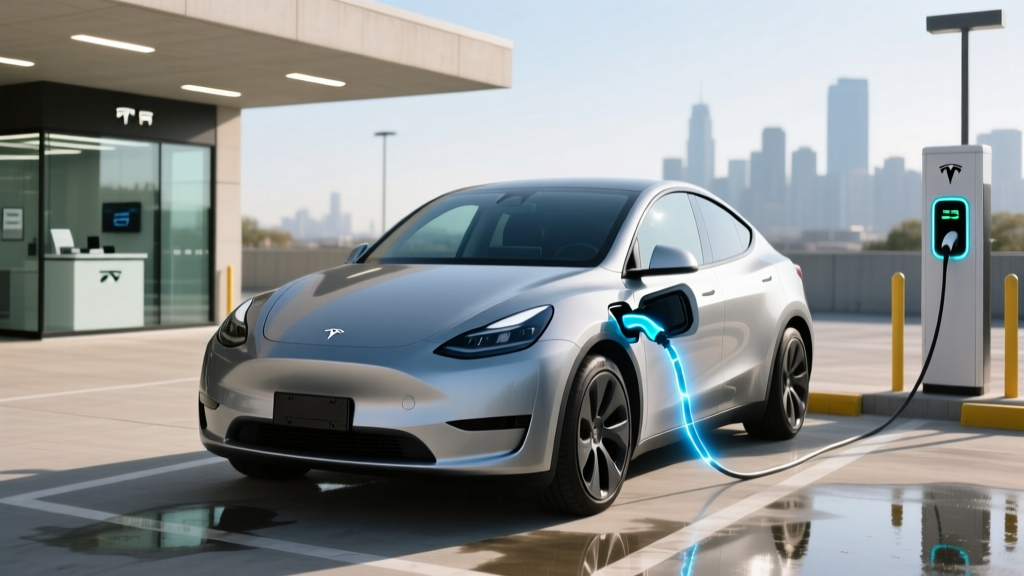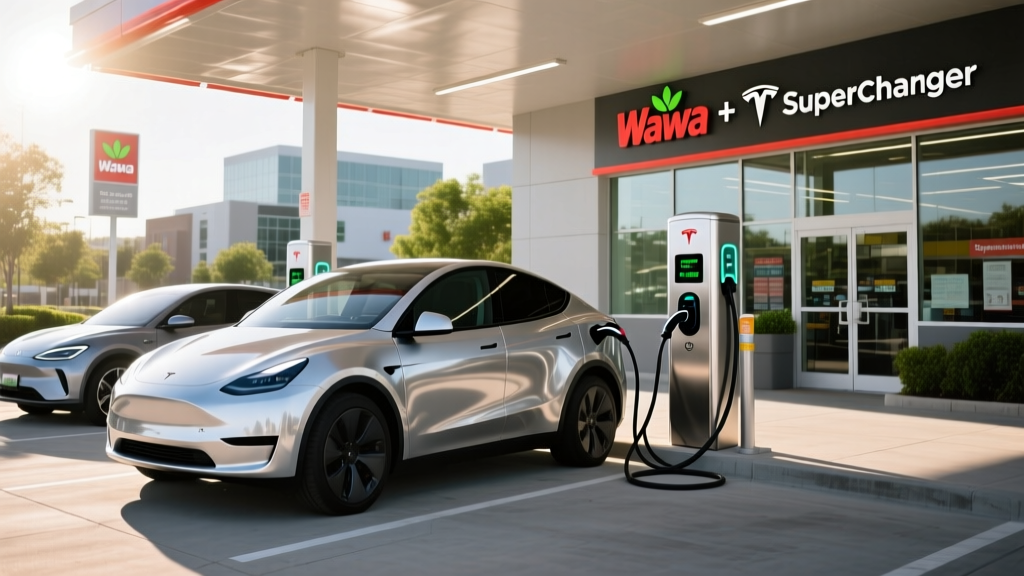
Wawa has become one of the most recognizable non-Tesla hosts for Tesla Supercharger stations across the Mid-Atlantic and Southeast, pairing fast DC charging with coffee, hoagies, and clean restrooms. If you've searched for a Wawa Tesla Supercharger on a road trip, you've likely noticed the footprint is expanding — but stall counts, peak power, and whether non-Tesla EVs can use those same stalls vary significantly by location. This guide breaks down what Wawa Supercharger stops actually deliver in 2026, how they compare to home charging, and what you should budget per mile when you pull in for a top-up.
Where Wawa Tesla Superchargers Fit in the Charging Ecosystem
Tesla Superchargers are DC fast chargers — Level 3 in common parlance — delivering between 150 kW (older V2 stalls) and up to 250–350 kW (V3 and the newer V4 architecture) directly to your battery. Wawa-hosted sites tend to be corridor-friendly stops along I-95, I-81, I-75, and similar routes, making them practical for 15–25 minute comfort breaks rather than destination charging.
It's worth distinguishing the three charging levels before we dig in, because the power (measured in kilowatts, kW) determines how quickly energy (kilowatt-hours, kWh) flows into your pack. A common mistake is treating kW and kWh as interchangeable — they aren't. Think of kW as the size of the hose and kWh as the bucket you're filling.
| Level | Voltage / Typical kW | Miles of range added per hour | Typical use case |
|---|---|---|---|
| Level 1 | 120V / 1.0–1.4 kW | 3–5 mi/hr | Overnight trickle, PHEVs, emergencies |
| Level 2 | 240V / 7.7–19.2 kW | 25–70 mi/hr | Home garage, workplace, hotels |
| DC Fast (incl. Wawa Tesla Supercharger) | 400–800V / 50–350 kW | 150–1,000+ mi/hr (peak) | Road trips, quick top-ups, fleet |
At a typical Wawa Supercharger site with V3 stalls (250 kW peak), a Tesla Model Y Long Range (about 75 kWh usable battery) can recover roughly 10–80% in 22–27 minutes, depending on pack temperature and starting state of charge. Expect the curve to taper hard above 80% — charging from 80–100% can take as long as 10–80%, which is why road-trippers treat 80% as the practical ceiling.
Real-World Charging Times at Wawa Superchargers
Tesla publishes peak kW figures, but sustained charging speed is what actually matters. Cold packs, high starting SoC, and battery chemistry (LFP vs NMC) all compress the curve. Here's what we've observed at 250 kW-class Wawa sites on a 70°F day with a preconditioned pack:
- Tesla Model 3 RWD (LFP, ~60 kWh usable): 10–80% in roughly 25–30 minutes; LFP packs tolerate regular 100% charging but still taper above ~85%.
- Tesla Model Y Long Range (NMC, ~75 kWh usable): 10–80% in about 22–26 minutes; peak ~250 kW held briefly in the 10–30% SoC window.
- Tesla Model S Plaid (~95 kWh usable): 10–80% in 25–30 minutes; larger pack means more total kWh added even at similar peak kW.
- Non-Tesla EVs with NACS (Ford F-150 Lightning, Rivian R1T, GM Ultium models): Where Wawa sites have Magic Dock or native NACS cables, expect 10–80% in 20–35 minutes depending on the vehicle's accepted peak kW.
Real-world note: EPA range stickers assume mixed driving. At 75 mph on the highway in winter, expect a Model Y LR to deliver roughly 240–260 real miles from its 310-mile EPA rating. Plan Wawa stops around 180–200 miles of actual travel to preserve a comfort buffer.
Are Wawa Tesla Superchargers Open to Non-Tesla EVs?
Partially. Tesla's "Superchargers with Magic Dock" program has opened select stalls to CCS-equipped EVs via a built-in adapter, and an increasing number of Wawa-hosted sites are being retrofitted with V4 cabinets that support native NACS cables alongside CCS1. As of early 2026, you can check stall compatibility directly in the Tesla app or by filtering for "NACS" in apps like PlugShare. Not every Wawa site is open to non-Teslas — always confirm before you detour.
| Connector | What fits | Adapter needed? |
|---|---|---|
| NACS (native Tesla cable) | All Tesla vehicles; 2025+ Ford, GM, Rivian, Volvo, Polestar NACS-equipped models | No |
| Magic Dock (built-in CCS1 adapter) | CCS1 EVs at select stalls — Chevy Bolt, Hyundai Ioniq 5, Kia EV6, VW ID.4, etc. | No — adapter is on the cable |
| CHAdeMO | Nissan Leaf (older), Mitsubishi Outlander PHEV | Not supported at Tesla stalls |
If you drive a CHAdeMO vehicle, Wawa Tesla Superchargers won't work for you — you'll need Electrify America, EVgo, or a CHAdeMO-equipped site. Owners of CCS1 EVs without Magic Dock access should carry a third-party NACS-to-CCS adapter (e.g., Lectron or A2Z) rated for the kW you expect to pull, though not all Supercharger stalls authenticate non-Tesla VINs without Magic Dock.
What It Costs to Charge at Wawa vs at Home
Wawa Supercharger pricing follows Tesla's per-kWh billing in most states, typically ranging from $0.28 to $0.48/kWh depending on local utility rates and time-of-use. Idle fees ($0.50–$1.00/minute) apply if you stay plugged in after hitting your limit. Here's how that translates into cost per mile versus home charging and a comparable gas vehicle.
| Scenario | Energy price | Vehicle efficiency | Cost per mile |
|---|---|---|---|
| Wawa Supercharger (avg $0.36/kWh) | $0.36/kWh | 3.5 mi/kWh (Model Y) | $0.103 |
| Home Level 2, off-peak ($0.13/kWh) | $0.13/kWh | 3.5 mi/kWh | $0.037 |
| Home Level 2, peak ($0.24/kWh) | $0.24/kWh | 3.5 mi/kWh | $0.069 |
| Gasoline, 28 MPG combined ($3.40/gal) | $3.40/gal | 28 mi/gal | $0.121 |
| Gasoline, 22 MPG combined ($3.40/gal) | $3.40/gal | 22 mi/gal | $0.155 |
Even at Wawa's public Supercharger rates, the per-mile cost undercuts a typical 28-MPG gas car. The gap becomes enormous when you charge at home on off-peak utility rates — a full 1,000-mile month can cost $37 at home vs $103 at Wawa vs $121 in a gas crossover. Road-trippers who rely exclusively on DC fast charging still save versus gas, but the savings are modest compared to home-based owners.
How Much Does a Home Level 2 Charger Cost to Install?
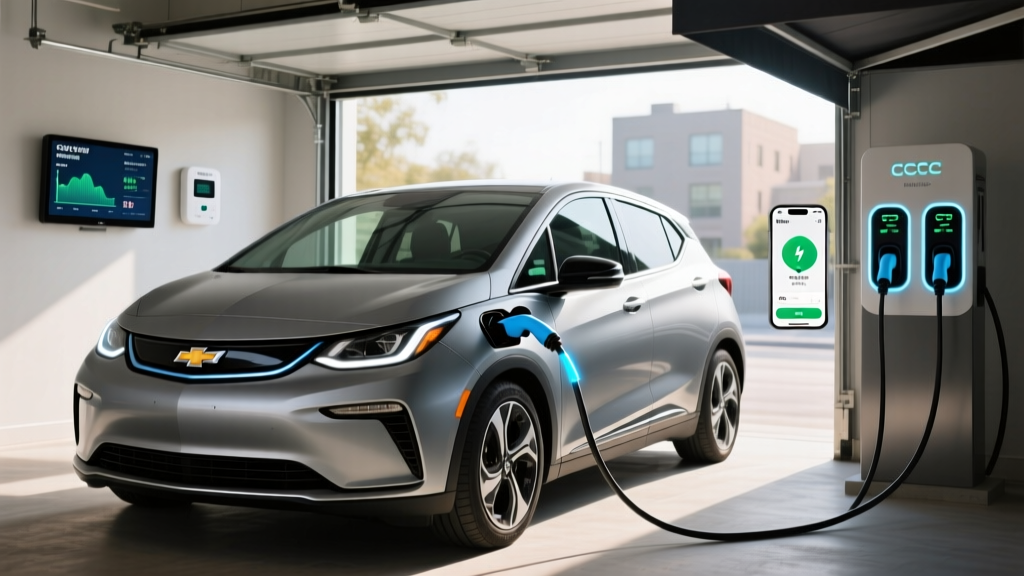
Public Superchargers are convenient, but the economics of EV ownership tilt heavily toward home Level 2 charging. A proper home install requires a dedicated 240V circuit, a hardwired or NEMA 14-50 outlet, permitting, and — in older homes — potentially a panel upgrade from 100A to 200A service.
| Item | Low end | High end | Notes |
|---|---|---|---|
| Level 2 charger hardware | $400 | $750 | 40A–48A Wi-Fi-enabled units |
| Electrician labor | $500 | $1,800 | Depends on run length from panel |
| Permit & inspection | $75 | $300 | Varies by municipality |
| Panel upgrade (100A → 200A) | $1,500 | $4,000 | Required in older homes; not always needed |
| Total (no panel upgrade) | $975 | $2,850 | Most modern homes fall here |
| Total (with panel upgrade) | $2,475 | $6,850 | Common in pre-1990 builds |
The federal §30D tax credit does not currently cover residential charging equipment — that was the former 30C credit, which expired for most residential installs. Some utilities and states still offer rebates of $250–$1,000 for Level 2 hardware; check your local utility and the IRS credits page for current-year rules, as incentive structures shift frequently.
Recommended Level 2 Home Chargers for Daily Use
If you're using Wawa Superchargers on road trips but want to minimize cost day-to-day, a quality home Level 2 unit pays for itself within a year for most drivers. These three are proven in 2026 installations:
ChargePoint Home Flex
- Power output: up to 50A / 12 kW (adjustable)
- Connector: NACS (native) or J1772 (with adapter for Tesla)
- Cable length: 23 ft
- Smart features: Wi-Fi, scheduled charging, utility TOU integration
- Price: ~$599
Tesla Wall Connector
- Power output: up to 48A / 11.5 kW
- Connector: NACS (native Tesla); J1772 adapter included for non-Teslas
- Cable length: 24 ft
- Smart features: Wi-Fi, OTA updates, Power-Share between two units
- Price: ~$475
Emporia Vue Level 2
- Power output: up to 48A / 11.5 kW
- Connector: J1772 (NACS adapter sold separately)
- Cable length: 24 ft
- Smart features: integrated home energy monitoring, solar-aware scheduling
- Price: ~$449
For Tesla owners, the Wall Connector is the obvious default. For mixed-EV households (say, a Model Y and an Ioniq 5), the ChargePoint Home Flex with its flexible amperage and app-based scheduling offers the best balance. Always match the charger's max amperage to your circuit — the National Electrical Code requires a 125% safety margin, so a 48A charger needs a 60A breaker.
Safety, Permits, and Code Requirements
Don't skip permitting. A documented, inspected install protects your homeowner's insurance coverage and your home's resale value. Key code requirements for any Level 2 install:
- Dedicated circuit: EVSE must have its own breaker — no shared circuits with dryers or HVAC.
- GFCI protection: NEC 2023 and later require GFCI breakers for outdoor receptacles; hardwired units often exempt but check local amendments.
- Outdoor rating: If mounted outside, the unit must carry a NEMA 4 or IP55+ rating. All three units above qualify.
- Cable management: Avoid running cords across walkways; retractable reels or wall-mounted holsters keep things safe.
- Load calculation: Your electrician will perform a NEC Article 220 load calculation to confirm your panel can handle the added draw — this is where panel upgrades surface.
Planning a Wawa Supercharger Stop on a Road Trip
The practical playbook for a Wawa Supercharger stop:
- Precondition the battery by routing through the Tesla nav or enabling preconditioning manually 20–30 minutes out. A cold pack can cut peak kW by 40% or more.
- Arrive at 10–15% SoC to capture the steepest part of the charge curve. Showing up at 40% means you'll rarely see peak kW.
- Plan to leave at 80%. The 80–100% taper is brutal — often dropping to sub-50 kW. Grab coffee, use the restroom, and get back on the road.
- Check stall availability in the Tesla app before detouring. Popular Wawa stops on I-95 can queue on holiday weekends.
- Confirm Magic Dock or NACS availability if you're in a non-Tesla — not every Wawa site has opened up.
Choose Wawa Superchargers if: you're on a corridor road trip, value clean facilities and food, and drive a Tesla or NACS-equipped EV.
Choose Electrify America or EVgo instead if: you drive a CHAdeMO vehicle, need guaranteed CCS access, or are in a region where Wawa's footprint is thin (West Coast, Mountain states).
Charge at home whenever possible: at $0.13/kWh off-peak, home charging is roughly one-third the per-mile cost of even the cheapest Supercharger stop.
Frequently Asked Questions
Are Wawa Tesla Superchargers free to use?
No. Wawa hosts the stations, but Tesla bills per kWh (typically $0.28–$0.48/kWh depending on the state and time of day). Wawa does not currently subsidize charging sessions.
Can I charge a Ford, GM, or Rivian at a Wawa Tesla Supercharger?
Yes, at sites equipped with Magic Dock or native NACS V4 cables. Verify in the Tesla app or PlugShare before detouring — not every Wawa location has opened access to non-Tesla EVs.
How fast does a Wawa Tesla Supercharger actually charge?
Most Wawa sites use V3 stalls rated for 250 kW peak. Real-world 10–80% times for a preconditioned Model Y Long Range are 22–26 minutes. Older V2 stalls at some locations cap at 150 kW, adding roughly 5–8 minutes to that session.
Will I get idle fees at Wawa Superchargers?
Yes, if the station is busy and you remain plugged in after your session completes or your set limit. Idle fees run $0.50–$1.00 per minute. Move the car promptly.
How does Wawa Supercharger cost compare to gas?
At an average $0.36/kWh and 3.5 mi/kWh efficiency, a Model Y costs about $0.103 per mile — roughly 15% cheaper than a 28-MPG gas car at $3.40/gallon. Home charging at off-peak rates cuts that to under $0.04/mile.
Do Wawa Superchargers work in winter?
Yes, but expect slower peak speeds unless the pack is preconditioned. Cold-soaked batteries can limit peak draw to 100–150 kW until internal temps rise, adding 5–10 minutes to a typical stop.
What's the difference between kW and kWh at a Supercharger?
kW (kilowatts) is the charge rate — how fast energy is flowing. kWh (kilowatt-hours) is the total energy delivered. A 250 kW stall delivering energy for 20 minutes might add ~70 kWh to your battery. You're billed on kWh, not kW.
Wawa-hosted Tesla Superchargers have quietly become one of the most user-friendly DC fast-charging experiences on the East Coast corridor. Pair them with a proper home Level 2 install and you'll cover daily driving at pennies per mile while reserving public charging for the road trips where it was always meant to shine. For the latest site-specific stall counts and real-time availability, cross-reference the in-car Tesla map with PlugShare and the DOE Alternative Fuels Station Locator.