The Volkswagen ID.4 is one of the most popular electric SUVs on the road, offering up to 291 miles of EPA-estimated range and a practical, family-friendly layout. But as the charging landscape shifts decisively toward Tesla's NACS (North American Charging Standard), ID.4 owners face a key question: how do you access Tesla Superchargers with a CCS-equipped vehicle? The answer involves a VW ID.4 Tesla adapter, a bit of planning, and a solid understanding of your home and public charging options.
This guide covers everything you need to know about adapter compatibility, real-world charging speeds, home Level 2 installation costs, and the best equipment to pair with your ID.4 — whether you're charging in your garage or on a cross-country road trip.
The Connector Shift: Why ID.4 Owners Need an Adapter
The VW ID.4 sold in North America through the 2025 model year uses a CCS1 (Combined Charging System) connector for both Level 2 AC charging and DC fast charging. Tesla vehicles, however, use the proprietary NACS connector, which Tesla opened as a standard in late 2022. By 2026, the majority of new EVs from non-Tesla automakers — including Volkswagen's upcoming models — are shipping with native NACS ports.
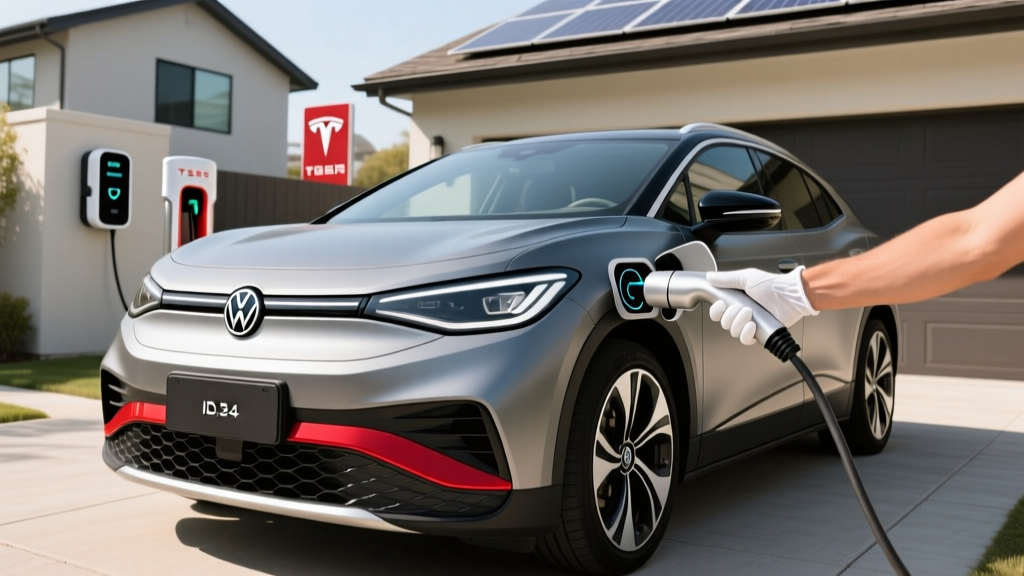
But if you own a 2021–2025 ID.4, your car has a CCS1 inlet. That means you can't plug directly into a Tesla Supercharger without an adapter. Here's where the VW ID.4 Tesla adapter comes in.
| Connector Type | Used By | AC Charging | DC Fast Charging | Adapter Needed for Superchargers? |
|---|---|---|---|---|
| NACS (Tesla) | Tesla (all years), Ford F-150 Lightning (2025+), GM Ultium vehicles (2025+), VW ID.7 (2026+) | Yes | Yes | No — native |
| CCS1 | VW ID.4 (2021–2025), Hyundai Ioniq 5, Kia EV6, BMW iX, most pre-2025 EVs | Yes (via J1772 pins) | Yes | Yes — CCS1-to-NACS adapter required |
| CHAdeMO | Nissan Leaf (discontinued in US), Mitsubishi Outlander PHEV | Yes (via J1772) | Yes | No widely available adapter |
How the VW ID.4 Tesla Adapter Works at Superchargers
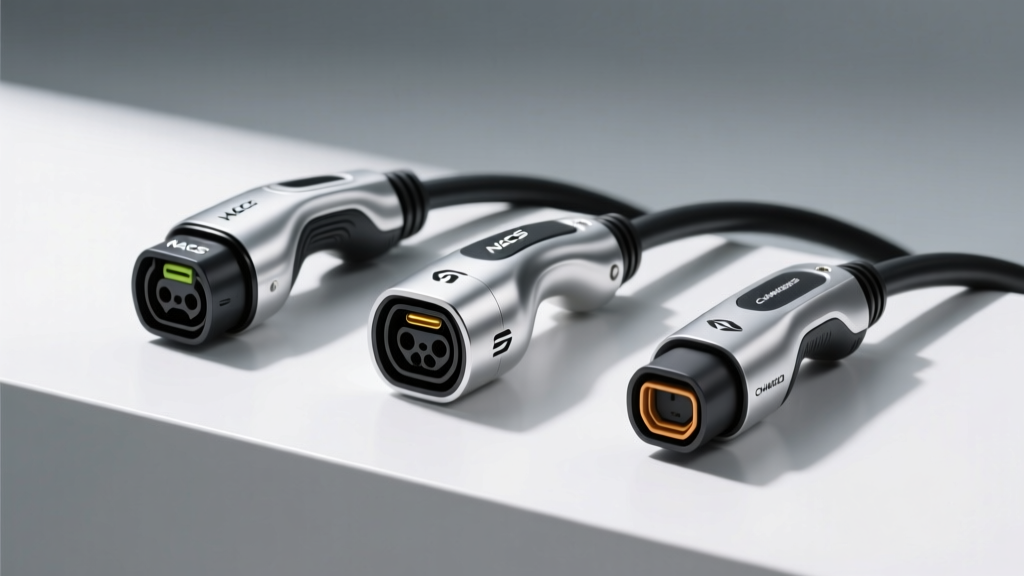
A CCS1-to-NACS adapter is a physical dongle that plugs into your ID.4's CCS charge port on one end and accepts a Tesla Supercharger's NACS cable on the other. Several manufacturers produce these adapters, with the most prominent being:
- Tesla's official CCS adapter — originally designed for Tesla vehicles to charge at CCS stations, it works bidirectionally for non-Tesla EVs at Superchargers. Priced around $175–$250.
- Lectron CCS-to-NACS adapter — a popular third-party option rated for up to 250 kW DC fast charging. Typically $150–$200.
- A2Z Typhoon adapter — another third-party option, often priced around $180.
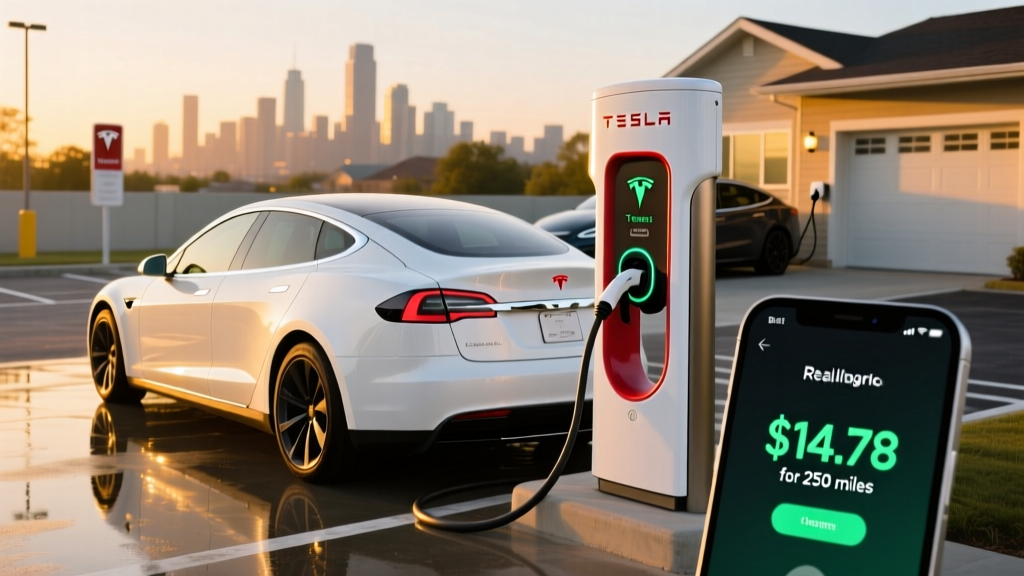
Critical caveat: Not all Tesla Superchargers are open to non-Tesla vehicles. Tesla's "Open Supercharger" program has expanded steadily, and by early 2026, roughly 40–50% of US Supercharger stalls are accessible to non-Tesla EVs via the Tesla app. Before driving to a Supercharger, check the Tesla app or your vehicle's built-in navigation (if updated) to confirm the specific station supports non-Tesla vehicles.
Charging Levels Explained: Speeds, Power, and Range Added
Understanding EV charging requires distinguishing between kW (kilowatts), which measures the rate of power delivery, and kWh (kilowatt-hours), which measures total energy stored in the battery. Think of kW as the flow rate of a hose, and kWh as the total volume of the tank you're filling.
The VW ID.4 comes with an 82 kWh gross battery (approximately 77 kWh usable) on AWD and Pro S trims, and a 62 kWh gross battery (~58 kWh usable) on the base Standard Range trim. Here's how fast each charging level replenishes those batteries:
| Charging Level | Power (kW) | Voltage / Amperage | Miles of Range Added per Hour | Typical Use Case |
|---|---|---|---|---|
| Level 1 (120V household outlet) | 1.0–1.4 kW | 120V / 12A | 3–5 miles/hr | Overnight trickle; emergency backup |
| Level 2 (240V home or public) | 7.2–11.5 kW | 240V / 30–48A | 22–40 miles/hr | Daily home charging; workplace |
| DC Fast Charging (public) | 50–175 kW (ID.4 peak: 175 kW) | 400–800V DC | 150–350+ miles/hr (at peak) | Road trips; quick top-ups |
Real-world ID.4 charging times (10–80% State of Charge):
- Level 1 (1.4 kW): Approximately 40–45 hours for the 82 kWh battery. Impractical as a primary method.
- Level 2 (11 kW, 48A): Roughly 7–8 hours from 10% to full. Ideal for overnight charging.
- DC Fast Charge (175 kW peak): VW estimates 10–80% in approximately 29–30 minutes under optimal conditions. However, the charge curve tapers significantly above 80% — expect 80–100% to take nearly as long as 10–80%.
Home Level 2 Charger Installation: Costs, Electrical Requirements, and Upgrades
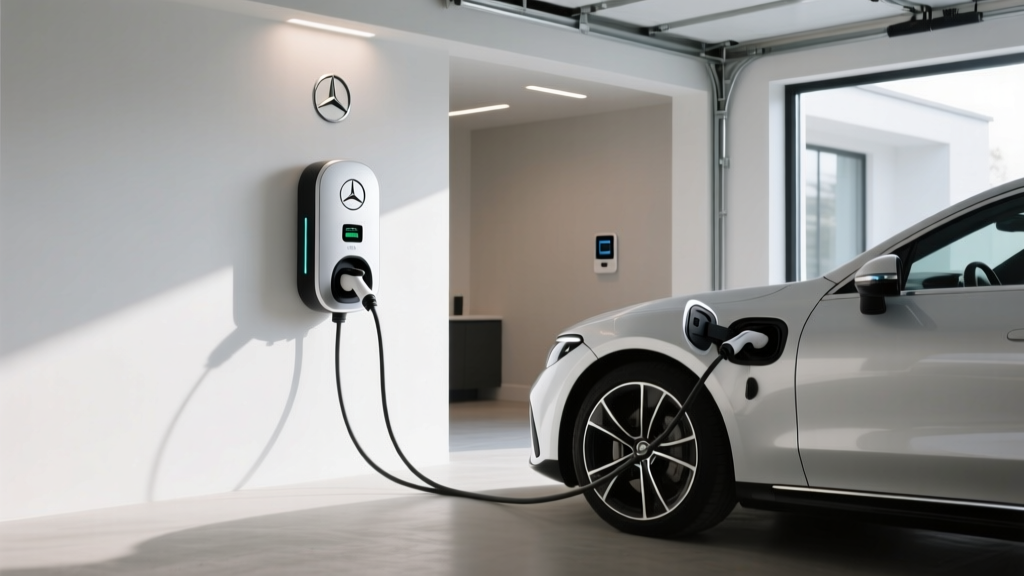
The single most impactful upgrade for EV ownership is a dedicated Level 2 home charger. For the ID.4, which has an onboard AC charger rated at 11 kW (48A, 240V), you'll want a Level 2 unit that can deliver the full 48 amps to maximize overnight charging speed.
Electrical Requirements
A 48A Level 2 charger requires a dedicated 60-amp circuit on a 240V line (National Electrical Code requires circuits be rated at 125% of the continuous load — 48A × 1.25 = 60A). This typically uses 6 AWG copper wire, though longer runs may require 4 AWG to minimize voltage drop.
Panel upgrade reality: Many older homes have 100A or 125A main electrical panels. Adding a 60A circuit for EV charging may push total load beyond the panel's capacity, requiring a panel upgrade to 200A. This is one of the most expensive variables in home charger installation. A licensed electrician will perform a load calculation to determine whether an upgrade is necessary.
| Component | Typical Cost Range | Notes |
|---|---|---|
| Level 2 charging equipment (hardwired, 48A) | $400–$750 | Smart chargers with Wi-Fi/app cost more |
| Electrician labor (standard install, short wire run) | $500–$1,500 | Varies by region; garage installs on the lower end |
| Electrical permit | $50–$200 | Required in most jurisdictions; varies by municipality |
| Wire and conduit materials | $100–$400 | Longer runs from panel to garage increase cost |
| Panel upgrade (if needed: 100A → 200A) | $1,500–$3,500 | Not always required; depends on existing load calculation |
| Total (without panel upgrade) | $1,050–$2,850 | Average most homeowners pay: $1,500–$2,200 |
| Total (with panel upgrade) | $2,550–$6,350 | Older homes with 100A panels most affected |
Safety and Code Considerations
- Dedicated circuit: Your Level 2 charger must have its own dedicated breaker — never share a circuit with other appliances.
- GFCI protection: NEC 2023 and later require GFCI (Ground Fault Circuit Interrupter) protection for EV charging circuits in garages. Many hardwired chargers include built-in GFCI; if not, a GFCI breaker is required.
- Outdoor rating: If your charger is installed outside (carport, driveway), ensure the unit carries a NEMA 4 rating for weather resistance. Indoor garage installations only require NEMA 3R at minimum.
- Hardwired vs. plug: Hardwired installations (no plug, direct wire connection) are generally preferred for 48A chargers because they avoid the heat and wear associated with NEMA 14-50 receptacles at sustained high amperage. If you use a NEMA 14-50 outlet, have the electrician install a commercial-grade receptacle (e.g., Hubbell or Bryant) rather than a residential-grade unit.
Best Level 2 Chargers for the VW ID.4: Equipment Recommendations
The ID.4's 11 kW onboard charger means you can take full advantage of a 48A Level 2 unit. Here are the top picks for 2026, selected for reliability, features, and value:
ChargePoint Home Flex
- Power output: Up to 12 kW / 50A (configurable down to 16A for smaller circuits)
- Connector: J1772 (compatible with ID.4's CCS1 port for AC charging)
- Cable length: 23 feet
- Smart features: Wi-Fi, ChargePoint app scheduling, Alexa integration, energy reporting
- Price: ~$550–$650
- Best for: Flexibility — adjustable amperage lets you install on a 20A to 60A circuit depending on your panel capacity
Emporia Vue Level 2 Charger
- Power output: Up to 11.5 kW / 48A
- Connector: J1772
- Cable length: 24 feet
- Smart features: Wi-Fi, Emporia app with detailed energy monitoring, solar integration, TOU scheduling
- Price: ~$400–$500
- Best for: Budget-conscious buyers who want robust energy monitoring and solar-aware charging
Wallbox Pulsar Plus
- Power output: Up to 11.5 kW / 48A
- Connector: J1772
- Cable length: 25 feet
- Smart features: Wi-Fi + Bluetooth, myWallbox app, Power Sharing (two chargers on one circuit), Eco-Smart solar mode
- Price: ~$500–$650
- Best for: Two-EV households — Power Sharing lets two Pulsar Plus units share a single 60A circuit dynamically
Tesla Wall Connector (with J1772 adapter)
- Power output: Up to 11.5 kW / 48A
- Connector: NACS native; use a NACS-to-J1772 adapter (~$50–$80) for the ID.4
- Cable length: 24 feet
- Smart features: Wi-Fi, Tesla app, firmware updates, Power Sharing
- Price: ~$425–$475 (plus adapter cost)
- Best for: Households with both a Tesla and an ID.4 — one wall unit serves both with an inexpensive adapter swap
Charging Cost Per Mile: Home vs. Public vs. Gas
One of the strongest financial arguments for EV ownership is lower per-mile energy cost. But the savings vary dramatically depending on where and when you charge. The ID.4 Pro S AWD is rated at approximately 104 MPGe combined, consuming roughly 33 kWh per 100 miles (or about 3.0 miles per kWh).
| Charging Scenario | Rate ($/kWh) | Cost per 100 Miles | Cost per Mile | Equivalent Gas MPG at $3.50/gal |
|---|---|---|---|---|
| Home — off-peak utility rate (national avg) | $0.10–$0.14 | $3.30–$4.62 | $0.033–$0.046 | 76–106 MPG |
| Home — standard residential rate (national avg) | $0.16–$0.20 | $5.28–$6.60 | $0.053–$0.066 | 53–66 MPG |
| Public Level 2 (ChargePoint, EVgo, etc.) | $0.25–$0.49 | $8.25–$16.17 | $0.083–$0.162 | 22–42 MPG |
| DC Fast Charging (Electrify America, EVgo) | $0.35–$0.55 | $11.55–$18.15 | $0.116–$0.182 | 19–30 MPG |
| Tesla Supercharger (non-Tesla access, via adapter) | $0.28–$0.48 | $9.24–$15.84 | $0.092–$0.158 | 22–38 MPG |
| Gas vehicle (25 MPG combined at $3.50/gallon) | — | $14.00 | $0.140 | 25 MPG (baseline) |
The takeaway: Charging at home on an off-peak utility rate is dramatically cheaper than gasoline — roughly one-third to one-quarter the per-mile cost. Public DC fast charging, however, can approach or even exceed the cost of gas in some markets. The financial case for EV ownership is strongest when you can charge at home most of the time.
For context on current electricity rates in your area, check the U.S. Energy Information Administration's state-by-state electricity price data.
Public Charging Networks for the ID.4: CCS and Supercharger Access
As a CCS1-equipped vehicle, the ID.4 has native access to the largest non-Tesla DC fast charging networks:
- Electrify America: VW's charging partner, with over 4,000 DC fast chargers nationwide. ID.4 owners of earlier model years received complimentary charging credits. Peak speeds up to 350 kW at newer stations (ID.4 will draw its max of 175 kW).
- EVgo: Over 1,100 public fast charging stations, many with CCS connectors. Pricing varies by market, typically $0.35–$0.48/kWh.
- ChargePoint: Largest network by station count, with a mix of Level 2 and DC fast chargers.
With a VW ID.4 Tesla adapter (CCS1-to-NACS), you additionally gain access to participating Tesla Superchargers — a significant expansion of your road-trip charging map, especially in rural corridors where Tesla has denser coverage than Electrify America.
Charging curve reality check: The ID.4's DC fast charging curve peaks at 175 kW only at low states of charge (roughly 5–30% SoC). By 60% SoC, speed drops to approximately 100–120 kW, and above 80% it falls below 50 kW. This means a 10–80% charge takes about 29–30 minutes, but a 10–95% charge takes closer to 50–55 minutes. Plan road-trip stops around 80% to minimize time at the charger.
Frequently Asked Questions
How much does it cost to install a home EV charger for the VW ID.4?
A typical Level 2 home installation (48A hardwired charger on a 60A dedicated circuit) costs between $1,050 and $2,850 when no panel upgrade is needed. This includes the charger unit ($400–$750), electrician labor ($500–$1,500), permit ($50–$200), and wiring materials ($100–$400). If your home's electrical panel needs upgrading from 100A to 200A, add $1,500–$3,500 to the total.
How fast will each charging level add range to my ID.4?
Level 1 (120V household outlet) adds roughly 3–5 miles per hour. Level 2 (240V, 48A) adds approximately 30–40 miles per hour. DC fast charging at peak speed (175 kW) can add 150+ miles in about 15 minutes, though the rate tapers as the battery fills. For daily driving, Level 2 home charging fully replenishes the ID.4 overnight.
Which connector and charger are compatible with the VW ID.4?
The 2021–2025 ID.4 uses a CCS1 connector, which incorporates J1772 pins for AC Level 1/2 charging and two additional DC pins for fast charging. Any J1772 Level 2 charger works for home charging. For DC fast charging, look for CCS1-equipped stations. To access Tesla Superchargers, you need a CCS1-to-NACS adapter. The upcoming 2026+ ID.4 models are expected to ship with a native NACS port.
How much does charging the ID.4 cost per mile compared to gasoline?
At a national average home electricity rate of ~$0.16/kWh, the ID.4 costs roughly $0.05–$0.07 per mile to drive. A comparable gas SUV at 25 MPG and $3.50/gallon costs about $0.14 per mile. Home charging on off-peak rates can drop below $0.04/mile. Public DC fast charging at $0.40–$0.55/kWh costs $0.12–$0.18 per mile — closer to gasoline pricing.
What electrical upgrades might I need for a Level 2 charger?
The most common upgrade is a panel capacity increase. If your home has a 100A main panel and is already running significant loads (electric range, dryer, HVAC), a load calculation may show insufficient capacity for a 60A EV circuit. Upgrading to a 200A panel costs $1,500–$3,500. Some utilities offer rebates for panel upgrades tied to EV adoption — check with your local provider. Homes with 200A panels typically have sufficient headroom for a Level 2 charger without an upgrade.
Can I use a Tesla Wall Connector to charge my VW ID.4 at home?
Yes, but you'll need a NACS-to-J1772 adapter (approximately $50–$80). The Tesla Wall Connector delivers up to 11.5 kW / 48A, which matches the ID.4's onboard charger capacity perfectly. This is a practical solution for households that own both a Tesla and a VW.
Does the VW ID.4 Tesla adapter void my vehicle warranty?
Using a third-party adapter does not automatically void your VW battery or powertrain warranty (8 years/100,000 miles on the high-voltage battery). However, if an adapter causes damage to the charge port or electrical system, VW may deny a warranty claim for that specific repair. Stick with well-reviewed, properly rated adapters from established manufacturers.
For the latest details on federal EV charging tax incentives, including the Residential Clean Energy Credit (IRC §25D) — which can cover up to 30% of home charger equipment and installation costs through 2032 — consult a tax professional, as income limits and eligibility rules apply.