The North American charging landscape has fractured into a patchwork of connectors, and whether you drive a Tesla, a Hyundai Ioniq 5, or a legacy Nissan Leaf, you will likely need an electric vehicle charger adapter at some point. As of 2026, the SAE J3400 (NACS) standard has been adopted by nearly every major automaker, but millions of CCS1 and CHAdeMO vehicles remain on the road — and public infrastructure still reflects that transition. This guide maps every connector, the adapters that bridge them, and the home charging equipment that powers them, with exact speeds, costs, and installation figures.
Charging Levels Explained: Speeds in kW and Miles Per Hour
Before selecting an adapter or home charger, you need to understand the three charging tiers. The critical distinction: kW (kilowatts) measures power — the rate at which energy flows — while kWh (kilowatt-hours) measures energy capacity, the size of your battery. Think of kW as the width of a hose and kWh as the bucket you're filling.
| Level | Voltage | Max Power (kW) | Miles of Range Per Hour | Typical Use Case |
|---|---|---|---|---|
| Level 1 | 120V AC | 1.4–1.9 kW | 3–5 mi/hr | Overnight top-ups, PHEVs, low-mileage drivers |
| Level 2 | 240V AC | 7.2–19.2 kW | 20–65 mi/hr | Home daily charging, workplace, hotels |
| DC Fast | 400–800V DC | 50–350 kW | 150–1,200 mi/hr (peak) | Road trips, highway corridors, 10–80% in 18–45 min |
Real-world charging times vary with battery size, state of charge, and thermal management. A 77 kWh battery (Ford Mustang Mach-E Extended Range) charging at a 150 kW DC fast charger will hit 10–80% in roughly 30 minutes under ideal conditions. The same session on a 350 kW Electrify America stall won't be proportionally faster because the Mach-E's peak acceptance rate is around 150 kW. Conversely, the Hyundai Ioniq 5 with its 800V architecture can sustain 230+ kW, reaching 10–80% in approximately 18 minutes at a capable charger.
Charge curve reality check: Peak kW ratings apply only at low states of charge (typically 10–30% SoC). Above 80%, charging speed tapers sharply to protect battery health. A charger rated at 250 kW may deliver only 40–60 kW once you pass 85% SoC. Plan road-trip stops to 80%, not 100%, unless you need the final miles.
Connector Compatibility: NACS, CCS1, and CHAdeMO in 2026
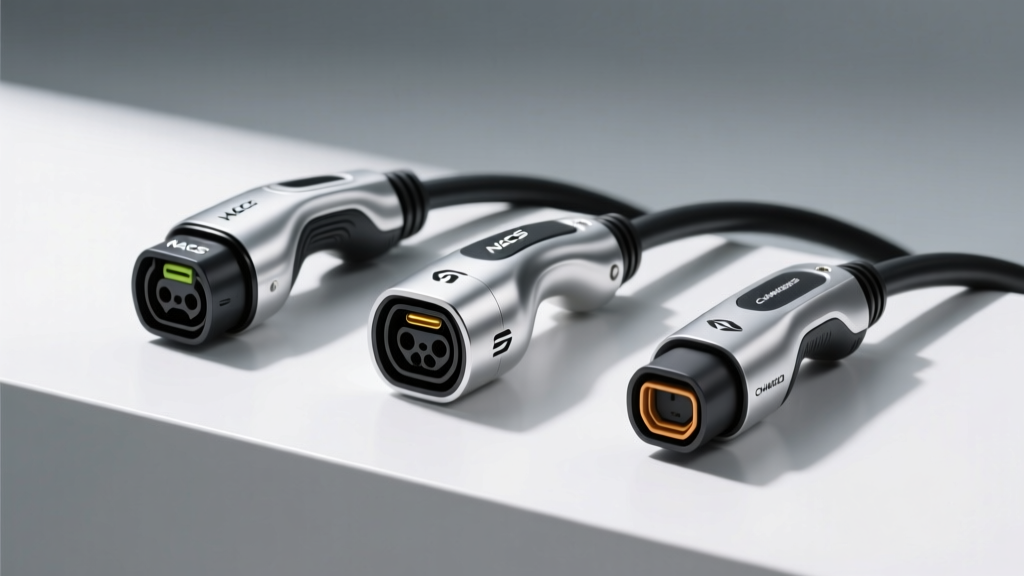
The connector on your EV determines which public chargers you can use natively — and which require an adapter. Here is the 2026 landscape:
| Connector | Brands Using It (2026 Models) | DC Fast Availability | Adapter Needed For |
|---|---|---|---|
| NACS (J3400) | Tesla (all), Ford, GM, Rivian, Volvo, Polestar, Mercedes, Hyundai/Kia (2025+), Honda, BMW, Subaru, Lucid, Fisker | Tesla Supercharger network (20,000+ stalls), growing NACS stalls on EA, EVgo | CCS1 chargers (legacy public infrastructure) |
| CCS1 | VW ID.4 (pre-2025), some older Ford/GM models, pre-adoption Hyundai/Kia, legacy models | Electrify America, EVgo, ChargePoint DC network | NACS Superchargers (via CCS-to-NACS adapter) |
| CHAdeMO | Nissan Leaf (discontinued 2025, legacy on road), Mitsubishi Outlander PHEV (older) | Declining; some EA and independent stations retain CHAdeMO plugs | NACS or CCS chargers (limited adapter availability; CHAdeMO-to-CCS adapters are rare and expensive) |
The NACS Transition and Your Adapter Needs
If you purchased a new EV from Ford, GM, Rivian, or Volvo in 2025 or 2026, your vehicle ships with a native NACS port. You can plug directly into Tesla Superchargers. However, you may still encounter CCS1-only chargers at older Electrify America or ChargePoint locations, especially in rural areas. A NACS-to-CCS1 adapter (such as the Lectron or A2Z NACS-to-CCS adapter, typically $150–$250) bridges this gap.
If you own a pre-2025 CCS1 vehicle — for example, a 2023 Hyundai Ioniq 5 or a 2024 VW ID.4 — you will need a CCS1-to-NACS adapter to access the Supercharger network. Tesla sells its official CCS-to-NACS adapter for approximately $200 through its shop, and third-party options from Lectron and A2Z are widely available. These adapters are rated for up to 250 kW DC fast charging and are safety-certified by UL or equivalent testing labs.
CHAdeMO owners face the most constrained adapter market. CHAdeMO-to-CCS adapters exist (notably from CHAdeMO Association-licensed manufacturers), but they are bulky, cost $400–$600, and are not universally compatible with all DC fast chargers. If you drive a legacy Nissan Leaf, your best strategy is to map CHAdeMO-compatible stations using PlugShare or the EVgo app before road trips.
Home Charger Installation: Electrical Requirements and Costs
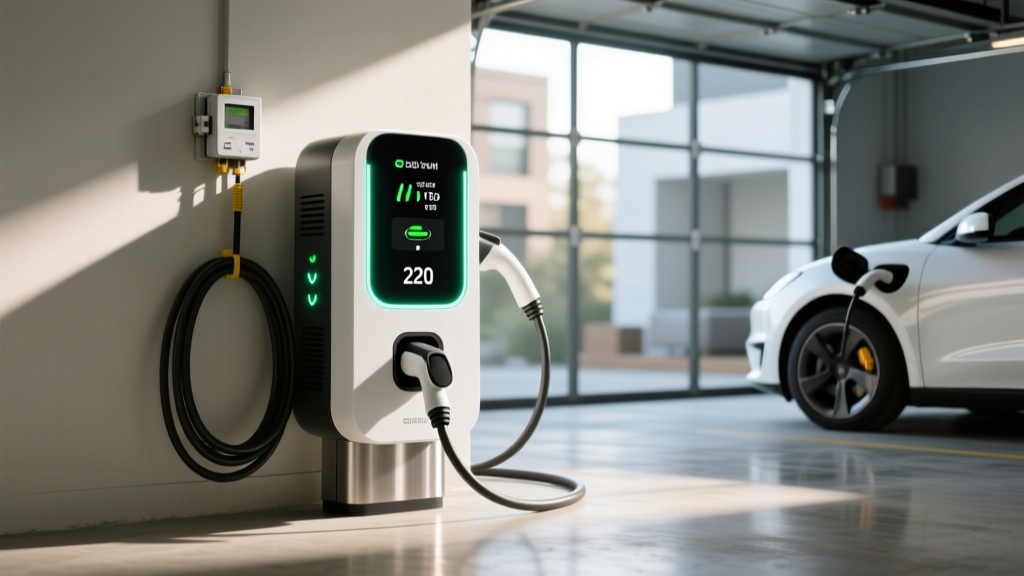
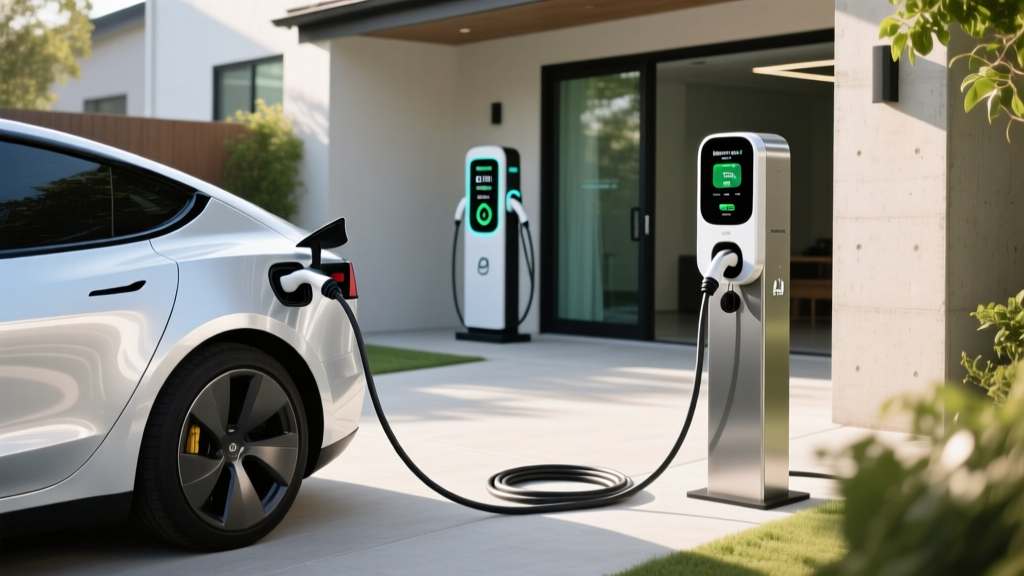
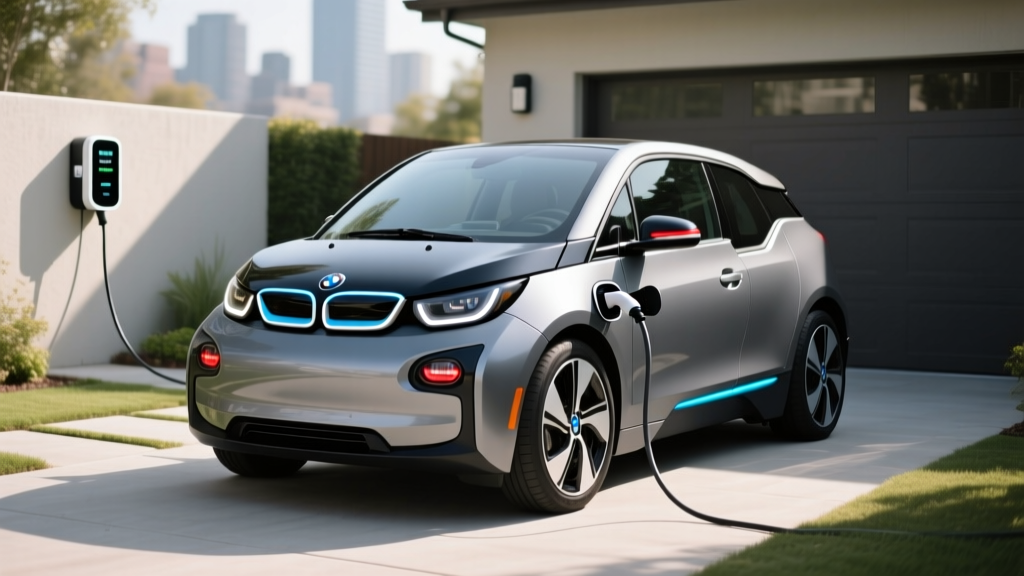
Most EV owners do 80% or more of their charging at home on a Level 2 charger. Installing one requires a dedicated 240V circuit — the same voltage as your electric dryer or oven — and the cost varies dramatically depending on your home's electrical panel, the distance from panel to charger location, and local permit requirements.
Electrical Requirements
A typical Level 2 home charger draws between 32A and 48A at 240V, requiring a dedicated circuit rated at 40A to 60A (the National Electrical Code requires circuits to be rated at 125% of the continuous load, so a 48A charger needs a 60A breaker). If your home has a 100A electrical panel — common in homes built before 1990 — you may not have sufficient spare capacity for a 60A circuit. A panel upgrade to 200A costs $1,500–$3,500 and is the single biggest variable in installation pricing.
| Component | Cost Range | Notes |
|---|---|---|
| Level 2 Charger (Equipment) | $350–$750 | Smart Wi-Fi-enabled units with 25ft cable, NACS or J1772 connector |
| Electrician Labor (Standard Install) | $500–$1,500 | Assumes panel within 30ft of charger location, conduit run, new breaker |
| Permit & Inspection | $100–$400 | Varies by municipality; some jurisdictions waive for EV charger installs |
| Panel Upgrade (if needed) | $1,500–$3,500 | 100A → 200A service upgrade; not needed in most post-2000 homes |
| Total (No Panel Upgrade) | $950–$2,650 | Typical scenario for newer homes with 200A service |
| Total (With Panel Upgrade) | $2,450–$6,150 | Older homes or those near panel capacity |
Always hire a licensed electrician and pull a permit. Unpermitted work can void your homeowner's insurance in the event of an electrical fire and may cause issues during a future home sale. According to NECA, the National Electrical Code (NEC Article 625) governs EV charging equipment installation, and your local inspector will verify proper grounding, GFCI protection (required for outdoor installations in most jurisdictions), and correct wire gauge.
How Much Does Charging Cost Per Mile vs. Gas?
The economics of EV charging depend on your electricity rate, whether you charge at home or publicly, and your vehicle's efficiency. Let's use concrete 2026 figures.
| Scenario | Rate ($/kWh) | Vehicle Efficiency | Cost Per Mile |
|---|---|---|---|
| Home Off-Peak (Time-of-Use plan) | $0.09/kWh | 3.0 mi/kWh (e.g., Tesla Model 3 RWD) | $0.030/mi |
| Home Standard Rate | $0.16/kWh | 3.0 mi/kWh | $0.053/mi |
| Public Level 2 (ChargePoint, EVgo) | $0.30–$0.45/kWh | 3.0 mi/kWh | $0.10–$0.15/mi |
| DC Fast Charging (EA, EVgo) | $0.35–$0.55/kWh | 3.0 mi/kWh | $0.12–$0.18/mi |
| Tesla Supercharger (member rate) | $0.25–$0.35/kWh | 3.2 mi/kWh (Model Y) | $0.078–$0.109/mi |
| Gas Car (28 MPG combined, $3.40/gal) | $3.40/gallon | 28 mi/gal | $0.121/mi |
At home on a time-of-use plan, an EV costs roughly 3–5 cents per mile to fuel — a fraction of the 12+ cents per mile for a comparable gas car. Even at public DC fast chargers, EVs often match or beat gas on a per-mile basis. The savings compound: a driver covering 12,000 miles per year saves $600–$1,200 annually by charging at home versus buying gas, based on EPA efficiency data.
2026 Equipment Recommendations: Home Chargers and Adapters
The best home charger for you depends on your EV's connector, your electrical panel's spare capacity, and whether you want smart scheduling features. Below are top picks for the current market.
ChargePoint Home Flex (NACS or J1772)
Power Output: Up to 12 kW (50A / 240V), adjustable down to 16A for lower-capacity panels
Cable Length: 24 feet
Connector Options: NACS (native) or J1772 (for pre-2025 non-Tesla EVs; use J1772-to-NACS adapter if your car has NACS port)
Smart Features: Wi-Fi, app scheduling, Alexa integration, utility demand-response programs
Price: ~$599 (NACS version)
Best For: Most homeowners wanting flexible amperage settings and reliable app control
Tesla Wall Connector (NACS)
Power Output: Up to 11.5 kW (48A / 240V)
Cable Length: 24 feet
Connector: NACS (native Tesla plug)
Smart Features: Wi-Fi, power-sharing with second unit, Tesla app integration, OTA updates
Price: ~$475
Best For: Tesla owners and NACS-equipped Ford/GM/Rivian drivers who want a clean, integrated experience
Emporia Vue Level 2 Charger
Power Output: Up to 11.5 kW (48A / 240V)
Cable Length: 24 feet
Connector: J1772 (includes J1772-to-NACS adapter in box for NACS vehicles)
Smart Features: Wi-Fi, solar integration with Emporia energy monitor, time-of-use scheduling, load management
Price: ~$399
Best For: Budget-conscious buyers and homes with solar panels who want energy monitoring
Grizzl-E Smart (NACS or J1772)
Power Output: Up to 10 kW (40A / 240V)
Cable Length: 24 feet
Connector: NACS or J1772
Smart Features: OCPP-compatible, works with multiple apps, adjustable amperage, outdoor-rated (NEMA 4)
Price: ~$499
Best For: Outdoor installations in cold climates (rated to -40°F), Canadian-built with strong warranty
Adapter Recommendations
If your EV has a NACS port but you need to use CCS1 public chargers, the Lectron NACS-to-CCS1 Adapter (~$180, UL-listed, rated to 250 kW DC / 60A) is a reliable choice. For CCS1 vehicles needing Supercharger access, the Tesla CCS-to-NACS Adapter (~$200, sold via Tesla's online shop) provides official compatibility. Always verify that any adapter you purchase carries UL or TÜV certification — uncertified adapters can cause arcing, overheating, or damage to your vehicle's charge port.
Safety, Electrical Code, and Outdoor Considerations
EV charging equipment is governed by NEC Article 625, and your installation must meet several non-negotiable requirements:
- Dedicated circuit: Your Level 2 charger must have its own breaker — no shared circuits with other appliances.
- GFCI protection: Required for all outdoor receptacles and increasingly mandated for indoor garage installations depending on your local jurisdiction.
- Wire gauge: A 60A circuit requires 6 AWG copper wire (THHN in conduit) or 4 AWG if running NM-B (Romex) inside walls. Your electrician will size this based on run length and local code.
- Outdoor rating: If your charger is mounted outside, it must carry a NEMA 4 or NEMA 4X rating for weather resistance. All recommended units above meet this standard.
- Cable management: Retractable reels or wall hooks prevent trip hazards and cable damage. Avoid letting cables rest on the ground where they can be driven over.
For homes with solar panels or battery storage systems (such as the Tesla Powerwall), some smart chargers — notably the Emporia Vue — can be configured to charge only when excess solar production is available, effectively reducing your per-mile fuel cost to near zero during sunny months.
Frequently Asked Questions
How much does it cost to install a home EV charger?
A standard Level 2 installation in a home with a 200A panel and the charger within 30 feet of the panel typically costs $950–$2,650 including equipment, electrician labor, and permit. If your home needs a panel upgrade from 100A to 200A, add $1,500–$3,500. Some utilities offer rebates of $200–$500 for Level 2 charger installation, and the federal Residential Clean Energy Credit (IRS Form 5695) may cover up to 30% of equipment and installation costs through 2032, capped at $1,000 per year — consult a tax professional for eligibility.
How fast will each charging level add range?
Level 1 (120V) adds 3–5 miles per hour — adequate for PHEVs with small batteries or drivers covering under 30 miles daily. Level 2 (240V, 40–48A) adds 20–40 miles per hour, fully recharging most EVs overnight. DC fast charging at 150 kW can add 150–200 miles in 20 minutes, while 350 kW chargers with compatible 800V vehicles (Hyundai Ioniq 5, Kia EV6, Porsche Taycan) can add 200+ miles in 15–18 minutes.
Which connector and charger is compatible with my EV?
Check your vehicle's charge port: if it's a slim, 5-pin NACS connector (standard on all 2025+ Teslas, Fords, GMs, Rivians, and most 2025+ new models), you need NACS-compatible equipment. If your port has the larger, round CCS1 connector with two additional DC pins below, you need CCS1 equipment. Nissan Leaf owners have the CHAdeMO connector. Adapters bridge the gaps: CCS1 vehicles can use NACS Superchargers with a CCS-to-NACS adapter, and NACS vehicles can use CCS chargers with a NACS-to-CCS adapter.
How much does charging cost per mile vs. gas?
Home charging on a standard rate of $0.16/kWh costs approximately $0.05/mile for an efficient EV (3 mi/kWh). Gas at $3.40/gallon in a 28 MPG car costs $0.12/mile. Even public DC fast charging at $0.45/kWh ($0.15/mile) is competitive with gas. Over 12,000 miles per year, home-charging an EV saves $600–$900 versus fueling a comparable gas vehicle.
What electrical upgrades might I need?
The most common upgrade is a panel capacity increase from 100A to 200A, needed in roughly 20–30% of older homes. If your panel has spare capacity but no room for a new breaker, a tandem breaker or sub-panel addition ($300–$800) may suffice. Some utilities offer load-management devices that allow a charger to share capacity with other high-draw appliances, avoiding a panel upgrade entirely. Have an electrician perform a load calculation before committing to a charger amperage.
Do I need an adapter for Tesla Superchargers?
If your non-Tesla EV has a native NACS port (most 2025+ models from Ford, GM, Rivian, and others), no adapter is needed — plug directly into Superchargers. If your EV has a CCS1 port, you need a CCS-to-NACS adapter (~$200) to access the Supercharger network. Verify your vehicle is enabled for Supercharger access in the Tesla app or your automaker's app, as some brands require activation.