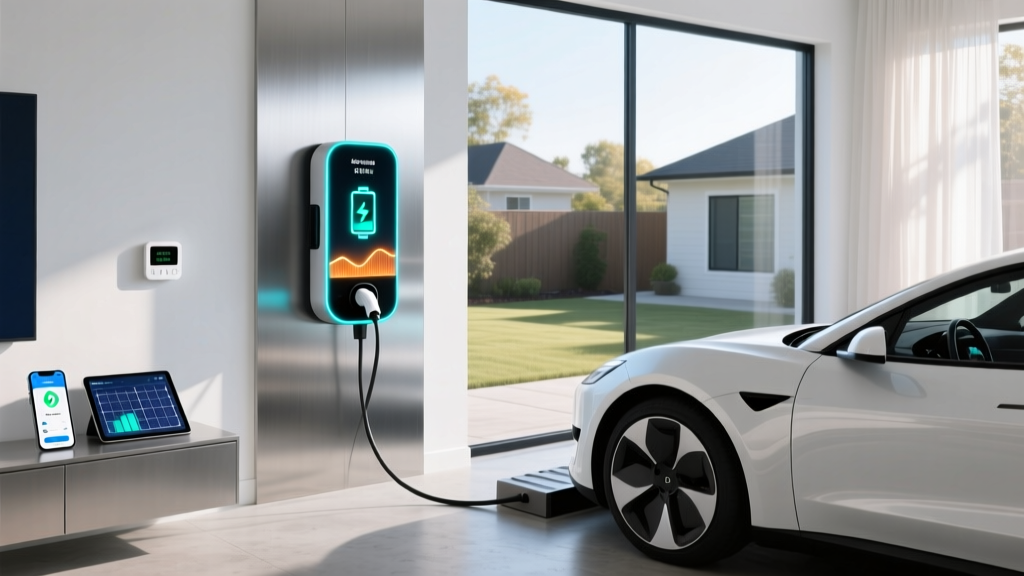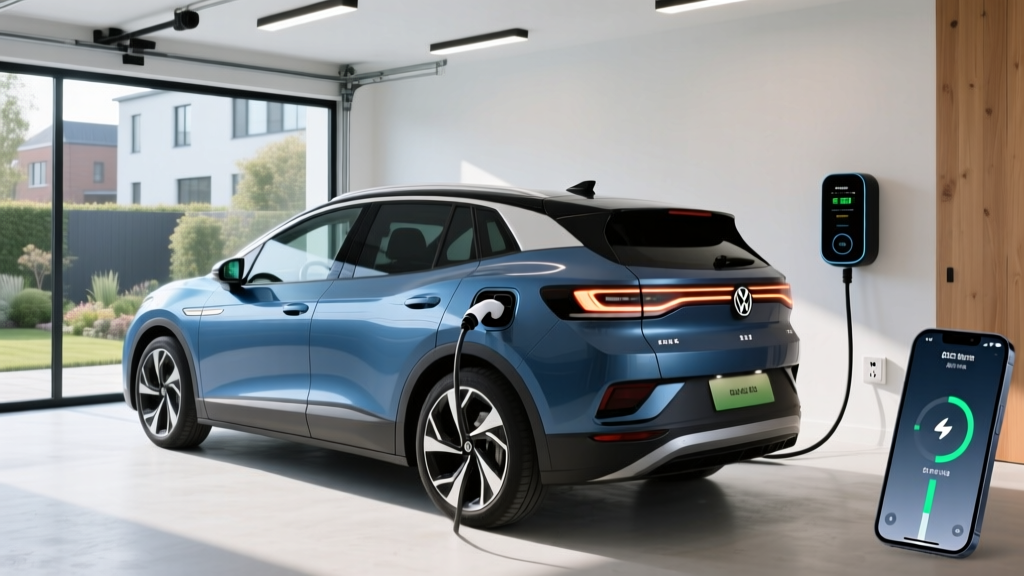
If you own a Volkswagen ID.4—or are seriously shopping for one—the single most impactful decision you'll make isn't about trim levels or paint colors. It's how you charge. The ID.4's EPA-estimated range is only half the story; the other half is whether your home electrical system, your chosen wallbox, and your local electricity rates actually let you use that range day after day without friction.
This guide walks through the ID.4's real-world range expectations, every charging level from a standard wall outlet to a 175 kW DC fast charger, what a Level 2 home installation actually costs in 2026, and how your per-mile energy cost stacks up against gasoline. Every figure below reflects current 2026 model-year specs and real-world testing context.
VW ID.4 Range: EPA Sticker vs. the Real World
The 2026 Volkswagen ID.4 is available with two battery configurations. The Standard Range model uses a 62 kWh usable lithium-ion (NMC chemistry) pack, while the larger Pro and Pro S trims carry an 82 kWh usable pack. Here's what the EPA says—and what you should actually plan for.
Standard Range (62 kWh): EPA 228 mi (RWD) · Real-world highway: ~190–205 mi · Cold weather (below 30°F): ~160–180 mi
Pro / Pro S (82 kWh): EPA 291 mi (RWD) / 275 mi (AWD) · Real-world highway: ~240–260 mi · Cold weather: ~200–225 mi
Source: fueleconomy.gov
Why the gap? The EPA test cycle includes significant low-speed and city driving where regenerative braking recovers energy. Sustained 70+ mph highway driving increases aerodynamic drag roughly with the square of speed, and cold temperatures increase cabin heating demand while reducing battery chemical efficiency. Expect roughly 15–20% range reduction at highway speeds in mild weather, and 25–35% reduction in sub-freezing conditions. The ID.4's available heat pump (standard on Pro S trims in 2026) helps mitigate cold-weather HVAC draw but doesn't eliminate it.
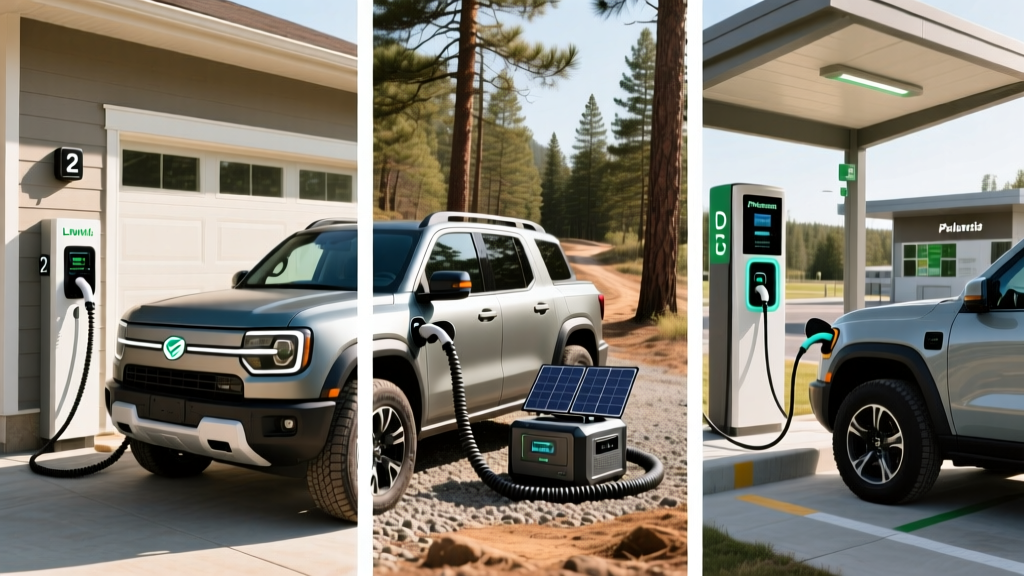
Charging Levels Explained: How Fast Will Each Level Add ID.4 Range?
Before we get to specific numbers, a critical distinction: kW (kilowatts) measures power—the rate at which energy flows into your car. kWh (kilowatt-hours) measures energy—the total capacity of your battery, like gallons in a fuel tank. A 10 kW charger delivers energy twice as fast as a 5 kW charger. Your battery's kWh capacity determines how long filling takes at a given kW rate.
| Level | Power (kW) | Miles of Range / Hour | 10–80% Time (82 kWh) | Best For |
|---|---|---|---|---|
| Level 1 (120V household) | 1.0–1.4 kW | 3–5 mi/hr | ~45+ hours | Emergency / overnight trickle |
| Level 2 (240V home/public) | 7.2–11.5 kW | 22–37 mi/hr | ~7.5–10 hours | Daily home charging |
| DC Fast Charging | 50–175 kW peak | 130–250+ mi/hr (peak) | ~29–34 min | Road trips |
The ID.4's onboard AC charger maxes out at 11.5 kW on Pro/Pro S trims (7.2 kW on the Standard Range model). That means even if you plug into a 19.2 kW public Level 2 station, the car will only accept 11.5 kW. Plan your home charger accordingly—there's no benefit to installing a 48-amp (11.5 kW) charger if you have the Standard Range ID.4 with a 7.2 kW onboard limit.
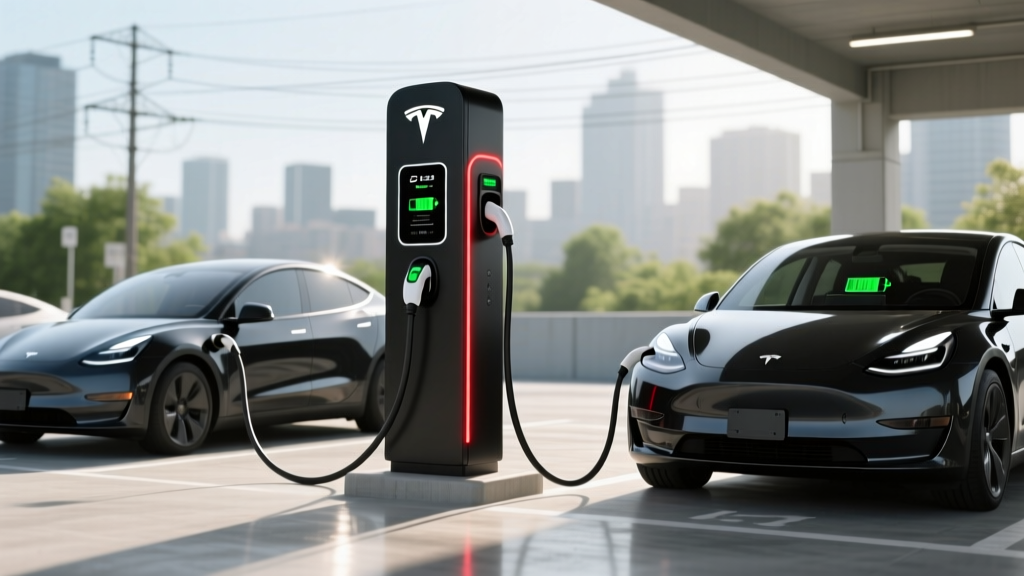
On DC fast charging, the 82 kWh ID.4 peaks at 175 kW. However, that peak rate holds only between roughly 10–30% state of charge (SoC). The charge curve tapers significantly: by 60% SoC, you'll see roughly 100–120 kW, and above 80%, it drops below 50 kW to protect the battery. A 10–80% session at a 175 kW Electrify America stall takes approximately 29–34 minutes in moderate temperatures. In cold weather (below 40°F), add 5–10 minutes unless you've preconditioned the battery using the ID.4's navigation-routed preconditioning feature.
Home Charger Installation: Electrical Requirements, Costs & Panel Upgrades
How much does it cost to install a home EV charger? The honest answer spans a wide range depending on your home's electrical panel, the distance from panel to garage or driveway, and local permit fees. Here's a realistic 2026 breakdown for a Level 2 installation.
| Component | Simple Install | Moderate Install | Complex Install |
|---|---|---|---|
| Level 2 charger (hardware) | $400–$650 | $400–$650 | $400–$650 |
| Electrician labor | $300–$600 | $600–$1,200 | $1,200–$2,500 |
| Electrical materials (wire, conduit, breaker) | $100–$200 | $200–$500 | $500–$1,000 |
| Permit & inspection | $50–$150 | $100–$250 | $150–$350 |
| Panel upgrade (if needed) | Not required | Not required | $1,500–$3,500 |
| Total Estimated Cost | $850–$1,600 | $1,300–$2,600 | $3,750–$8,000 |
When is a panel upgrade required? Most homes built before 1990 have 100-amp electrical panels. A 40-amp dedicated EV circuit (supporting a 32-amp continuous charger) consumes a significant chunk of that capacity. If your panel is already near load capacity—running electric range, dryer, HVAC, and water heater—an electrician may recommend upgrading to a 200-amp panel. This is the single biggest variable in installation cost.
Electrical requirements for the ID.4 at home: To take advantage of the ID.4 Pro/Pro S's full 11.5 kW onboard charger, you need a 240V / 50-amp dedicated circuit (the National Electrical Code requires circuits to be rated at 125% of continuous load, so a 40-amp continuous draw requires a 50-amp breaker). For the Standard Range model's 7.2 kW limit, a 240V / 40-amp circuit is sufficient.
Safety and code considerations: Your installation must include a dedicated circuit (not shared with other appliances), a GFCI breaker as required by NEC 2023 Article 625, and an outdoor-rated (NEMA 4) enclosure if the charger is mounted outside. Always pull a permit—unpermitted electrical work can void homeowner's insurance and create fire risk. Some utilities offer rebates of $250–$500 for permitted Level 2 installations; check with your local provider.
Which Connector and Charger Is Compatible with the ID.4?
The 2026 VW ID.4 sold in North America comes equipped with the NACS (North American Charging Standard) port, a shift Volkswagen made starting with the 2025 model year. This is a major practical advantage: NACS-equipped ID.4s can use Tesla Superchargers natively—no adapter required—giving you access to the most reliable and extensive DC fast-charging network in the country.
| Connector Type | 2021–2024 ID.4 | 2025–2026 ID.4 | Adapter Needed? |
|---|---|---|---|
| CCS1 (Combo) | ✅ Native | ⚠️ Adapter required | NACS-to-CCS (~$200) |
| NACS (Tesla) | ⚠️ Adapter required | ✅ Native | CCS-to-NACS for older models |
| J1772 (Level 2 AC) | ✅ Native | ⚠️ J1772-to-NACS adapter | Included with most new chargers |
| CHAdeMO | ❌ Not compatible | ❌ Not compatible | No adapter available |
For home Level 2 charging: Most new home chargers sold in 2026 ship with a NACS connector or include a J1772-to-NACS adapter in the box. If you purchased a J1772 charger before 2025, you'll need a J1772-to-NACS adapter (typically $50–$100) for a 2025+ ID.4. For 2021–2024 CCS1 ID.4 models, your existing J1772 Level 2 chargers plug in natively—no adapter needed.
Level 2 Home Charger Recommendations for the ID.4
Based on the ID.4's 11.5 kW onboard charging capability, here are three chargers that pair well with it. Each recommendation includes power output, connector type, cable length, smart features, and current pricing.
Emporia Vue Level 2
- Power Output: 11.5 kW (48A)
- Connector: NACS (native)
- Cable Length: 24 ft
- Smart Features: Wi-Fi, energy monitoring, solar integration, scheduling via app
- Price: ~$399
- Best For: Budget-conscious buyers who want smart features and full 11.5 kW output for the ID.4 Pro
ChargePoint Home Flex (2nd Gen)
- Power Output: Up to 12 kW (50A) — adjustable
- Connector: NACS (2025+ models)
- Cable Length: 23 ft
- Smart Features: Wi-Fi, app scheduling, Alexa/Google integration, load sharing for dual installs
- Price: ~$599
- Best For: Reliability-focused buyers; ChargePoint's network integration is excellent for finding public chargers
Tesla Wall Connector
- Power Output: Up to 11.5 kW (48A)
- Connector: NACS (native)
- Cable Length: 24 ft
- Smart Features: Wi-Fi, power sharing, firmware OTA updates, sleek design
- Price: ~$475
- Best For: ID.4 owners who also have a Tesla in the household or want the cleanest NACS-native setup
A note on amperage: The National Electrical Code requires that continuous loads (like EV charging) not exceed 80% of a circuit's rated capacity. A 48-amp charger requires a 60-amp breaker. A 40-amp charger requires a 50-amp breaker. Your electrician will size the breaker and wire gauge accordingly—typically 6 AWG copper for 60-amp circuits and 8 AWG for 50-amp runs under 50 feet.
How Much Does Charging an ID.4 Cost Per Mile vs. Gas?
How much does charging cost per mile vs gas? The answer depends on where and when you charge. Below are three common scenarios for the ID.4 Pro (82 kWh pack, EPA combined efficiency of approximately 104 MPGe or roughly 3.0 miles per kWh).
| Scenario | Rate ($/kWh) | Cost for Full Charge (82 kWh) | Cost Per Mile | Gas Equivalent (30 MPG @ $3.40/gal) |
|---|---|---|---|---|
| Home off-peak (utility TOU rate) | $0.09–$0.13 | $7.38–$10.66 | $0.03–$0.04 | $0.11/mi |
| Home standard rate (national avg) | $0.16 | $13.12 | $0.05 | $0.11/mi |
| Public Level 2 (ChargePoint, etc.) | $0.25–$0.35 | $20.50–$28.70 | $0.08–$0.10 | $0.11/mi |
| DC Fast (Electrify America / Tesla Supercharger) | $0.35–$0.55 | $28.70–$45.10 | $0.12–$0.16 | $0.11/mi |
The economics are clear: home charging on an off-peak or time-of-use (TOU) rate delivers fuel costs roughly one-third to one-half of gasoline per mile. Public Level 2 charging breaks even with gasoline. DC fast charging is generally more expensive per mile than gas—so treat it as a road-trip convenience, not your primary charging strategy.
For the ID.4 Standard Range (62 kWh, ~3.2 mi/kWh), costs scale proportionally downward. A full home charge at $0.13/kWh costs roughly $8.06 for approximately 198 real-world miles—about $0.04/mi.
DC Fast Charging in Practice: What a Road Trip Actually Looks Like
On a 400-mile highway trip in the ID.4 Pro (82 kWh), you'll realistically need one charging stop. Here's how that plays out:
- Departure: Start at 100% SoC (~260 real-world highway miles of range)
- First stop (~220 miles in): Arrive at ~15% SoC. Plug into a 175 kW Electrify America or Tesla Supercharger stall.
- Charge session: 15–80% takes roughly 25–30 minutes. You'll add approximately 170 miles of range.
- Remainder: Drive the final ~180 miles to your destination with comfortable buffer.
Two practical tips that significantly affect road-trip charging: First, always use the ID.4's built-in navigation to route to a DC fast charger. This triggers battery preconditioning—the thermal management system warms or cools the battery to optimal charging temperature before you arrive. Without preconditioning, especially in cold weather, your peak charge rate may be limited to 100–120 kW instead of 175 kW, adding 10–15 minutes to your stop. Second, charge only to 80% at DC fast stations. The taper above 80% is so severe that the 80–100% top-up can take as long as the 10–80% session.
Frequently Asked Questions About ID.4 Charging
What electrical upgrades might I need for a Level 2 home charger?
The most common upgrade is a panel replacement from 100-amp to 200-amp service, which costs $1,500–$3,500 depending on your utility and local electrician rates. You'll know this is needed if your electrician's load calculation shows your existing panel is at or above 80% capacity with the added EV circuit. Some utilities now offer smart-panel solutions (like Span or Lumin) that manage circuits dynamically, potentially avoiding a full panel upgrade.
Can I charge the ID.4 with just a regular 120V outlet?
Yes, but slowly. Level 1 charging at 120V delivers about 1.0–1.4 kW, adding roughly 3–5 miles of range per hour. A full charge from empty for the 82 kWh pack would take 60+ hours. Level 1 works if you drive under 30 miles daily and can plug in overnight, but it's impractical as a primary strategy for most owners.
Does the ID.4 qualify for any charging equipment tax credits?
The federal §30D tax credit applies to the vehicle purchase, not to home charger equipment separately. However, the Alternative Fuel Vehicle Refueling Property Credit (IRS §30C) covers up to 30% of home charging equipment and installation costs (maximum $1,000) if you live in an eligible census tract. Check IRS.gov §30C guidelines and consult a tax professional, as eligibility depends on your specific location and income.
How does the ID.4's charging speed compare to rivals?
The ID.4's 175 kW DC fast-charging peak is competitive but not class-leading. The Hyundai Ioniq 5 peaks at 240 kW (10–80% in ~18 min), and the Tesla Model Y peaks around 250 kW. However, the ID.4's charge curve is relatively flat between 10–50% SoC, meaning real-world 10–80% times (~29–34 min) are only a few minutes behind those faster-charging competitors on an average session.
Is it bad to DC fast charge the ID.4 every day?
Modern battery management systems, including the ID.4's liquid-cooled thermal management, mitigate most degradation from DC fast charging. However, exclusively using DC fast charging accelerates degradation slightly compared to Level 2 home charging. VW's battery warranty covers the ID.4 pack for 8 years / 100,000 miles with a minimum 70% capacity retention threshold. For maximum longevity, use Level 2 for daily charging and reserve DC fast charging for road trips.
Sources: EPA fueleconomy.gov · Volkswagen ID.4 Specifications · IRS §30C Refueling Property Credit