Why EV Charging Software Matters for Every Owner
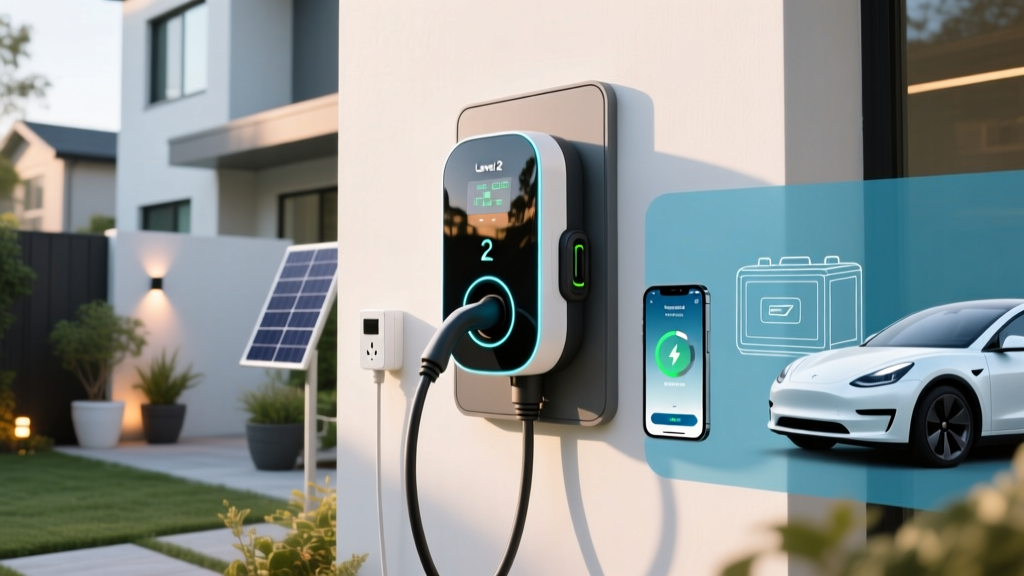
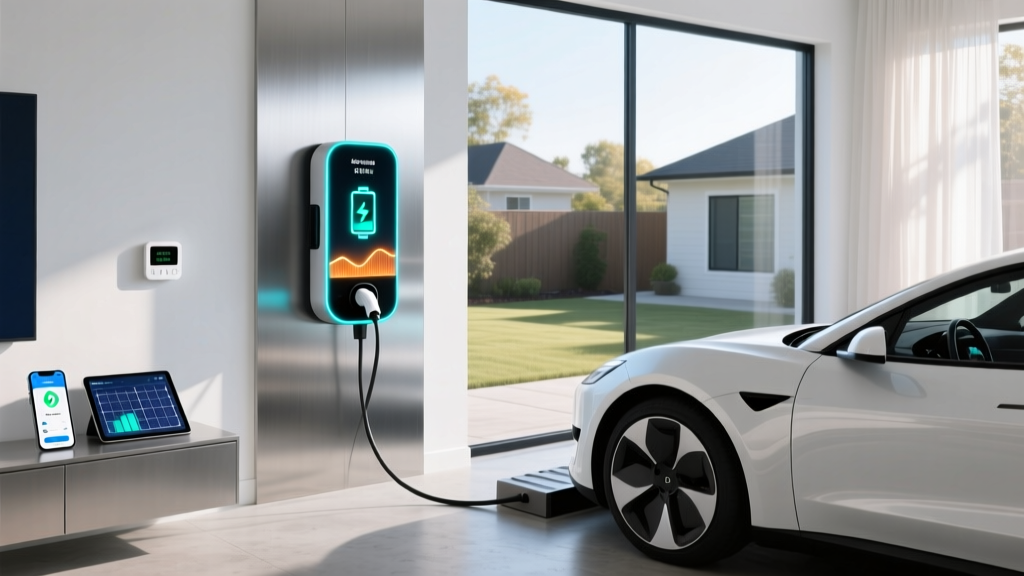
The hardware hanging on your garage wall is only half the equation. Modern Level 2 chargers rely on EV charging software to schedule off-peak sessions, balance solar production, monitor energy use in real time, and push firmware updates that improve charge curves and safety protocols. A charger without competent software is essentially a dumb outlet with a cable — it delivers electrons but can't optimize when, how, or at what cost those electrons flow into your battery.
In 2026, the gap between basic and software-rich chargers has widened. Smart chargers integrate with utility demand-response programs (earning you rebates), communicate with your vehicle's preconditioning system, and provide detailed session logs for tax or fleet-tracking purposes. This guide breaks down the full charging ecosystem — hardware, software, electrical requirements, connectors, and real costs — so you can spec a home setup that actually matches your vehicle and utility rate plan.
Charging Levels Explained: kW, Miles per Hour, and Real-World Times
Before evaluating chargers, you need to understand the three charging tiers and what they actually deliver. Note the critical distinction: kW (kilowatts) measures power — the rate of energy delivery — while kWh (kilowatt-hours) measures energy — the total capacity of your battery. A 48 kW charger delivers energy 6× faster than an 8 kW unit, all else equal.
| Level | Voltage | Power (kW) | Miles of Range Added per Hour | Typical Use Case |
|---|---|---|---|---|
| Level 1 | 120V AC | 1.0–1.9 kW | 3–5 mi/hr | Overnight top-ups, PHEVs, emergency backup |
| Level 2 | 240V AC | 7.2–19.2 kW | 25–65 mi/hr | Daily home charging, workplace, destinations |
| DC Fast (Level 3) | 400–800V DC | 50–350 kW | 180–1,200+ mi/hr | Road trips, highway corridors, fleet depots |
Real-world charging time examples (10–80% SoC):
- 75 kWh battery (e.g., Tesla Model Y, Ford Mustang Mach-E Extended Range): ~8–10 hours on a 9.6 kW Level 2; ~25–35 minutes on a 150 kW DC fast charger (accounting for taper above 80%).
- 100 kWh battery (e.g., Rivian R1S Dual-Motor, GMC Sierra EV): ~11–13 hours on 9.6 kW Level 2; ~30–45 minutes on a 200+ kW DC fast charger.
- 18 kWh PHEV battery (e.g., Toyota RAV4 Prime): ~2.5 hours on a standard 120V outlet; ~1 hour on a 7.2 kW Level 2.
DC fast charging speeds are not linear. Most EVs accept peak kW only between roughly 10–50% SoC, then taper significantly. A "250 kW capable" vehicle may average only 130–150 kW across a full 10–80% session. EV charging software on smart home chargers can't control DC taper (that's the car's BMS), but it does optimize Level 2 sessions for efficiency and cost.
Home Charger Installation: Electrical Requirements, Panel Upgrades, and True Costs
Installing a Level 2 home charger involves more than mounting a box and plugging in. Your home's electrical panel must support the added load, and most jurisdictions require a permit and inspection. Here's what you're actually looking at.
Electrical requirements for a typical 48-amp Level 2 charger:
- Circuit: Dedicated 60-amp breaker (NEC requires chargers to draw no more than 80% of circuit capacity, so a 48A charger needs a 60A circuit).
- Voltage: 240V, single-phase — the same as your electric dryer or oven.
- Wire gauge: 6 AWG copper (or 4 AWG aluminum) for runs up to ~50 feet; thicker wire for longer runs to prevent voltage drop.
- GFCI protection: NEC 2020 and later require GFCI protection for EV charging outlets; hardwired units may have GFCI built into the charger itself.
- Outdoor rating: If mounted outside, the charger must carry a NEMA 4 or NEMA 4X rating for weather resistance.
Panel Upgrade Reality
Most homes built after 2000 have 200-amp electrical service, which typically supports a 48A EV charger alongside existing loads. However, older homes with 100-amp or 150-amp panels often lack the headroom. A licensed electrician will perform a load calculation (per NEC Article 220) to determine available capacity. If your panel is maxed out, a service upgrade to 200A costs between $1,500 and $3,500 depending on your utility's connection fees and local labor rates.
An increasingly popular alternative: smart load-management software — offered by chargers like the Emporia Vue with EV charger and the Enel X JuiceBox with smart-panel integration — that dynamically throttles charging amperage when other household loads spike. This can avoid a panel upgrade entirely in marginal cases.
| Component | Cost Range | Notes |
|---|---|---|
| Level 2 Charger (hardware) | $350 – $750 | Smart/Wi-Fi-enabled units with EV charging software |
| Electrician labor (standard install) | $300 – $800 | Assumes panel is nearby, short wire run |
| Electrical permit | $50 – $200 | Varies by municipality |
| Panel upgrade (if needed) | $1,500 – $3,500 | 100A → 200A service upgrade |
| Long wire run / conduit | $200 – $1,200 | If charger is far from panel, trenching required |
| Total (no panel upgrade) | $700 – $1,750 | Most common scenario for modern homes |
| Total (with panel upgrade) | $2,200 – $5,450 | Older homes, high-load households |
The IRS §30D clean vehicle credit does not cover home charger installation directly, but the separate §30C Alternative Fuel Vehicle Refueling Property Credit provides up to $1,000 for residential charging equipment installed in eligible census tracts. Check IRS.gov §30C for current eligibility maps and income requirements.
Connector Compatibility: NACS, CCS1, and CHAdeMO in 2026
The connector landscape has consolidated significantly since Ford, GM, Rivian, and most major automakers adopted the North American Charging Standard (NACS) — originally Tesla's proprietary connector — starting in 2024–2025. Here's where things stand for 2026 model-year vehicles.
| Connector | Brands Using It (Native) | Adapter Needed For |
|---|---|---|
| NACS (J3400) | Tesla, Ford, GM, Rivian, Volvo, Polestar, Mercedes-Benz, Fisker, Lucid (2025+), Honda (2026+) | CCS1 public chargers (most OEMs include or sell adapter) |
| CCS1 | Hyundai, Kia, BMW, Volkswagen, Stellantis/Chrysler, Subaru (some 2025 carry-over models) | Tesla Superchargers (CCS→NACS adapter, ~$200–$250) |
| CHAdeMO | Nissan Leaf (legacy), Mitsubishi Outlander PHEV (legacy) | Limited DC fast network; plan for CCS/NACS adapter or replacement vehicle |
For home Level 2 charging: Nearly all Level 2 chargers sold in 2026 ship with a NACS connector or include a J1772 adapter (the previous universal Level 2 standard). If your EV has a CCS1 port, you'll need a J1772-to-CCS adapter for some older chargers, but most new units now offer NACS-native cables with J1772 adapters included. The key point: Level 2 home charging is universally compatible with the right adapter, regardless of your vehicle's DC fast-charge port.
Cost to Charge: Home vs. Public vs. DC Fast — Per Mile Compared to Gas
The economics of EV charging depend heavily on where and when you plug in. EV charging software plays a direct role here by enabling scheduled charging during off-peak utility windows when electricity rates drop to $0.05–$0.10/kWh.
| Scenario | Rate ($/kWh) | Cost per 300-Mile Fill | Cost per Mile |
|---|---|---|---|
| Home, off-peak (utility TOU plan) | $0.07–$0.12 | $6.30–$10.80 | $0.021–$0.036 |
| Home, standard rate (no TOU) | $0.13–$0.18 | $11.70–$16.20 | $0.039–$0.054 |
| Public Level 2 (ChargePoint, EVgo L2) | $0.20–$0.35 | $18.00–$31.50 | $0.060–$0.105 |
| DC Fast Charging (Electrify America, Tesla Supercharger) | $0.32–$0.56 | $28.80–$50.40 | $0.096–$0.168 |
| Gasoline (28 MPG combined, $3.40/gal) | — | $36.43 | $0.121 |
Assumptions: EV efficiency of 3.0 mi/kWh (~100 MPGe combined), which aligns with vehicles like the EPA-rated Hyundai Ioniq 6 and Tesla Model 3 Highland. A 300-mile fill requires approximately 90–100 kWh from the grid (accounting for ~10% charging losses).
The takeaway: home off-peak charging costs roughly 70–80% less per mile than gasoline. Even DC fast charging is competitive with gas on a per-mile basis in most states, though it's not cheaper. EV charging software that automates off-peak scheduling is the single highest-leverage feature for minimizing your cost per mile.
Top Smart Chargers with Advanced EV Charging Software (2026)
Here are five chargers that pair robust hardware with genuinely useful EV charging software — covering scheduling, energy monitoring, utility integration, and load management.
ChargePoint Home Flex
- Power output: Up to 12 kW (50A) on a 60A circuit; configurable down to 16A for lower-capacity panels
- Connector: NACS (2025+ models); J1772 adapter included
- Cable length: 23 feet
- Software features: ChargePoint app with scheduled charging, session history, energy-cost tracking, Alexa/Google Home integration, utility demand-response enrollment
- Price: ~$599 (charger only)
Emporia Level 2 EV Charger
- Power output: Up to 11.5 kW (48A) on a 60A circuit
- Connector: NACS native; J1772 adapter included
- Cable length: 24 feet
- Software features: Deep integration with Emporia Vue whole-home energy monitor, solar-aware charging (charges only when excess solar is available), real-time per-circuit energy tracking, TOU scheduling
- Price: ~$399
Wallbox Pulsar Plus
- Power output: Up to 11.5 kW (48A)
- Connector: NACS (2025+ revision); J1772 included
- Cable length: 25 feet
- Software features: myWallbox app with Power Sharing (balances two chargers on one circuit), Eco-Smart mode for solar integration, scheduled charging, session export for fleet/business use
- Price: ~$549
Tesla Wall Connector (Gen 4)
- Power output: Up to 11.5 kW (48A)
- Connector: NACS native; J1772 adapter sold separately
- Cable length: 24 feet
- Software features: Wi-Fi firmware updates, power-sharing across multiple Wall Connectors, integration with Tesla vehicle app for charge scheduling, access control (restrict who can use your charger)
- Price: ~$475
Enel X JuiceBox 48
- Power output: Up to 11.5 kW (48A)
- Connector: NACS (new 2025+ SKU); J1772 adapter available
- Cable length: 25 feet
- Software features: JuiceNet app with smart-grid integration, utility demand-response program enrollment (earn rebates from participating utilities), charging analytics, multi-vehicle scheduling
- Price: ~$499
Safety, Code Compliance, and What Your Electrician Will Check
The National Electrical Code (NEC) treats EV chargers as continuous loads — meaning they can run for 3+ hours — which triggers specific requirements:
- Dedicated circuit: Your Level 2 charger must have its own breaker, not shared with other outlets or appliances.
- 80% rule: A charger rated at 48A must be on a 60A breaker (48 ÷ 0.8 = 60). Never install a 48A charger on a 50A circuit.
- GFCI protection: Required for receptacle-installed chargers (NEMA 14-50 outlet). Hardwired chargers often include internal GFCI, which may satisfy code — confirm with your local inspector.
- Outdoor installation: Must use a NEMA 4X-rated enclosure and an in-use cover if using a receptacle. Hardwired outdoor-rated chargers (most models above carry this rating) simplify compliance.
- Permit and inspection: Nearly all jurisdictions require an electrical permit for a new 240V circuit. The inspector will verify wire gauge, breaker sizing, grounding, and GFCI compliance. Permit fees typically run $50–$200.
Do not skip the permit. Unpermitted electrical work can void your homeowner's insurance in the event of a fire and will create issues during a home sale. A licensed electrician will pull the permit on your behalf as part of the installation.
Frequently Asked Questions
How much does it cost to install a home EV charger?
A standard Level 2 installation with a nearby panel and short wire run typically costs $700–$1,750 total (charger + electrician + permit). If your home needs a 200A panel upgrade, expect $2,200–$5,450. The IRS §30C credit may offset up to $1,000 of equipment and installation costs in eligible areas.
How fast will each charging level add range?
Level 1 (120V) adds roughly 3–5 miles per hour. Level 2 (240V) adds 25–65 miles per hour depending on amperage. DC fast charging can add 180–1,200+ miles per hour at peak power, though real sessions average lower due to taper above 80% SoC.
Which connector/charger is compatible with my EV?
For 2026 models, most new EVs use NACS (Tesla, Ford, GM, Rivian, Volvo, Honda, and others). Hyundai, Kia, BMW, and VW still use CCS1 on many models. For home Level 2 charging, any modern smart charger with the correct connector or adapter will work. For DC fast charging, confirm your vehicle's port type and whether you need an adapter for Tesla Superchargers or Electrify America stations.
How much does charging cost per mile vs gas?
Home off-peak charging averages $0.02–$0.04 per mile, compared to $0.12/mile for a 28 MPG gas vehicle at $3.40/gallon. That's roughly $1,000–$1,500 in annual fuel savings for a driver covering 12,000 miles/year. Public DC fast charging at $0.35–$0.50/kWh costs $0.10–$0.17/mile — competitive with gas but not cheaper.
What electrical upgrades might I need?
If your home has a 200A panel with available capacity (confirmed by a load calculation), you likely need only a new 60A breaker and a wire run to the charger location. Homes with 100A or 150A service, or those already running high-load appliances (electric heat, dual ovens, hot tubs), may require a panel upgrade to 200A — a $1,500–$3,500 job. Smart chargers with dynamic load management can sometimes avoid this by throttling charge rate when household demand peaks.
Does EV charging software really save money?
Yes, if you're on a time-of-use (TOU) utility plan. Scheduling charges during off-peak hours (typically 10 PM – 6 AM) can cut your per-kWh cost by 40–60% compared to peak rates. Over a year of daily charging, that translates to $200–$500 in savings depending on your utility's rate spread. Some utilities also offer demand-response rebates of $50–$200/year for enrolling your smart charger in load-balancing programs.