Why VW ID.4 Owners Are Searching for a NACS Adapter
The Volkswagen ID.4 ships with a CCS1 (Combined Charging System) port, which works fine at Electrify America, EVgo, and ChargePoint DC fast stations. But the charging landscape shifted dramatically when Ford, GM, Rivian, and eventually Volkswagen committed to adopting the North American Charging Standard (NACS) — the connector Tesla designed and opened to the industry. As of 2026, Tesla's Supercharger network includes over 25,000 stalls in North America, many now equipped with the "Magic Dock" CCS adapter built into the stall, while other networks are adding NACS connectors alongside CCS.
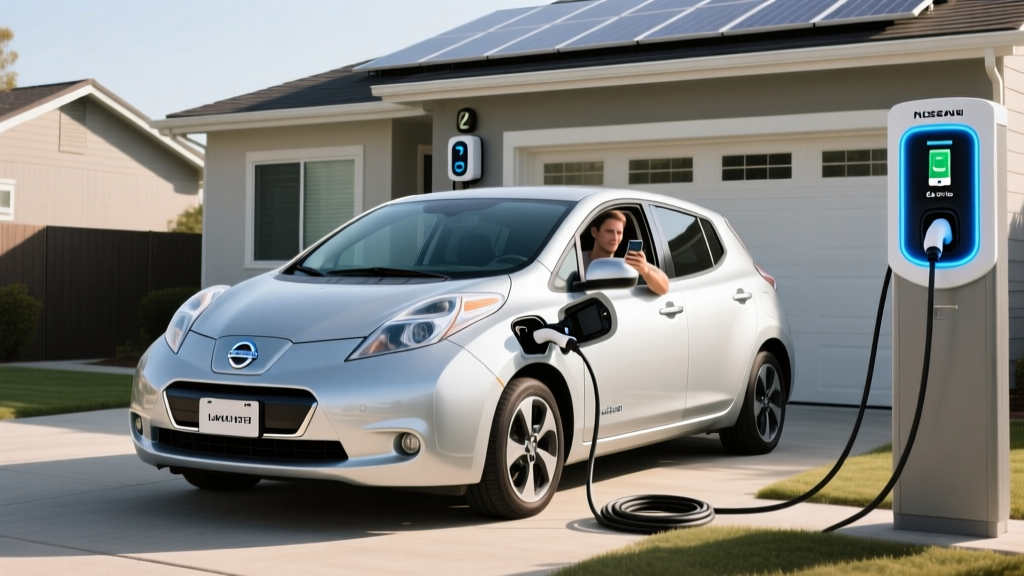
If you own a 2021–2026 VW ID.4, you have a CCS1 inlet. That means you can already use Magic Dock-equipped Superchargers without any adapter. But for Supercharger stalls that are NACS-only (which is increasingly common at newer V4 deployments), you need a NACS-to-CCS1 adapter — or you need to wait for VW's native NACS port, expected on the refreshed ID.4 lineup.
This guide covers exactly how the VW ID.4 NACS adapter situation works, what your charging options are at every level, what home installation really costs, and which equipment we recommend.
Understanding Charging Levels: kW, kWh, and Miles Per Hour
Before we get into adapters, let's nail down the single most important distinction in EV charging: kW (kilowatts) measures power — how fast energy flows. kWh (kilowatt-hours) measures energy — the total amount stored in your battery. Confusing these is like confusing gallons-per-minute with gallons in a tank. Your ID.4's battery holds roughly 77 kWh of usable energy (82 kWh gross for the 2024–2026 models). The charger's kW rating determines how quickly you refill that battery.
| Level | Voltage / Amperage | Max Power (kW) | Miles of Range Added Per Hour | Typical Use Case |
|---|---|---|---|---|
| Level 1 | 120V / 12A | ~1.4 kW | ~3–4 mi/hr | Emergency / overnight trickle |
| Level 2 | 240V / 32–48A | 7.7–11.5 kW | ~22–33 mi/hr | Home daily charging |
| DC Fast Charge | 400V DC | Up to 170 kW (peak) | ~180+ mi in 30 min | Road trips, quick top-ups |
The ID.4's onboard charger maxes out at 11.5 kW on Level 2 (240V, 48A). On DC fast charging, VW rates the ID.4 at a peak of 170 kW, though real-world sustained rates depend heavily on battery temperature and state of charge. Expect the charge curve to taper significantly above 80% SoC — a 10–80% session takes roughly 28–30 minutes at a 150+ kW stall, but going from 80–100% can add another 20 minutes.
VW ID.4 NACS Adapter: What Works and What Doesn't
Here's the current state of NACS compatibility for CCS1-equipped vehicles like the ID.4:
| Connector Type | Native Compatibility | Adapter Needed? | Network Examples |
|---|---|---|---|
| CCS1 | Yes — native port | No | Electrify America, EVgo, ChargePoint, some Superchargers (Magic Dock) |
| NACS (Tesla) | No | Yes — NACS-to-CCS1 adapter required | Tesla Supercharger (NACS-only stalls) |
| CHAdeMO | No | Not available (no safe adapter exists) | Largely deprecated in North America |
| J1772 (Level 2) | Yes — J1772 is the AC portion of CCS1 | No | All public Level 2 stations |
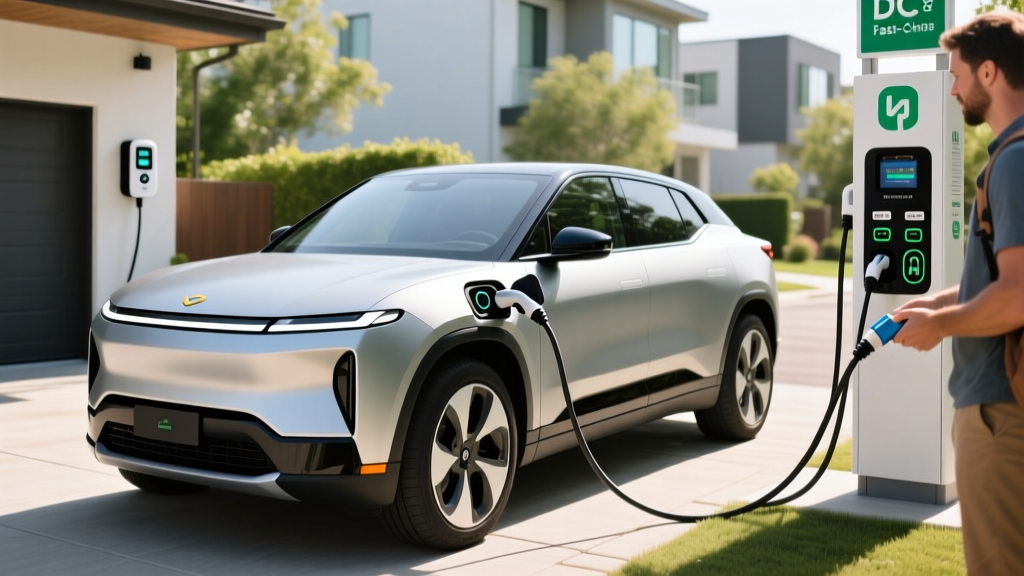
Tesla Magic Dock: Tesla has retrofitted select Supercharger stalls with a built-in CCS1 adapter called Magic Dock. At these stalls, your ID.4 plugs in directly — no adapter required. You initiate the session through the Tesla app after linking your VW's VIN. However, Magic Dock is not universal; many Supercharger stations, especially newer V4 deployments, are NACS-only.
Aftermarket NACS-to-CCS1 adapters: Several companies sell adapters that convert your CCS1 inlet to accept a NACS plug. When shopping, look for adapters rated for the full DC fast-charge current your vehicle can accept. A quality adapter should handle at least 200 kW DC and be UL-listed or equivalent. Prices typically range from $150–$300. Key brands include Lectron, A2Z, and Tesla's own CCS adapter (which is actually NACS-to-CCS1 for non-Tesla vehicles accessing Superchargers).
VW's official adapter: Volkswagen has announced that CCS1-to-NACS adapters will be available through VW dealerships for ID.4 owners. Check with your local dealer for availability and pricing, as rollout timing varies by region.
Home Charger Installation: Costs, Electrical Requirements, and Gotchas
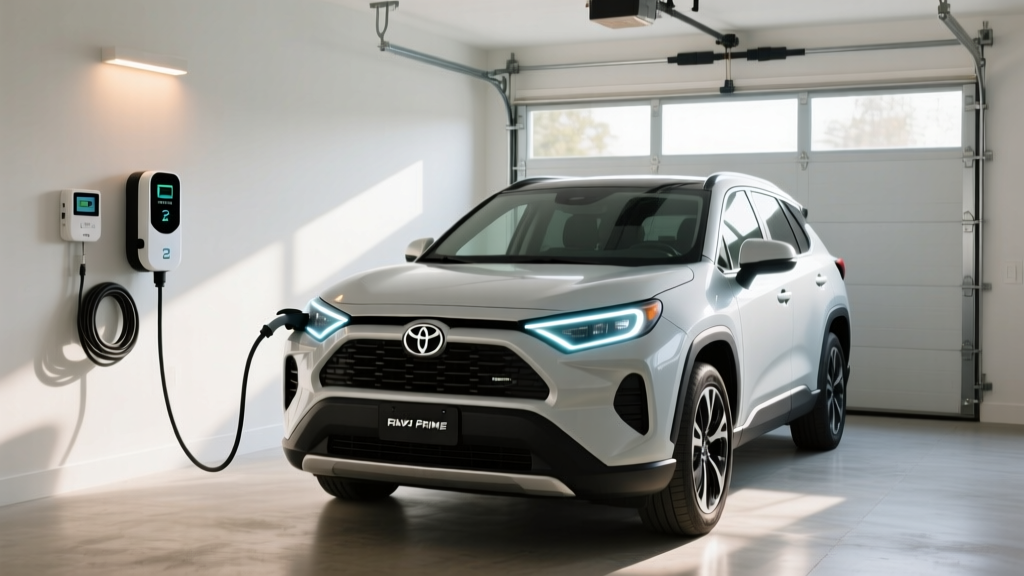
Home Level 2 charging is where most ID.4 owners will do 80–90% of their charging. Here's what a proper installation involves and what it actually costs.
Electrical Requirements for VW ID.4 Home Charging
To get the ID.4's full 11.5 kW Level 2 rate, you need a 240V circuit rated at 60 amps (the charger draws a continuous 48A, and the National Electrical Code requires circuits to be rated at 125% of continuous load — so 48 × 1.25 = 60A). If your home's electrical panel has spare capacity, a licensed electrician can run a dedicated 60A circuit with 6 AWG copper wire (or 4 AWG aluminum) from your panel to the charger location.
If you're okay with a slower 7.7 kW charge rate (32A draw), a 40A circuit with 8 AWG wire works — this still adds roughly 22 miles of range per hour, which is plenty for overnight charging on most days.
Panel Upgrade: The Hidden Cost
Many homes built before 2000 have 100A or 150A main service panels. If your panel is already near capacity (running electric range, dryer, HVAC, water heater), adding a 60A EV circuit may require a panel upgrade to 200A — or the installation of a smart load-management device like the Emporia Load Management Center or Span smart panel, which dynamically shares capacity between circuits.
| Component | Cost Range | Notes |
|---|---|---|
| Level 2 Charger (hardware) | $350–$700 | Smart Wi-Fi chargers, 32–48A |
| Electrical permit | $50–$200 | Varies by municipality |
| Electrician labor (simple install) | $500–$1,500 | Panel within 20 ft of garage, no upgrades |
| Electrician labor (complex run) | $1,500–$3,000 | Long wire runs, conduit, trenching |
| Panel upgrade (if needed) | $2,000–$5,000 | 100A → 200A service upgrade |
| Total (simple install) | $900–$2,400 | Most homes with adequate panel capacity |
| Total (with panel upgrade) | $2,900–$8,900 | Older homes needing service upgrade |
Always hire a licensed electrician and pull a permit. Unpermitted EV charger installations can void home insurance claims and create code violations that surface during a home sale. Per the NEC, outdoor installations require a GFCI breaker, and the charger itself should carry a NEMA 4 (weatherproof) rating if mounted outside.
Check IRS.gov for the current §30D and §25E tax credit rules — the Alternative Fuel Vehicle Refueling Property Credit (§30C) may cover up to 30% of home charger installation costs (max $1,000) if you live in an eligible census tract. Eligibility depends on income limits and location; consult a tax professional.
Equipment Recommendations: Level 2 Chargers for the ID.4
These chargers pair well with the VW ID.4's 11.5 kW onboard charger and offer the reliability and smart features most owners need.
Emporia Vue Level 2 Charger
- Power: 48A / 11.5 kW (max for ID.4)
- Connector: J1772 (native for ID.4 AC charging)
- Cable length: 24 ft
- Smart features: Wi-Fi, energy monitoring, solar integration, scheduling
- Price: ~$399
- Best for: Budget-conscious owners who want full power and energy tracking
ChargePoint Home Flex
- Power: Up to 50A / 12 kW (configurable 16–50A)
- Connector: J1772
- Cable length: 23 ft
- Smart features: Wi-Fi, Alexa integration, ChargePoint app, flexible amperage
- Price: ~$549
- Best for: Owners who want amperage flexibility for different panel capacities
Tesla Wall Connector
- Power: 48A / 11.5 kW
- Connector: NACS (requires J1772 adapter for ID.4, sold separately ~$50)
- Cable length: 24 ft
- Smart features: Wi-Fi, OTA updates, Power-Share between two units
- Price: ~$420 + adapter cost
- Best for: Multi-EV households with a Tesla and an ID.4
All three require a dedicated 60A circuit for maximum output. If your panel can only support a 40A circuit, the ChargePoint Home Flex is the best pick because you can set it to 32A via the app without changing hardware.
Charging Cost Per Mile: ID.4 vs. Gas-Powered SUV
One of the strongest arguments for the ID.4 is fuel-cost savings, but the math depends heavily on where and when you charge.
| Scenario | Cost per kWh | ID.4 Cost/Mile | Gas SUV (25 MPG avg) Cost/Mile | Annual Savings (12,000 mi) |
|---|---|---|---|---|
| Home off-peak (utility rate) | $0.08–$0.12 | $0.024–$0.036 | $0.132 | $1,150–$1,300 |
| Home standard rate | $0.15–$0.20 | $0.045–$0.060 | $0.132 | $860–$1,050 |
| Public Level 2 | $0.25–$0.40 | $0.075–$0.120 | $0.132 | $140–$680 |
| DC Fast Charging | $0.35–$0.55 | $0.105–$0.165 | $0.132 | -$400 to +$320 |
Key takeaway: The ID.4's efficiency is roughly 3.0–3.3 kWh per mile (or about 104 MPGe combined per the EPA). If you charge primarily at home on off-peak rates, your fuel cost drops to roughly $0.03/mile — about a quarter of what a 25 MPG gas SUV costs. But if you rely exclusively on DC fast charging at $0.45+/kWh, you could actually spend more per mile than gas. Home charging access is the single biggest variable in EV ownership economics.
VW also includes three years of complimentary Electrify America charging (with kWh caps that vary by model year) on new ID.4 purchases, which can offset road-trip charging costs in the early years of ownership.
DC Fast Charging the ID.4: What to Expect on the Road
The ID.4's 400V architecture and 170 kW peak DC charge rate put it in the middle of the pack — not as fast as an 800V Hyundai Ioniq 5 (which peaks at 240 kW), but competitive with the Ford Mustang Mach-E and Nissan Ariya.
Here's what real-world DC fast charging looks like for the ID.4 with its ~77 kWh usable battery:
- 10–80% at a 150+ kW stall: ~28–30 minutes (averaging ~100–110 kW sustained)
- 10–80% at a 50 kW stall: ~65–70 minutes
- 80–100% taper: Adds 15–25 additional minutes; avoid unless necessary
The charge curve matters: the ID.4 sustains roughly 130–150 kW between 10–40% SoC, then gradually tapers to 80–90 kW by 60%, and drops further to 50–60 kW by 80%. This is normal for NMC lithium-ion chemistry — charging speed is not constant. Preconditioning the battery (navigating to a charging station in the ID.4's infotainment system triggers thermal prep) can significantly improve cold-weather charge speeds.
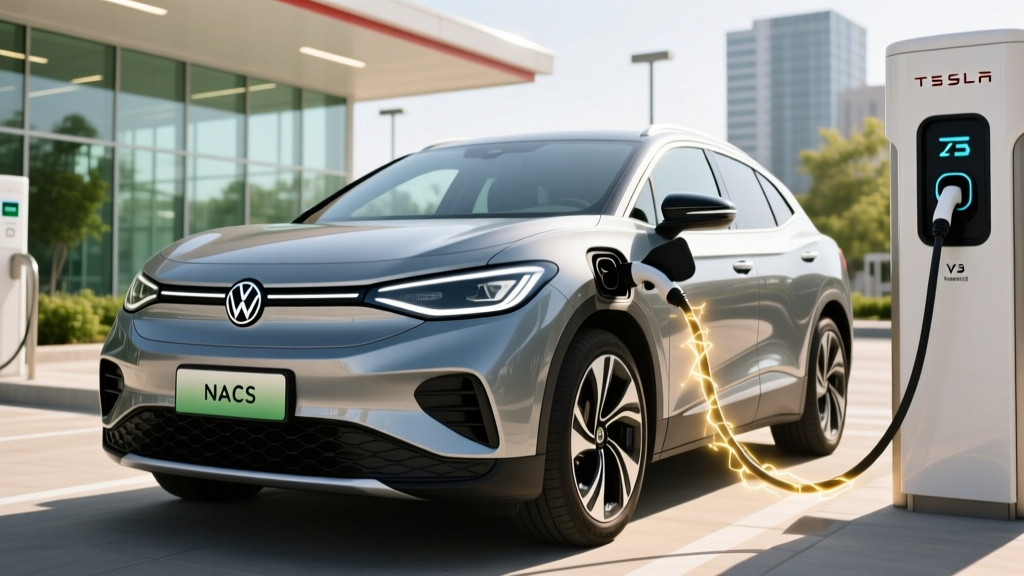
When using a NACS adapter at a Tesla Supercharger, the ID.4 will charge at whatever the stall and adapter support. V3 Superchargers (250 kW NACS) will be limited by the ID.4's 170 kW ceiling and the adapter's rating. Expect similar 10–80% times as CCS1 stations, assuming the adapter is rated for the full power.
Safety, Code, and Best Practices
A few critical safety considerations for ID.4 charging at home and on the road:
- Dedicated circuit: Your Level 2 charger must be on its own dedicated breaker — never share a circuit with other heavy loads.
- GFCI protection: Required by NEC for outdoor receptacles and recommended for all EV charger installations.
- Outdoor rating: If your charger is mounted outside, it must be rated NEMA 4 or higher to resist rain, dust, and ice.
- Cable management: Use a wall-mounted holster to keep the cable off the ground and prevent tripping hazards or water immersion.
- Adapter inspection: Periodically inspect your NACS-to-CCS1 adapter for signs of heat damage, discoloration, or loose pins — especially after high-power DC sessions in hot weather.
- Do not use extension cords: Never use a household extension cord between your charger and the vehicle. If you need more reach, buy a longer J1772 cable (up to 25 ft is common) or relocate the charger.
Frequently Asked Questions
How much does it cost to install a home EV charger for my VW ID.4?
A straightforward Level 2 installation (60A circuit, short wire run, adequate panel capacity) typically costs $900–$2,400 including the charger hardware, electrician labor, and permit. If your home needs a panel upgrade from 100A to 200A service, total costs can range from $2,900 to $8,900. Always get at least two quotes from licensed electricians and verify they pull the required permit.
How fast will each charging level add range to my ID.4?
Level 1 (120V) adds roughly 3–4 miles per hour — enough for a slow overnight trickle but impractical as a primary method. Level 2 (240V at 48A) adds approximately 28–33 miles per hour, fully replenishing the ID.4's ~77 kWh battery in about 7–8 hours. DC fast charging at 150+ kW can add up to 70% of the battery (roughly 190 miles of range) in about 28–30 minutes.
Which charger connector is compatible with my VW ID.4?
The ID.4 uses a CCS1 port for DC fast charging and a J1772 connector for Level 1 and Level 2 AC charging. To access NACS-only Tesla Supercharger stalls, you need a NACS-to-CCS1 adapter. At Superchargers equipped with Tesla's Magic Dock, no adapter is needed — the CCS1 adapter is built into the stall.
How much does charging my ID.4 cost per mile compared to gas?
At home on off-peak utility rates ($0.08–$0.12/kWh), the ID.4 costs roughly $0.03 per mile — about 75% cheaper than a 25 MPG gas SUV at $3.30/gallon. On public DC fast chargers ($0.35–$0.55/kWh), cost per mile rises to $0.10–$0.17, which can equal or exceed gasoline. Home charging access is the key to EV cost savings.
What electrical upgrades might I need for a home charger?
If your electrical panel is 200A with available breaker slots, you likely just need a dedicated 60A circuit. Homes with 100A or 150A panels that are already heavily loaded may need a panel upgrade ($2,000–$5,000) or a smart load-management system that dynamically shares power between the EV charger and other appliances. A licensed electrician can perform a load calculation to determine your exact needs.
Does using a NACS adapter void my VW ID.4 warranty?
Using a third-party adapter does not automatically void your vehicle warranty, but if an adapter causes damage to the charge port or electrical system, VW could deny a related warranty claim. Using VW's official adapter (when available) or a UL-listed adapter from a reputable manufacturer reduces this risk. Keep your adapter purchase receipt and documentation.
Will the next VW ID.4 have a native NACS port?
Volkswagen has confirmed that future EV models sold in North America will transition to NACS. The ID.4 refresh (expected for the 2027 model year) is anticipated to include a native NACS port, eliminating the need for an adapter. Current 2021–2026 ID.4 models retain CCS1.