The Volkswagen ID. Buzz is the electric microbus VW fans have waited decades for, but its boxy shape and heavy curb weight make range and charging efficiency the first questions every buyer asks. With a usable 91 kWh battery and an EPA-estimated 234 miles of range (RWD Pro S trim), the ID. Buzz is a capable family hauler — provided you understand how its charging curve behaves, what it costs to fuel, and what your home electrical panel needs to support Level 2 charging.
This guide covers the ID. Buzz's real-world range expectations, every charging scenario from a standard wall outlet to a 175 kW DC fast charger, and a detailed breakdown of what a home Level 2 installation actually costs in 2026.
ID. Buzz Battery, Range, and Efficiency at a Glance
| Spec | Value |
|---|---|
| Battery (usable) | 91 kWh, NMC chemistry |
| EPA Range (RWD Pro S) | 234 miles |
| EPA Range (AWD Pro S Plus) | 231 miles |
| EPA Efficiency | 87 MPGe combined (RWD) |
| Energy Consumption | ~39 kWh/100 mi |
| Peak DC Fast Charge Rate | 175 kW (CCS1) |
| 10–80% DC Fast Charge Time | ~26 minutes |
| Level 2 Onboard Charger | 11 kW (48A at 240V) |
| Horsepower (RWD / AWD) | 282 hp / 335 hp |
| 0–60 mph (est.) | ~7.9 sec (RWD) / ~6.5 sec (AWD) |
| Base MSRP (Pro S) | $59,995 |
| Battery/Powertrain Warranty | 8 years / 100,000 miles |
Charging Levels Explained: Speeds, kW, and Miles Per Hour
Understanding the three charging tiers is essential before you buy equipment or plan a road trip. The critical distinction: kW (kilowatts) measures power — how fast energy flows into the battery. kWh (kilowatt-hours) measures energy — the battery's total capacity. Think of kW as the width of a hose and kWh as the size of the bucket.
| Level | Voltage / Current | Max Power (kW) | Miles of Range Added Per Hour | Typical Use Case |
|---|---|---|---|---|
| Level 1 | 120V / 12A | ~1.4 kW | ~3–4 mi/hr | Emergency / overnight trickle |
| Level 2 | 240V / 48A | 11 kW | ~28–30 mi/hr | Home daily charging |
| DC Fast Charging | 400V+ DC | 175 kW (peak) | ~170+ mi/hr (at peak) | Road trips, quick top-ups |
Level 1 (a standard 120V household outlet) adds roughly 3–4 miles of range per hour to the ID. Buzz. A full 10–80% charge would take over 50 hours — impractical for anything beyond emergency trickle charging or plugging in overnight to recover 30–40 miles.
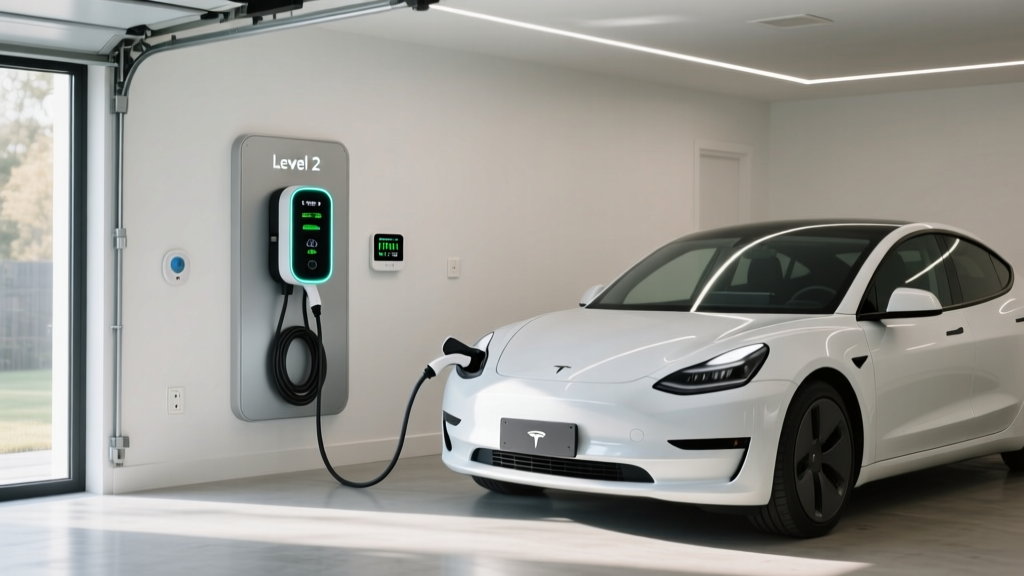
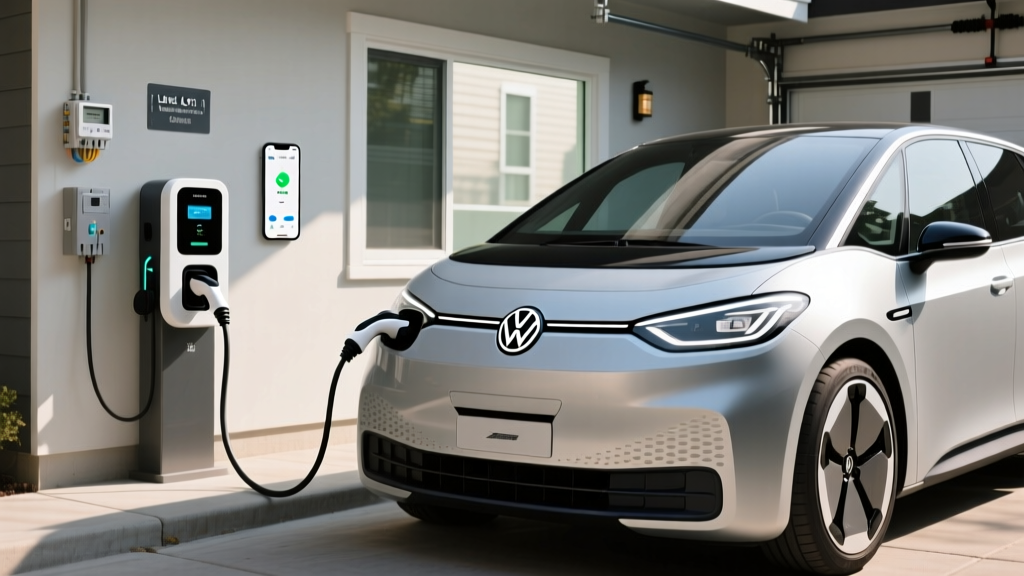
Level 2 is the backbone of EV ownership. The ID. Buzz's onboard charger accepts up to 11 kW (48 amps at 240V). At that rate, a 10–80% charge takes roughly 6 to 6.5 hours. Plug in when you get home, and the bus is fully topped up by morning. This is the setup every ID. Buzz owner should install.
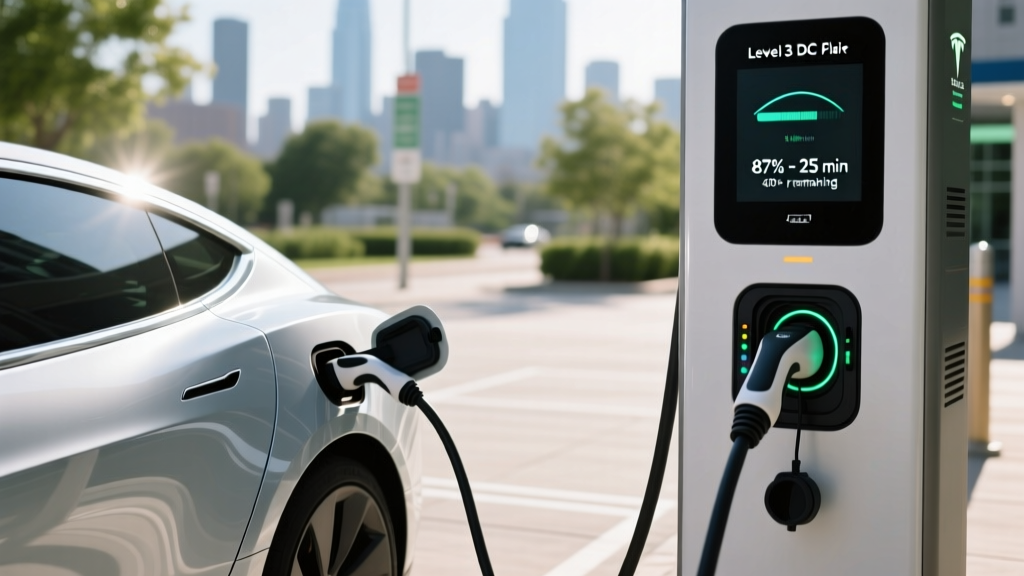
DC Fast Charging bypasses the onboard charger and feeds DC current directly to the battery. The ID. Buzz peaks at 175 kW on a CCS1 connector. VW quotes a 10–80% time of approximately 26 minutes. However, that peak rate is only sustained between roughly 10–40% state of charge. Above 60%, the charge curve tapers significantly — expect rates to drop to 50–70 kW by the time you hit 80%. This is normal battery-protection behavior for NMC chemistry, but it means the last 20% takes nearly as long as the first 50%.
How Much Does It Cost to Install a Home EV Charger?
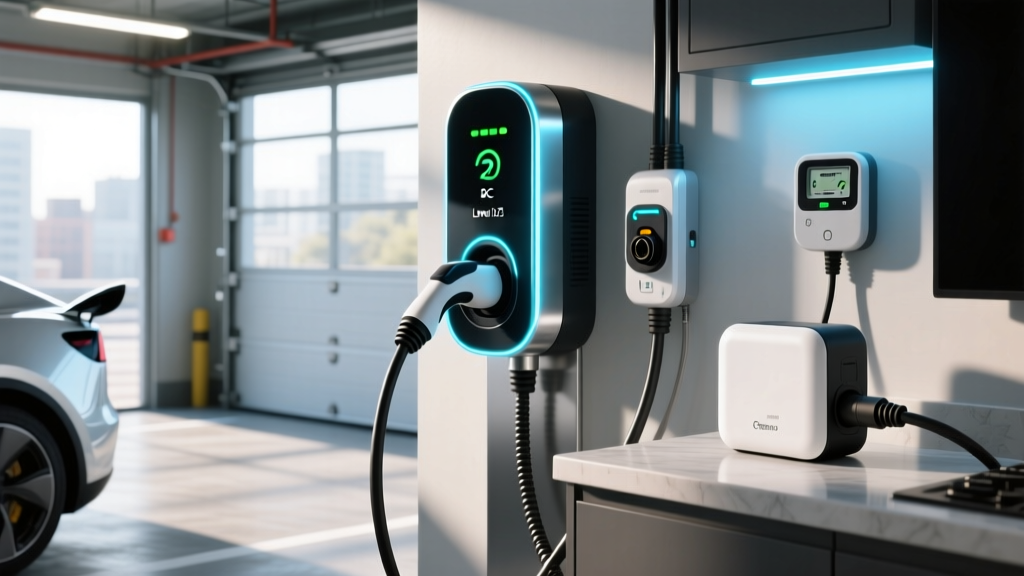
A Level 2 home charger for the ID. Buzz requires a dedicated 240V circuit, typically 60 amps (to support a 48A continuous charger load, the National Electrical Code requires the circuit to be rated 125% above continuous draw). Here's what a real installation looks like:
| Component | Typical Cost Range | Notes |
|---|---|---|
| Level 2 Charger (hardware) | $400 – $750 | Smart Wi-Fi chargers, 48A, 240V, 25ft cable |
| Electrician labor | $600 – $2,500 | Depends on run length from panel to garage/carport |
| Electrical permit | $50 – $250 | Required in most US jurisdictions |
| Panel upgrade (if needed) | $1,500 – $4,000 | Older 100A panels often need a 200A upgrade |
| Total (no panel upgrade) | $1,050 – $3,500 | Most homes with 200A service |
| Total (with panel upgrade) | $2,550 – $7,500 | Older homes with 100A or 150A service |
The panel upgrade question is the wildcard. If your home has a 200-amp electrical panel with available capacity (typically 2–4 open breaker slots), your electrician can add a 60A double-pole breaker and run 6/3 NM-B or 6 AWG THHN in conduit to a NEMA 14-60 outlet or hardwire the charger directly. Total install often lands in the $1,200–$2,500 range for a straightforward garage run under 40 feet.
If your home has a 100-amp panel — common in houses built before the 1990s — adding a 60A EV circuit may exceed the panel's safe load capacity. A licensed electrician will perform a load calculation per NEC Article 220. If the panel is maxed out, you'll need either a panel upgrade to 200A ($1,500–$4,000 depending on utility requirements and trenching) or a lower-amperage circuit. A 30A circuit (delivering 24A continuous / ~5.8 kW) still adds roughly 15 miles per hour to the ID. Buzz — enough for most overnight needs.
Some homeowners opt for a smart load-management device (such as the Emporia V2 with load management or a Tesla Wall Connector with power-sharing) that dynamically limits charger draw when other high-load appliances (dryer, oven, HVAC) are running. This can avoid a panel upgrade entirely.
Connector Compatibility: CCS1, NACS, and the ID. Buzz
The US-market VW ID. Buzz ships with a CCS1 (Combined Charging System) port. This is the standard used by most non-Tesla EVs sold in North America through 2025. However, the industry is actively transitioning to NACS (North American Charging Standard), the Tesla-designed connector now adopted by Ford, GM, Rivian, Hyundai, and others.
| Connector | Native Support? | Adapter Needed? | Network Access |
|---|---|---|---|
| CCS1 | Yes — factory port | No | Electrify America, EVgo, ChargePoint, Ionity (EU) |
| NACS (Tesla) | No | Yes — CCS-to-NACS adapter (~$200–$300) | Tesla Supercharger network (15,000+ US stalls) |
| CHAdeMO | No | Not available for ID. Buzz | Largely deprecated in US |
| J1772 (Level 2) | Yes — upper portion of CCS port | No | All public Level 2 stations |
As of 2026, Volkswagen has not announced a native NACS port for the ID. Buzz. To access Tesla Superchargers — the largest and most reliable DC fast-charging network in the US — you'll need a CCS-to-NACS adapter. VW has indicated that future models will adopt NACS, and a retrofit adapter program may become available. Check VW's official ID. Buzz page for the latest connector updates.
For Level 2 public charging (grocery stores, workplaces, parking garages), the ID. Buzz uses the J1772 connector, which is the upper portion of the CCS1 port. No adapter is needed.
Charging Cost: ID. Buzz Per-Mile vs. Gas Minivan
The ID. Buzz's ~39 kWh/100 mi efficiency makes it one of the less efficient EVs on the market — blame the bus shape and nearly 6,000-lb weight. But electricity still costs dramatically less per mile than gasoline. Here's how the math works across common charging scenarios:
| Scenario | Rate | Cost per Mile (ID. Buzz) | Cost per Mile (Gas Minivan, 22 MPG) |
|---|---|---|---|
| Home charging (off-peak utility rate) | $0.13/kWh | $0.051 | $0.159 (at $3.50/gal) |
| Home charging (high-cost utility, e.g. CA) | $0.30/kWh | $0.117 | $0.159 |
| Public Level 2 (network pricing) | $0.25/kWh | $0.098 | $0.159 |
| DC Fast Charging (EA/EVgo typical) | $0.48/kWh | $0.187 | $0.159 |
At a national average residential rate of ~$0.16/kWh (per EIA data), home-charging the ID. Buzz costs about $0.062 per mile — roughly 60% cheaper than fueling a gas minivan at $3.50/gallon and 22 MPG combined.
The crossover point is DC fast charging. At $0.48/kWh (common at Electrify America and EVgo stations without a subscription plan), the ID. Buzz actually costs slightly more per mile than a gas minivan. This is why home Level 2 charging is so important for EV economics. Road-trippers who rely exclusively on DC fast charging should budget accordingly — a 200-mile highway leg at DCFC rates costs roughly $37 in the ID. Buzz vs. $32 in a gas minivan.
Pro tip: Electrify America's Pass+ subscription ($7/month in 2026) reduces DCFC rates to approximately $0.36/kWh, bringing the per-mile cost back below gas.
Recommended Level 2 Chargers for the ID. Buzz
Since the ID. Buzz accepts up to 11 kW (48A) on Level 2, you want a charger that can deliver the full 48 amps to minimize overnight charge time. Here are three proven units:
Emporia Level 2 EV Charger
Power: 48A / 11.5 kW (240V)
Connector: J1772 (CCS-compatible)
Cable: 24 ft
Smart features: Wi-Fi, energy monitoring via Emporia app, load management, solar integration
Price: ~$399
Best for: Budget-conscious buyers who want energy data and load management to avoid panel upgrades.
ChargePoint Home Flex
Power: Up to 50A / 12 kW (configurable 16–50A)
Connector: J1772
Cable: 23 ft
Smart features: Wi-Fi, Alexa integration, scheduled charging, ChargePoint network account
Price: ~$649
Best for: Flexibility — you can dial the amperage down to match your circuit if a 60A breaker isn't feasible.
Tesla Wall Connector (with J1772 adapter)
Power: 48A / 11.5 kW (240V/60A circuit)
Connector: NACS native (J1772 adapter included for non-Tesla EVs)
Cable: 24 ft
Smart features: Wi-Fi, over-the-air updates, power-sharing with second unit
Price: ~$475
Best for: Multi-EV households with a Tesla and an ID. Buzz; future-proofs for NACS adoption.
All three chargers are UL-listed, rated for indoor and outdoor installation (NEMA 4 enclosure), and require hardwiring or a NEMA 14-60 receptacle on a dedicated 60A breaker. Hardwired installations are generally preferred — they avoid the $50–$100 cost of a 14-60 outlet and eliminate a potential failure point.
Safety, Electrical Code, and Installation Essentials
Before you order a charger, confirm these requirements with a licensed electrician:
- Dedicated circuit: The EV charger must be on its own dedicated double-pole breaker — no shared circuits with dryers, ovens, or HVAC. Per NEC 625, continuous loads (defined as running 3+ hours, which EV charging always does) must be derated to 80% of breaker capacity. A 48A charger requires a 60A breaker.
- GFCI protection: NEC 2023 and later require GFCI protection for all EV charging outlets (receptacle-based installations). Hardwired chargers are exempt from this GFCI requirement in most jurisdictions, which is another reason hardwiring is preferred.
- Outdoor rating: If your charger is mounted outside (carport, driveway wall), both the charger and any conduit fittings must carry a NEMA 3R or NEMA 4 rating for weather resistance.
- Wire gauge: A 60A circuit typically requires 6 AWG copper wire (THHN in conduit) or 4 AWG aluminum. For runs over 100 feet, your electrician may upsized to 4 AWG copper to limit voltage drop.
- Permit and inspection: Most US municipalities require an electrical permit for EV charger installation ($50–$250). The work must pass inspection before energizing. Skip the permit and you risk insurance denial if an electrical fire occurs.
Real-World Charging Times for the ID. Buzz's 91 kWh Battery
Here's what charging sessions actually look like for the ID. Buzz across common scenarios:
- Overnight Level 2 at home (10% → 100%): ~9 hours at 11 kW. Plug in at 10 PM, full by 7 AM. Most owners set a charge limit of 80–90% for daily use to preserve NMC battery longevity, reducing this to ~7 hours.
- Road-trip DC fast charge (10% → 80%): ~26 minutes at a 175+ kW station. Plan bathroom and food breaks around this window. Expect actual session time of 30–35 minutes including pull-in, authentication, and taper above 70%.
- DC fast charge to 100% (10% → 100%): ~55–60 minutes. The 80–100% taper is severe — roughly 25+ minutes for the final 20%. Only charge to 100% at a DCFC if you absolutely need the full 234 miles for the next leg.
- Public Level 2 top-up (50% → 80%): ~2.5 hours at 7.2 kW (many public L2 stations are limited to 30A/7.2 kW). Useful while shopping or at work, but won't fully replenish the battery quickly.
- Level 1 emergency (120V, 12A): ~3.5 miles per hour. A 10-hour overnight session adds ~35 miles. Fine for low-mileage days or as a backup, but not viable as a primary strategy for a 91 kWh battery.
Frequently Asked Questions
How much does it cost to install a home EV charger for the ID. Buzz?
Expect $1,050–$3,500 for a straightforward installation (Level 2 charger + electrician + permit) in a home with a 200A panel and available capacity. If your home needs a panel upgrade from 100A to 200A, add $1,500–$4,000. Get quotes from at least two licensed electricians and confirm they include permit costs.
How fast will each charging level add range to the ID. Buzz?
Level 1 (120V): ~3–4 miles per hour. Level 2 (240V, 48A): ~28–30 miles per hour. DC Fast Charging (175 kW peak): ~170+ miles per hour at peak, tapering significantly above 60% state of charge.
Which connector and charger is compatible with the ID. Buzz?
The ID. Buzz uses CCS1 for DC fast charging and J1772 for Level 2. To access Tesla Superchargers, you need a CCS-to-NACS adapter (sold separately, ~$200–$300). For home Level 2 charging, any J1772 charger rated 48A/240V will deliver the Buzz's maximum 11 kW acceptance rate.
How much does charging the ID. Buzz cost per mile compared to gas?
At the US average residential electricity rate (~$0.16/kWh), the ID. Buzz costs approximately $0.06 per mile to fuel at home — about 60% less than a 22 MPG gas minivan at $3.50/gallon ($0.16/mi). However, DC fast charging at $0.48/kWh pushes the cost to ~$0.19/mile, slightly above gas. Home charging is where EV economics win decisively.
What electrical upgrades might I need for a Level 2 charger?
The most common upgrade is a 200A panel replacement for older homes with 100A service. You'll also need a dedicated 60A double-pole breaker, 6 AWG copper wire, and an electrical permit. Homes with existing 200A service and spare breaker slots typically need no panel work — just the new circuit run from panel to charger location.
Does the ID. Buzz qualify for the federal EV tax credit?
As of 2026, the ID. Buzz's eligibility under IRS §30D depends on battery component sourcing, critical mineral requirements, buyer income caps ($150K single / $300K joint), and the vehicle's MSRP. VW has not confirmed full $7,500 credit eligibility for all trims. Check the IRS qualified vehicle list and consult a tax professional before relying on the credit in your purchase decision. The credit can be transferred to the dealer at point of sale as a purchase-price reduction if eligible.