If you own a Volkswagen ID.4, ID. Buzz, or the upcoming ID.7, the charging landscape has shifted dramatically. Volkswagen's North American models now ship with the North American Charging Standard (NACS) port, granting direct access to Tesla's Supercharger network — the largest and most reliable DC fast-charging system on the continent. But what does that mean in practice for your daily driving, road trips, and home setup? This guide breaks down every layer of the Volkswagen-Tesla Supercharger relationship, from adapter requirements and real-world charge speeds to the true cost of installing a Level 2 charger in your garage.
Volkswagen and the Tesla Supercharger Network: What Changed
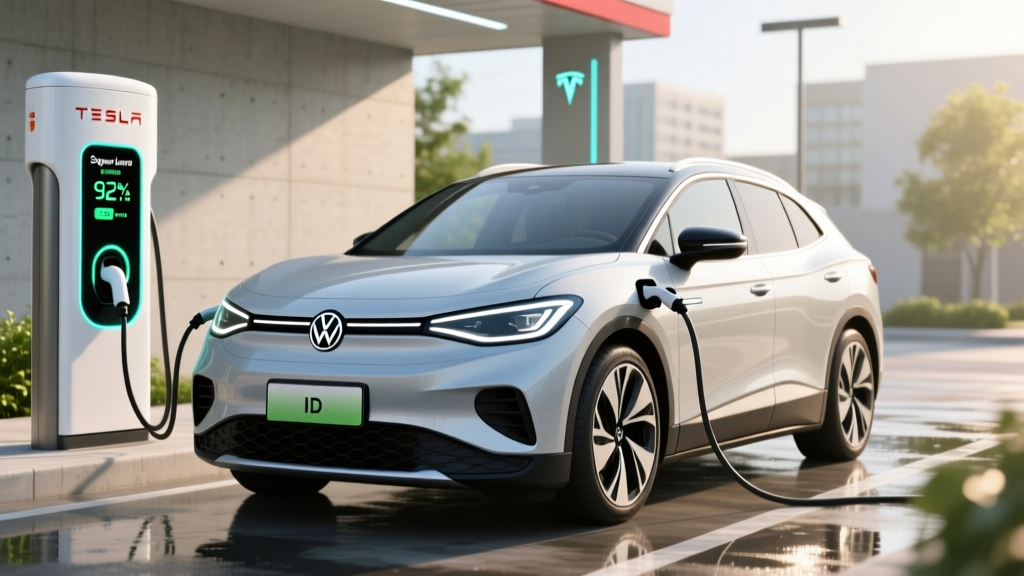
Starting with the 2025 model year, Volkswagen transitioned its North American EV lineup from the CCS1 connector to NACS. That means a 2026 VW ID.4 can plug directly into a Tesla Supercharger V3 or V4 stall without any adapter. Owners of 2021–2024 ID.4 models equipped with CCS1 ports can purchase Volkswagen's official CCS-to-NACS adapter (approximately $199) to access Superchargers that have been enabled for non-Tesla vehicles through Tesla's "Open Supercharger" program.
As of early 2026, Tesla lists over 28,000 Supercharger stalls across North America, with an increasing percentage enabled for NACS-equipped non-Tesla EVs. You can verify station compatibility through the Tesla app or your VW in-dash navigation, which now integrates Supercharger routing.
Charging Levels Explained: Speeds, Power, and Range Added
Understanding EV charging starts with distinguishing kW (kilowatts), which measures power — the rate of energy delivery — from kWh (kilowatt-hours), which measures energy capacity, the size of your battery. Think of kW as the flow rate of a hose and kWh as the size of the bucket.
| Level | Voltage / Amps | Max Power (kW) | Miles of Range Added per Hour | Typical Use Case |
|---|---|---|---|---|
| Level 1 | 120V / 12A | ~1.4 kW | 3–5 mi/hr | Overnight trickle; PHEVs; emergency top-up |
| Level 2 | 240V / 32–48A | 7.7–11.5 kW | 20–44 mi/hr | Home daily charging; workplace; hotels |
| DC Fast (Level 3) | 400–800V DC | 50–350 kW | 150–800+ mi/hr (peak) | Road trips; highway corridors; quick top-ups |
The 2026 Volkswagen ID.4 Pro S accepts up to 175 kW on a DC fast charger. At a Tesla Supercharger V3 stall (up to 250 kW available, though the ID.4 caps at 175 kW), you'll see a 10–80% charge in approximately 28–30 minutes under ideal conditions. In cold weather (below 40°F), expect that to stretch to 35–40 minutes because the battery management system limits charge rate to protect the cells until they warm up — preconditioning via the VW app before arrival helps mitigate this.
2026 VW ID.4 Pro S — Range Reality Check
EPA estimated range: 291 miles (82 kWh usable battery, NMC chemistry).
Real-world highway (70 mph, mild weather): ~250–265 miles.
Cold weather (20°F, highway): ~200–220 miles.
Source: fueleconomy.gov
Home Charging Installation: Requirements, Costs, and Panel Upgrades
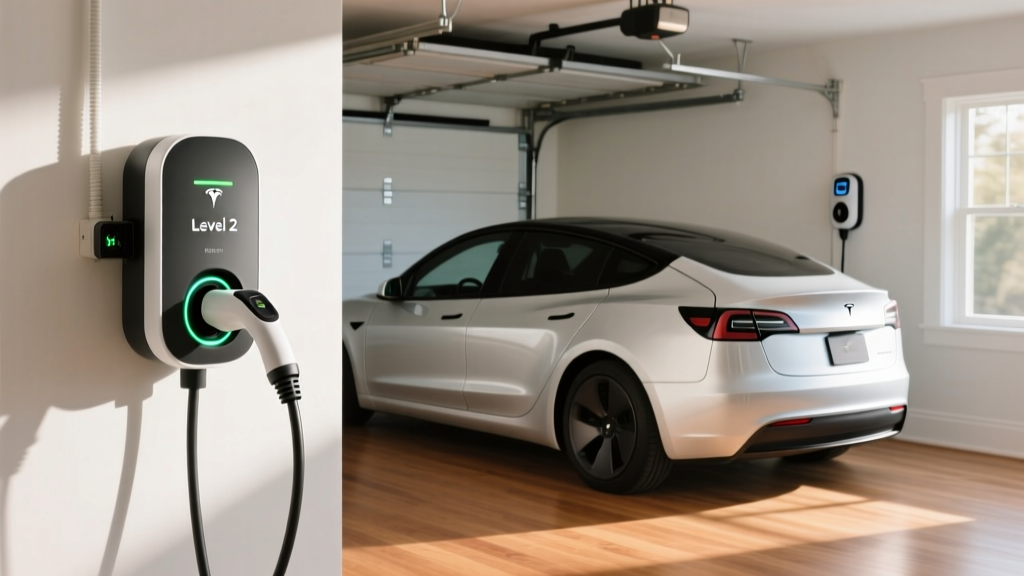
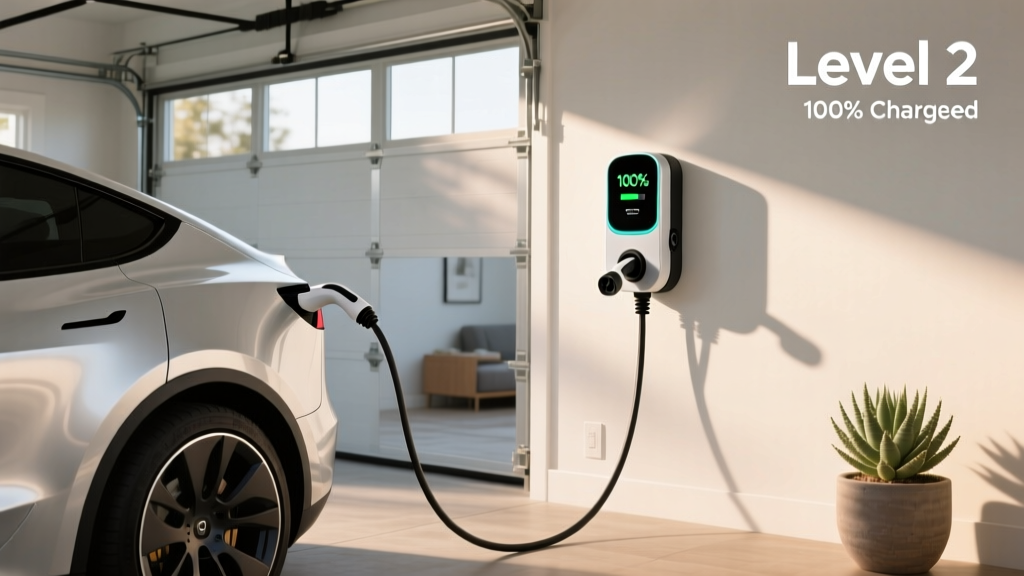
Most Volkswagen EV owners will want a Level 2 home charger for daily convenience. Here's what that involves electrically and financially.
Electrical Requirements
A Level 2 charger requires a dedicated 240V circuit. The most common configurations:
- 32A circuit (7.7 kW): Requires a 40A breaker. Sufficient for overnight charging — adds roughly 25 miles of range per hour, fully replenishing an ID.4's 82 kWh battery in about 10–11 hours.
- 48A circuit (11.5 kW): Requires a 60A breaker. Adds roughly 37 miles of range per hour, fully charging the ID.4 in about 7 hours. The ID.4's onboard charger maxes at 11 kW, so this captures the vehicle's full AC acceptance rate.
Panel Upgrade Considerations
If your home has a 100A electrical panel (common in homes built before 2000), adding a 40A or 60A dedicated circuit may require a panel upgrade to 200A. This is the single biggest variable in installation cost and can add $1,500–$3,500 to your project. Signs you may need an upgrade:
- Your panel is already near capacity (electric stove, dryer, AC, water heater all running).
- You have a fuse box rather than a breaker panel.
- An electrician's load calculation shows insufficient headroom.
| Component | Low Estimate | High Estimate | Notes |
|---|---|---|---|
| Level 2 Charger (Equipment) | $350 | $700 | Smart WiFi-enabled units; hardwired or plug-in |
| Electrician Labor (standard install) | $400 | $1,200 | Depends on run length from panel to garage |
| Permit / Inspection | $50 | $250 | Varies by municipality |
| Panel Upgrade (if needed) | $1,500 | $3,500 | 100A to 200A service upgrade |
| Total (no panel upgrade) | $800 | $2,150 | Most homes with 200A panels |
| Total (with panel upgrade) | $2,300 | $5,650 | Older homes needing service upgrade |
Always hire a licensed electrician who will pull a permit. Unpermitted electrical work can void your homeowner's insurance and create fire risk. The National Electrical Code (NEC) requires GFCI protection for outdoor receptacles and a dedicated circuit — never share a circuit with other appliances.
Connector Compatibility: NACS, CCS1, and What You Need
The connector landscape in 2026 has consolidated heavily toward NACS, but legacy vehicles and some public chargers still use CCS1. Here's where Volkswagen fits in:
| VW Model / Year | Built-In Connector | Tesla Supercharger Access | CCS Public Charger Access | Adapter Needed? |
|---|---|---|---|---|
| ID.4 (2025–2026) | NACS | Direct plug-in | NACS-to-CCS adapter required | CCS adapter (~$199–$249) |
| ID.4 (2021–2024) | CCS1 | CCS-to-NACS adapter required | Direct plug-in | NACS adapter (~$199) |
| ID. Buzz (2025–2026) | NACS | Direct plug-in | NACS-to-CCS adapter required | CCS adapter (~$199–$249) |
| ID.7 (2026, announced) | NACS (expected) | Direct plug-in (expected) | NACS-to-CCS adapter required | CCS adapter |
Key insight for road trips: If you own a 2026 NACS-equipped VW, the vast majority of new DC fast-charging installations in 2025–2026 use NACS connectors. However, older Electrify America, EVgo, and ChargePoint stations may still have CCS1 cables. Carrying both a CCS adapter and your OEM cable ensures you're never stranded.
Charging Cost Breakdown: Home vs. Public vs. Gas
One of the strongest arguments for EV ownership is fuel cost savings, but the math depends heavily on where and when you charge.
| Scenario | Rate | Cost to Add 200 Miles | Cost Per Mile |
|---|---|---|---|
| Home Level 2 (off-peak utility rate) | $0.09/kWh | $5.40 | $0.027 |
| Home Level 2 (standard utility rate) | $0.15/kWh | $9.00 | $0.045 |
| Tesla Supercharger (average) | $0.30/kWh | $18.00 | $0.090 |
| Electrify America / third-party DCFC | $0.42/kWh | $25.20 | $0.126 |
| Gas SUV (26 MPG combined, $3.40/gal) | $3.40/gal | $26.15 | $0.131 |
The ID.4 averages approximately 3.0 miles per kWh (EPA combined). At home off-peak rates, you'll spend roughly $0.03 per mile — about 77% less than the gas equivalent. Even at Tesla Supercharger pricing ($0.30/kWh average), you're still saving roughly 31% per mile versus gasoline. The savings compound: a driver covering 15,000 miles annually saves $1,000–$1,600 per year by charging primarily at home versus fueling a 26 MPG gas SUV.
Recommended Home Level 2 Chargers for Volkswagen Owners
Below are three proven Level 2 chargers well-suited to the ID.4 and ID. Buzz, selected for reliability, smart features, and NACS compatibility.
ChargePoint Home Flex (NACS)
- Power Output: Up to 11.5 kW (48A) — adjustable down to 16A for lower-capacity panels
- Connector: NACS (native), CCS adapter available
- Cable Length: 23 feet
- Smart Features: WiFi, app scheduling, utility demand-response integration, Alexa
- Price: ~$599
- Best For: Flexibility — amperage is adjustable via DIP switches, so it works with 20A through 60A circuits
Tesla Wall Connector (NACS)
- Power Output: Up to 11.5 kW (48A)
- Connector: NACS (native)
- Cable Length: 24 feet
- Smart Features: WiFi, over-the-air updates, power sharing (link up to 6 units on one circuit), load management
- Price: ~$475
- Best For: VW owners who also want seamless Supercharger-style ecosystem integration; excellent value
Emporia Level 2 EV Charger
- Power Output: Up to 11.5 kW (48A)
- Connector: NACS (2025+ models), J1772 with adapter for older versions
- Cable Length: 24 feet
- Smart Features: WiFi, app control, solar integration, energy monitoring, scheduled charging
- Price: ~$399
- Best For: Budget-conscious buyers who want energy monitoring and solar-aware charging
All three units are hardwired (no plug) for maximum amperage. If your panel has limited capacity, the ChargePoint Home Flex's adjustable amperage is the safest bet — your electrician can set it to match your available headroom.
DC Fast Charging Times: What to Expect on the Road
When using a Tesla Supercharger or other DC fast-charging network, the ID.4's 82 kWh battery (NMC chemistry) follows a typical charge curve: peak rate is sustained up to roughly 35–40% State of Charge (SoC), then tapers progressively to protect cell health.
| Charger Type | Peak Power | 10–80% Time | Miles Added in 15 Min |
|---|---|---|---|
| Tesla Supercharger V3 | 175 kW (vehicle-limited) | ~28 min | ~140 mi |
| Tesla Supercharger V4 | 175 kW (vehicle-limited) | ~28 min | ~140 mi |
| Electrify America 350 kW | 175 kW (vehicle-limited) | ~28 min | ~140 mi |
| 50 kW DCFC (older station) | 50 kW | ~75 min | ~60 mi |
Charge curve reality: You'll rarely see the full 175 kW for the entire session. Expect peak rates of 155–175 kW from 10–35% SoC, tapering to ~100 kW by 55%, and ~50 kW by 75%. This is normal battery physics — charging above 80% is dramatically slower, which is why road-trip strategy targets 10–80% hops rather than full charges.
Federal Tax Credit and Home Charger Incentives
The IRS §30D federal tax credit applies to new EV purchases (up to $7,500 if the vehicle meets battery sourcing, MSRP cap, and buyer income requirements — see IRS.gov for current 2026 eligibility rules). Separately, the Alternative Fuel Vehicle Refueling Property Credit (§30C) can cover up to 30% of home charger equipment and installation costs (max $1,000), provided you live in an eligible census tract. Many utilities also offer rebates of $200–$500 for Level 2 charger installations — check with your local provider.
Safety and Electrical Code Essentials
- Dedicated circuit: Your Level 2 charger must have its own breaker — never share with a dryer, oven, or HVAC.
- GFCI protection: Required for outdoor outlets (NEC 2023+). Hardwired installations may not require a GFCI breaker depending on local code — your electrician will confirm.
- Outdoor rating: If mounting outside, ensure the charger carries a NEMA 4 or IP55+ rating for weather resistance.
- Permit and inspection: Required in virtually all jurisdictions. Unpermitted work can create liability and insurance issues.
- Cable management: Use a holster or retractor to keep cables off the ground and prevent trip hazards.
How much does it cost to install a home EV charger?
For a standard Level 2 installation in a home with an adequate 200A electrical panel, expect $800–$2,150 total (charger unit + electrician labor + permit). If your home needs a panel upgrade from 100A to 200A, add $1,500–$3,500, bringing the total to $2,300–$5,650. Always get a load calculation from a licensed electrician before committing.
How fast will each charging level add range to my VW ID.4?
Level 1 (120V) adds roughly 3–5 miles per hour. Level 2 (240V, 48A) adds about 37 miles per hour — enough to fully recharge overnight. DC fast charging at 175 kW adds roughly 140 miles in 15 minutes, or 10–80% in about 28 minutes under ideal conditions.
Which connector does my Volkswagen EV use, and do I need an adapter?
The 2025–2026 VW ID.4 and ID. Buzz use NACS natively and plug directly into Tesla Superchargers. For CCS1 public chargers, you'll need a NACS-to-CCS adapter. Older 2021–2024 ID.4 models have CCS1 and need a CCS-to-NACS adapter (~$199) to use Superchargers.
How much does charging cost per mile compared to gas?
Charging at home on off-peak rates (~$0.09/kWh) costs about $0.03/mile in the ID.4 — roughly 77% less than a 26 MPG gas SUV at $3.40/gallon. Even Tesla Supercharger rates (~$0.30/kWh) deliver about $0.09/mile, a 31% savings versus gas.
What electrical upgrades might I need for a home charger?
If your home has a 200A panel with available capacity, you likely only need a new dedicated 40A or 60A breaker and a wire run to your garage. Homes with 100A panels, maxed-out capacity, or fuse boxes will need a service upgrade to 200A, which costs $1,500–$3,500 and typically takes 1–2 days.
Can I use a Tesla Wall Connector with my Volkswagen ID.4?
Yes. The Tesla Wall Connector uses a NACS plug, which fits the 2025–2026 ID.4 natively. It delivers up to 11.5 kW (48A) and costs around $475 — making it one of the best-value Level 2 chargers available, even for non-Tesla owners.