Volkswagen's Supercharger Access: What Changed and What It Means for You
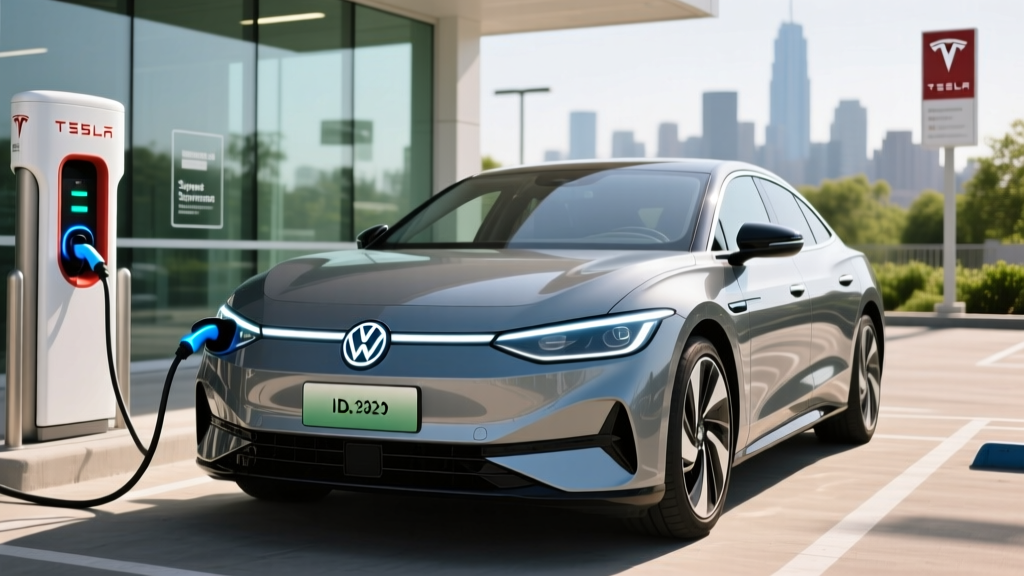
If you own or are shopping for a Volkswagen EV — the ID.4, the upcoming ID.7, or the ID.Buzz — the charging landscape has shifted dramatically in your favor. Starting in 2025, Volkswagen joined the wave of automakers adopting the North American Charging Standard (NACS), granting VW EV owners access to Tesla's Supercharger network, the most reliable and expansive DC fast-charging infrastructure in the United States. As of early 2026, that access is live and expanding, but the details matter: which connector your VW has, whether you need an adapter, what speeds you'll actually see, and how home charging fits into the picture.
This guide breaks down everything a Volkswagen EV owner or buyer needs to know about Supercharger access, home Level 2 installation, connector compatibility, and the real cost of charging an ID.4 or ID.Buzz compared to filling a gas tank.
Understanding Charging Levels: Speeds, Power, and What They Mean
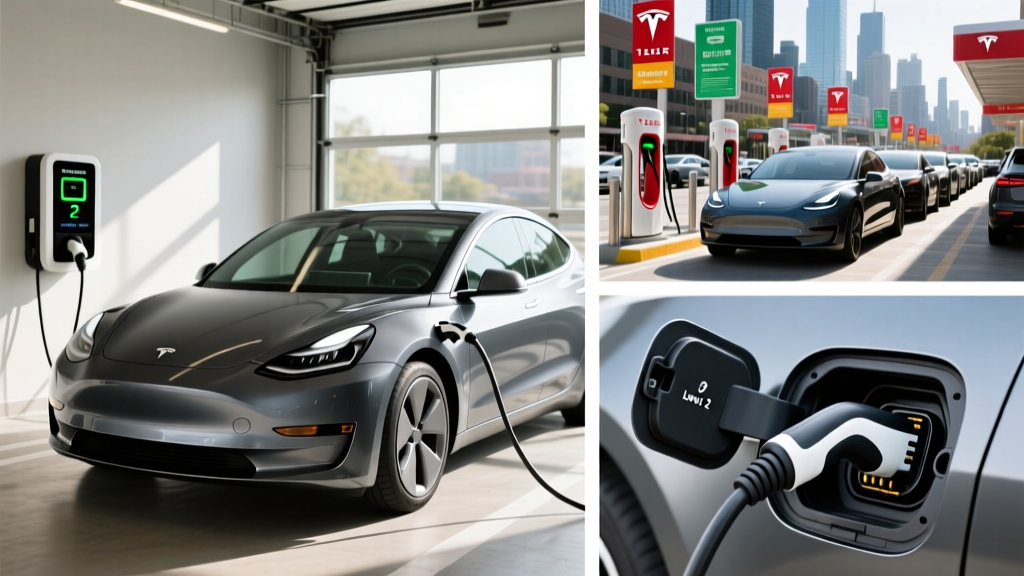
Before we get into Volkswagen-specific Supercharger access, let's establish the three charging tiers every EV owner must understand. The critical distinction: kW (kilowatts) measures power — how fast energy flows into your battery. kWh (kilowatt-hours) measures energy — the total capacity of your battery, like gallons in a fuel tank. These are not interchangeable.
| Level | Voltage | Max Power (kW) | Miles of Range Added per Hour | Typical Use Case |
|---|---|---|---|---|
| Level 1 | 120V AC | 1.4–1.9 kW | 3–5 miles/hr | Overnight trickle; emergency top-ups |
| Level 2 | 240V AC | 7.2–19.2 kW | 20–60 miles/hr | Home daily charging; workplace; public AC stations |
| DC Fast Charge | 400–800V DC | 50–350 kW | 150–1,000+ miles/hr (peak) | Road trips; rapid top-ups on highways |
For a Volkswagen ID.4 with its 82 kWh battery pack (77 kWh usable), Level 1 charging is impractical as a daily strategy — it would take roughly 55+ hours from empty to full. Level 2 at 11.5 kW (the ID.4's onboard charger max) replenishes the battery in about 7 hours, ideal for overnight charging. DC fast charging at the ID.4's peak rate of 170 kW can take the battery from 10–80% in approximately 29 minutes under optimal conditions.
Volkswagen Supercharger Access: Connectors, Adapters, and Compatibility
Here's where the specifics matter. Volkswagen's transition to NACS happened in phases:
- 2025 and later model-year VW EVs (ID.4 refresh, ID.7, ID.Buzz): Built with the native NACS charge port, meaning direct plug-in access to Tesla Superchargers with no adapter required.
- 2021–2024 model-year VW EVs (ID.4): Equipped with the CCS1 connector. These vehicles require a NACS-to-CCS1 adapter to use Tesla Superchargers. Volkswagen has approved specific adapters, and Tesla also offers one through its website.
| Connector Type | VW Models / Years | Supercharger Access | Adapter Needed? |
|---|---|---|---|
| NACS (native) | 2025+ ID.4, ID.7, ID.Buzz | Direct plug-in | No |
| CCS1 | 2021–2024 ID.4 | Via adapter | Yes — NACS-to-CCS1 adapter (~$150–$250) |
| CHAdeMO | Not used on any VW EV | N/A | N/A |
The adapter situation deserves attention. Third-party NACS-to-CCS1 adapters from brands like Lectron and A2Z have flooded the market, but Volkswagen — like Ford and GM before it — recommends using only manufacturer-approved or Tesla-supplied adapters to ensure proper communication between the vehicle's Battery Management System (BMS) and the Supercharger's power delivery protocol. An incompatible adapter can result in slower charging, handshake failures, or in rare cases, connector damage.
Charging a Volkswagen ID.4 on a Supercharger: Real-World Speeds
The Volkswagen ID.4 (2025 model year, 82 kWh pack) peaks at 170 kW on DC fast chargers. On a Tesla V3 Supercharger (capable of 250 kW), the bottleneck is the car, not the station. Here's what a typical session looks like:
- 10–30% SoC: ~150–170 kW peak, adding roughly 6–7 miles of range per minute
- 30–60% SoC: Tapers to ~120–140 kW
- 60–80% SoC: Further taper to ~70–90 kW
- 10–80% total time: Approximately 29–33 minutes (optimal battery temperature)
- Above 80%: Sharp taper below 40 kW — avoid charging past 80% on road trips unless necessary
For the ID.4's EPA-rated range of 275 miles (RWD Pro S trim), a 10–80% session adds roughly 190 miles of range. In real-world highway driving at 70 mph in moderate temperatures, expect usable range closer to 240–255 miles, meaning that Supercharger stop effectively gives you ~165–180 real highway miles. In cold weather (below 30°F), reduce that by another 15–25%.
Home Level 2 Charging Installation: Requirements, Costs, and Equipment
Public Supercharger access is a road-trip solution. For daily driving, home Level 2 charging is where 80–90% of VW EV owners do their charging. Here's what installation actually involves and costs.
Electrical Requirements for a Volkswagen ID.4
The 2025 ID.4 has an 11.5 kW onboard charger, meaning it can accept up to 48 amps at 240V. To deliver this, you need a dedicated circuit rated for at least 60 amps (EV chargers are considered continuous loads under NEC Article 625, requiring the circuit to be rated 125% above the charger's max draw: 48A × 1.25 = 60A).
- Voltage: 240V (split-phase, same as an electric dryer or oven)
- Amperage: 48A continuous draw on a 60A dedicated breaker
- Wire gauge: 6 AWG copper (or 4 AWG aluminum) for a 60A circuit
- Circuit: Must be dedicated — no sharing with other appliances
Panel Upgrade: The Hidden Cost
Many homes built before 2000 have 100-amp or 150-amp electrical panels. Adding a 60A EV circuit may exceed your panel's spare capacity. A licensed electrician will perform a load calculation (per NEC 220.82 or 220.87) to determine if your panel can handle the addition. If not:
- Panel upgrade (100A → 200A): $1,500–$3,500 depending on your utility, local codes, and whether a new meter base is needed
- Panel upgrade (200A → 400A): $3,000–$6,000+ (rare for most homes, more common with large homes adding solar + EV + heat pumps)
If a panel upgrade isn't in your budget, you can install a lower-amperage Level 2 charger (e.g., 32A on a 40A circuit), which still adds roughly 25 miles of range per hour — plenty for overnight charging.
Installation Cost Breakdown
| Component | Cost Range | Notes |
|---|---|---|
| Level 2 Charger (hardware) | $300–$700 | Varies by brand, power output, smart features |
| Electrician labor | $500–$2,000 | Depends on run length from panel, wall type, conduit needs |
| Electrical permit | $50–$250 | Required in most jurisdictions; inspection included |
| Panel upgrade (if needed) | $1,500–$3,500 | Only if load calculation requires it |
| Total (no panel upgrade) | $850–$2,950 | Typical scenario for homes with 200A panel and spare capacity |
| Total (with panel upgrade) | $2,350–$6,450 | Older homes or high-load households |
The federal Residential Clean Energy Credit covers 30% of the cost of home EV charging equipment and installation (up to $1,000) through 2032, per IRS §25E. Check with a tax professional for eligibility, and verify your state and utility incentives — many offer additional rebates of $250–$1,000 for Level 2 installations.
Recommended Level 2 Chargers for Volkswagen EVs
Emporia Vue Level 2 (48A)
- Power: 11.5 kW max (48A / 240V)
- Connector: J1772 (NACS version available for 2025+ VW models)
- Cable length: 24 ft
- Smart features: Wi-Fi, energy monitoring, solar integration, scheduling via app
- Price: ~$399
- Best for: Budget-conscious owners who want smart features and full 48A output
ChargePoint Home Flex (up to 50A)
- Power: Up to 12 kW (50A, configurable down to 16A)
- Connector: J1772 (NACS pigtail available)
- Cable length: 23 ft
- Smart features: Wi-Fi, Alexa, scheduling, detailed app analytics
- Price: ~$599
- Best for: Owners wanting flexible amperage settings and a proven brand
Tesla Wall Connector (48A)
- Power: 11.5 kW max (48A / 240V)
- Connector: NACS native (perfect for 2025+ VW models; CCS1 VWs need adapter)
- Cable length: 24 ft
- Smart features: Wi-Fi, OTA updates, load sharing with multiple units
- Price: ~$475
- Best for: Households with both Tesla and NACS-equipped VW EVs
Safety and Code Considerations
Every Level 2 installation must comply with NEC Article 625 (National Electrical Code for EV charging). Key requirements:
- Dedicated circuit: The EV charger must have its own breaker — no shared circuits
- GFCI protection: Required for outdoor installations (some jurisdictions require it indoors as well for 240V EV circuits per 2023 NEC updates)
- Outdoor rating: If mounted outside, the charger must carry a NEMA 4 or NEMA 4X rating for weather resistance. All three chargers above meet this standard.
- Cable management: NEC requires that the charging cable not create a tripping hazard — wall-mounted retractors or cable hooks are recommended
- Permit and inspection: Nearly all jurisdictions require a permit for a new 240V circuit. Skipping this can void home insurance coverage in the event of an electrical fire.
The Cost to Charge a Volkswagen EV: Home vs. Public vs. Gas
Let's run the numbers on what it actually costs to fuel a 2025 Volkswagen ID.4 compared to a comparable gas SUV, using the EPA-rated efficiency of 104 MPGe (combined) and a real-world consumption figure of approximately 30 kWh per 100 miles.
| Charging Scenario | Rate ($/kWh) | Cost per 100 Miles | Cost per Mile |
|---|---|---|---|
| Home (off-peak utility rate) | $0.12/kWh | $3.60 | $0.036 |
| Home (average US residential) | $0.17/kWh | $5.10 | $0.051 |
| Public Level 2 (ChargePoint, EVgo AC) | $0.25–$0.35/kWh | $7.50–$10.50 | $0.075–$0.105 |
| Tesla Supercharger (DC fast) | $0.28–$0.40/kWh | $8.40–$12.00 | $0.084–$0.12 |
| Electrify America (DC fast) | $0.35–$0.52/kWh | $10.50–$15.60 | $0.105–$0.156 |
| Gas SUV (30 MPG, $3.40/gal) | — | $11.33 | $0.113 |
The takeaway: home charging is dramatically cheaper than gas — roughly one-third the per-mile cost at average utility rates. Public DC fast charging is competitive with or slightly more expensive than gas on a per-mile basis, which is why relying primarily on home Level 2 charging is the economic sweet spot for EV ownership. Volkswagen ID.4 owners who charge at home 85% of the time and use Superchargers for road trips will see annual fuel savings of $800–$1,400 compared to a 30 MPG gas SUV (assuming 12,000 miles/year).
Supercharger Network Practicalities for VW Owners
Accessing Tesla Superchargers in a Volkswagen EV involves a few logistical details beyond the physical connector:
- Tesla app or account: You'll need a Tesla account linked to your payment method. Non-Tesla EVs access Superchargers through the Tesla app, which shows station availability, pricing, and initiates the charging session.
- Supercharger pricing: Varies by station and time of day. In 2026, typical rates range from $0.28–$0.40/kWh, with off-peak discounts at select locations.
- V3 vs. V4 Superchargers: V3 stalls deliver up to 250 kW (plenty for the ID.4's 170 kW peak). V4 stalls, rolling out across 2025–2026, offer up to 350 kW and feature a CCS-compatible cable design at some locations — though the NACS adapter pathway remains the standard for CCS1-equipped VWs.
- Idle fees: Tesla charges $0.50–$1.00/minute if your car remains plugged in after reaching its charge limit. Set a charge limit in your ID.4's infotainment system and monitor via the Tesla app.
- Station etiquette: Supercharger stalls are sized for Tesla's smaller vehicles. The VW ID.Buzz (187.2 inches long, 81.2 inches wide with mirrors) may require careful positioning to avoid blocking adjacent stalls.
Frequently Asked Questions
How much does it cost to install a home EV charger for my Volkswagen?
For a typical home with a 200-amp panel and spare capacity, expect $850–$2,950 total (charger hardware, electrician labor, and permit). If your home needs a panel upgrade, costs can reach $2,350–$6,450. Always get a load calculation from a licensed electrician before committing. The federal §25E credit covers 30% of equipment and installation, up to $1,000.
How fast will each charging level add range to my VW ID.4?
Level 1 (120V): approximately 3–5 miles per hour. Level 2 (240V, 48A): approximately 37 miles per hour — a full overnight session adds 250+ miles. DC fast charging at 170 kW peak: roughly 6–7 miles per minute at peak, with a 10–80% session taking about 29–33 minutes.
Which connector is compatible with my Volkswagen EV?
2025 and newer VW EVs use the NACS connector natively and plug directly into Tesla Superchargers. 2021–2024 ID.4 models use CCS1 and require a NACS-to-CCS1 adapter (~$150–$250) for Supercharger access. For home Level 2 charging, older VWs use the J1772 connector; newer NACS-equipped models may need a J1772-to-NACS adapter if your home charger has a J1772 plug.
How much does charging cost per mile vs. gas?
At home on average US electricity rates ($0.17/kWh), a VW ID.4 costs about $0.051/mile to fuel. A comparable 30 MPG gas SUV at $3.40/gallon costs $0.113/mile — more than double. Public DC fast charging at $0.35/kWh works out to roughly $0.105/mile, competitive with gas but not cheaper.
What electrical upgrades might I need for a home charger?
The most common upgrade is a panel capacity increase (100A to 200A) if your existing panel lacks spare capacity for a 60A dedicated EV circuit. Other potential upgrades include: running new conduit from the panel to the garage (if the panel is far from the charge location), adding a GFCI breaker (required in many jurisdictions for outdoor 240V circuits), and upgrading the meter base if your utility requires it for a 200A+ service. A licensed electrician will identify these during a site assessment.
Will using a Supercharger adapter void my Volkswagen warranty?
Using a manufacturer-approved or Tesla-supplied NACS-to-CCS1 adapter should not void your VW battery or powertrain warranty. However, damage caused by a non-certified third-party adapter may not be covered. Volkswagen's 8-year/100,000-mile battery warranty (covering degradation below 70% capacity) applies regardless of which charging network you use, provided the charging equipment meets SAE and UL standards. Always consult your dealer or Volkswagen's official ID.4 page for the latest adapter compatibility guidance.