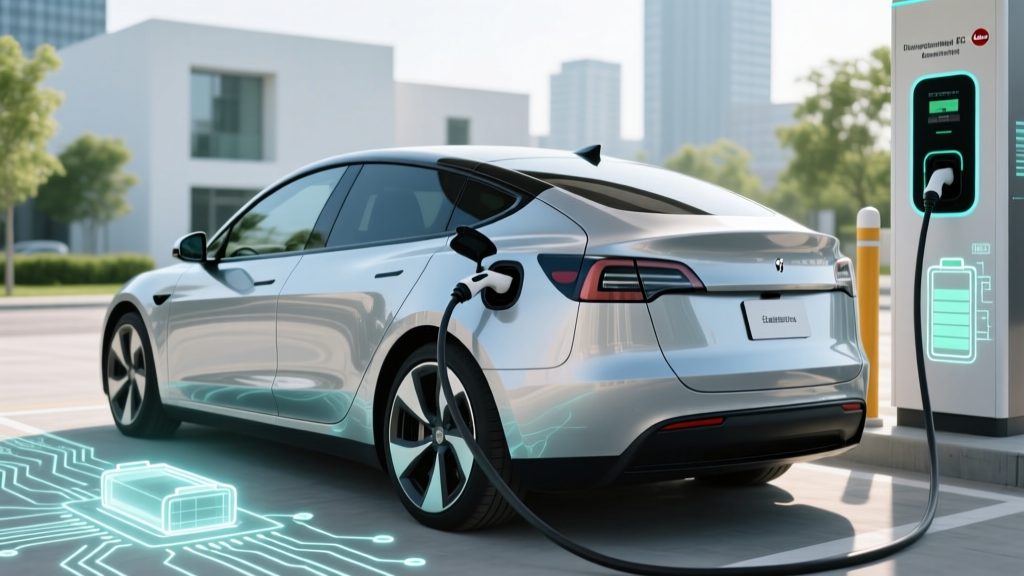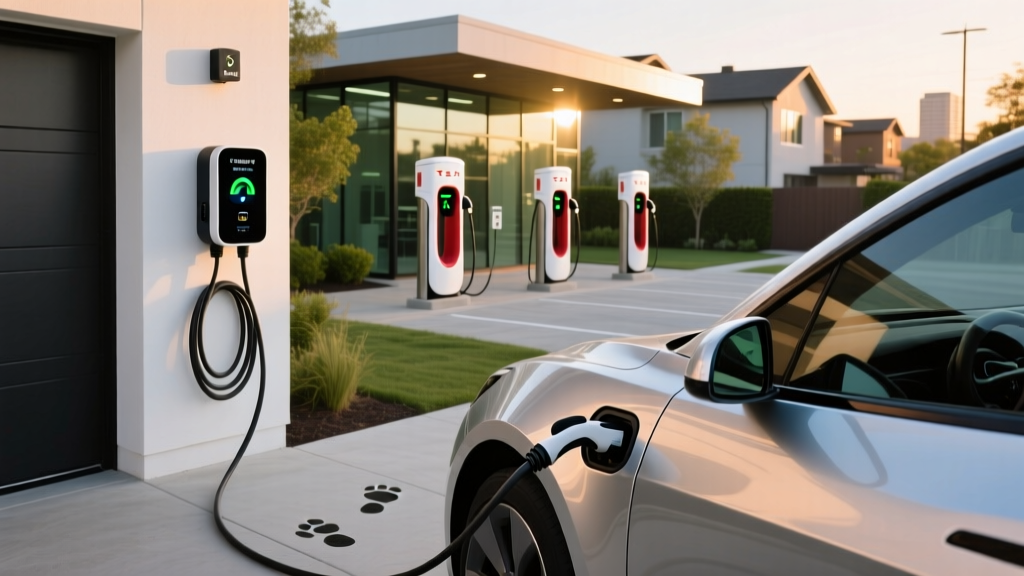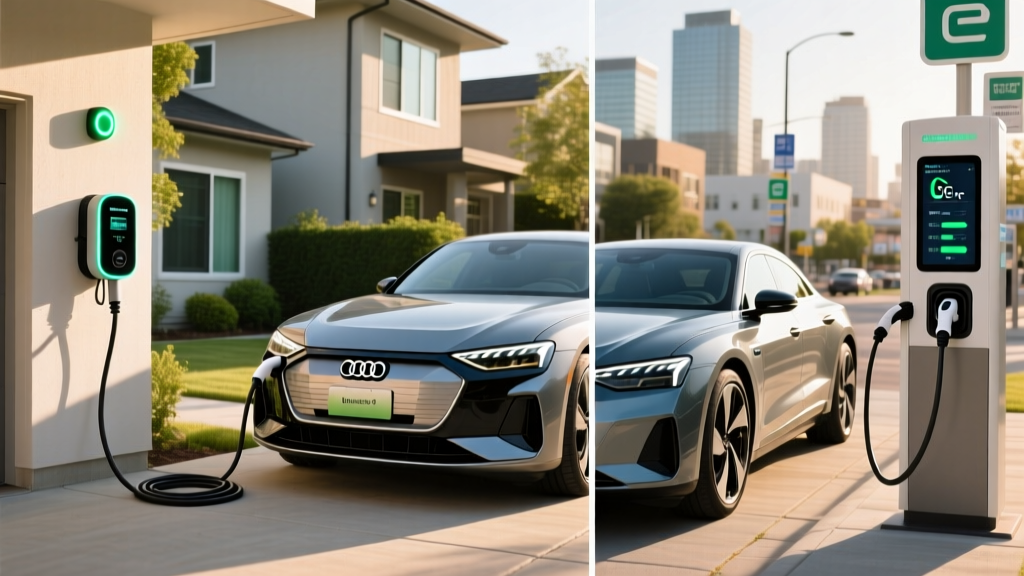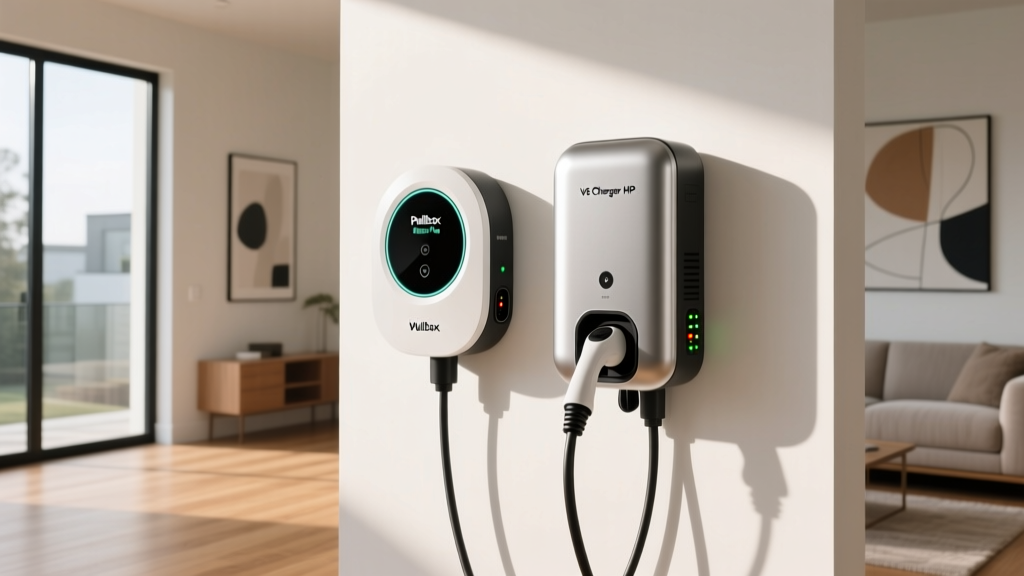
If you've been searching for a reliable Level 2 home charging solution, you've likely encountered the term v6 charger hp — shorthand used by EV owners to reference high-performance wall-mounted chargers in the 40-amp to 48-amp class. These units deliver roughly 9.6 kW to 11.5 kW of power, adding 30–44 miles of range per hour. That's the sweet spot for overnight charging on a standard 240V residential circuit, and it's where most buyers should focus.
This guide breaks down the home EV charging landscape in 2026: the three charging levels, what your electrical panel needs to handle, real installation costs, connector compatibility across brands, and specific equipment picks including the Wallbox Pulsar Plus, Emporia Vue-linked V6 charger, ChargePoint Home Flex, and Tesla Wall Connector. We'll also run the numbers on cost per mile versus gasoline, so you can see the actual economics.
The Three EV Charging Levels: Speeds Explained
Before choosing equipment, understand what each level delivers. The distinction between kW (kilowatts — the rate of power flow) and kWh (kilowatt-hours — the total energy stored in your battery) is critical. Think of kW as how fast water flows from a hose, and kWh as the size of the bucket you're filling.
| Level | Voltage | Max Power (kW) | Miles of Range Added Per Hour | Typical Use |
|---|---|---|---|---|
| Level 1 | 120V (standard outlet) | 1.4–1.9 kW | 3–5 mi/hr | Overnight trickle; PHEVs with small batteries |
| Level 2 | 240V (dryer-style outlet) | 7.2–11.5 kW | 23–44 mi/hr | Daily home charging; covers most BEVs overnight |
| DC Fast Charge | 400–800V DC | 50–350 kW | 180–1,000+ mi/hr (peak) | Road trips; 10–80% in 18–40 min depending on vehicle |
For a typical 75 kWh battery (like the Hyundai Ioniq 5 or Ford Mustang Mach-E Extended Range), Level 2 at 11.5 kW will take roughly 6.5 hours from 10% to 100%. That's ideal: plug in at 10 PM, full by 6:30 AM. Level 1 at 1.4 kW would need over 50 hours — impractical for BEVs but workable for PHEVs with 15–40 kWh batteries.
- Tesla Model Y (75 kWh usable): ~4.5 hours at 11.5 kW (48A)
- Hyundai Ioniq 5 (77.4 kWh usable): ~4.7 hours at 11.5 kW
- Ford F-150 Lightning Extended Range (131 kWh usable): ~8 hours at 11.5 kW; ~5.7 hours at 19.2 kW (80A)
- Chevrolet Equinox EV (85 kWh usable): ~5.2 hours at 11.5 kW
Home Charger Installation: Electrical Requirements and Costs
A Level 2 charger requires a dedicated 240V circuit — the same voltage your electric dryer or oven uses. The amperage determines your charging speed and what your electrical panel must support.
Circuit sizing rule: The National Electrical Code (NEC) requires the circuit breaker to be rated at 125% of the continuous load. A 48-amp charger (11.5 kW) needs a 60-amp breaker. A 40-amp charger (9.6 kW) needs a 50-amp breaker. A 32-amp charger (7.7 kW) needs a 40-amp breaker.
Do You Need a Panel Upgrade?
Most modern homes have a 200-amp main panel. A licensed electrician will perform a load calculation to determine if adding a 50–60 amp circuit exceeds your panel's capacity. Homes built before 1990 often have 100-amp or 150-amp panels, and adding a high-amperage EV circuit may require a panel upgrade to 200 amps — a significant added cost.
Homes with existing 240V outlets (NEMA 14-50 for dryers or ranges) may be able to use a plug-in charger without new wiring, though the outlet must be on a dedicated circuit rated for continuous EV load. Never share a dryer circuit with your EV charger.
| Item | Low Range | High Range | Notes |
|---|---|---|---|
| Level 2 charger unit (hardwired or plug-in) | $350 | $750 | 40A–48A smart chargers |
| Electrical wiring & conduit (50–60A circuit) | $300 | $1,200 | Depends on run length from panel to garage |
| Electrician labor (licensed) | $400 | $1,500 | 2–6 hours typical; varies by region |
| Permit & inspection | $50 | $300 | Required by most jurisdictions |
| Panel upgrade (if needed, 100A→200A) | $1,500 | $4,000 | Older homes; not always required |
| Total (no panel upgrade) | $1,100 | $3,750 | Most homes with 200A panel |
| Total (with panel upgrade) | $2,600 | $7,750 | Older homes with 100–150A panel |
Some utilities and states offer rebates of $250–$1,000 for home charger installation. Check with your local utility and the Alternative Fuels Data Center for current programs in your area. The federal Alternative Fuel Vehicle Refueling Property Credit (§30C) covers 30% of home charging equipment and installation costs, up to $1,000, though eligibility depends on census-tract requirements — consult a tax professional.
Connector Compatibility: NACS, CCS1, and CHAdeMO
The North American charging landscape has consolidated around two primary connectors for Level 2 and DC fast charging. Here's what you need to know when selecting a home charger:
| Connector | Brands Using It (Native) | Level 2 Home Charging | DC Fast Charging |
|---|---|---|---|
| NACS (Tesla / SAE J3400) | Tesla, Ford, GM, Rivian, Volvo, Polestar, Hyundai/Kia (2025+), Mercedes-Benz | Native on most new EVs; adapters available for CCS vehicles | Tesla Superchargers (open to NACS-equipped non-Tesla EVs); growing third-party networks |
| CCS1 (Combined Charging System) | VW, BMW, Stellantis, Honda, Nissan (Ariya), Subaru, Toyota (bZ4X), Lucid | Native on these brands; NACS-to-CCS adapters available from Tesla and third parties | Electrify America, EVgo, ChargePoint DC stations |
| CHAdeMO | Nissan Leaf (legacy), Mitsubishi Outlander PHEV | Rare for new vehicles; J1772 for Level 2 | Declining infrastructure; being phased out |
The adapter reality in 2026: Most new EVs now ship with NACS ports. If you own a CCS1-equipped vehicle (2022–2024 model year VW ID.4, BMW i4, etc.), you can purchase a NACS-to-CCS adapter (~$150–$250) to use Tesla Superchargers and NACS-equipped home chargers. Tesla owners with older vehicles may need a CCS adapter for non-Tesla DC networks. Check your vehicle's charge port and your charger's connector before purchasing.
All Level 2 chargers sold in North America use a J1772 connector (or NACS, which is physically compatible with J1772 signaling for Level 2). You don't need to worry about Level 2 incompatibility — the connector fits every EV sold in the US. The CCS/NACS distinction matters primarily for DC fast charging.
Equipment Picks: Top Level 2 Home Chargers in 2026
These are the chargers we recommend based on power output, build quality, smart features, connector options, and real-world reliability. The "v6 charger hp" class — meaning 40–48 amps, high performance — dominates this list because it covers the majority of residential electrical capacity.
Tesla Wall Connector (Gen 3)
- Power: Up to 11.5 kW (48A)
- Connector: NACS native; J1772 adapter included
- Cable length: 24 ft
- Smart features: Wi-Fi, OTA updates, load sharing with second unit, power sharing
- Price: ~$475
- Best for: Tesla owners; NACS-equipped Fords, GMs, Rivians
ChargePoint Home Flex
- Power: Up to 12 kW (50A) on 60A circuit; configurable down to 16A
- Connector: J1772 (works with all EVs); NACS adapter available
- Cable length: 23 ft
- Smart features: Wi-Fi, app scheduling, Alexa integration, energy tracking
- Price: ~$599 (often on sale for $499)
- Best for: CCS1 vehicles; flexible amperage for older panels
Emporia V6 Charger (Vue-Linked)
- Power: Up to 11.5 kW (48A)
- Connector: J1772 (NACS adapter available)
- Cable length: 24 ft
- Smart features: Integrates with Emporia Vue energy monitor for whole-home load tracking, solar-aware charging, TOU scheduling
- Price: ~$399 (charger); Vue monitor sold separately ~$99
- Best for: Solar owners; energy-conscious households wanting granular kWh tracking
Wallbox Pulsar Plus
- Power: Up to 11.5 kW (48A)
- Connector: J1772 (NACS version available)
- Cable length: 25 ft
- Smart features: Wi-Fi + Bluetooth, Power Sharing (two units on one circuit), Eco-Smart solar integration
- Price: ~$549
- Best for: Two-EV households needing load sharing; compact form factor
What about the Emporia V6 charger specifically? The V6 designation refers to the hardware generation that pairs with Emporia's Vue home energy monitoring system. Its "hp" (high performance) advantage is the whole-home energy visibility: you can see exactly how many kWh your EV consumes versus your HVAC, water heater, and other loads. For households with solar panels, the V6 charger can be configured to charge only when excess solar production is available — effectively charging for free.
Cost to Charge: Home vs. Public vs. Gasoline
The economics of EV charging depend on your local electricity rate, whether you charge at home or publicly, and your vehicle's efficiency. Here's how the numbers break down for a typical mid-size EV getting 3.5 miles per kWh (roughly 112 MPGe combined, similar to a Hyundai Ioniq 5 or Tesla Model Y).
| Scenario | Cost per kWh | Cost per Mile (at 3.5 mi/kWh) | Equivalent Gas MPG at $3.50/gal |
|---|---|---|---|
| Home charging (off-peak TOU rate) | $0.08–$0.12 | $0.023–$0.034 | 103–152 MPG |
| Home charging (standard flat rate) | $0.13–$0.18 | $0.037–$0.051 | 68–94 MPG |
| Public Level 2 (ChargePoint, EVgo L2) | $0.25–$0.49 | $0.071–$0.140 | 25–49 MPG |
| DC Fast Charging (Electrify America, EVgo) | $0.35–$0.55 | $0.100–$0.157 | 22–35 MPG |
| Tesla Supercharger (average) | $0.25–$0.35 | $0.071–$0.100 | 35–49 MPG |
| Gasoline vehicle (27 MPG combined avg.) | $3.50/gal | $0.130 | 27 MPG |
The takeaway: Home charging on an off-peak rate is 3–5x cheaper per mile than gasoline. Even public DC fast charging is often comparable to or cheaper than gas on a per-mile basis. However, relying exclusively on public DC fast charging erodes most of the cost advantage — which is why home Level 2 installation is the single highest-impact decision an EV owner can make.
For a driver covering 12,000 miles per year with a home off-peak rate of $0.10/kWh and 3.5 mi/kWh efficiency, annual charging cost is approximately $343. The same miles in a 27 MPG gas car at $3.50/gallon costs $1,556. That's a $1,213 annual fuel savings — $6,065 over five years — before factoring in reduced maintenance (no oil changes, fewer brake replacements due to regenerative braking).
Safety, Code, and Best Practices
EV charging involves sustained high-amperage electrical draw — often 8+ hours continuously. This is classified as a continuous load under the NEC, which triggers specific safety requirements:
- Dedicated circuit: Your EV charger must have its own breaker. Never share a circuit with other appliances.
- Hardwired vs. plug-in: Hardwired chargers (no plug, direct wire connection inside the unit) are preferred for 48A+ installations. NEMA 14-50 receptacles are acceptable for 40A chargers but must be installed with a torque screwdriver to spec — loose connections cause overheating and fire risk.
- GFCI protection: The 2020 NEC and later require GFCI protection for outdoor receptacles used for EV charging. Hardwired units with internal ground-fault protection satisfy this requirement in most jurisdictions.
- Outdoor rating: If your charger is mounted outside or in an unenclosed carport, it must be rated NEMA 4 (weatherproof). All chargers listed above carry outdoor ratings.
- Cable management: Use a holster or cable organizer to keep the cord off the ground and prevent tripping hazards and connector damage.
Frequently Asked Questions
How much does it cost to install a home EV charger?
For most homes with an existing 200-amp panel and a short wire run to the garage, expect $1,100–$3,750 total (charger unit + wiring + electrician labor + permit). Older homes needing a panel upgrade to 200 amps should budget $2,600–$7,750. Get at least two quotes from licensed electricians, and confirm the quote includes the permit and inspection.
How fast will each charging level add range?
Level 1 (120V) adds 3–5 miles per hour — suitable only for PHEVs or emergency top-ups. Level 2 at 40 amps (9.6 kW) adds roughly 30 miles per hour. Level 2 at 48 amps (11.5 kW) adds roughly 37–44 miles per hour depending on vehicle efficiency. DC fast charging adds 150–300+ miles in 20–30 minutes at peak rate, but the charge curve tapers significantly above 80% SoC.
Which connector and charger is compatible with my EV?
For Level 2 home charging, every EV sold in the US accepts a J1772 connector or NACS connector (which handles Level 2 natively). The Tesla Wall Connector ships with NACS and includes a J1772 adapter. The ChargePoint Home Flex and Emporia V6 ship with J1772 and work with all EVs. For DC fast charging, check whether your vehicle has NACS or CCS1 — this determines which public networks you can use natively versus with an adapter.
How much does charging cost per mile compared to gas?
Home charging at $0.10/kWh with a 3.5 mi/kWh vehicle costs approximately $0.029 per mile — equivalent to a gas car getting 120 MPG at $3.50/gallon. Public DC fast charging at $0.45/kWh costs about $0.129 per mile, roughly equivalent to a 27 MPG gas car. The economics strongly favor home charging; see the cost table above for detailed scenarios.
What electrical upgrades might I need for a Level 2 charger?
At minimum, you need a dedicated 240V circuit with a 50-amp or 60-amp breaker (depending on charger amperage). If your panel is already near capacity — common in homes with electric heat, electric water heaters, and an electric dryer — your electrician may recommend upgrading from a 100A or 150A panel to 200A. Some utilities offer managed charging programs that allow a lower-amperage circuit (32A / 7.7 kW) in exchange for off-peak rate discounts, which may avoid a panel upgrade entirely.
Is the Emporia V6 charger worth it over the Tesla Wall Connector?
It depends on your ecosystem. The Emporia V6 charger excels if you want whole-home energy monitoring via the Vue system, have solar panels, or want granular kWh cost tracking. The Tesla Wall Connector is the better pick if you own a Tesla or NACS-equipped Ford/GM/Rivian and want the simplest, most reliable plug-and-charge experience. Both deliver 48A / 11.5 kW — the performance is identical. The V6 wins on data visibility; the Tesla wins on brand-native integration.