If you've spent years behind the wheel of a 1998 Pontiac GTP Supercharged — that beloved 3.8L L67 V6 pushing 240 hp and sipping premium at roughly 18 MPG combined — you already know what it costs to keep a performance car fueled. At $3.50/gallon and 18 MPG, you're paying roughly $0.19 per mile just in fuel. Switch to a modern EV like the 2026 Hyundai Ioniq 5 (114 MPGe combined, per fueleconomy.gov) and that drops to around $0.04–$0.06 per mile on home electricity. But that savings only materializes if you understand charging infrastructure before you buy.
This guide covers every charging scenario a former GTP owner needs to evaluate: what the three charging levels actually deliver in miles-per-hour, what your home's electrical panel can (or can't) support, which connector your new EV will use, and what equipment is worth your money in 2026.
The Three EV Charging Levels: Speeds in kW and Miles Per Hour
EV charging is categorized into three levels, each defined by voltage, amperage, and the resulting power output measured in kilowatts (kW). Remember: kW measures the rate of energy flow (like gallons-per-minute at a gas pump), while kilowatt-hours (kWh) measure the total energy stored in your battery (like the size of your gas tank). A 77 kWh battery charged at 11.5 kW takes roughly 6.7 hours from empty; that same battery at 150 kW DC fast charging can reach 80% in about 25 minutes.
| Level | Voltage | Power (kW) | Miles of Range Added Per Hour | Typical Use Case |
|---|---|---|---|---|
| Level 1 | 120V AC | 1.2–1.9 kW | 3–5 mi/hr | Overnight top-off, PHEVs, low-mileage drivers |
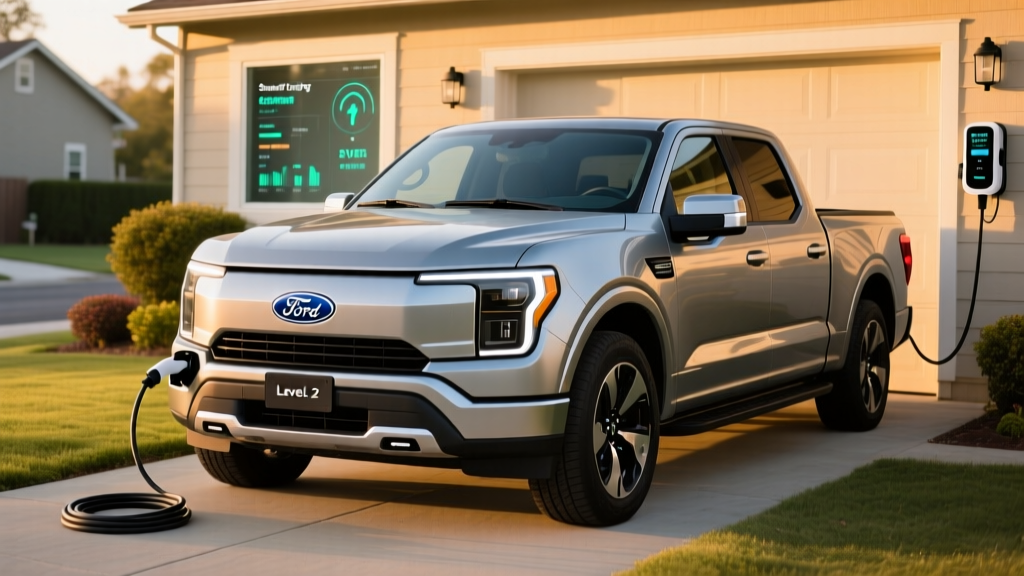
| Level 2 | 240V AC | 3.3–19.2 kW | 12–75 mi/hr | Home daily charging, workplace, public destinations |
| DC Fast Charge | 400–900V DC | 50–350 kW | 150–1,200 mi/hr (peak) | Road trips, highway corridors, rapid top-ups |
Real-world context: A 2026 Tesla Model Y Long Range (78 kWh usable battery, ~320 miles EPA range) charging on a 48-amp Level 2 home charger at 11.5 kW adds roughly 44 miles of range per hour — enough to fully replenish overnight. On a 250 kW DC fast charger, that same vehicle peaks near 250 kW but tapers significantly above 60% state of charge (SoC), averaging closer to 130 kW across a 10–80% session, completing it in roughly 25–28 minutes.
Home EV Charger Installation: Electrical Requirements and Real Costs
Your 1998 Pontiac GTP only needed a gas station. An EV needs a dedicated electrical circuit — and this is where many new EV owners encounter unexpected costs. Here's what a Level 2 home installation actually requires.
Electrical Panel and Circuit Requirements
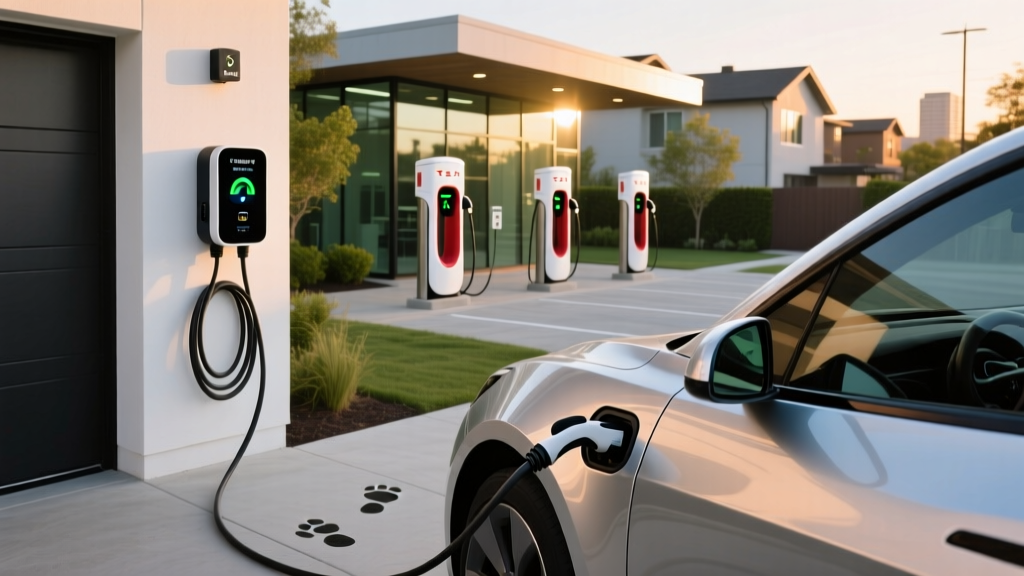
A typical Level 2 home charger runs on a 240V circuit (the same voltage as your electric dryer or oven) at 40, 48, or 60 amps. By National Electrical Code (NEC), a continuous load like EV charging can only use 80% of a circuit's rated capacity, so a 48-amp charger requires a 60-amp breaker. Your home's electrical panel must have:
- Sufficient spare capacity (typically 200-amp service for modern homes with EV + electric appliances)
- Two adjacent breaker slots for a double-pole breaker
- Adequate bus bar rating — some older 100-amp panels cannot safely add a 60-amp EV circuit
Panel upgrade reality: Homes built before 2000 — which includes any home that was new when your GTP was — often have 100-amp or 150-amp panels. Upgrading to 200-amp service costs $1,500–$3,500 depending on your utility and local code requirements. This is the single biggest variable in home charging cost.
Installation Cost Breakdown
| Component | Low End | High End | Notes |
|---|---|---|---|
| Level 2 Charger (hardwired, 48A) | $350 | $700 | Smart Wi-Fi models cost more |
| Electrician labor (basic install, <25 ft run) | $400 | $800 | Varies by region; conduit length matters |
| Permit and inspection | $50 | $250 | Required in most jurisdictions |
| Electrical panel upgrade (if needed) | $1,500 | $3,500 | 100A → 200A service upgrade |
| Total (no panel upgrade) | $800 | $1,750 | Most common scenario for 200A homes |
| Total (with panel upgrade) | $2,300 | $5,250 | Common for pre-2000 homes |
Federal incentive: The IRS Residential Clean Energy Credit (§25C/§25D) may cover 30% of charger equipment and installation costs, up to $1,000 for EV supply equipment. Eligibility depends on your tax liability and whether you live in a qualifying census tract. Consult a tax professional — rules are specific and subject to change.
Connector Compatibility: NACS, CCS1, CHAdeMO, and Adapter Needs
Unlike the universal gas pump nozzle, EV connectors vary by manufacturer. As of 2026, the North American market has largely converged on two standards, with a third fading out.
| Connector | Brands Using It (Native) | Max DC Fast Charge Rate | Notes |
|---|---|---|---|
| NACS (North American Charging Standard / Tesla) | Tesla, Ford, GM, Rivian, Volvo, Polestar, Hyundai/Kia (2025+) | Up to 350 kW | Compact, dominant standard by 2026 |
| CCS1 (Combined Charging System) | VW, BMW, Stellantis, legacy Hyundai/Kia, some others | Up to 350 kW | Phasing out on new models; still widely available at public chargers |
| CHAdeMO | Nissan Leaf (legacy) | Up to 100 kW | Discontinued on new vehicles; limited new infrastructure |
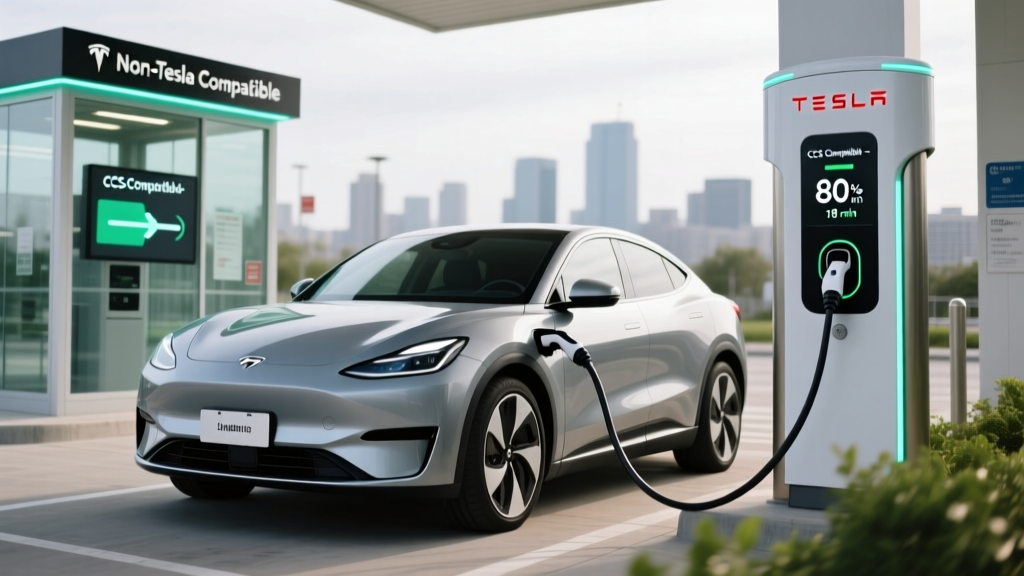
Adapter reality: If you buy a CCS1-equipped EV, Tesla Supercharger access requires a CCS-to-NACS adapter ($150–$250). Conversely, NACS-equipped vehicles can use CCS public chargers via a NACS-to-CCS adapter. Many 2026 chargers at Electrify America and EVgo now offer both NACS and CCS cables natively. Before buying a home charger, confirm your vehicle's native port.
Cost to Charge Per Mile: EV Electricity vs. Your GTP's Gas Bill
The financial case for EV charging hinges on your local electricity rate and whether you can charge at home on off-peak hours. Here's a direct comparison using the 1998 Pontiac GTP Supercharged as a baseline.
| Vehicle / Scenario | Energy Cost | Efficiency | Cost Per Mile |
|---|---|---|---|
| 1998 Pontiac GTP Supercharged (premium fuel) | $3.50/gal | 18 MPG combined | $0.194 |
| 2026 Tesla Model Y LR (home, off-peak $0.12/kWh) | $0.12/kWh | 3.6 mi/kWh (120 MPGe) | $0.033 |
| 2026 Hyundai Ioniq 5 (home, off-peak $0.12/kWh) | $0.12/kWh | 3.4 mi/kWh (114 MPGe) | $0.035 |
| 2026 Model Y (public Level 2, $0.25/kWh) | $0.25/kWh | 3.6 mi/kWh | $0.069 |
| 2026 Model Y (DC fast charge, $0.48/kWh) | $0.48/kWh | 3.6 mi/kWh | $0.133 |
Key insight: Home off-peak charging delivers fuel costs roughly 83% lower than your supercharged GTP. Even at public DC fast-charger rates ($0.48/kWh at some Electrify America stations), you're still paying less per mile than premium gasoline. But exclusive DC fast charging erodes most of the savings — home Level 2 is where the economics work best.
Annual fuel savings estimate: At 12,000 miles/year, the GTP costs ~$2,328 in premium fuel. A Model Y charged primarily at home costs ~$396. That's ~$1,932/year in fuel savings — meaningful money that helps offset a higher purchase price.
Charging Time Examples: 10–80% for Common Battery Sizes
Charging times depend on battery capacity (kWh), the charger's peak power (kW), and the vehicle's charge curve — the rate at which the battery accepts power, which tapers significantly above 60–80% SoC to protect cell health. Peak kW ratings are sustained only briefly.
- 62 kWh battery (2026 Nissan Leaf SV, LFP chemistry): 50 kW DC fast charger → 10–80% in ~55 minutes. 100 kW charger → ~38 minutes.
- 77 kWh battery (2026 VW ID.4, NMC chemistry): 135 kW peak DC fast charger → 10–80% in ~30 minutes (sustained average ~95 kW due to taper).
- 84 kWh battery (2026 Hyundai Ioniq 5, NMC, 800V architecture): 350 kW DC fast charger → 10–80% in ~18 minutes (sustained average ~210 kW — one of the fastest in its class).
- 78 kWh battery (2026 Tesla Model Y Long Range): 250 kW Supercharger → 10–80% in ~25 minutes (sustained average ~155 kW).
- Level 2 at home (48A / 11.5 kW): A 77 kWh battery from 10–80% (54 kWh replenished) takes approximately 4.7 hours — ideal for overnight charging.
Charge curve reality: Manufacturers advertise peak charge rates (e.g., "up to 350 kW"), but no EV sustains that rate for a full session. The Ioniq 5's 800V architecture is notable because it sustains higher rates longer than 400V competitors. When planning road trips, use tools like A Better Routeplanner to model actual charge-stop durations, not peak rates.
2026 Home EV Charger Recommendations: Power, Features, and Price
Not all Level 2 chargers are equal. Here are three proven models suited to different needs, all available in both NACS and CCS1 connector configurations.
Emporia Vue Level 2 Charger
- Power output: 48A / 11.5 kW (hardwired) or 40A / 9.6 kW (NEMA 14-50 plug)
- Connector: NACS or CCS1 (J1772 adapter included)
- Cable length: 24 ft
- Smart features: Wi-Fi, scheduling, solar integration, energy monitoring via Emporia app
- Price: ~$399
- Best for: Budget-conscious buyers wanting smart scheduling and energy tracking
ChargePoint Home Flex
- Power output: Up to 50A / 12 kW (adjustable down to match panel capacity)
- Connector: NACS or J1772 (CCS adapter available)
- Cable length: 23 ft
- Smart features: Wi-Fi, Alexa integration, ChargePoint network access, flexible amperage settings
- Price: ~$549
- Best for: Homes with limited panel capacity (adjustable amperage avoids panel upgrade)
Tesla Wall Connector (Gen 4)
- Power output: 48A / 11.5 kW
- Connector: NACS native (J1772/CCS adapter sold separately)
- Cable length: 24 ft
- Smart features: Wi-Fi, OTA updates, power sharing (up to 6 units on one circuit), Tesla app integration
- Price: ~$450
- Best for: Tesla owners and NACS-native EV buyers wanting clean design and multi-charger setups
Pro tip for GTP-era homes: If your electrical panel is tight on capacity, the ChargePoint Home Flex's adjustable amperage (configurable from 16A to 50A) lets you dial down the draw to match what your panel can safely deliver — potentially avoiding a $2,000+ panel upgrade. A licensed electrician should make this determination.
Safety, Code Compliance, and Installation Best Practices
EV charging is a continuous high-amperage load running for hours — far more demanding on your wiring than intermittent appliances. Cutting corners here creates fire risk.
- Dedicated circuit: Your Level 2 charger must be on its own dedicated double-pole breaker. Never share a circuit with other heavy loads.
- GFCI protection: NEC 2020 and later require GFCI (Ground Fault Circuit Interrupter) protection for outdoor EV outlets. Hardwired chargers may have built-in GFCI; plug-in units require a GFCI breaker.
- Outdoor rating: If your charger is installed outdoors or in an unsealed garage, ensure the unit carries a NEMA 4 (weather-resistant) rating. All three chargers above meet this standard.
- Permit and inspection: Most municipalities require an electrical permit and post-installation inspection for EV charger circuits. This typically costs $50–$250 and protects your home insurance coverage.
- NEMA 14-50 vs. hardwired: A NEMA 14-50 outlet offers portability (take your charger when you move) but requires a GFCI breaker in most jurisdictions post-2020 NEC. Hardwired installations avoid the GFCI breaker requirement and are preferred for permanent setups.
Never use an extension cord for EV charging, and avoid "cheater" adapters that combine two 120V outlets into a 240V supply. These bypass safety mechanisms and are a documented fire cause.
Frequently Asked Questions
How much does it cost to install a home EV charger?
For a home with an existing 200-amp panel and a short conduit run, expect $800–$1,750 total (charger + electrician + permit). For older homes needing a panel upgrade from 100A to 200A service, total costs range from $2,300 to $5,250. Always get two or three quotes from licensed electricians — prices vary significantly by region.
How fast will each charging level add range?
Level 1 (120V) adds 3–5 miles per hour — adequate for PHEVs with small batteries or drivers covering under 30 miles daily. Level 2 (240V, 48A) adds roughly 35–45 miles per hour for most EVs, fully replenishing overnight. DC fast charging adds 150–1,200 miles per hour at peak, but real-world 10–80% sessions take 18–55 minutes depending on the vehicle and charger.
Which connector/charger is compatible with my EV?
Check your vehicle's charge port. For 2026 models, most new Ford, GM, Rivian, Hyundai, Kia, and Tesla vehicles use NACS. Volkswagen, BMW, and some carryover models still use CCS1. CHAdeMO is limited to the legacy Nissan Leaf. Home chargers are available in both connector types, and adapters bridge the gap for public charging.
How much does charging cost per mile vs gas?
Home off-peak charging at $0.12/kWh costs roughly $0.03–$0.04 per mile for a typical EV. Compare this to the 1998 Pontiac GTP Supercharged at ~$0.19/mile on premium fuel. Even public DC fast charging at $0.48/kWh ($0.13/mile) undercuts gasoline. The savings are largest when you charge at home consistently.
What electrical upgrades might I need?
Homes with 100-amp or 150-amp electrical service — common in homes built before 2000 — may need a panel upgrade to 200 amps to safely support a 48-amp EV charger alongside existing loads. Some utilities offer rebates for panel upgrades. Alternatively, a lower-amperage charger (32A or 40A) may work on existing panels — have a licensed electrician perform a load calculation before deciding.