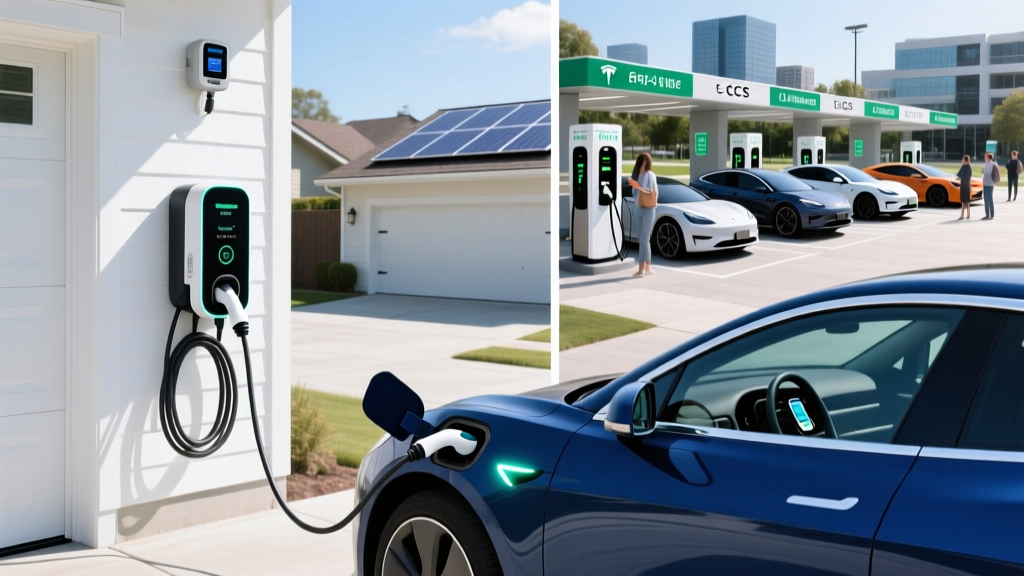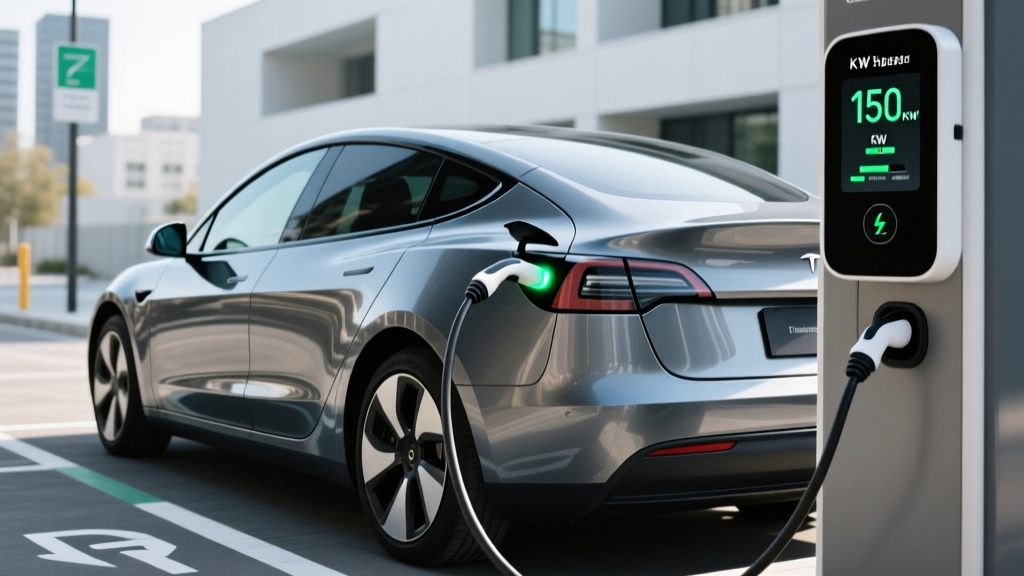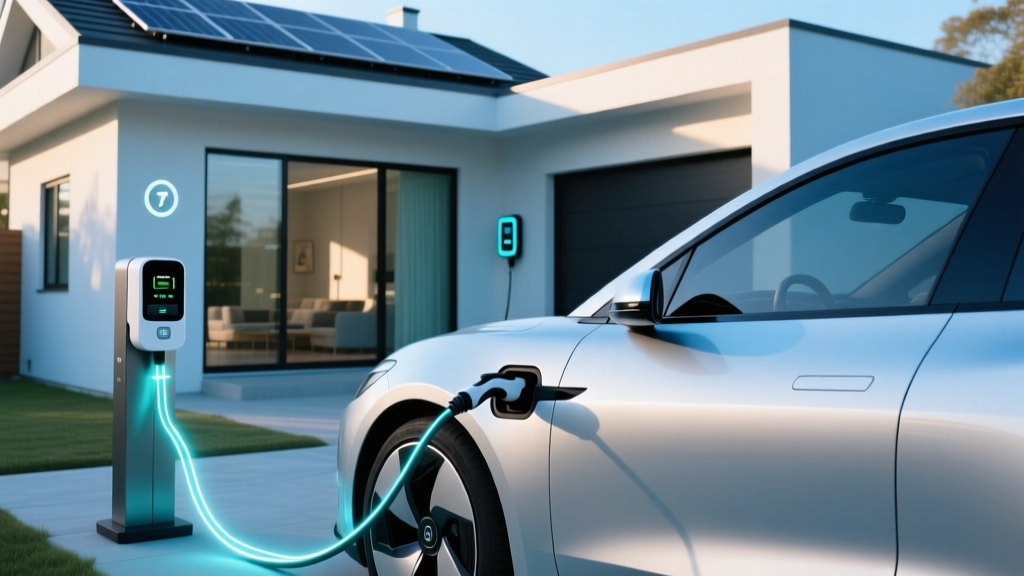
Vehicle-to-grid (V2G) charging transforms your electric vehicle from a transportation device into a mobile power plant. In 2026, bidirectional charging has moved from concept to consumer reality, with several automakers offering V2G-capable models and utilities actively paying EV owners to feed energy back into the grid during peak demand. But V2G requires specific hardware, a compatible vehicle, and a utility program that supports it — none of which are universal yet.
This guide covers everything you need to evaluate V2G charging for your home: what bidirectional power actually means, which EVs support it, the home electrical work required, equipment costs, and the real economics of selling power back to your utility.
What Is V2G Charging and How Does Bidirectional Power Work?
V2G (vehicle-to-grid) charging allows energy to flow in two directions: from the grid into your EV's battery (normal charging) and from your EV's battery back to the grid or your home. This requires a bidirectional charger — sometimes called a bidirectional EVSE — and an EV with onboard hardware that supports reverse power flow.
There are three distinct bidirectional modes you'll encounter:
- V2G (Vehicle-to-Grid): Your EV feeds power back into the electrical grid, typically during peak demand hours. Utilities compensate you for this service, usually through bill credits or direct payments.
- V2H (Vehicle-to-Home): Your EV powers your home during an outage or during expensive peak-rate hours. This requires a transfer switch or smart panel integration.
- V2L (Vehicle-to-Load): Your EV powers devices directly through built-in AC outlets (120V or 240V). This is the simplest form — no special home charger needed. The Hyundai Ioniq 5, Ford F-150 Lightning, and Kia EV9 all offer V2L.
The critical distinction: kW (kilowatts) measures power flow rate — how fast energy moves in or out. kWh (kilowatt-hours) measures energy capacity — how much your battery stores. A 10 kW bidirectional charger can push 10 kW of power back to the grid; a 77 kWh battery stores 77 kWh of total energy. These are not interchangeable.
Which EVs Support V2G Charging in 2026?
Not every EV can send power backward. Bidirectional capability requires specific onboard inverter hardware and manufacturer software authorization. As of 2026, the V2G/V2H-capable lineup includes:
| Vehicle | Bidirectional Type | Max Output | Battery (usable kWh) | Connector |
|---|---|---|---|---|
| Ford F-150 Lightning | V2H (Power Backup) | 9.6 kW | 98 kWh (ext.) / 77 kWh (std.) | NACS |
| Hyundai Ioniq 5 | V2L + V2G (pilot) | 3.6 kW (V2L) | 77.4 kWh | NACS |
| Kia EV9 | V2L + V2G (pilot) | 3.6 kW (V2L) | 99.8 kWh | NACS |
| GMC Sierra EV | V2H / V2G | 19.2 kW | 200+ kWh | NACS |
| Volkswagen ID.4 (2025+) | V2G (ISO 15118) | ~10 kW | 77 kWh | NACS |
| Nissan Leaf / Ariya | V2G (CHAdeMO legacy) | ~6 kW | 60-91 kWh | CHAdeMO / NACS |
Nissan pioneered V2G with CHAdeMO connectors, but the industry-wide shift to NACS (North American Charging Standard) has complicated compatibility. Most 2025+ EVs now ship with NACS ports, and bidirectional NACS chargers are arriving from companies like Fermata Energy, Wallbox, and dcbel. If your EV uses CCS1 or CHAdeMO, bidirectional hardware options remain limited but available through specialty installers.
Charging Levels Explained: Speeds, kW, and Miles Per Hour
Before evaluating V2G hardware, you need to understand the three charging levels and how they apply to both standard and bidirectional charging.
| Level | Voltage | Power (kW) | Miles of Range Added/Hour | Use Case |
|---|---|---|---|---|
| Level 1 | 120V AC | 1.0–1.4 kW | 3–5 mi/hr | Emergency / trickle charging |
| Level 2 (standard) | 240V AC | 7.2–19.2 kW | 25–65 mi/hr | Daily home charging |
| Level 2 (bidirectional V2G/V2H) | 240V AC | 3.6–19.2 kW out | N/A (power export) | Grid export / home backup |
| DC Fast Charging | 400–800V DC | 50–350 kW | 150–1,000+ mi/hr | Road trips, rapid top-ups |
For V2G specifically, you're looking at bidirectional Level 2 hardware. A 10 kW bidirectional charger exporting for 5 hours sends 50 kWh back to the grid — roughly enough to power an average US home (30 kWh/day) for 1.5 days, per EIA household data.
Standard DC fast charging remains one-directional (grid to vehicle). Bidirectional DC charging exists in commercial fleet applications but is not yet available for residential use due to equipment cost ($20,000–$50,000+) and utility interconnection complexity.
Home Installation: Electrical Requirements, Panel Upgrades, and Costs
Installing a bidirectional charger is more involved than a standard Level 2 EVSE. V2G/V2H systems require a dedicated 240V circuit, a bidirectional-capable EVSE, and — for V2H — either a transfer switch or a smart electrical panel (like the Span panel or Schneider Wiser) to manage power flow between grid, home, and vehicle.
Electrical Requirements
- Circuit: Dedicated 240V circuit, typically 40A–80A depending on charger power rating
- Wire gauge: 6 AWG copper for 40A; 4 AWG for 50A; 2 AWG for 80A circuits
- Breaker: Must match circuit amperage; GFCI breaker required by NEC 2023+ for outdoor EVSE installations
- Panel capacity: Your main panel must have spare capacity for the charger circuit. A 200A panel is minimum for most V2H setups; older 100A panels will require an upgrade
- Transfer switch or smart panel: Required for V2H to isolate your home from the grid during outages (anti-islanding safety requirement)
Panel Upgrade Reality
Homes built before 2000 often have 100A or 150A main panels. Adding a 40A–80A bidirectional charger plus V2H transfer equipment can exceed available capacity. A panel upgrade to 200A or 400A costs $2,000–$5,000+ depending on your utility's service drop and local permitting. Factor this in before committing to V2H.
| Component | Cost Range | Notes |
|---|---|---|
| Bidirectional EVSE (hardware) | $2,500–$7,000 | Wallbox Quasar 2, dcbel r16, Fermata |
| Electrical labor (licensed electrician) | $1,500–$4,000 | Varies by run length, conduit, panel proximity |
| Transfer switch or smart panel | $1,500–$4,500 | Required for V2H; Span panel costs $3,500–$5,000+ |
| Permit and inspection | $150–$500 | Required in most jurisdictions |
| Panel upgrade (if needed) | $2,000–$5,000 | 100A→200A or 200A→400A |
| Total (without panel upgrade) | $5,650–$16,000 | Most homes: $7,000–$12,000 |
| Total (with panel upgrade) | $7,650–$21,000 | Older homes likely need this |
Always hire a licensed electrician familiar with bidirectional EVSE and NEC Article 625 (EV charging) and Article 702/705 (backup power and grid interconnection). The utility must approve any grid-tied V2G system before activation.
Connector Compatibility: NACS, CCS1, and CHAdeMO for Bidirectional Charging
Bidirectional charging demands connector compatibility on two fronts: your EV's charge port and the charger's plug. The connector landscape for V2G in 2026:
| Connector | Bidirectional Support | Vehicles Using It | Adapter Needed? |
|---|---|---|---|
| NACS (J3400) | Yes — growing ecosystem | Tesla, Ford, GM, Hyundai/Kia (2025+), Rivian, Volvo | CCS-to-NACS adapters available for older CCS vehicles |
| CCS1 | Limited | Older VW ID.4, BMW iX, pre-2025 models | Bidirectional CCS1 chargers rare; most V2G pilots use NACS or CHAdeMO |
| CHAdeMO | Yes — most mature V2G protocol | Nissan Leaf, older Mitsubishi Outlander PHEV | N/A — CHAdeMO V2G chargers available (Nuvve, Fermata) |
The NACS standard's bidirectional specification (SAE J3400) was finalized in late 2024, clearing the way for mass-market V2G chargers. If you're buying a new EV in 2026 with V2G intent, choose a NACS-equipped vehicle for the widest hardware compatibility going forward.
Bidirectional Charger Equipment: 2026 Picks and Specifications
The bidirectional home charger market is still small but expanding. Here are the leading residential V2G/V2H units available or shipping in 2026:
Wallbox Quasar 2
- Power: 11.5 kW charge / 11.5 kW discharge
- Connector: NACS
- V2H capable: Yes (with Home Power Manager)
- Smart features: myWallbox app, solar integration, time-of-use scheduling
- Cable length: 25 ft
- Price: ~$4,500–$5,500 (hardware only)
dcbel r16
- Power: 16 kW charge / 16 kW discharge
- Connector: NACS
- V2H capable: Yes — includes integrated home energy management
- Smart features: Built-in solar inverter compatibility, backup panel integration
- Cable length: 18 ft
- Price: ~$5,500–$7,000 (hardware only)
Fermata Energy FE-15 (V2G)
- Power: 15 kW charge / 15 kW discharge
- Connector: CHAdeMO (NACS adapter in development)
- V2G capable: Yes — utility-grid integrated, UL 9741 certified
- Smart features: Utility demand-response integration, fleet management portal
- Cable length: 20 ft
- Price: ~$6,000–$8,000 (often provided by utility in V2G pilot programs)
For V2H (home backup), the Ford F-150 Lightning with the Ford Charge Station Pro ($1,769 hardware) and Sunrun or similar solar-integration partner remains the most proven residential setup, delivering up to 9.6 kW of whole-home backup for up to 3 days on the extended-range 131 kWh battery pack.
Cost to Charge: Home, Public, and V2G Revenue Compared
Understanding EV charging economics requires comparing what you pay to charge against what you might earn through V2G export.
| Scenario | Cost per kWh | Cost to Fill 77 kWh Battery | Cost per Mile (3.5 mi/kWh) |
|---|---|---|---|
| Home Level 2 (off-peak) | $0.08–$0.14 | $6.16–$10.78 | $0.023–$0.040 |
| Home Level 2 (peak rate) | $0.22–$0.35 | $16.94–$26.95 | $0.063–$0.100 |
| Public Level 2 (ChargePoint, etc.) | $0.25–$0.49 | $19.25–$37.73 | $0.071–$0.140 |
| DC Fast Charging (EA, Tesla) | $0.32–$0.56 | $24.64–$43.12 | $0.091–$0.160 |
| Gas equivalent (25 MPG, $3.50/gal) | — | — | $0.140 |
| V2G export revenue (peak) | $0.15–$0.40/kWh earned | $11.55–$30.80 earned per full discharge | Offsets charging cost |
V2G economics depend entirely on your utility's program. Some utilities pay $0.15–$0.40/kWh for peak-hour export, while others offer flat monthly credits of $20–$60 for participation. A 77 kWh battery exporting 30 kWh during a $0.35/kWh peak window earns $10.50 in a single session. Over a year with regular participation, V2G revenue can reach $500–$1,500, partially offsetting the higher hardware cost.
The caveat: frequent deep discharges accelerate battery degradation. Most automakers limit V2G export to maintain a minimum state of charge (typically 20–30%) to protect battery health. Check whether V2G participation affects your battery warranty — some manufacturers exclude degradation from bidirectional use.
Safety, Code, and Utility Interconnection Requirements
Bidirectional charging involves feeding power into your home's electrical system or the utility grid, which triggers additional code and safety requirements beyond a standard EVSE install:
- NEC Article 625: Governs all EV charging equipment. Bidirectional units must be listed to UL 9741 (bidirectional EVSE standard).
- NEC Article 705: Covers grid-interconnected power sources. Your utility must approve any V2G system that exports to the grid.
- Anti-islanding protection: V2H systems must automatically disconnect from the grid during outages to prevent back-feeding power to utility workers on downed lines. This is why a transfer switch or smart panel is mandatory.
- GFCI protection: Required for all outdoor EVSE installations per NEC 2023 and later.
- Dedicated circuit: The bidirectional charger must have its own dedicated breaker — no shared circuits.
- Outdoor rating: If mounted outdoors, the EVSE must carry a NEMA 4 or NEMA 4X weather rating.
- Utility interconnection agreement: Most utilities require a signed agreement, sometimes with a separate meter or monitoring equipment, before allowing V2G export. Contact your utility's distributed energy resources (DER) department before purchasing hardware.
Per NFPA's National Electrical Code, all bidirectional installations must be performed by a licensed electrician and inspected. DIY bidirectional wiring is dangerous and illegal in most jurisdictions.
V2G Charging FAQ
How much does it cost to install a home V2G charger?
Expect $7,000–$12,000 for a typical bidirectional charger installation without a panel upgrade, and $9,000–$21,000 if your home needs a 200A or 400A panel upgrade. The hardware alone runs $2,500–$7,000, with electrical labor, transfer switch, and permits adding $3,000–$9,000+. This is significantly more than a standard Level 2 installation ($500–$2,000 total).
How fast will each charging level add range?
Level 1 (120V) adds 3–5 miles per hour. Level 2 (240V) adds 25–65 miles per hour depending on amperage. DC fast charging adds 150–1,000+ miles per hour at peak rates. For a 77 kWh battery like the Ioniq 5's, Level 2 at 11.5 kW charges 10–80% in roughly 5 hours; DC fast charging at 240 kW peak does it in ~18 minutes (tapering above 80% per the charge curve).
Which connector and charger is compatible with my EV for V2G?
Check your EV's charge port: NACS (J3400) vehicles have the widest and growing bidirectional charger selection. CHAdeMO vehicles (Nissan Leaf/Ariya) have mature V2G options. CCS1 vehicles currently have the fewest bidirectional charger choices. Always verify that both the EV manufacturer and the charger manufacturer explicitly support bidirectional operation — not all NACS chargers are bidirectional.
How much does EV charging cost per mile vs gas?
Home off-peak charging at $0.12/kWh with a 3.5 mi/kWh efficient EV costs about $0.034/mile. Gas at $3.50/gallon and 25 MPG costs $0.14/mile — roughly 4× more. Even DC fast charging at $0.48/kWh ($0.137/mile) matches gas costs. V2G export revenue can push your net cost per mile even lower or to zero during high-earning months.
What electrical upgrades might I need for V2G?
Bidirectional chargers draw 40A–80A and, for V2H, require a transfer switch or smart panel. Homes with 100A or 150A main panels will likely need a panel upgrade to 200A+ ($2,000–$5,000). You may also need conduit runs, a new breaker, GFCI protection, and utility interconnection approval. A licensed electrician should perform a load calculation before you purchase equipment.
Does V2G degrade my EV battery faster?
Every charge-discharge cycle causes some degradation. V2G adds cycles beyond normal driving use. However, most V2G programs limit discharge depth (e.g., never below 30% SoC), which reduces stress. LFP (lithium iron phosphate) batteries tolerate cycling better than NMC chemistries. Expect 1–3% additional annual degradation with regular V2G use, depending on depth and frequency. Verify your battery warranty terms — some manufacturers void coverage for commercial-grade bidirectional use.
Are there tax credits or incentives for V2G charger installation?
The federal §30C Alternative Fuel Vehicle Refueling Property Credit covers up to 30% of home EV charger hardware and installation costs, capped at $1,000 for residential properties. This applies to bidirectional chargers that meet the certification requirements. Eligibility depends on your census tract (must be in a qualified low-income or non-urban area per IRA provisions). Some utilities also offer rebates of $500–$2,500 for V2G-capable equipment. Consult a tax professional for your specific situation.