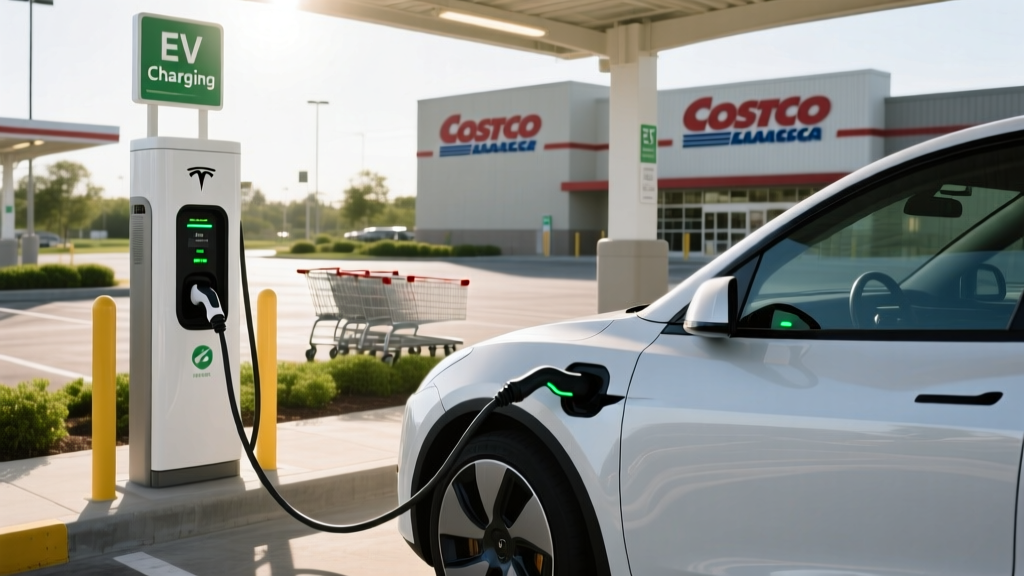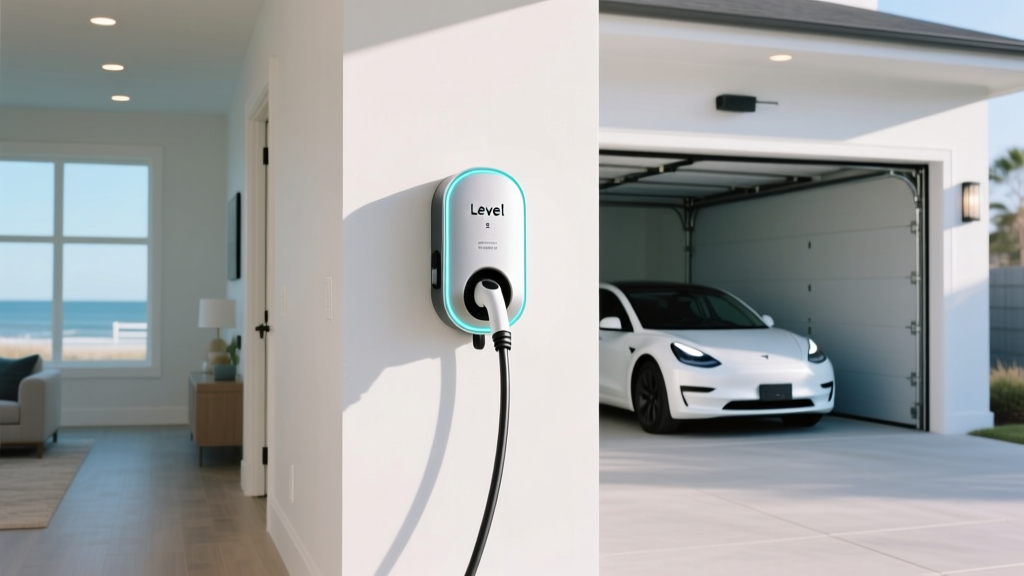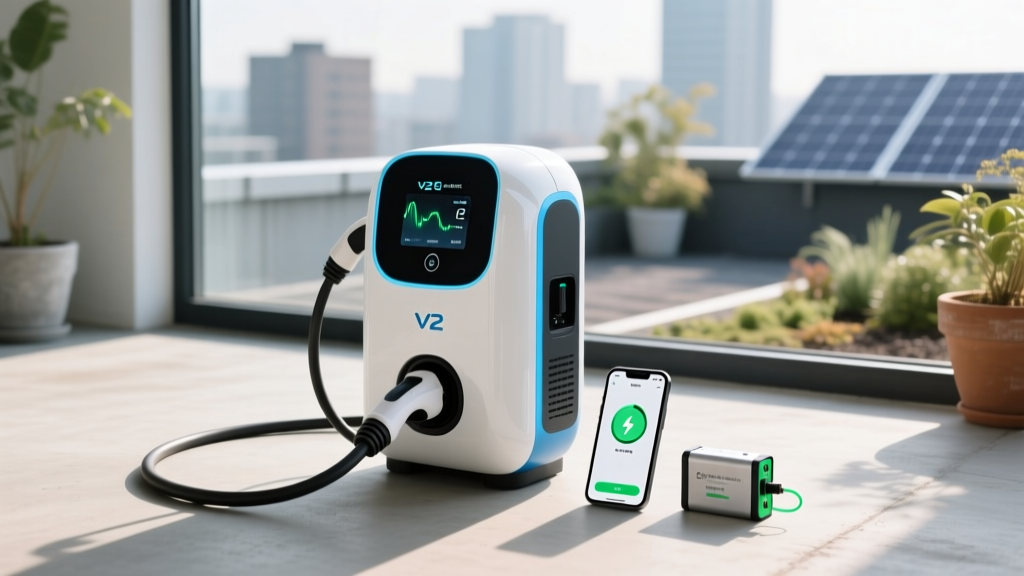
Most EV owners think of charging as a one-way street: electricity flows from the grid into the battery. A V2G charger (vehicle-to-grid charger) reverses that equation, enabling your EV to send power back to your home during an outage or to the grid for utility credit. Bidirectional charging is no longer a concept-car gimmick — it's shipping hardware in 2026, though the ecosystem of compatible vehicles, utility programs, and certified installers remains narrow.
This guide breaks down exactly what V2G-capable hardware is available, what it costs to install, which EVs support it, and whether the economics justify the investment today.
V2G vs V2H vs V2L: What Bidirectional Charging Actually Means
Before spending $5,000+ on bidirectional equipment, clarify which capability you need. Manufacturers and charger brands use these terms inconsistently, but the distinctions matter for wiring and utility interconnection:
- V2G (Vehicle-to-Grid): The EV exports power back through the utility meter, earning credits or payments from your utility for grid services. Requires utility approval, a revenue-grade meter, and interconnection agreement.
- V2H (Vehicle-to-Home): The EV powers your home during an outage or peak-rate window, acting like a home battery (think Tesla Powerwall on wheels). Does not require utility interconnection approval — it operates behind the meter through an automatic transfer switch.
- V2L (Vehicle-to-Load): The EV provides AC power through onboard outlets (120V or 240V) to run appliances, tools, or a campsite. No special home charger needed — the car's built-in inverter handles it. Available on the Hyundai Ioniq 5/6, Kia EV6/EV9, Ford F-150 Lightning, and Genesis GV60.
Most "V2G chargers" sold to consumers in 2026 are technically V2H-capable bidirectional chargers. True grid export (V2G) requires a utility that has deployed a V2G tariff program — currently limited to select markets served by PG&E, SDG&E, Southern California Edison, Duke Energy, and a handful of others. Check your utility's interconnection portal before assuming V2G revenue is available.
Charging Levels Explained: Where Bidirectional Fits
Bidirectional charging operates at Level 2 speeds on the AC side. Here's how it fits into the broader charging landscape:
| Level | Voltage / Amperage | Power (kW) | Miles Added Per Hour | Direction | Typical Use |
|---|---|---|---|---|---|
| Level 1 | 120V / 12-16A | 1.4 – 1.9 kW | 3 – 5 mi/hr | One-way (to EV) | Overnight trickle, emergency |
| Level 2 | 240V / 32-48A | 7.7 – 11.5 kW | 25 – 44 mi/hr | One-way or bidirectional | Daily home charging, V2H |
| DC Fast (Level 3) | 400-900V DC | 50 – 350 kW | 180 – 1,200+ mi/hr | One-way (to EV) | Road trips, public stations |
A V2G/V2H charger typically operates at 11.5 kW (48A, 240V) for charging the EV and exports at a similar rate when powering the home. For context, 11.5 kW can run most of a 2,500 sq ft home's essential circuits (refrigerator, lights, HVAC blower, well pump) simultaneously — though not an electric oven, dryer, and EV charger all at once.
Available V2G and V2H Chargers in 2026
The bidirectional charger market has consolidated around a few proven units. Here's what's available for residential installation:
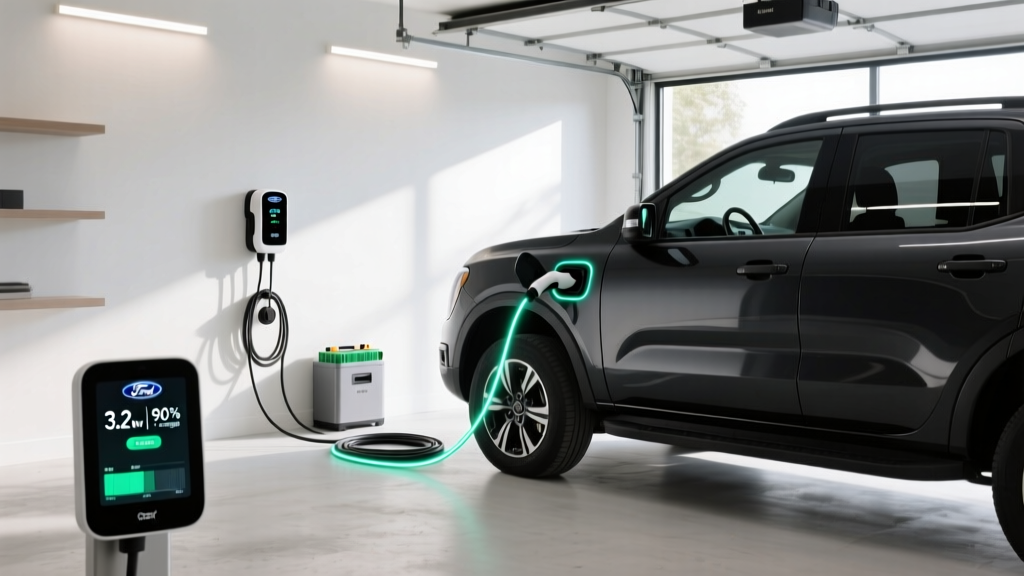
Ford Charge Station Pro
- Power: 11.5 kW charge / 9.6 kW export (V2H)
- Connector: NACS (Tesla-style, native on 2025+ F-150 Lightning)
- Cable length: 25 ft
- Smart features: FordPass app scheduling, Intelligent Backup Power via transfer switch
- Price: ~$1,800 (hardware only)
- Compatible EVs: Ford F-150 Lightning (all trims)
Wallbox Quasar 2
- Power: 11.5 kW charge / 11.5 kW export (V2H/V2G)
- Connector: NACS or CCS1 (configurable at order)
- Cable length: 20 ft
- Smart features: myWallbox app, utility API integration for V2G tariffs, solar integration
- Price: ~$3,500 (hardware only)
- Compatible EVs: Ford F-150 Lightning, Hyundai Ioniq 5 (2025+ NACS), Kia EV9, select CCS1 vehicles with firmware support
Emporia V2X Bidirectional Charger
- Power: 11.5 kW charge / 11.5 kW export (V2H)
- Connector: NACS
- Cable length: 24 ft
- Smart features: Emporia app with whole-home energy monitoring, solar-aware scheduling, automatic transfer
- Price: ~$2,800 (hardware only)
- Compatible EVs: Ford F-150 Lightning, GM Ultium-platform vehicles (Silverado EV, Blazer EV with V2H OTA update)
dcbel r16 Home Station
- Power: 11.5 kW charge / 12 kW export (V2H), optional solar DC coupling
- Connector: NACS
- Cable length: 22 ft
- Smart features: Integrated solar inverter, home energy management, off-grid capability
- Price: ~$5,500 (hardware only)
- Compatible EVs: Ford F-150 Lightning, GM Ultium vehicles
Key buying note: Every bidirectional charger requires the vehicle's onboard systems to support export. Plugging a non-compatible EV into a Quasar 2 will charge the car normally (one-way), but export functions won't activate. Confirm vehicle firmware compatibility with the charger manufacturer before purchasing.
Home Installation: Electrical Requirements, Panel Upgrades & Costs
Bidirectional chargers demand more from your electrical system than a standard Level 2 charger. The export function and integrated transfer switch add complexity and cost.
Electrical Requirements
- Circuit: Dedicated 60A breaker (for 48A continuous charge/export per NEC 80% rule)
- Wire gauge: 6 AWG copper (THHN in conduit) or 4 AWG aluminum
- Voltage: 240V split-phase (standard US residential)
- Transfer switch: Required for V2H — either a whole-home automatic transfer switch (ATS) or a critical-loads subpanel. Generac, Kohler, and Wallbox offer compatible ATS units.
- GFCI: NEC 2023/2026 requires GFCI protection for all EV supply equipment — bidirectional chargers have this built in.
- Outdoor rating: NEMA 4 (weatherproof) required for outdoor installations; NEMA 1 minimum for garage mounts.
Panel Upgrade Reality
Most homes built before 2000 have a 100A or 125A main panel. Adding a 60A bidirectional circuit — plus the backfeed from export — often pushes total calculated load beyond panel capacity. A licensed electrician will perform a NEC Article 220 load calculation to determine if your panel can handle it.
If your panel is already near capacity (common with electric ranges, dryers, HVAC, and an existing EV charger), expect a panel upgrade to 200A, which adds $1,500–$3,500 to the project. Homes with 200A+ service usually have headroom for a bidirectional circuit without an upgrade.
Installation Cost Breakdown
| Component | Low Estimate | High Estimate | Notes |
|---|---|---|---|
| Bidirectional charger hardware | $1,800 | $5,500 | Varies by brand; dcbel r16 at top |
| Automatic transfer switch (ATS) | $500 | $2,000 | Required for V2H backup power |
| Electrical labor (installation + wiring) | $800 | $2,500 | Depends on panel proximity, conduit run length |
| Panel upgrade (if needed) | $1,500 | $3,500 | 200A upgrade; not always required |
| Permit & inspection | $150 | $500 | Varies by jurisdiction |
| Utility interconnection fee (V2G only) | $0 | $300 | Only if exporting to grid for credit |
| Total (no panel upgrade) | $3,250 | $10,800 | |
| Total (with panel upgrade) | $4,750 | $14,300 |
Federal tax credit note: The IRS §30D credit applies to the vehicle, not the charger. However, the Energy Efficient Home Improvement Credit (25C) covers up to $1,000 (30% of cost, capped) for EV supply equipment installed in 2026. This applies to bidirectional chargers. Confirm eligibility with a tax professional — income caps and equipment certification requirements apply.
Which EVs Support Bidirectional Charging?
Not every EV can export power. Bidirectional capability requires specific onboard inverter hardware and firmware. As of 2026, here's the compatibility landscape:
| Vehicle | Model Year | Connector | V2H | V2G | V2L | Export Power |
|---|---|---|---|---|---|---|
| Ford F-150 Lightning | 2022–2026 | NACS | ✅ Yes | ⚠️ Limited | ✅ Yes | 9.6 kW (V2H), 2.0 kW (V2L) |
| Hyundai Ioniq 5 | 2025–2026 | NACS | ⚠️ Firmware pending | ❌ No | ✅ Yes | 3.6 kW (V2L only) |
| Kia EV9 | 2024–2026 | NACS | ⚠️ Firmware pending | ❌ No | ✅ Yes | 3.6 kW (V2L only) |
| Chevrolet Silverado EV | 2024–2026 | NACS | ✅ Yes (OTA) | ❌ No | ✅ Yes | Up to 10.2 kW (V2H) |
| GMC Sierra EV | 2024–2026 | NACS | ✅ Yes (OTA) | ❌ No | ✅ Yes | Up to 10.2 kW (V2H) |
| Hyundai Ioniq 5 (pre-2025) | 2022–2024 | CCS1 | ❌ No | ❌ No | ✅ Yes | 3.6 kW (V2L only) |
| Tesla Cybertruck | 2024–2026 | NACS | ❌ No | ❌ No | ✅ Yes (Powershare) | 11.5 kW (V2L, outlets in bed) |
The practical reality: For full V2H home backup via a bidirectional charger, the Ford F-150 Lightning and GM Ultium trucks (Silverado EV, Sierra EV) are your only proven options in 2026. Hyundai/Kia vehicles support V2L (outlet-based power) but have not yet enabled full V2H through a wall-mounted charger, despite hardware capability. Tesla does not support any form of bidirectional export through a charger as of 2026 — Powershare is limited to V2L through the truck bed outlets.
Cost to Charge: Home vs Public vs V2G Revenue
Bidirectional charging adds a revenue dimension to the standard cost equation. Here's the full picture:
| Scenario | $/kWh | Cost for 60 kWh (≈200 mi) | Cost Per Mile | Gas Equivalent (25 MPG @ $3.40/gal) |
|---|---|---|---|---|
| Home off-peak (utility TOU) | $0.08 – $0.12 | $4.80 – $7.20 | $0.024 – $0.036 | $0.136 |
| Home standard rate | $0.14 – $0.18 | $8.40 – $10.80 | $0.042 – $0.054 | $0.136 |
| Public Level 2 (ChargePoint, etc.) | $0.20 – $0.35 | $12.00 – $21.00 | $0.060 – $0.105 | $0.136 |
| DC Fast (Electrify America, Tesla) | $0.30 – $0.55 | $18.00 – $33.00 | $0.090 – $0.165 | $0.136 |
| V2G export revenue | $0.10 – $0.30/kWh earned | –$6.00 to –$18.00 | Offsets charging cost | N/A |
V2G economics in practice: If your utility offers a V2G tariff (e.g., PG&E's experimental vehicle-to-grid program), you might earn $0.15–$0.30/kWh for exporting during peak grid events (typically 4–9 PM on summer weekdays). A 131 kWh F-150 Lightning battery exporting 40 kWh during a peak event could earn $6–$12 in a single evening. Over a summer season, that's potentially $300–$600 in credits — but these programs remain limited, experimental, and subject to change.
V2H economics (more realistic for most buyers): During a power outage, a 131 kWh Lightning battery at 80% SoC holds ~105 kWh of usable energy. At 9.6 kW export, that's roughly 11 hours of full-home backup or 3–5 days of essentials-only power (refrigerator, lights, internet, HVAC at reduced load). Compared to a $12,000–$18,000 Tesla Powerwall (13.5 kWh), the Lightning's battery holds nearly 10× the energy — and you drive it to work every day.
Charging Time Examples for Common Battery Sizes
Here's what to expect when charging popular bidirectional-capable EVs with an 11.5 kW Level 2 V2G charger:
| Vehicle | Battery (usable kWh) | 10–80% at 11.5 kW | Full 0–100% at 11.5 kW | DC Fast 10–80% |
|---|---|---|---|---|
| Ford F-150 Lightning (Std Range) | 98 kWh (LFP) | ~6.0 hours | ~8.5 hours | ~44 min (150 kW peak) |
| Ford F-150 Lightning (Ext Range) | 131 kWh (NMC) | ~8.0 hours | ~11.4 hours | ~41 min (170 kW peak) |
| Chevrolet Silverado EV (4WT) | 200 kWh (NMC) | ~12.2 hours | ~17.4 hours | ~65 min (350 kW peak) |
| GMC Sierra EV Denali | 200 kWh (NMC) | ~12.2 hours | ~17.4 hours | ~65 min (350 kW peak) |
Charge curve note: Level 2 AC charging is essentially linear — the charger delivers its full 11.5 kW until the battery management system tapers near 100% SoC. This is different from DC fast charging, where the curve drops sharply above 80%. For daily use, set your charge limit to 80% (especially with NMC chemistry) and use 100% only when you need full range for a trip. LFP batteries (like the Lightning Standard Range) tolerate 100% daily charging better — fueleconomy.gov lists chemistry by model.
Safety, Code & Utility Interconnection Considerations
Bidirectional chargers blur the line between load and generator in your electrical panel. This triggers specific code and safety requirements:
- NEC Article 625: Governs all EV supply equipment. Bidirectional chargers must be listed to UL 9741 (Bidirectional EVSE standard) — confirm the unit carries this certification before purchasing.
- Transfer switch requirement: V2H systems must include an approved transfer switch to prevent backfeeding the grid during an outage (which could electrocute utility line workers). Never install a V2H system without one.
- Utility notification: Even for V2H (behind-the-meter), many utilities require notification of any bidirectional equipment on the premises. Failure to notify may void your interconnection agreement.
- Battery degradation: Frequent V2G cycling accelerates battery wear. Ford's warranty covers the Lightning battery for 8 years/100,000 miles with a minimum 70% capacity retention — but intentional grid export may affect warranty terms. Read the fine print. Occasional V2H backup use (a few times per year) has negligible degradation impact.
- Grounding & bonding: Bidirectional systems require proper equipment grounding per NEC 250. Your electrician must verify the grounding electrode system is adequate for the export current.
Frequently Asked Questions
How much does it cost to install a V2G charger at home?
Expect $3,250–$10,800 total for a bidirectional charger installation without a panel upgrade, and $4,750–$14,300 if your panel needs upgrading to 200A. The hardware itself ranges from $1,800 (Ford Charge Station Pro) to $5,500 (dcbel r16), with the transfer switch, labor, and permit adding $1,450–$5,300 depending on your home's electrical layout.
How fast will each charging level add range?
Level 1 (120V) adds 3–5 miles per hour. Level 2 (240V, 48A) adds 25–44 miles per hour depending on the vehicle's efficiency — an F-150 Lightning at ~2.0 kWh/mile gains roughly 25 mi/hr at 11.5 kW, while a more efficient EV at 3.5 mi/kWh gains ~40 mi/hr. DC fast charging adds 180–1,200+ miles per hour at peak rates but is a one-way (charge-only) technology.
Which connector and charger is compatible with my EV?
All current bidirectional chargers use the NACS connector. If your EV has a CCS1 port (pre-2025 Hyundai/Kia/GM models), you'll need a CCS1-to-NACS adapter for charging, but bidirectional export will not work unless the vehicle's firmware supports it. The Ford F-150 Lightning (2022+, NACS) and GM Silverado/Sierra EV (NACS) are the primary compatible vehicles for full V2H via wall charger in 2026.
How much does charging cost per mile vs gas?
Home charging at $0.14/kWh costs $0.042–$0.054 per mile for an F-150 Lightning (~2.0 kWh/mile). Gasoline at $3.40/gallon in a comparable F-150 (20 MPG combined) costs $0.17 per mile. That's a 70–75% per-mile savings with electricity, before any V2G revenue or V2H backup value is factored in.
What electrical upgrades might I need?
The most common upgrade is a panel replacement from 100A/125A to 200A ($1,500–$3,500), needed when your existing panel lacks capacity for a 60A dedicated circuit plus export backfeed. You'll also need an automatic transfer switch ($500–$2,000) for V2H functionality. Some jurisdictions require a separate revenue-grade meter for V2G grid export. Always get a load calculation from a licensed electrician before committing to hardware.
Does bidirectional charging void my EV battery warranty?
It depends on the manufacturer and the type of export. Ford permits V2H backup use with the Charge Station Pro and states it does not void the 8-year/100,000-mile battery warranty. However, frequent V2G grid export (daily cycling for utility revenue) may be classified as commercial use, which could affect warranty coverage. GM has not issued a blanket statement for Silverado EV V2H use as of early 2026. Always confirm in writing with the manufacturer before purchasing bidirectional equipment.
Is a V2G charger worth it in 2026?
If you own an F-150 Lightning or Silverado EV, live in an area with frequent outages, and value home backup power, a V2H installation ($5,000–$10,000 all-in) provides exceptional value compared to a standalone home battery. If your goal is V2G grid revenue, wait — utility programs are still pilot-stage in most markets, and the earnings rarely justify the premium hardware cost alone. The strongest use case today is V2H backup power, not V2G income.
Sources: EPA Fuel Economy, IRS Energy Efficient Home Improvement Credit, manufacturer specifications from Ford, GM, and Wallbox.