The State of US Public Charging in 2026
If you've searched "how many charging stations in the US" while weighing an EV purchase, the short answer is reassuring: as of early 2026, the country hosts roughly 75,000 public charging ports across more than 30,000 stations, according to the U.S. Department of Energy's Alternative Fuels Data Center. That number has roughly doubled since 2022, driven by the NEVI (National Electric Vehicle Infrastructure) program and private rollouts from Tesla, Electrify America, EVgo, and ChargePoint.
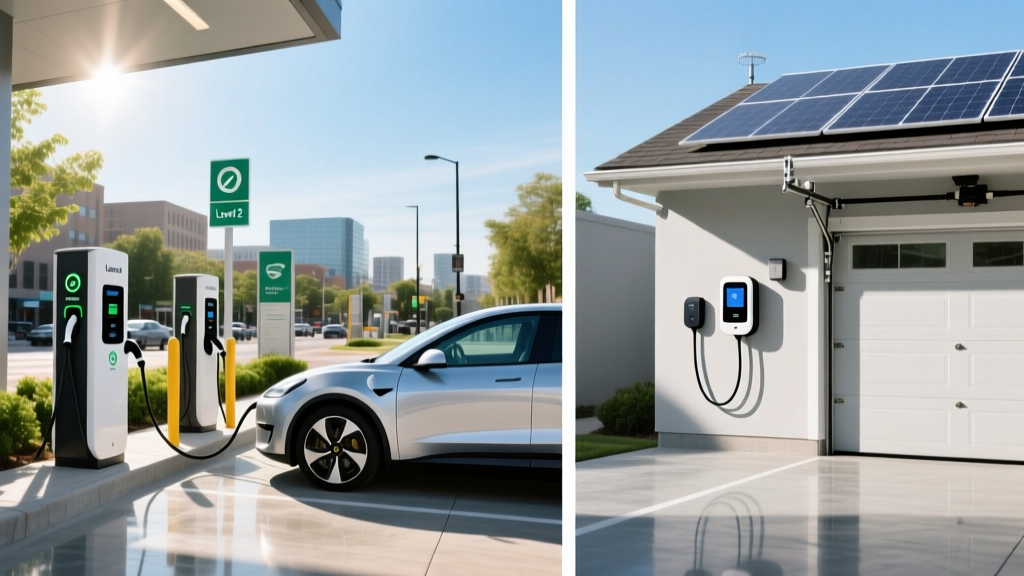
But the raw count is only part of the story. About 15% of those ports are DC fast chargers (50 kW and above); the rest are Level 2 (typically 6.6–19.2 kW). And distribution is uneven: California alone accounts for roughly one-third of all public ports, while stretches of I-70, I-80, and I-10 in the Mountain West still have gaps of 80–120 miles between reliable DCFC stops. For most EV owners, home charging remains the backbone — public networks are for road trips and apartment dwellers.
Charging Levels Explained: Speeds, kW, and Miles Per Hour
Before evaluating any station or home install, you need to separate kW (kilowatts, the rate of power flow) from kWh (kilowatt-hours, the energy stored in your battery). A 72 kWh battery charged at 11 kW gains roughly 11 kWh per hour — simple division. Here's how each level translates in the real world:
| Level | Voltage | Power (kW) | Miles Added / Hour | Best For |
|---|---|---|---|---|
| Level 1 | 120V | 1.0–1.4 kW | 3–5 mi/hr | Overnight top-ups, PHEVs, low-mileage drivers |
| Level 2 (home/public) | 240V | 3.3–19.2 kW | 14–60 mi/hr | Daily home charging, workplaces, retail |
| DC Fast (DCFC) | 400–800V DC | 50–350 kW | 150–1,000+ mi/hr (peak) | Road trips, quick top-ups |
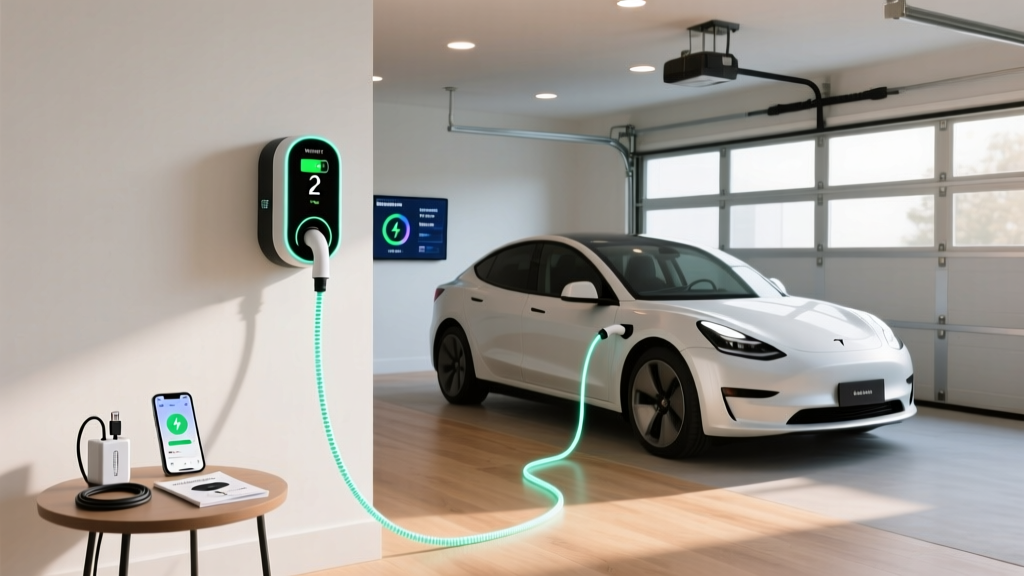
A few real-world anchors: a Tesla Model Y (75 kWh usable battery) on an 11.5 kW Level 2 home charger refills from 20–80% in about 5 hours. On a 250 kW Supercharger, that same 20–80% sprint takes roughly 22 minutes — but only if the battery is preconditioned and ambient temps are moderate. Above 80% state of charge, every DCFC tapers sharply to protect the cells; expect the final 20% to take as long as the first 60%.
Home Level 2 Installation: What It Actually Costs
The single biggest variable in home charging is your electrical panel. A modern 200-amp panel with spare breaker slots can usually accommodate a 40A or 48A Level 2 circuit without drama. A 100-amp panel in a 1970s home, or one already loaded with electric range, dryer, and HVAC, may need a $2,000–$4,500 service upgrade before any charger goes in.
| Item | Low End | Typical | High End |
|---|---|---|---|
| Level 2 charger hardware (40–48A, 240V, NACS or J1772) | $350 | $550 | $750 |
| Electrician labor (short run, <30 ft from panel) | $400 | $700 | $1,200 |
| Permit & inspection | $75 | $175 | $350 |
| Long wire run (50–100 ft, conduit) | $300 | $600 | $1,200 |
| Panel upgrade (100A → 200A, if needed) | $1,800 | $2,800 | $4,500 |
| Total (no panel upgrade) | $825 | $1,425 | $2,450 |
| Total (with panel upgrade) | $2,625 | $4,225 | $6,950 |
Electrical requirements are specific: a 48A charger needs a 60A breaker (NEC continuous-load rule requires 125% headroom), 6 AWG copper wire, a NEMA 14-50 receptacle or hardwired connection, and a GFCI breaker if the outlet is outdoors. Many licensed electricians now recommend hardwiring over receptacles — it eliminates a failure point and often avoids the GFCI nuisance-trip issue that plagued early 14-50 installs.
The federal §30C Alternative Fuel Vehicle Refueling Property Credit covers up to 30% of home charger hardware and installation costs, capped at $1,000, but only for taxpayers in eligible low-income or non-urban census tracts. Check the latest IRS guidance before assuming eligibility.
Connector Compatibility: NACS, CCS1, and CHAdeMO
The connector landscape consolidated dramatically between 2023 and 2025. NACS (North American Charging Standard, the Tesla plug) is now the de facto standard: Ford, GM, Rivian, Hyundai, Kia, BMW, and most other major OEMs have adopted it on new vehicles. CCS1 remains on many 2021–2025 models still on the road. CHAdeMO is effectively legacy — only the Nissan Leaf still uses it, and new Leaf production ended in 2025.
| Connector | Native Vehicles | Adapter Needed? | Network Access |
|---|---|---|---|
| NACS (Tesla plug) | Tesla, Ford F-150 Lightning/Mach-E, GM Ultium, Rivian, Hyundai Ioniq 5/6 (2025+), Kia EV6/EV9 (2025+) | CCS→NACS adapter for older CCS cars | Tesla Supercharger (open to non-Tesla via app), Electrify America, EVgo |
| CCS1 | 2021–2025 VW ID.4, BMW i4/iX, many pre-2025 models | NACS→CCS adapter (~$200) for Superchargers | Electrify America, EVgo, ChargePoint DCFC |
| CHAdeMO | Nissan Leaf (discontinued 2025) | No viable adapter to NACS/CCS | Shrinking legacy network |
If you're buying a 2026 EV, insist on NACS. If you own a CCS vehicle today, budget $180–$250 for a Tesla-approved adapter to unlock Supercharger access — it's the single highest-value accessory you can buy.
Cost to Charge: Per-Mile Economics vs. Gasoline
Charging cost depends entirely on where and when you plug in. A kWh (the unit of energy you pay for) costs anywhere from $0.08 at home on a time-of-use off-peak rate to $0.58 at some urban DC fast chargers. Here's how that translates for a 2026 Hyundai Ioniq 5 (3.6 mi/kWh efficiency, per fueleconomy.gov) versus a comparable 28 MPG gas SUV at $3.40/gallon:
| Scenario | Rate | EV Cost / Mile | Gas Cost / Mile | EV Savings |
|---|---|---|---|---|
| Home off-peak (utility TOU) | $0.11/kWh | $0.031 | $0.121 | 75% |
| Home peak | $0.22/kWh | $0.061 | $0.121 | 50% |
| Public Level 2 (workplace, retail) | $0.28/kWh | $0.078 | $0.121 | 36% |
| DC fast (highway corridor) | $0.48/kWh | $0.133 | $0.121 | −10% (EV more expensive) |
The takeaway: home charging on off-peak rates is the economic sweet spot. If you rely exclusively on DC fast charging, a gas car can actually cost less per mile. This is why home or workplace Level 2 access is the single biggest determinant of EV ownership satisfaction.
Recommended Home Level 2 Chargers (2026)
Emporia Vue / Emporia Level 2
- Power: 48A (11.5 kW at 240V)
- Connector: J1772 (NACS version available)
- Cable: 24 ft
- Smart features: Wi-Fi, scheduling, solar integration
- Price: ~$399
ChargePoint Home Flex
- Power: up to 50A (12 kW, dip-switch configurable)
- Connector: J1772 or NACS
- Cable: 23 ft
- Smart features: app scheduling, Alexa, load sharing
- Price: ~$649
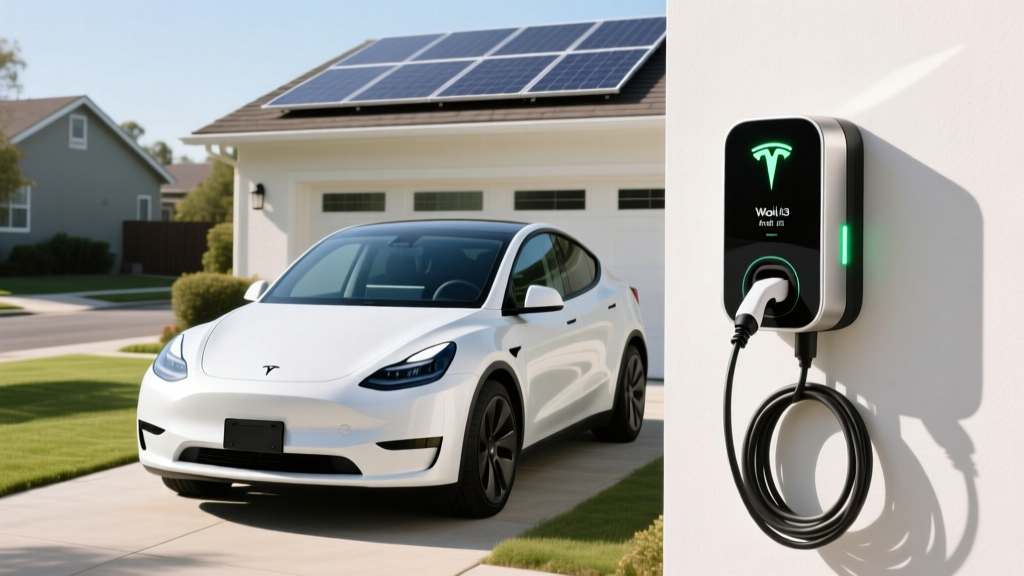
Tesla Wall Connector (Universal)
- Power: 48A (11.5 kW)
- Connector: NACS with integrated J1772 adapter (Magic Dock style)
- Cable: 24 ft
- Smart features: Wi-Fi updates, power sharing, vehicle-specific profiles
- Price: ~$599
For most 2026 NACS-native vehicles, the Tesla Universal Wall Connector is the cleanest match. If your home has solar or you want granular energy tracking, Emporia is the value pick. ChargePoint remains the best option for households with mixed NACS and J1772 vehicles.
Charging Time Examples for Common Battery Sizes
Real charging times depend on the charge curve, not just peak kW. Here are realistic 10–80% times for popular 2026 models under typical conditions (battery preconditioned, 65–75°F ambient):
- Tesla Model Y (75 kWh, NMC): 250 kW Supercharger → ~22 min; 11.5 kW home L2 → ~5.5 hr
- Hyundai Ioniq 5 (84 kWh, NMC, 800V architecture): 350 kW DCFC → ~18 min; 10.9 kW home L2 → ~6 hr
- Ford F-150 Lightning Extended Range (131 kWh, NMC): 150 kW DCFC → ~42 min; 19.2 kW home L2 → ~8 hr
- BYD Seal (82.5 kWh, LFP): 150 kW DCFC → ~30 min (LFP tapers earlier); 11 kW home L2 → ~6.5 hr
- Chevrolet Equinox EV (85 kWh, NMC): 150 kW DCFC → ~30 min; 11.5 kW home L2 → ~6 hr
Note that LFP batteries (common on base-trim Teslas and most Chinese-market vehicles) tolerate 100% state-of-charge better than NMC, but their DCFC curve tapers earlier — expect 10–80% times roughly 20% longer than an equivalent NMC pack at the same peak kW.
Safety, Code, and Installation Gotchas
A Level 2 charger is a continuous high-amperage load — more like an electric furnace than a phone charger. Non-negotiable code and safety points:
- Dedicated circuit: The charger must be on its own breaker, shared with nothing else.
- NEC 125% rule: A 48A charger requires a 60A breaker and 6 AWG copper.
- GFCI protection: Required for outdoor receptacles; hardwired installs often exempt depending on jurisdiction.
- Outdoor rating: Any unit mounted outside must be NEMA 4 rated. All three chargers above meet this.
- Permit required: Nearly every US jurisdiction requires an electrical permit and inspection for a new 240V circuit. Skip this and your homeowner's insurance can deny a related claim.
- Load calculation: A licensed electrician should run a NEC Article 220 load calculation before energizing the circuit. If your panel is near capacity, a smart load-management device (like the Emporia Smart Panel or Tesla Powerwall gateway) can avoid a full service upgrade.
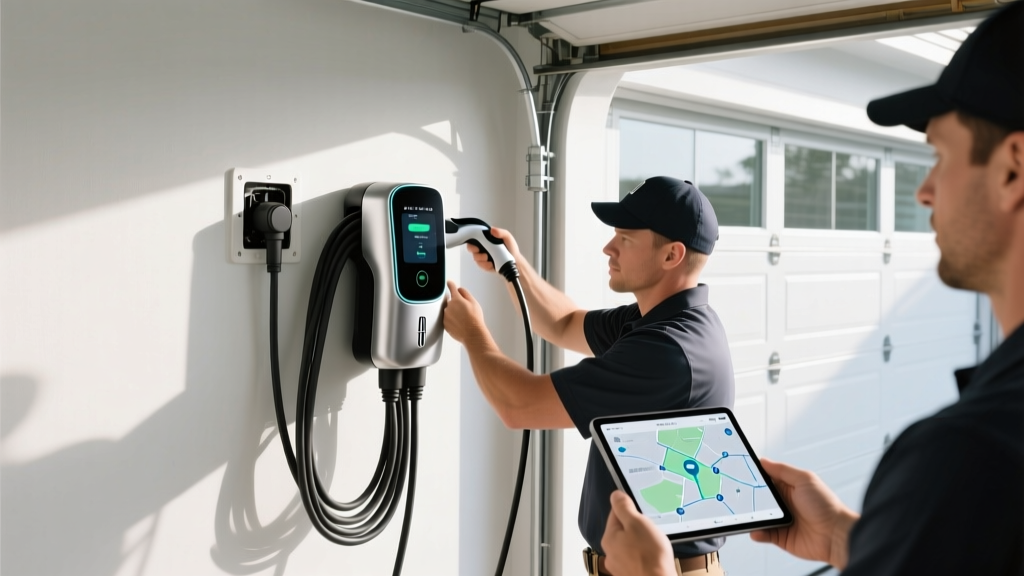
Always hire a licensed electrician familiar with EVSE installs. The $100–$200 premium over a handyman pays for itself in code compliance and warranty protection.
Frequently Asked Questions
How much does it cost to install a home EV charger?
A straightforward Level 2 install on an existing 200A panel typically runs $825–$2,450 all-in (hardware, labor, permit). Homes needing a panel upgrade to 200A should budget $2,625–$6,950. The federal §30C credit can offset up to $1,000 for qualifying taxpayers in eligible census tracts.
How fast will each charging level add range?
Level 1 (120V): 3–5 miles per hour. Level 2 (240V, 48A): roughly 35–45 miles per hour on a typical sedan. DC fast charging: 150–1,000+ miles per hour at peak, but sustained averages are much lower due to taper above 80% SoC.
Which connector/charger is compatible with my EV?
For 2026 model-year vehicles, NACS is now the dominant standard on Tesla, Ford, GM, Hyundai, Kia, and Rivian. CCS1 is on most 2021–2025 non-Tesla EVs; an adapter (~$200) unlocks Superchargers. CHAdeMO is legacy only. Check your vehicle's charge-port door or owner's manual for the exact connector.
How much does charging cost per mile vs gas?
Home off-peak charging costs about $0.03/mile — roughly 75% less than a 28 MPG gas car at $3.40/gallon. Public DC fast charging at $0.48/kWh actually costs more per mile than gas. Home Level 2 access is the economic linchpin of EV ownership.
What electrical upgrades might I need?
If your home has a 100A panel, or a 200A panel already loaded with electric heat, range, dryer, and A/C, expect a panel upgrade ($1,800–$4,500). Long wire runs over 50 ft add $300–$1,200 in copper and conduit. A licensed electrician's load calculation is the only way to know for sure before committing.