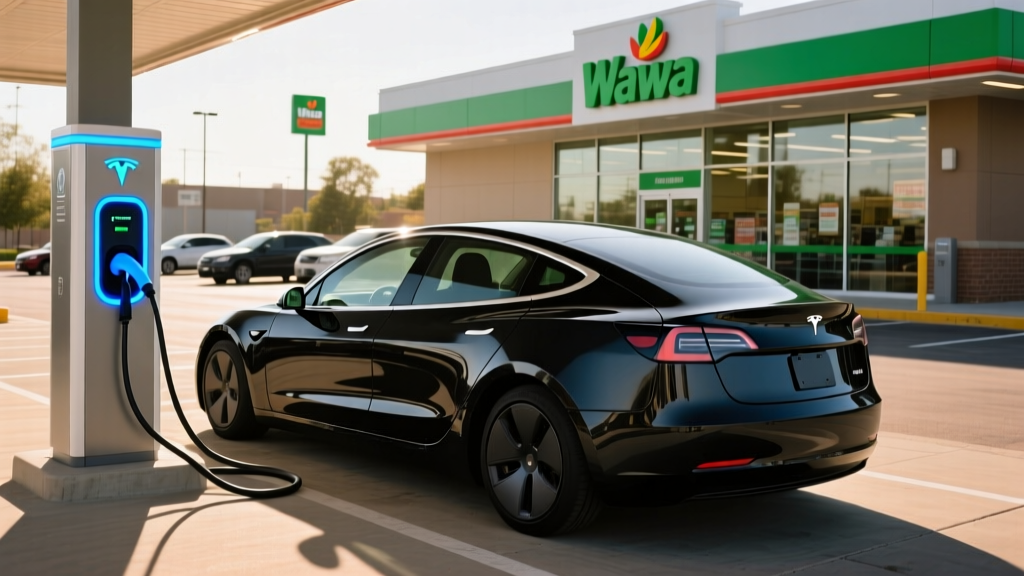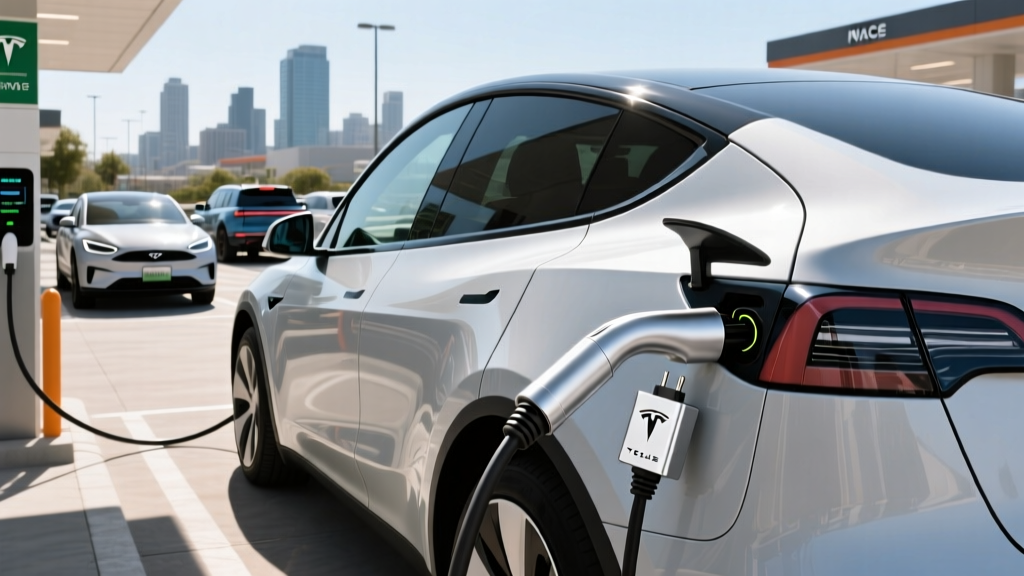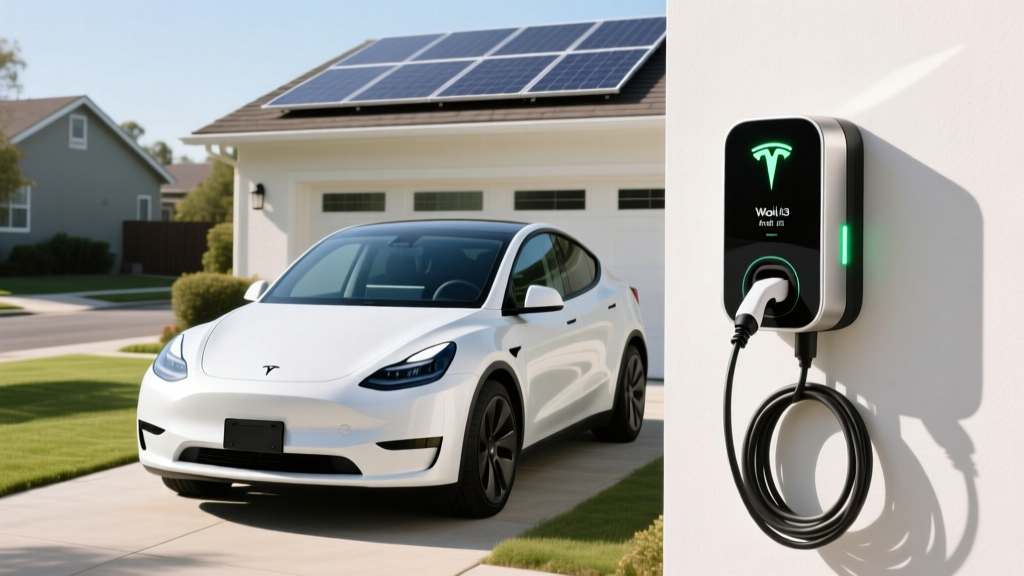
If you own a Tesla—or any EV with the North American Charging Standard (NACS) port—you've probably searched "how to buy a Tesla Supercharger" wondering whether you can install the same blazing-fast chargers you see at highway rest stops in your own garage. The short answer: you can't buy a commercial Supercharger stall for your home, but Tesla sells the Tesla Wall Connector, a Level 2 home charging unit that delivers up to 11.5 kW (48 amps) and adds roughly 44 miles of range per hour. For most EV owners, this is the practical, code-compliant, and cost-effective path to Supercharger-adjacent convenience at home.
This guide walks through every decision point: which Tesla charging equipment you can actually purchase, what your electrical panel needs to support it, how NACS compatibility is evolving across the industry, and exactly what you'll spend on hardware, labor, and permits in 2026.
What Tesla Actually Sells to Consumers (and What It Doesn't)
Tesla's DC fast-charging Supercharger stalls—the 150 kW to 250 kW cabinets you see in parking lots—are commercial infrastructure. They require three-phase power delivery, utility-grade transformers, and direct grid interconnection agreements. Tesla does not sell these to individual consumers.
What Tesla does sell for home use is a lineup of Level 2 AC charging equipment:
- Tesla Wall Connector (Gen 3): Up to 11.5 kW / 48A, hardwired, Wi-Fi enabled, 24-foot cable. Currently priced around $475.
- Tesla Mobile Connector: A portable charging cable that ships with new Teslas. Delivers up to 3 kW on a standard 120V outlet (Level 1) or up to 7.2 kW with the optional 240V NEMA 14-50 adapter (Level 2). Priced around $200 for the bundle.
- Tesla Universal Wall Connector: Includes a built-in J1772 adapter tip so it can charge both NACS (Tesla) and CCS/J1772 vehicles from the same unit. Also rated up to 11.5 kW / 48A, priced around $595.
For non-Tesla EVs now adopting NACS (Ford, Rivian, GM, Volvo, and others as of 2025–2026), the standard Tesla Wall Connector with its native NACS plug is a direct fit—no adapter needed.
Charging Levels Explained: Speeds, Power, and What to Expect
Before sizing your home setup, you need a clear picture of what each charging level delivers. Remember: kW (kilowatts) measures power—how fast energy flows into your battery. kWh (kilowatt-hours) measures energy—the total capacity of your battery, like gallons in a fuel tank. A 75 kWh battery charged at 11.5 kW will theoretically fill from empty to full in about 6.5 hours, minus efficiency losses and tapering near 100%.
| Charging Level | Voltage / Amperage | Power Output | Miles of Range Added per Hour | Typical Use Case |
|---|---|---|---|---|
| Level 1 | 120V / 12A | ~1.4 kW | 3–5 mi/hr | Overnight top-ups, PHEVs, emergencies |
| Level 2 (Standard) | 240V / 32A | ~7.7 kW | 25–30 mi/hr | Home daily charging, apartment garages |
| Level 2 (Max Home) | 240V / 48A | ~11.5 kW | 35–44 mi/hr | Tesla Wall Connector, high-capacity BEVs |
| DC Fast Charging | 400–800V DC | 50–350 kW | 150–1,000+ mi/hr | Road trips, highway Superchargers, EA/Ionity |
For a Tesla Model Y Long Range with an 82 kWh battery (roughly 310 miles EPA range), a 48A Wall Connector will replenish a 20–80% charge in approximately 4–5 hours. That same session at a 250 kW Supercharger takes about 15–20 minutes, but DC fast charging should be reserved for road trips to preserve long-term battery health.
Electrical Requirements: What Your Panel Needs to Handle
The Tesla Wall Connector at its full 48A rating requires a dedicated 60-amp circuit at 240 volts. National Electrical Code (NEC) mandates that continuous loads—EV charging qualifies—cannot exceed 80% of a circuit's rated capacity. So 48A continuous draw needs a 60A breaker.
Here's what to verify before you buy:
- Panel capacity: Most modern homes have a 200-amp main panel. A 60A EV circuit consumes about 30% of that capacity. If you're already running electric dryers, ranges, and HVAC on the same panel, a licensed electrician will perform a load calculation to confirm you have headroom.
- Panel upgrade: Homes with 100-amp service (common in pre-1990 construction) will almost certainly need an upgrade to 200A. This is the single biggest variable in installation cost.
- Wire gauge: A 60A circuit typically requires 6 AWG copper wire (THHN in conduit or NM-B Romex where permitted). Longer runs from the panel to the garage may need 4 AWG to minimize voltage drop.
- GFCI protection: The 2020 and 2023 NEC require GFCI protection for EV charging outlets. Hardwired installations (like the Wall Connector) are generally exempt from this requirement, which is one reason hardwiring is preferred over a NEMA 14-50 receptacle for dedicated EV circuits.
- Permit: Virtually every jurisdiction in the U.S. requires an electrical permit for new 240V circuits. Your electrician will pull this. Expect an inspection after installation.
| Component | Cost Range | Notes |
|---|---|---|
| Tesla Wall Connector (hardware) | $475–$595 | Standard vs. Universal (J1772 adapter built in) |
| Electrician labor (standard install) | $500–$1,500 | Short run from panel, no upgrades needed |
| Electrical permit | $50–$200 | Varies by municipality |
| Panel upgrade (100A → 200A) | $1,500–$3,500 | Needed for older homes with limited capacity |
| Trenching / conduit (long runs) | $300–$1,200 | Detached garages, underground runs |
| Total (no panel upgrade) | $1,025–$2,300 | Most common scenario for modern homes |
| Total (with panel upgrade) | $2,525–$5,800 | Older homes or high-load panels |
As always, get at least three quotes from licensed electricians. Ask specifically about their experience with EV charger installations and whether they'll pull the required permit. For detailed guidance on electrical work, defer to a licensed electrician familiar with your local code.
NACS, CCS, and CHAdeMO: Which Connector Does Your EV Need?
The connector landscape has consolidated significantly since Ford, GM, Rivian, and nearly every major automaker committed to adopting the North American Charging Standard (NACS)—Tesla's proprietary connector, now standardized as SAE J3400. Here's where things stand in 2026:
| Connector Type | Vehicles Using It (2026) | Home Charger Compatibility |
|---|---|---|
| NACS (Tesla / J3400) | All Teslas; Ford F-150 Lightning, Mustang Mach-E (2025+); GM Ultium vehicles (2025+); Rivian R1T/R1S (2025+); Volvo EX30/EX90 | Tesla Wall Connector (native); ChargePoint Home Flex with NACS cable |
| CCS1 (Combined Charging System) | Hyundai Ioniq 5/6, Kia EV6/EV9, BMW iX/i4, VW ID.4, older Ford/GM models | ChargePoint Home Flex, Emporia Vue, Grizzl-E (CCS cable); Tesla Universal Wall Connector with J1772 adapter (vehicle-side CCS adapter may be needed) |
| CHAdeMO | Nissan Leaf (legacy), Mitsubishi Outlander PHEV (legacy) | Limited Level 2 options; mostly phased out for new vehicles |
If you drive a non-Tesla EV that still uses CCS1, the Tesla Universal Wall Connector ($595) includes an integrated J1772 adapter tip that works with CCS vehicles for Level 2 AC charging. You cannot use a Tesla Wall Connector for DC fast charging a CCS vehicle at a Supercharger without the vehicle's own NACS adapter (provided by Ford, GM, and others for public Supercharger access).
Cost to Charge: Home Electricity vs. Public DC Fast Charging vs. Gas
The economic case for home charging is overwhelming. Here's a realistic breakdown based on 2026 electricity rates and fuel prices:
| Scenario | Rate / Price | Cost per Mile (250 Wh/mi EV) | Annual Cost (12,000 mi) |
|---|---|---|---|
| Home charging (off-peak utility rate) | $0.09/kWh | $0.023 | $270 |
| Home charging (standard rate) | $0.16/kWh | $0.040 | $480 |
| Public Level 2 (ChargePoint, EVgo L2) | $0.25–$0.35/kWh | $0.063–$0.088 | $750–$1,050 |
| Tesla Supercharger (DC fast) | $0.28–$0.40/kWh | $0.070–$0.100 | $840–$1,200 |
| Gasoline vehicle (28 MPG combined) | $3.40/gallon | $0.121 | $1,457 |
Even at peak public DC fast-charging rates, an EV costs less per mile than a 28 MPG gas car. But the real savings come from home charging, especially if your utility offers time-of-use (TOU) rates. Setting your Tesla to charge between midnight and 6 AM on off-peak rates can cut your annual fuel cost to under $300—roughly one-fifth of what you'd spend on gasoline.
According to fueleconomy.gov, the 2026 Tesla Model Y Long Range achieves 122 MPGe combined, translating to approximately 28 kWh per 100 miles. Your actual cost per mile depends on your local electricity rate and driving efficiency (highway speeds, cold weather, and elevation all affect Wh/mi).
Charging Time Examples: 10–80% for Common Battery Sizes
DC fast charging gets the headlines, but 95% of EV charging happens at home on Level 2. Here's what to expect for common Tesla battery sizes at different charge rates. Note that all EVs taper charge speed significantly above 80% state of charge to protect the battery—this is why we use 10–80% as the practical benchmark.
| Vehicle / Battery Size | Level 2 at 7.7 kW (32A) | Level 2 at 11.5 kW (48A) | DC Fast at 250 kW (Supercharger V3) |
|---|---|---|---|
| Tesla Model 3 RWD (60 kWh LFP) | ~5.5 hours (10–80%) | ~3.7 hours (10–80%) | ~25 minutes (10–80%) |
| Tesla Model Y LR (82 kWh NMC) | ~7.5 hours (10–80%) | ~5.0 hours (10–80%) | ~22 minutes (10–80%) |
| Tesla Model S (100 kWh NMC) | ~9.0 hours (10–80%) | ~6.0 hours (10–80%) | ~30 minutes (10–80%) |
Real-world caveat: LFP batteries (like the Model 3 RWD) can be charged to 100% regularly without degradation concerns—Tesla recommends it for accurate state-of-charge calibration. NMC batteries benefit from daily limits of 80–90% for longevity. Set your charge limit in the Tesla app accordingly.
Also note that DC fast-charging speeds depend heavily on battery temperature. In cold weather (below 40°F), always use the Tesla navigation system to route to a Supercharger—this triggers battery preconditioning, warming the pack so it can accept peak charge rates. Without preconditioning, a cold battery may accept only 50–80 kW even at a 250 kW stall, extending your stop significantly.
Equipment Recommendations: Tesla Wall Connector vs. Alternatives
If you've decided to buy a Tesla home charger, here are the top options with exact specs:
Tesla Wall Connector (Gen 3) — $475
- Power output: Up to 11.5 kW (48A at 240V)
- Connector: NACS (native Tesla plug)
- Cable length: 24 feet
- Smart features: Wi-Fi for OTA updates, load sharing (pair up to 6 units on one circuit), access control via Tesla app
- Installation: Hardwired only (no plug)
- Best for: Tesla-only households, maximum Level 2 speed
Tesla Universal Wall Connector — $595
- Power output: Up to 11.5 kW (48A at 240V)
- Connector: NACS with integrated J1772 adapter tip
- Cable length: 24 feet
- Smart features: Same Wi-Fi and load-sharing capabilities
- Installation: Hardwired only
- Best for: Mixed households (Tesla + non-Tesla EV with CCS/J1772)
ChargePoint Home Flex — $549–$699
- Power output: Up to 12 kW (50A at 240V)
- Connector: Available in NACS or J1772 (CCS) cable
- Cable length: 23 feet
- Smart features: Wi-Fi, ChargePoint app scheduling, Alexa integration, adjustable amperage (16A–50A via DIP switches)
- Installation: Hardwired or NEMA 14-50 plug
- Best for: Flexibility across EV brands, plug-in option for renters
Emporia Vue Level 2 Charger — $399
- Power output: Up to 11.5 kW (48A at 240V)
- Connector: J1772 (CCS) or NACS
- Cable length: 24 feet
- Smart features: Wi-Fi, solar-integration scheduling, energy monitoring, TOU rate optimization
- Installation: Hardwired or NEMA 14-50
- Best for: Budget-conscious buyers, solar-panel households
Safety, Code, and Installation Best Practices
EV charging is a high-draw, long-duration electrical load—essentially running a large appliance at full power for 4–8 hours every night. Proper installation is non-negotiable.
- Dedicated circuit: Your Wall Connector must be on its own dedicated breaker. Never share a circuit with other appliances.
- Hardwired vs. receptacle: Hardwired installations avoid the GFCI breaker requirement (which can nuisance-trip on EV loads) and eliminate a common failure point (loose NEMA 14-50 receptacles). Most EV electricians recommend hardwiring for dedicated EV circuits.
- Outdoor rating: The Tesla Wall Connector is rated NEMA 3R (suitable for outdoor installation). If you're mounting on an exterior wall or in an open carport, confirm your electrician uses weatherproof conduit fittings.
- Thermal monitoring: The Gen 3 Wall Connector includes built-in temperature sensors that reduce charge rate if the unit or wiring overheats—a critical safety feature for sustained 48A loads.
- Inspection: After installation, your local electrical inspector will verify wire gauge, breaker sizing, grounding, and torque on terminal connections. Do not skip this step; it's required for insurance coverage in most states.
Frequently Asked Questions
Can I buy an actual Tesla Supercharger stall for my home?
No. Tesla Supercharger stalls are commercial DC fast-charging infrastructure requiring utility-grade power delivery (often 480V three-phase), dedicated transformers, and grid interconnection agreements. They are not sold to consumers. For home use, the Tesla Wall Connector at 11.5 kW is the fastest Level 2 option available.
How much does it cost to install a Tesla Wall Connector at home?
Expect $1,025–$2,300 total (hardware + electrician + permit) if your electrical panel has adequate capacity. If your home needs a panel upgrade from 100A to 200A service, add $1,500–$3,500. Always get multiple quotes from licensed electricians and confirm they pull the required permit.
Will a Tesla Wall Connector charge my non-Tesla EV?
If your non-Tesla EV has a NACS port (Ford, GM, Rivian, and Volvo models from 2025 onward), yes—the standard Wall Connector plugs in directly. If your EV has a CCS/J1772 port (Hyundai, Kia, BMW, VW), you need either the Tesla Universal Wall Connector (with built-in J1772 adapter) or a third-party CCS charger like the ChargePoint Home Flex.
How much does home EV charging cost compared to gasoline?
At the U.S. average residential rate of $0.16/kWh, a Tesla Model Y (28 kWh/100mi) costs about $0.04 per mile—roughly one-third the cost of a 28 MPG gas car at $3.40/gallon ($0.12/mi). With off-peak TOU rates around $0.09/kWh, that drops to about $0.023 per mile, or $270 annually for 12,000 miles of driving.
Do I need a panel upgrade to install a Tesla Wall Connector?
Maybe. A 48A Wall Connector requires a 60A dedicated circuit. If your home has a 200A panel with available capacity, no upgrade is needed. Homes with 100A service (common in pre-1990 construction) or panels already near capacity will need an upgrade to 200A, costing $1,500–$3,500. A licensed electrician will perform a load calculation to determine your needs.
Is there a tax credit for installing a home EV charger?
The federal Alternative Fuel Vehicle Refueling Property Credit (IRC §30C) covers up to 30% of home charging equipment and installation costs, capped at $1,000. Eligibility depends on your census tract meeting certain criteria. Consult a tax professional and review current IRS guidance before claiming.