What "Ultra Fast Charging" Actually Means for Your EV
When automakers advertise 350 kW peak charging or "10 to 80 percent in 18 minutes," they're describing DC fast charging at the absolute top end of what current battery architectures allow. For buyers researching an ultra fast charging EV, the reality involves more nuance: charge curves taper, connector standards are converging around NACS, and the vast majority of your charging will still happen at home on a Level 2 circuit. This guide breaks down every layer — from the physics of peak kW to the permit paperwork for your garage.
Charging Levels Explained: Speed, Power, and Real-World Range Added
Every EV owner uses a mix of three charging levels. Understanding the kW output and real miles added per hour is the foundation of trip planning and home setup decisions.
| Level | Voltage / Phase | Power (kW) | Miles of Range Added Per Hour | Typical Use Case |
|---|---|---|---|---|
| Level 1 | 120V AC, single-phase | 1.0 – 1.9 kW | 3 – 5 mi/hr | Overnight trickle; PHEVs; emergency top-ups |
| Level 2 | 240V AC, single-phase | 3.3 – 19.2 kW | 12 – 75 mi/hr | Daily home & workplace charging |
| DC Fast (Level 3) | 200 – 925V DC | 50 – 350+ kW | 150 – 1,000+ mi/hr (at peak) | Road trips; ultra fast charging EV corridors |
A practical example: if you drive a Hyundai Ioniq 5 (84 kWh usable battery, EPA 303-mile range, ~3.6 mi/kWh efficiency), plugging into a Level 2 home charger at 11.5 kW adds roughly 41 miles of range per hour. A full overnight session (8 hours) restores about 328 miles — more than a full battery. On a 350 kW DC fast charger, that same Ioniq 5 peaks at 238 kW and can go from 10 to 80% in approximately 18 minutes, but the charge rate tapers sharply above 80% to protect the NMC cells.
The Reality of Ultra Fast Charging EV Speeds: 350 kW and the Charge Curve
Peak kW numbers grab headlines, but no EV sustains its maximum charge rate from 10% to 80%. The charge curve — how power delivery changes as the battery fills — determines your actual stop time.
Why Peak kW Isn't Sustained kW
Lithium-ion cells accept charge fastest at low state of charge (SoC) and progressively resist current as they fill. Thermal management also plays a role: if the battery is too cold or too hot, the vehicle's onboard system throttles the charge rate to prevent degradation. Here's what real charge curves look like on popular ultra fast charging EV platforms:
- Hyundai/Kia E-GMP (Ioniq 5, EV6, GV60): Peaks at ~238 kW on a 350 kW station, holds above 200 kW to ~55% SoC, tapers to ~100 kW by 70%, and drops below 50 kW past 85%. Result: 10-80% in ~18 minutes.
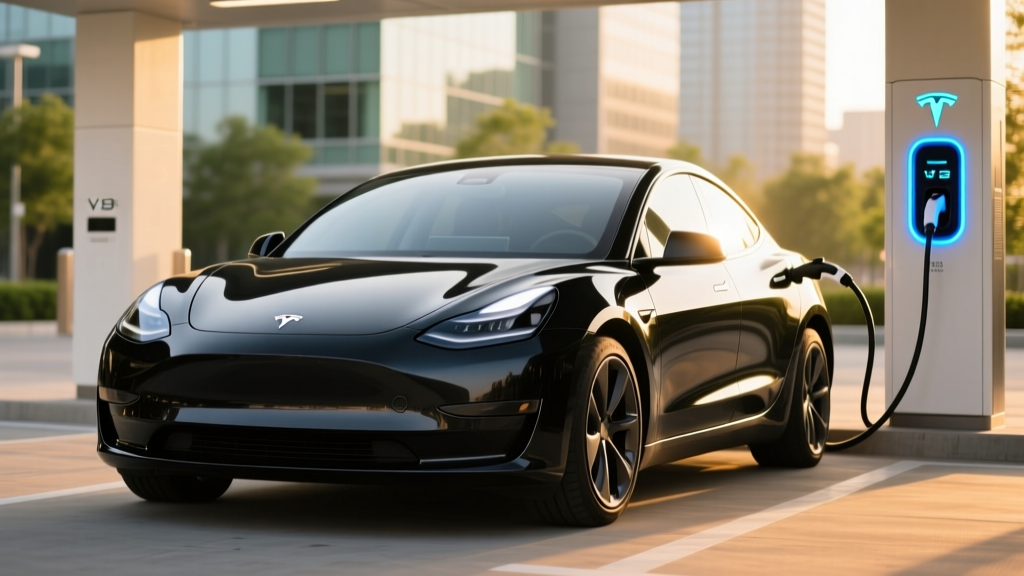
- Tesla Model 3/Y (2025+ NACS native): Peaks at ~250 kW at V3 Superchargers, sustains ~200 kW to ~45%, then curves down. V4 Superchargers rolling out in 2025-2026 support up to 350 kW for Cybertruck and next-gen models. 10-80% in ~22-25 minutes for Model Y Long Range.
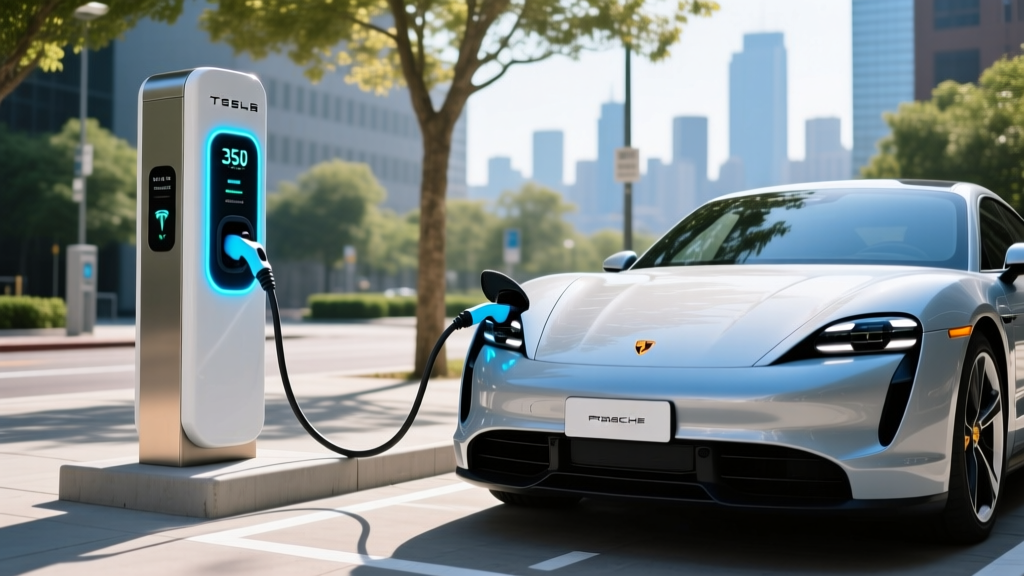
- Porsche Taycan / Audi e-tron GT (800V architecture): Peaks at ~270 kW (Taycan with Performance Battery Plus), sustains above 200 kW to ~60%. 10-80% in ~20 minutes on a 350 kW charger.
- Rivian R1T/R1S (2025+ with max tow battery): Peaks at ~220 kW on CCS/NACS adapter, tapers moderately. 10-80% in ~28-32 minutes.
Charging Time Examples for Common Battery Sizes (10-80%)
| Vehicle (Battery kWh Usable) | Peak DC kW | 10-80% Time | Level 2 at 11.5 kW (0-100%) |
|---|---|---|---|
| Chevrolet Equinox EV (85 kWh) | ~150 kW | ~30 min | ~6.5 hours |
| Tesla Model Y LR (75 kWh) | ~250 kW | ~22 min | ~5.8 hours |
| Hyundai Ioniq 5 (84 kWh) | ~238 kW | ~18 min | ~6.5 hours |
| Ford F-150 Lightning Ext. (131 kWh) | ~150 kW | ~41 min | ~10 hours |
| Porsche Taycan Perf. Batt+ (83.7 kWh) | ~270 kW | ~20 min | ~6.5 hours |
Home EV Charger Installation: Electrical Requirements, Costs, and Gotchas
Most EV owners do 80-90% of their charging at home. A properly installed Level 2 charger on a 240V circuit is the single biggest quality-of-life upgrade in EV ownership. Here's what the installation actually involves.
Electrical Requirements for Level 2 Home Charging
A Level 2 charger requires a dedicated 240-volt circuit, similar to what powers an electric dryer or oven. The amperage determines your charge speed:
- 240V / 20A circuit → 16A continuous → 3.8 kW (adequate for PHEVs and slow overnight BEV charging)
- 240V / 40A circuit → 32A continuous → 7.7 kW (common residential sweet spot)
- 240V / 60A circuit → 48A continuous → 11.5 kW (optimal for most BEVs with 11-19 kW onboard chargers)
- 240V / 80A circuit → 64A continuous → 15.4 kW (requires robust panel; benefits trucks like F-150 Lightning with dual onboard chargers)
Per the National Electrical Code (NEC), continuous loads like EV charging must not exceed 80% of the circuit's rated amperage. A 48A charger therefore requires a 60A breaker and appropriately sized wire (typically 6 AWG copper for runs under 50 feet).
Panel Upgrade: The Cost Many Buyers Overlook
If your home has a 100-amp main electrical panel — common in homes built before 2000 — adding a 60A EV circuit may exceed your panel's capacity. A licensed electrician will perform a load calculation (NEC Article 220) to determine whether you need a panel upgrade to 200A. This is one of the most significant variables in installation cost.
| Component | Low-End Estimate | High-End Estimate | Notes |
|---|---|---|---|
| Level 2 Charger Equipment (hardwired, 48A) | $400 | $750 | Smart Wi-Fi chargers cost more; basic units less |
| Electrician Labor (new 60A circuit, <30 ft run) | $600 | $1,800 | Varies by region, wall material, conduit needs |
| Electrical Permit | $50 | $300 | Required in most jurisdictions; inspection included |
| Panel Upgrade (100A → 200A, if needed) | $1,500 | $4,000 | Not always required; depends on load calculation |
| Total (No Panel Upgrade) | $1,050 | $2,850 | Most common scenario for homes built after 2000 |
| Total (With Panel Upgrade) | $2,550 | $6,850 | Older homes; consult a licensed electrician for exact quote |
The IRS §30D clean vehicle credit does not cover home charger installation for most taxpayers in 2026, as the residential charger credit (§30C) expired for non-commercial installations after 2023 for many filers. However, some utilities and states offer rebates of $250-$1,000 for Level 2 equipment and installation. Check your local utility's EV program page and the Alternative Fuels Data Center state incentive database for current offers.
Safety and Code Considerations
- Dedicated circuit: Your EV charger must be on its own dedicated breaker — never shared with other appliances.
- GFCI protection: NEC 2020 and later require GFCI (ground-fault circuit interrupter) protection for all 240V EV charging outlets (NEMA 14-50). Hardwired installations may exempt this in some jurisdictions, but GFCI breakers are recommended regardless.
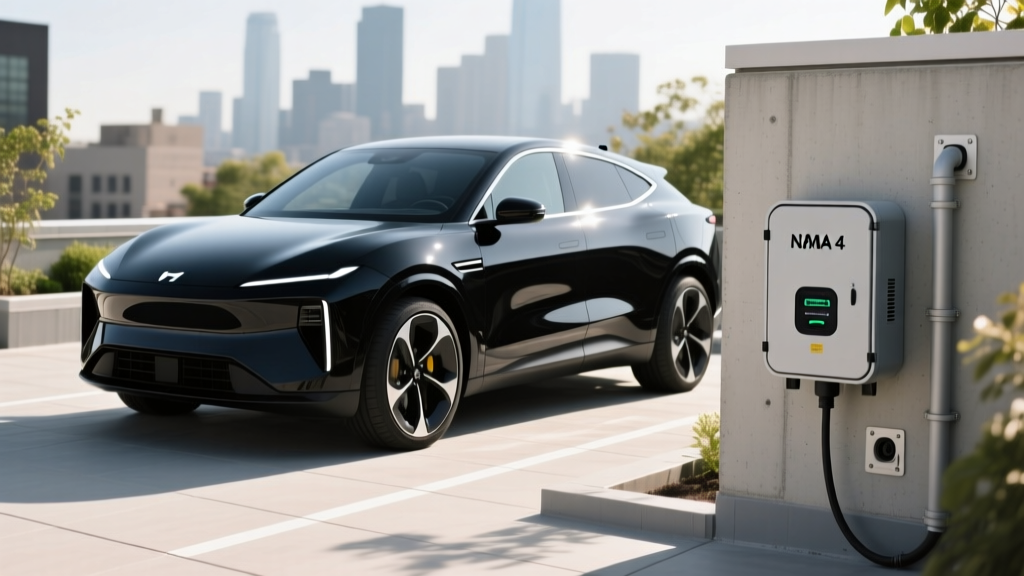
- Outdoor rating: If your charger is mounted outside or in an unenclosed carport, ensure the unit carries a NEMA 4 or IP65 rating for weather resistance.
- Cable management: Longer cables (25 ft) offer flexibility but add cost and weight. Most quality chargers include 18-25 ft cables.
- Load management: Some smart chargers (e.g., Emporia Vue-integrated) monitor your panel's total load and dynamically reduce charging amperage to prevent breaker trips — useful if a panel upgrade is cost-prohibitive.
Connector Compatibility: NACS, CCS1, CHAdeMO, and Adapter Needs
The connector landscape shifted dramatically between 2023 and 2026. Tesla's North American Charging Standard (NACS) has been adopted by Ford, GM, Rivian, Hyundai, Kia, BMW, and most major automakers. Here's where things stand for 2026 model-year vehicles:
| Connector | Brands Using Natively (2026) | Max DC kW Supported | Adapter Situation |
|---|---|---|---|
| NACS (J3400) | Tesla, Ford, GM, Rivian, Hyundai, Kia, BMW, Volvo, Polestar, Mercedes (2026+) | 350+ kW | Becoming the US standard; CCS→NACS adapters from Tesla, Lectron, A2Z |
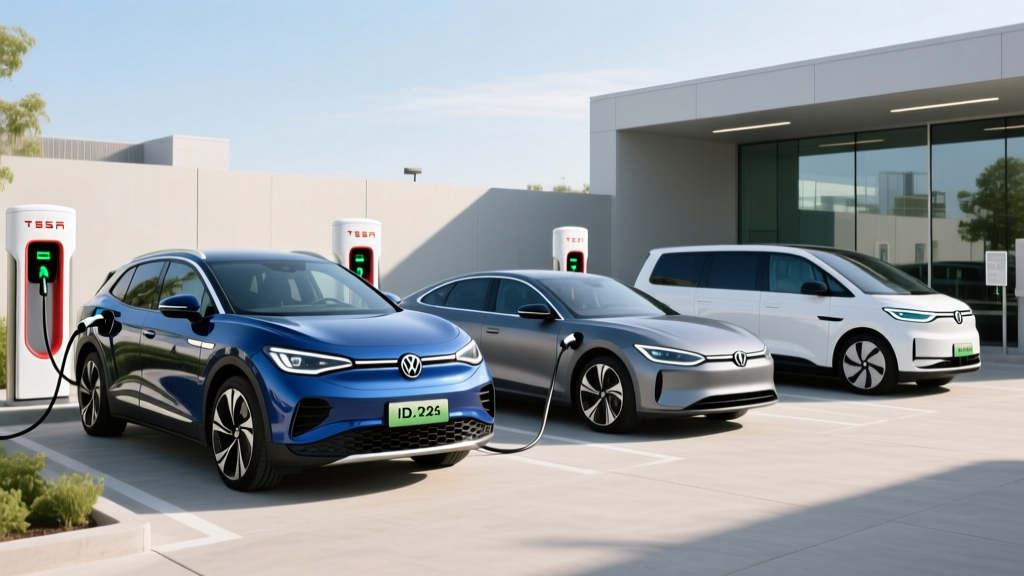
| CCS1 (Combo) | VW, Audi, Porsche, legacy Ford/GM/Hyundai (pre-2025) | 350 kW | NACS→CCS adapters available for Tesla Supercharger access |
| CHAdeMO | Nissan Leaf (legacy only; no new US models) | 100 kW | Declining infrastructure; adapters rare and expensive |
If you own a CCS-equipped EV (model year 2022-2024), you'll likely need a NACS-to-CCS adapter ($150-$300) to access Tesla Superchargers, which now number over 30,000 in North America. Ford and GM began shipping NACS-native vehicles in 2025, and by 2026 most new EVs sold in the US will have a NACS port. Always confirm adapter compatibility with your specific vehicle's OEM — using an uncertified adapter can void warranty coverage.
Cost to Charge: $/kWh Scenarios and Cost Per Mile vs Gas
The economics of EV charging depend heavily on where and when you plug in. Here's a realistic breakdown using 2026 electricity rates and gas prices.
| Scenario | $/kWh | Vehicle Efficiency | Cost Per Mile | Annual Cost (12,000 mi) |
|---|---|---|---|---|
| Home off-peak (utility time-of-use rate) | $0.08 – $0.12 | 3.5 mi/kWh | $0.023 – $0.034 | $275 – $410 |
| Home standard rate (no TOU) | $0.14 – $0.18 | 3.5 mi/kWh | $0.040 – $0.051 | $480 – $615 |
| Public Level 2 (ChargePoint, workplace) | $0.18 – $0.30 | 3.5 mi/kWh | $0.051 – $0.086 | $615 – $1,030 |
| DC Fast (Electrify America, Tesla Supercharger) | $0.30 – $0.55 | 3.2 mi/kWh (highway) | $0.094 – $0.172 | $1,125 – $2,060 |
| Gas Vehicle (28 MPG combined) | $3.40/gallon | 28 mi/gal | $0.121 | $1,457 |
The takeaway: home charging at off-peak rates delivers fuel costs roughly 75-85% lower than a comparable gas vehicle. Even exclusive DC fast charging at $0.48/kWh roughly matches gas costs per mile. The economic advantage of EV ownership hinges on access to affordable home or workplace charging. If you rely entirely on public DC fast charging at premium rates, the per-mile savings narrow significantly.
Recommended Level 2 Home Chargers: Power, Features, and Pricing
After testing and tracking reliability across dozens of residential installations, these are the Level 2 chargers we recommend for 2026 EV buyers. All units below support NACS or CCS connectors — verify your vehicle's port before ordering.
ChargePoint Home Flex (NACS or J1772)
- Power: Up to 11.5 kW (48A) on a 60A circuit; adjustable down to 16A
- Connector: NACS (2025+ version) or J1772 with adapter
- Cable: 23 feet
- Smart features: Wi-Fi, scheduling, Alexa integration, energy dashboard
- Price: $549 – $599
- Best for: Flexible amperage adjustment for homes with limited panel capacity
Tesla Wall Connector (NACS)
- Power: Up to 11.5 kW (48A) on a 60A circuit
- Connector: Native NACS
- Cable: 24 feet
- Smart features: Wi-Fi, OTA updates, power sharing (link multiple units), access control
- Price: $475
- Best for: Tesla, Ford, GM, Rivian, and other NACS-native vehicles; excellent value
Emporia Level 2 Smart Charger
- Power: Up to 11.5 kW (48A)
- Connector: J1772 (NACS adapter included in 2025+ models)
- Cable: 24 feet
- Smart features: Integration with Emporia Vue energy monitor, real-time panel load management, solar-aware scheduling
- Price: $399 – $449
- Best for: Solar homes and panel-load-conscious installations
Grizzl-E Smart (NACS or J1772)
- Power: Up to 10 kW (40A) on a 50A circuit
- Connector: NACS or J1772
- Cable: 24 feet
- Smart features: Wi-Fi, OCPP compatibility, adjustable amperage
- Price: $449 – $499
- Best for: Cold-climate durability (rated to -40°F); rugged outdoor installations
Public Ultra Fast Charging Networks: Where to Find 350 kW
As of 2026, several networks operate 350 kW-capable DC fast chargers across the US highway system. Availability varies by corridor — rural routes in the Mountain West and Great Plains still have gaps.
- Tesla Supercharger (V3/V4): Over 30,000 stalls in North America. V3 delivers 250 kW; V4 (deploying through 2026) supports up to 350 kW. Open to NACS-equipped non-Tesla vehicles. Reliability consistently leads the industry at ~97% uptime.
- Electrify America: ~1,000+ stations with 350 kW CCS/NACS chargers along major interstate corridors. Pricing averages $0.37-$0.52/kWh. Reliability has improved but still trails Tesla (~90-93% uptime per third-party tracking).
- EVgo (eXtend): Expanding 350 kW stalls in partnership with GM's Ultium Charge 360. Primarily urban and suburban locations.
- Ionna (BMW/GM/Honda/Hyundai/Kia/Mercedes/Stellantis joint venture): New network launching 2025-2026 with 350 kW NACS and CCS chargers at highway travel plazas. Early deployments in the Southeast and Northeast.
For road trip planning, fueleconomy.gov lists your vehicle's efficiency and range, while apps like PlugShare and A Better Routeplanner (ABRP) provide real-time charger availability and route optimization.
Frequently Asked Questions
How much does it cost to install a home EV charger?
A typical Level 2 home charger installation (48A, 60A circuit, no panel upgrade) costs between $1,050 and $2,850 including equipment, electrician labor, and permit fees. If your home requires a panel upgrade from 100A to 200A, add $1,500 to $4,000. Always get at least two quotes from licensed electricians and verify they pull the required permit.
How fast will each charging level add range?
Level 1 (120V) adds 3-5 miles per hour. Level 2 (240V, 48A) adds 30-45 miles per hour for most EVs. DC fast charging at 150-350 kW adds 150-1,000+ miles per hour at peak — but only for short bursts during the 10-80% window. For daily driving, Level 2 at home covers virtually all needs overnight.
Which connector/charger is compatible with my EV?
For 2026 model-year EVs: Tesla, Ford, GM, Rivian, Hyundai, Kia, and most new vehicles use NACS (J3400). Older CCS-equipped vehicles (2022-2024) can access NACS chargers with a certified adapter ($150-$300). CHAdeMO is legacy-only (Nissan Leaf) and infrastructure is declining. Check your vehicle's charge port or owner's manual to confirm.
How much does charging cost per mile vs gas?
Home charging at off-peak rates ($0.10/kWh) costs approximately $0.03 per mile — roughly 75% less than a 28 MPG gas vehicle at $3.40/gallon ($0.12/mile). Public DC fast charging at $0.45/kWh costs about $0.13-$0.14 per mile, roughly matching gas. The economic case for EVs is strongest when you can charge at home.
What electrical upgrades might I need?
The most common upgrade is a panel increase from 100A to 200A service, needed when your existing panel lacks capacity for a new 60A dedicated circuit. An electrician performs an NEC Article 220 load calculation to determine this. Other potential needs: new conduit runs (if the charger is far from the panel), a GFCI breaker (required by NEC 2020+ for receptacle installations), and possibly a smart load-management device if you want to avoid a panel upgrade.