If you're shopping for an electric vehicle or just brought one home, understanding the types of EV chargers available is the single most important piece of ownership logistics you'll need to master. The wrong charger means slow top-ups, expensive electrical work, or a connector that doesn't fit your car. The right setup means waking up every morning with a full battery at a fraction of what gas would cost.
This guide breaks down every charging level, connector standard, and installation scenario you'll encounter as an EV owner in 2026 — with exact numbers for speed, cost, and compatibility. We'll also clarify the most common point of confusion in EV charging: kW (kilowatts) measures power — how fast energy flows into your car — while kWh (kilowatt-hours) measures energy — how much your battery holds. Think of kW as the width of a pipe and kWh as the size of the tank it's filling.
The Three Charging Levels: Speed, Power, and Real-World Range Added
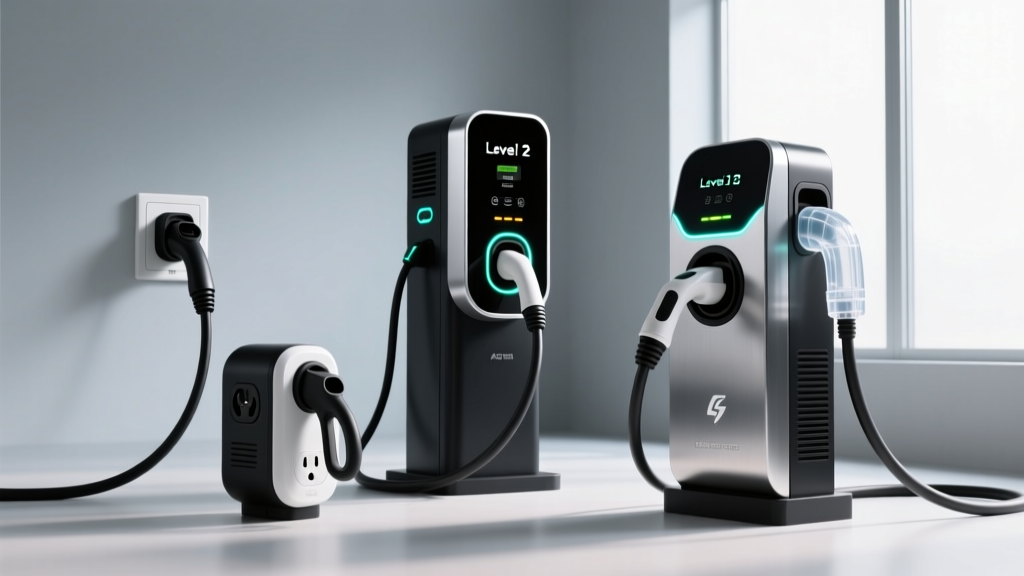
Every EV charger falls into one of three categories defined by the Society of Automotive Engineers (SAE). The level determines voltage, amperage, and ultimately how quickly your battery refills. Here's what each level delivers in practice:
| Level | Voltage / Amperage | Max Power (kW) | Miles of Range Added Per Hour | Typical Use Case |
|---|---|---|---|---|
| Level 1 (AC) | 120V / 12A | 1.4 kW | 3–5 miles | Overnight trickle; PHEVs; emergency backup |
| Level 2 (AC) | 240V / 32A–48A | 7.7–11.5 kW | 25–44 miles | Daily home charging; workplace; destination |
| DC Fast Charge (Level 3) | 400V–900V DC / 50A–500A+ | 50–350+ kW | 150–1,200+ miles (equivalent per hour) | Road trips; highway corridors; commercial fleets |
Real-world context: A Level 1 charger on a standard household outlet will fully recharge a plug-in hybrid with a 15 kWh battery overnight (roughly 10 hours). That same charger would need 40+ hours to fill a Ford F-150 Lightning's 131 kWh extended-range battery — making Level 1 impractical for full BEVs unless your daily driving stays under 30 miles.
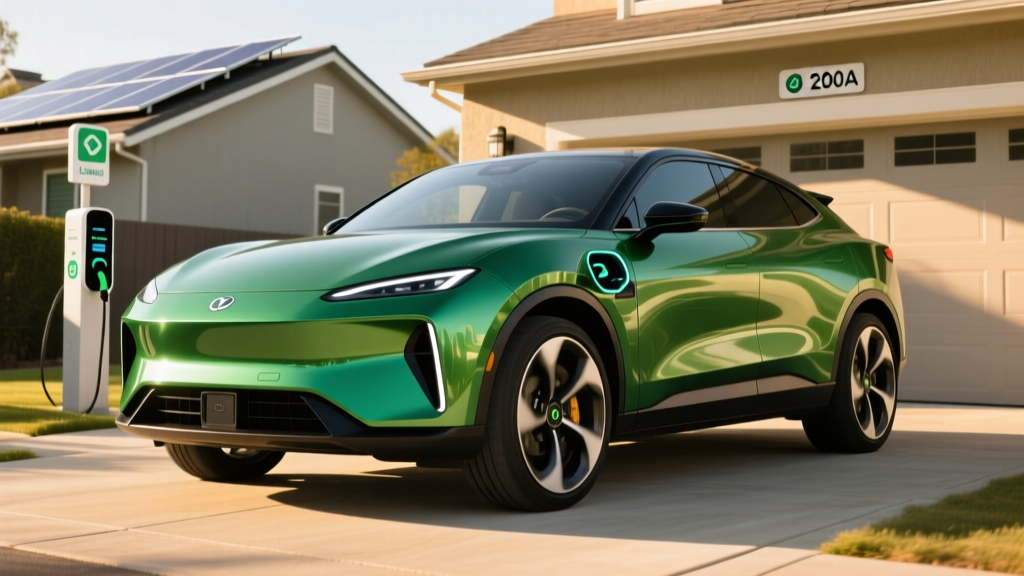
Level 2 is the backbone of EV ownership. A 48-amp, 11.5 kW home charger will refill a Tesla Model Y Long Range (75 kWh usable battery) from 10% to 80% in roughly 5 hours — easily covering a full day of driving while you sleep. This is the setup most EV owners install in their garage or driveway.
DC fast charging bypasses your car's onboard AC-to-DC converter and feeds direct current straight into the battery at much higher power. A 350 kW Electrify America or Tesla Supercharger V4 stall can take a Hyundai Ioniq 5 (which supports 800V architecture) from 10% to 80% in approximately 18 minutes. However, peak kW is not sustained kW — every EV's charge curve tapers significantly above 80% State of Charge (SoC) to protect battery health. That last 20% can take as long as the first 70%.
Connector Standards: NACS, CCS1, and CHAdeMO Compatibility
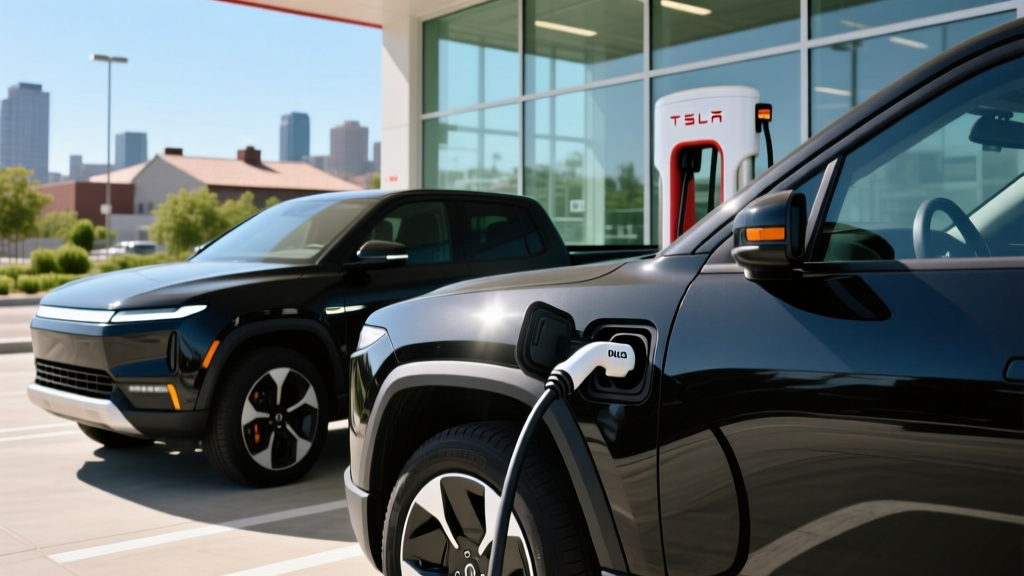
The connector is the physical plug that links the charger to your vehicle. As of 2026, North America has largely converged on the North American Charging Standard (NACS) — originally developed by Tesla and now adopted by Ford, GM, Rivian, Hyundai, Kia, BMW, and most other major automakers. Here's where each standard stands:
| Connector | Type | Compatible Vehicles | Network Access | Adapter Needed? |
|---|---|---|---|---|
| NACS (J3400) | AC + DC | Tesla (all), Ford (2025+), GM (2025+), Rivian (2025+), Hyundai/Kia (2025+), BMW, Mercedes, Volvo | Tesla Superchargers, Electrify America (NACS stalls), EVgo, ChargePoint | No — native on new vehicles |
| CCS1 (Combo) | AC + DC | VW ID.4 (pre-2026), older Chevy Bolt, BMW i4 (pre-2025), Stellantis EVs, Lucid Air (pre-2025) | Electrify America, EVgo, ChargePoint, Blink | NACS-to-CCS adapter required for Tesla Superchargers (~$175–$250) |
| CHAdeMO | DC only | Nissan Leaf (legacy), Mitsubishi Outlander PHEV (older) | Limited; shrinking network | No adapter available for NACS; use CHAdeMO-specific stations |
If you're buying a new EV in 2026, it almost certainly has a NACS port unless you're purchasing a remaining CCS1-equipped model from prior model years. For older CCS1 vehicles, automakers and third-party suppliers like Lectron and A2Z offer NACS-to-CCS adapters that unlock access to Tesla's Supercharger network — the largest and most reliable fast-charging network in North America with over 25,000 stalls. Per Tesla's Supercharger page, non-Tesla access is now available at most U.S. locations.
Critical note on CHAdeMO: If you own a Nissan Leaf, CHAdeMO infrastructure is shrinking as networks prioritize NACS and CCS. Plan your road trips carefully and rely on apps like PlugShare to verify station availability before departure.
Home EV Charger Installation: Electrical Requirements and Cost Breakdown
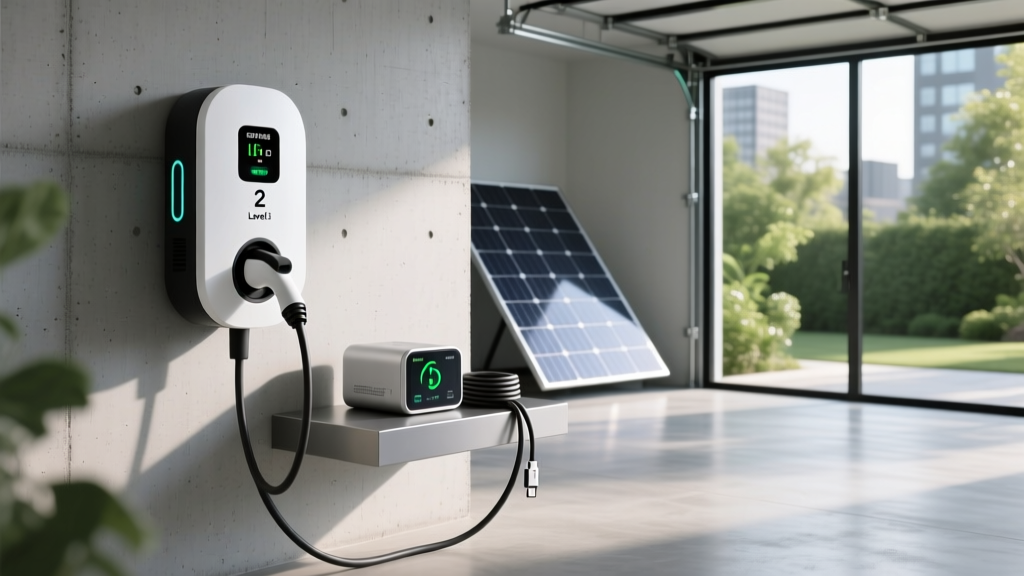
Installing a Level 2 home charger is the single highest-impact upgrade you can make as an EV owner. But costs vary enormously depending on your home's electrical panel, the distance from panel to charger location, and local permitting requirements.
Electrical Requirements
A Level 2 charger requires a dedicated 240-volt circuit — the same type of circuit your electric dryer or oven uses. The amperage depends on your charger:
- 32A charger (7.7 kW): Requires a 40A breaker (NEC code mandates circuits be rated at 125% of continuous load)
- 40A charger (9.6 kW): Requires a 50A breaker
- 48A charger (11.5 kW): Requires a 60A breaker
If your home's electrical panel is already near capacity — common in homes built before 2000 with 100A or 150A main service — you may need a panel upgrade to 200A before adding an EV circuit. This is the single biggest variable in installation cost.
| Component | Simple Install (Panel Has Capacity, Short Run) | Complex Install (Panel Upgrade or Long Run) |
|---|---|---|
| Level 2 Charger (Equipment) | $350–$700 | $350–$700 |
| Electrician Labor | $400–$800 | $1,200–$2,500 |
| Electrical Permit | $50–$200 | $100–$300 |
| Panel Upgrade (if needed) | $0 | $1,500–$3,500 |
| Conduit, Wire, Hardware | $100–$300 | $300–$800 |
| Total Estimated Cost | $900–$2,000 | $3,450–$7,800 |
According to data from the U.S. Department of Energy, most straightforward home Level 2 installations fall in the $1,000–$2,500 range when no panel upgrade is required. Always get 2–3 quotes from licensed electricians and confirm they pull the required local permits — unpermitted work can void home insurance and cause issues at resale.
Safety and Code Considerations
The National Electrical Code (NEC) has specific requirements for EV charging installations that your electrician must follow:
- Dedicated circuit: Your EV charger must have its own breaker — no sharing with other appliances
- GFCI protection: NEC 2020 and later requires ground-fault circuit interrupter protection for all EV outlets (built into most hardwired chargers and NEMA 14-50 receptacles)
- Outdoor rating: If installing outside, the charger must carry a NEMA 4 (weatherproof) rating — all major brands now offer outdoor-rated models
- Wire gauge: 6 AWG copper for 48A circuits; 8 AWG for 32A circuits — undersized wire is a fire hazard
For homes where a panel upgrade isn't feasible or cost-effective, consider a smart load-management system like the Emporia VUE with automatic load shedding. These devices monitor your home's total electrical draw and throttle the EV charger when other appliances are running — avoiding a panel upgrade entirely.
Charging Time Examples: How Long to Refill Common EV Batteries
Charge times depend on two variables: your battery's usable capacity (in kWh) and the charger's sustained power delivery (in kW). Here are real-world estimates for popular EVs, accounting for charge-curve tapering:
| Vehicle | Battery (kWh Usable) | Level 2 at 11.5 kW | DC Fast (Peak kW) | DC Fast 10–80% Time |
|---|---|---|---|---|
| Tesla Model Y Long Range | 75 kWh (NMC) | ~4.5 hours | 250 kW | ~25 minutes |
| Ford F-150 Lightning Ext. Range | 131 kWh (NMC) | ~8 hours | 150 kW (limited) | ~41 minutes |
| Hyundai Ioniq 5 Long Range AWD | 77.4 kWh (NMC) | ~5 hours | 350 kW (800V) | ~18 minutes |
| Chevrolet Equinox EV 3RS | 85 kWh (NMC) | ~5.5 hours | 150 kW | ~32 minutes |
| Tesla Model 3 RWD (LFP) | 57.5 kWh (LFP) | ~3.5 hours | 170 kW | ~25 minutes |
Key insight on LFP batteries: Vehicles like the base Tesla Model 3 and some BYD models use lithium iron phosphate (LFP) chemistry, which tolerates frequent 100% charging better than NMC. Tesla recommends charging LFP vehicles to 100% at least weekly for accurate battery calibration — an advantage for drivers who want maximum range without degradation concerns.
Cost to Charge: Home vs. Public vs. DC Fast Charging Per Mile
Electricity costs vary dramatically by where and when you charge. Here's a realistic comparison using national average rates and a vehicle efficiency of 3.0 miles per kWh (typical for a midsize EV like the Model Y or Ioniq 5):
| Charging Scenario | Avg Cost per kWh | Cost Per Mile (at 3 mi/kWh) | Annual Cost (12,000 mi/yr) |
|---|---|---|---|
| Home, Off-Peak (Time-of-Use Rate) | $0.08–$0.12 | $0.027–$0.040 | $320–$480 |
| Home, Standard Residential Rate | $0.15–$0.18 | $0.050–$0.060 | $600–$720 |
| Public Level 2 (ChargePoint, EVgo) | $0.25–$0.49 | $0.083–$0.163 | $1,000–$1,960 |
| DC Fast Charging (Electrify America, Tesla) | $0.35–$0.55 | $0.117–$0.183 | $1,400–$2,200 |
| Comparison: Gas Vehicle at 28 MPG Combined, $3.40/gallon | |||
| Gasoline | $3.40/gal | $0.121 | $1,457 |
The data makes the economics clear: home charging on off-peak rates is 3–4x cheaper per mile than gasoline. Even exclusive DC fast charging roughly matches gas costs — and most EV owners do 80–90% of their charging at home.
To maximize savings, enroll in your utility's time-of-use (TOU) rate plan. Most utilities offer significantly discounted rates between 10 PM and 6 AM. A smart Level 2 charger can be scheduled to charge only during these windows automatically — you plug in when you get home, and the charger waits for off-peak rates to begin.
Best Home EV Chargers for 2026: Equipment Recommendations
After testing and tracking reliability data across major brands, these are the Level 2 chargers we recommend based on power output, build quality, smart features, and value. All models listed are NACS-native or available with NACS connectors for 2026-model EVs:
Best Overall: ChargePoint Home Flex (NACS)
- Power: Up to 11.5 kW (48A) on a 60A circuit; adjustable down to 16A
- Connector: NACS (also available in J1772 for older EVs with adapter)
- Cable Length: 23 feet
- Smart Features: Wi-Fi, app scheduling, Alexa integration, energy tracking, load sharing with second unit
- Rating: NEMA 4 (indoor/outdoor)
- Price: ~$549
The Home Flex's adjustable amperage is its standout feature — you can set it to match any circuit from 20A to 60A, making it ideal for homes where a panel upgrade isn't practical. UL-listed and backed by a 3-year warranty.
Best Value: Emporia Level 2 Smart Charger
- Power: Up to 11.5 kW (48A)
- Connector: NACS (J1772 version also available)
- Cable Length: 24 feet
- Smart Features: Wi-Fi, app control, solar integration with Emporia VUE energy monitor, TOU scheduling, real-time cost tracking
- Rating: NEMA 4 (indoor/outdoor)
- Price: ~$399
If you have or plan to install solar panels, the Emporia charger's ability to charge exclusively from solar surplus is a unique advantage. Build quality is solid for the price, though the app UI is less polished than ChargePoint's.
Best for Tesla Owners: Tesla Wall Connector
- Power: Up to 11.5 kW (48A)
- Connector: NACS (native Tesla)
- Cable Length: 24 feet
- Smart Features: Wi-Fi, over-the-air updates, power sharing between multiple units, Tesla app integration, automatic vehicle recognition
- Rating: NEMA 4 (indoor/outdoor)
- Price: ~$475
The sleekest design in the category, with a glass faceplate and integrated cable management. Power sharing lets you install two Wall Connectors on a single 60A circuit — ideal for two-EV households. Also works with non-Tesla NACS vehicles.
Best Portable / No-Install Option: Lectron V-BOX Pro
- Power: Up to 9.6 kW (40A) via NEMA 14-50 plug; 1.4 kW on 120V
- Connector: NACS (CCS1 adapter included)
- Cable Length: 20 feet
- Smart Features: Basic LCD display; no Wi-Fi or app
- Rating: IP65 (weatherproof)
- Price: ~$280
For renters or anyone who can't hardwire a charger, the Lectron V-BOX Pro plugs into an existing NEMA 14-50 outlet (common for electric dryers and RV hookups). If your garage already has one, you're charging at 9.6 kW with zero installation cost.
Public Charging Networks: What to Expect in 2026
While home charging handles daily needs, public charging infrastructure is essential for road trips and apartment dwellers. The major networks have expanded significantly:
- Tesla Supercharger: 25,000+ stalls in North America; now open to NACS-equipped non-Tesla vehicles. Reliability remains the industry benchmark at 97%+ uptime per Tesla's reports. Speeds up to 250 kW (V3) and 350 kW at select V4 locations.
- Electrify America: 4,000+ DC fast chargers; transitioning many stalls to NACS connectors alongside CCS1. Speeds up to 350 kW. Membership plans reduce per-kWh costs. Reliability has improved but still trails Tesla.
- EVgo: 3,500+ public fast chargers; adding NACS connectors. Partners with GM's Ultium Charge 360 network. Speeds up to 350 kW at newer stations.
- ChargePoint: Primarily Level 2 destination charging (workplaces, retail, hotels) with 30,000+ ports. Limited DC fast presence.
Pro tip for road trips: Precondition your battery before arriving at a DC fast charger. Most EVs (Tesla, Hyundai/Kia, Ford, GM) automatically begin preconditioning when you navigate to a charger in the built-in navigation system. This heats or cools the battery to optimal temperature, enabling peak charge rates. Without preconditioning — especially in cold weather — you may see charge speeds reduced by 30–50% for the first 10–15 minutes.
Frequently Asked Questions
How much does it cost to install a home EV charger?
A straightforward Level 2 installation with adequate panel capacity typically costs $900–$2,000 including equipment, labor, and permits. If your home needs an electrical panel upgrade from 100A/150A to 200A, total costs can reach $3,500–$7,800. Always get multiple quotes from licensed electricians and ensure permits are pulled. Some utilities and states offer rebates of $250–$1,000 for home charger installation — check your utility's website or the AFDC state incentives database.
How fast will each charging level add range?
Level 1 (120V) adds roughly 3–5 miles of range per hour. Level 2 (240V, 48A) adds 25–44 miles per hour depending on vehicle efficiency. DC fast charging adds the equivalent of 150–1,200+ miles per hour at peak power, but charge speed tapers significantly above 80% SoC — which is why fast-charge times are quoted as 10%–80%, not 0%–100%.
Which connector or charger is compatible with my EV?
If your EV is a 2025 or newer model from Tesla, Ford, GM, Rivian, Hyundai, Kia, BMW, or most other major brands, it uses the NACS connector. Older CCS1-equipped vehicles can use a NACS-to-CCS adapter (~$175–$250) to access Tesla Superchargers. The Nissan Leaf uses CHAdeMO, which has no adapter path to NACS — CHAdeMO owners must use compatible public stations. For home Level 2 charging, NACS vehicles plug directly into NACS chargers; no adapter needed.
How much does charging cost per mile compared to gas?
Home charging on off-peak electricity rates costs roughly $0.03–$0.04 per mile — about 3–4x cheaper than gasoline at $3.40/gallon in a 28 MPG vehicle ($0.12/mile). Even standard residential rates ($0.15–$0.18/kWh) keep EV costs at $0.05–$0.06 per mile. Only exclusive reliance on premium-priced DC fast chargers ($0.35–$0.55/kWh) brings EV fueling costs close to gas parity.
What electrical upgrades might I need for a home charger?
The most common upgrade is a panel capacity increase if your existing electrical service (100A or 150A) can't accommodate an additional 40A–60A circuit. Other potential upgrades include: running new conduit from the panel to the garage or driveway ($5–$15 per foot), installing a NEMA 14-50 outlet for portable chargers, or adding a smart load-management system to avoid a panel upgrade entirely. Your electrician will perform a load calculation during the initial assessment to determine what's needed.
Can I charge my EV on a regular 120V outlet?
Yes — every EV ships with a mobile charge cord that plugs into a standard 120V (Level 1) outlet. At 1.4 kW, you'll add 3–5 miles of range per hour, which is sufficient for PHEVs and BEV owners who drive fewer than 30 miles daily and can charge for 10–12 hours overnight. For higher-mileage drivers, Level 1 is impractical as a primary charging method.
Is it safe to charge an EV in the rain or outdoors?
Yes. All EV chargers rated for outdoor use carry a NEMA 4 or IP65 rating, meaning they're sealed against rain, snow, dust, and hose-directed water. The connector and vehicle inlet are designed with safety interlocks — no current flows until a secure connection is confirmed. Charging in rain, snow, or any weather condition is safe with properly rated equipment.