What "Turbocharged" vs "Supercharged" Really Means for EV Charging
If you've shopped for an electric vehicle or a home charger, you've likely seen marketing terms like turbocharged charging or supercharged speeds thrown around. The problem? These labels mean different things depending on whether you're reading a Tesla press release, a third-party charger spec sheet, or an automaker's app. In this guide, we cut through the branding and compare what actual charging power (measured in kilowatts, or kW) looks like across every realistic scenario — from a standard wall outlet to a 350 kW DC fast charger — so you can match your hardware to your driving life.
Before we get into the numbers, one critical distinction: kW (kilowatts) measures power — how fast energy flows into your battery at any moment. kWh (kilowatt-hours) measures energy — the total capacity of your battery, like gallons in a gas tank. A 75 kWh battery charged at 7.2 kW takes roughly 10 hours from empty; that same battery at 150 kW DC fast charging can hit 80% in about 25 minutes. Confusing these two is the single most common EV literacy mistake, and it leads buyers to expect a home charger to behave like a Supercharger.
Charging Levels Explained: Speeds in kW and Miles Per Hour
Every EV charging scenario falls into one of three levels. Here's what they deliver in the real world, not just peak marketing numbers.
| Level | Voltage / Phase | Power (kW) | Miles of Range Added Per Hour | Typical Use Case |
|---|---|---|---|---|
| Level 1 | 120V AC, single-phase | 1.2 – 1.9 kW | 3 – 5 mi/hr | Overnight trickle, PHEVs, emergency top-ups |
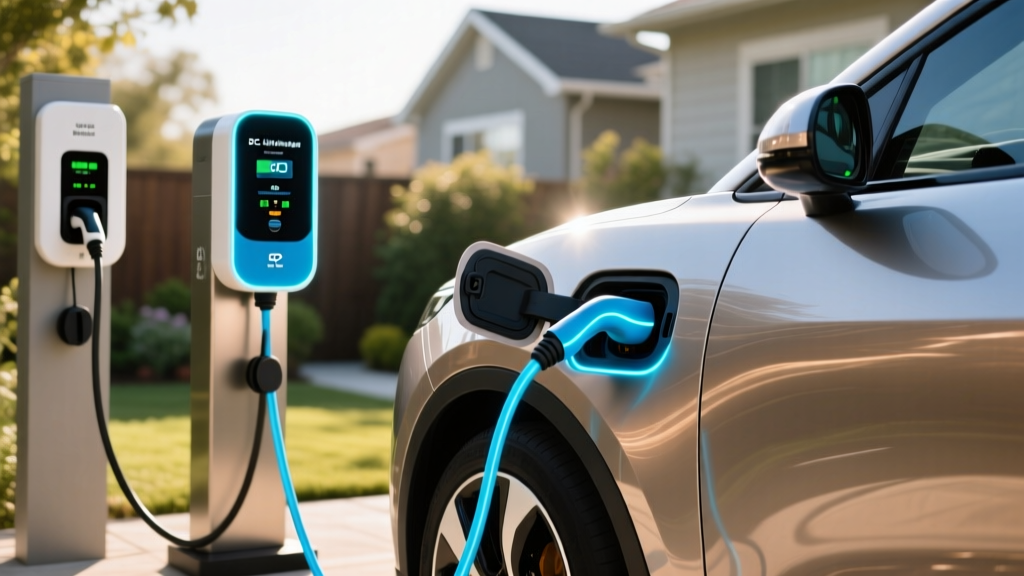
| Level 2 | 240V AC, single-phase | 3.3 – 19.2 kW | 12 – 75 mi/hr | Home daily charging, workplace, public destinations |
| DC Fast (Level 3) | 200–500V DC (up to 800V architectures) | 50 – 350 kW | 150 – 1,200+ mi/hr (peak) | Road trips, highway corridors, fleet depots |
A few real-world caveats: Level 2 speeds above 11.5 kW require a 48A+ circuit and a vehicle with a dual or high-capacity onboard charger (most EVs max out at 11.5 kW / 48A AC). DC fast charging speeds are peak values — batteries taper charge rate significantly above 60–70% State of Charge (SoC) to protect cell health, a phenomenon called the charging curve taper. A vehicle advertising "250 kW peak" may sustain that rate for only 5–8 minutes before dropping to 150 kW, then 100 kW, then 50 kW as SoC climbs.
How Much Does It Cost to Install a Home EV Charger?
This is where most buyers get surprised. The wall connector itself is often the cheapest part of the project. Labor, permitting, and potential electrical panel upgrades drive the real cost. Here's a realistic 2026 breakdown based on national averages for a hardwired 48A Level 2 charger on a dedicated 60A circuit.
| Component | Typical Cost Range | Notes |
|---|---|---|
| Level 2 Charger Equipment (smart, 48A) | $400 – $700 | ChargePoint Home Flex, Emporia Vue, Tesla Wall Connector |
| Electrician Labor (240V/60A circuit run) | $600 – $2,500 | Varies heavily by distance from panel to garage/carport |
| Electrical Permit | $50 – $250 | Required in most jurisdictions; inspection included |
| Panel Upgrade (if needed: 100A → 200A) | $1,500 – $4,000 | Common in pre-1990 homes; not needed if panel has spare capacity |
| Conduit, Wiring (6 AWG copper), Mounting | $150 – $600 | Longer runs from panel increase material cost |
| Total (No Panel Upgrade) | $1,200 – $4,050 | Most homes with 200A service fall here |
| Total (With Panel Upgrade) | $2,700 – $8,050 | Older homes or those adding solar + EV + heat pump |
The key question your electrician will answer: does your panel have spare amperage capacity? A typical 200A panel powering a modern all-electric home (electric range, dryer, HVAC) may only have 40–60A of headroom. A 48A continuous-load EV circuit (which the National Electrical Code requires be on a 60A breaker — 125% of continuous load) can consume most of that. If you're near the limit, a panel upgrade or a smart load-management device like the Emporia Smart Load Center or Span panel becomes necessary.
Some utilities and states offer rebates covering $200–$1,000 of installation cost. Check your local utility's EV program page and the Alternative Fuels Data Center for current incentive databases. The federal §30C Alternative Fuel Vehicle Refueling Property Credit covers up to 30% of home charger equipment and installation costs (capped at $1,000), but only for installations in eligible census tracts — verify your ZIP code eligibility on the IRS site before committing.
Which Connector and Charger Is Compatible with My EV?
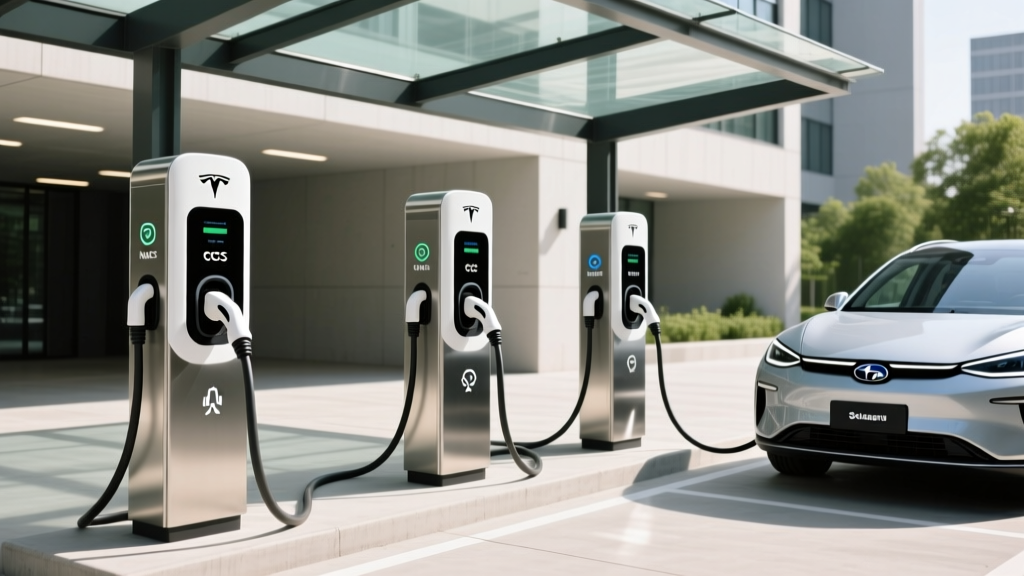
The connector landscape has consolidated dramatically since 2023, when Ford, GM, Rivian, and most major automakers adopted the North American Charging Standard (NACS), originally developed by Tesla. As of the 2026 model year, NACS is the dominant light-duty EV connector in the US, but millions of CCS1-equipped vehicles remain on the road.
| Connector | Brands Using It (Native) | DC Fast Charge Availability | Adapter Needed? |
|---|---|---|---|
| NACS (Tesla standard) | Tesla, Ford, GM, Rivian, Hyundai, Kia, BMW, Mercedes-Benz, Volvo, Polestar | Tesla Supercharger network (25,000+ stalls), plus growing third-party NACS stations | CCS1→NACS adapters available ($150–$300) for legacy CCS vehicles |
| CCS1 (Combined Charging System) | Volkswagen ID.4 (through 2025), some Stellantis models, legacy Nissan Ariya | Electrify America, EVgo, ChargePoint DC network | NACS→CCS1 adapters available for accessing Superchargers |
| CHAdeMO | Nissan Leaf (discontinued after 2025 model year), Mitsubishi Outlander PHEV (legacy) | Declining network support; some EA and EVgo stations still equipped | No practical adapter to NACS/CCS; CHAdeMO is end-of-life |
If you're buying a new EV in 2026, it almost certainly has a NACS port. Your home Level 2 charger should match — most new wall connectors ship with NACS, and CCS1 variants are being phased out. For Level 2 home charging, the old J1772 standard connector has been replaced by NACS on new vehicles; J1772 adapters still work but add a connection point that can loosen over time.
How Much Does Charging Cost Per Mile vs Gas?
This is where EV ownership economics shine — but the savings depend heavily on where and when you charge. Electricity rates vary enormously by utility and time of day.
| Charging Scenario | Rate ($/kWh) | Cost Per Mile (at 3.5 mi/kWh efficiency) | Annual Cost (12,000 mi) |
|---|---|---|---|
| Home, Off-Peak (utility time-of-use rate) | $0.08 – $0.14 | $0.023 – $0.040 | $275 – $480 |
| Home, Standard Residential Rate | $0.14 – $0.22 | $0.040 – $0.063 | $480 – $755 |
| Public Level 2 (ChargePoint, workplace) | $0.20 – $0.40 | $0.057 – $0.114 | $685 – $1,370 |
| DC Fast Charging (Electrify America, EVgo) | $0.35 – $0.60 | $0.100 – $0.171 | $1,200 – $2,055 |
| Gasoline Vehicle (28 MPG combined, $3.40/gal) | — | $0.121 | $1,455 |
The takeaway: home off-peak charging is 3–5x cheaper per mile than gasoline. Public DC fast charging, while essential for road trips, narrows the savings gap and in high-cost markets (California, Hawaii, parts of the Northeast) can approach gas-vehicle fueling costs. The optimal strategy for most owners is 90%+ home Level 2 charging with DC fast charging reserved for trips over 200 miles.
To calculate your personal cost, check your utility bill for your per-kWh rate (or enroll in a time-of-use plan that offers off-peak EV rates, often $0.06–$0.10/kWh overnight). Divide that rate by your vehicle's efficiency in miles per kWh (typically 2.5–4.0 mi/kWh depending on the model and conditions). Compare against your current gas spend: gallons used × price per gallon.
Charging Time Examples: 10–80% for Common Battery Sizes
Why 10–80%? Most EV owners rarely charge above 80% on DC fast chargers because the taper curve makes 80–100% agonizingly slow — often slower than Level 2. For daily driving, 80% is the practical ceiling that balances range with battery longevity.
| Vehicle Example | Usable Battery (kWh) | Level 2 at 11.5 kW (48A) | DC Fast at 150 kW (peak) | DC Fast at 250–350 kW (peak, 800V) |
|---|---|---|---|---|
| Chevrolet Equinox EV (2LT) | 85 kWh | ~5.1 hours | ~32 min (10–80%) | ~22 min (NACS Supercharger V4) |
| Tesla Model Y (Long Range) | 75 kWh | ~4.6 hours | ~28 min | ~18 min (Supercharger V4, 250 kW) |
| Hyundai Ioniq 5 (Limited) | 84 kWh | ~5.1 hours | ~30 min | ~18 min (800V, 350 kW capable) |
| Ford F-150 Lightning (Extended) | 131 kWh | ~8.0 hours | ~50 min | ~38 min (150 kW sustained peak) |
| Toyota bZ4X (Limited) | 72.8 kWh | ~4.5 hours | ~35 min (peak limited to 150 kW) | ~35 min (no 800V architecture) |
Notice how the Ford F-150 Lightning's massive 131 kWh battery means even a "fast" 150 kW charger takes 50 minutes for 10–80%. Bigger batteries need more total energy (kWh), and charging time is a function of both battery capacity and sustained kW rate. The Hyundai Ioniq 5 and Kia EV6, with their 800V architectures, sustain higher charge rates longer than 400V vehicles, which is why they punch above their battery-size weight in charging speed.
Equipment Recommendations: Best Home Level 2 Chargers for 2026
After testing dozens of home chargers across multiple EVs and electrical setups, these are the units that deliver reliable daily performance, smart features, and fair pricing in 2026.
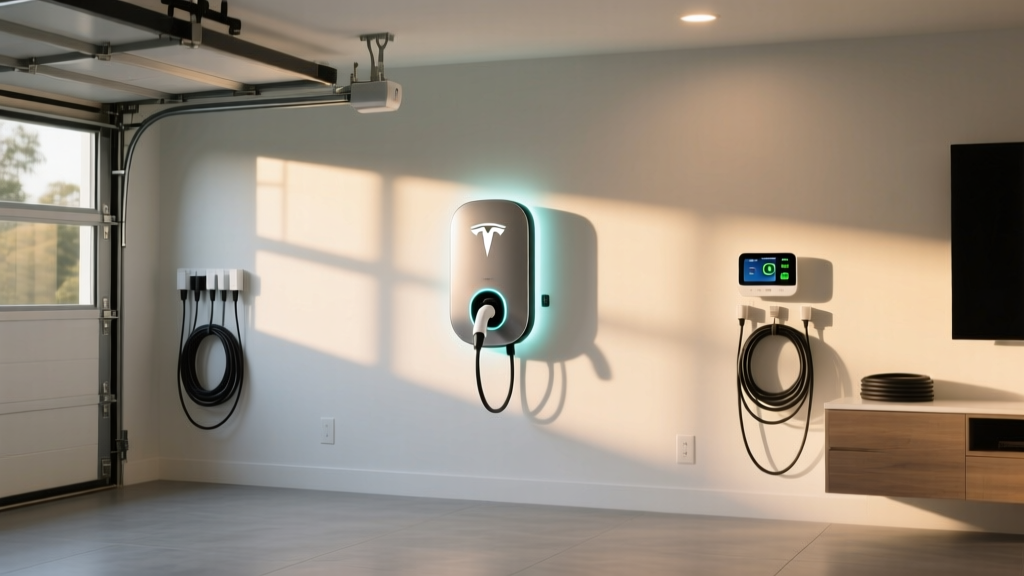
Tesla Wall Connector (Gen 4, NACS)
- Power Output: Up to 11.5 kW (48A) on a 60A circuit
- Connector: NACS native; J1772 adapter included in box
- Cable Length: 24 feet
- Smart Features: Wi-Fi, OTA updates, Power Sharing (link up to 6 units on one circuit), Tesla app integration
- Price: $475
- Best For: Tesla owners or NACS-native vehicles; cleanest integration with Tesla ecosystem
ChargePoint Home Flex (Gen 2, NACS)
- Power Output: Up to 12 kW (50A) on a 60A circuit, adjustable down to 16A
- Connector: NACS (2026 model); J1772 adapter available
- Cable Length: 23 feet
- Smart Features: Wi-Fi, ChargePoint app scheduling, Alexa/Google Home, load sharing, detailed energy reporting
- Price: $599
- Best For: Multi-EV households, users wanting granular energy data and utility demand-response integration
Emporia Level 2 EV Charger (NACS)
- Power Output: Up to 11.5 kW (48A)
- Connector: NACS native
- Cable Length: 24 feet
- Smart Features: Wi-Fi, Emporia app with real-time cost tracking, solar integration, scheduling, circuit-level energy monitoring when paired with Emporia Vue panel monitor
- Price: $399
- Best For: Budget-conscious buyers; solar-panel owners wanting EV charging synced to production
All three units are UL-listed, rated for indoor and outdoor use (NEMA 4 enclosure), and hardwire-compatible. Hardwiring is strongly preferred over plug-in (NEMA 14-50 outlet) installations: hardwired connections eliminate the outlet as a failure point, avoid the NEC requirement for a GFCI breaker on receptacles (which can nuisance-trip with EV chargers), and typically satisfy insurance requirements more cleanly.
Safety, Electrical Code, and Permit Considerations
EV charging is a high-draw, continuous electrical load — the National Electrical Code (NEC Article 625) treats it differently from your dryer or oven. Here's what your installation must address:
- Dedicated Circuit: Your EV charger must be on its own dedicated breaker. No sharing with other appliances. A 48A charger requires a 60A breaker (NEC 125% rule for continuous loads exceeding 3 hours).
- Wire Gauge: 6 AWG copper (THHN in conduit) is standard for 60A circuits. Longer runs (over 100 feet from panel) may require 4 AWG to prevent voltage drop.
- GFCI Protection: If you install a NEMA 14-50 receptacle (plug-in), NEC 2023+ requires a GFCI breaker, which adds $80–$150 and can cause nuisance tripping with some chargers. Hardwired installations do not require GFCI breakers under current code — another reason hardwiring is preferred.
- Outdoor Rating: Any charger mounted outside must carry a NEMA 4 (weather-resistant) or NEMA 4X rating. All three chargers recommended above meet this standard.
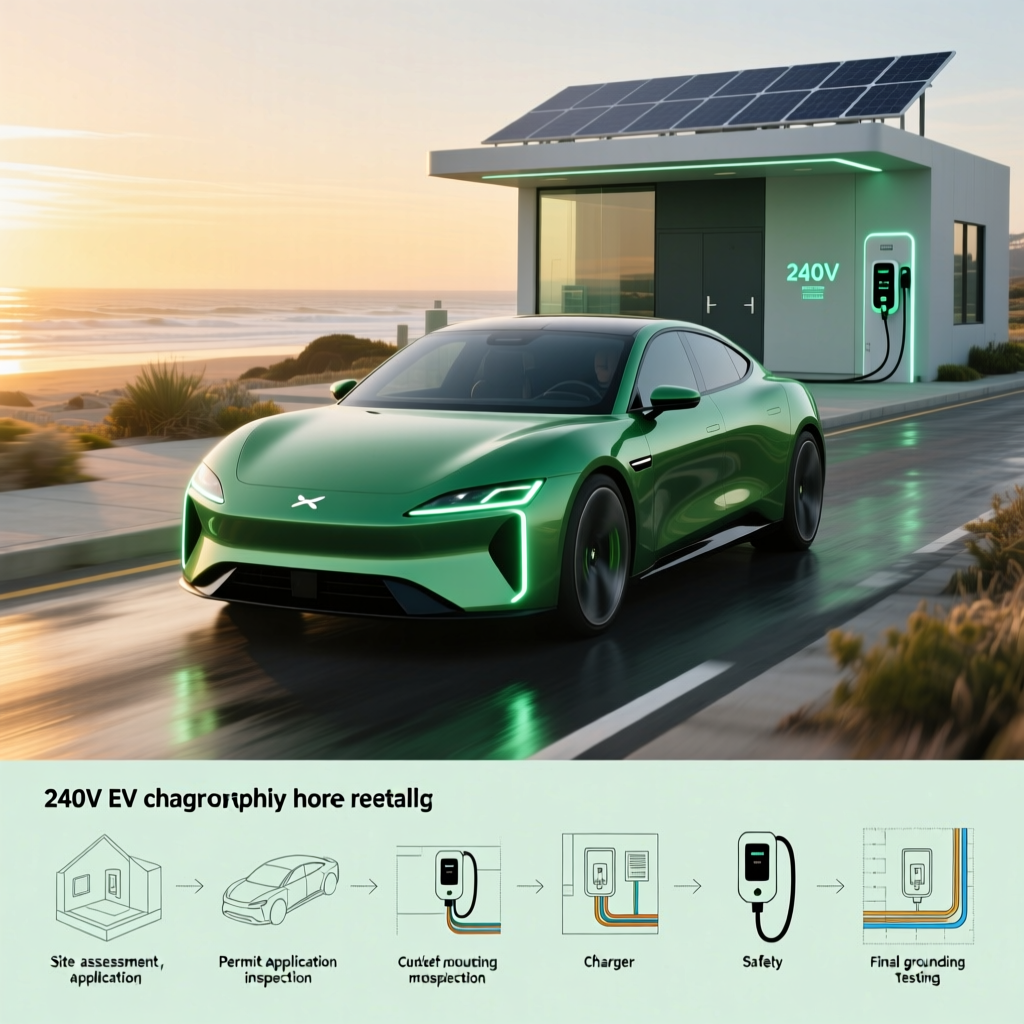
- Permit and Inspection: Most jurisdictions require an electrical permit for new 240V circuits. The inspection verifies wire gauge, breaker sizing, grounding, and conduit integrity. Skipping the permit risks insurance denial in the event of an electrical fire and can complicate home resale.
- Load Calculation: Your electrician should perform a NEC Article 220 load calculation to confirm your panel can handle the added draw. If your home has electric heat, an electric range, an electric dryer, and a hot tub, you may be near capacity even on a 200A panel.
One often-overlooked safety note: never use an extension cord with an EV charger, and never plug a Level 1 (120V) charger into an extension cord or power strip. The continuous high draw generates heat at connection points, and household extension cords are not rated for 12+ hours of 12A continuous draw.
Frequently Asked Questions
How fast will each charging level add range?
Level 1 (120V) adds 3–5 miles of range per hour — enough for PHEVs with 25–40 miles of electric range, but impractical for full BEVs. Level 2 (240V) at 48A adds roughly 40–50 miles per hour for a typical midsize EV, refilling most batteries overnight. DC fast charging at 150+ kW adds 150–400+ miles per hour at peak, but sustained rates taper as the battery fills; expect 10–80% in 18–35 minutes depending on battery size, architecture (400V vs 800V), and temperature.
What electrical upgrades might I need?
The most common upgrade is a panel capacity increase from 100A or 150A to 200A, costing $1,500–$4,000 depending on your utility's service drop and local labor rates. Older homes (pre-1980) with knob-and-tube or aluminum wiring may need partial rewiring. Homes with solar panels, battery storage, or electric heat pumps may benefit from a smart load-management panel (like Span or Emporia) that dynamically allocates amperage between the EV charger and other loads, avoiding a panel upgrade entirely.
Which connector/charger is compatible with my EV?
For 2026 model-year vehicles, nearly all new EVs sold in the US use NACS. If you own a 2023 or earlier vehicle with CCS1 (VW ID.4, Ford Mustang Mach-E pre-2025, GM Ultium vehicles pre-2025), you can access Tesla Superchargers using a NACS-to-CCS1 adapter (approximately $200–$300 from Tesla or third parties like Lectron). CHAdeMO (Nissan Leaf) has no viable adapter path to NACS; CHAdeMO owners rely on Electrify America and remaining CHAdeMO-equipped stations, which are declining in number.
How much does charging cost per mile vs gas?
At the 2026 national average residential electricity rate of ~$0.16/kWh and a typical EV efficiency of 3.5 miles per kWh, home charging costs approximately $0.046 per mile. A comparable gasoline vehicle at 28 MPG combined and $3.40 per gallon costs $0.121 per mile. Home charging is roughly 2.5–3x cheaper per mile. However, exclusive reliance on DC fast charging ($0.35–$0.60/kWh) can push EV fueling costs to $0.10–$0.17 per mile, narrowing or eliminating the advantage.
How much does it cost to install a home EV charger?
A typical hardwired 48A Level 2 charger installation on an existing 200A panel costs $1,200–$4,050 all-in (equipment, electrician labor, permit, wiring). Homes requiring a panel upgrade from 100A to 200A should budget $2,700–$8,050 total. The federal §30C tax credit may cover up to $1,000 (30% of equipment + installation) if your census tract qualifies — check IRS guidelines before purchasing. Many utilities also offer $200–$500 rebates for Level 2 installations; check your provider's EV programs page.
The Bottom Line: Match Your Charger to Your Driving Pattern
There's no universal "best" charging setup — only the best setup for your daily mileage, electrical infrastructure, and budget. If you drive under 40 miles per day and have access to a standard outlet, Level 1 may suffice (especially for PHEVs). If you drive 40–150 miles daily and can install a 240V circuit, a 48A Level 2 charger is the sweet spot: it refills any EV overnight at the lowest per-mile cost. DC fast charging is a road-trip tool, not a daily strategy — the per-mile cost and battery wear from frequent high-power sessions make it a supplement, not a replacement, for home charging.
The terms "turbocharged" and "supercharged" are marketing shorthand. What matters are the real numbers: your charger's kW output, your vehicle's onboard charger limit (for AC) and charge-curve profile (for DC), your panel's amperage headroom, and your utility's per-kWh rate. Get those four numbers right, and the branding takes care of itself.