Why a Toyota Level 2 Charger Changes Your Daily Driving
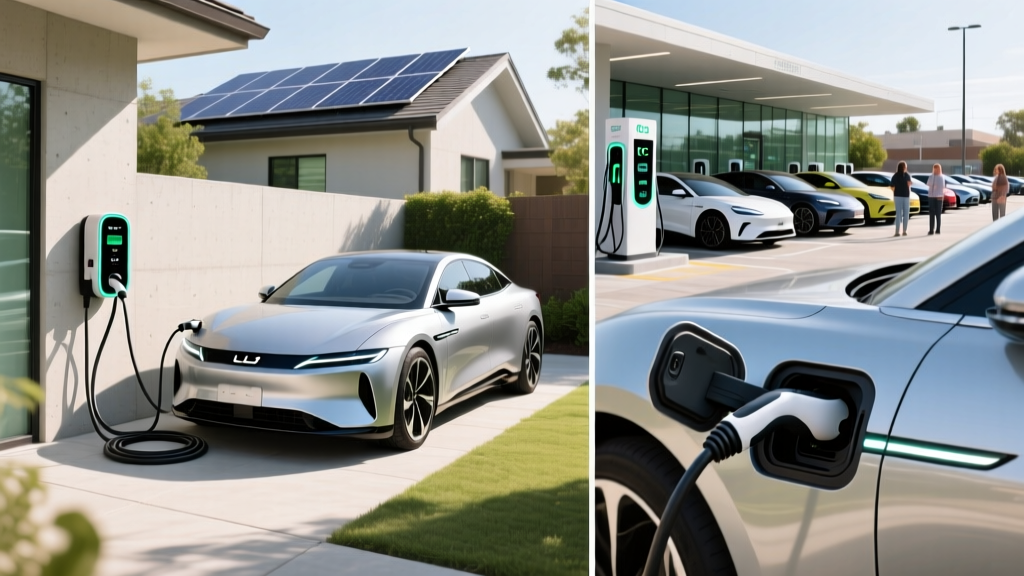
If you own a Toyota bZ4X, a RAV4 Prime, or a Prius Prime, the 120V cord that came with your vehicle is barely keeping up. Level 1 charging adds roughly 3 to 5 miles of range per hour — enough to refill a Prius Prime overnight, but painfully slow for the bZ4X's 71.4 kWh battery pack. A dedicated Toyota Level 2 charger operating on a 240V circuit transforms that math entirely, adding 15 to 40 miles of range per hour depending on the vehicle's onboard charger and the station's power output.
Toyota's own branded home charger, the Toyota Home Level 2 EV Charger, delivers up to 32 amps (7.7 kW) on a NEMA 14-50 outlet or hardwired connection. But third-party units from ChargePoint, Emporia, and Wallbox often provide faster charging, smarter scheduling, and longer cables — all fully compatible with Toyota's J1772 inlet (or NACS on 2025+ bZ models). This guide breaks down exactly what you need to install, what it costs, and which equipment earns our recommendation for 2026.
Charging Levels Explained: kW Speeds and Miles Per Hour
Before picking hardware, you need clarity on the three charging tiers and what each delivers in real-world terms. The distinction between kW (kilowatts — the rate of power delivery) and kWh (kilowatt-hours — the total energy stored in your battery) is the single most important concept in EV ownership. Think of kW as the width of the pipe and kWh as the size of the tank.
| Level | Voltage | Power (kW) | Miles of Range Added Per Hour | Best Use Case |
|---|---|---|---|---|
| Level 1 | 120V AC | 1.0–1.4 kW | 3–5 mi/hr | PHEV overnight top-off (RAV4 Prime, Prius Prime) |
| Level 2 (Home) | 240V AC | 3.3–11.5 kW | 12–42 mi/hr | Daily home charging for all Toyota EVs and PHEVs |
| Level 2 (Public) | 208–240V AC | 6.6–19.2 kW | 22–65 mi/hr | Workplace, shopping centers, destination charging |
| DC Fast Charge | 300–800V DC | 50–150+ kW | 150–400+ mi/hr | Road trips; 10–80% in 30 min (bZ4X) |
Toyota Level 2 Charger Compatibility: Connectors and Adapters
Connector compatibility depends on your Toyota model and model year. Here's the landscape as of 2026:
| Vehicle | Model Years | Inlet Type | Charger Plug Needed | Adapter Required? |
|---|---|---|---|---|
| bZ4X | 2023–2024 | CCS1 (J1772 + DC pins) | J1772 (Level 2) | No |
| bZ4X | 2025+ | NACS | NACS or J1772 | J1772-to-NACS adapter for J1772 chargers |
| bZ Woodland | 2026 | NACS | NACS or J1772 | J1772-to-NACS adapter for J1772 chargers |
| RAV4 Prime | 2021–2026 | J1772 | J1772 | No |
| Prius Prime | 2023–2026 | J1772 | J1772 | No |
| Grand Highlander Hybrid MAX | N/A (HEV) | No plug | N/A | N/A |
Most Level 2 home chargers sold in the U.S. ship with a J1772 connector. If you own a 2025 or later bZ4X with a NACS port, you'll need either a NACS-native home charger (such as the Tesla Wall Connector or Wallbox Pulsar Max with NACS) or a J1772-to-NACS adapter. Toyota includes a NACS-to-J1772 adapter with 2025+ bZ models for backward compatibility with existing public Level 2 infrastructure. For DC fast charging, NACS-equipped Toyotas can access Tesla Supercharger V3 and V4 stalls directly — a significant network advantage over CCS1-only vehicles.
Home Installation: Electrical Requirements and Total Cost
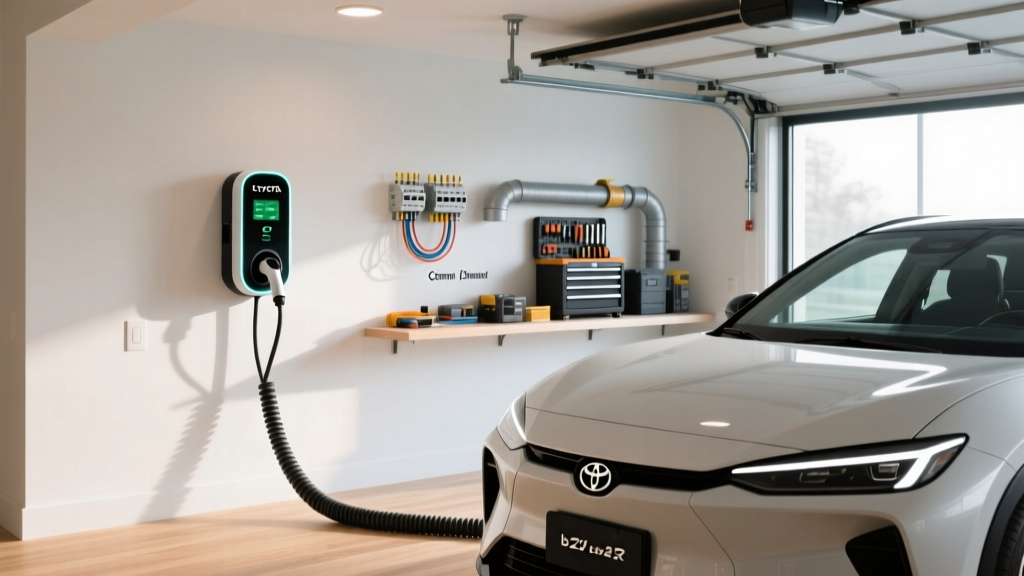
Installing a Level 2 charger is fundamentally an electrical project. You're adding a high-draw, continuous-load appliance to your home's panel, and the National Electrical Code (NEC) treats EV charging seriously. Here's what you're working with:
Electrical Specifications
- Voltage: 240V (split-phase, same as an electric dryer or oven)
- Amperage: 16A to 48A depending on charger — the circuit breaker must be rated 125% above the continuous draw (e.g., a 32A charger needs a 40A breaker; a 48A charger needs a 60A breaker)
- Circuit: Dedicated — no sharing with other outlets or appliances
- Outlet type (if not hardwired): NEMA 14-50 (most common) or NEMA 6-50
- GFCI protection: NEC 2020 and later requires GFCI breakers for EV receptacles in garages; hardwired units often exempt from this requirement, which is one reason many electricians prefer hardwiring
- Wire gauge: 6 AWG copper for 48A circuits; 8 AWG for 32A circuits (varies by run length and local code)
Panel Capacity: The Hidden Cost Driver
Your home's electrical panel has a maximum amperage rating — typically 100A, 150A, or 200A. Adding a 48A Level 2 charger draws up to 11.5 kW continuously, which can overwhelm a 100A panel already serving electric HVAC, a dryer, and a water heater. An electrician will perform a load calculation (per NEC Article 220) to determine if your panel has headroom.
If you need a panel upgrade from 100A to 200A, expect to pay $1,500–$3,500 on top of the charger installation. Homes built after 2000 usually have 200A panels and can accommodate a Level 2 circuit without an upgrade. Older homes with 100A service are the most common candidates for panel work.
| Component | Low Estimate | High Estimate | Notes |
|---|---|---|---|
| Level 2 charger unit | $300 | $700 | 32A–48A smart chargers |
| Electrical permit | $50 | $200 | Varies by municipality |
| Electrician labor (standard install) | $400 | $1,200 | Panel to garage, <30 ft run, no panel upgrade |
| Panel upgrade (if needed) | $1,500 | $3,500 | 100A to 200A service upgrade |
| Conduit and wiring materials | $100 | $400 | Depends on run length and routing complexity |
| Total (no panel upgrade) | $850 | $2,500 | Most homes with 200A service |
| Total (with panel upgrade) | $2,350 | $6,000 | Older homes with 100A service |
Charging Time Examples: What to Expect With Toyota Models
Here's how long a full Level 2 session takes for common Toyota electrified models, assuming a 32A (7.7 kW) charger — which matches the Toyota Home Level 2 charger's output:
| Vehicle | Battery (kWh Usable) | Onboard Charger | 0–100% at 7.7 kW | 10–80% Estimate |
|---|---|---|---|---|
| bZ4X (2024–2026) | 71.4 kWh | 6.6 kW | ~10.8 hours | ~7.5 hours |
| bZ Woodland (2026) | ~72 kWh (est.) | 6.6 kW | ~10.9 hours | ~7.6 hours |
| RAV4 Prime (2025–2026) | 18.1 kWh | 3.3 kW | ~5.5 hours | ~3.8 hours |
| Prius Prime (2025–2026) | 13.6 kWh | 3.3 kW | ~4.1 hours | ~2.8 hours |
For the bZ4X, a 7.7 kW Level 2 charger easily replenishes a full day's driving overnight. The EPA-rated range is 252 miles (FWD XLE trim), but expect 210–230 miles in real-world highway driving and potentially 170–190 miles in sub-freezing temperatures due to cabin heating demands and battery chemistry limitations. A nightly Level 2 session covers all of that comfortably.
For PHEV owners, the math is even more favorable. The RAV4 Prime's 42 miles of EPA electric range is fully restored in under 4 hours on a 3.3 kW Level 2 circuit — or under 2.5 hours if you upgrade to a 6.6 kW-capable charger and your vehicle supports it (check your model year; 2021–2022 RAV4 Primes were limited to 3.3 kW, while some 2023+ models support 6.6 kW with the optional upgrade package).
Cost to Charge: Home Electricity vs. Public vs. Gas
The economics of home Level 2 charging are compelling, especially when you schedule sessions during off-peak utility hours. Here's a cost comparison using the bZ4X as a baseline (3.5 miles per kWh, based on EPA combined efficiency of ~119 MPGe):
| Scenario | Rate | Cost Per Mile | Annual Cost (12,000 mi) |
|---|---|---|---|
| Home off-peak (utility time-of-use) | $0.09/kWh | $0.026 | $309 |
| Home standard rate (national avg.) | $0.17/kWh | $0.049 | $583 |
| Public Level 2 (ChargePoint, EVgo) | $0.35/kWh | $0.100 | $1,200 |
| DC Fast Charge (Electrify America) | $0.48/kWh | $0.137 | $1,646 |
| Gas vehicle (28 MPG combined, $3.40/gal) | $3.40/gal | $0.121 | $1,457 |
Home charging at off-peak rates saves roughly $1,100–$1,150 per year compared to a comparable gas crossover. Even at standard residential rates, you're cutting fuel costs by more than half. The breakeven point on your charger installation investment typically arrives within 12–18 months of consistent home charging.
For PHEV owners, the savings are proportional to electric-only miles driven. A RAV4 Prime owner who charges nightly and drives 30 miles daily on electricity will spend roughly $230/year on that electric mileage (at $0.17/kWh) versus $540 in gas for the same distance — a $310 annual savings just from the electric portion.
Best Level 2 Chargers for Toyota EVs and PHEVs in 2026
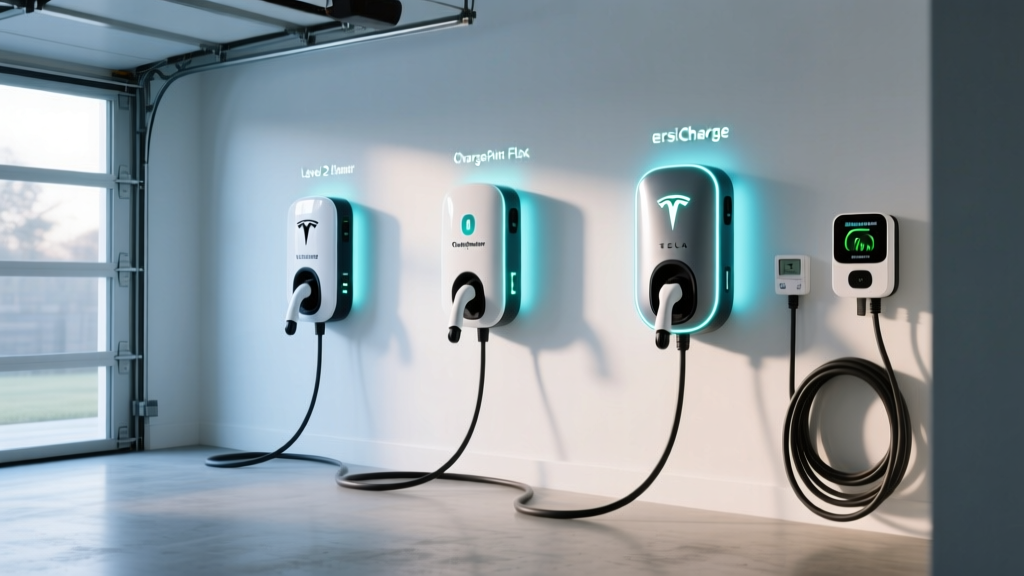
We evaluated home chargers based on power output, connector options, cable length, smart scheduling features, build quality, and price. Here are our top picks for Toyota owners:
Emporia Vue Level 2 Smart Charger
- Power: 48A (11.5 kW)
- Connector: J1772 (NACS adapter available)
- Cable: 24 ft
- Smart features: Solar integration, energy monitoring, time-of-use scheduling via app
- Price: ~$399
- Best for: bZ4X owners wanting max speed and energy visibility
ChargePoint Home Flex
- Power: Configurable 16A–50A (up to 12 kW)
- Connector: J1772
- Cable: 23 ft
- Smart features: Alexa integration, scheduling, detailed session history
- Price: ~$549
- Best for: Flexible amperage to match older panels
Tesla Wall Connector (Gen 4)
- Power: 48A (11.5 kW)
- Connector: NACS native (J1772 adapter included)
- Cable: 24 ft
- Smart features: Wi-Fi updates, power sharing between units, load management
- Price: ~$420
- Best for: 2025+ bZ4X / bZ Woodland owners with NACS ports
Wallbox Pulsar Max
- Power: 40A (9.6 kW)
- Connector: J1772 or NACS (select at purchase)
- Cable: 25 ft
- Smart features: Eco-Smart solar mode, Power Sharing, compact form factor
- Price: ~$499
- Best for: Outdoor installs (NEMA 4 rated) and tight garage spaces
Safety, Code, and Installation Best Practices
Level 2 EV charging involves continuous high-current draw — the NEC defines continuous load as operating for three hours or more, and a full bZ4X charge session can exceed 10 hours. This places specific demands on your installation:
- Dedicated circuit: Your Level 2 charger must have its own breaker. No shared circuits with laundry, lighting, or other outlets.
- 125% breaker rule: A 40A continuous charger requires a 50A breaker. A 32A charger requires a 40A breaker. Your electrician will size accordingly.
- GFCI protection: NEC 2020+ requires ground-fault protection for 240V EV receptacles. Hardwired installations may be exempt in some jurisdictions — ask your electrician which approach your local inspector prefers.
- Outdoor rating: If your charger is mounted outside (driveway or exterior wall), it must carry a NEMA 4 or NEMA 4X rating for water and dust ingress. All four chargers recommended above are outdoor-rated.
- Cable management: A 24-foot cable draped across a garage floor is a trip hazard. Wall-mounted cable organizers or retractors ($25–$60) are a worthwhile addition.
- Permit and inspection: Nearly all jurisdictions require an electrical permit for a new 240V circuit. The inspection verifies wire gauge, breaker sizing, grounding, and GFCI compliance. Don't skip this — it protects you and is required for any insurance claim related to electrical fire.
Always hire a licensed electrician — ideally one with EV charger installation experience. Ask for their load calculation methodology and whether they pull permits as standard practice. A quality install should come with a 1-year workmanship warranty on top of the charger manufacturer's warranty (typically 3 years).
Frequently Asked Questions
How much does it cost to install a home EV charger for my Toyota?
Most installations with an existing 200A panel run $850–$2,500 total, including the charger unit ($300–$700), electrician labor ($400–$1,200), permit ($50–$200), and materials. If your home needs a panel upgrade from 100A to 200A, add $1,500–$3,500 to the total.
Can I use a Tesla Wall Connector with my Toyota bZ4X?
Yes, if your bZ4X is a 2025 or later model with a NACS port. The Tesla Wall Connector (Gen 4) uses a native NACS plug. For 2023–2024 bZ4X models with CCS1/J1772 inlets, you would need a NACS-to-J1772 adapter, or you should choose a J1772-native charger instead.
Is the Toyota OEM Level 2 charger worth buying?
The Toyota Home Level 2 charger is reliable and fully compatible, but at 32A (7.7 kW) and ~$499, it offers less power than the Emporia Vue (48A, ~$399) or Tesla Wall Connector (48A, ~$420). If you value the Toyota branding and straightforward setup, it works well. If you want maximum charging speed or future-proofing, third-party options deliver more for the money.
How fast will a Level 2 charger add range to my RAV4 Prime?
The RAV4 Prime's onboard charger is limited to 3.3 kW (some 2023+ models support 6.6 kW with an optional package). At 3.3 kW, you'll add roughly 12–14 miles of electric range per hour, fully replenishing the 42-mile EPA battery in about 4 hours. At 6.6 kW, that drops to roughly 2.5 hours.
Do I need a permit to install a Level 2 charger at home?
Yes, in virtually all U.S. jurisdictions. A new 240V circuit requires an electrical permit and inspection. The permit fee is typically $50–$200. Skipping the permit risks code violations, insurance claim denials, and complications during a home sale.
Will a Level 2 charger work with both my bZ4X and my Prius Prime?
A J1772-connector Level 2 charger will plug directly into the Prius Prime (all years) and the 2023–2024 bZ4X. For a 2025+ bZ4X with NACS, you'll need a J1772-to-NACS adapter. Alternatively, a NACS-native charger with a NACS-to-J1772 adapter covers both vehicles.
Sources: U.S. Department of Energy / fueleconomy.gov, Toyota bZ4X Specifications, IRS Alternative Fuel Vehicle Refueling Property Credit