If you're cross-shopping the visceral thrill of a 2006 Chevrolet Cobalt SS Supercharged against a modern electric vehicle, the performance conversation is only half the equation. The 06 Cobalt SS Supercharged pushed 205 hp from its 2.0L supercharged Ecotec and delivered roughly 24 MPG combined on premium fuel. Today's EVs offer a radically different ownership experience — one where the "fuel" cost per mile can drop to a third or less of what that supercharged four-cylinder demands. But the real question buyers ask is: what does it actually cost to charge an EV at home and on the road, and how does that stack up against fueling a car like the 06 Cobalt SS Supercharged?
This guide breaks down every charging level, home installation cost, connector type, and per-mile energy expense so you can make a precise financial comparison. Whether you owned a Cobalt SS Supercharged back in the day or you're weighing a classic gas build against going electric in 2026, the numbers below tell the full story.
Understanding EV Charging Levels: Speed, Power, and Range Added
Before comparing costs, you need to understand the three charging tiers. The critical distinction: kW (kilowatts) measures power — how fast energy flows into the battery. kWh (kilowatt-hours) measures energy — the battery's total capacity. Think of kW as the width of the hose and kWh as the size of the bucket. Never use them interchangeably.
| Level | Voltage | Max Power (kW) | Miles of Range Added Per Hour | Best Use Case |
|---|---|---|---|---|
| Level 1 | 120V AC | 1.4–1.9 kW | 3–5 mi/hr | Overnight top-ups, PHEVs, low-mileage drivers |
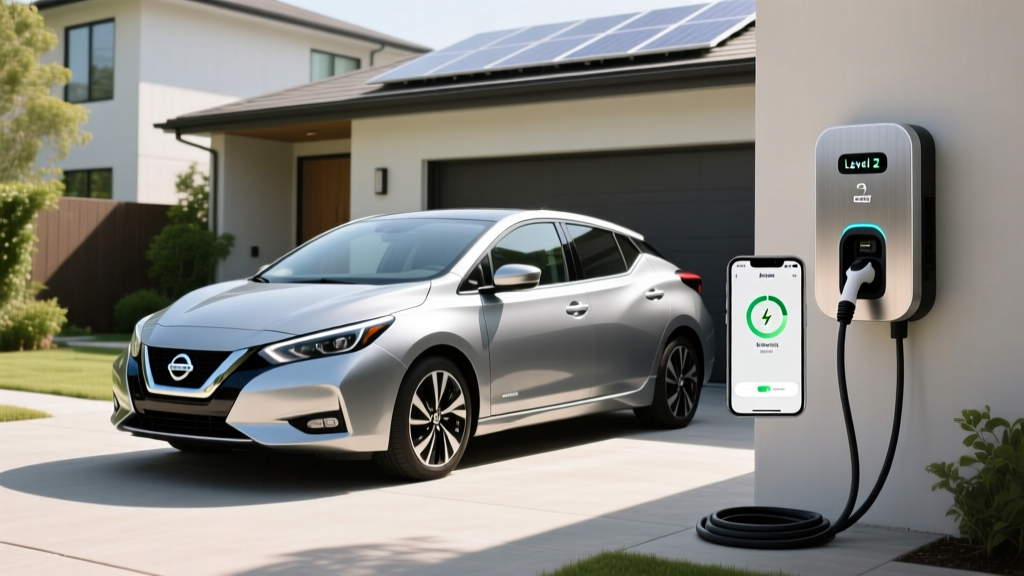
| Level 2 | 240V AC | 7.2–19.2 kW | 20–60+ mi/hr | Daily home charging, workplace charging |
| DC Fast Charge | 400–800V DC | 50–350+ kW | 150–1,200+ mi/hr (peak) | Road trips, quick top-ups away from home |
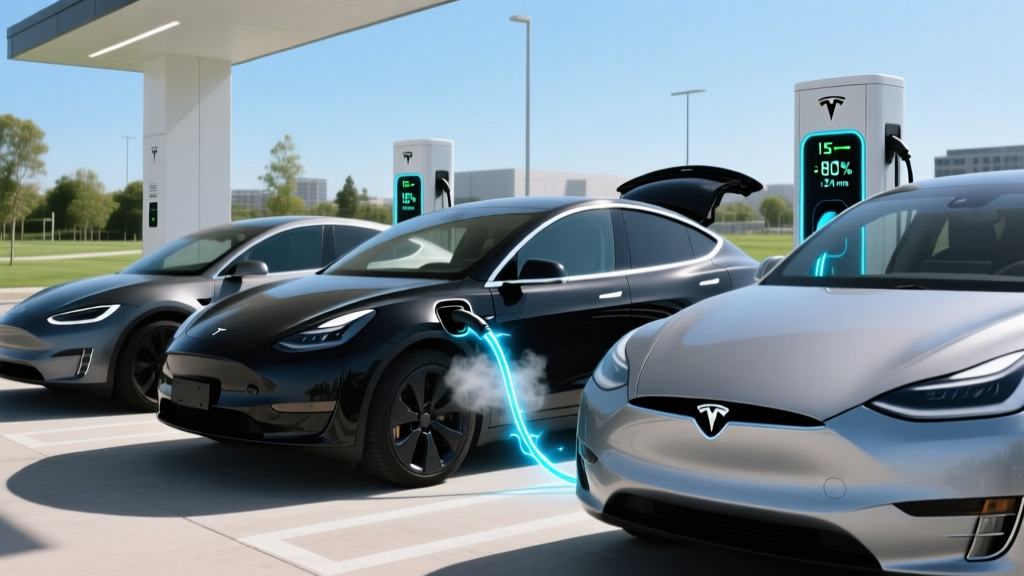
A typical 75 kWh battery (like in a Tesla Model Y Long Range) charged from 10–80% takes roughly 9 hours on Level 2 at 7.2 kW, about 3.5 hours at 19.2 kW, and approximately 18–25 minutes on a 250 kW DC fast charger — though charge-curve taper above 80% means the final 20% takes disproportionately longer. On Level 1, that same 10–80% fill would take over 40 hours, which is why Level 1 is best reserved for plug-in hybrids with smaller batteries or as a backup option.
Home EV Charger Installation: Requirements, Costs, and Panel Upgrades
Installing a Level 2 home charger is the single biggest ownership setup task, and costs vary dramatically based on your home's electrical infrastructure. Here's what's involved.
Electrical Requirements
A standard Level 2 home charger requires a dedicated 240V circuit, typically rated at 40A, 48A, or 60A depending on the charger's maximum output. A 48A charger, for example, needs a 60A breaker (NEC code requires the circuit be rated 125% above the continuous load). The charger hardwires directly to your panel or plugs into a NEMA 14-50 outlet.
Panel Upgrade Reality
Homes built before 2000 often have 100A or 150A electrical panels. Adding a 60A EV circuit to an already-loaded panel may require a panel upgrade to 200A, which is the single largest variable in installation cost. Signs you'll need an upgrade: your panel is near capacity (few open slots, breakers frequently tripping), or you already run high-draw appliances like electric ranges, dryers, and central AC simultaneously.
| Component | Simple Install (panel nearby, no upgrade) | Complex Install (long run, panel upgrade) |
|---|---|---|
| Level 2 Charger Equipment | $350–$700 | $350–$700 |
| Electrician Labor | $300–$800 | $1,200–$3,000 |
| Electrical Permit | $50–$200 | $100–$300 |
| Panel Upgrade (if needed) | $0 | $1,500–$4,000 |
| Conduit, Wire, Misc. | $50–$200 | $300–$800 |
| Total Estimated Range | $750–$1,900 | $3,450–$8,800 |
Always hire a licensed electrician and pull a permit. Unpermitted EV charger installs can void home insurance claims and create serious fire risk. The National Electrical Contractors Association maintains a directory of qualified EVSE installers.
Connector Compatibility: NACS, CCS1, CHAdeMO, and Adapters
The connector landscape shifted dramatically between 2023 and 2026. Here's where things stand now for new-vehicle buyers.
| Connector | Brands Using It (2026 Models) | DC Fast Charge Networks | Adapter Availability |
|---|---|---|---|
| NACS (Tesla / SAE J3400) | Tesla, Ford, GM, Rivian, Volvo, Polestar, Hyundai, Kia, BMW, most major OEMs | Tesla Supercharger, Electrify America (adding NACS), ChargePoint, EVgo | CCS-to-NACS adapters available; CHAdeMO-to-NACS limited |
| CCS1 (legacy) | Older VW ID.4, some 2023–2024 models still in circulation | Electrify America, EVgo, ChargePoint | NACS-to-CCS adapters for Supercharger access |
| CHAdeMO | Nissan Leaf (discontinued), Mitsubishi Outlander PHEV (older) | Declining; some Electrify America and independent stations | Limited adapter options |
For 2026 model-year purchases, NACS is the dominant standard. If you buy a used EV with CCS1 (such as a 2023 VW ID.4), you'll likely need a CCS-to-NACS adapter ($200–$300) to access the expanding Tesla Supercharger network, which now accepts non-Tesla vehicles. CHAdeMO is effectively a legacy connector — functional but with shrinking infrastructure support.
Cost to Charge an EV vs. Fueling the 06 Cobalt SS Supercharged
This is where the comparison gets concrete. The 2006 Cobalt SS Supercharged was EPA-rated at roughly 22 city / 28 highway / 24 combined MPG and required premium unleaded (91+ octane). Let's build a real per-mile cost comparison.
| Scenario | Rate | Vehicle Efficiency | Cost Per Mile |
|---|---|---|---|
| Home charging (off-peak utility rate) | $0.12/kWh | 3.5 mi/kWh (typical EV sedan) | $0.034 |
| Home charging (average US rate) | $0.17/kWh | 3.5 mi/kWh | $0.049 |
| Public Level 2 (ChargePoint, etc.) | $0.35/kWh | 3.5 mi/kWh | $0.10 |
| DC Fast Charging (Electrify America) | $0.48/kWh | 3.5 mi/kWh | $0.137 |
| Tesla Supercharger (avg 2026) | $0.35/kWh | 3.8 mi/kWh (Model Y) | $0.092 |
| 06 Cobalt SS Supercharged (premium fuel) | $4.20/gal | 24 MPG combined | $0.175 |
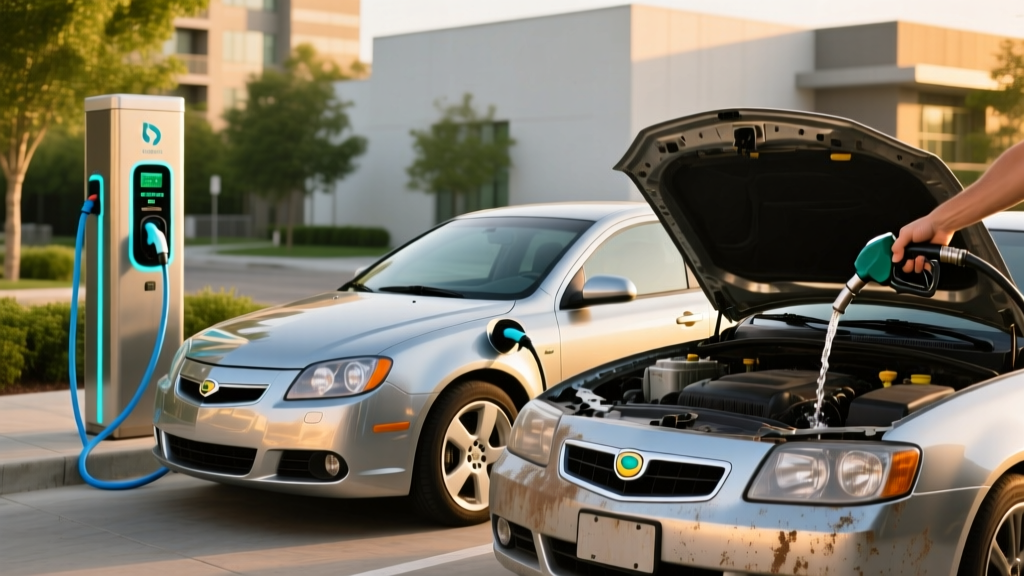
The math is unambiguous: home-charged EVs cost 3–5 cents per mile versus 17.5 cents per mile for the Cobalt SS Supercharged on premium — a 70–80% savings. Even the most expensive DC fast-charging scenario undercuts premium fuel. However, if you exclusively rely on public DC fast chargers at $0.48/kWh, your per-mile cost approaches that of a fuel-efficient gas car, eliminating much of the savings advantage. Home charging access is the financial linchpin of EV ownership.
According to fueleconomy.gov, the average 2026 EV achieves 100–130 MPGe combined, translating to 3.0–4.0 miles per kWh. Compare that to the Cobalt SS Supercharged's 24 MPG, and the energy-cost gap widens further when you factor in that electricity prices are more stable than gasoline.
Equipment Recommendations: Best Home Level 2 Chargers in 2026
Not all Level 2 chargers are equal. Here are top picks based on power output, build quality, smart features, and connector type.
Emporia Vue / Emporia Level 2 Charger
- Power Output: 48A (11.5 kW on 240V)
- Connector: NACS (J3400) native; CCS adapter included
- Cable Length: 24 ft
- Smart Features: Wi-Fi, app scheduling, solar integration, energy monitoring via Emporia Vue panel
- Price: ~$399
- Best For: Budget-conscious buyers wanting full smart features and solar-aware charging
ChargePoint Home Flex
- Power Output: Up to 50A (12 kW) — adjustable via DIP switch to match circuit
- Connector: NACS (2026 model); older CCS version still available
- Cable Length: 23 ft
- Smart Features: Wi-Fi, app-based scheduling, Alexa/Google Home integration, flexible amperage
- Price: ~$599
- Best For: Flexible amperage for homes with limited panel capacity
Tesla Wall Connector (Gen 4)
- Power Output: 48A (11.5 kW on 240V/60A circuit)
- Connector: NACS native
- Cable Length: 24 ft
- Smart Features: Wi-Fi, OTA updates, power sharing (link multiple units on one circuit), Tesla app integration
- Price: ~$475
- Best For: Tesla owners and NACS-native EVs; cleanest aesthetic
Safety, Electrical Code, and Outdoor Installation Considerations
EV charging involves sustained high-current draw — more similar to running a welder than plugging in a phone. Safety isn't optional.
- Dedicated circuit required: Your Level 2 charger must have its own breaker — never share a circuit with other appliances.
- GFCI protection: NEC 2023/2026 code requires GFCI (Ground Fault Circuit Interrupter) protection for all EVSE outlets. Hardwired units typically have built-in ground-fault protection.
- Outdoor rating: If mounting outside, ensure the unit carries a NEMA 4 or IP65 rating for weather resistance. All three chargers above are outdoor-rated.
- Cable management: A 24-foot cable drags on the ground if not managed. Wall-mounted cable organizers ($20–$40) prevent tripping hazards and connector damage.
- Permit and inspection: Most jurisdictions require a permit for new 240V circuits. Skipping this risks insurance denial in the event of an electrical fire. Your electrician should handle the permit application.
The National Fire Protection Association's NEC guidelines govern all EVSE installation requirements. Local amendments may add rules — check with your building department before work begins.
Frequently Asked Questions
How much does it cost to install a home EV charger?
A straightforward Level 2 install with an existing 200A panel and short wire run typically costs $750–$1,900 all-in (charger + electrician + permit). If your home needs a panel upgrade to 200A, total costs climb to $3,450–$8,800. Get 2–3 quotes from licensed electricians before committing.
How fast will each charging level add range?
Level 1 (120V) adds 3–5 miles per hour. Level 2 (240V) adds 20–60+ miles per hour depending on amperage. DC fast charging can add 150–1,200+ miles per hour at peak rates, though sustained rates taper significantly above 80% State of Charge. A 75 kWh battery goes from 10–80% in roughly 18–25 minutes on a 250 kW DC charger.
Which connector or charger is compatible with my EV?
For 2026 models, most new EVs use NACS (SAE J3400). Older CCS1 vehicles need a CCS-to-NACS adapter for Supercharger access. CHAdeMO is limited to older Nissan Leafs and a few remaining models. Check your vehicle's charge port before purchasing a home charger — buy a charger with the matching native connector to avoid adapter dependency.
How much does charging cost per mile compared to fueling a gas car like the 06 Cobalt SS Supercharged?
Home-charged EVs cost roughly $0.03–$0.05 per mile at typical US electricity rates. The 06 Cobalt SS Supercharged at 24 MPG combined on $4.20/gal premium costs about $0.175 per mile. That's a 70–80% per-mile savings for home-charged EVs. Public DC fast charging at $0.48/kWh raises EV cost to ~$0.14/mile — still cheaper than premium fuel but with a much narrower margin.
What electrical upgrades might I need before installing a charger?
The most common upgrade is a panel replacement from 100A or 150A to 200A service, costing $1,500–$4,000. You may also need additional breaker slots, a new meter base, or utility service-line upgrades in older homes. Some utilities offer rebates covering $200–$1,000 of panel-upgrade costs when paired with EV charger installation — check with your local provider. Homes with 200A+ panels and open breaker slots typically need no upgrade at all.
Can I use a 06 Cobalt SS Supercharged as my only car and skip EV charging entirely?
You can, but you'll pay for it at the pump. At 15,000 miles per year and $4.20/gal premium, the Cobalt SS Supercharged costs roughly $2,625 annually in fuel. An equivalent EV charged at home off-peak costs approximately $510 per year — a $2,115 annual savings. Over a 5-year ownership period, that's over $10,000 in fuel savings alone, before considering the Cobalt's supercharger maintenance, premium oil changes, and aging emissions components.