If you own or are shopping for a Toyota bZ-series EV — whether the bZ4X crossover or the newer, larger bZ SUV — one question dominates the ownership experience: how long does it actually take to charge? The answer depends on which charging level you use, the size of your battery pack, and whether your home electrical system is ready for a Level 2 setup. This guide breaks down Toyota bZ charging time across every scenario, with exact kW figures, real-world cost math, and the home installation details most buyers overlook until they're staring at an electrician's quote.
Toyota bZ Battery Sizes and What They Mean for Charging
Before calculating charge times, you need to know the energy capacity you're filling. Toyota's bZ lineup uses lithium-ion NMC (nickel manganese cobalt) battery packs in two primary sizes:
- bZ4X (FWD): 71.4 kWh usable capacity, EPA-estimated 252 miles of range
- bZ4X (AWD): 72.8 kWh usable capacity, EPA-estimated 228 miles of range
- bZ SUV (2026, announced): Expected ~75-80 kWh usable, targeting 300+ miles EPA (specs preliminary)
These battery capacities directly determine your charge times. A 71.4 kWh battery charging at 7.2 kW (a typical Level 2 home charger) requires roughly 10 hours from 0-100%. But most EV owners charge from 10-80% to preserve battery health and avoid the slow taper above 80% State of Charge (SoC).
Charging Levels: Speeds, kW, and Miles Per Hour
EV charging is measured in kW (kilowatts), which represents the rate of power delivery. Your battery capacity is measured in kWh (kilowatt-hours), which is the total energy stored. Think of kW as the speed of water flowing through a hose and kWh as the size of the bucket you're filling. Confusing these two is the single most common mistake new EV owners make.
| Level | Voltage / Amps | Power (kW) | Miles Added/Hour | Best For |
|---|---|---|---|---|
| Level 1 | 120V / 12A | 1.4 kW | ~4-5 mi/hr | Overnight top-up, PHEVs, emergencies |
| Level 2 | 240V / 32-48A | 7.7-11.5 kW | ~25-38 mi/hr | Daily home charging |
| DC Fast | 400-800V DC | 50-150 kW | ~150-350 mi/hr | Road trips, rapid top-ups |
Toyota bZ Charging Time: Level-by-Level Breakdown
Level 1 (120V Household Outlet): The Emergency Backup
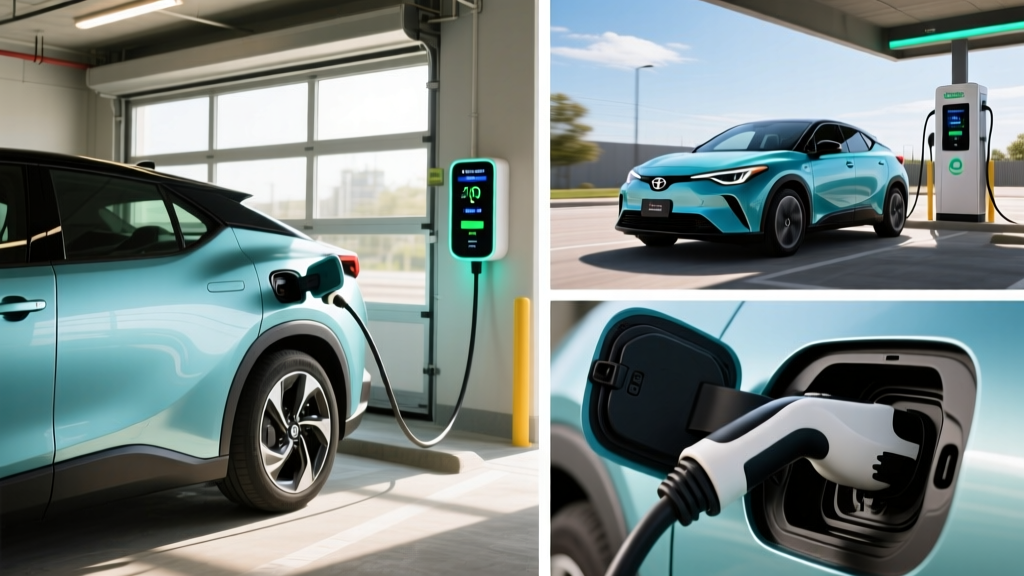
Every bZ4X ships with a dual-voltage charging cable that can plug into a standard 120V outlet. At 1.4 kW, this delivers roughly 4-5 miles of range per hour. Fully charging a depleted 71.4 kWh bZ4X battery from 0-100% at Level 1 would take approximately 51 hours — essentially two full days. Level 1 is viable only if you drive less than 30 miles per day and can leave the car plugged in for 10-12 hours overnight, recovering about 40-50 miles.
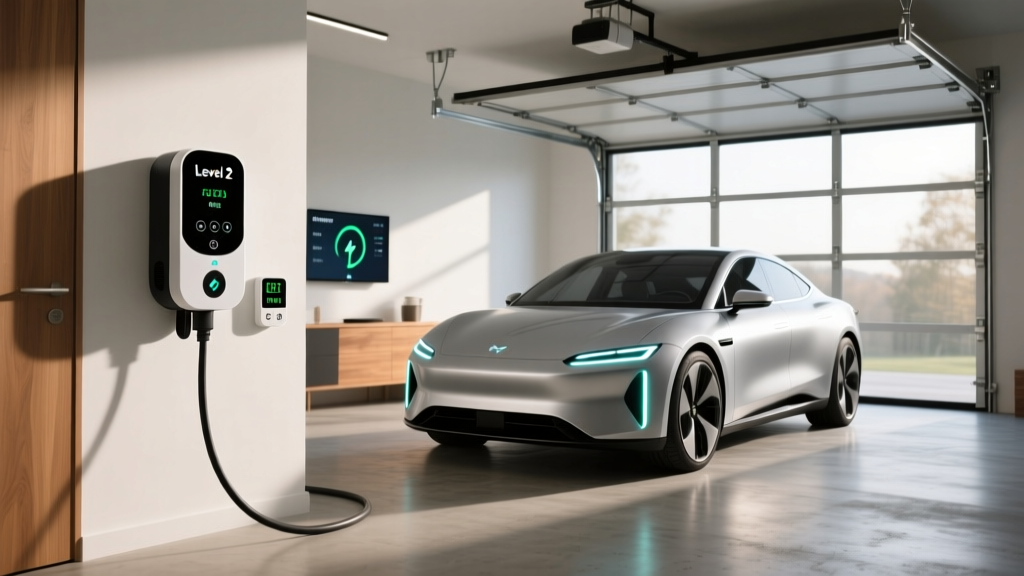
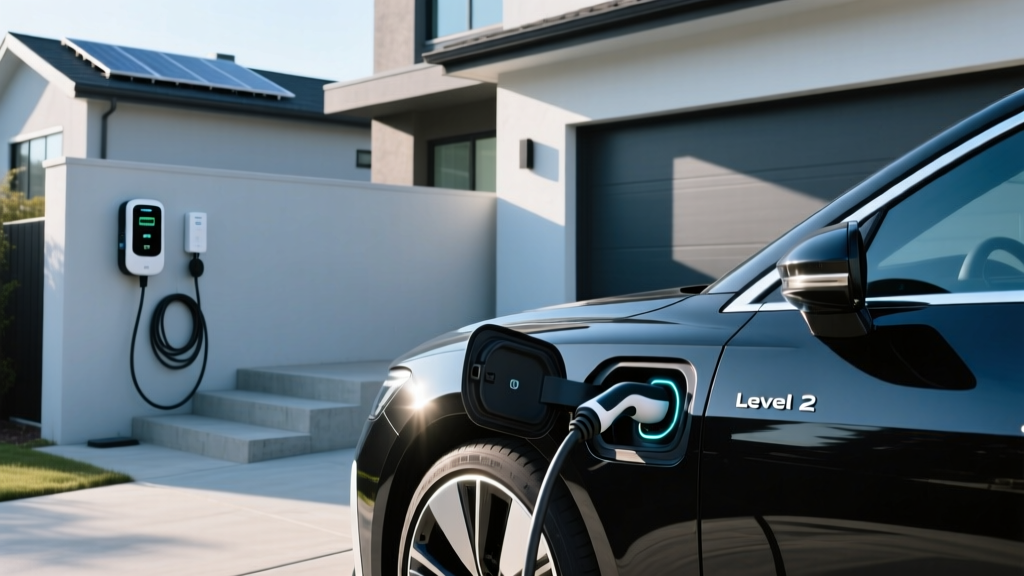
Level 2 (240V Home Charger): The Daily Workhorse
The bZ4X's onboard charger accepts up to 7.2 kW on Level 2 AC power (some 2025-2026 models with updated hardware accept up to 11 kW). Here's what that means in practice:
- At 7.2 kW (32A circuit): 10-80% in approximately 7 hours
- At 9.6 kW (40A circuit): 10-80% in approximately 5.5 hours (if vehicle supports it)
- At 11.5 kW (48A circuit): Limited by bZ4X's 7.2 kW onboard charger — no additional speed benefit
This is a critical ownership insight: the bZ4X's onboard charger caps AC charging at 7.2 kW. Installing a 48A/11.5 kW home charger won't charge the bZ4X any faster than a 32A/7.7 kW unit. Save money on a 32A charger unless you plan to own a future EV with a larger onboard charger.
DC Fast Charging: Road-Trip Speeds and the Curve Reality
The bZ4X supports DC fast charging at a peak rate of up to 150 kW on CCS1-equipped models. However, peak rate is not sustained rate. Like all EVs, the bZ4X follows a charging curve that tapers significantly as the battery fills:
- 10-80% DC fast charge: Approximately 30 minutes at a 150 kW station
- Peak rate duration: The bZ4X sustains near-peak speeds only from roughly 10-40% SoC, then tapers to ~80 kW through 60%, and drops further to ~40 kW above 70%
- 80-100%: Can add another 30-40 minutes — always stop at 80% on road trips unless you need the full range to reach your next stop
Connector Compatibility: NACS, CCS1, and Adapter Needs
The Toyota bZ4X sold in North America through model year 2024 uses the CCS1 (Combined Charging System) connector for both Level 2 AC and DC fast charging. Starting with 2025-2026 model years, Toyota has begun transitioning to the NACS (North American Charging Standard) — the Tesla-designed connector now adopted industry-wide.
| Connector | bZ Model Years | Networks Accessible | Adapter Needed? |
|---|---|---|---|
| CCS1 | 2023-2024 bZ4X | Electrify America, EVgo, ChargePoint, most non-Tesla networks | CCS-to-NACS adapter (~$200-250) needed for Tesla Superchargers |
| NACS | 2025+ bZ4X, 2026 bZ SUV | Tesla Superchargers natively, plus all networks via NACS-to-CCS adapter | NACS-to-CCS adapter (~$200) for older Electrify America stations |
If you own a 2023-2024 CCS1-equipped bZ4X, a CCS-to-NACS adapter from an approved manufacturer (Tesla, Lectron, or A2Z) unlocks access to the Tesla Supercharger network — over 25,000 stalls in North America. Toyota has confirmed adapter compatibility for its bZ models; check your specific VIN with your dealer before purchasing a third-party adapter. For home Level 2 charging, all connectors use the J1772 standard for AC — NACS vehicles accept J1772 via a small adapter typically included with the car.
Home Charger Installation: Costs, Electrical Requirements, and Panel Upgrades
Installing a Level 2 home charger is the single biggest infrastructure investment an EV owner makes. The total cost depends on your home's electrical panel capacity, the distance from the panel to your parking spot, and local permit requirements.
Electrical Requirements for the bZ4X
Since the bZ4X's onboard charger maxes out at 7.2 kW, you need a 240V circuit with at least 40 amps (which provides 32A of continuous charging current — electrical code requires circuits rated at 125% of the continuous load). A 40A circuit uses 8-gauge copper wire and a NEMA 14-50 outlet or a hardwired connection.
If you want future-proofing for a next EV with an 11.5 kW onboard charger, install a 60A circuit (48A continuous) using 6-gauge wire. The incremental cost during initial installation is typically $100-300 in wire and breaker upgrades — far cheaper than re-running wire later.
Installation Cost Breakdown
| Component | Simple Install (panel nearby) | Complex Install (long run / panel upgrade) |
|---|---|---|
| Level 2 Charger (hardware) | $350 - $700 | $350 - $700 |
| Electrician labor (2-4 hrs simple / 6-10 hrs complex) | $400 - $800 | $1,200 - $2,500 |
| Permit fee | $50 - $150 | $50 - $200 |
| Electrical panel upgrade (if needed: 100A → 200A) | N/A | $1,500 - $3,500 |
| Total | $800 - $1,650 | $3,100 - $6,900 |
Home Charger Equipment Recommendations for Toyota bZ Owners
Given the bZ4X's 7.2 kW onboard charger ceiling, the smartest purchase is a reliable 32A (7.7 kW) Level 2 charger. Spending extra for a 48A unit only makes sense if you plan to keep the charger for your next EV. Here are three proven options:
Grizzl-E Smart (32A)
- Power: 7.7 kW (32A, 240V)
- Connector: J1772 (NACS adapter included for newer models)
- Cable length: 24 ft
- Smart features: Wi-Fi, scheduling, energy tracking via app
- Price: ~$449
- Why for bZ: Matches bZ4X's onboard charger perfectly; rugged outdoor-rated build
ChargePoint Home Flex (up to 50A)
- Power: Up to 12 kW (50A) — adjustable via DIP switch
- Connector: J1772 or NACS (select at purchase)
- Cable length: 23 ft
- Smart features: Wi-Fi, Alexa, scheduling, detailed app
- Price: ~$599
- Why for bZ: Set to 32A now, upgrade to 48A for your next EV without replacing hardware
Tesla Universal Wall Connector (48A)
- Power: Up to 11.5 kW (48A, 240V)
- Connector: NACS with integrated J1772 adapter
- Cable length: 24 ft
- Smart features: Wi-Fi, OTA updates, power sharing between two units
- Price: ~$599
- Why for bZ: Best future-proof pick; built-in J1772 adapter charges CCS1 bZ4X models natively
Safety and Code Considerations
National Electrical Code (NEC) requires that EV chargers be installed on a dedicated circuit — meaning no other outlets or appliances share the breaker. For outdoor installations, the charger must carry a NEMA 4 (weatherproof) rating, and many jurisdictions now require a GFCI (ground-fault circuit interrupter) breaker for outdoor EV circuits. Hardwired connections (no plug) eliminate the need for a GFCI breaker in most jurisdictions and are generally more reliable. Always pull a permit — unpermitted electrical work can void your homeowner's insurance and create a fire hazard.
Cost to Charge a Toyota bZ: Home vs. Public vs. Gas
The economics of EV ownership hinge on your local electricity rates and how much you rely on public DC fast charging. Here's a realistic cost breakdown for a bZ4X FWD (71.4 kWh battery, 252-mile EPA range, ~3.5 miles/kWh real-world efficiency):
| Scenario | Rate ($/kWh) | Full Charge Cost | Cost Per Mile |
|---|---|---|---|
| Home (off-peak utility rate) | $0.09/kWh | $6.43 | $0.026/mi |
| Home (national avg. residential) | $0.17/kWh | $12.14 | $0.048/mi |
| Public Level 2 (ChargePoint, etc.) | $0.25-$0.35/kWh | $17.85-$24.99 | $0.071-$0.099/mi |
| DC Fast (Electrify America) | $0.35-$0.55/kWh | $24.99-$39.27 | $0.099-$0.156/mi |
| Gas baseline (28 MPG avg., $3.40/gal) | — | — | $0.121/mi |
At home off-peak rates, a bZ4X owner pays roughly $0.03 per mile — about 75% less than a comparable gas-powered Toyota RAV4 getting 28 MPG combined. Even at the national residential average of $0.17/kWh, you're at $0.05/mile, still a significant savings. The economics flip if you rely exclusively on DC fast charging at $0.45-$0.55/kWh, where per-mile costs can exceed gasoline. Home charging is where EV savings are won or lost.
According to fueleconomy.gov, the 2024 bZ4X FWD achieves 131 MPGe combined (25 kWh/100 miles), making it moderately efficient for its class but behind leaders like the Tesla Model Y (120 MPGe, but with more range) and Hyundai Ioniq 5 (114 MPGe with faster charging).
Frequently Asked Questions
How much does it cost to install a home EV charger for a Toyota bZ?
A straightforward Level 2 installation with a panel nearby typically costs $800-$1,650 (charger hardware + electrician + permit). If your home needs a panel upgrade from 100A to 200A, total costs can reach $3,100-$6,900. The federal Residential Clean Energy Credit covers 30% of hardware and installation, up to $1,000.
How fast will each charging level add range to my bZ4X?
Level 1 (120V): ~4-5 miles per hour. Level 2 (240V, 32A): ~25 miles per hour. DC Fast (150 kW peak): ~150-200 miles in 30 minutes (10-80%). The bZ4X's 7.2 kW onboard charger limits Level 2 speeds regardless of how powerful your home charger is.
Which connector and charger is compatible with my bZ EV?
Model years 2023-2024 use CCS1; model years 2025+ use NACS. For home Level 2 charging, any J1772 charger works with all model years (NACS models include a J1772 adapter). For DC fast charging, CCS1 models need a CCS-to-NACS adapter (~$200-250) to access Tesla Superchargers, while NACS models can use Superchargers natively.
How much does charging a Toyota bZ cost per mile vs. gas?
Home charging at off-peak rates costs ~$0.03/mile; at average residential rates, ~$0.05/mile. A comparable gas SUV at 28 MPG and $3.40/gallon costs ~$0.12/mile. Home charging delivers 60-75% fuel cost savings; exclusive reliance on DC fast charging at $0.45+/kWh can approach or exceed gas costs.
What electrical upgrades might I need for a home charger?
You'll need a dedicated 240V circuit (40A minimum for the bZ4X). Homes with 100A panels built before 1990 may need a panel upgrade to 200A, costing $1,500-$3,500. An electrician will perform a load calculation to determine if your existing panel has capacity. Outdoor installations may require a GFCI breaker and must use NEMA 4-rated equipment.
Does the Toyota bZ4X charge slower than competitors?
Yes, in DC fast charging. The bZ4X's 150 kW peak rate and aggressive taper result in a 10-80% time of ~30 minutes, while the Hyundai Ioniq 5 (with 800V architecture) achieves 10-80% in ~18 minutes at a 350 kW station. On Level 2, the bZ4X's 7.2 kW onboard charger is adequate for overnight home charging but slower than the 11.5 kW chargers found in the Ford Mustang Mach-E and BMW iX.
Should I charge my bZ4X to 100% every night?
No. Toyota recommends setting the charge limit to 80% for daily driving to prolong NMC battery health. Use 100% only when you need maximum range for a road trip. The bZ4X's battery management system includes a buffer (the 71.4 kWh "usable" figure already excludes a ~5 kWh top and bottom buffer), but staying between 20-80% SoC for daily use will minimize long-term degradation.
For current Toyota bZ specifications and warranty details, consult Toyota's official bZ4X page. Federal tax credit eligibility for new EV purchases is governed by IRS §30D rules with income caps, MSRP limits, and battery-sourcing requirements — verify current eligibility at irs.gov before purchasing.