Can You Use a Tesla Supercharger With a Porsche Taycan?
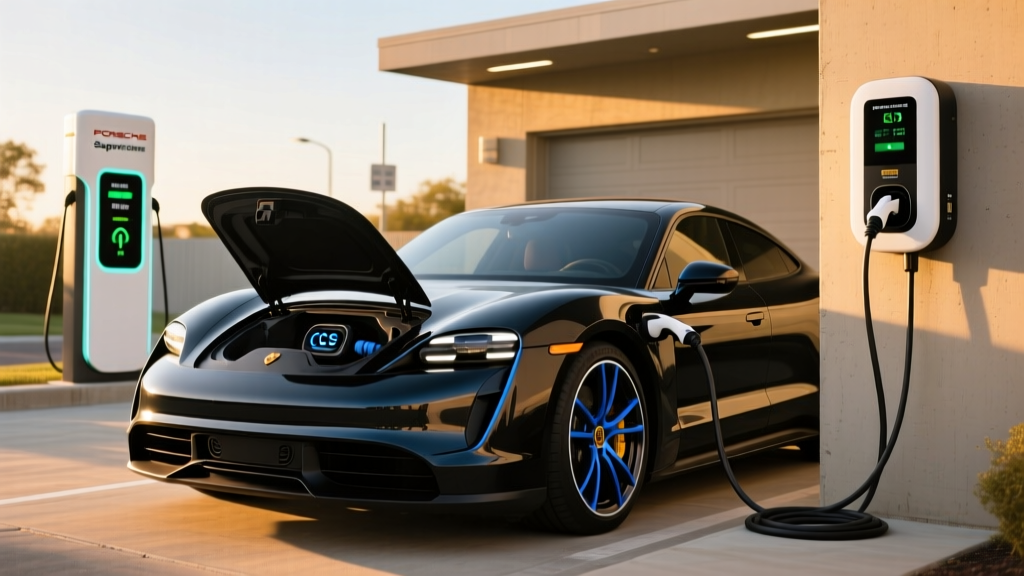
If you've searched for Porsche Supercharger compatibility, you're likely a Taycan owner (or prospective buyer) wondering whether Tesla's vast charging network is available to you. The short answer in 2026: yes, but with caveats. Tesla has progressively opened its Supercharger network to non-Tesla EVs through the NACS (North American Charging Standard) rollout, and Porsche has committed to equipping new models with native NACS ports. However, the practical reality of plugging a Taycan into a Supercharger depends heavily on your model year, whether you have the right adapter, and which Supercharger stations support non-Tesla vehicles.
This guide covers everything Taycan owners need to know: Supercharger access, DC fast-charging performance on Porsche's preferred networks, home Level 2 installation costs, connector compatibility, and per-mile charging economics versus gas.
Understanding Charging Levels: What Speeds to Expect
Every EV owner needs to internalize three charging tiers. Here's how they translate into real-world range recovery for a Taycan-class battery:
| Level | Voltage / Amps | Power (kW) | Miles of Range Per Hour | Best Use Case |
|---|---|---|---|---|
| Level 1 | 120V / 12-16A | 1.4–1.9 kW | 3–5 mi/hr | Overnight trickle; emergency backup |
| Level 2 | 240V / 32-48A | 7.7–11.5 kW | 25–40 mi/hr | Daily home charging; full overnight refill |
| DC Fast | 400-800V DC | 50–350 kW | 150–800+ mi/hr (peak) | Road trips; rapid top-ups |
For a 2026 Porsche Taycan with the Performance Battery Plus (93.4 kWh usable, NMC chemistry), Level 2 at 11.5 kW will fully replenish a depleted pack in roughly 8.5 hours — ideal for overnight charging. DC fast charging at the Taycan's peak rate of 270 kW (on 800V architecture) can push from 10–80% State of Charge in approximately 22–23 minutes under optimal thermal conditions, according to Porsche's official specifications.
Real-world charging-curve reality: That 270 kW peak is not sustained across the entire session. Expect peak rates between 10–40% SoC, tapering to ~150 kW by 60%, and dropping below 50 kW past 80%. This is why 10–80% time is the industry-standard metric — charging past 80% is painfully slow and generally unnecessary for road trips.
Porsche and the Tesla Supercharger Network: Access, Adapters, and Limitations
Starting in 2025, Porsche began transitioning to NACS charge ports on new vehicles sold in North America. For the 2026 model year, the Taycan is expected to ship with a native NACS port, enabling direct plug-in at Tesla Supercharger stalls that support non-Tesla vehicles via the Tesla app.
For 2020–2025 Taycan models equipped with a CCS1 port, Tesla offers a NACS-to-CCS adapter (approximately $250), though compatibility varies by Supercharger station. Not all Superchargers have been enabled for non-Tesla access — Tesla prioritizes stations with excess capacity. You'll need the Tesla app to initiate a session at these stalls, as the Supercharger's cable-lock and billing handshake rely on Tesla's proprietary protocol.
| Model Year | Native Port | Tesla Supercharger Access | Adapter Required |
|---|---|---|---|
| 2020–2024 Taycan | CCS1 | Limited (adapter + app) | NACS-to-CCS1 adapter (~$250) |
| 2025 Taycan | CCS1 (transition year) | Limited (adapter + app) | NACS-to-CCS1 adapter (~$250) |
| 2026 Taycan | NACS (expected) | Direct plug-in + Tesla app | CCS adapter for legacy stations |
Critical caveat: Even with a NACS port or adapter, Supercharger stalls deliver power at Tesla's voltage architecture. The Taycan's 800V system can accept high power, but some older V2 Superchargers (150 kW max) won't match the speeds you'd get on an Electrify America or Ionity 350 kW station. For maximum Taycan charging speed, seek out 350 kW-capable CCS/NACS stations on networks like Electrify America.
Home Level 2 Charger Installation: Electrical Requirements and Costs
Home Level 2 charging is the backbone of EV ownership. For a Taycan with a 93.4 kWh pack, a 48-amp Level 2 station delivers ~11.5 kW (at 240V), adding roughly 35 miles of range per hour and fully charging overnight. Here's what the installation involves:
Electrical Requirements
- Circuit: Dedicated 60-amp breaker (for a 48A continuous-load charger, NEC requires 125% overhead → 60A circuit)
- Voltage: 240V split-phase (standard US residential)
- Wire gauge: 6 AWG copper (THHN in conduit) for runs up to ~50 feet; 4 AWG for longer runs
- Panel capacity: Minimum 200-amp main service panel recommended; older 100-amp panels will likely need an upgrade
Panel Upgrade Reality
If your home has a 100-amp panel, adding a 60-amp EV circuit may exceed your panel's capacity — especially if you run electric HVAC, a dryer, and an oven. A panel upgrade to 200 amps typically costs $1,500–$3,000 before the charger circuit is even installed. Some utilities offer rebates for panel upgrades tied to EV adoption. In select jurisdictions, a smart panel-level load management device (like the Span smart panel or a load-sharing relay) can avoid a full upgrade by dynamically capping charger draw when other appliances cycle on.
| Component | Low Estimate | High Estimate | Notes |
|---|---|---|---|
| Level 2 Charger (hardware) | $400 | $750 | 48A smart charger, NACS or CCS |
| Electrical permit | $50 | $250 | Varies by municipality |
| Electrician labor (standard install) | $500 | $1,500 | Short run, panel adjacent to garage |
| Electrical panel upgrade (if needed) | $1,500 | $3,000 | 100A → 200A service upgrade |
| Conduit/wire for long runs (50+ ft) | $200 | $800 | Detached garage, underground runs |
| Total (no panel upgrade) | $950 | $2,500 | Most homes with 200A service |
| Total (with panel upgrade) | $2,450 | $5,500 | Older homes with 100A service |
Always hire a licensed electrician familiar with NEC Article 625 (EV charging system requirements). DIY electrical work on 240V/60A circuits carries serious shock and fire risk.
Recommended Level 2 Chargers for Porsche Taycan Owners
The Taycan's onboard charger accepts up to 11.5 kW (48A at 240V) on AC. To max out that rate, choose a 48-amp hardwired station. Here are proven picks for 2026:
ChargePoint Home Flex
- Power: Up to 12 kW / 50A (configurable via DIP switches)
- Connector: NACS (2025+ models); CCS available
- Cable: 23 feet
- Smart features: Wi-Fi, app scheduling, Alexa, utility demand-response
- Price: ~$599
Tesla Wall Connector
- Power: Up to 11.5 kW / 48A
- Connector: NACS native; CCS adapter sold separately
- Cable: 24 feet
- Smart features: Wi-Fi, OTA updates, power-sharing for multi-stall
- Price: ~$475
Emporia Level 2 EV Charger
- Power: Up to 11.5 kW / 48A
- Connector: NACS or CCS (J1772 adapter included)
- Cable: 24 feet
- Smart features: Energy monitoring, solar integration, app control
- Price: ~$399
Our pick for Taycan owners: If your 2026 Taycan has a NACS port, the Tesla Wall Connector offers seamless Supercharger ecosystem integration and reliable OTA firmware. For CCS-equipped 2020–2025 Taycans, the ChargePoint Home Flex at 50A gives you headroom above the car's 48A acceptance rate.
Charging Cost Per Mile: Home vs Public vs Gas
One of the strongest arguments for home EV charging is cost. Here's how the Taycan stacks up against its gas counterpart, the Porsche Panamera, using EPA efficiency data from fueleconomy.gov:
| Scenario | Energy Cost | Taycan Cost/Mile | Panamera Cost/Mile (20 MPG comb.) |
|---|---|---|---|
| Home charging (off-peak utility rate) | $0.13/kWh | $0.042 | — |
| Home charging (high-cost state, e.g. CA) | $0.30/kWh | $0.097 | — |
| Public Level 2 (network pricing) | $0.25/kWh | $0.081 | — |
| DC Fast Charging (EA / Tesla Supercharger) | $0.45/kWh | $0.145 | — |
| Gasoline (Panamera, $3.75/gal, 20 MPG) | $3.75/gal | — | $0.188 |
The Taycan achieves approximately 31 kWh/100 miles (combined, per EPA for the 4S variant). At a national-average residential rate of $0.16/kWh, that works out to roughly $0.05/mile — about a quarter of what a Panamera costs to fuel.
Even at DC fast-charging prices of $0.45–$0.55/kWh (common on Electrify America and some Supercharger locations), the Taycan still undercuts the Panamera on a per-mile basis. The savings widen further if your utility offers time-of-use rates with off-peak pricing below $0.10/kWh.
Safety, Code, and Smart Charging Practices
EV charging installation is governed by NEC Article 625 and local amendments. Key safety requirements include:
- Dedicated circuit: Your Level 2 charger must be on its own breaker — no shared circuits with other appliances.
- GFCI protection: NEC 2020+ requires GFCI breakers for outdoor receptacles used for EV charging. Hardwired stations may be exempt in some jurisdictions, but GFCI is recommended regardless.
- Outdoor rating: If your charger is mounted outside or in an unsealed garage, it must carry a NEMA 4 (weatherproof) rating.
- Cable management: Avoid running charging cables across walkways. Use a holster or retractable reel to prevent trip hazards and cable damage.
- Preconditioning: Use your Taycan's scheduled departure feature to warm the battery before a DC fast-charging session. A preconditioned 800V battery accepts peak kW rates faster, especially in cold weather where charge rates can drop 30–50% without thermal preparation.
Frequently Asked Questions
How much does it cost to install a home EV charger for a Porsche Taycan?
Expect $950–$2,500 for a standard installation (48A hardwired Level 2, short wire run, 200A panel). If your home needs a panel upgrade from 100A to 200A, total costs can reach $2,450–$5,500. Always get a quote from a licensed electrician who will perform a load calculation per NEC standards.
How fast will each charging level add range to my Taycan?
Level 1 (120V): ~3–5 miles per hour. Level 2 (240V, 48A): ~35 miles per hour. DC Fast (270 kW peak): up to 190+ miles in 15 minutes under ideal conditions, tapering significantly past 80% SoC.
Which connector and charger is compatible with my Porsche Taycan?
2020–2025 Taycans use CCS1. The 2026 model year is expected to adopt NACS natively. For home charging, choose a Level 2 station matching your car's port — or use a NACS-to-CCS adapter if you have an older model and want Tesla Wall Connector compatibility.
How much does charging a Taycan cost per mile versus gas?
At the US average residential electricity rate (~$0.16/kWh), a Taycan costs roughly $0.05/mile to charge at home. A comparable Porsche Panamera at 20 MPG and $3.75/gal costs $0.19/mile. Public DC fast charging raises the Taycan's cost to ~$0.14–$0.16/mile — still competitive with or cheaper than gas.
What electrical upgrades might I need before installing a home charger?
Homes with 100-amp electrical service will likely need a panel upgrade to 200 amps ($1,500–$3,000). Homes with 200-amp service usually accommodate a 60-amp EV circuit without upgrades, provided the electrician's load calculation confirms available capacity. Smart load-management devices can sometimes defer or eliminate a panel upgrade.
Can I use a Porsche Supercharger or does Porsche have its own network?
Porsche does not operate a proprietary "Supercharger" network. Taycan owners charge on third-party DC fast networks — primarily Electrify America (which Porsche partnered with for early Taycan complimentary charging), Tesla Superchargers (with NACS port or adapter), and Ionity in Europe. Porsche's Porsche Charging Service app aggregates multiple networks for payment and station lookup.
Sources: U.S. DOE / fueleconomy.gov, Porsche USA Taycan Specifications, IRS §30D Clean Vehicle Credits.