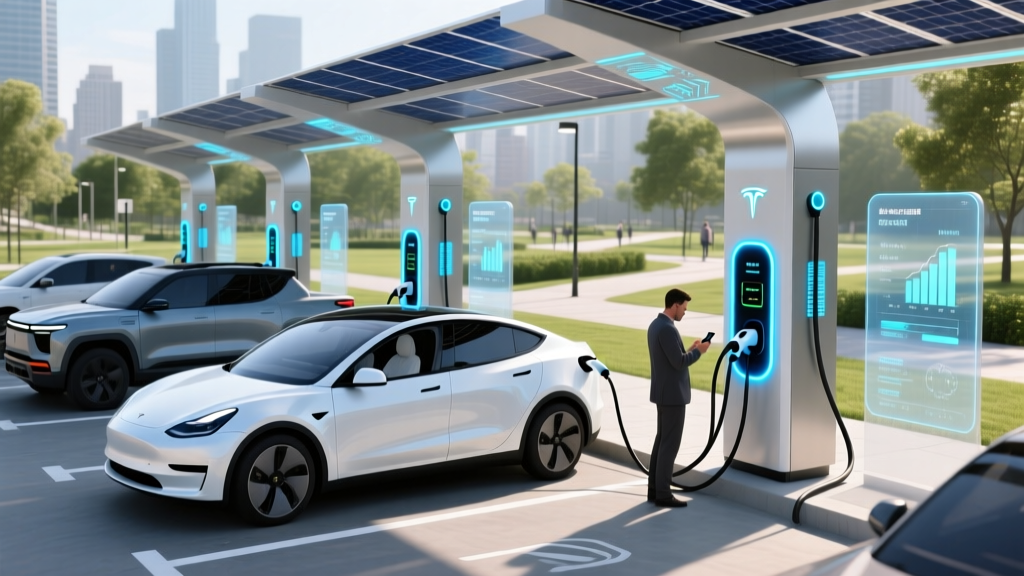
If you searched for "ev magazine top ev charging companies september 2024" or similar industry rankings, you likely found lists dominated by names like ChargePoint, Electrify America, EVgo, and Tesla Supercharger. Those rankings measure network size, uptime, and corporate momentum — useful for investors, less useful for drivers. What matters at the driveway level is different: how fast a unit actually charges your specific EV, what your electrician will quote to install it, whether your panel needs an upgrade, and what you'll pay per mile compared to gas.
This guide translates those industry rankings into the decisions you actually face: choosing home equipment, understanding public networks, budgeting installation, and calculating real operating costs. We'll use precise figures — kW charge rates, kWh battery capacities, 10-80% charge times, and per-mile costs — because vague claims like "fast charging" don't help you plan.
The Three Charging Levels: Speed, Power, and Real-World Range Gains
Before evaluating any company's equipment or network, you need to understand the three charging tiers. The critical distinction: kW (kilowatts) measures power — the rate of energy delivery, like water pressure from a hose. kWh (kilowatt-hours) measures energy — the total amount stored in your battery, like gallons in a tank. A 10 kW charger delivering power for one hour adds 10 kWh to your battery.
| Level | Voltage | Power (kW) | Miles of Range Per Hour | Typical Use Case |
|---|---|---|---|---|
| Level 1 | 120V AC | 1.0–1.4 kW | 3–5 mi/hr | Overnight top-off, PHEVs, low-mileage drivers |
| Level 2 | 240V AC | 3.3–19.2 kW | 12–75 mi/hr | Home daily charging, workplace, shopping centers |
| DC Fast | 400–800V DC | 50–350 kW | 150–1,200+ mi/hr | Road trips, highway corridors, rapid top-ups |
A few nuances that rankings rarely capture:
- Level 2 variance is huge. A 3.3 kW unit (16A on 240V) adds roughly 12 miles per hour — adequate for a 30-mile commute overnight. A 19.2 kW unit (80A) can add 75 miles per hour, but your EV's onboard charger must accept that rate. Most 2025–2026 EVs cap at 11.5 kW (48A) onboard, making a 48A home charger the practical ceiling.
- DC fast charging peaks and tapers. A "350 kW capable" station doesn't deliver 350 kW for the full session. Charge curves taper significantly above 80% State of Charge (SoC) to protect battery health. Expect a 10-80% session at 50-70% of peak rated power on average.
- Real-world miles per hour depend on your EV's efficiency. A 2 mi/kWh vehicle (like a Lucid Air) gains more range per kWh than a 3.5 mi/kWh vehicle (like a Ford F-150 Lightning).
Home Installation: Electrical Requirements, Panel Upgrades, and True Costs
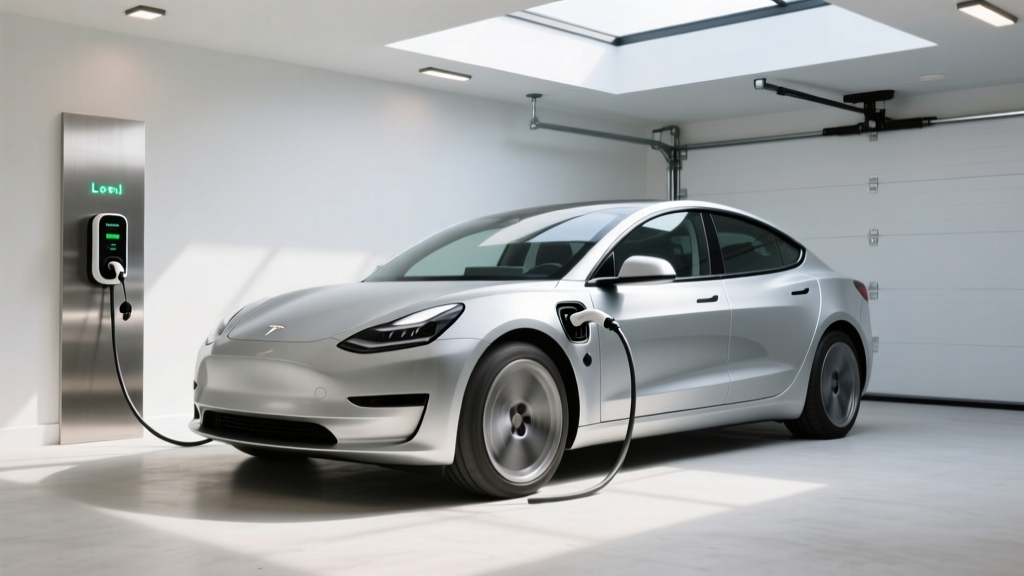
Home Level 2 charging is where most EV owners do 80-90% of their charging. The installation cost varies wildly based on your home's electrical infrastructure. Here's what determines the quote:
Electrical Requirements for a Typical Level 2 Charger
- Voltage: 240V (same as a dryer or oven outlet)
- Amperage: 40A circuit for a 32A continuous charger (NEC requires circuits rated 125% above continuous load), or 60A circuit for a 48A charger
- Wire gauge: 6 AWG copper for 40A; 4 AWG for 60A (varies by run length)
- Dedicated circuit: Required — you cannot share with other appliances
Panel Upgrade: The Hidden Cost for Older Homes
Homes built before 2000 often have 100A or 150A electrical panels. Adding a 40-60A EV circuit may exceed your panel's capacity, especially if you already run electric heat, a dryer, and an oven. A panel upgrade to 200A typically costs $1,500–$3,500 before any EV charger work begins. Some utilities offer load-management devices (like the Span smart panel or utility-controlled relays) that throttle charger draw during peak demand, avoiding a full panel upgrade.
| Component | Cost Range | Notes |
|---|---|---|
| Level 2 Charger (Equipment) | $300–$700 | 32A–48A smart chargers; hardwired or NEMA 14-50 plug |
| Electrician Labor (standard install) | $500–$1,500 | Depends on run length from panel, wall material, conduit needs |
| Electrical Permit | $50–$250 | Varies by municipality; some utilities rebate this |
| Panel Upgrade (if needed) | $1,500–$3,500 | 200A service upgrade; not always required |
| Utility Rebates / Federal Credit | -$300 to -$1,000 | IRS §25E offers 30% credit up to $1,000 for charger + install; many utilities offer $250–$500 rebates |
| Total (no panel upgrade) | $850–$2,450 | Most homes with 200A panels fall in $1,000–$1,800 |
| Total (with panel upgrade) | $2,350–$5,950 | Older homes or those adding solar/battery may hit this |
The IRS residential clean energy credit (§25E) covers 30% of home charger equipment and installation costs, up to $1,000 per year. This is separate from the §30D vehicle purchase credit. Eligibility requires installation at your primary residence; check current-year IRS guidance for income and sourcing requirements.
Connector Compatibility: NACS, CCS, and CHAdeMO in 2026
The connector landscape has consolidated significantly since 2023, when Ford and GM announced adoption of Tesla's North American Charging Standard (NACS). Here's where things stand for 2025–2026 model-year vehicles:
| Connector | Brands Using It | Adapter Needed? |
|---|---|---|
| NACS (Tesla standard, now SAE J3400) | Tesla, Ford, GM, Rivian, Volvo, Polestar, Mercedes (2025+), Hyundai/Kia (2025+) | None for Tesla Superchargers; CCS adapters available for legacy stations |
| CCS1 (Combined Charging System) | VW, BMW, Stellantis, some legacy models from Ford/GM/Rivian (pre-2025) | NACS-to-CCS adapter (~$150–$250) needed for Tesla Superchargers |
| CHAdeMO | Nissan Leaf (discontinued), Mitsubishi Outlander PHEV (legacy) | Limited network; no viable adapter to NACS for DC fast charging |
For home Level 2 charging, the J1772 connector is standard on all non-Tesla EVs. Tesla includes a J1772 adapter with every vehicle, or you can buy a third-party adapter ($30–$70). Most home chargers ship with a J1772 plug; Tesla Wall Connectors ship with NACS but include J1772 adapters. If you own a NACS-equipped Ford or GM, you can charge at home with either connector type using the appropriate adapter.
Cost to Charge: Home vs. Public vs. Gas, Per Mile
Charging economics depend on your electricity rate, charging behavior, and vehicle efficiency. Here's a realistic comparison using a 2026 Tesla Model Y Long Range (approximately 3.5 mi/kWh efficiency) as the baseline:
| Scenario | Rate | Cost Per Mile (3.5 mi/kWh EV) | Equivalent Gas MPG at $3.50/gal |
|---|---|---|---|
| Home Level 2 (national avg $0.16/kWh) | $0.16/kWh | $0.046/mi | 76 MPG |
| Home Level 2 (off-peak TOU $0.08/kWh) | $0.08/kWh | $0.023/mi | 152 MPG |
| Public Level 2 (ChargePoint, EVgo avg) | $0.30–$0.45/kWh | $0.086–$0.129/mi | 27–40 MPG |
| DC Fast (Electrify America, Tesla Supercharger) | $0.35–$0.55/kWh | $0.100–$0.157/mi | 22–35 MPG |
| Gas vehicle (28 MPG combined avg) | $3.50/gal | $0.125/mi | 28 MPG (baseline) |
Key takeaways:
- Home charging is 2.5–3x cheaper per mile than gas, even at standard residential rates. Off-peak time-of-use (TOU) rates make it 5x cheaper.
- Exclusive DC fast charging erases the cost advantage. If you lack home charging and rely entirely on public DC fast stations, your per-mile cost approaches or exceeds that of an efficient gas car.
- Public Level 2 is viable for occasional use but not as a primary strategy if cost is your priority.
For context, the EPA's fueleconomy.gov tool lets you input your local electricity rate and specific EV model to calculate personalized cost-per-mile figures.
Charging Time Examples: 10-80% Sessions for Common Battery Sizes
Most EV owners charge between 10% and 80% State of Charge for daily use — charging above 80% slows dramatically due to the charge curve taper, and staying below 100% prolongs battery longevity. Here's what to expect:
| Battery Size | Level 2 (48A / 11.5 kW) | DC Fast (150 kW peak) | DC Fast (250 kW peak) | DC Fast (350 kW peak) |
|---|---|---|---|---|
| 60 kWh (Hyundai Kona Electric) | ~3.5 hours | ~28 min | ~20 min | N/A (vehicle caps at 100 kW) |
| 75 kWh (Tesla Model Y LR) | ~4.5 hours | ~32 min | ~22 min | ~18 min |
| 100 kWh (Ford F-150 Lightning Ext.) | ~6 hours | ~45 min | ~30 min | ~24 min |
| 131 kWh (Rivian R1T Max Pack) | ~8 hours | ~55 min | ~38 min | ~28 min |
Charge curve reality check: A vehicle rated for "250 kW peak" may only sustain that rate between 10-30% SoC. From 30-60%, it might drop to 180 kW; from 60-80%, it might taper to 100 kW. The 10-80% times above reflect average sustained power, not peak. Battery chemistry matters: LFP (lithium iron phosphate) batteries, used in standard-range Teslas and some Ford/Hyundai models, tolerate frequent 100% charges better than NMC/NCA chemistries, but their charge curves taper earlier.
Equipment Recommendations: Home Chargers That Deliver
Based on real-world reliability, smart features, and value, here are five home Level 2 chargers that consistently perform well across the metrics that matter:
Emporia Vue Home EV Charger
Power: 48A (11.5 kW) | Connector: J1772 (NACS adapter included) | Cable: 24 ft | Price: ~$400
Hardwired or NEMA 14-50 plug. Integrates with Emporia's home energy monitoring for solar-aware charging. Wi-Fi connected with scheduling via app. Best value for a 48A smart charger.
ChargePoint Home Flex
Power: Up to 50A (12 kW, configurable 16-50A) | Connector: J1772 (25 ft cable) | Price: ~$550
Amperage is adjustable via internal dip switches to match your circuit. Robust app with detailed energy tracking. Alexa/Google Home integration. Proven reliability across thousands of installations.
Tesla Wall Connector (Gen 4)
Power: 48A (11.5 kW) | Connector: NACS (J1772 adapter included) | Cable: 24 ft | Price: ~$450
Best-in-class for Tesla and NACS-equipped Ford/GM/Rivian owners. Wi-Fi enabled with over-the-air updates. Power sharing feature lets two Wall Connectors share a single 60A circuit. Sleek design; no display screen (app only).
Grizzl-E Smart
Power: 40A (9.6 kW) | Connector: J1772 (24 ft cable) | Price: ~$450
Built in Canada with a rugged aluminum enclosure rated for -40°F outdoor use. OCPP-compatible (works with utility demand-response programs). No-frills reliability for cold-climate owners who prioritize durability over app features.
Enel X JuiceBox 48
Power: 48A (11.5 kW) | Connector: J1772 (25 ft cable) | Price: ~$500
Smart scheduling, energy tracking, and utility program integration. Compact wall-mount design. Solid customer support track record. Good choice for utility customers participating in managed-charging rebate programs.
Safety, Code, and Installation Best Practices
EV charging draws sustained high current for hours — more like a kiln than a refrigerator. This places specific demands on your electrical system:
- Dedicated circuit required: NEC Article 625 mandates a dedicated branch circuit for EV supply equipment. No sharing with outlets, lights, or appliances.
- GFCI protection: 2023 NEC updates require GFCI protection for all receptacles used for EV charging (including NEMA 14-50). Hardwired chargers are exempt from this specific requirement, which is one reason many electricians now recommend hardwiring over plug-in installations.
- Outdoor rating: If your charger mounts outside, ensure the unit carries a NEMA 4 (weatherproof) rating. All units listed above meet this standard.
- Permit and inspection: Most jurisdictions require an electrical permit and post-installation inspection. This protects you: unpermitted work can void homeowner's insurance claims related to electrical fires.
- Cable management: A 24-25 ft cable reaches most driveways from a garage-mounted unit. If you need more reach, consider a cable management system (retractable reel) rather than an extension cord — extension cords are unsafe and code-violating for EV charging.
Always hire a licensed electrician familiar with NEC Article 625. Ask for a load calculation before installation to determine whether your panel can handle the added circuit without an upgrade.
Frequently Asked Questions
How much does it cost to install a home EV charger?
For most homes with an existing 200A electrical panel, expect $1,000–$1,800 total (equipment + electrician + permit). Homes needing a panel upgrade to 200A may spend $2,500–$5,000+. The IRS §25E credit covers 30% of costs up to $1,000, and many utilities offer additional rebates of $250–$500.
How fast will each charging level add range?
Level 1 (120V) adds 3–5 miles per hour. Level 2 (240V, 48A) adds 30–40 miles per hour for most EVs. DC fast charging (150-350 kW) adds 150–1,200 miles per hour at peak, but tapers significantly above 80% SoC. Exact rates depend on your EV's efficiency (mi/kWh) and onboard charger acceptance rate.
Which connector/charger is compatible with my EV?
For 2025–2026 models: Tesla, Ford, GM, Rivian, Volvo, Polestar, and newer Hyundai/Kia models use NACS. VW, BMW, and Stellantis still use CCS1. For home Level 2, all non-Tesla EVs use J1772; Tesla includes a J1772 adapter. Check your vehicle's charge port or owner's manual before purchasing a charger.
How much does charging cost per mile vs gas?
Home Level 2 charging at the national average rate ($0.16/kWh) costs roughly $0.046/mile for an efficient EV — about 2.7x cheaper than gas at $3.50/gallon and 28 MPG. Off-peak home rates ($0.08/kWh) drop this to $0.023/mile. Exclusive DC fast charging at $0.45/kWh costs ~$0.13/mile, approaching gas parity.
What electrical upgrades might I need?
The most common upgrade is a panel capacity increase from 100A/150A to 200A, required when your existing panel lacks headroom for a 40-60A EV circuit. This costs $1,500–$3,500. Alternatives include load-management devices that throttle charger draw during peak appliance use, or a sub-panel dedicated to the EV circuit. Your electrician should perform a NEC Article 220 load calculation to determine your specific needs.