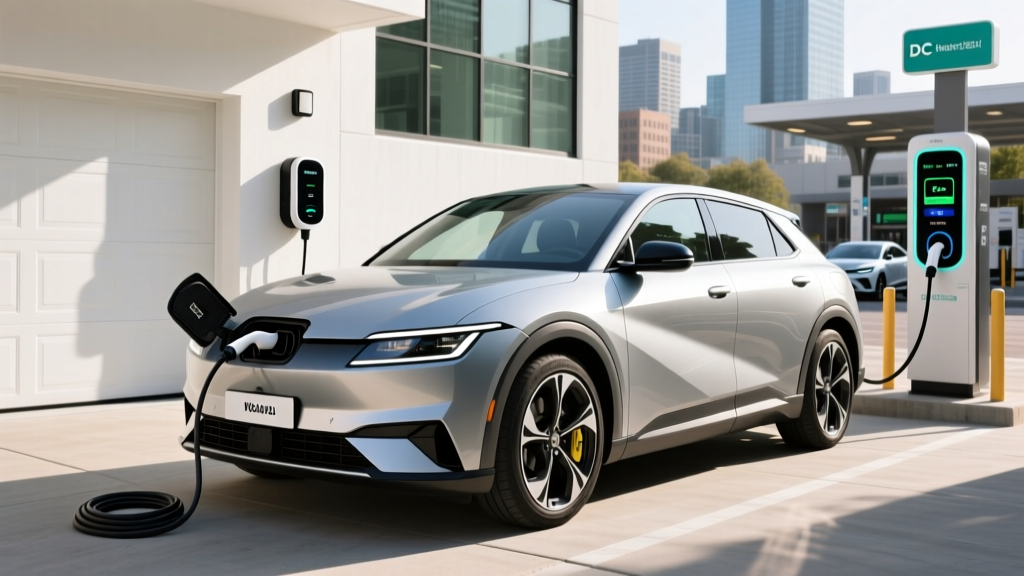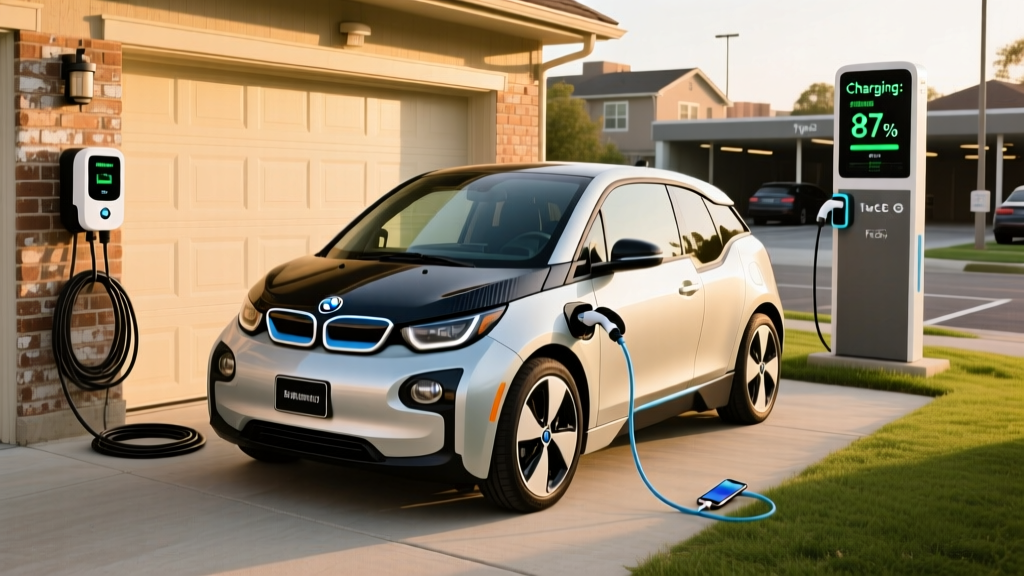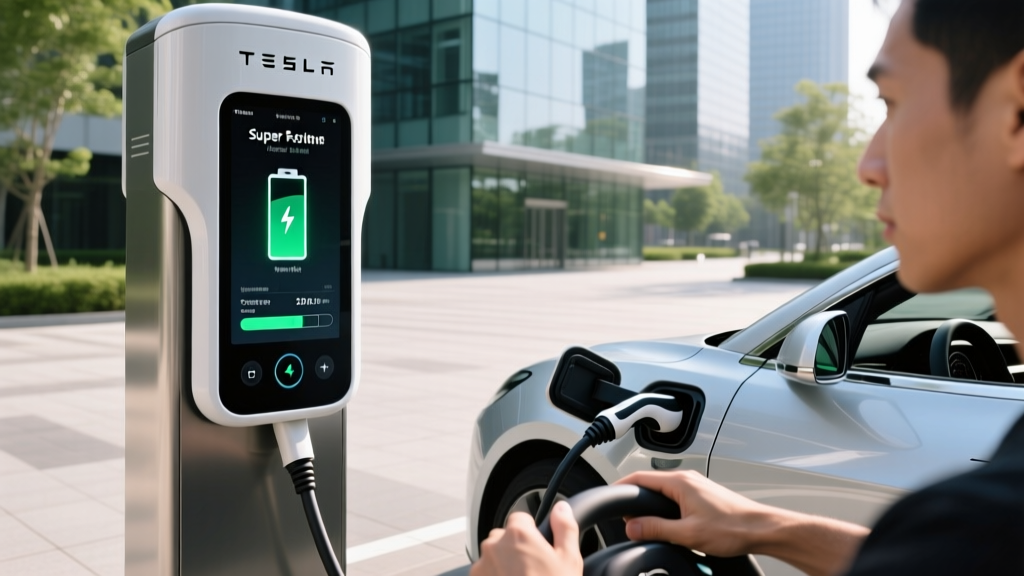
If you've plugged into a Tesla Supercharger recently, you may have noticed the on-screen Tesla Supercharger update interface looks and behaves differently than it did even a year ago. Tesla has been rolling out incremental software updates that change how drivers initiate sessions, monitor charging curves, and interact with the expanding open network that now serves non-Tesla EVs via the North American Charging Standard (NACS). But the Supercharger experience is only one piece of the EV charging puzzle.
Whether you're a Tesla owner adjusting to the new interface, a Ford or Hyundai driver navigating NACS adapters, or a new EV buyer planning a home Level 2 installation, this guide covers every charging scenario you'll face in 2026—with exact kW rates, costs, and installation numbers.
What Changed in the Tesla Supercharger Update Interface
The most recent Tesla Supercharger update interface revisions (pushed via over-the-air software updates through late 2025 and into 2026) focus on three areas:
- Non-Tesla EV session initiation: With the Supercharger network open to NACS-equipped vehicles from Ford, Rivian, GM, and others, the interface now surfaces adapter compatibility status, station availability by connector type, and real-time pricing tiers directly on the vehicle's navigation screen.
- Charging curve visualization: Updated displays show a live charge-curve graph, making it clear when peak kW rates taper above 80% State of Charge (SoC)—a feature long available on third-party apps but now native to Tesla's UI.
- Stall-specific status: The map view now indicates individual stall health (online, reduced power, offline) rather than only aggregate station availability, reducing the frustration of arriving at a station with degraded hardware.
These changes matter because the Supercharger network is no longer a walled garden. As more automakers adopt NACS, understanding how the interface communicates session data, pricing, and stall status is essential for every EV driver—not just Tesla owners.
Charging Levels Explained: Speeds, kW Rates, and Range Added
Before evaluating any charger—Supercharger or home unit—you need to understand the three charging levels and what they actually deliver. The critical distinction: kW (kilowatts) measures power (the rate of energy flow), while kWh (kilowatt-hours) measures energy (the battery's total capacity). A 250 kW charger doesn't deliver 250 kWh; it delivers energy at a rate of 250 kW, tapering as the battery fills.
| Level | Voltage / Amperage | Power (kW) | Miles of Range Added per Hour | Typical Use Case |
|---|---|---|---|---|
| Level 1 | 120V / 12A | ~1.4 kW | 3–5 mi/hr | Overnight trickle; PHEVs, emergency backup |
| Level 2 | 240V / 32–48A | 7.7–11.5 kW | 25–44 mi/hr | Daily home charging; workplace |
| DC Fast Charge | 400–800V DC | 50–350 kW | 150–1,200+ mi/hr (peak) | Road trips; Tesla Superchargers, Electrify America |
Real-world context: A Tesla Model Y Long Range (75 kWh usable battery, ~310 miles EPA range) charging at a V3 Supercharger peaking at 250 kW will add roughly 170 miles in 15 minutes under ideal conditions (low SoC, preconditioned battery). However, the charge curve tapers significantly above 60% SoC, and the 10–80% session typically takes about 25–28 minutes. Cold weather can add 5–10 minutes to that window due to reduced charge acceptance.
Home Level 2 Installation: Electrical Requirements and Costs
A Level 2 home charger is the single most impactful upgrade an EV owner can make. It eliminates daily reliance on public infrastructure and delivers enough range overnight for virtually any commute. But installation costs vary dramatically based on your home's electrical panel.
Electrical Requirements
Most Level 2 chargers require a dedicated 240V circuit. Common configurations:
- 32A circuit (7.7 kW): Requires a 40A breaker. Sufficient for most daily driving needs (adds ~25–30 miles per hour of charging).
- 40A circuit (9.6 kW): Requires a 50A breaker. Faster charging; common for larger batteries (F-150 Lightning, Rivian R1S).
- 48A circuit (11.5 kW): Requires a 60A breaker. Maximum Level 2 speed; requires a hardwired connection (no plug) per NEC code and a panel with adequate spare capacity.
Panel Upgrade Considerations
Homes built before 2000 often have 100A or 150A main service panels. Adding a 50–60A EV circuit to an already-loaded panel may require a service upgrade to 200A, which is the single largest variable in installation cost. A licensed electrician will perform a load calculation per NEC Article 220 to determine if your panel can handle the additional draw.
Installation Cost Breakdown
| Component | Typical Cost Range | Notes |
|---|---|---|
| Level 2 Charger Equipment | $300–$700 | Varies by brand, amperage, smart features |
| Electrician Labor (standard install) | $500–$1,500 | Run length, conduit, wall type affect price |
| Electrical Permit | $50–$250 | Varies by municipality; required by code |
| Panel Upgrade (if needed) | $1,500–$4,000 | 100A → 200A service upgrade; not always required |
| Total (no panel upgrade) | $850–$2,450 | Most homes with 200A service fall here |
| Total (with panel upgrade) | $2,350–$6,450 | Older homes with 100A service |
Federal incentive note: The §30D tax credit applies to vehicles, not chargers. However, the Alternative Fuel Vehicle Refueling Property Credit (IRC §30C) may cover up to 30% of home charger equipment and installation costs (capped at $1,000), subject to census-tract eligibility. Consult a tax professional and the IRS §30C guidelines for current-year eligibility.
Connector Compatibility: NACS, CCS1, CHAdeMO, and Adapters
The connector landscape has consolidated significantly since 2024. Tesla's NACS (North American Charging Standard) has been adopted by Ford, GM, Rivian, Hyundai, Kia, BMW, and most major automakers for 2025–2026 model-year vehicles. CCS1 remains on many vehicles already on the road, and CHAdeMO is effectively legacy (Nissan Leaf being the primary holdout).
| Connector | Primary Vehicles | Network Access | Adapter Needed? |
|---|---|---|---|
| NACS (Tesla) | Tesla (all), Ford (2025+), GM (2025+), Rivian (2025+), Hyundai/Kia (2026+) | Tesla Superchargers, growing third-party networks | CCS-to-NACS adapters for older CCS vehicles (~$200–$350) |
| CCS1 | VW ID.4, older Ford Mustang Mach-E, Hyundai Ioniq 5 (pre-2026), BMW i4/iX | Electrify America, EVgo, ChargePoint, Ionity | NACS-to-CCS adapter for Tesla Supercharger access (Ford/GM provided; aftermarket ~$200) |
| CHAdeMO | Nissan Leaf (legacy) | Limited; shrinking network | No practical adapter to NACS/CCS for DC fast charging |
Adapter reality check: If you drive a CCS1-equipped vehicle and want Supercharger access, you'll need a manufacturer-approved adapter. Ford and GM provided adapters to early adopters; aftermarket options from brands like Lectron and A2Z are available but verify they're rated for the full kW output of V3/V4 Superchargers (250 kW+). Underrated adapters can bottleneck charge speed or pose safety risks.
Charging Cost per Mile: Home vs. Public vs. Gas
The economics of EV charging depend entirely on where you charge. Home charging on a time-of-use (TOU) plan is dramatically cheaper than DC fast charging, and both are typically cheaper than gasoline on a per-mile basis.
| Scenario | Cost per kWh | Efficiency (kWh/100 mi) | Cost per Mile | Annual Cost (12,000 mi) |
|---|---|---|---|---|
| Home (off-peak TOU) | $0.08–$0.12 | 28 kWh/100 mi (Model Y avg) | $0.022–$0.034 | $264–$408 |
| Home (standard rate) | $0.14–$0.18 | 28 kWh/100 mi | $0.039–$0.050 | $468–$600 |
| Tesla Supercharger (avg) | $0.28–$0.36 | 28 kWh/100 mi | $0.078–$0.101 | $936–$1,212 |
| Electrify America / EVgo (avg) | $0.34–$0.48 | 28 kWh/100 mi | $0.095–$0.134 | $1,140–$1,608 |
| Gasoline Vehicle (25 MPG avg, $3.40/gal) | — | — | $0.136 | $1,632 |
Key takeaway: An EV owner charging primarily at home on off-peak rates saves roughly $1,200–$1,350 annually compared to a 25 MPG gas vehicle. Even exclusive Supercharger use saves $400–$700 per year. But if you're relying entirely on premium-priced public DC fast chargers, the savings narrow significantly—which is why home charging access is the single most important factor in EV ownership economics.
Equipment Picks: Best Home Level 2 Chargers for 2026
Here are three proven Level 2 chargers across different budgets, each with verified power output, connector type, and smart features.
Emporia Vue Smart EV Charger
- Power Output: 48A / 11.5 kW (hardwired) or 40A / 9.6 kW (NEMA 14-50 plug)
- Connector: NACS (native); J1772 version also available
- Cable Length: 24 ft
- Smart Features: Wi-Fi connected, energy monitoring via Emporia Vue panel integration, scheduled charging, solar-aware charging
- Price: ~$399–$449
- Best for: Budget-conscious buyers wanting 48A capability and energy monitoring without a premium price
ChargePoint Home Flex (2nd Gen)
- Power Output: Up to 50A / 12 kW (hardwired); adjustable amperage down to 16A
- Connector: NACS or J1772 (selectable at purchase)
- Cable Length: 23 ft
- Smart Features: Wi-Fi, ChargePoint app scheduling, Alexa integration, load-sharing with second unit, utility demand-response compatible
- Price: ~$599–$649
- Best for: Two-EV households needing load management; broad utility program compatibility
Tesla Wall Connector (Gen 4)
- Power Output: 48A / 11.5 kW (hardwired, 60A breaker required)
- Connector: NACS native; J1772 adapter included
- Cable Length: 24 ft
- Smart Features: Wi-Fi, OTA updates, Tesla app integration, power-sharing with up to 6 units, vehicle authentication
- Price: ~$475
- Best for: Tesla owners wanting seamless integration; also works with non-Tesla NACS vehicles
Selection note: The amperage you choose must match your circuit. A 48A charger requires a 60A breaker and a hardwired connection—no plug. If your panel can't support a 60A circuit, choose a 32A or 40A charger on a 40A or 50A breaker respectively. Your electrician will confirm the correct configuration during the load calculation.
Safety, Code, and Installation Best Practices
EV charging installations must comply with the National Electrical Code (NEC) and local amendments. Key requirements:
- Dedicated circuit: Your EV charger must be on its own dedicated breaker—no shared circuits with other appliances.
- GFCI protection: NEC 2020 and later require GFCI protection for all EVSE (Electric Vehicle Supply Equipment) outlets, including NEMA 14-50 receptacles. Hardwired units with built-in ground-fault protection satisfy this requirement.
- Outdoor rating: If installing outdoors, the charger must carry a NEMA 4 or NEMA 4X rating for weather resistance. All three chargers recommended above meet this standard.
- Permit and inspection: Virtually all jurisdictions require a permit and post-installation inspection. Skipping this step can void homeowner's insurance coverage in the event of an electrical fire.
- Cable management: For wall-mounted units, plan cable routing to avoid trip hazards and protect the cable from UV exposure and physical damage.
Always hire a licensed electrician familiar with EVSE installations. Ask for their experience with 240V EV circuits specifically—general residential electricians may not be current on NEC Article 625 (EV charging requirements).
Charging Time Examples: 10–80% for Common EVs
DC fast charging times depend on battery size, chemistry, thermal management, and peak charge rate. Here's what to expect for 10–80% sessions under ideal conditions (preconditioned battery, moderate ambient temperature, available peak-rate stall):
| Vehicle | Battery (kWh usable) | Peak DC Rate (kW) | 10–80% Time (ideal) | Real-World Note |
|---|---|---|---|---|
| Tesla Model Y Long Range | 75 kWh (NMC) | 250 kW | ~25 min | Tapers above 60%; cold adds 5–8 min |
| Hyundai Ioniq 5 (2026 NACS) | 77.4 kWh (NMC) | 350 kW (800V) | ~18 min | Best-in-class curve; sustains high rate to ~65% |
| Ford F-150 Lightning Ext. Range | 131 kWh (NMC) | 150 kW | ~41 min | Large battery limits C-rate; heavy taper above 70% |
| Chevrolet Equinox EV | 85 kWh (NMC) | 150 kW | ~32 min | Moderate curve; preconditioning essential |
Why 10–80%? Lithium-ion batteries accept charge fastest at low SoC and taper dramatically above 80% to protect cell longevity. Charging from 80–100% on a DC fast charger can take as long as the 10–80% session itself. For road trips, plan stops around the 10–80% window to minimize total travel time.
Frequently Asked Questions
How much does it cost to install a home EV charger?
A typical Level 2 home installation (equipment + electrician + permit) runs $850–$2,450 if your panel has adequate capacity. If a service upgrade from 100A to 200A is needed, expect $2,350–$6,450 total. The IRC §30C credit may offset up to $1,000 of equipment and installation costs for eligible taxpayers in qualifying census tracts.
How fast will each charging level add range?
Level 1 (120V) adds 3–5 miles per hour. Level 2 (240V, 32–48A) adds 25–44 miles per hour depending on amperage and vehicle efficiency. DC fast charging at 150–350 kW adds 150–1,200+ miles per hour at peak rates, though sustained rates taper significantly above 60–80% SoC.
Which connector/charger is compatible with my EV?
For 2025–2026 models, check your vehicle's charge port: NACS is now standard on Tesla, Ford, GM, Rivian, and incoming Hyundai/Kia models. CCS1 remains on most pre-2025 non-Tesla EVs (VW, BMW, older Hyundai/Kia). CHAdeMO is limited to the Nissan Leaf. If your EV has CCS1 and you want Supercharger access, you'll need a CCS-to-NACS adapter (typically $200–$350).
How much does charging cost per mile vs gas?
Home charging on off-peak rates costs $0.02–$0.03 per mile—about 75–85% cheaper than a 25 MPG gas vehicle at $3.40/gallon ($0.136/mile). Even public DC fast charging at $0.28–$0.48/kWh costs $0.08–$0.13 per mile, still competitive with or cheaper than gasoline. The savings are maximized when you charge at home.
What electrical upgrades might I need?
The most common upgrade is a panel service increase from 100A to 200A, required when your existing panel lacks spare capacity for a dedicated 40–60A EV circuit. Your electrician will perform a NEC Article 220 load calculation to determine this. Other potential upgrades include running new conduit (if the panel is far from the garage), upgrading the meter base, or adding a sub-panel. Homes with existing 200A service and a nearby garage typically need no panel upgrade.
Does the Tesla Supercharger update interface affect non-Tesla vehicles?
Yes, indirectly. The updated interface now displays NACS adapter status, stall-level health, and real-time pricing for all vehicles using the Supercharger network. Non-Tesla drivers accessing Superchargers via the Tesla app will see updated session initiation flows and pricing tiers that reflect the expanded network. The in-stall display and app experience have been unified to reduce confusion as the network serves a broader range of EVs.
Understanding the Tesla Supercharger update interface is just one part of a complete EV charging strategy. The real ownership advantage comes from pairing reliable home Level 2 infrastructure with knowledge of public charging networks, connector compatibility, and the true cost-per-mile economics that make EVs financially compelling over the long term.