What Is the Tesla Supercharger Referral Program?
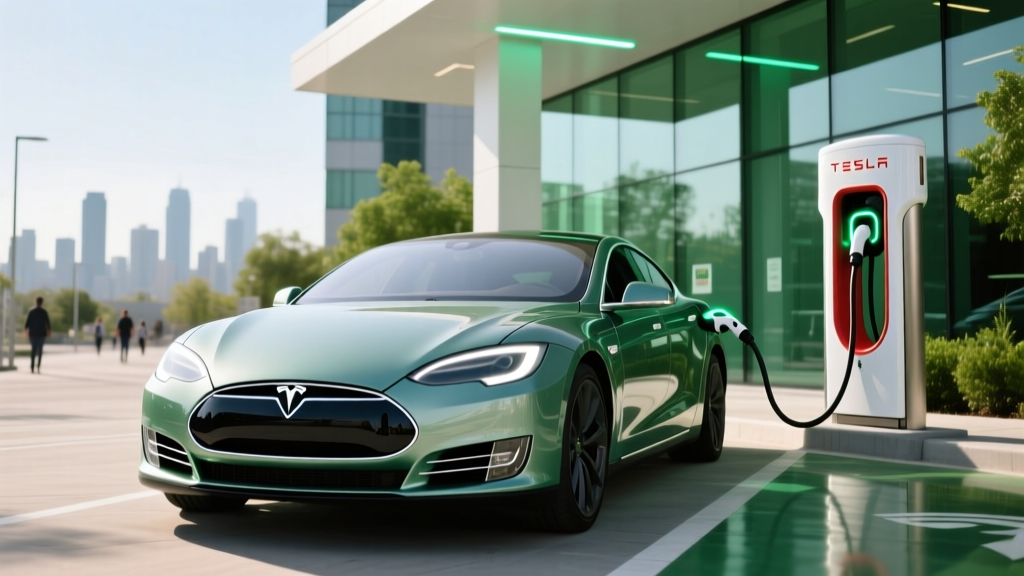
If you've searched for a Tesla Supercharger referral code or link, you've likely encountered a maze of outdated forum posts and expired promotions. Tesla's referral incentives have evolved significantly since the original unlimited Supercharging days. As of 2026, the Tesla referral program operates through the company's app-based referral system, where existing Tesla owners (and sometimes Solar/Powerwall customers) can share a personalized referral link that rewards both parties — typically with credits applicable toward Supercharging, accessories, or future vehicle purchases.
The key detail most guides miss: referral rewards are not always free Supercharging miles. Tesla rotates what's on offer — sometimes it's $500 off a new vehicle order, sometimes it's 1,000 to 5,000 Supercharger credits (roughly equivalent to 1,000–5,000 miles of free DC fast charging), and sometimes it's product discounts on items like the Gen 2 Wall Connector or J1772 adapter. The reward structure changes quarterly or even monthly, so checking your Tesla app's referral dashboard is the only way to know what's currently active.
Here's how the mechanics work in practice:
- The referrer shares their unique link from the Tesla app.
- The referred buyer uses that link when ordering a new Tesla vehicle, Solar Roof, or Powerwall.
- Upon delivery and payment completion, both parties receive credits in their Tesla account.
- Credits are applied automatically at Supercharger stalls or redeemed through the Tesla shop.
Important caveat: Tesla has periodically paused, modified, or region-restricted the referral program. As of early 2026, the program is active in the US but reward values and eligibility vary. Always verify current terms directly in your Tesla app or on Tesla's official referral page.
Understanding DC Fast Charging: How Superchargers Actually Work
Before evaluating whether Supercharger credits are worth chasing, you need to understand what happens at a Supercharger stall — and how it compares to charging at home. This is where the critical distinction between kW (power, or charge rate) and kWh (energy, or battery capacity) matters most.
A Supercharger delivers DC power directly to your battery at rates far exceeding home charging. But not all Superchargers are equal, and your vehicle's onboard charge curve determines how much of that peak power you actually use.
| Charging Level | Power (kW) | Typical Miles Added/Hour | Best Use Case |
|---|---|---|---|
| Level 1 (120V household) | 1.0–1.4 kW | 3–5 mi/hr | Overnight top-up, PHEVs |
| Level 2 (240V home/public) | 7.2–19.2 kW | 25–75 mi/hr | Daily home charging, workplace |
| DC Fast (CCS/NACS) | 50–350 kW | 150–1,000+ mi/hr (peak) | Road trips, rapid top-ups |
| Tesla V3 Supercharger | Up to 250 kW | ~1,000 mi/hr (peak, first 5 min) | Tesla and NACS-equipped EVs |
| Tesla V4 Supercharger | Up to 350 kW (announced/rolling) | ~1,200+ mi/hr (peak) | Next-gen architecture vehicles |
Real-world charging curve reality: A Tesla Model Y Long Range (75 kWh usable battery, NMC chemistry) hitting a V3 Supercharger at 10% State of Charge (SoC) will peak near 250 kW for roughly 3–5 minutes, then taper to ~150 kW through 40%, drop to ~100 kW by 60%, and slow to ~50 kW approaching 80%. The advertised "10–80% in ~18 minutes" holds true for preconditioned batteries, but the last 20% (80–100%) can take an additional 25–35 minutes. This taper is why EV owners charge to 80% on road trips and only fill to 100% when needed.
If you're using earned Supercharger referral credits, the practical math works out to roughly 3–5 full 10–80% charges per 1,000 credits, depending on your battery size and local electricity rates at the stall.
Home Charging Setup: Where Most of Your Miles Come From
Even if you score generous Supercharger referral credits, home Level 2 charging will handle 85–95% of your total charging over the life of your EV. Supercharging is for road trips; home charging is for daily life. Getting your home setup right is the single most impactful EV ownership decision you'll make.
Electrical Requirements for a Level 2 Home Charger
A proper Level 2 home charger requires a 240V dedicated circuit — the same voltage your electric dryer or oven uses. The most common configurations:
- 240V / 40A circuit → delivers up to 9.6 kW (32A continuous draw, per NEC 80% rule for continuous loads). Adds ~30–35 miles per hour for a typical EV.
- 240V / 48A circuit → delivers up to 11.5 kW. Adds ~40–44 miles per hour. Requires a 60A breaker.
- 240V / 60A circuit → delivers up to 14.4 kW (48A continuous). Adds ~50–55 miles per hour. Requires hardwired installation and a 60A+ breaker.
The National Electrical Code (NEC) requires that continuous loads (like EV charging, which runs 4+ hours) use only 80% of a circuit's rated capacity. A 50A breaker supports a 40A continuous charger. A 60A breaker supports 48A continuous. This is non-negotiable for safety and code compliance.
Do You Need a Panel Upgrade?
This is the hidden cost that catches many homeowners off guard. If your home has a 100A main electrical panel (common in homes built before the 1990s), adding a 40–60A EV charger circuit may push your total calculated load beyond the panel's capacity. An electrician will perform a load calculation (per NEC Article 220) to determine if you have headroom.
If your panel is maxed out, you have options:
- Downsize the charger circuit: Use a 30A circuit (24A continuous, ~5.8 kW) instead — still adds ~20–22 mi/hr, enough for most daily needs.
- Install an automatic load management device: Products like the Emporia Smart Load Center or Span panel can dynamically allocate power between the charger and other circuits, avoiding a full panel upgrade.
- Upgrade to a 200A panel: Costs $1,500–$3,500+ but future-proofs your home for EV charging, heat pumps, solar, and other high-draw appliances.
Installation Cost Breakdown
Here's what a real-world Level 2 home charger installation costs, based on 2025–2026 electrician quotes across US markets:
| Cost Component | Simple Install (panel nearby) | Complex Install (long run / panel upgrade) |
|---|---|---|
| Level 2 Charger (hardware) | $400–$700 | $400–$700 |
| Electrician labor (2–6 hrs) | $300–$800 | $800–$2,000 |
| Electrical materials (conduit, wire, breaker) | $100–$300 | $300–$800 |
| Permit and inspection | $50–$200 | $50–$200 |
| Panel upgrade (if needed) | $0 | $1,500–$3,500 |
| Total Range | $850–$2,000 | $3,050–$7,200 |
Federal tax credit note: The IRS §30D alternative fuel vehicle refueling property credit (as of 2026) offers up to 30% of home charger installation costs, capped at $1,000, but only if you live in a qualifying census tract (typically rural or low-income areas per IRA provisions). Confirm eligibility on IRS.gov and consult a tax professional — eligibility depends on your specific address and income.
Connector Compatibility: NACS, CCS, and the Adapter Landscape
The Tesla Supercharger network uses the North American Charging Standard (NACS) connector — a compact, proprietary design Tesla opened to the industry in late 2022. As of 2025–2026, nearly every major automaker has adopted NACS for new vehicles, but millions of CCS1-equipped EVs are still on the road.
| Connector | Vehicles Using It | Supercharger Access | Adapter Needed? |
|---|---|---|---|
| NACS (Tesla) | Tesla (all), Ford F-150 Lightning (2025+), GM Ultium (2025+), Rivian (2025+), others | Native — plug and charge | No |
| CCS1 | Hyundai Ioniq 5/6, Kia EV6/EV9, VW ID.4, BMW iX, pre-2025 Ford/GM EVs | Via adapter at select Superchargers | Yes — CCS-to-NACS adapter (~$200–$250) |
| CHAdeMO | Nissan Leaf (legacy), Mitsubishi Outlander PHEV | Not compatible | No practical adapter exists |
| J1772 (Level 1/2) | All non-Tesla EVs for AC charging | N/A — AC only | Tesla Mobile Connector includes J1772 adapter |
If you own a CCS1 vehicle and want Supercharger access, Tesla sells an official CCS-to-NACS adapter, and third-party options from brands like Lectron and A2Z are available. Note that not all Supercharger stalls support non-Tesla vehicles — Tesla designates specific stalls with "Magic Dock" built-in adapters or lists compatible locations in the Tesla app. Check the in-app map before relying on Supercharger access with a non-Tesla EV.
Charging Cost Per Mile: Home vs. Supercharger vs. Gas
This is where EV ownership economics become concrete. Let's compare real costs per mile across charging scenarios and a gas baseline.
| Scenario | Rate | Cost per kWh | Cost per Mile (at 3.5 mi/kWh) |
|---|---|---|---|
| Home Level 2 (off-peak utility rate) | $0.10–$0.15/kWh | $0.12 avg | $0.034/mi |
| Home Level 2 (standard rate) | $0.13–$0.22/kWh | $0.17 avg | $0.049/mi |
| Tesla Supercharger (avg US) | $0.25–$0.40/kWh | $0.32 avg | $0.091/mi |
| Electrify America / EVgo DC fast | $0.30–$0.55/kWh | $0.42 avg | $0.120/mi |
| Gas car (30 MPG, $3.50/gal) | — | — | $0.117/mi |
| Gas car (25 MPG, $3.50/gal) | — | — | $0.140/mi |
The takeaway: Home off-peak charging is 3–4x cheaper per mile than gasoline. Even Supercharging at full price is competitive with a 30 MPG gas car. But if you exclusively use public DC fast chargers at premium rates ($0.45–$0.55/kWh), your per-mile cost can exceed that of an efficient hybrid. This is why home charging access is the single biggest factor in EV total cost of ownership.
If your Supercharger referral credits cover, say, 3,000 miles of free charging, that's roughly $270 in avoided Supercharger costs at the $0.091/mi average — a meaningful but not transformative savings over the long term. The real value is in the referral discount toward a vehicle purchase or accessories.
Recommended Home Level 2 Chargers (2026)
Based on real-world testing, reliability data, and feature sets, here are the top home Level 2 chargers for EV owners in 2026:
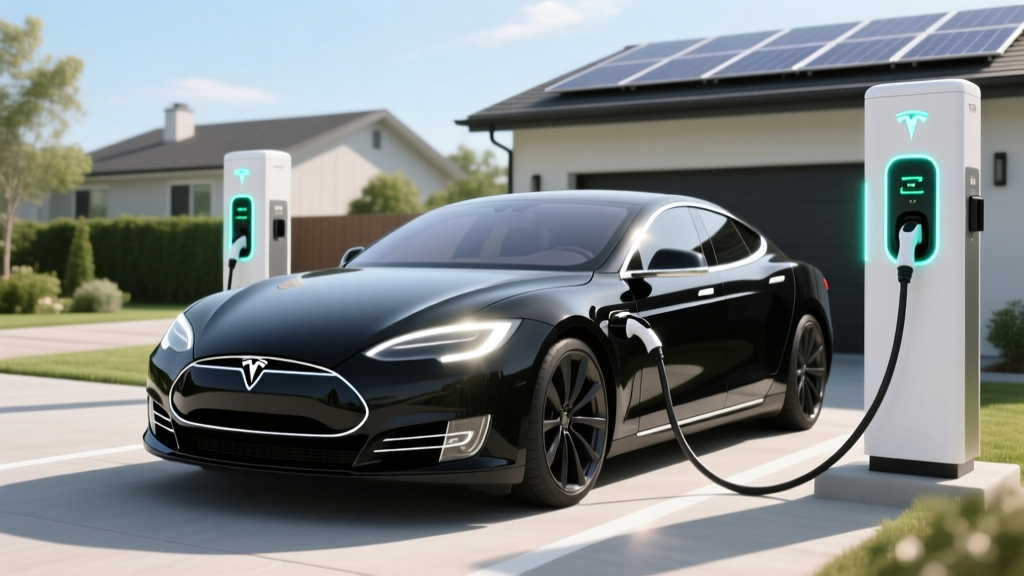
Tesla Wall Connector (Gen 3)
- Power output: Up to 11.5 kW (48A, hardwired on 60A circuit)
- Connector: NACS native (J1772 adapter included)
- Cable length: 24 ft
- Smart features: Wi-Fi, OTA updates, Power Sharing (link up to 6 units on one circuit), load management
- Price: ~$475
- Best for: Tesla owners, NACS-equipped EVs, multi-EV households
Emporia Level 2 Smart Charger
- Power output: Up to 11.5 kW (48A) or 9.6 kW (40A) — configurable
- Connector: J1772 (NACS adapter available)
- Cable length: 24 ft
- Smart features: Energy monitoring via Emporia app, solar integration, off-peak scheduling, Alexa compatible
- Price: ~$399 (48A) / ~$349 (40A)
- Best for: Solar panel owners, budget-conscious buyers, non-Tesla EVs
ChargePoint Home Flex
- Power output: Up to 12 kW (50A, configurable down to 16A)
- Connector: J1772 (NACS adapter sold separately)
- Cable length: 23 ft
- Smart features: ChargePoint app scheduling, Alexa/Google Home, flexible amperage dial
- Price: ~$549–$649
- Best for: Homes with limited panel capacity (dial down amps), CCS/J1772 vehicles
Grizzl-E Smart
- Power output: Up to 10 kW (40A)
- Connector: J1772 (NACS adapter available)
- Cable length: 24 ft
- Smart features: OCPP-compatible, EV Energy app, adjustable amperage, extreme cold rated (-40°F)
- Price: ~$449
- Best for: Cold-climate owners, outdoor installs, rugged durability
Pro tip: Buy a charger rated for more amperage than you currently need, even if your panel only supports a 40A circuit today. If you upgrade your panel or move homes later, the charger is already capable. The marginal cost difference between a 40A and 48A unit is typically under $50.
Safety, Permits, and Code Requirements
EV charging draws sustained high current for hours — this is not like plugging in a phone. Proper installation protects your home and your warranty.
- Dedicated circuit: Your Level 2 charger must have its own breaker — never share a circuit with other appliances. NEC 625 governs EV charging installations specifically.
- GFCI protection: The 2020 NEC (adopted in most states by 2024–2026) requires GFCI protection for all 125V–250V receptacles used for EV charging in garages and outdoor locations. Hardwired chargers (like the Tesla Wall Connector) are exempt from the GFCI receptacle requirement but still benefit from the breaker's protection.
- Outdoor rating: If installing outside, ensure both the charger (NEMA 4 or IP65 rated) and the conduit/wiring are rated for wet locations. The Tesla Wall Connector and Grizzl-E are both outdoor-rated.
- Permit and inspection: Most US jurisdictions require an electrical permit for new 240V circuits. The inspection ensures code compliance and protects your homeowner's insurance coverage. Skipping a permit risks claim denial if a fire originates from unpermitted work.
- Wire gauge: A 48A continuous load requires 6 AWG copper wire (or 4 AWG aluminum). Your electrician will size appropriately — never undersize wire to save money.
Charging Time Examples: 10–80% for Common Battery Sizes
How long does a 10–80% charge actually take? It depends on battery capacity (kWh), peak charge rate (kW), and the charge curve taper. Here are real-world estimates for popular 2025–2026 EVs:
| Vehicle | Battery (kWh usable) | Peak DC Rate (kW) | 10–80% Time (DC Fast) | 10–80% Time (Level 2, 11.5 kW) |
|---|---|---|---|---|
| Tesla Model Y Long Range | 75 kWh (NMC) | 250 kW (V3) | ~18 min | ~4.5 hrs |
| Tesla Model 3 Highland LR | 75 kWh (NMC) | 250 kW (V3) | ~18 min | ~4.5 hrs |
| Hyundai Ioniq 5 (Long Range) | 77.4 kWh (NMC) | 240 kW (800V) | ~18 min | ~5 hrs |
| Ford F-150 Lightning (Ext Range) | 131 kWh (NMC) | 150 kW | ~41 min | ~8.5 hrs |
| Chevrolet Equinox EV (RS) | 85 kWh (NMC) | 150 kW | ~30 min | ~5.5 hrs |
| Rivian R1S (Dual Max) | 141 kWh (NMC) | 200 kW | ~45 min | ~9 hrs |
| Tesla Model Y Standard (LFP) | 60 kWh (LFP) | 170 kW | ~25 min | ~3.5 hrs |
LFP battery note: Vehicles with LFP (lithium iron phosphate) batteries — like the Tesla Model Y Standard Range and some Model 3 variants — can and should be charged to 100% regularly. LFP chemistry tolerates full SoC better than NMC, and periodic 100% charges help the battery management system recalibrate. Tesla recommends 100% at least weekly for LFP packs.
Frequently Asked Questions
How much does it cost to install a home EV charger?
A straightforward Level 2 installation (panel has capacity, short wire run) typically costs $850–$2,000 including equipment, electrician labor, materials, and permit. If your home needs a panel upgrade from 100A to 200A, add $1,500–$3,500, pushing the total to $3,050–$7,200. Always get 2–3 licensed electrician quotes and verify they pull a permit.
How fast will each charging level add range?
Level 1 (120V) adds 3–5 miles per hour. Level 2 (240V, 40–48A) adds 25–55 miles per hour depending on amperage. DC fast charging (150–350 kW) adds 150–1,000+ miles per hour at peak, but tapers significantly above 80% SoC. For daily driving, Level 2 home charging overnight is sufficient for nearly all drivers.
Which connector/charger is compatible with my EV?
If you drive a Tesla or a 2025+ Ford, GM, Rivian, or Volvo EV, your vehicle uses the NACS connector natively. If you drive a Hyundai, Kia, VW, BMW, or pre-2025 Ford/GM EV, you have CCS1 and will need a CCS-to-NACS adapter (~$200–$250) to use Tesla Superchargers. CHAdeMO vehicles (Nissan Leaf) cannot use Superchargers. For home Level 2, all non-Tesla EVs use J1772; Teslas include a J1772 adapter.
How much does charging cost per mile vs gas?
Home off-peak charging costs roughly $0.03–$0.05 per mile. Supercharging averages $0.09 per mile. A 30 MPG gas car at $3.50/gallon costs $0.12 per mile. Home charging saves $1,000–$2,000 per year for a driver covering 12,000 miles annually. Exclusive public DC fast charging narrows the gap and can cost as much as a fuel-efficient hybrid.
What electrical upgrades might I need?
If your home has a 100A main panel (common in pre-1990s construction), you may need a panel upgrade to 200A ($1,500–$3,500) or can opt for a lower-amperage charger on a 30A circuit. Homes with 200A panels typically have sufficient capacity. An electrician's load calculation (NEC Article 220) will determine your options. Load management devices can also defer or eliminate the need for an upgrade.
Are Tesla Supercharger referral credits still available in 2026?
Tesla's referral program is active as of early 2026, but reward types and values rotate frequently. Current rewards may include Supercharger credits, vehicle purchase discounts, or product credits. Check your Tesla app's referral section for the live offer. Credits earned are applied automatically at Supercharger stalls and do not expire within the stated program terms.
Can I use Supercharger referral credits on non-Tesla vehicles?
Supercharger credits are tied to your Tesla account and can only be used at Tesla Supercharger stalls. If you charge a non-Tesla EV (via CCS adapter or Magic Dock), the credits still apply to the session cost as long as you initiate charging through the Tesla app linked to your account.