The Reality of the Tesla Supercharger NJ Turnpike Network
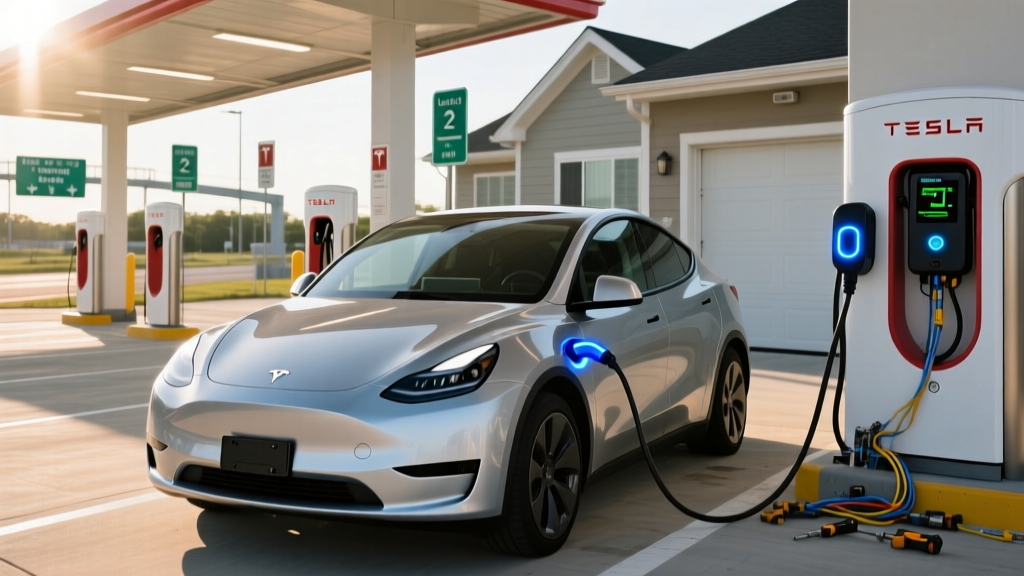
For EV owners traversing the Northeast Corridor, the Tesla Supercharger NJ Turnpike network is a critical artery. Whether you are commuting from South Jersey to Manhattan or embarking on a longer haul toward D.C., understanding the specific capabilities of these stalls is essential for trip planning. In 2026, the landscape has shifted; while Tesla's proprietary network remains the gold standard for reliability, the opening of the network to non-Tesla EVs via the NACS (North American Charging Standard) has changed the dynamic at high-traffic plazas like the Jersey Gardens and Newark Liberty International Airport locations.
This guide moves beyond basic maps. We analyze the power output (kW), the real-world charging curves you can expect at these specific sites, and the cost-per-mile economics compared to gas. Furthermore, for those looking to replicate this convenience at home, we provide a granular breakdown of Level 2 installation costs, electrical panel requirements, and the best hardware available this year.
Supercharger Specs: Peak Power vs. Sustained Reality
Most Supercharger plazas along the NJ Turnpike (including the popular Joyce Kilmer and Holmdel sites) are now equipped with V3 and V4 architecture. While marketing materials highlight peak speeds, the physics of battery charging means those speeds are rarely sustained for the entire session.
| Charger Type | Peak Power | Typical 10-80% Time | Miles Added in 15 Min |
|---|---|---|---|
| V3 Supercharger | 250 kW | 20-28 Minutes | ~170-200 Miles |
| V4 Supercharger | 350 kW (Cabinet) | 15-20 Minutes* | ~220+ Miles* |
| Urban Destination | 72 kW | 60+ Minutes | ~50 Miles |
*Note: Achieving V4 speeds requires an 800V architecture vehicle (e.g., Hyundai Ioniq 5, Porsche Taycan, or upcoming Tesla Cybertruck updates). Standard 400V Teslas like the Model 3 Highland will still peak around 250 kW.
The charge curve is the hidden variable. A Model 3 Long Range (82 kWh usable) will pull 250 kW only between 10% and 35% State of Charge (SoC). By 50%, that rate drops to ~100 kW, and by 80%, it slows to under 40 kW to protect the battery cells. This is why we recommend charging only to 80% at public stalls unless absolutely necessary; the time spent going from 80% to 100% is often longer than the time from 10% to 50%.
Connector Compatibility and the NACS Shift
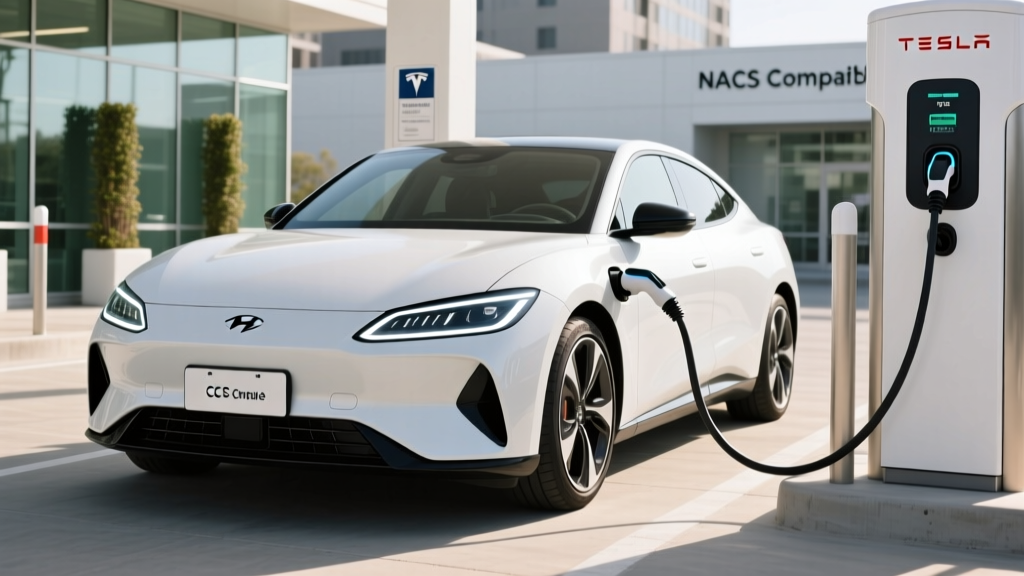
As of 2026, the NACS connector is the dominant standard, but the transition period has created a mixed environment. If you are driving a non-Tesla EV to a Supercharger, you must verify if the specific plaza supports NACS or if you need a CCS-to-NACS adapter.
| Standard | Connector Type | Compatibility Note |
|---|---|---|
| NACS (Tesla) | Compact 5-pin | Native for Tesla, Ford F-150 Lightning, Rivian, and 2025+ GM/Hyundai EVs. |
| CCS1 | Combo Plug | Requires Magic Dock adapter at Tesla stalls or use of Electrify America/EVgo networks. |
| CHAdeMO | Dual-Pin DC | Largely obsolete; Nissan Leaf owners should rely on Level 2 or specific legacy DC stations. |
Home Charging: The 240V Level 2 Solution
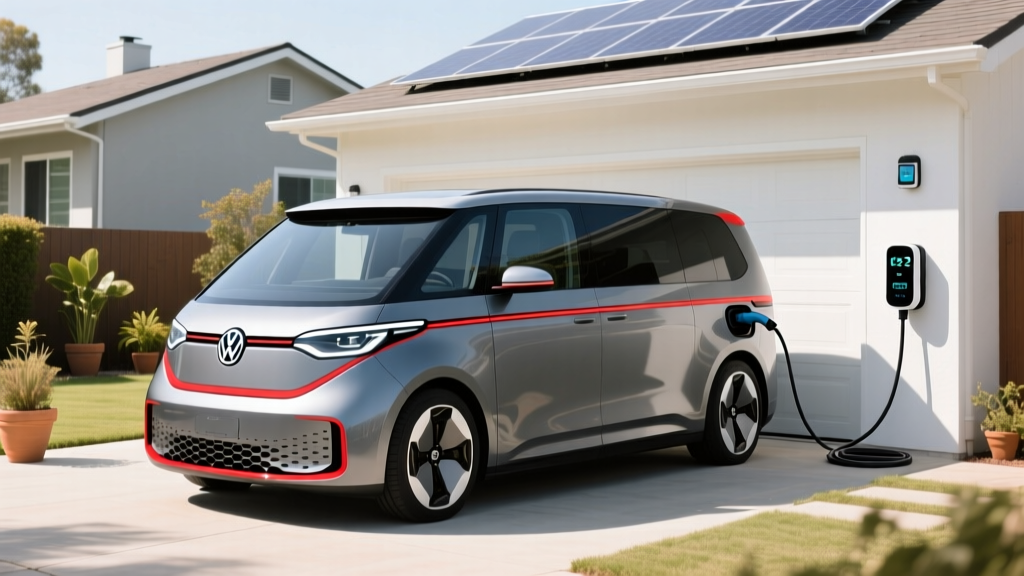
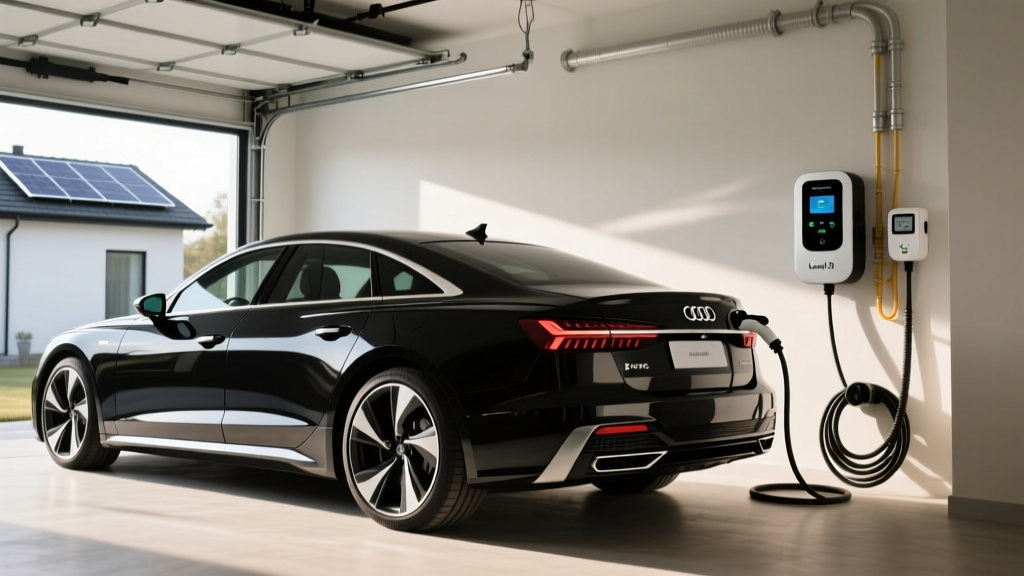
While the Tesla Supercharger NJ Turnpike stops are convenient for road trips, 90% of charging should happen at home. A Level 2 (240V) setup is the baseline for modern EV ownership, offering a balance of speed and battery health.
| Level | Voltage / Power | Miles of Range Per Hour |
|---|---|---|
| Level 1 | 120V / 1.4 kW | 3 - 5 Miles |
| Level 2 | 240V / 7.7 - 11.5 kW | 25 - 45 Miles |
| DC Fast | 400-800V / 50-350 kW | 200 - 1,000+ Miles |
Installation Cost Breakdown
Many buyers underestimate the electrical work required. A simple "plug and play" is only possible if you already have a 240V outlet (like a dryer plug) near your parking spot. For most, a hardwired installation on a dedicated circuit is required.
| Item | Estimated Cost Range |
|---|---|
| Level 2 Charger Unit (48A) | $400 - $700 |
| Electrician Labor (4-8 hours) | $600 - $1,500 |
| Electrical Permit | $100 - $300 |
| Panel Upgrade (100A to 200A) | $2,000 - $4,500 (If needed) |
| Total (No Panel Upgrade) | $1,100 - $2,500 |
Source: Department of Energy estimates for residential infrastructure.
Cost Per Mile: Electricity vs. Gasoline in NJ
New Jersey has some of the highest gas prices in the country, but also offers relatively stable electricity rates if you utilize off-peak hours. The economics favor EVs significantly when charging at home, though public DC fast charging narrows the gap.
| Scenario | Cost per kWh / Gallon | Cost Per Mile (at 3.5 mi/kWh or 30 MPG) |
|---|---|---|
| Home Off-Peak (PSE&G) | $0.12 / kWh | $0.034 |
| Home Peak Rate | $0.22 / kWh | $0.062 |
| Tesla Supercharger (NJ) | $0.36 / kWh | $0.102 |
| Gasoline (NJ Avg 2026) | $3.45 / Gallon | $0.115 |
At current rates, home charging is roughly 70% cheaper than gas per mile. However, exclusive reliance on the Tesla Supercharger NJ Turnpike network for daily driving will result in costs nearly identical to a fuel-efficient hybrid.
Top Level 2 Equipment Recommendations
For 2026, we recommend hardwired units for safety and maximum power delivery. Avoid "dryer plug" adapters for daily high-amperage use due to thermal risks.
Best Overall: Tesla Wall Connector
- Power: 11.5 kW (48A)
- Connector: NACS (Native)
- Features: Wi-Fi updates, load sharing, 24ft cable.
- Price: ~$475
Best Universal: ChargePoint Home Flex
- Power: Up to 12 kW (50A)
- Connector: NACS or CCS1 (configurable)
- Features: App scheduling, Alexa integration, NEMA 4 outdoor rating.
- Price: ~$699
Safety and Code Considerations
According to the National Electrical Code (NEC), EV charging is considered a "continuous load." This means the circuit must be rated for 125% of the charger's maximum draw. If you install a 48-amp charger, you must have a 60-amp breaker and appropriate wire gauge (typically 6 AWG copper). Never use an extension cord, and ensure outdoor units are rated NEMA 4 or 4X for weather resistance.
Frequently Asked Questions
How much does it cost to install a home EV charger?
Expect to pay between $1,100 and $2,500 for a standard installation. If your home requires a service panel upgrade (common in homes built before 1990 with 100A service), add $2,000 to $4,500 to the total.
How fast will each charging level add range?
Level 1 (120V) adds 3-5 miles per hour. Level 2 (240V) adds 25-45 miles per hour. DC Fast Charging (Superchargers) can add 150+ miles in 15 minutes, but speeds taper significantly as the battery fills.
Which connector is compatible with my EV?
If you have a Tesla, you use NACS. If you have a 2025+ Ford, GM, or Rivian, you likely have NACS. Most other EVs currently use CCS1 and will require a high-quality adapter to use Tesla Superchargers that have been opened to the public.
How much does charging cost per mile vs gas?
Home charging averages $0.03 to $0.06 per mile. Public DC fast charging averages $0.10 to $0.12 per mile. Gasoline vehicles average $0.11 to $0.15 per mile depending on MPG and local fuel prices.
What electrical upgrades might I need?
You may need a panel upgrade if your home has less than 200-amp service or if your existing panel lacks the physical space for a new double-pole breaker. A licensed electrician must perform a "load calculation" to determine this.