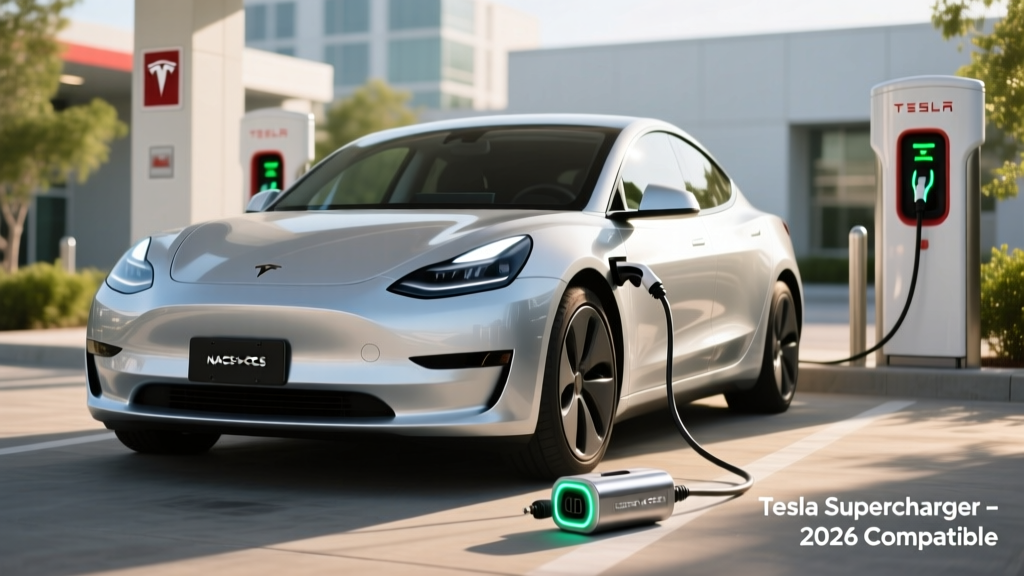
If you've ever pulled into a packed Supercharger station only to see a warning about extra charges, you've encountered Tesla's approach to managing station capacity. The Tesla Supercharger congestion fee — more formally known as idle fees — can add unexpected costs to your road trip if you don't understand how the system works. This guide breaks down exactly what triggers these fees, what you'll pay at public chargers, and how setting up a home Level 2 charger can eliminate the problem entirely while saving you money per mile.
What Is the Tesla Supercharger Congestion Fee?
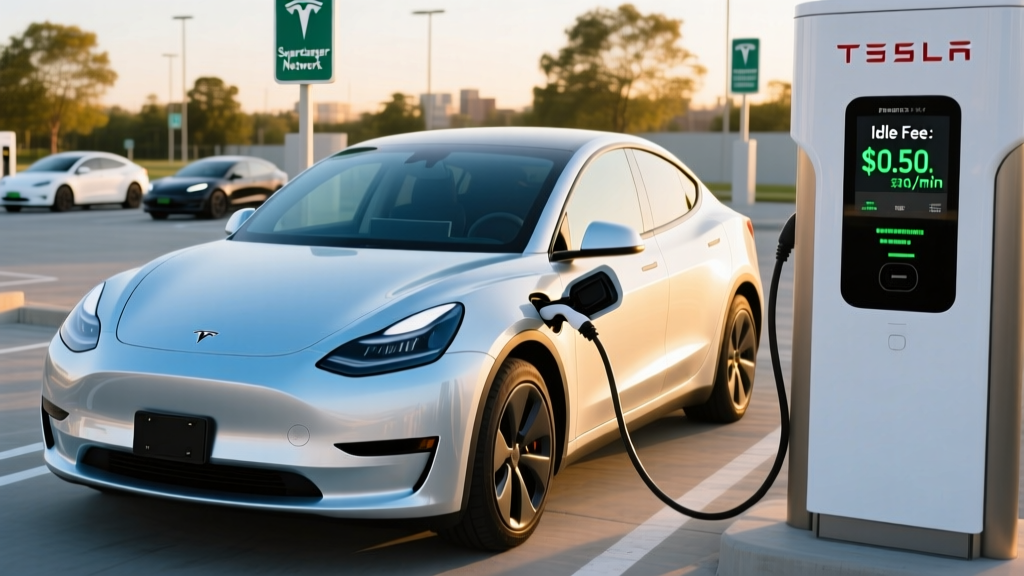
Tesla's idle fee program is designed to keep charging stalls available at busy stations. When a Supercharger station is at or near full capacity, vehicles that remain plugged in after reaching their charge limit (typically 80% or 100%, depending on your settings) incur a per-minute penalty. As of 2026, the fee structure is:
- Station at 50-100% capacity: $0.50 per minute after charging completes
- Station at 100% capacity: $1.00 per minute after charging completes
You receive notifications in the Tesla app and on your vehicle's touchscreen when idle fees begin accruing. There is a brief grace period (typically 5 minutes) to move your vehicle before charges apply. If you move the car within that window, no fee is assessed.
Tesla also enforces a congestion-based charge limit at certain high-traffic stations during peak travel periods. At these locations, the vehicle may automatically limit your charge to 80% to maximize throughput, regardless of your personal charge-limit setting. This isn't a fee but a station management tool that can affect your trip planning if you need a full battery for a long stretch.
Charging Levels Explained: Speed, Power, and Range Added
Understanding the difference between kW (kilowatts) and kWh (kilowatt-hours) is essential. kW measures power — the rate at which energy flows into your battery. kWh measures energy — the total capacity stored in your battery. Think of kW as the width of a pipe and kWh as the size of the tank it's filling.
| Level | Power (kW) | Voltage | Miles of Range Added Per Hour | Best For |
|---|---|---|---|---|
| Level 1 (120V) | 1.4–1.9 kW | 120V AC | 3–5 miles | Overnight top-ups, PHEVs |
| Level 2 (240V) | 7.2–19.2 kW | 240V AC | 20–60 miles | Home daily charging |
| DC Fast Charging | 50–350 kW | 400–800V DC | 150–1,000+ miles (equivalent) | Road trips, rapid top-ups |
Most modern EVs charge at home via Level 2, which delivers a full overnight replenishment for nearly any battery size. DC fast charging is reserved for road trips and quick top-ups, with speeds varying dramatically by vehicle and station capability.
Real-World Charging Time Examples
Charging speed is never a flat rate. Every EV has a charge curve — it charges fastest between roughly 10% and 50% State of Charge (SoC), then tapers significantly above 80% to protect battery health. Here's what to expect from common battery sizes:
- 60 kWh battery (e.g., base Tesla Model 3 RWD): 10-80% in ~25 minutes on a 170 kW V3 Supercharger; ~8-9 hours on a 7.2 kW Level 2 home charger
- 82 kWh battery (e.g., Tesla Model Y Long Range): 10-80% in ~27 minutes on a 250 kW V3 Supercharger; ~11 hours on a 7.2 kW Level 2
- 100 kWh battery (e.g., Ford F-150 Lightning Extended Range): 10-80% in ~35 minutes on a 150+ kW DC charger; ~13 hours on a 7.2 kW Level 2
Home Charger Installation: Costs, Requirements, and Upgrades
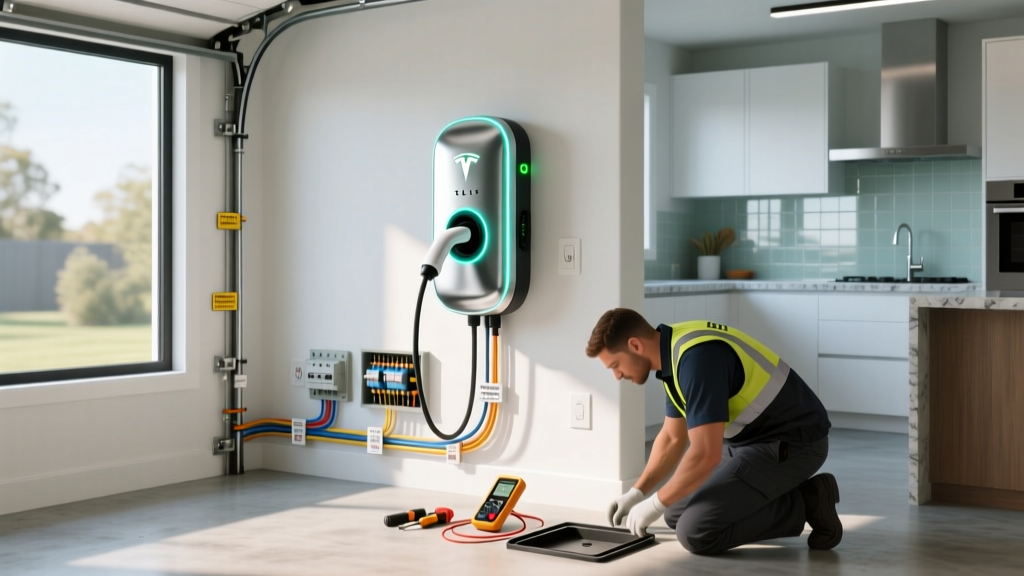
Installing a Level 2 home charger is the single most impactful upgrade an EV owner can make. You'll charge at home for a fraction of public-charging costs, wake up to a full battery every morning, and never worry about idle fees.
Electrical Requirements
A Level 2 charger requires a 240V dedicated circuit, similar to what powers an electric dryer or oven. The most common home installations are:
- 240V / 40A circuit → delivers up to 9.6 kW (32A continuous draw, as NEC requires circuits rated at 125% of continuous load)
- 240V / 50A circuit → delivers up to 12 kW (40A continuous)
- 240V / 60A circuit → delivers up to 14.4 kW (48A continuous) — requires a hardwired connection; no NEMA plug
Your existing electrical panel must have enough spare capacity to support the new circuit. A typical modern home with a 200A panel usually has sufficient headroom. Older homes with 100A panels often require a panel upgrade to 200A, which is the single largest variable in installation cost.
| Component | Cost Range | Notes |
|---|---|---|
| Level 2 Charger Equipment | $300–$700 | Varies by brand, power output, smart features |
| Electrician Labor | $500–$2,000 | Depends on panel proximity, conduit run length, wall type |
| Electrical Permit | $50–$300 | Varies by municipality; required in most jurisdictions |
| Panel Upgrade (if needed) | $1,500–$3,500 | 100A → 200A upgrade; not needed for most modern homes |
| Total (no panel upgrade) | $850–$3,000 | Typical range for standard installations |
| Total (with panel upgrade) | $2,350–$6,500 | Older homes with 100A service |
Always hire a licensed electrician and pull a permit. Unpermitted work can void your homeowner's insurance and create fire hazards. The National Electrical Code (NEC) requires GFCI protection for outdoor receptacles and specific wire gauge sizing based on circuit amperage and run length.
Connector Compatibility: NACS, CCS, and CHAdeMO
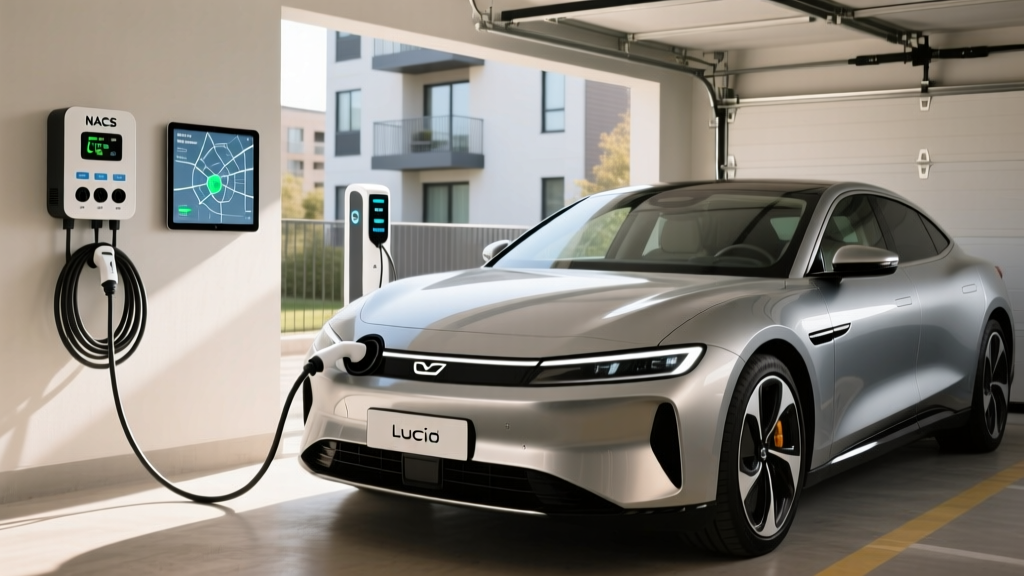
The connector landscape has consolidated significantly since 2024, when most major automakers committed to adopting the North American Charging Standard (NACS), originally developed by Tesla. As of 2026, NACS is the dominant connector for new EVs sold in North America.
| Connector | Brands Using It (Native) | DC Fast Charge Availability |
|---|---|---|
| NACS (Tesla) | Tesla, Ford, GM, Rivian, Volvo, Polestar, Mercedes-Benz, Fisker | Tesla Supercharger network; growing third-party NACS stations |
| CCS1 | Hyundai, Kia, BMW, Volkswagen, Stellantis (some models) | Electrify America, EVgo, ChargePoint, Ionity |
| CHAdeMO | Nissan Leaf (legacy); discontinued for new models | Limited and declining availability |
Adapter needs: If you drive a CCS-equipped vehicle and want access to Tesla Superchargers, you'll need a CCS-to-NACS adapter. Tesla sells an official adapter for approximately $199. Conversely, NACS-equipped vehicles from non-Tesla brands may need a NACS-to-CCS adapter for Electrify America or other CCS networks. Always verify adapter compatibility with your specific model year before purchasing.
Cost to Charge: Home vs. Public vs. Gas
One of the strongest arguments for EV ownership is fuel cost savings — but the magnitude depends heavily on where you charge. Home charging on an off-peak electricity rate is dramatically cheaper than DC fast charging, and both are usually cheaper than gasoline.
| Scenario | Cost per kWh | Cost Per Mile (at 3.5 mi/kWh) | Annual Cost (12,000 mi) |
|---|---|---|---|
| Home (off-peak utility rate) | $0.08–$0.14 | $0.02–$0.04 | $240–$480 |
| Home (standard residential rate) | $0.14–$0.20 | $0.04–$0.06 | $480–$720 |
| Public Level 2 (network) | $0.25–$0.49 | $0.07–$0.14 | $840–$1,680 |
| DC Fast Charging (public) | $0.35–$0.65 | $0.10–$0.19 | $1,200–$2,280 |
| Gasoline (25 MPG avg, $3.40/gal) | — | $0.14 | $1,680 |
Even at the most expensive DC fast-charging rates, EVs typically cost less per mile than a 25 MPG gasoline vehicle. But the real savings come from consistent home charging, where annual fuel costs can drop below $500 — roughly 70% less than gasoline.
Recommended Home Level 2 Chargers
The best home charger depends on your electrical panel capacity, vehicle's onboard charger limit, and whether you want smart scheduling features. Here are top picks for 2026:
Tesla Wall Connector (Gen 4)
- Power: Up to 11.5 kW (48A)
- Connector: NACS native
- Cable: 24 ft
- Smart features: Wi-Fi, OTA updates, power sharing between two units, Tesla app integration
- Price: ~$425
- Best for: Tesla owners and NACS-equipped Ford/GM/Rivian vehicles
ChargePoint Home Flex
- Power: Up to 12 kW (50A) — configurable via dip switch
- Connector: NACS or CCS1 (J1772 with adapter)
- Cable: 23 ft
- Smart features: Wi-Fi, app scheduling, Alexa integration, energy tracking
- Price: ~$550–$650
- Best for: Multi-EV households, flexible amperage adjustment
Emporia Level 2 Smart Charger
- Power: Up to 11.5 kW (48A)
- Connector: J1772 (NACS adapter included)
- Cable: 24 ft
- Smart features: Wi-Fi, solar integration, energy dashboard, off-peak scheduling
- Price: ~$399
- Best for: Budget-conscious buyers, solar-panel owners
Before purchasing, confirm your vehicle's onboard charger capacity. Many EVs max out at 11.5 kW AC (48A), meaning a 12 kW charger won't charge them any faster. Check your owner's manual or manufacturer spec sheet.
Safety, Code, and Installation Best Practices
EV charging draws significant continuous current — often for 8-12 hours at a time. Proper installation isn't optional; it's a safety requirement.
- Dedicated circuit: Your Level 2 charger must have its own dedicated circuit breaker. Sharing a circuit with other appliances risks tripping the breaker or overheating wiring.
- GFCI protection: The NEC requires Ground Fault Circuit Interrupter protection for outdoor EV receptacles. Hardwired chargers may not require a GFCI breaker if the unit includes integrated ground-fault protection.
- Wire gauge: For a 50A circuit, 6 AWG copper wire is standard. Longer runs (over 100 ft) may require 4 AWG to prevent voltage drop.
- Outdoor rating: If installing outside, ensure the charger carries a NEMA 4 or IP65 rating for weather resistance. Most quality chargers meet this standard.
- Permit and inspection: Nearly all jurisdictions require an electrical permit for EV charger installation. The inspection ensures code compliance and protects your insurance coverage.
According to the National Fire Protection Association, improper EV charger installations — particularly undersized wiring and missing permits — are a growing cause of residential electrical fires as EV adoption accelerates.
Frequently Asked Questions
How much does it cost to install a home EV charger?
A standard Level 2 installation without a panel upgrade typically costs $850–$3,000, including equipment ($300–$700), electrician labor ($500–$2,000), and permits ($50–$300). If your home has a 100A electrical panel, expect an additional $1,500–$3,500 for a 200A panel upgrade.
How fast will each charging level add range?
Level 1 (120V) adds 3–5 miles per hour. Level 2 (240V) adds 20–60 miles per hour depending on amperage. DC fast charging adds the equivalent of 150–1,000+ miles per hour, but is limited by the vehicle's charge curve and typically used for 10-80% sessions lasting 18–40 minutes.
Which connector/charger is compatible with my EV?
Check your vehicle's charge port. As of 2026, most new EVs from Tesla, Ford, GM, Rivian, Volvo, and others use NACS. Hyundai, Kia, BMW, and VW primarily use CCS1. The Nissan Leaf uses CHAdeMO. Adapters are available for cross-network access.
How much does charging cost per mile vs gas?
Home charging at off-peak rates costs $0.02–$0.04 per mile — roughly 70-80% less than gasoline at $3.40/gal and 25 MPG. Even public DC fast charging at $0.48/kWh costs about $0.14/mile, comparable to gasoline. See the cost table above for detailed scenarios.
What electrical upgrades might I need?
The most common upgrade is a 100A-to-200A panel replacement in older homes. You may also need a new 240V circuit with appropriately sized wiring (6 AWG for 50A). Your electrician will perform a load calculation to determine if your panel has sufficient spare capacity.
How do I avoid Tesla Supercharger idle fees?
Set your charge limit to 80% or your actual needed level, enable push notifications in the Tesla app, and return to your vehicle within the 5-minute grace period after charging completes. At congested stations during holidays, plan to charge at off-peak hours (early morning or late evening) to avoid both idle fees and 80% charge-limit restrictions.