The Real Answer: How Long Does a Tesla Supercharger Take?
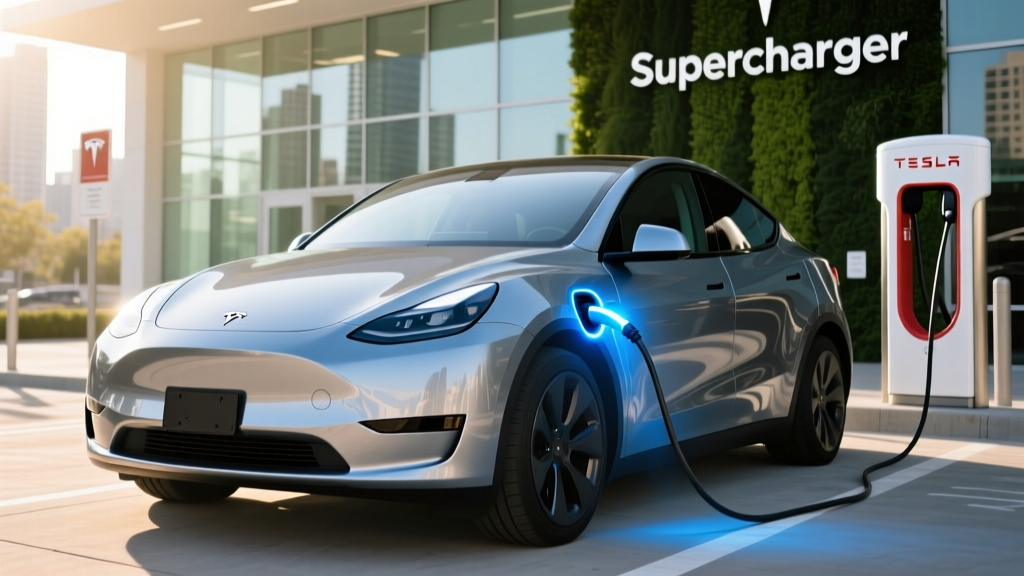
If you're shopping for a Tesla or just bought one, you've probably typed "how long does Tesla Supercharger take" into your search bar. The short answer: 15 to 30 minutes for a 10–80% charge at a V3 or V4 Supercharger, depending on your model, battery state of charge (SoC), and ambient temperature. But that number hides a lot of nuance — peak kilowatt (kW) ratings are not sustained rates, and your actual session time depends heavily on the charging curve.
Here's the data-driven breakdown for current 2026 Tesla models at V3 (250 kW peak) and V4 Supercharger stalls, based on Tesla's published specs and independent testing.
| Model (2026) | Battery (kWh usable) | Peak DC Rate | 10–80% Time | Miles Added in 15 Min |
|---|---|---|---|---|
| Model 3 Long Range AWD | 75 kWh (NMC) | 250 kW | ~25 min | ~175 mi |
| Model 3 Performance | 75 kWh (NMC) | 250 kW | ~25 min | ~170 mi |
| Model Y Long Range AWD | 75 kWh (NMC) | 250 kW | ~27 min | ~162 mi |
| Model S Long Range | 95 kWh (NMC) | 250 kW | ~32 min | ~200 mi |
| Model X Long Range | 95 kWh (NMC) | 250 kW | ~34 min | ~185 mi |
| Cybertruck AWD | 123 kWh (NMC) | 350 kW (V4) | ~28 min | ~170 mi |
Understanding the Charging Curve: Why Peak kW Is Misleading
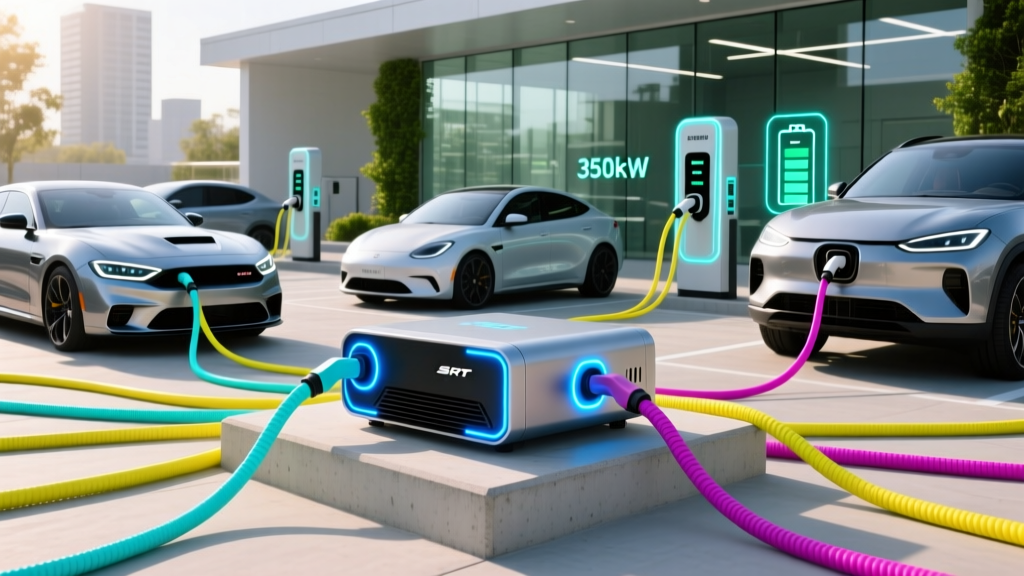
Tesla advertises V3 Superchargers at 250 kW peak and V4 at up to 350 kW. But a Supercharger does not deliver peak power for the entire session. Lithium-ion batteries accept charge fastest at low SoC and progressively slow down as they fill — this is the charging curve.
Here's what a typical V3 session looks like for a Model 3 Long Range:
- 10–30% SoC: Peak ~250 kW (fastest phase)
- 30–50% SoC: Tapers to ~180 kW
- 50–70% SoC: Drops to ~120 kW
- 70–80% SoC: Further reduced to ~75 kW
- 80–100% SoC: Trickle charge, ~25–40 kW
This is why Tesla and most EV manufacturers quote 10–80% times rather than 0–100%. Charging past 80% at a DC fast charger is inefficient and adds battery stress. For daily driving, set your charge limit to 80% and only charge to 100% before long road trips.
Pro tip: Always navigate to a Supercharger using the car's built-in navigation. This triggers battery preconditioning — the thermal management system warms or cools the pack to the optimal temperature for fast charging. Without preconditioning, your peak charge rate can drop by 30–50%, especially in cold weather.
All Three Charging Levels: Speeds, Times, and Use Cases
Superchargers are just one piece of the puzzle. Every Tesla owner uses a mix of charging levels. Here's how they stack up:
| Level | Power Source | Max kW | Miles of Range per Hour | Best For |
|---|---|---|---|---|
| Level 1 | 120V household outlet | 1.0–1.4 kW | 3–5 mi/hr | Overnight top-ups, emergencies, PHEVs |
| Level 2 | 240V (dryer/outlet or hardwired) | 7.2–19.2 kW | 25–70 mi/hr | Daily home charging, workplace, hotels |
| DC Fast (Supercharger V3) | 480V+ DC commercial | 250 kW | ~1,000 mi/hr (peak) | Road trips, quick top-ups away from home |
| DC Fast (Supercharger V4) | 480V+ DC commercial | 350 kW | ~1,200 mi/hr (peak) | Cybertruck, future higher-rate vehicles |
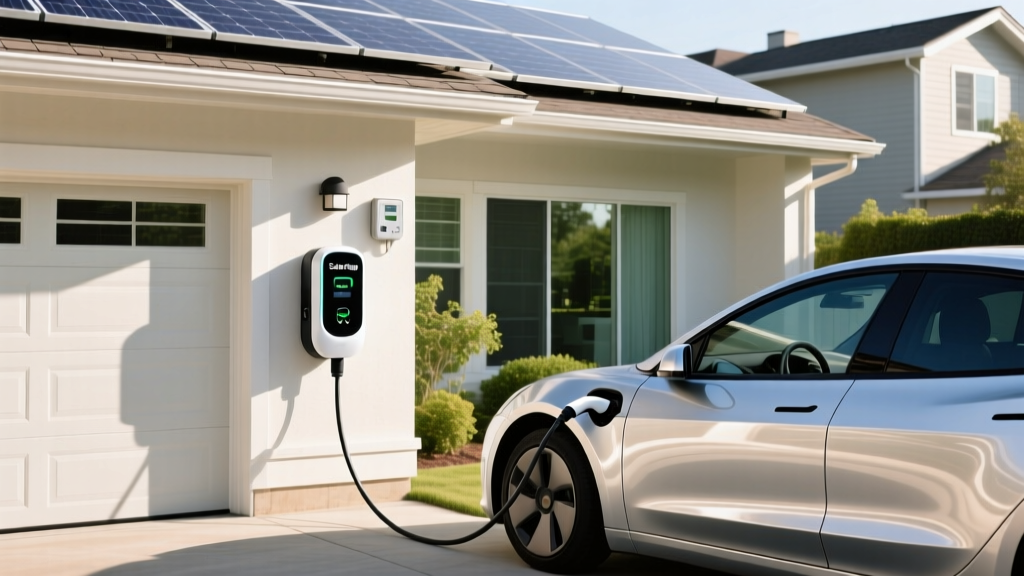
For context, a Model 3 Long Range driven 40 miles per day needs roughly 10 kWh of energy to replenish. A Level 2 charger delivering 11.5 kW (48A on a 60A circuit) replaces that in under an hour — which is why home Level 2 charging is the backbone of practical EV ownership.
How Much Does It Cost to Install a Home EV Charger?
Home charging is where Tesla owners save the most money and time. But installation costs vary enormously based on your home's electrical infrastructure. Here's a realistic breakdown for a 240V/48A Level 2 setup in 2026:
| Component | Low Estimate | High Estimate | Notes |
|---|---|---|---|
| Level 2 Charger (equipment) | $350 | $700 | Tesla Wall Connector, ChargePoint, Emporia |
| Electrician labor (240V run) | $500 | $2,000 | Depends on distance from panel to garage |
| Electrical permit | $50 | $250 | Required in most jurisdictions |
| Panel upgrade (if needed) | $1,500 | $4,000 | 100A → 200A service; older homes may need this |
| Total (no panel upgrade) | $900 | $2,950 | Most homes with 200A service |
| Total (with panel upgrade) | $2,400 | $6,950 | Homes with 100A or older panels |
Panel upgrade reality check: A Level 2 charger on a 60A circuit draws 48A continuous. If your home has a 100-amp main panel already near capacity (common in homes built before 1990), you'll likely need a 200-amp service upgrade. This is the single biggest cost surprise for new EV owners. Have a licensed electrician perform a load calculation before committing to equipment.
Which Connector and Charger Is Compatible with My EV?
Connector compatibility has simplified significantly since Tesla opened its North American Charging Standard (NACS) to the industry. Here's the 2026 landscape:
| Connector | Native Vehicles | Adapter Needed? | Network Access |
|---|---|---|---|
| NACS (Tesla) | Tesla (all), Ford, Rivian, GM, Volvo, Polestar, Fisker | None for NACS-native; CCS→NACS adapter for older non-Tesla | Tesla Superchargers, an expanding number of third-party DC stations |
| CCS1 | Hyundai, Kia, VW, BMW, Mercedes, Stellantis, most legacy brands | NACS→CCS adapter to use Tesla Superchargers (where open) | Electrify America, EVgo, ChargePoint DC, Ionity (EU) |
| CHAdeMO | Nissan Leaf (legacy only; discontinued in US) | CHAdeMO→CCS adapter available | Limited and shrinking network |
For Tesla owners: Your vehicle uses NACS natively. You can charge at any Supercharger without an adapter. Tesla also provides a CCS adapter (sold separately, ~$250) for accessing non-Tesla DC fast chargers — useful on road trips through areas with limited Supercharger coverage.
For non-Tesla EVs with NACS: Ford, GM, Rivian, and others now ship with NACS ports. You can access Tesla Superchargers (where Tesla has opened access) using the Tesla app. If your EV still has CCS1, you'll need a NACS-to-CCS adapter (~$200–$300) to use Superchargers.
Charging Cost: Home vs. Supercharger vs. Gas
One of the strongest arguments for EV ownership is lower fueling cost — but only if you charge smartly. Here's how the numbers compare in 2026:
| Scenario | Rate | Cost per Mile (Model 3 LR at 3.5 mi/kWh) | Annual Cost (12,000 mi) |
|---|---|---|---|
| Home Level 2 (off-peak utility rate) | $0.09/kWh | $0.026 | $309 |
| Home Level 2 (average US residential) | $0.17/kWh | $0.049 | $583 |
| Tesla Supercharger V3/V4 (average) | $0.32/kWh | $0.091 | $1,097 |
| Third-party DC fast (EA, EVgo) | $0.42/kWh | $0.120 | $1,440 |
| Gas car (30 MPG combined, $3.40/gal) | $3.40/gal | $0.113 | $1,360 |
The takeaway: home charging on off-peak rates is 4x cheaper per mile than gasoline. Even exclusive Supercharger use is slightly cheaper than gas for a comparable vehicle. But if you rely solely on third-party DC fast chargers at $0.42+/kWh, your cost advantage shrinks significantly. This is why home Level 2 installation is the single highest-ROI investment for EV ownership.
According to fueleconomy.gov, the 2026 Model 3 Long Range achieves 132 MPGe combined, translating to roughly 26 kWh per 100 miles — one of the most efficient EVs on the market.
Best Home Chargers for Tesla Owners: Equipment Picks
Not all Level 2 chargers are equal. Here are three proven options for Tesla owners in 2026, spanning budget to premium:
Tesla Wall Connector (Gen 3)
- Power Output: Up to 11.5 kW (48A on 60A circuit)
- Connector: NACS native — no adapter needed
- Cable Length: 24 feet
- Smart Features: Wi-Fi firmware updates, power sharing (link up to 6 units on one circuit), load management
- Price: ~$475
- Best For: Tesla-only households wanting seamless integration
Emporia Level 2 EV Charger
- Power Output: Up to 11.5 kW (48A on 60A circuit)
- Connector: J1772 (use Tesla's J1772 adapter included with every Tesla)
- Cable Length: 24 feet
- Smart Features: Energy monitoring, solar integration, scheduling via app, works with Emporia Vue home energy monitor
- Price: ~$399
- Best For: Solar-equipped homes and multi-EV households (J1772 is universal)
ChargePoint Home Flex
- Power Output: Up to 12 kW (50A on 60A circuit, adjustable down to 16A)
- Connector: J1772 (NACS version now available)
- Cable Length: 23 feet
- Smart Features: Alexa integration, scheduled charging, charge history, flexible amperage for older panels
- Price: ~$699
- Best For: Homes needing adjustable amperage to avoid panel upgrades
Safety and Electrical Code: What Your Installation Must Meet
A Level 2 charger is a high-draw appliance — equivalent to running a clothes dryer continuously for hours. Electrical safety is non-negotiable:
- Dedicated circuit: Your charger must be on its own dedicated breaker — never shared with other appliances. A 48A continuous load requires a 60A breaker per NEC Article 210.20 (continuous loads cannot exceed 80% of breaker rating).
- GFCI protection: The 2023 NEC (and 2026 adoptions) requires GFCI protection for outdoor receptacles used for EV charging. Hardwired installations (like the Tesla Wall Connector) may be exempt in some jurisdictions, but confirm with your local inspector.
- Outdoor rating: If your charger is installed outside or in an unenclosed carport, it must carry a NEMA 4 or NEMA 4X rating for weather resistance. All three chargers listed above meet this standard.
- Wire gauge: A 60A circuit typically requires 6 AWG copper wire (THHN in conduit) or 4 AWG for longer runs to minimize voltage drop. Your electrician will calculate this based on run distance.
- Permit and inspection: Nearly all jurisdictions require an electrical permit and final inspection for EV charger installations. Skipping this can void your homeowner's insurance in the event of an electrical fire.
Always hire a licensed electrician familiar with EV charger installations. Ask for their experience with 240V EV circuits specifically — this is not the same as installing a standard outlet.
Frequently Asked Questions
How much does it cost to install a home EV charger?
Most homeowners spend between $900 and $2,950 for a Level 2 installation assuming no panel upgrade is needed. If your home has an older 100-amp electrical panel, a service upgrade to 200A adds $1,500–$4,000, bringing the total to $2,400–$6,950. Get a load calculation from a licensed electrician before purchasing equipment.
How fast will each charging level add range to my Tesla?
Level 1 (120V) adds roughly 3–5 miles per hour — fine for overnight trickle charging. Level 2 (240V, 48A) adds 30–44 miles per hour, fully replenishing a Model 3 Long Range overnight in 7–8 hours. DC fast charging at a V3 Supercharger adds up to 175 miles in 15 minutes at peak rate, though the charge curve means sustained speed is lower.
Which connector and charger is compatible with my EV?
All Teslas use the NACS connector natively and charge on Superchargers without adapters. Most 2025+ non-Tesla EVs from Ford, GM, Rivian, and Volvo also ship with NACS. Older CCS-equipped EVs need a NACS-to-CCS adapter (~$200–$300) to access Tesla Superchargers. For home charging, Tesla's Wall Connector (NACS) is the simplest option; J1772 chargers work with the adapter Tesla includes with every vehicle.
How much does charging cost per mile compared to gas?
Home charging on off-peak rates costs approximately $0.026/mile in a Model 3 Long Range — about 4x cheaper than a 30 MPG gas car at $3.40/gallon ($0.113/mile). Even Supercharger use at $0.32/kWh averages $0.091/mile, still less than gas. Third-party DC fast charging at $0.42+/kWh narrows the gap to near parity with gasoline. See the DOE EV cost comparison tool for your local electricity rates.
What electrical upgrades might I need for a home charger?
The most common upgrade is a 200-amp service panel replacement, required when your existing 100A panel lacks capacity for a 60A dedicated circuit. Other potential costs include running new conduit from the panel to your garage ($3–$10/foot), upgrading your utility meter socket, or adding a sub-panel if the garage is far from the main panel. A licensed electrician's load calculation ($100–$200) will determine exactly what you need.
Does Supercharging damage my Tesla's battery?
Occasional Supercharging has minimal impact on battery health. However, frequent daily DC fast charging accelerates degradation slightly compared to Level 2 home charging. Tesla's battery management system actively manages cell temperature and limits charge rate to protect the pack. Data from long-term Tesla owners shows an average degradation of roughly 10–12% after 150,000 miles regardless of charging mix. Tesla's battery warranty covers 8 years/120,000 miles (Model 3/Y) or 8 years/150,000 miles (Model S/X) with a minimum 70% capacity retention threshold.
Can I use a Supercharger if I don't own a Tesla?
Yes, in select locations. Tesla has opened some Supercharger stations to non-Tesla EVs equipped with NACS or with a CCS-to-NACS adapter, accessible via the Tesla app. Availability varies by region and station — check the Tesla app or Tesla's Supercharger map for open stations in your area. Pricing for non-Tesla vehicles is typically 10–25% higher than Tesla-owner rates.