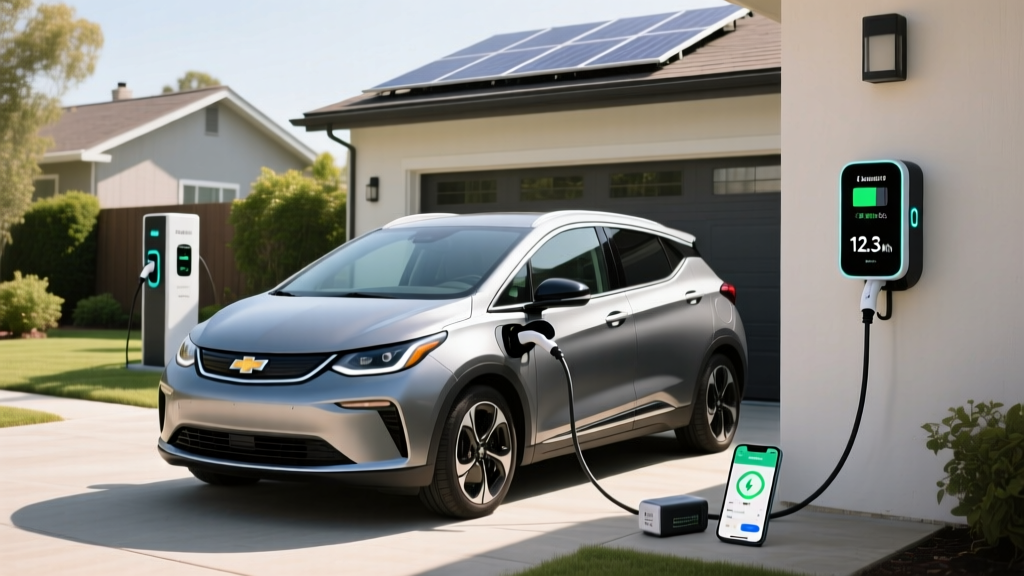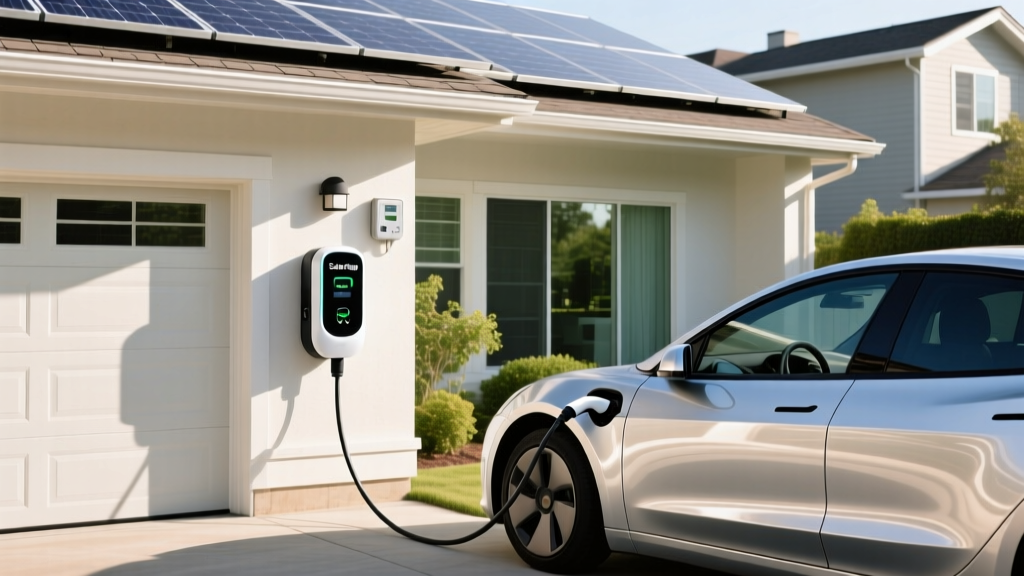
Home solar and EV ownership are a natural pairing, but most Level 2 chargers treat the grid and your rooftop panels as interchangeable sources. The SolarEdge EV charger (officially the SolarEdge Home EV Charger) takes a different approach: it's designed to prioritize solar-generated electricity, routing excess panel output directly into your vehicle before pulling from the grid. For homeowners already running a SolarEdge inverter system, it's one of the few chargers that can genuinely claim to charge your car on sunshine.
But does solar-first charging actually save money, and is the hardware competitive with standalone units like the ChargePoint Home Flex or Tesla Wall Connector? We break down the specs, installation realities, connector compatibility, and real-world cost math.
Charging Levels Explained: What the SolarEdge EV Charger Delivers
Before evaluating any specific unit, it's essential to understand the three charging tiers and where home equipment fits. Power is measured in kW (kilowatts — the rate of energy flow), while battery capacity and energy consumed are measured in kWh (kilowatt-hours — the total energy stored or used). Confusing the two is the single most common EV literacy gap.
| Level | Voltage | Max Power (kW) | Miles of Range Added Per Hour | Typical Use Case |
|---|---|---|---|---|
| Level 1 | 120V AC | 1.4–1.9 kW | 3–5 miles | Overnight top-ups, PHEVs, emergency |
| Level 2 | 240V AC | 3.3–19.2 kW | 12–75 miles | Home daily charging, workplace, public AC |
| DC Fast Charge | 400–900V DC | 50–350 kW | 150–1,000+ miles (equivalent rate) | Road trips, highway corridors |
The SolarEdge EV charger is a Level 2, 240V unit available in two configurations: a 32A model delivering 7.7 kW and a 40A model delivering 9.6 kW. On a 9.6 kW circuit, most EVs will recover roughly 30–38 miles of range per hour of charging — enough to fully replenish a 75–85 kWh battery overnight.
SolarEdge EV Charger Specs and Solar Integration
The SolarEdge charger is built around a specific ecosystem. It communicates directly with SolarEdge inverters and the mySolarEdge app to identify when your panels are producing surplus energy, then modulates charging current to absorb that excess rather than exporting it to the grid at low utility buyback rates (often $0.03–$0.08/kWh).
| Specification | 32A Model | 40A Model |
|---|---|---|
| Max Power Output | 7.7 kW | 9.6 kW |
| Voltage / Amperage | 240V / 32A | 240V / 40A |
| Connector Type | J1772 (NACS adapter available) | J1772 (NACS adapter available) |
| Cable Length | 18 ft (standard) / 24 ft (optional) | 18 ft (standard) / 24 ft (optional) |
| Wi-Fi / Connectivity | Yes — mySolarEdge app | Yes — mySolarEdge app |
| Solar-Only Charging Mode | Yes | Yes |
| Scheduled / Delayed Charging | Yes | Yes |
| Indoor/Outdoor Rating | NEMA 4 (outdoor rated) | NEMA 4 (outdoor rated) |
| Estimated Equipment Price | ~$650–$750 | ~$700–$850 |
The solar-priority mode is the differentiator. If your 8 kW rooftop array is producing 5 kW midday and your household load is 2 kW, the charger can direct the 3 kW surplus into your EV — scaling up or down as clouds pass or appliances cycle on. This is more sophisticated than simply scheduling charge sessions for midday and hoping the sun cooperates.
Home Installation: Electrical Requirements and Costs
Installing any hardwired Level 2 charger requires a dedicated 240V circuit from your electrical panel. The SolarEdge 32A model requires a 40A breaker (NEC code mandates circuits be rated 125% of continuous load); the 40A model needs a 50A breaker.
Here's what homeowners should budget. Costs vary significantly by region, panel condition, and conduit run length:
| Item | Low Estimate | High Estimate | Notes |
|---|---|---|---|
| SolarEdge EV Charger (equipment) | $650 | $850 | 32A vs 40A model, cable length options |
| Licensed Electrician Labor | $500 | $1,500 | Depends on conduit run distance, wall type |
| Electrical Permit | $50 | $250 | Varies by municipality |
| Panel Upgrade (if needed) | $1,500 | $3,500 | 100A→200A service; older homes often need this |
| Total (no panel upgrade) | $1,200 | $2,600 | |
| Total (with panel upgrade) | $2,700 | $6,100 |
Panel Upgrade Reality Check
Homes built before 2000 frequently have 100A or 150A electrical service. Adding a 40A or 50A dedicated EV circuit — especially if you're also running electric heat, a dryer, and an electric range — can max out your panel. A licensed electrician will perform a load calculation per NEC Article 220 to determine whether your current service can support the additional draw. If not, upgrading to 200A service is the standard fix and adds $1,500–$3,500 to the project.
Some homeowners opt for a smart electrical panel (like Span or Lumin) or an automated load management device to avoid a full service upgrade. These systems dynamically shed non-essential loads when the EV charger activates, keeping total draw within panel limits.
Connector Compatibility: Will It Fit Your EV?
The North American EV connector landscape shifted dramatically between 2023 and 2025, with nearly every major automaker adopting the NACS (North American Charging Standard) — Tesla's connector design — as the new standard. The SolarEdge EV charger ships with a J1772 connector, which was the universal Level 2 standard prior to the NACS transition.
| Connector | Automakers Using It (Level 2) | Adapter Needed for SolarEdge Charger? |
|---|---|---|
| J1772 | Older EVs (pre-2025), some PHEVs, Rivian (pre-2025 models) | No — native fit |
| NACS (Tesla plug) | Tesla (all years), Ford, GM, Hyundai/Kia, Rivian, BMW, Volvo, Polestar, Nissan (2025+) | Yes — J1772-to-NACS adapter (~$100–$200) |
| CHAdeMO | Nissan Leaf (legacy, DC only — not relevant for L2) | N/A for home Level 2 |
If you're buying a 2025 or 2026 model-year EV from Ford, GM, Hyundai, Kia, BMW, or most other major brands, your vehicle has a NACS port. You'll need a J1772-to-NACS adapter to use the SolarEdge charger. Tesla sells an official J1772-to-NACS adapter for approximately $150, and several third-party options exist. The adapter adds a minor step each time you plug in but doesn't affect charging speed.
SolarEdge has indicated that a native NACS cable option may become available. Check with your installer or SolarEdge directly for the latest configuration options at time of purchase.
Cost to Charge: SolarEdge vs Grid vs Gas
The financial case for the SolarEdge EV charger hinges on how much of your charging can be covered by solar energy you're already generating — effectively at $0.00 marginal cost per kWh after the solar system is paid off.
| Scenario | Cost per kWh | Cost Per Mile (at 3.5 mi/kWh) | Annual Cost (12,000 mi) |
|---|---|---|---|
| Solar excess (SolarEdge solar-priority mode) | $0.00* | $0.00* | $0* |
| Home grid — off-peak utility rate | $0.08–$0.14 | $0.02–$0.04 | $240–$480 |
| Home grid — standard rate (no TOU) | $0.14–$0.22 | $0.04–$0.06 | $480–$720 |
| Public Level 2 (ChargePoint, EVgo L2) | $0.20–$0.35 | $0.06–$0.10 | $720–$1,200 |
| DC Fast Charging (Electrify America, Tesla SC) | $0.30–$0.55 | $0.09–$0.16 | $1,080–$1,920 |
| Gas vehicle (28 MPG combined, $3.40/gal) | — | $0.12 | $1,440 |
*Solar marginal cost assumes your solar system is owned (not leased) and fully paid off. If financing, divide your monthly solar loan payment by kWh produced to get your effective rate — typically $0.04–$0.08/kWh.
The math is compelling for solar homeowners. If 70% of your annual driving energy comes from solar surplus and 30% from off-peak grid power at $0.12/kWh, your blended cost per mile drops to roughly $0.01 — or about $120/year for 12,000 miles of driving. That's a 92% reduction compared to a 28 MPG gas car at $3.40/gallon.
According to fueleconomy.gov, the average new EV achieves 100–130 MPGe combined, translating to 3.0–4.0 miles per kWh. Efficiency varies: a Lucid Air Grand Touring reaches 4.0+ mi/kWh, while a GMC Hummer EV Pickup drops to around 2.0 mi/kWh due to its 8,000+ lb curb weight.
Equipment Comparison: SolarEdge vs Alternatives
How does the SolarEdge EV charger stack up against other popular home Level 2 units?
SolarEdge Home EV Charger (40A)
- Power: 9.6 kW (40A, 240V)
- Connector: J1772 (NACS adapter required for most 2025+ EVs)
- Cable: 18 ft or 24 ft
- Smart Features: Solar-priority mode, mySolarEdge app, scheduled charging, solar production tracking
- Price: ~$700–$850
- Best For: Homes with existing SolarEdge inverter systems who want automated solar-surplus charging
Tesla Wall Connector
- Power: 11.5 kW (48A, 240V)
- Connector: NACS native (J1772 adapter included)
- Cable: 24 ft
- Smart Features: Wi-Fi, OTA updates, load sharing (pair up to 6 units), Tesla app integration
- Price: ~$475
- Best For: Tesla owners or NACS-equipped EVs; best value for power output
ChargePoint Home Flex
- Power: Up to 12 kW (50A, 240V) — adjustable down
- Connector: J1772 (NACS version now available)
- Cable: 23 ft
- Smart Features: ChargePoint app, Alexa integration, scheduling, detailed session data
- Price: ~$550–$700
- Best For: Broad EV compatibility, strong app ecosystem, flexible amperage
Emporia Level 2 Smart Charger
- Power: 11.5 kW (48A, 240V)
- Connector: J1772 (NACS adapter available)
- Cable: 24 ft
- Smart Features: Emporia energy monitoring integration, solar-aware scheduling, load management
- Price: ~$400–$500
- Best For: Budget-conscious buyers wanting energy monitoring and solar integration without SolarEdge ecosystem lock-in
The SolarEdge unit isn't the most powerful or least expensive option. Its value proposition is the native solar integration — no third-party energy monitor needed, no manual scheduling guesswork. If you're already running SolarEdge inverters and monitoring, the charger slots into that ecosystem seamlessly. If you have Enphase or SMA inverters, the solar-priority advantage diminishes, and a Tesla Wall Connector or ChargePoint Home Flex offers more power for less money.
Safety, Code, and Permit Considerations
Any Level 2 charger installation must comply with the National Electrical Code (NEC) Article 625, which governs EV charging equipment. Key requirements include:
- Dedicated circuit: The charger must have its own breaker — no shared circuits with other appliances.
- GFCI protection: NEC 2020 and later require ground-fault circuit interrupter protection for outdoor receptacles and, in many jurisdictions, for hardwired outdoor EV chargers as well. The SolarEdge unit includes built-in ground fault protection.
- NEMA 4 rating: For outdoor installations, the enclosure must be rated for weather resistance. The SolarEdge charger carries a NEMA 4 rating, suitable for rain, snow, and dust exposure.
- Cable management: The connector and cable should not drape across walkways. Wall-mounted cable organizers or retractors are recommended.
- Permit and inspection: Most jurisdictions require an electrical permit for a new 240V circuit. Your electrician typically pulls this, and a local inspector verifies the work. Budget $50–$250 for the permit fee.
If you're installing in a garage near your electrical panel, the job is straightforward — often just 20–40 feet of conduit. Outdoor installations on the far side of the house from the panel can double or triple labor costs due to longer conduit runs, trenching, or attic crawls.
Federal and State Incentives for Home Charging
The federal Alternative Fuel Vehicle Refueling Property Credit (IRS Form 8911) covers 30% of the cost of home EV charging equipment and installation, up to a maximum of $1,000. This applies to both the charger hardware and electrician labor.
However, there are eligibility restrictions effective under current law:
- The property must be located in an eligible low-income or non-urban census tract (per IRS guidance tied to the Inflation Reduction Act provisions).
- The credit is non-refundable — it can reduce your tax liability to zero but won't generate a refund beyond that.
- Equipment must be new and placed in service during the tax year.
Many states and utilities offer additional rebates. For example, some utilities provide $200–$500 rebates for smart Level 2 chargers, and certain states offer up to $1,500 for installations in multi-unit dwellings. Check your utility's website or the Alternative Fuels Data Center for local programs.
Is the SolarEdge EV Charger Right for You?
- You already have a SolarEdge inverter system and want seamless solar-surplus charging
- You want automated, app-managed solar-priority charging without third-party hardware
- You produce significant excess solar during the day and can park at home to capture it
- You value ecosystem integration over maximum kW output
- You have Enphase, SMA, or non-SolarEdge inverters
- You want maximum charging speed (11.5 kW at 48A vs SolarEdge's 9.6 kW at 40A)
- You want a native NACS connector without an adapter
- You're on a tight budget and don't need solar integration
Frequently Asked Questions
How much does it cost to install a SolarEdge EV charger at home?
Expect $1,200–$2,600 total if your electrical panel has capacity. This includes the charger ($650–$850), electrician labor ($500–$1,500), and permit fees ($50–$250). If your home needs a panel upgrade from 100A to 200A service, add $1,500–$3,500.
How fast will the SolarEdge charger add range to my EV?
At 9.6 kW (40A model), most EVs gain approximately 30–38 miles of range per hour. A full 10–80% charge on a 75 kWh battery takes roughly 6.5–7 hours — well suited to overnight or all-workday sessions.
Do I need an adapter to charge a NACS-equipped EV with the SolarEdge charger?
Yes, if your EV has a NACS port (standard on most 2025–2026 models from Ford, GM, Hyundai, Kia, Tesla, BMW, and others). A J1772-to-NACS adapter costs approximately $100–$200 and does not affect charging speed.
How much does charging cost per mile compared to gas?
Charging on solar surplus: effectively $0.00/mile. Home grid charging at off-peak rates: $0.02–$0.04/mile. A comparable gas vehicle at 28 MPG and $3.40/gallon costs approximately $0.12/mile. Over 12,000 miles annually, that's $240–$480 for grid-charged EV vs $1,440 for gas.
What electrical upgrades might I need for a Level 2 charger?
Your home needs a 240V dedicated circuit with a 40A or 50A breaker. Homes with 100A service panels often need a panel upgrade to 200A ($1,500–$3,500). A licensed electrician will perform a load calculation to determine if your existing panel can handle the additional draw alongside other major appliances.
Does the SolarEdge charger work without SolarEdge inverters?
It functions as a standard Level 2 charger with any electrical system, but the solar-priority charging mode requires communication with a SolarEdge inverter. Without the SolarEdge ecosystem, you lose the unit's primary differentiator.