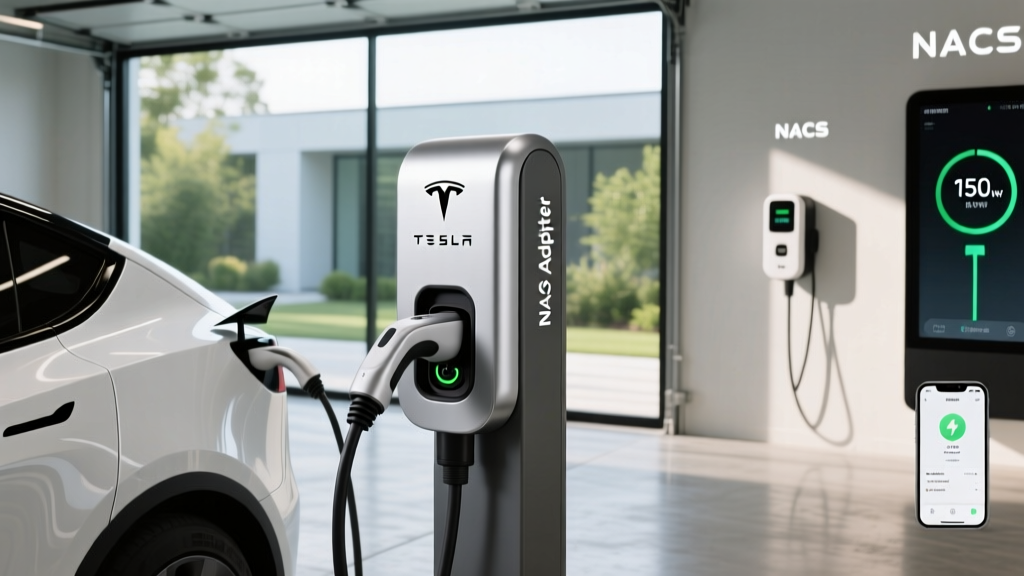
If you drive a non-Tesla electric vehicle in 2026, the Tesla Supercharger network — now commonly called the NACS (North American Charging Standard) network — is likely the most reliable DC fast-charging option on your road-trip route. With over 20,000 Supercharger stalls across North America and growing, Tesla opened access to competing EVs starting in 2024, and by 2026 most major automakers have either adopted the NACS port natively or offer a factory adapter. But the adapter ecosystem can be confusing: which plug do you need, how fast will you actually charge, and what are the real limitations when a CCS1-equipped EV plugs into a NACS stall?
This guide breaks down every Tesla Supercharger adapter scenario, the charging speeds you can expect, and how home charging fits into the picture so you can plan both daily top-ups and cross-country trips with confidence.
Why the Tesla Supercharger Adapter Matters in 2026
For years, Tesla owners enjoyed a near-monopoly on reliable long-distance EV charging. The proprietary Tesla connector (now standardized as NACS) paired with the Supercharger network delivered consistent 150–250 kW peak speeds, functional stall screens, and seamless plug-and-charge billing. Meanwhile, non-Tesla EVs relied on CCS1 or CHAdeMO connectors and a patchwork of third-party networks — Electrify America, EVgo, ChargePoint — with notoriously inconsistent uptime.
That gap has narrowed but not disappeared. According to fueleconomy.gov, DC fast-charging infrastructure has grown significantly, yet Supercharger stalls still lead in reliability metrics reported by EV owners. Accessing them with a non-Tesla EV requires either:
- A NACS-to-CCS1 adapter (for EVs with a CCS1 port, like most 2022–2025 Hyundai, Kia, VW, and BMW models)
- A factory-supplied or aftermarket NACS adapter (for EVs whose automaker has transitioned to NACS but shipped early units with CCS1)
- A built-in NACS port (standard on most 2025+ Ford, GM, Rivian, and Volvo EVs — no adapter needed)
- A NACS-to-CHAdeMO adapter (for older Nissan Leaf and Mitsubishi Outlander PHEV owners — limited availability)
Charging Levels Explained: kW, Miles per Hour, and What Each Level Does
Before evaluating adapters, you need clarity on the three charging levels. The most common mistake in EV discussions is confusing kW (kilowatts — the rate of power delivery, like water pressure) with kWh (kilowatt-hours — the energy stored in your battery, like the size of the tank). An adapter's job is to bridge a physical connector gap; it does not change the kW rate your EV can accept.
| Level | Voltage | Max Power (kW) | Typical Miles Added/Hour | Best For |
|---|---|---|---|---|
| Level 1 | 120V AC | 1.4–1.9 kW | 3–5 miles | Overnight trickle, PHEVs, emergencies |
| Level 2 | 240V AC | 7.2–19.2 kW | 20–60 miles | Daily home & workplace charging |
| DC Fast Charge | 400–800V DC | 50–350 kW | 150–1,200+ miles (at peak) | Road trips, rapid top-ups |
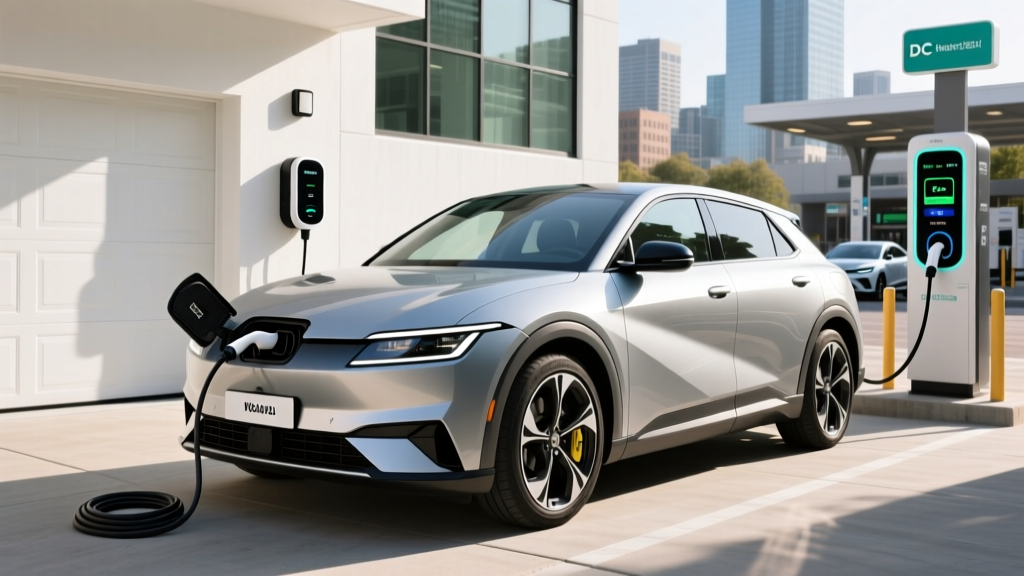
A Tesla Supercharger adapter only applies to DC fast charging. Your home Level 2 setup uses a different connector (J1772 for non-Tesla EVs, or the NACS connector if you've upgraded your wall unit). Most Supercharger stalls currently deliver a peak of 150 kW (V2) or 250 kW (V3), with newer V4 posts rated up to 350 kW for compatible 800V-architecture EVs like the Hyundai Ioniq 5 and Kia EV6.
Connector Compatibility: Which Tesla Supercharger Adapter Fits Your EV?
The adapter you need depends entirely on the charge port your vehicle was built with. Here's the compatibility matrix for 2026 EVs:
| EV Port Type | Example Vehicles | Adapter Needed for Supercharger | Typical Adapter Cost |
|---|---|---|---|
| NACS (native) | 2025+ Ford F-150 Lightning, GM Equinox EV, Rivian R1S/R1T (2025+), Tesla (all years) | None — plug directly into Supercharger | $0 |
| CCS1 | 2022–2024 Hyundai Ioniq 5/6, Kia EV6/EV9, VW ID.4, BMW iX, most pre-2025 non-Tesla EVs | NACS-to-CCS1 adapter | $150–$250 |
| CHAdeMO | Nissan Leaf (all years), Mitsubishi Outlander PHEV (older) | NACS-to-CHAdeMO adapter (limited availability) | $300–$500 |
| Tesla (pre-2025, proprietary) | All Tesla models | None — native Supercharger access | $0 |
Critical note on CHAdeMO: The NACS-to-CHAdeMO adapter market is thin. Lectron and a few smaller brands offer them, but supply is limited and peak charging speed is often capped at 50 kW due to the CHAdeMO protocol's limitations — far below what a V3 Supercharger can deliver. If you drive a Nissan Leaf, your better road-trip strategy may involve planning around Electrify America or EVgo CHAdeMO-equipped stations rather than relying on Supercharger access.
Real Charging Speeds: What to Expect With a Tesla Supercharger Adapter
Plugging a CCS1 EV into a Supercharger through an adapter does not reduce your vehicle's peak charge acceptance rate — the adapter is a passive physical bridge, not a power limiter. However, your actual charging speed depends on several factors:
- Your EV's maximum DC charge rate: A Hyundai Ioniq 5 with its 800V architecture can accept up to 240 kW peak, meaning it will take full advantage of a V3 Supercharger's 250 kW output. A Chevy Bolt EV, capped at ~55 kW DC, will charge at that rate regardless of the stall's capability.
- Charge curve taper: EVs charge fastest between roughly 10–40% State of Charge (SoC). Above 80%, the battery management system deliberately slows charging to protect cell longevity. A "10–80% in 18 minutes" spec assumes preconditioned battery and optimal conditions.
- Stall generation: V2 Superchargers peak at 150 kW; V3 at 250 kW; V4 at up to 350 kW. The Tesla app and in-car navigation will show which generation is at your destination.
- Battery temperature: Cold batteries charge slower. Preconditioning (available on most modern EVs via navigation routing to a charger) warms the pack for faster acceptance.
Charging Time Examples: 10–80% at a 250 kW V3 Supercharger (via adapter)
| Vehicle | Battery (kWh usable) | Peak DC Rate | 10–80% Time (approx.) |
|---|---|---|---|
| Hyundai Ioniq 5 (2025) | 77.4 kWh (NMC) | 240 kW | ~18 min |
| VW ID.4 (2025) | 77 kWh (NMC) | 175 kW | ~28 min |
| Ford Mustang Mach-E (2024, CCS1) | 75.7 kWh (NMC) | 150 kW | ~34 min |
| Chevy Bolt EV (2023) | 65 kWh (NMC) | 55 kW | ~60 min |
These times assume a preconditioned battery at moderate ambient temperature. In sub-freezing weather without preconditioning, add 30–50% to these figures.
Home Charging Setup: Electrical Requirements, Costs, and Panel Upgrades
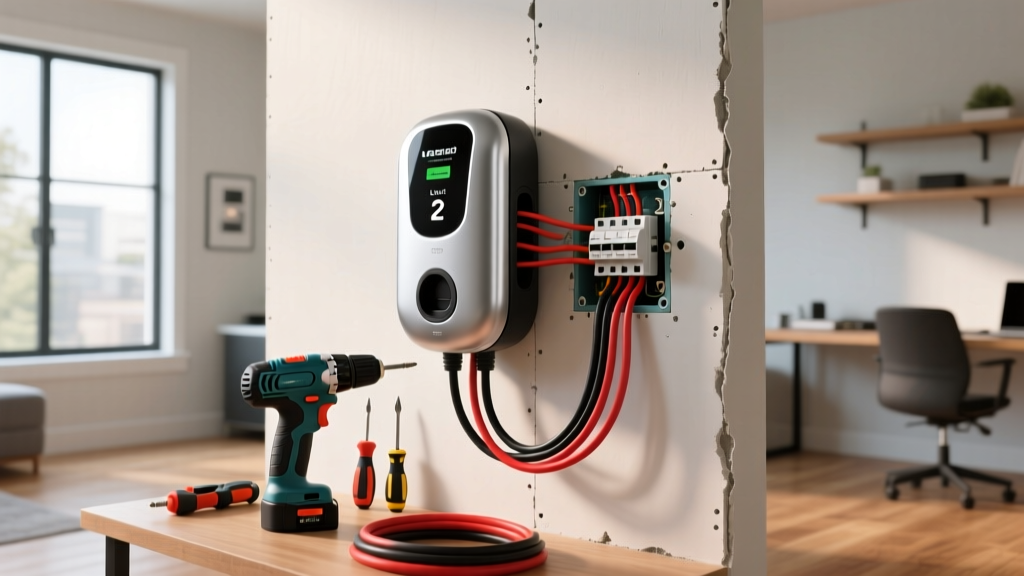
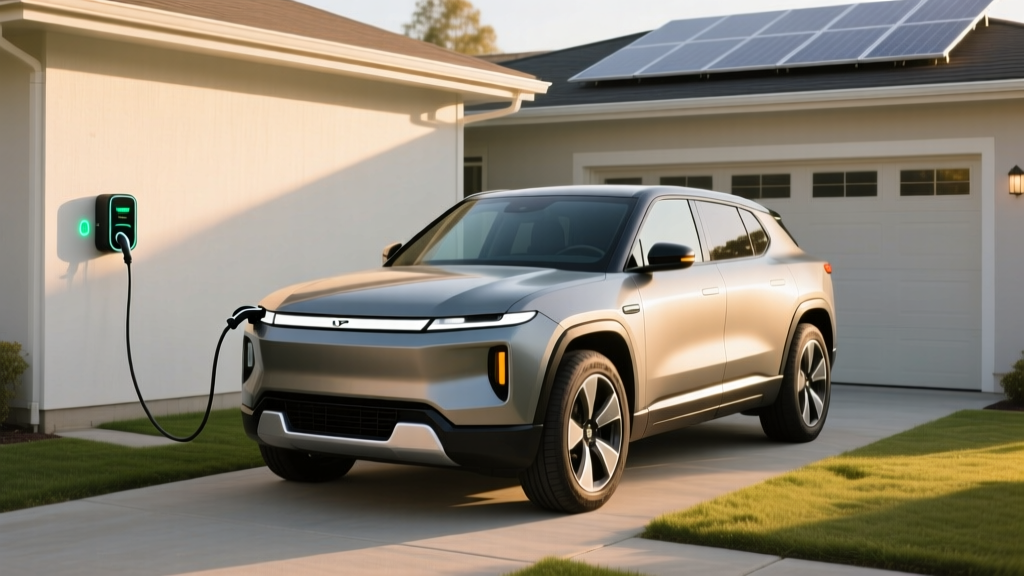
While the Tesla Supercharger adapter solves road-trip charging, 80% or more of EV charging happens at home. If you're installing a Level 2 home charger — whether a NACS-connector unit like the Tesla Wall Connector or a J1772 unit like the ChargePoint Home Flex — the electrical requirements are the same.
Electrical Requirements for a Level 2 Home Charger
- Voltage: 240V (same as a dryer or oven outlet)
- Amperage: 40A circuit for a 32A continuous charger, or 60A circuit for a 48A continuous charger (NEC requires circuits rated at 125% of continuous load)
- Dedicated circuit: Your charger must have its own breaker — it cannot share a circuit with other appliances
- GFCI protection: Required by NEC 2020 and later for EV charging outlets; hardwired chargers may bypass this requirement depending on local code
- Outdoor rating: If your charger is mounted outside, it must carry a NEMA 4 (weatherproof) rating
How Much Does It Cost to Install a Home EV Charger?
Installation costs vary enormously based on your home's electrical panel capacity and the distance from the panel to the charger location. Here's a realistic breakdown:
| Component | Low Estimate | High Estimate | Notes |
|---|---|---|---|
| Level 2 charger unit (hardware) | $350 | $750 | Depends on brand, power output, smart features |
| Electrician labor (standard install) | $500 | $1,500 | Short run from panel, no upgrades needed |
| Permit fees | $50 | $300 | Varies by municipality |
| Electrical panel upgrade (if needed) | $1,500 | $4,000+ | Required if panel is 100A or has no spare capacity |
| Total (no panel upgrade) | $900 | $2,550 | Most newer homes with 200A panels |
| Total (with panel upgrade) | $2,400 | $6,550+ | Older homes with 100A service |
Panel upgrade reality: Homes built before 1990 often have 100-amp electrical panels that simply cannot support a 40A or 60A dedicated EV circuit alongside existing loads (HVAC, electric oven, dryer). A panel upgrade to 200A is a major expense but also increases your home's resale value. Always get a licensed electrician to perform a load calculation before committing to a charger install.
Home Charger Equipment Picks for 2026
Whether your EV uses NACS or J1772 at home, these are the Level 2 chargers we recommend based on reliability, power output, and smart features:
Tesla Wall Connector (Gen 4)
- Power output: Up to 11.5 kW (48A on a 60A circuit)
- Connector: NACS (native Tesla plug)
- Cable length: 24 ft
- Smart features: Wi-Fi, OTA updates, Power-Sharing with multiple units, integrates with Tesla app
- Price: ~$475
- Best for: Tesla owners and NACS-equipped Ford/GM/Rivian drivers who want maximum home charge speed
ChargePoint Home Flex (NACS version, 2025+)
- Power output: Up to 12 kW (50A on a 60A circuit, adjustable)
- Connector: NACS (also available in J1772)
- Cable length: 23 ft
- Smart features: Wi-Fi, Alexa/Google Home integration, scheduling, energy tracking via app
- Price: ~$600
- Best for: Multi-EV households or drivers who want detailed energy monitoring
Emporia Level 2 Smart Charger
- Power output: Up to 11.5 kW (48A)
- Connector: J1772 (use with your EV's J1772-to-NACS adapter for home, or plug directly into CCS1/J1772 port)
- Cable length: 24 ft
- Smart features: Wi-Fi, energy dashboard pairs with Emporia Vue home energy monitor, solar integration
- Price: ~$400
- Best for: Budget-conscious buyers with solar panels who want whole-home energy visibility
Cost to Charge: Home vs. Public DC Fast Charging vs. Gas
One of the strongest arguments for EV ownership is fuel cost savings — but the gap narrows significantly when you rely on public DC fast charging rather than home Level 2.
| Scenario | Rate | Cost per kWh | Cost per Mile (at 3 mi/kWh) |
|---|---|---|---|
| Home Level 2 (off-peak utility rate) | $0.08–$0.14/kWh | $0.11 avg | $0.037 |
| Home Level 2 (peak utility rate) | $0.18–$0.30/kWh | $0.24 avg | $0.080 |
| Tesla Supercharger (NACS, via adapter) | $0.28–$0.48/kWh | $0.36 avg | $0.120 |
| Electrify America / EVgo DC fast | $0.35–$0.55/kWh | $0.45 avg | $0.150 |
| Gas car (28 MPG combined, $3.40/gal) | — | — | $0.121 |
The takeaway: Home off-peak charging delivers roughly 3× cost savings per mile versus gasoline. But if you exclusively rely on DC fast charging — Supercharger or otherwise — your per-mile cost approaches or even exceeds that of an efficient gas car. This is why home charging access remains the single biggest predictor of EV ownership satisfaction.
For the latest IRS rules on the §30D federal EV tax credit, which can offset up to $7,500 of a new EV purchase (subject to MSRP caps, buyer income limits, and battery-sourcing requirements), consult a tax professional. Some utilities also offer rebates of $250–$1,000 for Level 2 charger installation.
Safety, Code Compliance, and Installation Best Practices
EV chargers draw sustained high current for hours — this is fundamentally different from short-burst appliances like a microwave. Proper installation isn't optional:
- Always use a licensed electrician. DIY EV charger installs are a leading cause of electrical fires in garages. The sustained 32–48A draw stresses connections that a brief appliance test wouldn't reveal.
- Hardwire vs. plug: Hardwired chargers (no plug, direct junction-box connection) avoid the need for a 240V receptacle and GFCI breaker, which can add $100–$200 to parts cost. Hardwired also eliminates the risk of someone unplugging the charger for another use.
- NEMA 14-50 outlet: If you prefer a plug-in charger for portability, a NEMA 14-50 receptacle on a 50A breaker is the standard. Ensure your electrician uses an industrial-grade outlet (Hubbell or Bryant brand) — residential-grade 14-50 outlets have been linked to overheating under sustained EV loads.
- Permit and inspection: Most jurisdictions require an electrical permit for EV charger installation. The inspection ensures proper wire gauge, breaker sizing, and grounding. Skipping the permit risks voiding your homeowner's insurance if an electrical fire occurs.
Tesla Supercharger Adapter FAQ
Can I use a Tesla Supercharger with my non-Tesla EV in 2026?
Yes, if your EV has a CCS1 port and you have a NACS-to-CCS1 adapter, or if your EV was built with a native NACS port (most 2025+ Ford, GM, Rivian, and Volvo models). Tesla's "Open Supercharger" program supports non-Tesla EVs at designated stalls — check the Tesla app or your EV's built-in charger map for compatible locations. Not every Supercharger stall is open to non-Tesla vehicles; Tesla designates specific stalls with Magic Dock integrated adapters at some locations.
Does a Tesla Supercharger adapter reduce charging speed?
No. A quality NACS-to-CCS1 adapter is a passive connector bridge — it does not limit power. Your EV's onboard charge controller and battery management system determine the maximum kW it accepts. However, some older CCS1 EVs (like the Chevy Bolt EV at 55 kW peak) are hardware-limited regardless of the stall's capability.
How much does a NACS-to-CCS1 adapter cost?
Between $150 and $250 for reputable brands like Lectron, Alectron, or the official Ford/Fast Charging Adapter. Tesla also sells a CCS-to-NACS adapter for ~$250. Avoid no-name adapters from marketplace sellers — poorly manufactured adapters can overheat under sustained high-current DC charging.
Will my EV's warranty be affected by using a third-party adapter?
Under the Magnuson-Moss Warranty Act, using a third-party adapter cannot void your vehicle's warranty unless the manufacturer can prove the adapter caused specific damage. That said, stick to UL-listed or well-reviewed adapters and inspect them regularly for heat damage or pin wear.
What's the difference between NACS and CCS1 connectors?
NACS (Tesla's connector, now standardized by SAE as J3400) is physically smaller and lighter than CCS1, uses the same pins for both AC and DC charging, and supports up to 350 kW in V4 Supercharger implementations. CCS1 (Combined Charging System) is larger, uses separate AC and DC pin configurations, and is the legacy standard on most non-Tesla EVs built before 2025. The industry is rapidly transitioning to NACS as the North American standard.
Do I still need a home charger if I have Supercharger adapter access?
Absolutely. DC fast charging — even at Supercharger speeds — is more expensive per mile than home Level 2 charging and puts more thermal stress on your battery over time. For daily use, a home Level 2 charger at off-peak utility rates delivers the lowest cost per mile (~$0.037 vs. ~$0.12 at a Supercharger) and is better for long-term battery State of Health (SoH). Reserve DC fast charging for road trips and occasional rapid top-ups.