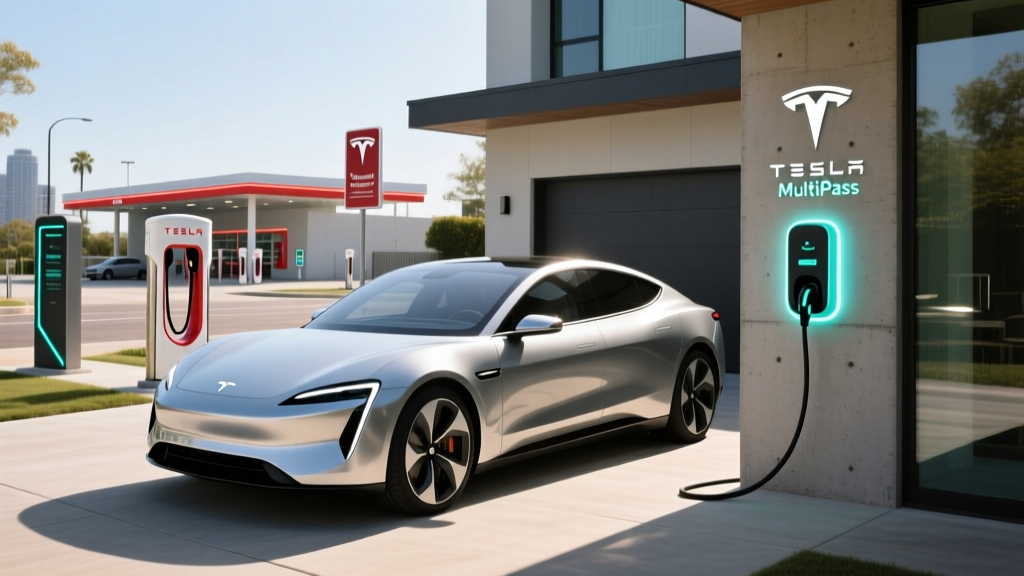
If you own a Tesla—or are shopping for one—you've likely encountered the term Tesla MultiPass charging while researching how to keep your vehicle powered across home, destination, and highway scenarios. MultiPass isn't a single product; it's Tesla's ecosystem approach to charging access that bundles home wall connector capability, the expanding Supercharger network, Destination Charging partners, and the NACS adapter ecosystem that now opens Tesla infrastructure to non-Tesla EVs (and vice versa). Understanding how each layer works, what it costs, and where the bottlenecks live is the difference between seamless EV ownership and frustrating charging delays.
This guide breaks down every charging tier in the Tesla MultiPass ecosystem with exact kW figures, real-world install costs, connector compatibility, and per-mile economics so you can plan your charging strategy with precision.
Charging Levels Explained: kW, Miles Per Hour, and 10-80% Times
The single most important distinction in EV charging is between kW (kilowatts), which measures power flow rate—how fast energy moves into your battery—and kWh (kilowatt-hours), which measures energy capacity—how much total energy the battery holds. Think of kW as the width of a hose and kWh as the size of the bucket. A wider hose (higher kW) fills the bucket faster, but the bucket size (battery kWh) determines total range.
| Charging Level | Voltage / Amperage | Max Power (kW) | Miles of Range Per Hour | Typical Use Case |
|---|---|---|---|---|
| Level 1 (Standard Outlet) | 120V / 12A | 1.4 kW | 3–5 miles/hr | Overnight trickle, PHEVs, emergencies |
| Level 2 (Home / Destination) | 240V / 32–48A | 7.7–11.5 kW | 25–44 miles/hr | Daily home charging, workplace, hotels |
| DC Fast Charging (Supercharger V3) | 400–800V DC | 250 kW | ~200 miles in 15 min | Road trips, highway corridors |
| DC Fast Charging (Supercharger V4) | Up to 900V DC | 350+ kW (announced) | ~250+ miles in 15 min | Next-gen Tesla and NACS-equipped EVs |
Real-world charging time examples: A Tesla Model Y Long Range (75 kWh usable battery) charging from 10–80% on a V3 Supercharger (250 kW peak) takes approximately 22–25 minutes. On a 48-amp Level 2 home wall connector (11.5 kW), that same 10–80% session takes roughly 5.5 hours. Level 1 would require over 40 hours—making it impractical for BEVs but viable for PHEVs with smaller batteries.
Home Charger Installation: Electrical Requirements and Real Costs
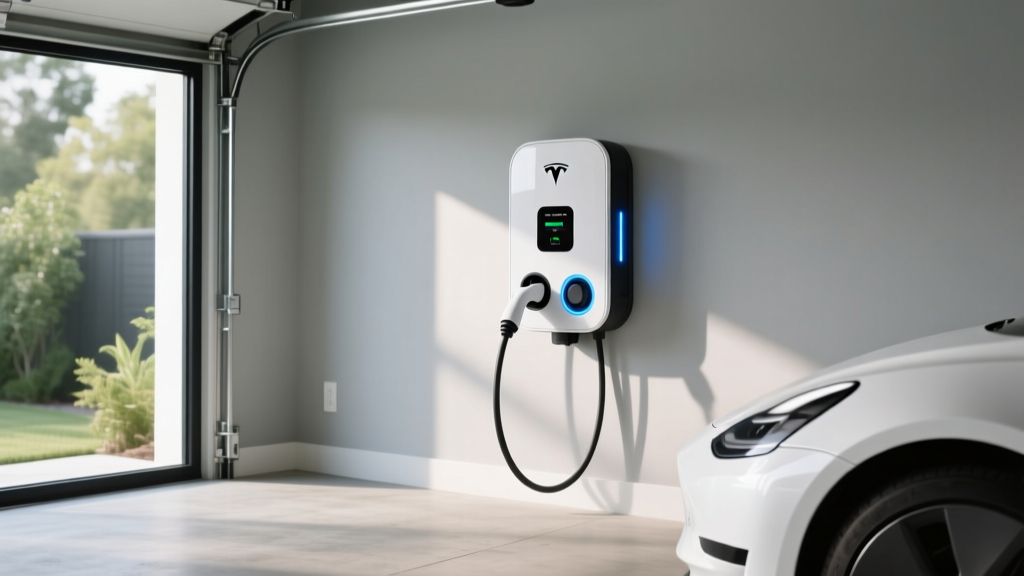
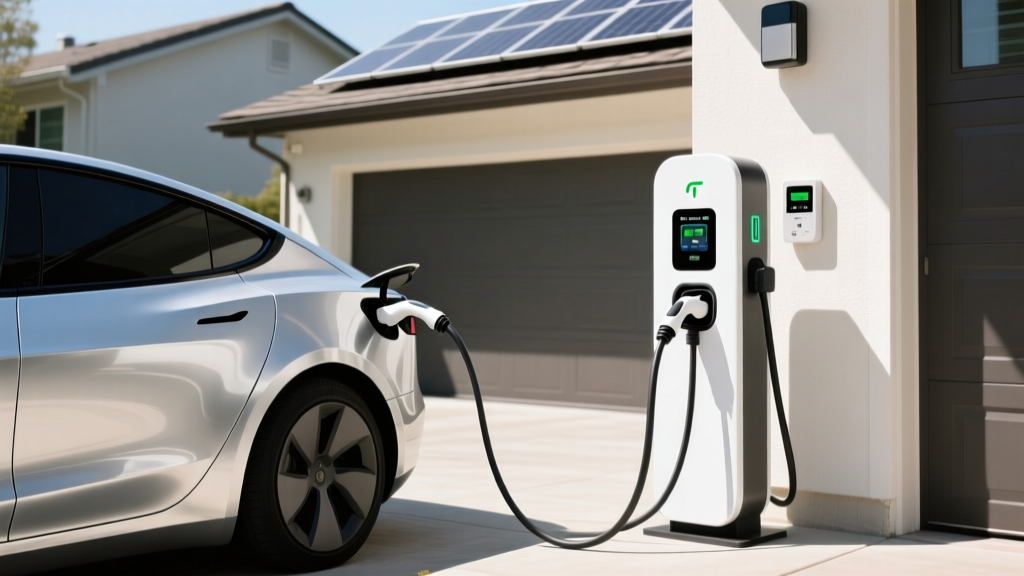
The Tesla Wall Connector is the centerpiece of MultiPass home charging, delivering up to 11.5 kW (48 amps) on a 60-amp dedicated circuit. But the sticker price of the charger itself is only part of the equation. Installation costs vary dramatically based on your home's electrical panel capacity, the distance from panel to charger location, and local permitting requirements.
Electrical Requirements for a Tesla Wall Connector
- Voltage: 240V (split-phase, standard US residential)
- Amperage: 48A continuous draw requires a 60A dedicated breaker (NEC 125% rule for continuous loads)
- Wire gauge: 6 AWG copper for runs under 50 feet; 4 AWG for longer runs
- Circuit: Dedicated—cannot share with dryer, oven, or HVAC
- GFCI protection: Required by NEC 2020/2023 for outdoor installations in most jurisdictions
Panel Upgrade: The Hidden Cost Many Buyers Miss
If your home has a 100-amp main panel (common in homes built before 2000), adding a 60-amp EV circuit may exceed your panel's capacity—especially if you already run electric heat, a dryer, and an oven. A licensed electrician will perform a load calculation per NEC Article 220 to determine if your panel can handle the addition. If not, a panel upgrade to 200 amps typically costs $1,500–$3,000 before the charger circuit is even installed.
| Component | Low-End Cost | High-End Cost | Notes |
|---|---|---|---|
| Tesla Wall Connector (hardware) | $400 | $475 | Gen 3, 24ft cable, Wi-Fi enabled |
| Electrician labor (standard install) | $500 | $1,200 | Panel to garage, <30ft run |
| Electrical permit | $50 | $200 | Varies by municipality |
| Panel upgrade (if needed) | $1,500 | $3,000 | 100A → 200A service upgrade |
| Conduit / trenching (long runs) | $300 | $1,500 | Detached garage, >50ft runs |
| Total (no panel upgrade) | $950 | $1,875 | Most homes with 200A panels |
| Total (with panel upgrade) | $2,450 | $4,875 | Older homes needing service upgrade |
Always hire a licensed electrician and pull permits. Unpermitted work can void homeowners insurance and create fire hazards. The Tesla Wall Connector product page lists certified installer networks by ZIP code.
Connector Compatibility: NACS, CCS, and the Adapter Landscape
Tesla's North American Charging Standard (NACS) connector has become the de facto industry standard as of 2025–2026, with Ford, GM, Rivian, Volvo, BMW, and most major automakers adopting it. But if you're driving a non-Tesla EV with a CCS1 port—or a Tesla owner wanting to use legacy CCS infrastructure—adapter compatibility matters.
| Connector Type | Native Vehicles | Supercharger Access | Adapter Required? |
|---|---|---|---|
| NACS (Tesla) | Tesla (all), Ford F-150 Lightning, GM Ultium vehicles, Rivian (2025+), Volvo EX30/EX90 | Direct plug-in at all Superchargers | None for Tesla Superchargers |
| CCS1 | Hyundai Ioniq 5/6, Kia EV6/EV9, VW ID.4, BMW iX (pre-2025) | Yes—via NACS-to-CCS adapter at select Superchargers | Tesla CCS adapter (~$175) or third-party |
| CHAdeMO | Nissan Leaf (legacy) | No—Superchargers do not support CHAdeMO | No viable adapter; use Electrify America, EVgo |
For Tesla owners: Your vehicle's native NACS port works at every Supercharger and Tesla Destination Charger without adapters. Tesla also sells a CCS1 adapter ($175) that enables charging at non-Tesla DC fast stations—useful in areas where Electrify America or EVgo chargers are more available than Superchargers.
For non-Tesla NACS-equipped EVs (2025+ models): You can now access the Supercharger network directly using your native NACS plug. The Tesla app provides station navigation and payment.
For CCS1-equipped EVs: Ford, GM, and Rivian provide NACS adapters with vehicle purchase or as accessories. You'll need the adapter to access Superchargers. Per fueleconomy.gov, adapter use does not significantly impact charging speed, though some early adapters limited peak kW to 150—check your adapter's rated throughput.
Cost to Charge: Home vs. Public vs. Supercharger Per-Mile Economics
One of the strongest arguments for EV ownership is fuel cost savings—but the exact savings depend entirely on where and when you charge. Let's compare real cost-per-mile figures across scenarios.
| Charging Scenario | Avg $/kWh | Cost Per Mile (Model Y, 3.5 mi/kWh) | Annual Cost (12,000 mi) |
|---|---|---|---|
| Home (off-peak utility rate) | $0.08–$0.12 | $0.023–$0.034 | $275–$410 |
| Home (standard residential rate) | $0.14–$0.18 | $0.040–$0.051 | $480–$620 |
| Tesla Supercharger (V3) | $0.28–$0.36 | $0.080–$0.103 | $960–$1,235 |
| Public Level 2 (ChargePoint, EVgo) | $0.25–$0.49 | $0.071–$0.140 | $855–$1,680 |
| Gasoline (25 MPG avg, $3.40/gal) | — | $0.136 | $1,632 |
To minimize public charging costs, use the Tesla app or Tesla's Supercharger map to check per-kWh pricing before plugging in. Many Superchargers now offer time-of-use pricing, with off-peak rates 20–30% lower during overnight hours.
Recommended Charging Equipment for the MultiPass Setup
Here are the top charger picks for Tesla owners building a complete MultiPass charging strategy across home and travel scenarios.
Tesla Wall Connector (Gen 3)
- Power Output: Up to 11.5 kW (48A / 240V)
- Connector: NACS native, 24-foot cable
- Smart Features: Wi-Fi, OTA updates, power sharing between multiple units, access control
- Price: ~$475
- Best For: Tesla-exclusive households, fastest Level 2 home charging
ChargePoint Home Flex
- Power Output: Up to 12 kW (50A / 240V), configurable down to 16A
- Connector: NACS or J1772 (select at purchase), 23-foot cable
- Smart Features: Wi-Fi, scheduling, Alexa integration, detailed energy reporting
- Price: ~$599 (NACS version)
- Best For: Multi-EV households with Tesla + non-Tesla vehicles
Tesla Mobile Connector
- Power Output: Up to 3.0 kW (120V) or 7.2 kW (240V with NEMA 14-50 adapter)
- Connector: NACS native, interchangeable plug adapters
- Smart Features: None—basic charger, no Wi-Fi
- Price: ~$200 (included with some Tesla models)
- Best For: Travel backup, rental properties, budget installs with existing 240V outlet
Grizzl-E Smart
- Power Output: Up to 9.6 kW (40A / 240V)
- Connector: NACS or J1772, 24-foot cable
- Smart Features: OCPP compatible, adjustable amperage, extreme cold rated (-40°F)
- Price: ~$449
- Best For: Cold-climate owners, budget-conscious buyers wanting smart features
Safety, Code, and Preconditioning: What MultiPass Users Must Know
NEC Code and Safety Requirements
Every home EV charger installation must comply with the National Electrical Code (NEC Article 625) and local amendments. Key requirements include:
- Dedicated circuit: Your EV charger cannot share a breaker with other appliances
- GFCI protection: Required for all outdoor receptacles and increasingly mandated for indoor garage installations (NEC 2023)
- Outdoor-rated equipment: If mounted outside, the charger must carry a NEMA 4 or IP65 rating—the Tesla Wall Connector is rated for outdoor use
- Permit and inspection: Most jurisdictions require a permit ($50–$200) and a post-install inspection; skipping this risks insurance claim denial
Battery Preconditioning for Faster DC Charging
When you navigate to a Supercharger in your Tesla, the vehicle automatically begins preconditioning the battery—heating it to the optimal temperature window (roughly 95–115°F) for maximum charge acceptance. This can reduce 10–80% charging time by 5–8 minutes in cold weather. Non-Tesla EVs using Superchargers via adapter may not precondition as effectively, resulting in slightly slower initial charge rates until the battery warms naturally.
Cold-Weather Range and Charging Impact
In sub-freezing temperatures, expect 20–30% range reduction and 15–25% slower DC fast charging speeds. The Tesla Model Y Long Range (EPA 310 miles) may deliver 220–250 real-world miles in winter highway driving at 70 mph. Always plan Supercharger stops with a 20% buffer in cold conditions.
Tesla MultiPass Charging FAQ
How much does it cost to install a home Tesla charger?
A standard Tesla Wall Connector installation with a 60-amp circuit typically costs $950–$1,875 including hardware, electrician labor, and permits. If your home requires a 200-amp panel upgrade, add $1,500–$3,000. Always get a load calculation from a licensed electrician before committing.
How fast will each charging level add range to my Tesla?
Level 1 (120V) adds 3–5 miles per hour. Level 2 at 48 amps (11.5 kW) adds roughly 44 miles per hour—enough to fully replenish overnight. A V3 Supercharger (250 kW peak) adds approximately 200 miles in 15 minutes during the optimal 10–30% SoC window, tapering significantly above 50%.
Which connector and charger are compatible with my EV?
All current Tesla vehicles use the NACS connector natively. For non-Tesla EVs: 2025+ Ford, GM, Rivian, and Volvo models ship with NACS ports and Supercharger access. Older CCS1 vehicles (Hyundai Ioniq 5, Kia EV6, VW ID.4) require a NACS-to-CCS adapter to use Superchargers. CHAdeMO vehicles (Nissan Leaf) cannot use the Supercharger network.
How much does charging cost per mile compared to gasoline?
Home off-peak charging costs $0.02–$0.03 per mile in a Model Y—roughly 5x cheaper than gasoline at $0.14/mile (25 MPG, $3.40/gal). Supercharger costs average $0.08–$0.10 per mile, still 25–40% below gasoline. The optimal MultiPass strategy maximizes home charging for daily driving and reserves Superchargers for road trips.
What electrical upgrades might my home need for a Level 2 charger?
Homes with 100-amp electrical panels often require a panel upgrade to 200 amps ($1,500–$3,000) to accommodate a 60-amp dedicated EV circuit alongside existing loads. Homes with 200-amp panels usually need only the dedicated circuit run. An electrician will perform an NEC Article 220 load calculation to determine your specific needs. Some utilities offer rebates for panel upgrades that support EV charging—check with your local provider.
Can I use Tesla Superchargers with a non-Tesla EV?
Yes, if your vehicle has a native NACS port (2025+ Ford, GM, Rivian, Volvo) or you have a CCS1-to-NACS adapter. Tesla's Supercharger network is now open to NACS-equipped vehicles from participating automakers. Pricing is typically $0.28–$0.36/kWh, though Tesla occasionally offers membership discounts through the Tesla app for non-Tesla owners.