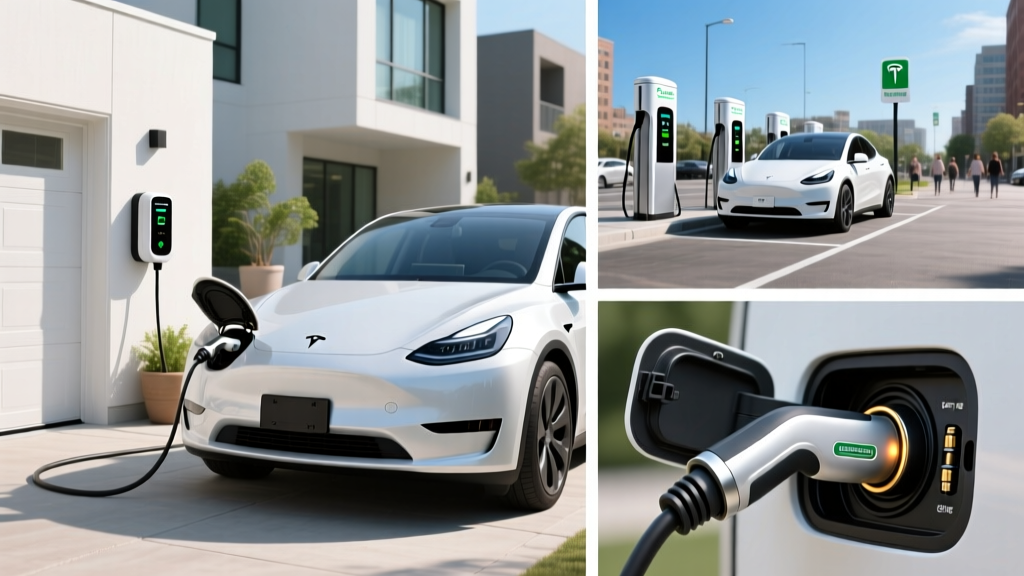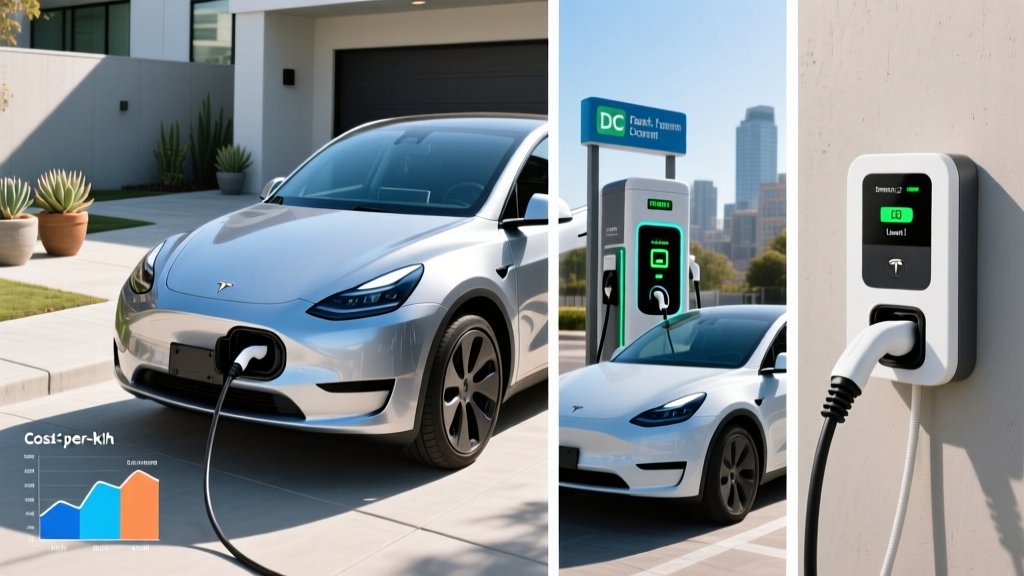
The Tesla Model S remains one of the most efficient long-range electric sedans on the market, with the 2026 Model S Long Range achieving an EPA-estimated 402 miles on a full charge. But that sticker number only tells part of the story. Real-world mileage range for the Tesla Model S depends heavily on how you charge, when you charge, and what equipment you use at home and on the road.
This guide covers everything you need to know about charging the Model S to preserve its range, minimize costs, and avoid common home-installation pitfalls — from electrical panel upgrades to choosing the right Level 2 wall connector.
2026 Tesla Model S Range and Battery Specs
Before we talk charging hardware, let's ground the discussion in the numbers. The current-generation Model S uses a 100 kWh battery pack (approximately 95 kWh usable) with a dual-motor all-wheel-drive powertrain. Tesla does not publish exact cell chemistry for the Model S, but it is widely confirmed to use an NMC (nickel manganese cobalt) configuration optimized for energy density.
| Spec | Model S Long Range | Model S Plaid |
|---|---|---|
| EPA Range | 402 miles | 359 miles |
| Battery (Usable) | ~95 kWh (NMC) | ~95 kWh (NMC) |
| Efficiency | 124 MPGe (27 kWh/100mi) | 116 MPGe (29 kWh/100mi) |
| Peak DC Fast Charge | 250 kW | 250 kW |
| 10–80% DCFC Time | ~27 minutes | ~27 minutes |
| Max Level 2 AC Charge | 11.5 kW (48A) | 11.5 kW (48A) |
| 0–60 mph | 3.1 seconds | 1.99 seconds |
| Base MSRP | $79,990 | $94,990 |
Charging Levels Explained: Speeds and Range Added Per Hour
Understanding the three charging levels is essential for planning both daily driving and road trips. Note that kW (kilowatts) measures the rate of power delivery — how fast energy flows into the battery — while kWh (kilowatt-hours) measures the total energy capacity of the battery itself. Think of kW as the flow rate of a hose and kWh as the size of the bucket.
| Level | Voltage | Max Power (kW) | Miles of Range Added Per Hour | Best For |
|---|---|---|---|---|
| Level 1 (120V) | 120V / 12A | ~1.4 kW | ~3–4 miles/hr | Emergency / overnight trickle |
| Level 2 (240V) | 240V / 48A | 11.5 kW | ~34–40 miles/hr | Daily home charging |
| DC Fast Charge | 400V+ DC | 250 kW (peak) | ~750+ miles/hr (at peak) | Road trips, rapid top-ups |
For a 95 kWh usable battery, a full Level 2 charge from 0–100% takes approximately 9–10 hours. Most owners charge from 20–80% daily, which takes roughly 5–6 hours on a 48-amp Level 2 circuit — easily completed overnight.
Home Charger Installation: Requirements, Costs, and Panel Upgrades
Installing a Level 2 home charger is the single most impactful upgrade for daily EV ownership. For the Model S, which can accept up to 11.5 kW on Level 2 (48 amps continuous), you need a 60-amp dedicated circuit. The National Electrical Code requires circuits to be rated at 125% of the continuous load, so a 48A charger requires a 60A breaker.
Electrical Requirements
- Voltage: 240V split-phase (standard US residential)
- Amperage: 60A dedicated circuit for full 48A continuous charging
- Wire gauge: 6 AWG copper (or 4 AWG aluminum) for runs up to 50 feet; larger gauge for longer runs
- Breaker: 60A double-pole breaker
- GFCI protection: Required for outdoor installations per NEC 2020+ in most jurisdictions; some indoor garage installations may also require it depending on local code
Panel Upgrade Considerations
This is where costs can escalate. Most modern homes have a 200A main electrical panel. Before adding a 60A EV circuit, an electrician will perform a load calculation to determine if your panel has sufficient spare capacity. Homes with electric ranges, electric dryers, central A/C, and electric water heaters may be near capacity already.
If your panel is maxed out, you have three options:
- Downsize the charger circuit: Install a 40A breaker (32A continuous) for ~9.2 kW — still adds ~30 miles/hr and is sufficient for most daily needs.
- Install a smart load management device: Devices like the Emporia Smart Load Center dynamically share capacity between the EV charger and other appliances, avoiding a panel upgrade.
- Upgrade to a 400A service: Costs $2,000–$5,000+ depending on utility requirements, but future-proofs for additional EVs, heat pumps, or solar.
| Component | Typical Cost Range | Notes |
|---|---|---|
| Level 2 Charger (Equipment) | $400 – $700 | Tesla Wall Connector, ChargePoint, Emporia |
| Electrician Labor (standard install) | $600 – $1,500 | Varies by run length, wall type, conduit |
| Electrical Materials (wire, breaker, conduit) | $150 – $400 | Longer runs = more wire cost |
| Permit & Inspection | $100 – $300 | Required in most jurisdictions |
| Panel Upgrade (if needed) | $2,000 – $5,000 | Only if load calculation fails |
| Total (no panel upgrade) | $1,250 – $2,900 | Most common scenario |
| Total (with panel upgrade) | $3,250 – $7,900 | Older homes or high-load panels |
Always hire a licensed electrician and pull a permit. Unpermitted work can void home insurance and create fire risk. Check whether your utility offers rebates — many cover $250–$500 of installation cost or offer discounted off-peak charging rates.
Connector Compatibility: NACS, CCS1, and Adapters
The Tesla Model S uses the North American Charging Standard (NACS) connector natively. As of 2026, NACS has become the dominant light-duty EV connector in the US, with Ford, GM, Rivian, Hyundai, and most other manufacturers adopting it. This means the Model S can charge at Tesla Superchargers without an adapter — and most non-Tesla DC fast chargers now also offer NACS cables.
| Connector Type | Compatibility | Adapter Needed? |
|---|---|---|
| NACS (Tesla native) | Full compatibility — Superchargers, most new public DCFC | None |
| CCS1 | Compatible with adapter | Tesla CCS Adapter (~$175) or third-party |
| CHAdeMO | Limited compatibility | Aftermarket adapter ($200–$400); CHAdeMO stations declining |
| J1772 (Level 2 public) | Compatible with adapter | Tesla Mobile Connector includes J1772 adapter |
For road trips, the Tesla Supercharger network remains the most reliable option. However, carrying a CCS adapter is worthwhile for Electrify America and other networks that may still have CCS-only stalls at some locations. Tesla's in-car navigation automatically routes through compatible chargers and preconditions the battery for optimal charge speed upon arrival.
Charging Cost Per Mile: Home vs. Public vs. Gas Comparison
One of the strongest arguments for the Model S is its low operating cost. Here's how charging expenses compare across scenarios, based on the Model S Long Range's efficiency of approximately 27 kWh per 100 miles (or 0.27 kWh/mile).
| Scenario | Rate | Cost Per kWh | Cost Per Mile | Full "Tank" (0–100%) |
|---|---|---|---|---|
| Home (off-peak utility rate) | $0.12/kWh | $0.12 | $0.032 | $11.40 |
| Home (standard rate) | $0.17/kWh | $0.17 | $0.046 | $16.15 |
| Public Level 2 (ChargePoint/EVgo) | $0.25–$0.40/kWh | $0.32 avg | $0.086 | $30.40 |
| Tesla Supercharger (V3/V4) | $0.28–$0.40/kWh | $0.34 avg | $0.092 | $32.30 |
| Gasoline car (25 MPG, $3.50/gal) | — | — | $0.14 | ~$49 (350 mi) |
Even at public DC fast charging rates, the Model S costs roughly 35% less per mile than a comparable gasoline sedan. Home charging on off-peak rates delivers savings of over 75% per mile. Over 15,000 annual miles, home charging at $0.12/kWh costs about $480 — versus $2,100 for gasoline.
DC Fast Charging Curve Reality: The Model S peaks at 250 kW but only sustains that rate for the first 10–15% of the session. The charge curve tapers progressively: expect ~150 kW average from 10–50%, ~80 kW from 50–70%, and ~40 kW from 70–80%. Charging from 80–100% on DCFC is extremely slow — plan to unplug at 80% on road trips and move on.
Recommended Home Chargers for Tesla Model S
To take full advantage of the Model S's 11.5 kW onboard charger, you need a 48-amp (60A circuit) Level 2 unit. Here are three proven options:
Tesla Wall Connector (Gen 3)
- Power Output: 11.5 kW (48A) on 60A circuit
- Connector: NACS native — no adapter needed
- Cable Length: 24 feet
- Smart Features: Wi-Fi, OTA updates, power sharing between multiple units, load management
- Price: ~$475
- Best For: Tesla-only households wanting seamless integration
Emporia Level 2 EV Charger
- Power Output: 11.5 kW (48A) on 60A circuit; configurable down to 32A/40A
- Connector: J1772 (use Tesla adapter) or NACS version available
- Cable Length: 24 feet
- Smart Features: Energy monitoring, solar integration, scheduling, load management with Emporia Vue panel monitor
- Price: ~$399
- Best For: Solar owners, multi-EV homes, budget-conscious buyers
ChargePoint Home Flex
- Power Output: Up to 12 kW (50A) on 60A circuit; adjustable via DIP switches down to 16A
- Connector: J1772 (Tesla adapter included) or NACS version
- Cable Length: 23 feet
- Smart Features: App scheduling, Alexa integration, energy reports, flexible amperage
- Price: ~$599
- Best For: Mixed-EV households, renters who may move (flexible amp settings)
For a Tesla-exclusive garage, the Tesla Wall Connector is the cleanest choice — native NACS, no adapter fumbling, and power-sharing capability if you add a second EV later. For mixed fleets or homes with solar, the Emporia offers superior energy management at a lower price.
Safety, Code Compliance, and Best Practices
EV charging involves sustained high-current draw — far more demanding than typical household appliances. Follow these safety guidelines:
- Dedicated circuit only: Never share the EV charger circuit with other outlets or appliances.
- Hardwired preferred: Hardwired installations avoid the overheating risk associated with high-amperage NEMA 14-50 receptacles running for hours. If using a receptacle, ensure it is an industrial-grade unit rated for continuous use.
- GFCI for outdoor: Any outdoor installation requires a GFCI breaker per NEC. Indoor garage installations may also require GFCI in some jurisdictions — confirm with your inspector.
- Outdoor-rated equipment: If the charger is mounted outside, verify it carries a NEMA 4 or IP65 rating for weather resistance.
- Cable management: Use a wall-mounted cable organizer to prevent tripping hazards and connector damage.
- Smoke detector: Install a smoke detector near the charging location as an added precaution.
Frequently Asked Questions
How much does it cost to install a home EV charger for a Tesla Model S?
A standard Level 2 installation (60A circuit, hardwired Tesla Wall Connector, short wire run) typically costs $1,250–$2,900 including equipment, electrician labor, materials, and permit. If your electrical panel requires an upgrade to 400A service, add $2,000–$5,000. Always get a load calculation from a licensed electrician before committing.
How fast will each charging level add range to the Model S?
Level 1 (120V) adds approximately 3–4 miles per hour. Level 2 (240V, 48A) adds 34–40 miles per hour. DC fast charging at a Tesla Supercharger (250 kW peak) can add up to 200 miles in approximately 15 minutes under ideal conditions, though the charge curve tapers significantly above 50% state of charge.
Which connector is compatible with the Tesla Model S?
The Model S uses the NACS connector natively, which is compatible with Tesla Superchargers and an expanding number of third-party DC fast chargers. For CCS1 stations (some Electrify America locations), you need the Tesla CCS Adapter (~$175). The Tesla Mobile Connector includes a J1772 adapter for public Level 2 stations.
How much does charging the Model S cost per mile compared to gas?
Home charging at off-peak utility rates ($0.12/kWh) costs approximately $0.032 per mile. Even at public Supercharger rates (~$0.34/kWh), it's about $0.092 per mile. A comparable gasoline sedan at 25 MPG and $3.50/gallon costs $0.14 per mile. Home charging saves 75%+ per mile versus gasoline.
What electrical upgrades might I need for a Level 2 charger?
The most common upgrade is adding a 60A double-pole breaker and running 6 AWG wire from the panel to the charger location. If your panel lacks spare capacity — common in older homes with 100A or 150A service — you may need a panel upgrade to 200A or 400A ($2,000–$5,000). A smart load management device can sometimes avoid this expense. According to the National Electrical Code (NFPA), all EV charger circuits must be dedicated and properly sized for continuous load.
Does the federal tax credit cover home charger installation?
The §30D federal tax credit applies to the vehicle purchase, not charging equipment. However, the separate Alternative Fuel Vehicle Refueling Property Credit (§30C) may cover up to 30% of home charger installation costs (max $1,000), subject to income and census-tract eligibility. Check current rules at IRS.gov and consult a tax professional, as eligibility requirements and qualifying areas change annually.
How does cold weather affect Model S range and charging speed?
In temperatures below 32°F, expect 15–25% range reduction due to increased cabin heating demand and reduced battery efficiency. DC fast charging also slows significantly when the battery is cold. Always use the Tesla app to precondition the battery while still plugged in — this warms the cells using grid power and restores near-normal charging speeds and range.
For the definitive EPA efficiency and range figures for all Model S trims, refer to fueleconomy.gov. Real-world range will vary with driving style, terrain, temperature, and tire condition — but with proper home charging infrastructure and smart habits, the Model S delivers some of the most practical long-range EV ownership available in 2026.