If you have been browsing used-Tesla listings or forums lately, you have likely seen the phrase Model S free Supercharging tossed around like a golden ticket. For early Tesla adopters, unlimited free Supercharging was the ultimate ownership perk — a way to road-trip across the country without ever swiping a credit card at a charger. But in 2026, the landscape has shifted. Tesla has cycled through several generations of free Supercharging policies, transfer rules, and promotional offers, leaving many buyers wondering: does free Supercharging still exist on the Model S, and if it does, is it actually worth factoring into your purchase decision?
This guide unpacks the current state of Model S free Supercharging, then zooms out to the bigger picture every EV owner needs to master: home charging setup, public DC fast charging economics, connector compatibility, and the real cost-per-mile of driving electric versus gasoline. Whether you are chasing a legacy free-Supercharging VIN or planning a home Level 2 install for a brand-new 2026 Model S, the numbers below will help you make a precise, data-driven decision.
The State of Tesla Model S Free Supercharging in 2026
Tesla first introduced free unlimited Supercharging as a promotional incentive for the original Model S and Model X, typically tied to the original owner and the vehicle's VIN. Over the years, Tesla has modified, removed, and occasionally reintroduced variations of this perk. Here is where things stand as of the current model year:
- Legacy Free Unlimited Supercharging (pre-2017 vehicles): Some 2012–2016 Model S and Model X vehicles carry transferable free unlimited Supercharging. When Tesla periodically allows transfers to subsequent owners, these VINs command a premium on the used market — often $3,000–$7,000 above comparable vehicles without the perk.
- Non-transferable free Supercharging (2017–2019 era): Tesla offered free Supercharging tied to the original purchaser only. When the car is sold, the benefit expires. If you are buying used, this perk is almost certainly gone.
- Promotional free Supercharging (2023–2025): Tesla has occasionally offered limited-time free Supercharging (typically 10,000–20,000 miles or 1–3 years) on new Model S and Model X purchases or leases to stimulate demand. Check Tesla's current offers page before purchasing, as these promotions rotate quarterly.
- 2026 Model S new purchases: As of this writing, the 2026 Model S does not include free unlimited Supercharging as standard. New buyers pay standard Supercharger rates, which vary by location, time of day, and demand.
Understanding EV Charging Levels: Speeds, Costs, and Real-World Times
Whether your Model S has free Supercharging or not, understanding the three charging levels is essential for planning daily driving and road trips. The critical distinction every EV owner must internalize: kW (kilowatts) measures power — the rate at which energy flows into your battery — while kWh (kilowatt-hours) measures energy — the total capacity of your battery, like gallons in a fuel tank. A 100 kWh battery charged at 10 kW takes roughly 10 hours; charged at 100 kW, roughly 1 hour (minus taper losses above 80% SoC).
| Level | Voltage / Amperage | Max Power (kW) | Miles of Range Added per Hour | Best Use Case |
|---|---|---|---|---|
| Level 1 (120V) | 120V / 12A | ~1.4 kW | 3–5 mi/hr | Overnight top-up, PHEVs, emergencies |
| Level 2 (240V) | 240V / 32–48A | 7.7–11.5 kW | 25–44 mi/hr | Daily home charging, workplace |
| DC Fast (Supercharger / CCS) | 400–800V DC | 150–250+ kW | 170–200+ mi in 15 min | Road trips, rapid top-ups |
The 2026 Tesla Model S comes with a ~100 kWh battery pack (NMC chemistry) and an EPA-estimated range of up to 405 miles (Long Range AWD). On a Tesla V4 Supercharger, the Model S can peak at approximately 250 kW, adding up to 200 miles in about 15 minutes under ideal conditions. However, real-world charging follows a charge curve: peak power is sustained only between roughly 10–50% State of Charge (SoC). Above 80%, the rate tapers significantly to protect battery health. A realistic 10–80% session takes approximately 25–30 minutes at a V3 or V4 Supercharger.
How Much Does It Cost to Install a Home EV Charger?
Even with free Supercharging on a legacy Model S, home Level 2 charging remains the backbone of convenient EV ownership. Most daily driving is covered overnight at home, where electricity rates are lowest and you never detour to a station. Here is what a professional Level 2 installation actually costs in 2026:
| Component | Typical Cost Range | Notes |
|---|---|---|
| Level 2 EVSE (charger hardware) | $350–$750 | 32A–48A smart chargers; Tesla Wall Connector ~$475 |
| Electrician labor (240V circuit run) | $500–$2,000 | Depends on panel proximity, wall type, conduit length |
| Permit and inspection | $50–$300 | Required in most jurisdictions; varies by municipality |
| Electrical panel upgrade (if needed) | $1,500–$4,000 | 100A→200A upgrade for older homes; not always required |
| Total (no panel upgrade) | $900–$3,050 | Most homes with 200A panels fall in this range |
| Total (with panel upgrade) | $2,400–$7,050 | Homes with 100A service or maxed-out panels |
Electrical requirements for a 48A Level 2 charger: You need a dedicated 240V circuit with a 60A breaker (NEC code requires circuits to be rated at 125% of the continuous load, so a 48A charger requires a 60A breaker). The circuit should use 6 AWG copper wire for runs up to ~50 feet. Your electrician will verify that your panel has sufficient spare capacity — typically at least 60A of unused capacity — before installing. If your panel is already near its limit (common in homes with electric HVAC, dryers, and ranges), a panel upgrade or a load-management device may be necessary.
The federal residential clean energy credit (IRS §25C, formerly §30C for EVSE) may cover up to 30% of home charger installation costs (capped at $1,000), but eligibility depends on your tax situation and whether you live in a qualifying census tract. Always consult a tax professional and verify current-year rules on IRS.gov.
Which Connector and Charger Is Compatible with My EV?
Connector compatibility is one of the most common points of confusion for new EV buyers. The good news: as of 2026, the industry has largely standardized around NACS (North American Charging Standard), the connector Tesla pioneered and which nearly every major automaker has now adopted.
| Connector | Brands Using It (2026) | Adapter Needed? |
|---|---|---|
| NACS (Tesla) | Tesla (all), Ford, GM, Rivian, Volvo, Polestar, Hyundai, Kia, BMW, Mercedes, others | Native on Teslas; CCS→NACS adapter ($150–$250) for non-Tesla CCS vehicles at Superchargers |
| CCS1 | Legacy: older VW ID.4, some pre-2025 models; being phased out for NACS | NACS→CCS adapter needed for Supercharger access on older CCS vehicles |
| CHAdeMO | Nissan LEAF (legacy only); effectively discontinued for new vehicles | No practical adapter; CHAdeMO stations increasingly rare |
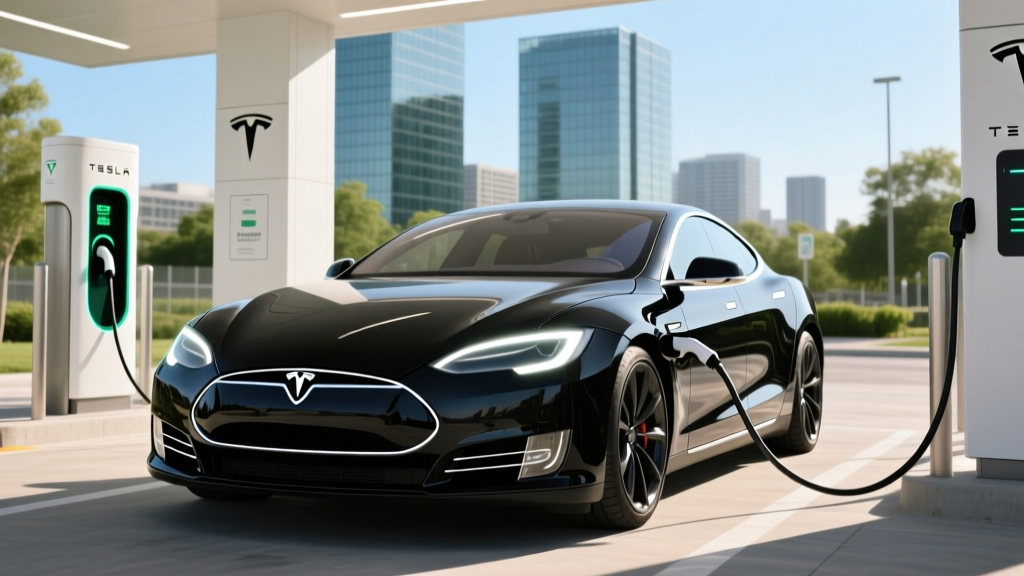
The 2026 Tesla Model S uses NACS natively and has full access to Tesla's Supercharger network (17,000+ stalls in North America) as well as third-party NACS-compatible DC fast chargers from Electrify America, EVgo, and others. If you own a non-Tesla EV with a CCS1 port, you will need a manufacturer-approved NACS adapter to access Tesla Superchargers — Tesla sells an official adapter, and several third-party options (Lectron, A2Z) are available. Always verify adapter compatibility with your specific model year before purchasing.
How Much Does Charging Cost per Mile vs. Gas?
The economics of EV charging versus gasoline depend heavily on where and when you charge. Home charging on a time-of-use (TOU) plan is dramatically cheaper than public DC fast charging, and both are typically cheaper than gasoline on a per-mile basis.
| Scenario | Rate ($/kWh) | Cost per Mile (Model S, ~3.0 mi/kWh) | Annual Cost (12,000 mi) |
|---|---|---|---|
| Home off-peak (TOU plan) | $0.08–$0.12 | $0.027–$0.040 | $320–$480 |
| Home standard rate | $0.14–$0.18 | $0.047–$0.060 | $560–$720 |
| Public Level 2 (workplace, mall) | $0.20–$0.30 | $0.067–$0.100 | $800–$1,200 |
| DC Fast (Tesla Supercharger avg.) | $0.28–$0.42 | $0.093–$0.140 | $1,120–$1,680 |
| Gasoline (25 MPG avg., $3.40/gal) | $3.40/gal | $0.136 | $1,632 |
Even at the most expensive DC fast charging rates, the Model S costs less per mile than a comparable 25 MPG gasoline sedan at $3.40/gallon. But the real savings come from home charging: at off-peak rates of $0.10/kWh, you are paying roughly 3 cents per mile — about one-quarter the cost of gasoline. Over 12,000 miles per year, that is a savings of $1,150–$1,300 annually.
For owners with legacy free Supercharging, road-trip charging costs drop to $0, but daily home charging still costs the same. Free Supercharging is most valuable for high-mileage road-trippers; for owners who drive mostly locally and charge at home, the perk saves perhaps $200–$400 per year on occasional public charging.
Best Level 2 Home Chargers for the Model S in 2026
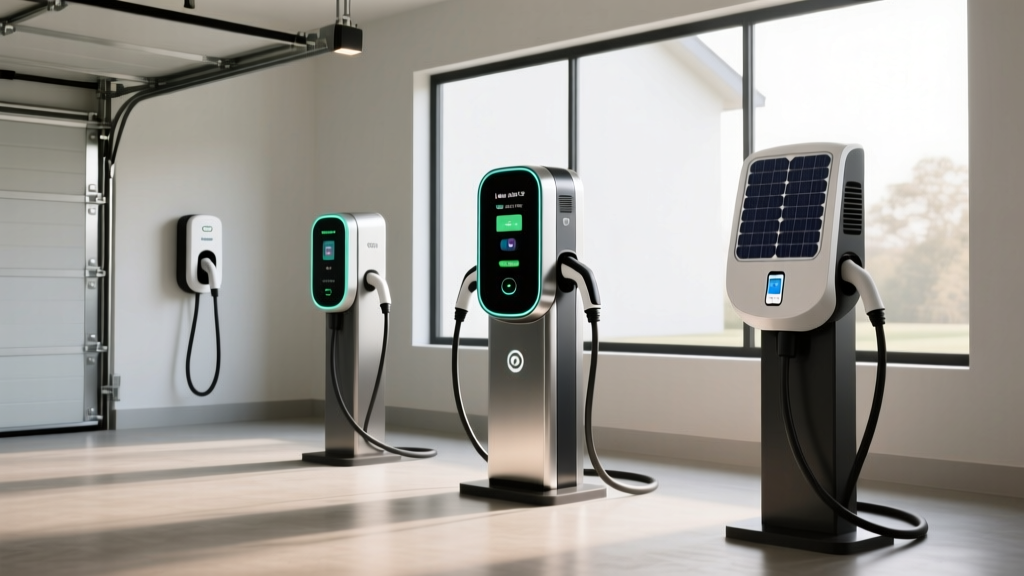
The 2026 Model S supports up to 11.5 kW (48A) AC charging onboard. To take full advantage, pair it with a 48A-capable Level 2 charger on a 60A circuit. Here are the top picks based on reliability, features, and value:
Tesla Wall Connector
- Power: 48A / 11.5 kW (240V)
- Connector: NACS (native Tesla)
- Cable length: 24 ft
- Smart features: Wi-Fi, OTA updates, load sharing with multiple units, power-sharing
- Price: ~$475
- Best for: Tesla-only households; cleanest integration with the Tesla app
ChargePoint Home Flex
- Power: Up to 50A / 12 kW (configurable 16–50A)
- Connector: NACS (2025+ models) or J1772 with adapter
- Cable length: 23 ft
- Smart features: Wi-Fi, scheduling, Alexa integration, detailed energy tracking
- Price: ~$550–$650
- Best for: Multi-EV households (NACS + adapter flexibility)
Emporia Vue EV Charger
- Power: 48A / 11.5 kW (240V)
- Connector: NACS or J1772 (configurable)
- Cable length: 24 ft
- Smart features: Wi-Fi, solar integration, whole-home energy monitoring via Emporia Vue panel
- Price: ~$400–$500
- Best for: Solar-equipped homes; budget-conscious buyers wanting smart features
All three chargers are NEMA 4 rated for outdoor installation and include GFCI protection as required by the 2023 NEC (Article 625). For a Tesla-only garage, the Wall Connector is the obvious pick. If you also own (or plan to own) a non-Tesla EV, the ChargePoint Home Flex or Emporia offer more connector flexibility.
Safety, Electrical Code, and Installation Considerations
A Level 2 EV charger is a continuous high-amperage load — it draws near-maximum current for hours at a time. This makes proper installation non-negotiable for safety and code compliance. Key requirements per the National Electrical Code (NEC) Article 625:
- Dedicated circuit: Your EV charger must have its own dedicated breaker — it cannot share a circuit with other appliances.
- GFCI protection: All EVSE installations (indoor and outdoor) require Ground Fault Circuit Interrupter protection, either built into the charger or via a GFCI breaker.
- Outdoor rating: If installing outdoors, the charger must be rated NEMA 3R or NEMA 4 (weather-resistant). All recommended chargers above meet this standard.
- Circuit sizing: Per NEC, continuous loads (defined as operating 3+ hours) must be sized at 125% of the rated current. A 48A charger requires a 60A breaker and appropriately rated wire (6 AWG copper for most runs).
- Permit and inspection: Most jurisdictions require an electrical permit and post-installation inspection. Skipping this step can void your homeowner's insurance coverage for electrical fires.
Frequently Asked Questions
Can I still get free Supercharging on a new 2026 Tesla Model S?
Not as a standard feature. Tesla occasionally offers limited-time promotional free Supercharging (typically 10,000–20,000 miles or 1–3 years) on new Model S purchases, but unlimited lifetime free Supercharging is no longer offered on new vehicles. Check Tesla's current promotions page before ordering, as offers change quarterly.
Does free Supercharging transfer when I buy a used Model S?
It depends on the vehicle's VIN and the specific program. Pre-2017 Model S vehicles with transferable free unlimited Supercharging do exist, but Tesla has periodically restricted transfers. Always verify the Supercharging status directly in the Tesla app or by contacting Tesla support with the VIN before purchasing. Non-transferable free Supercharging (common on 2017–2019 vehicles) expires upon sale.
How fast will a home Level 2 charger add range to my Model S?
At the Model S's maximum AC charge rate of 11.5 kW (48A on a 240V/60A circuit), you will add approximately 35–44 miles of range per hour of charging, depending on efficiency. A full overnight charge (8–10 hours) easily replenishes the entire ~100 kWh battery, giving you the full EPA-estimated 405 miles each morning.
What electrical upgrades might I need for a home charger?
If your home has a 200A electrical panel with available capacity, you likely need only a new 240V/60A dedicated circuit — a straightforward job for a licensed electrician ($500–$2,000 in labor). If your panel is 100A or already near capacity, you may need a panel upgrade to 200A ($1,500–$4,000) or a smart load-management device that throttles charger power when other appliances are running.
Is it worth paying more for a used Model S with free Supercharging?
It depends on your driving patterns. If you road-trip frequently (5,000+ miles/year on Superchargers), the perk can save $500–$1,000 annually at current Supercharger rates of $0.28–$0.42/kWh. For mostly local drivers who charge at home, the savings are minimal ($100–$300/year). Factor in the premium price of legacy free-Supercharging VINs ($3,000–$7,000) and calculate your break-even timeline before paying extra.