The Real-World Distance Question for Tesla's Model 3 RWD
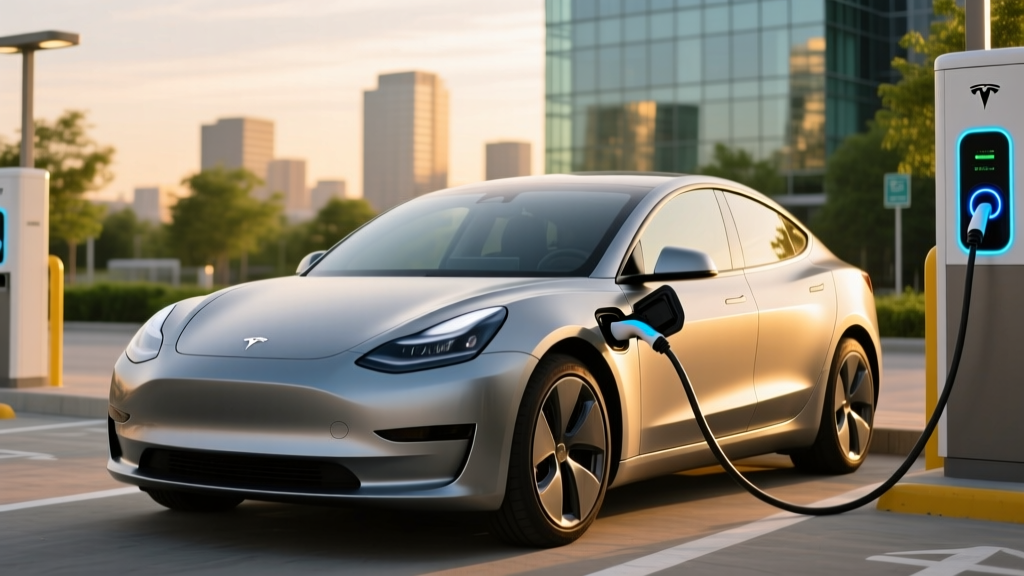
If you're researching the Tesla Model 3 short range distance, you're likely looking at the rear-wheel-drive (RWD) trim — the most affordable entry point into Tesla's lineup and one of the best-selling EVs in the US. For 2025-2026, the Model 3 RWD carries an EPA-estimated range of 272 miles on its ~57.5 kWh usable LFP (lithium iron phosphate) battery. But EPA stickers don't tell the whole story, and charging habits matter just as much as the battery itself.
Before we map out your charging strategy, here's the reality check on distance:
Real-World Highway (70-75 mph): ~230-250 miles
Cold Weather (below 30°F): ~190-220 miles
Mixed City/Suburban: ~255-270 miles
The Model 3 RWD uses an LFP battery, which has lower energy density than the NMC packs in the Long Range and Performance trims but offers excellent cycle life and can be charged to 100% daily without accelerated degradation concerns. That's a meaningful ownership advantage if you're charging at home every night.
EPA data on fueleconomy.gov confirms the 272-mile combined figure with an efficiency rating of 132 MPGe combined (25 kWh/100mi). That efficiency number is critical when calculating your actual charging costs — and it's among the best in the EV market.
Charging Levels Explained: Speeds That Matter for a 57.5 kWh Battery
Understanding the three charging levels is essential before you spend a dollar on equipment. The single most common EV mistake is confusing kW (power — how fast energy flows) with kWh (energy — how much the battery holds). The Model 3 RWD battery holds about 57.5 kWh of usable energy. The charger's kW rating determines how quickly those 57.5 kWh get replenished.
| Level | Voltage | Power (kW) | Miles Added/Hour | Best Use Case |
|---|---|---|---|---|
| Level 1 | 120V AC | 1.0-1.4 kW | 3-5 mi/hr | Emergency / overnight top-off |
| Level 2 | 240V AC | 7.2-19.2 kW | 24-60 mi/hr | Home daily charging |
| DC Fast | 400V+ DC | 50-250 kW | 150-800+ mi/hr | Road trips, rapid top-ups |
For the Model 3 RWD, the onboard charger accepts up to 11.5 kW AC on Level 2 (48A), meaning a 48A home charger can fully replenish the battery in roughly 5.5 hours from empty. On DC fast charging, Tesla rates the RWD at a peak of 170 kW, achieving a 10-80% charge in approximately 25-28 minutes under ideal conditions.
Keep in mind that DC fast charging follows a charge curve: the car pulls peak kW only at lower states of charge (typically 10-40% SoC), then tapers significantly above 60%, and slows to a trickle past 80%. That 25-minute 10-80% figure assumes battery preconditioning is active — which the Model 3 does automatically when you navigate to a Supercharger.
Home Charger Installation: What It Actually Costs
Installing a Level 2 home charger is where most Model 3 owners will do 85-95% of their charging. But the total cost varies wildly depending on your home's electrical panel, the distance from panel to garage or driveway, and local permitting requirements.
Electrical Requirements for the Model 3
To take full advantage of the Model 3 RWD's 11.5 kW onboard charger, you'll need a 240V / 60A dedicated circuit with a hardwired wall connector rated for 48A continuous draw (NEC code requires circuits be rated 125% above continuous load). If you opt for a lower-amperage charger — say, 32A (7.7 kW) — a 40A circuit suffices and may avoid a panel upgrade.
Installation Cost Breakdown
| Component | Typical Cost Range | Notes |
|---|---|---|
| EVSE Equipment (Level 2 charger) | $300 - $700 | Varies by brand, power, smart features |
| Electrician Labor | $500 - $2,500 | Depends on run length, wall type, conduit |
| Electrical Permit | $50 - $300 | Required in most jurisdictions |
| Panel Upgrade (if needed) | $1,500 - $4,000 | Common in homes with 100A service |
| Total (no panel upgrade) | $850 - $3,500 | Most typical scenario |
| Total (with panel upgrade) | $2,350 - $7,500 | Older homes with 100A or maxed-out panels |
Panel upgrade reality: If your home has a 100-amp electrical panel that's already near capacity, adding a 60A EV circuit will likely require upgrading to a 200A service. This is the single biggest variable in installation cost. Have a licensed electrician perform a load calculation before committing to a charger amperage — sometimes stepping down to a 32A charger (requiring only a 40A circuit) avoids the panel upgrade entirely.
Connector Compatibility: NACS, CCS, and the Model 3 Advantage
One of the strongest ownership benefits of the Model 3 in 2025-2026 is native NACS (North American Charging Standard) compatibility. Tesla's charging port is now the industry standard, and the Model 3 RWD plugs directly into the entire Tesla Supercharger network — over 20,000 stalls in North America — without any adapter.
| Connector | Native Vehicles | Model 3 RWD Compatible? | Adapter Needed? |
|---|---|---|---|
| NACS (Tesla) | Tesla, Ford, GM, Rivian (2025+) | Yes — native | None |
| CCS1 | Hyundai, Kia, VW, BMW, most legacy EVs | Yes | Tesla CCS Adapter (included with newer vehicles) |
| CHAdeMO | Nissan Leaf (legacy) | No | Not available / not recommended |
| J1772 (Level 2 AC) | All non-Tesla EVs | Yes | Tesla J1772 Adapter (included) |
The Tesla CCS adapter allows you to use Electrify America, EVgo, and other CCS-equipped public DC fast networks. This dramatically expands your charging options on road trips through areas with limited Supercharger coverage. Tesla's official CCS adapter page provides compatibility details and purchase information.
Cost to Charge: Home vs. Public vs. Gas Comparison
Charging economics are where the Model 3 RWD shines. At 25 kWh/100mi (its EPA-rated efficiency), the cost per mile depends entirely on your electricity rate. Here's how common scenarios break down:
| Scenario | Rate ($/kWh) | Cost per 100 Miles | Cost per Mile |
|---|---|---|---|
| Home Off-Peak (utility TOU rate) | $0.08 - $0.12 | $2.00 - $3.00 | $0.02 - $0.03 |
| Home Standard Rate (national avg) | $0.16 | $4.00 | $0.04 |
| Public Level 2 (ChargePoint, etc.) | $0.25 - $0.49 | $6.25 - $12.25 | $0.06 - $0.12 |
| Tesla Supercharger (avg US) | $0.28 - $0.36 | $7.00 - $9.00 | $0.07 - $0.09 |
| Electrify America DC Fast | $0.36 - $0.48 | $9.00 - $12.00 | $0.09 - $0.12 |
| Gas Car (30 MPG, $3.40/gal) | — | $11.33 | $0.11 |
For a typical driver covering 12,000 miles per year, home charging on an off-peak rate costs roughly $240-$360 annually — compared to $1,360 for a 30 MPG gas car at $3.40/gallon. Even exclusive Supercharger use runs about $840-$1,080/year, still meaningfully cheaper than gasoline.
The key takeaway: home charging is where the savings live. If you rely entirely on public DC fast charging, the per-mile cost approaches or exceeds that of an efficient hybrid. Install the home charger — it pays for itself within 12-18 months for most drivers.
Best Level 2 Chargers for the Tesla Model 3 RWD
Here are three proven Level 2 chargers that pair well with the Model 3's 11.5 kW onboard charger, covering different budgets and feature sets:
Tesla Wall Connector (Gen 3)
- Power Output: Up to 11.5 kW (48A)
- Connector: NACS native
- Cable Length: 24 ft
- Smart Features: Wi-Fi updates, power sharing between multiple units, access control
- Price: ~$475
- Why it works: Seamless Tesla integration, full 48A output matches the Model 3's max AC rate, load-sharing lets you install two units on one 60A circuit
ChargePoint Home Flex
- Power Output: Up to 12 kW (50A), configurable down to 16A
- Connector: J1772 (use Tesla adapter) or NACS version (2025+)
- Cable Length: 23 ft
- Smart Features: App scheduling, Alexa integration, charging history, flexible amperage
- Price: ~$550-$650
- Why it works: Adjustable amperage avoids panel upgrades in older homes; excellent app for tracking costs
Emporia Level 2 EV Charger
- Power Output: Up to 11.5 kW (48A)
- Connector: J1772 (NACS version available)
- Cable Length: 24 ft
- Smart Features: Energy monitoring, solar integration, scheduling via app
- Price: ~$350-$400
- Why it works: Budget-friendly with full 48A output; pairs with Emporia Vue for whole-home energy tracking
Safety, Code, and Smart Installation Practices
A Level 2 charger is a major continuous electrical load — the NEC (National Electrical Code) treats it seriously, and so should you.
- Dedicated circuit: Your EVSE must have its own dedicated breaker — never share a circuit with other appliances.
- GFCI protection: NEC 2020+ requires GFCI protection for outdoor receptacles used for EV charging. Hardwired units often bypass this requirement, which is one reason hardwired installs are preferred.
- Outdoor rating: If mounting outside, ensure the charger carries a NEMA 4 or NEMA 4X rating for weather resistance. All three chargers above are outdoor-rated.
- Permit and inspection: Most municipalities require an electrical permit and post-installation inspection. Skipping this can void home insurance coverage in the event of an electrical fire.
- Wire gauge: A 60A circuit requires 6 AWG copper wire (or 4 AWG aluminum). Your electrician will size this correctly, but verify — undersized wire is a fire hazard.
Charging the Model 3 RWD: Time Examples
With a ~57.5 kWh usable battery, here's what charging looks like in practice:
| Scenario | State of Charge | Time to Charge | Miles Added |
|---|---|---|---|
| Level 1 (120V / 12A) | 20% → 80% | ~26 hours | ~163 mi |
| Level 2 (240V / 32A, 7.7 kW) | 20% → 80% | ~4.5 hours | ~163 mi |
| Level 2 (240V / 48A, 11.5 kW) | 20% → 80% | ~3 hours | ~163 mi |
| DC Fast (170 kW peak, Supercharger) | 10% → 80% | ~25-28 min | ~190 mi |
| DC Fast (50 kW CCS station) | 10% → 80% | ~60-70 min | ~190 mi |
For daily driving, most owners plug in each evening and wake up to a full charge. A typical 40-mile daily commute uses roughly 10-12 kWh, which a 48A Level 2 charger replenishes in under an hour. The DC fast times matter mainly for road trips — and here, Tesla's Supercharger network remains the most reliable and fastest option.
Tax Credits and Incentives for Home Charger Installation
The federal Alternative Fuel Vehicle Refueling Property Credit (IRS §30C) was reinstated under the Inflation Reduction Act and covers up to 30% of home EVSE equipment and installation costs, capped at $1,000 per year. This credit applies to both the charger hardware and the electrician's labor.
Key eligibility rules from the IRS:
- The equipment must be installed at your primary residence
- The credit applies to equipment placed in service through 2032
- Income caps and census-tract requirements may apply for commercial installations (residential has fewer restrictions)
- You must file IRS Form 8911 with your tax return
- Consult a tax professional — credit eligibility depends on your individual tax situation
Many states and utilities also offer rebates for Level 2 charger installation — sometimes covering $300-$1,000 on top of the federal credit. Check your utility's EV programs and state incentive databases for current offers.
Frequently Asked Questions
How much does it cost to install a home EV charger?
Typical total cost runs $850-$3,500 for a standard installation (equipment + electrician + permit) when no panel upgrade is needed. If your home requires a 200A panel upgrade, expect $2,350-$7,500 total. The Tesla Wall Connector itself costs ~$475, with electrician labor typically $500-$2,500 depending on run length and complexity.
How fast will each charging level add range to my Model 3 RWD?
Level 1 (120V) adds about 3-5 miles per hour. Level 2 (240V at 48A) adds roughly 44-48 miles per hour — enough for a full overnight charge. DC fast charging at a Supercharger (170 kW peak) can add up to 190 miles in about 25-28 minutes (10-80% SoC), though the rate tapers significantly above 80%.
Which connector and charger is compatible with my Tesla Model 3?
The Model 3 uses the NACS connector natively, which plugs directly into all Tesla Superchargers and Destination Chargers. For CCS public networks (Electrify America, EVgo), you'll need the Tesla CCS adapter (included with newer vehicles or available separately). For Level 2 public stations with J1772 connectors, Tesla includes a J1772 adapter in the vehicle.
How much does charging cost per mile vs. gas?
At home on a standard rate (~$0.16/kWh), the Model 3 RWD costs about $0.04/mile to drive. On off-peak utility rates, it drops to $0.02-$0.03/mile. A comparable 30 MPG gas car at $3.40/gallon costs $0.11/mile. Even exclusive Supercharger use (~$0.32/kWh avg) costs roughly $0.08/mile — still cheaper than gasoline.
What electrical upgrades might I need for a home charger?
The most common upgrade is a panel capacity increase from 100A to 200A service ($1,500-$4,000), required when your existing panel can't handle an additional 40-60A continuous load. You may also need new conduit runs, a sub-panel, or utility service line upgrades in older homes. A licensed electrician's load calculation is the definitive answer — don't skip this step.
Can I charge my Model 3 RWD to 100% every day?
Yes. The Model 3 RWD uses an LFP (lithium iron phosphate) battery, which Tesla explicitly recommends charging to 100% at least once per week for accurate state-of-charge calibration. Unlike the NMC batteries in Long Range and Performance trims, LFP chemistry tolerates daily 100% charges without significant additional degradation. This is one of the RWD's underappreciated ownership advantages.