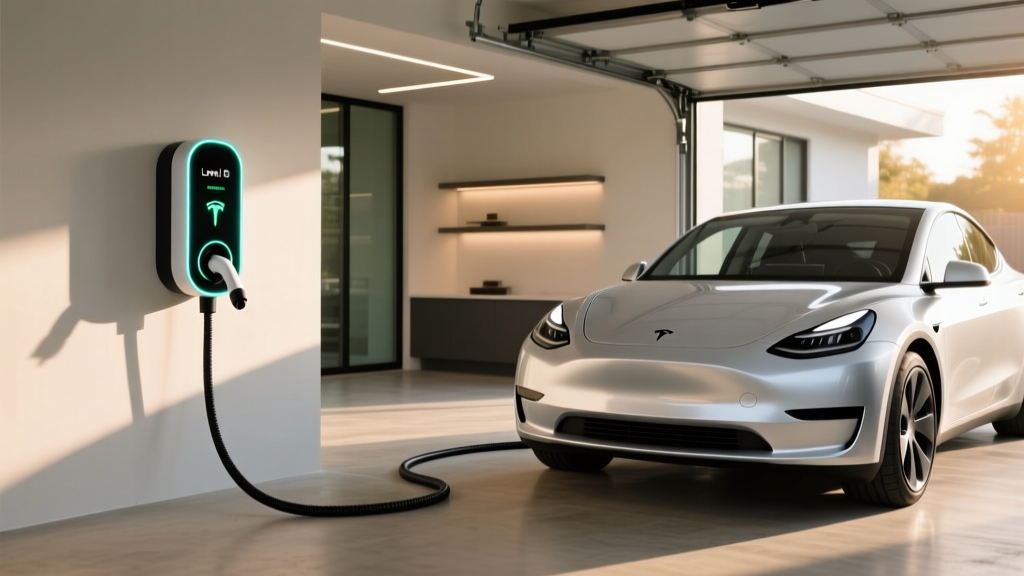
Whether you're a current owner or shopping for the latest refresh, understanding how charging habits directly impact your Tesla range Model 3 is the single most important factor in electric vehicle satisfaction. The 2026 Tesla Model 3 Long Range AWD carries an EPA-estimated 363 miles of range from its ~79 kWh (usable) NMC lithium-ion battery, while the Rear-Wheel Drive variant offers 272 miles from an LFP pack. But those sticker numbers only tell half the story.
Real-world range depends heavily on how you charge, when you charge, and what equipment you use. This guide breaks down every charging scenario — from a standard 120V wall outlet to a 250 kW Supercharger — with exact speeds, costs, and installation requirements so you can extract every usable mile from your Model 3.
Real-World Range vs. EPA Sticker: What Model 3 Owners Actually See
Long Range AWD: EPA 363 mi → Expect ~310–330 mi mixed highway, ~250–270 mi at 75+ mph in cold weather (below 32°F)
Rear-Wheel Drive (LFP): EPA 272 mi → Expect ~230–245 mi mixed highway, ~185–200 mi cold-weather highway
Performance: EPA 315 mi → Expect ~265–285 mi mixed highway
Source: EPA fueleconomy.gov
Charging to 100% regularly on an NMC battery (Long Range/Performance) accelerates degradation. Tesla recommends daily charging to 80–90% for NMC packs, reserving 100% for road trips. LFP batteries (RWD) can and should be charged to 100% at least weekly to maintain cell-balancing accuracy. This directly affects your usable daily range: a Long Range charged to 80% yields roughly 290 real-world miles before you need to plug in again.
Charging Levels Explained: kW Speeds and Miles Per Hour
The most common EV mistake is confusing kW (kilowatts — the rate of power flow, like water pressure) with kWh (kilowatt-hours — the total energy stored, like gallons in a tank). Your Model 3 Long Range battery holds roughly 79 kWh of energy. A 10 kW charger delivers 10 kWh per hour, meaning a full charge would take ~8 hours.
| Level | Voltage / Amperage | Max Power (kW) | Miles of Range Added Per Hour | Best Use Case |
|---|---|---|---|---|
| Level 1 (120V) | 120V / 12A | ~1.4 kW | 3–5 mi/hr | Overnight trickle, emergencies |
| Level 2 (240V) | 240V / 32–48A | 7.7–11.5 kW | 25–44 mi/hr | Daily home charging |
| DC Fast (Supercharger) | 400V+ architecture | Up to 250 kW (peak) | ~1,000+ mi/hr (at peak) | Road trips, quick top-ups |
Charging time examples (Model 3 Long Range, ~79 kWh usable):
- Level 1 (1.4 kW): 0–100% in ~56 hours — impractical for daily use
- Level 2, 48A (11.5 kW): 0–100% in ~7 hours; 10–80% in ~4.8 hours
- DC Fast Charging (250 kW peak): 10–80% in ~25–30 minutes. Note that peak 250 kW is only sustained between roughly 10–30% SoC; above 50% the rate tapers significantly, dropping below 100 kW past 70%.
Home Charger Installation: Electrical Requirements and True Costs
This is where most new EV owners get surprised. The charger hardware is often the cheapest part of the equation. Professional installation, potential panel upgrades, and permitting make up the bulk of the expense.
Electrical Requirements for a Model 3 Level 2 Charger
The Tesla Wall Connector (Gen 3) can deliver up to 11.5 kW (48A) on a 240V circuit. Per National Electrical Code (NEC), continuous loads must not exceed 80% of the circuit's rated capacity. That means a 48A charger requires a 60-amp dedicated circuit and a 60A double-pole breaker in your panel.
Key requirements:
- Panel capacity: Your main electrical panel must have sufficient spare amperage. Most modern 200A panels can accommodate a 60A EV circuit. Older 100A panels almost certainly cannot and will need an upgrade.
- Dedicated circuit: The EV charger must have its own breaker — no sharing with dryers, ovens, or HVAC.
- Wire gauge: 6 AWG copper for runs up to ~50 feet; 4 AWG for longer runs to minimize voltage drop.
- GFCI protection: NEC 2020+ requires GFCI protection for EV receptacles (if using a plug-in charger rather than hardwired). Hardwired installations often avoid this requirement and provide a cleaner, more reliable connection.
- Permit: Most jurisdictions require an electrical permit ($50–$200) and a post-installation inspection.
Installation Cost Breakdown
| Item | Simple Install (Panel Nearby) | Complex Install (Long Run / Panel Upgrade) |
|---|---|---|
| Level 2 Charger Hardware | $400–$650 | $400–$650 |
| Electrician Labor (2–4 hrs simple; 6–12+ hrs complex) | $300–$800 | $1,200–$3,500 |
| Electrical Permit | $50–$150 | $100–$250 |
| Panel Upgrade (100A → 200A, if needed) | N/A | $1,500–$4,000 |
| Conduit, Wire, Misc. Materials | $50–$150 | $200–$800 |
| TOTAL | $800–$1,750 | $3,400–$9,200 |
Federal Tax Credit for Home Charging Equipment
The IRS §30C Alternative Fuel Vehicle Refueling Property Credit covers 30% of home charging equipment and installation costs, up to $1,000. Eligibility depends on census-tract income and geographic requirements that apply to the current tax year. Consult a tax professional for your specific situation — eligibility rules are specific and change periodically.
Connector Compatibility: NACS, CCS, and Adapter Needs
The 2026 Tesla Model 3 comes equipped with the NACS (North American Charging Standard) port — the connector Tesla designed and opened to other manufacturers starting in 2024. This means native access to the entire Tesla Supercharger network (17,000+ stalls in North America) with no adapter required.
| Connector Type | Native or Adapter? | Networks Available | Max Charge Speed |
|---|---|---|---|
| NACS (Tesla) | Native — built-in | Tesla Superchargers, Electrify America (NACS stalls), EVgo, ChargePoint (NACS-equipped) | Up to 250 kW DC |
| CCS1 | Requires NACS-to-CCS adapter (~$200–$300) | Legacy Electrify America, some ChargePoint and EVgo CCS-only stalls | Up to 150–350 kW DC (station dependent) |
| CHAdeMO | Not supported; no practical adapter | Nissan-legacy stations (declining network) | N/A |
| J1772 (Level 2 AC) | Requires J1772-to-NACS adapter (included with vehicle) | Public Level 2 stations, non-Tesla destination chargers | Up to ~11.5 kW AC |
Practical takeaway: The NACS native port is a significant advantage. Tesla Superchargers remain the most reliable public DC fast-charging network in the US, with consistent uptime and automatic plug-and-charge billing. Carry the included J1772 adapter for hotel and destination charging, and consider a CCS adapter only if you frequently travel in areas where CCS-only stations outnumber Superchargers.
Cost to Charge: Home vs. Public vs. Gas Comparison
Charging economics vary dramatically depending on where and when you plug in. Here's a real-world cost breakdown for the Model 3 Long Range (~79 kWh battery, ~3.5 mi/kWh efficiency):
| Charging Scenario | Rate ($/kWh) | Cost for Full Charge (~79 kWh) | Cost Per Mile (363 mi range) |
|---|---|---|---|
| Home — Off-Peak (Time-of-Use rate) | $0.08–$0.14 | $6.32–$11.06 | $0.017–$0.030 |
| Home — Standard Rate (no TOU) | $0.16–$0.22 | $12.64–$17.38 | $0.035–$0.048 |
| Tesla Supercharger (average) | $0.28–$0.40 | $22.12–$31.60 | $0.061–$0.087 |
| Third-Party DC Fast (EA, EVgo) | $0.35–$0.55 | $27.65–$43.45 | $0.076–$0.120 |
| Gas Car (30 MPG, $3.50/gal) | — | $42.42 (for 363 mi) | $0.117 |
The bottom line: Home charging on off-peak rates saves Model 3 owners roughly $1,000–$1,500 per year compared to a 30 MPG gas car at 12,000 miles/year. Exclusive Supercharger/DC fast charging narrows the gap significantly, and the most expensive public networks can approach or exceed gas-car fueling costs. Installing a home Level 2 charger is the single highest-ROI investment an EV owner can make.
Recommended Level 2 Chargers for Tesla Model 3
Every Model 3 ships with a J1772-to-NACS adapter and a Mobile Connector (120V/240V). But for dedicated home charging, a hardwired or plug-in Level 2 wall unit delivers faster speeds and smarter features.
Tesla Wall Connector (Gen 3)
- Power: Up to 11.5 kW (48A, hardwired on 60A circuit)
- Connector: Native NACS — no adapter needed
- Cable: 24 ft
- Smart features: Wi-Fi updates, load sharing (pair two units on one circuit), Tesla app integration, Power-Share with multiple Teslas
- Price: ~$475
- Verdict: Best for all-Tesla households. Clean integration, top reliability, competitive price.
ChargePoint Home Flex
- Power: Up to 12 kW (50A, NEMA 14-50 plug or hardwired on 60A circuit)
- Connector: J1772 (use included adapter) or NACS version (2025+)
- Cable: 23 ft
- Smart features: Wi-Fi, ChargePoint app scheduling, Alexa, adjustable amperage (16–50A) to match your circuit
- Price: ~$550–$650
- Verdict: Best for multi-EV households (non-Tesla + Tesla). Flexible amperage is ideal for panel-constrained homes.
Emporia Vue EV Charger
- Power: Up to 11.5 kW (48A, hardwired or NEMA 14-50)
- Connector: J1772 (adapter needed) or NACS
- Cable: 24 ft
- Smart features: Energy monitoring via Emporia Vue panel integration, solar-aware scheduling, app control
- Price: ~$400–$500
- Verdict: Best budget pick with energy monitoring. Excellent for solar-equipped homes wanting to charge only on excess production.
DC Fast Charging on Road Trips: Understanding the Charge Curve
The Model 3 Long Range supports peak DC fast charging at 250 kW on V3 Tesla Superchargers. However, the charging curve is not linear, and understanding this is critical for road-trip planning.
Typical Supercharger session (Model 3 LR, preconditioned battery):
- 10–30% SoC: Peak 200–250 kW — extremely rapid energy delivery
- 30–50% SoC: Tapers to ~150–180 kW
- 50–70% SoC: Drops to ~80–120 kW
- 70–80% SoC: Further taper to ~50–80 kW
- 80–100% SoC: Dramatically slower, ~20–40 kW — avoid unless necessary
10–80% time: approximately 25–30 minutes at a V3 Supercharger with a preconditioned battery. Preconditioning (navigating to a Supercharger in the Tesla nav triggers automatic battery heating/cooling) can shave 5–10 minutes off your session, especially in cold weather.
Frequently Asked Questions
How much does it cost to install a home EV charger for my Tesla Model 3?
A straightforward Level 2 installation (panel has capacity, short wire run, no panel upgrade) typically costs $800–$1,750 total including the charger hardware, electrician labor, and permit. Complex installations requiring long conduit runs, trenching, or a panel upgrade from 100A to 200A can range from $3,400 to $9,200. Always get 2–3 quotes from licensed electricians and ask for a load calculation before deciding on charger amperage.
How fast will each charging level add range to my Model 3?
Level 1 (120V) adds roughly 3–5 miles of range per hour — about 40–60 miles overnight. Level 2 (240V, 48A) adds approximately 44 miles per hour, fully replenishing the Long Range battery in about 7 hours. DC fast charging at a V3 Supercharger adds up to 175+ miles in 15 minutes at peak rate, with a 10–80% session taking 25–30 minutes.
Which connector and charger is compatible with my 2026 Tesla Model 3?
The 2026 Model 3 uses the NACS connector natively. This gives you direct access to all Tesla Superchargers and a growing number of NACS-equipped public stations. For non-Tesla Level 2 public chargers (J1772), use the adapter included with your vehicle. A CCS1 adapter ($200–$300) is optional and only needed for legacy CCS-only DC fast stations.
How much does charging cost per mile compared to gas?
Home charging on off-peak electricity ($0.10/kWh) costs roughly $0.025 per mile in a Model 3. Even at the national average residential rate (~$0.17/kWh), it's about $0.04 per mile. Compare that to a 30 MPG gas car at $3.50/gallon: $0.117 per mile. Home-charged Model 3 owners typically save $1,000–$1,500 annually on fuel. However, exclusive reliance on premium-priced DC fast chargers ($0.40–$0.55/kWh) narrows or eliminates this advantage.
What electrical upgrades might I need before installing a home charger?
The most common upgrade is a main electrical panel service increase from 100A to 200A, costing $1,500–$4,000. You may also need a new 60A double-pole breaker (if panel space allows), upgraded wiring from the utility meter to the panel, or a sub-panel near the garage. Homes with solar or battery systems may need additional coordination. A licensed electrician's load calculation (typically $100–$250 as a standalone service) will determine exactly what your home requires before you purchase any equipment.
Should I charge my Model 3 Long Range to 100% every day?
No. The Long Range and Performance models use NMC battery chemistry, which degrades faster when held at high state of charge. Tesla recommends setting the daily charge limit to 80–90%. Reserve 100% for road trips when you need maximum range. The Rear-Wheel Drive model uses LFP chemistry, which tolerates and actually benefits from regular 100% charges — Tesla recommends charging LFP packs to 100% at least once per week for accurate state-of-charge calibration.
Sources: EPA fueleconomy.gov, Tesla Model 3 Specifications, IRS §30C Credit