Why Tesla Model 3 Mileage Per kWh Matters for Your Wallet
The Tesla Model 3 remains one of the most efficient electric vehicles on the road, but understanding its true efficiency — measured in miles per kWh — is the difference between budgeting accurately and getting sticker shock from your electric bill. Whether you're charging at home on a Level 2 setup, topping off at a public DC fast charger, or trickling from a 120V outlet, your cost per mile hinges on this single metric.
For the 2025 Tesla Model 3 Long Range AWD, the EPA rates efficiency at 132 MPGe combined, which translates to approximately 26 kWh per 100 miles, or roughly 3.85 miles per kWh. The Rear-Wheel Drive (RWD) variant pushes that to about 4.0 miles per kWh (25 kWh/100mi, 134 MPGe) thanks to its lighter curb weight and single motor. These figures come from fueleconomy.gov and represent combined city/highway driving under ideal conditions.
Knowing your Model 3's real-world miles per kWh lets you calculate exact charging costs, size your home charger correctly, and compare your fuel savings against a gas vehicle with precision — not guesswork.
Charging Levels Explained: Speed, Power, and Range Added Per Hour
Before plugging in, you need clarity on the three charging levels. The most common mistake new EV owners make is confusing kW (kilowatts) — the rate of power delivery — with kWh (kilowatt-hours) — the total energy stored in your battery. Think of kW as the width of a hose and kWh as the size of the bucket. A wider hose (higher kW) fills the bucket (battery) faster.
The 2025 Tesla Model 3 Long Range carries a 79 kWh usable battery (NMC chemistry), while the RWD trim uses a 60 kWh usable LFP (lithium iron phosphate) pack. Here's how each charging level fills those batteries:
| Level | Voltage / Amps | Power (kW) | Miles of Range Per Hour | Best For |
|---|---|---|---|---|
| Level 1 (120V) | 120V / 12A | ~1.4 kW | 3–5 mi/hr | Overnight trickle, emergencies |
| Level 2 (240V) | 240V / 32–48A | 7.7–11.5 kW | 25–44 mi/hr | Daily home charging |
| DC Fast Charging | 400V+ DC | Up to 250 kW (peak) | ~170 mi in 15 min (peak) | Road trips, rapid top-ups |
Charging time examples (10–80% State of Charge):
- Level 1 (1.4 kW): Model 3 RWD (60 kWh) — approximately 30+ hours. Not practical as a primary method.
- Level 2 at 11.5 kW (48A): Model 3 Long Range (79 kWh) — roughly 5 hours for 10–80%.
- Level 2 at 7.7 kW (32A): Model 3 Long Range — roughly 7.5 hours for 10–80%.
- DC Fast Charging at Tesla Supercharger V3 (250 kW peak): Model 3 Long Range — approximately 25–30 minutes for 10–80%, though peak rate only sustains up to ~30–40% SoC before tapering.
Home Charger Installation: Electrical Requirements, Costs, and Panel Upgrades
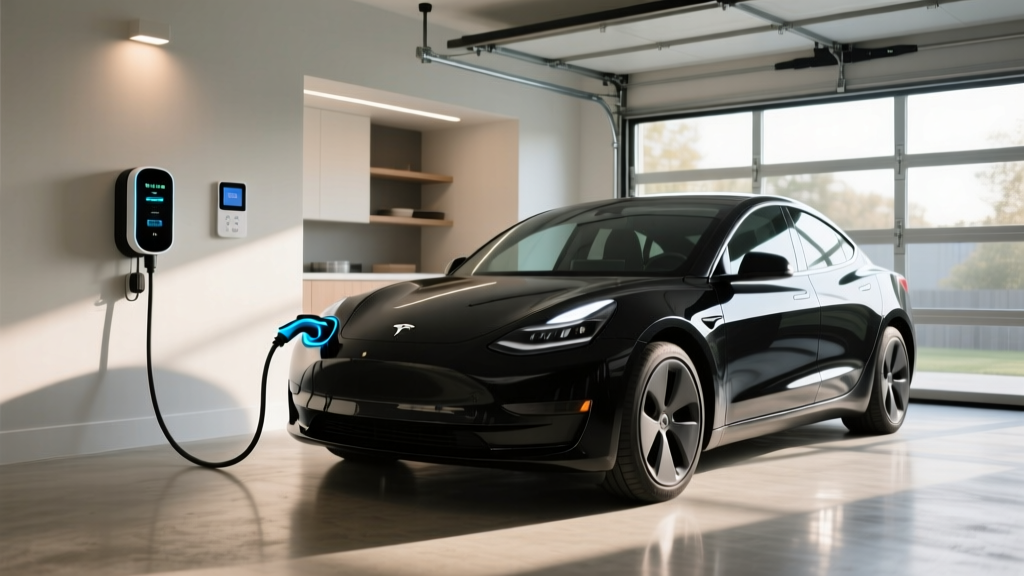
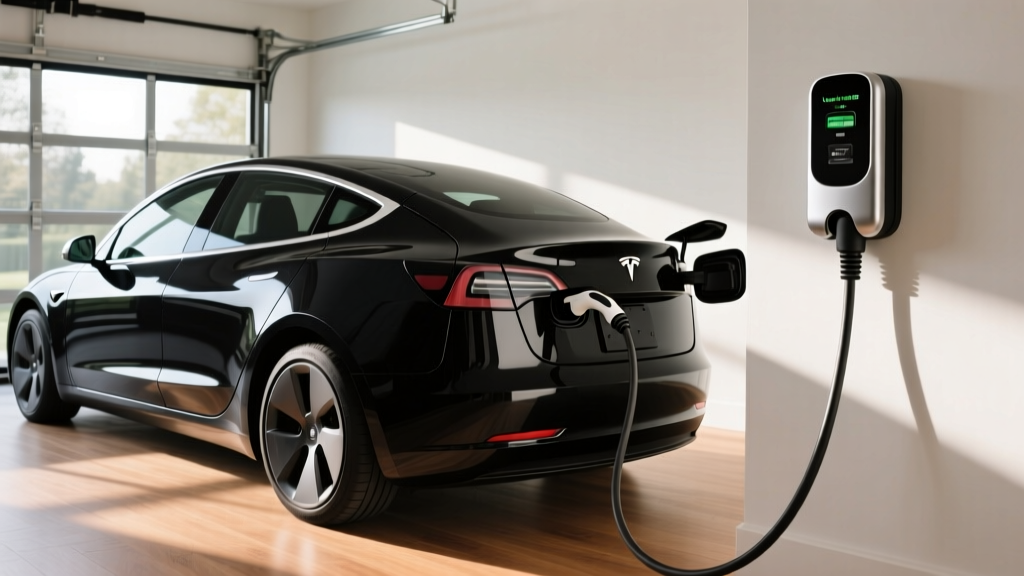
Installing a Level 2 home charger is the single most impactful upgrade for daily EV ownership. For a Tesla Model 3, you'll want a 240V circuit capable of delivering at least 32 amps (7.7 kW) — ideally 48 amps (11.5 kW) to take full advantage of the Model 3's 11.5 kW onboard charger.
Electrical requirements for a typical Model 3 home setup:
- Circuit: Dedicated 50A or 60A breaker (for 40A or 48A continuous draw, respectively — NEC code requires the breaker to be rated 125% above continuous load)
- Wire: 6 AWG copper (for 50A) or 4 AWG copper (for 60A), run through conduit if exposed
- Outlet vs. hardwired: NEMA 14-50 outlet offers flexibility (you can unplug and take the charger); hardwired avoids GFCI nuisance trips and is often preferred by electricians for dedicated EV circuits
- Panel capacity: Most homes with a 200A panel can accommodate a 50–60A EV circuit. Older homes with 100A panels may require a panel upgrade — a significant added cost.
| Component | Simple Install (Near Panel) | Complex Install (Long Run / Upgrade) |
|---|---|---|
| Level 2 Charger Equipment | $350–$600 | $400–$700 |
| Electrician Labor | $300–$600 | $800–$2,000 |
| Electrical Permit | $50–$150 | $100–$300 |
| Panel Upgrade (if needed) | N/A | $1,500–$3,500 |
| Conduit / Wire (long runs) | $0–$100 | $200–$800 |
| Total Estimated Cost | $700–$1,450 | $3,000–$7,300 |
Most homeowners with a 200A panel and a garage adjacent to the electrical panel land in the $800–$1,500 range for a straightforward install. If your panel is on the opposite side of the house from your parking spot, expect wire-run costs to add up quickly at $8–$15 per linear foot for 6 AWG in conduit.
Which Connector and Charger Is Compatible With the Tesla Model 3?
Tesla uses the North American Charging Standard (NACS) connector — a proprietary design that Tesla opened to other manufacturers in late 2022. As of 2025, the Model 3 ships with a native NACS port. This means:
- Tesla Superchargers: Plug directly — no adapter needed. The Supercharger network remains the most reliable DC fast-charging ecosystem in the U.S., with over 25,000 stalls nationally.
- Non-Tesla DC fast chargers (CCS1): Legacy Electrify America, EVgo, and other CCS-equipped stations require a NACS-to-CCS adapter. Tesla sells one for ~$250; third-party options from Lectron and A2Z are available for $150–$200.
- Level 2 public chargers (J1772): Tesla includes a J1772-to-NACS adapter with every new Model 3. You'll use this at hotels, workplaces, and shopping-center Level 2 stations.
- CHAdeMO: Effectively obsolete for new vehicles. Nissan Leaf is the last major holdout. No adapter needed for a Model 3 owner — just skip these stations.
| Connector Type | Native or Adapter? | Where You'll Find It |
|---|---|---|
| NACS (Tesla) | Native — plug directly | Tesla Superchargers, Tesla Wall Connector, new non-Tesla stations |
| CCS1 | NACS-to-CCS adapter required | Electrify America, EVgo, older public DC stations |
| J1772 (Level 2) | Included adapter | Public Level 2 stations, workplaces, hotels |
| CHAdeMO | Not compatible / not needed | Legacy Nissan Leaf infrastructure |
Level 2 Home Charger Equipment Picks for the Model 3
The Model 3's onboard charger accepts up to 11.5 kW (48A) on the Long Range and 7.7 kW (32A) on some configurations. To maximize charging speed at home, match your charger's output to the car's acceptance rate. Here are three proven options:
Tesla Wall Connector
- Power: Up to 11.5 kW (48A)
- Connector: Native NACS — no adapter needed
- Cable: 24 ft
- Smart Features: Wi-Fi, OTA updates, load sharing between multiple units, Power-Share
- Price: ~$475
- Best for: Tesla-only households wanting seamless integration
ChargePoint Home Flex
- Power: Up to 12 kW (50A), adjustable down to match circuit
- Connector: J1772 (use included Tesla adapter) or NACS version available
- Cable: 23 ft
- Smart Features: App scheduling, energy tracking, Alexa integration, utility demand-response
- Price: ~$550–$700
- Best for: Multi-EV households (Tesla + non-Tesla)
Emporia Vue Level 2 Charger
- Power: Up to 11.5 kW (48A)
- Connector: J1772 (adapter needed for Tesla) or NACS version
- Cable: 24 ft
- Smart Features: Real-time energy monitoring, solar integration, utility rate scheduling
- Price: ~$400–$500
- Best for: Budget-conscious buyers with solar panels
Cost to Charge a Tesla Model 3 Per Mile vs. Gasoline
This is where the math gets compelling. Using the Model 3 Long Range's real-world efficiency of approximately 3.5 miles per kWh (a conservative blended estimate accounting for highway and seasonal driving), here's what charging costs per mile across common scenarios:
| Scenario | Rate ($/kWh) | Cost Per Mile | Full Charge (0–100%) |
|---|---|---|---|
| Home Off-Peak (utility TOU rate) | $0.08–$0.12 | $0.023–$0.034 | $6.30–$9.50 |
| Home Standard Rate (avg U.S.) | $0.16 | $0.046 | $12.60 |
| Public Level 2 (ChargePoint, etc.) | $0.25–$0.40 | $0.071–$0.114 | $19.80–$31.60 |
| Tesla Supercharger V3/V4 | $0.28–$0.42 | $0.080–$0.120 | $22.10–$33.20 |
| Gas Car (30 MPG, $3.50/gal) | $3.50/gal | $0.117 | N/A |
| Gas Car (25 MPG, $3.50/gal) | $3.50/gal | $0.140 | N/A |
The bottom line: Charging at home on off-peak rates costs roughly 3–4 cents per mile — a fraction of the 12–14 cents per mile a comparable gas sedan burns. Even at Supercharger rates, the Model 3 is competitive with or cheaper than gasoline per mile. Over 15,000 annual miles, home charging saves roughly $1,200–$1,600 per year versus a 25–30 MPG gas car at $3.50/gallon.
For the latest state-by-state electricity rates and utility EV plans, check the U.S. Energy Information Administration data tables.
Safety, Code, and Best Practices for Home Charging
EV charging draws sustained high current for hours — this is fundamentally different from short-burst appliances. The National Electrical Code (NEC) treats EV charging as a continuous load, which drives specific requirements:
- Dedicated circuit: Your Level 2 charger must be on its own dedicated breaker — never shared with other outlets or appliances.
- Breaker sizing: A 48A charger requires a 60A breaker (48A × 1.25 = 60A per NEC 210.20). A 32A charger needs a 40A breaker.
- GFCI protection: NEC 2020 and later requires GFCI protection for outdoor receptacles used for EV charging. Hardwired installations typically avoid this requirement and reduce nuisance tripping — a reason many electricians prefer hardwiring.
- Outdoor rating: If your charger is mounted outside (driveway, carport), it must carry a NEMA 3R or NEMA 4 weatherproof rating. All chargers listed above meet this standard.
- Permit and inspection: Most jurisdictions require an electrical permit for a new 240V circuit. The inspection ensures wire gauge, breaker size, and grounding meet code. Skipping the permit risks insurance denial in the event of an electrical fire.
- Cable management: Use a holster or retractor to keep the charging cable off the ground — prevents tripping hazards, water exposure, and connector damage.
Always hire a licensed electrician familiar with NEC Article 625 (Electric Vehicle Charging System Equipment). Ask for a load calculation before installation to confirm your panel has headroom.
Frequently Asked Questions
How much does it cost to install a home EV charger for a Tesla Model 3?
A straightforward Level 2 installation with a 200A panel and short wire run typically costs $700–$1,500 total (equipment + electrician + permit). Complex installs requiring long conduit runs or a panel upgrade can reach $3,000–$7,300. The Tesla Wall Connector itself costs ~$475.
How fast will each charging level add range to my Model 3?
Level 1 (120V) adds 3–5 miles per hour — too slow for daily use. Level 2 (240V, 48A) adds 35–44 miles per hour, easily replenishing a day's driving in 1–2 hours. DC fast charging at a Tesla Supercharger V3 adds up to 170 miles in 15 minutes at peak rate, though the rate tapers significantly above 50% SoC.
Do I need an adapter to charge my Tesla Model 3 at non-Tesla stations?
For DC fast chargers with CCS1 connectors (common at Electrify America and EVgo), yes — you'll need a NACS-to-CCS adapter (~$150–$250). For Level 2 public stations with J1772 connectors, Tesla includes the adapter with every new Model 3. At Tesla Superchargers, you plug in natively with no adapter.
How much does charging a Tesla Model 3 cost per mile compared to gas?
At home on off-peak electricity ($0.10/kWh), the Model 3 costs about 3 cents per mile. A comparable gas car at 28 MPG and $3.50/gallon costs about 12.5 cents per mile. That's roughly a 4x cost advantage for home EV charging. Even at public Supercharger rates ($0.35/kWh), the Model 3 costs about 10 cents per mile — still cheaper than most gas cars.
What electrical upgrades might I need before installing a Level 2 charger?
If your home has a 100A electrical panel (common in homes built before 1990), you'll likely need a panel upgrade to 200A — costing $1,500–$3,500. A licensed electrician will perform a NEC Article 220 load calculation to determine if your existing panel can handle a 50–60A dedicated EV circuit alongside your other loads (HVAC, range, dryer). Homes with 200A panels rarely need an upgrade.
Is the Tesla Wall Connector the best charger for a Model 3?
For Tesla-only households, the Wall Connector is the most convenient choice: native NACS plug, 11.5 kW output matching the Model 3's onboard charger, and integrated software features. If you own or plan to own a non-Tesla EV alongside your Model 3, a J1772 or dual-connector charger like the ChargePoint Home Flex offers more flexibility.