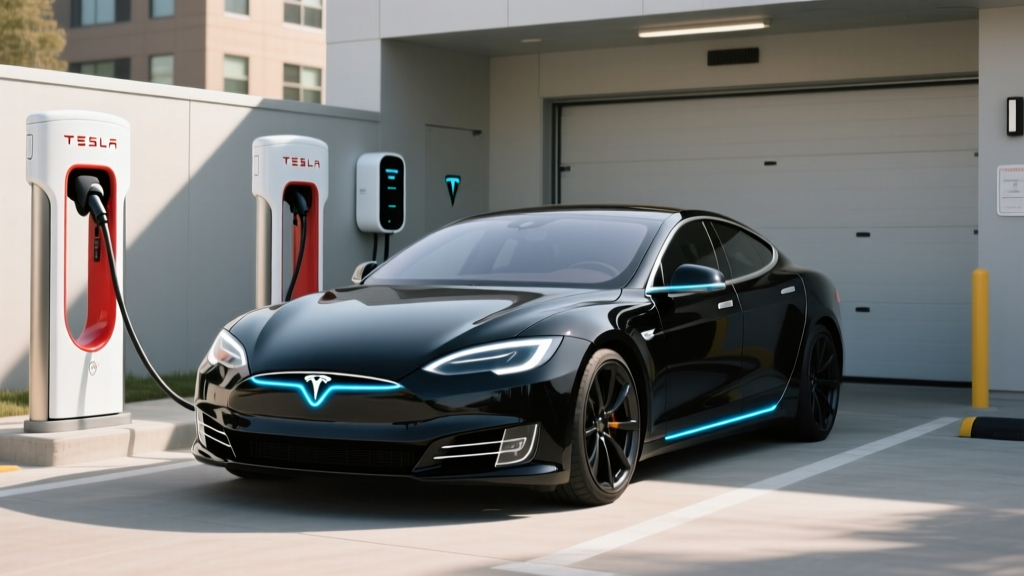
If you're asking which Tesla has the longest range, the short answer for the 2026 model year is the Model S Long Range, rated at an EPA-estimated 402 miles on a full charge. But range is only half the ownership equation. A 402-mile battery is useless if you can't replenish it conveniently at home — and the cost and speed of that replenishment vary dramatically depending on your charging setup.
This guide ranks every current Tesla by range and efficiency, then walks through exactly what it takes to charge one at home: electrical requirements, installation costs, equipment picks, and what you'll actually pay per mile compared to gasoline.
2026 Tesla Range Rankings: Every Model Ranked
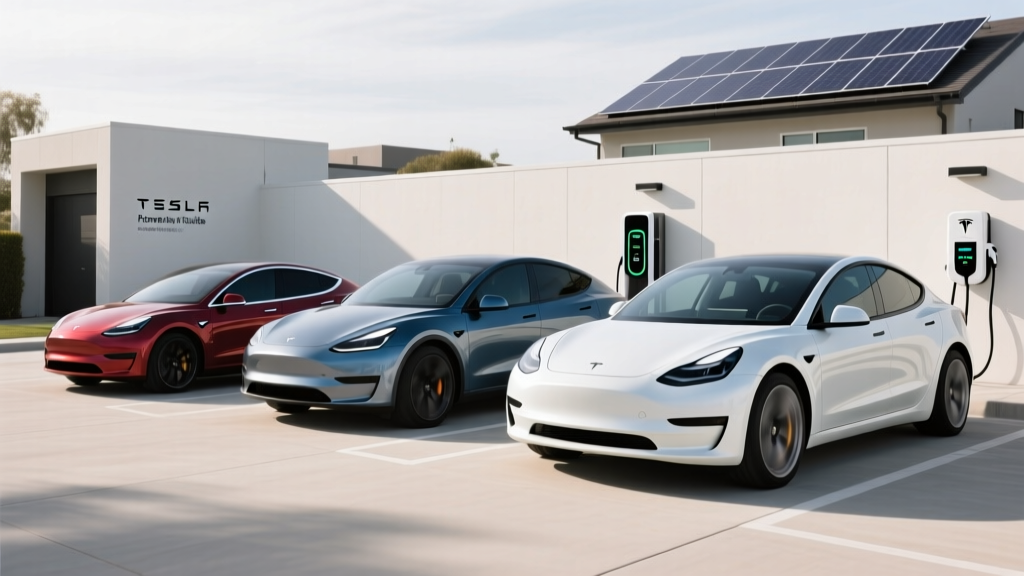
Tesla's 2026 lineup spans four consumer models across multiple trims. Range varies significantly based on drivetrain (RWD vs. AWD), wheel size, and battery chemistry. Here's the complete breakdown using EPA data from fueleconomy.gov:
| Model & Trim | EPA Range | Battery (usable) | Chemistry | Efficiency (MPGe) | Peak DC Charge | 10–80% Time | Base MSRP |
|---|---|---|---|---|---|---|---|
| Model S Long Range | 402 mi | ~100 kWh | NMC | 120 MPGe | 250 kW | ~25 min | $79,990 |
| Model 3 Long Range AWD | 363 mi | ~79 kWh | NMC | 132 MPGe | 250 kW | ~22 min | $47,740 |
| Model Y Long Range AWD | 330 mi | ~78 kWh | NMC | 123 MPGe | 250 kW | ~22 min | $48,990 |
| Model X Long Range | 335 mi | ~100 kWh | NMC | 111 MPGe | 250 kW | ~25 min | $79,990 |
| Model 3 RWD | 272 mi | ~57.5 kWh | LFP | 142 MPGe | 175 kW | ~25 min | $38,990 |
| Model Y RWD | 260 mi | ~57.5 kWh | LFP | 134 MPGe | 175 kW | ~25 min | $44,990 |
Understanding EV Charging Levels: Speeds in kW and Miles Per Hour
Before wiring up a charger, you need to understand the three charging tiers. The critical distinction: kW (kilowatts) measures power — how fast energy flows into your battery. kWh (kilowatt-hours) measures energy capacity — how much the battery holds. Think of kW as the width of a hose and kWh as the size of the bucket.
| Charging Level | Voltage | Power (kW) | Miles Added/Hour (Model 3 LR) | Best For |
|---|---|---|---|---|
| Level 1 | 120V AC | 1.0–1.4 kW | 3–5 mi/hr | Overnight top-off, low-mileage drivers |
| Level 2 | 240V AC | 7.2–19.2 kW | 25–65 mi/hr | Daily home charging, workplace |
| DC Fast Charging | 400V+ DC | 50–350 kW | 150–1,000+ mi/hr | Road trips, rapid replenishment |
For context, a Tesla Model 3 Long Range (~79 kWh battery, ~4 mi/kWh efficiency) charging on a 48A Level 2 circuit (11.5 kW) will add roughly 46 miles of range per hour — enough to fully replenish overnight from any daily driving load. That same car on a standard 120V outlet adds only about 4 miles per hour, which covers a 40-mile commute in a 10-hour session but falls short for heavier use.
Home Charger Installation: Electrical Requirements and Costs
Installing a Level 2 home charger is the single most impactful upgrade for Tesla ownership. Here's what's involved electrically and financially.
Electrical Requirements
A Level 2 charger requires a dedicated 240V circuit. The most common residential setup is a 60A breaker feeding a 48A continuous load charger (the National Electrical Code requires breakers rated at 125% of continuous load, so 48A × 1.25 = 60A). Smaller installations may use a 40A breaker with a 32A charger.
Your electrical panel must have enough spare capacity to add this load. A typical home charger draws 11.5 kW — comparable to running a central AC unit and an electric dryer simultaneously. If your panel is already near capacity (common in older homes with 100A service), you'll need a panel upgrade to 200A, which is a significant cost driver.
Installation Cost Breakdown
| Component | Simple Install (panel nearby) | Complex Install (long run / panel upgrade) |
|---|---|---|
| Level 2 Charger (Equipment) | $400–$700 | $400–$700 |
| Electrician Labor (2–4 hrs typical) | $300–$800 | $1,000–$2,500 |
| Electrical Permit | $50–$200 | $50–$200 |
| Panel Upgrade (if needed: 100A → 200A) | N/A | $1,500–$3,500 |
| Conduit / Wiring Materials | $100–$300 | $300–$800 |
| Total Estimated Cost | $850–$2,000 | $3,250–$7,700 |
For the final electrical specification and load calculation, always defer to a licensed electrician familiar with your local code. Requirements vary by jurisdiction, and permits are mandatory in most municipalities.
Which Connector Do You Need? Tesla NACS vs. CCS vs. CHAdeMO
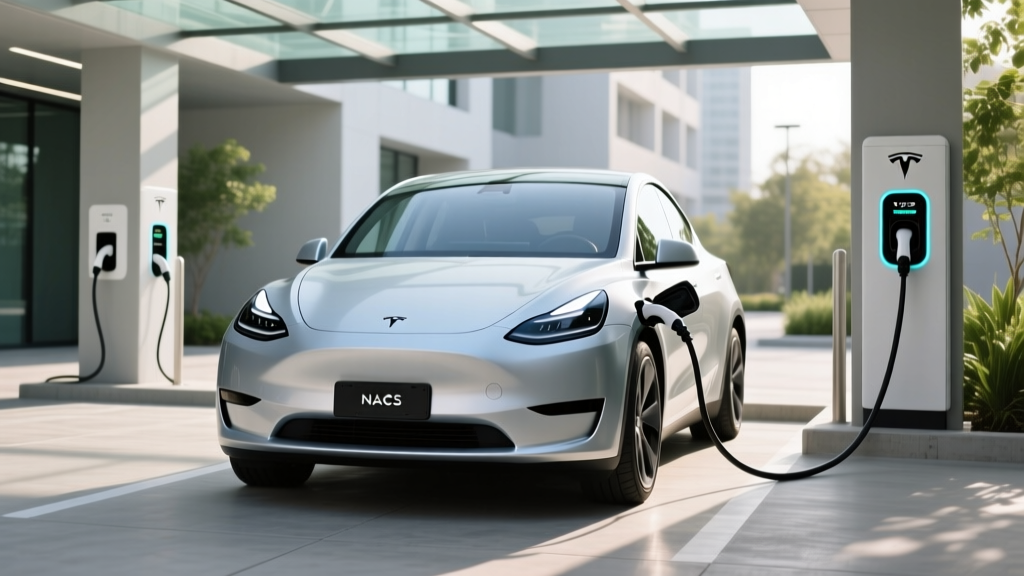
All 2026 Teslas ship with the North American Charging Standard (NACS) connector — the same proprietary connector Tesla has used since 2012, now adopted as an industry standard. As of 2025, Ford, GM, Rivian, Volvo, and others have transitioned to NACS, making it the dominant connector in North America.
| Connector | Used By | DC Fast Charge Availability | Adapter Needed for Tesla? |
|---|---|---|---|
| NACS (Tesla) | Tesla, Ford, GM, Rivian, Volvo, Polestar, others (2025+) | Tesla Supercharger network (20,000+ stalls in North America) | None — native connector |
| CCS1 | Legacy non-Tesla EVs (2024 and earlier models) | Electrify America, EVgo, ChargePoint | Tesla provides CCS adapter (included with newer vehicles, ~$175 separately) |
| CHAdeMO | Nissan Leaf (discontinued in US), older Japanese EVs | Limited and declining network | Third-party adapter (~$300–$450); not recommended for new buyers |
If you own a Tesla and occasionally need to use a CCS-equipped public charger (e.g., an Electrify America station in a Supercharger gap), Tesla sells a CCS Combo 1 adapter that enables DC fast charging on non-Tesla networks. For home Level 2 charging, all Teslas include a J1772 adapter in the glove box, allowing use of universal Level 2 stations at workplaces, hotels, and public garages.
Charging Cost Per Mile: Tesla vs. Gasoline
The financial case for EV ownership hinges on fuel cost savings. Here's what you'll actually pay to drive a Tesla in 2026, broken down by charging scenario.
| Charging Scenario | Typical $/kWh | Cost to Charge Model 3 LR (79 kWh, 10–80%) | Cost Per Mile (at 4 mi/kWh) |
|---|---|---|---|
| Home (off-peak utility rate) | $0.08–$0.14 | $4.43–$7.74 | $0.02–$0.035 |
| Home (standard flat rate) | $0.14–$0.20 | $7.74–$11.06 | $0.035–$0.05 |
| Public Level 2 (workplace/mall) | $0.20–$0.40 | $11.06–$22.12 | $0.05–$0.10 |
| Tesla Supercharger (DC fast) | $0.28–$0.48 | $15.51–$26.57 | $0.07–$0.12 |
| Non-Tesla DC fast (EA, EVgo) | $0.35–$0.55 | $19.39–$30.42 | $0.09–$0.14 |
Gas comparison: A comparable midsize sedan getting 30 MPG combined at $3.50/gallon costs $0.117 per mile in fuel alone. A Tesla Model 3 charged primarily at home on off-peak rates costs $0.02–$0.05 per mile — a savings of 57–83%. Even exclusive Supercharger use at $0.38/kWh averages ~$0.095/mile, still cheaper than gas.
The key insight: home charging is where EV economics win. Drivers who rely primarily on public DC fast charging sacrifice most of the cost advantage. If you can install a Level 2 charger at home, your annual "fuel" cost for 12,000 miles drops to roughly $360–$600 versus $1,400+ for gasoline.
Best Level 2 Home Chargers for Tesla in 2026
Not all Level 2 chargers are equal. Here are three proven units we recommend based on power output, cable management, smart features, and real-world reliability.
Tesla Wall Connector (Gen 3)
Power: Up to 11.5 kW (48A on 60A circuit) | Connector: NACS native | Cable: 24 ft | Price: ~$475
Why it's our top pick for Tesla owners: Native NACS plug means no adapter needed. Wi-Fi enabled for firmware updates and energy monitoring. Power-sharing feature lets you install two units on a single circuit. Sleek design with integrated cable management. Works with any EV using a NACS-to-J1772 adapter (sold separately for non-Tesla guests).
ChargePoint Home Flex
Power: Up to 12 kW (50A on 60A circuit, configurable down to 16A) | Connector: J1772 (use Tesla's included adapter) | Cable: 23 ft | Price: ~$550–$650
Best for mixed-EV households: Amperage is adjustable via app, making it flexible for homes with limited panel capacity. NEMA 14-50 plug version allows relocation without rewiring. Alexa and Google Home integration. Requires the Tesla J1772 adapter for each session — a minor inconvenience.
Grizzl-E Smart
Power: Up to 10 kW (40A on 50A circuit) | Connector: J1772 | Cable: 24 ft | Price: ~$449
Best budget and cold-climate pick: Built in Canada, rated to -40°F. IP67 outdoor rating with rugged aluminum enclosure. OCPP-compatible for commercial and multi-unit installations. Slightly lower max output than competitors but more than adequate for overnight charging. Requires Tesla J1772 adapter.
Safety, Permits, and Code Considerations
Home EV charger installation isn't a DIY project. Here's what code compliance and safety demand:
- Dedicated circuit: Your Level 2 charger must be on its own dedicated breaker — no sharing with other appliances. A 48A charger requires a 60A breaker.
- GFCI protection: The 2023 NEC (National Electrical Code) requires GFCI protection for EV charging outlets in garages and outdoor locations. Hardwired installations (like the Tesla Wall Connector) may have integrated ground-fault protection; plug-in units rely on the breaker. Your electrician will ensure compliance with your local code version.
- Outdoor rating: If your charger mounts outside, it must carry at minimum an IP55 rating (protected against water jets). All three chargers above meet or exceed this. For coastal or high-humidity areas, IP67 is preferred.
- Permit and inspection: Most jurisdictions require an electrical permit for new 240V circuits. The permit fee typically runs $50–$200. After installation, a municipal inspector will verify the work. Skipping the permit risks insurance claim denials and code violations.
- Wire gauge: A 60A circuit requires minimum 6 AWG copper wire (or 4 AWG aluminum). Your electrician will size wire based on run length and ambient temperature derating.
Frequently Asked Questions
How much does it cost to install a home EV charger?
A straightforward Level 2 installation with the panel nearby typically costs $850–$2,000 including equipment, electrician labor, and permit. If your home needs a panel upgrade (100A to 200A) or a long conduit run, expect $3,250–$7,700. Get at least two quotes from licensed electricians — prices vary significantly by region and job complexity.
How fast will each charging level add range?
For a Tesla Model 3 Long Range: Level 1 (120V) adds 3–5 miles per hour. Level 2 at 11.5 kW adds roughly 46 miles per hour. DC fast charging at a V3 Supercharger (250 kW peak) can add up to 200 miles in about 15 minutes, though the charge curve tapers significantly above 80% State of Charge.
Which Tesla has the longest range in 2026?
The Model S Long Range leads the lineup at an EPA-estimated 402 miles. The Model 3 Long Range AWD follows at 363 miles and offers the best efficiency at 132 MPGe. For buyers prioritizing value, the Model 3 LR delivers 91% of the Model S's range at roughly 60% of the price.
Which connector is compatible with my Tesla?
All 2026 Teslas use the NACS connector natively. For home Level 2 charging, you can use a Tesla Wall Connector (native NACS plug) or any J1772 charger with the included Tesla adapter. For non-Tesla DC fast chargers (Electrify America, EVgo), use Tesla's CCS Combo 1 adapter.
How much does charging cost per mile vs. gas?
Charging a Tesla Model 3 at home on off-peak rates costs roughly $0.02–$0.05 per mile. A comparable gasoline sedan at 30 MPG and $3.50/gallon costs about $0.12 per mile. Even exclusive Supercharger use (~$0.10/mile) undercuts gasoline. The savings are largest for home-charged drivers: roughly $800–$1,000 per year at 12,000 miles driven.
What electrical upgrades might I need?
The most common upgrade is a panel expansion from 100A to 200A service, needed when your existing panel lacks spare capacity for a 60A EV circuit. Older homes may also need wiring updates (aluminum to copper), a new grounding rod, or a utility transformer upgrade for the added load. Your electrician's load calculation will identify what's required before work begins.
Does the §30D federal tax credit apply to home charger installation?
The federal Alternative Fuel Vehicle Refueling Property Credit (IRC §30C, separate from the vehicle purchase credit under §30D) offers up to $1,000 for home EV charger equipment and installation. Eligibility depends on your census tract meeting specific low-income or non-urban criteria per current IRS guidance. Consult a tax professional to verify eligibility for your address — rules are subject to change.
The Tesla with the longest range is only as practical as your ability to recharge it. A $475 Tesla Wall Connector on a properly installed 60A circuit delivers 46 miles of range per hour of sleep — enough to cover any daily commute and wake up "full" every morning. That's the ownership experience that makes the 402-mile Model S, or the 363-mile Model 3 Long Range, a genuinely practical daily driver rather than a spec-sheet curiosity.