There Is No 'Home Supercharger' — Here's What Tesla Actually Sells
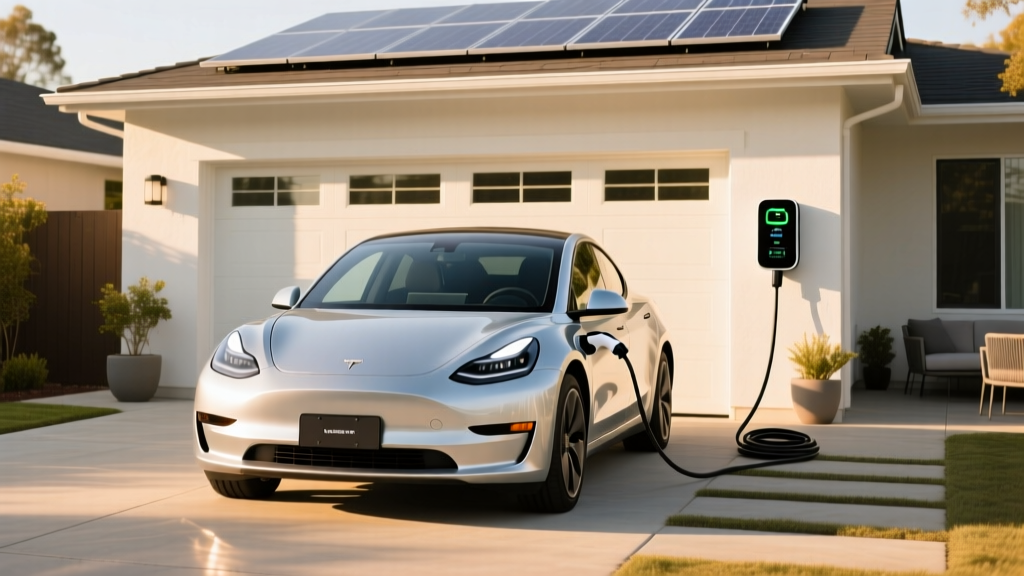
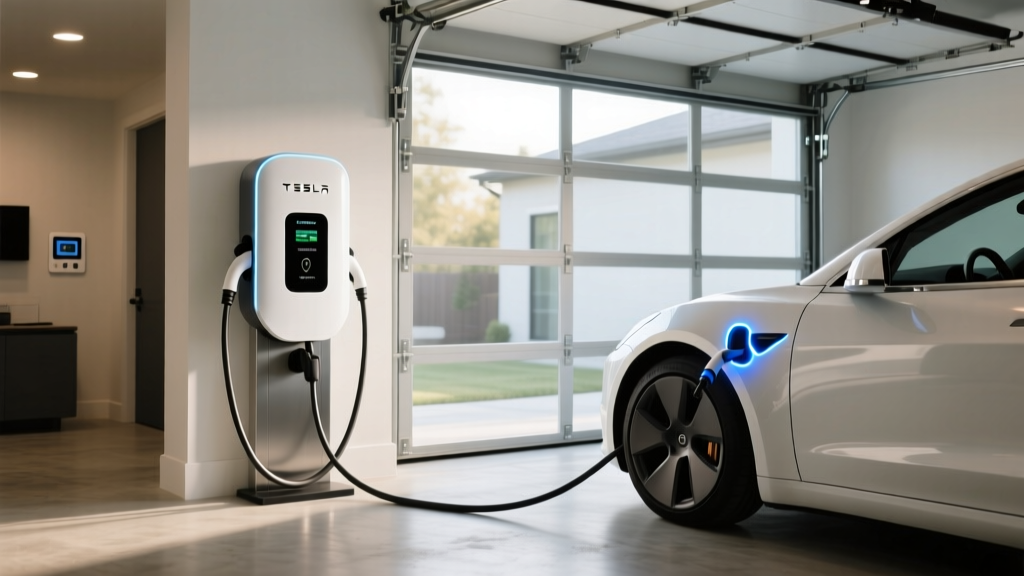
Let's clear up the most common misconception right away: Tesla does not sell a Supercharger for your garage. The Supercharger network consists of commercial DC fast-charging stations delivering 150–350 kW (and up to 100 kW for older V2 stalls). What Tesla does sell for residential use is the Tesla Wall Connector, a Level 2 AC charger that maxes out at 11.5 kW (48 amps) on a 60-amp dedicated circuit. When people search for "Tesla home Supercharger cost," they're almost always asking about installing a Wall Connector — and that's exactly what this guide covers, with real numbers from a 2026 ownership perspective.
The Wall Connector is a legitimate, fast home charger. An 11.5 kW feed will add roughly 44 miles of range per hour of charging on a Model 3 or Model Y, easily replenishing a full day's driving overnight. But it operates on entirely different physics than a Supercharger, and the installation costs, electrical requirements, and expectations should match what it actually is.
Charging Levels Explained: kW, Miles per Hour, and What You Actually Get
Before pricing anything, you need to understand the three charging tiers and what each delivers. Power is measured in kW (kilowatts) — the rate of energy flow. Energy stored in your battery is measured in kWh (kilowatt-hours) — the total capacity. Confusing the two is the single most common EV mistake. Think of kW as how fast water flows from a hose, and kWh as the size of the bucket.
| Level | Voltage / Amps | Max Power (kW) | Miles of Range per Hour | Typical Use Case |
|---|---|---|---|---|
| Level 1 | 120V / 12A | ~1.4 kW | 3–5 mi/hr | Emergency / trickle (PHEV-friendly) |
| Level 2 (Home) | 240V / 40–48A | 9.6–11.5 kW | 30–44 mi/hr | Primary home charging |
| DC Fast Charging | 400–800V DC | 50–350 kW | 150–1,000+ mi/hr (peak) | Road trips / public stations |
A Tesla Model Y Long Range has an 82 kWh usable battery and an EPA range of 310 miles. On a Level 2 Wall Connector at 11.5 kW, a 10–80% charge (roughly 57 kWh) takes about 5 hours. On Level 1 at 1.4 kW? That same charge would take roughly 41 hours — which is why Level 1 is only practical for plug-in hybrids with small batteries or as a backup.
Tesla Wall Connector Installation Cost: The Full Breakdown
The Tesla Wall Connector unit itself retails for $475 (24-foot cable version) as of early 2026. But the hardware is usually the cheapest part of the project. Your total cost depends heavily on your electrical panel's capacity, the distance from panel to charger location, and local permit fees.
| Component | Low Estimate | High Estimate | Notes |
|---|---|---|---|
| Tesla Wall Connector (hardware) | $475 | $475 | Fixed retail price |
| Electrician labor (basic install) | $600 | $1,200 | Short run, accessible panel |
| Electrical materials (wire, conduit, breaker) | $150 | $500 | Varies with run length |
| Permit & inspection | $50 | $300 | Varies by municipality |
| Panel upgrade (if needed, 200A service) | $2,000 | $5,000 | Required if panel is maxed out |
| Total (no panel upgrade) | $1,275 | $2,475 | Typical scenario |
| Total (with panel upgrade) | $3,275 | $7,475 | Older homes with 100A service |
Do You Need a Panel Upgrade?
This is the make-or-break question for older homes. The Wall Connector at 48 amps requires a 60-amp dedicated circuit (the National Electrical Code requires continuous loads to be derated to 80% of breaker capacity: 48A × 1.25 = 60A). Your electrician will perform a load calculation on your existing panel to determine if there's headroom.
Homes with 200-amp service and modern panels usually have sufficient capacity. Homes with 100-amp service — common in pre-1990 construction — often need an upgrade, especially if you're also running electric heat, a dryer, and an oven. A panel upgrade to 200A typically costs $2,000–$5,000 depending on your utility's requirements and local labor rates.
If a panel upgrade isn't feasible or budget-friendly, you can configure the Wall Connector to draw fewer amps. Setting it to 32 amps (40-amp circuit) still delivers 7.7 kW — enough for most daily needs — and may avoid the upgrade entirely. Your electrician should advise on this trade-off.
Charging Cost per Mile: Home Electricity vs. Gasoline
The economics of home charging are where EVs pull dramatically ahead of gasoline vehicles. Here's what it actually costs to fuel a Tesla Model Y vs. a comparable gas SUV, using EPA energy consumption data.
| Scenario | Rate | Cost per Mile (Model Y) | Cost per Mile (Gas SUV, 25 MPG) |
|---|---|---|---|
| Home off-peak electricity | $0.12/kWh | $0.033 | — |
| Home average electricity | $0.17/kWh | $0.047 | — |
| Public Level 2 (ChargePoint, etc.) | $0.30/kWh | $0.083 | — |
| Tesla Supercharger (average) | $0.35/kWh | $0.096 | — |
| Gasoline ($3.50/gal) | $3.50/gal | — | $0.140 |
| Gasoline ($4.50/gal) | $4.50/gal | — | $0.180 |
The Model Y consumes roughly 28 kWh per 100 miles (about 3.6 miles/kWh) in real-world mixed driving. At the U.S. average residential rate of $0.17/kWh, that's 4.7 cents per mile. At off-peak utility rates (many utilities offer EV time-of-use plans at $0.08–$0.12/kWh), you're looking at 2.2–3.3 cents per mile.
A comparable gas SUV at 25 MPG combined with gas at $3.50/gallon costs 14 cents per mile. Over 15,000 miles per year, that's $2,100 for gas vs. roughly $700 for home charging — a $1,400 annual savings. Over five years, home charging saves approximately $7,000 in fuel, which more than offsets a basic Wall Connector installation.
Connector Compatibility: NACS, CCS, and What Fits Your EV
The connector landscape has shifted dramatically. Tesla's North American Charging Standard (NACS) has been adopted by nearly every major automaker starting in 2025. Here's where things stand in 2026:
| Connector | Brands Using It | Home Charger Availability |
|---|---|---|
| NACS (Tesla) | Tesla, Ford, GM, Rivian, Volvo, Polestar, Mercedes, BMW, Hyundai, Kia, Subaru, Lucid, Toyota | Tesla Wall Connector, ChargePoint Home Flex (NACS), Emporia Vue |
| CCS1 | Legacy models pre-NACS transition, Stellantis (some), VW ID.4 (pre-2025) | ChargePoint Home Flex, Emporia Vue, Grizzl-E |
| CHAdeMO | Nissan LEAF (legacy only, no new models) | Very limited home options; adapters available |
If you own a Tesla, the Wall Connector with its native NACS plug is the most seamless option. If you own a non-Tesla EV that has transitioned to NACS (e.g., a 2025+ Ford Mustang Mach-E or 2025+ Hyundai Ioniq 5), the Wall Connector will plug in directly. For vehicles still on CCS1, you'll either need a CCS-compatible charger or Tesla's CCS adapter ($175).
Best Home EV Chargers for Tesla and NACS Vehicles (2026)
The Wall Connector is the default pick for Tesla owners, but it's not the only option. Here's how the top contenders compare:
Tesla Wall Connector
- Max Power: 11.5 kW (48A)
- Connector: NACS (native)
- Cable Length: 24 ft
- Smart Features: Wi-Fi, OTA updates, Tesla app integration, power sharing with second unit
- Price: $475
Best for: Tesla-only households. Cleanest integration, best app experience.
ChargePoint Home Flex (NACS)
- Max Power: 12 kW (50A)
- Connector: NACS (2025+ models)
- Cable Length: 23 ft
- Smart Features: Wi-Fi, Alexa, scheduling, works with any EV brand
- Price: $599
Best for: Multi-EV households or those wanting brand flexibility.
Emporia Vue Smart Charger
- Max Power: 11.5 kW (48A)
- Connector: NACS or CCS1 (configurable)
- Cable Length: 24 ft
- Smart Features: Energy monitoring, solar integration, load management
- Price: $399
Best for: Solar-panel owners wanting integrated energy management.
Grizzl-E Smart
- Max Power: 10 kW (40A)
- Connector: NACS or CCS1
- Cable Length: 24 ft
- Smart Features: OCPP protocol, adjustable amperage, rugged build
- Price: $449
Best for: Cold-climate durability and adjustable circuit settings.
Safety, Electrical Code, and Installation Requirements
Home EV charging is safe when installed to code. Here's what your installation must meet:
- Dedicated circuit: The Wall Connector requires its own breaker — it cannot share a circuit with other appliances.
- GFCI protection: The 2023 NEC (adopted by most jurisdictions by 2026) requires GFCI protection for all EV charging outlets and hardwired connections. The Wall Connector has built-in GFCI, satisfying this requirement for hardwired installs.
- Outdoor rating: The Wall Connector is rated NEMA 4 (indoor/outdoor), suitable for exterior walls and exposed carports. If mounting in a fully exposed area, verify your local inspector accepts NEMA 4 vs. NEMA 4X (corrosion-resistant).
- Wire gauge: A 60-amp circuit requires 6 AWG copper wire (THHN in conduit) or 4 AWG for longer runs to minimize voltage drop.
- Permit and inspection: Nearly all jurisdictions require an electrical permit for EV charger installation. Skipping this voids homeowner insurance coverage for electrical fires and creates a liability risk.
Hire a licensed electrician who has installed EV chargers before. Ask for their load calculation methodology and whether they pull permits as standard practice. According to NHTSA guidance, professional installation is strongly recommended over DIY for any 240V circuit.
Charging Time Examples: What to Expect with Common Battery Sizes
Charge times depend on battery size, starting state of charge (SoC), and your charger's power output. Below are estimates for a 10–80% charge on common Tesla and competitor batteries using the Wall Connector at 11.5 kW:
- Tesla Model 3 RWD (60 kWh usable, LFP): ~3.6 hours (10–80%)
- Tesla Model Y Long Range (82 kWh usable, NMC): ~5.0 hours (10–80%)
- Tesla Model S (100 kWh usable, NMC): ~6.1 hours (10–80%)
- Ford Mustang Mach-E Extended Range (91 kWh usable, NMC): ~5.5 hours (10–80%)
- Hyundai Ioniq 5 Long Range (77.4 kWh usable, NMC): ~4.7 hours (10–80%)
Note that LFP batteries (like the Model 3 RWD) can and should be charged to 100% regularly — Tesla recommends this for LFP chemistry to maintain accurate SoC calibration. NMC batteries benefit from staying between 20–80% for daily use to maximize long-term cell health.
Frequently Asked Questions
Can I install a Tesla Supercharger at home?
No. Superchargers are commercial DC fast chargers requiring 480V three-phase power, dedicated utility transformers, and commercial infrastructure. They are not available for residential purchase. The fastest home option is the Tesla Wall Connector at 11.5 kW (Level 2).
How much does it cost to install a home EV charger?
For a Tesla Wall Connector with a straightforward installation (short wire run, adequate panel capacity), expect $1,275–$2,475 total including hardware, electrician labor, materials, and permit. If your home needs a 200A panel upgrade, add $2,000–$5,000.
How fast will each charging level add range?
Level 1 (120V) adds 3–5 miles per hour. Level 2 at 11.5 kW adds 30–44 miles per hour depending on vehicle efficiency. DC fast charging at 150–250 kW can add 150–250+ miles in 15–20 minutes, though charge speed tapers significantly above 80% SoC.
Which connector is compatible with my EV?
As of 2026, most new EVs sold in North America use NACS (Tesla's connector). Older non-Tesla EVs may still use CCS1. The Nissan LEAF uses CHAdeMO. Check your vehicle's charge port or owner's manual. The Tesla Wall Connector uses NACS natively; adapters are available for CCS vehicles.
How much does charging cost per mile vs. gas?
Home charging a Tesla Model Y at the U.S. average rate of $0.17/kWh costs approximately 4.7 cents per mile. A comparable gas SUV at 25 MPG with $3.50/gallon fuel costs 14 cents per mile. Home charging saves roughly $1,400 per year at 15,000 miles driven.
What electrical upgrades might I need?
The most common upgrade is a panel service increase from 100A to 200A, needed in older homes that lack spare capacity. Your electrician will perform a load calculation. If your panel has sufficient headroom, no upgrade is needed — just a new 60-amp breaker and dedicated wiring run.
Is the §30C tax credit available for home charger installation?
The Alternative Fuel Vehicle Refueling Property Credit (§30C) covers 30% of home charger hardware and installation, up to $1,000 — but only for installations in qualifying low-income or non-urban census tracts. Check the IRS §30C page and verify your census tract eligibility with a tax professional before counting on this credit.