Why Your Tesla's Full Charge Time Depends on the Charger, Not the Car
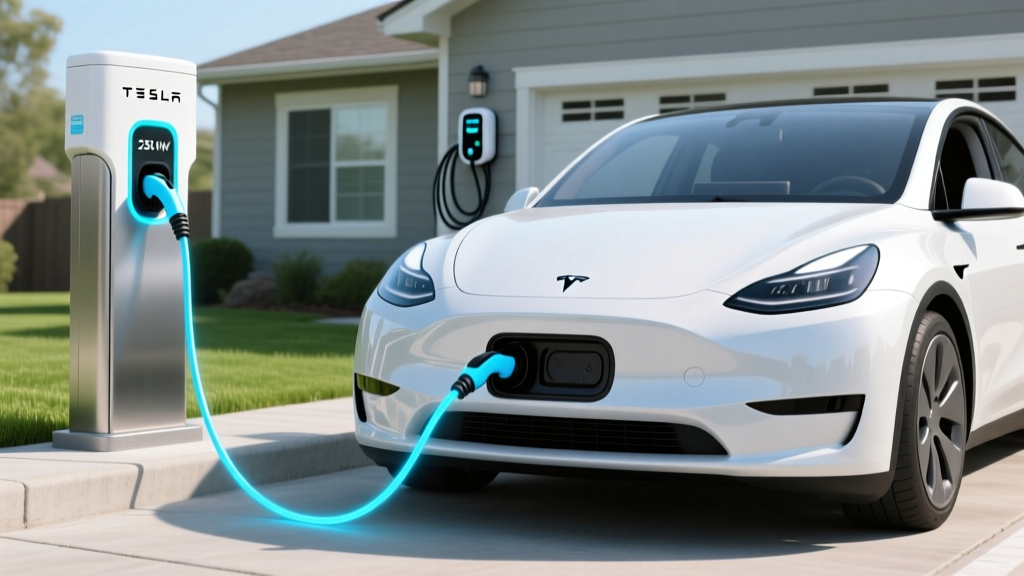
Search for "Tesla full charge time" and you'll find answers ranging from 15 minutes to 3 days. Both are correct. The variable isn't the car — it's the charging equipment delivering power to the battery. A Tesla Model Y Long Range with its 75 kWh (usable) battery can absorb energy at vastly different rates depending on whether it's plugged into a standard 120V wall outlet, a 240V home charger, or a 250 kW Supercharger.
Before we map out exact times, let's clear up the single most common point of confusion in EV charging: kW (kilowatts) measure power — the rate energy flows into the battery, like water pressure from a hose. kWh (kilowatt-hours) measure energy — the total capacity of the battery, like the size of the tank. A 250 kW charger doesn't deliver 250 kWh; it delivers energy at a rate of 250 kW. The bigger the battery (kWh) and the lower the charge rate (kW), the longer the fill.
Here's the full breakdown of what to expect across every charging scenario you'll encounter as a Tesla owner in 2026.
The Three Charging Levels: Speed, Power, and Range Added Per Hour
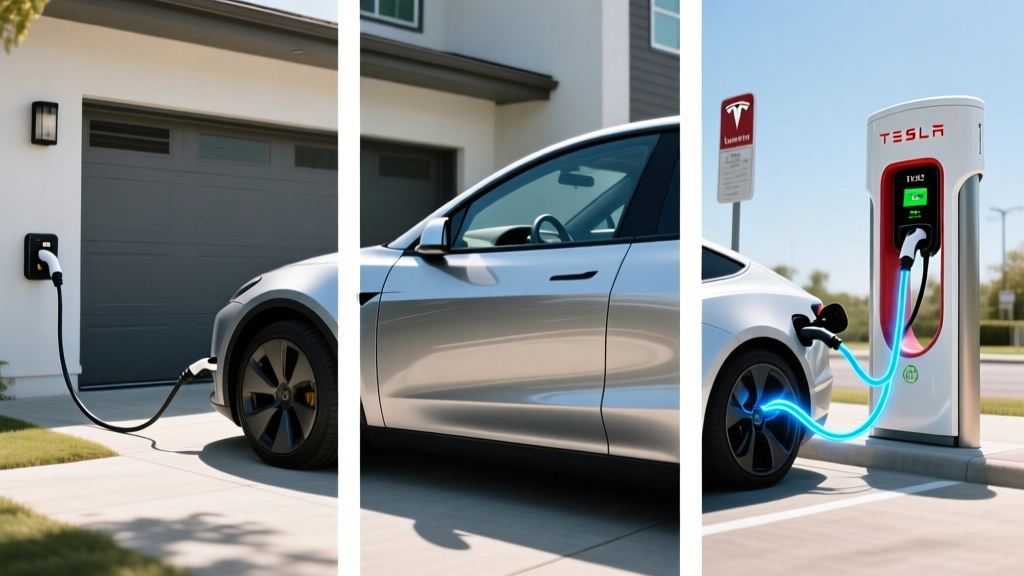
Every EV charger falls into one of three categories. Tesla vehicles support all three natively through the North American Charging Standard (NACS) connector, which has become the dominant plug in North America as of 2025-2026, with Ford, GM, Rivian, Hyundai, and most major automakers adopting it.
| Level | Voltage / Amps | Max Power (kW) | Range Added Per Hour | Typical Use Case |
|---|---|---|---|---|
| Level 1 | 120V / 12A | ~1.4 kW | 3–5 miles | Emergency / overnight trickle |
| Level 2 (Home) | 240V / 32–48A | 7.7–11.5 kW | 25–44 miles | Daily home charging |
| DC Fast (Supercharger) | 400V+ DC | 150–250 kW | ~1,000+ miles (peak) | Road trips / rapid top-ups |
Level 2 is where 90%+ of Tesla charging happens. If you drive 40 miles per day and plug into a 48A Level 2 charger at night, you'll recover that energy in roughly one hour. You'll rarely, if ever, need to wait for a "full charge" — most owners simply plug in when they get home and wake up to a full battery every morning.
Tesla Full Charge Time by Model and Charging Level
The following table maps realistic charge times for current Tesla models. Note that DC fast charging times are measured from 10% to 80% State of Charge (SoC) — not 0-100%. Charging slows dramatically above 80% to protect battery health, a phenomenon called the charge curve taper. A 250 kW peak rate is only sustained roughly between 10-40% SoC; by 80%, you may be pulling just 40-60 kW.
| Model (2025-2026) | Usable Battery (kWh) | Level 1 (0-100%) | Level 2 @ 11.5 kW (0-100%) | Supercharger 250 kW (10-80%) |
|---|---|---|---|---|
| Model 3 Long Range AWD | ~75 kWh | ~54 hours | ~6.5 hours | ~25 min |
| Model Y Long Range AWD | ~75 kWh | ~54 hours | ~6.5 hours | ~27 min |
| Model S Dual Motor | ~95 kWh | ~68 hours | ~8.5 hours | ~30 min |
| Model X Dual Motor | ~95 kWh | ~68 hours | ~8.5 hours | ~32 min |
How Much Does It Cost to Install a Home Tesla Charger?
This is the question that stops many new EV buyers cold. The answer spans a wide range because your home's existing electrical infrastructure determines the labor cost. Here's the honest breakdown.
Electrical requirements for Level 2 home charging: A proper Tesla home charger needs a dedicated 240V circuit, typically 60A (to support continuous 48A charging, per the National Electrical Code's 80% rule for continuous loads). This requires a NEMA 14-50 outlet or a hardwired connection. If your electrical panel has sufficient spare capacity (typically 200A service in modern homes), the install is straightforward.
If your home has older 100A or 150A service, or your panel is already near capacity with existing appliances, you may need a panel upgrade to 200A — adding $1,500-$3,000+ to the project. This is the single biggest variable in home charger installation cost and the one most online guides gloss over.
| Cost Component | Simple Install (Panel OK) | Complex Install (Panel Upgrade) |
|---|---|---|
| EVSE Equipment (Tesla Wall Connector) | $400–$475 | $400–$475 |
| Electrician Labor (240V circuit run) | $600–$1,500 | $800–$2,000 |
| Electrical Permit | $50–$200 | $50–$200 |
| Panel Upgrade (if needed) | $0 | $1,500–$3,500 |
| Total Estimated Cost | $1,050–$2,175 | $2,750–$6,175 |
Get multiple quotes. A licensed electrician should perform a load calculation on your panel before quoting. Some utilities offer rebates of $250-$1,000 for Level 2 charger installation — check your local provider. As always, consult a licensed electrician for your specific electrical requirements; the figures above are national averages.
Which Connector and Charger Is Compatible With My Tesla?
Tesla uses the North American Charging Standard (NACS) connector — the proprietary plug Tesla designed, which has since been adopted as an industry standard by SAE International. Every Tesla sold in North America comes with a NACS charge port. This means:
- Tesla Superchargers: Plug directly in — no adapter needed. Tesla's network has 25,000+ Superchargers across North America as of 2026.
- Non-Tesla DC fast chargers (Electrify America, EVgo, etc.): Many now include NACS cables. If a station only has CCS1, you'll need a CCS-to-NACS adapter (~$200-$250).
- Level 2 public chargers (J1772): Tesla includes a J1772-to-NACS adapter with every new vehicle. This covers virtually all public Level 2 stations.
| Connector Type | Where You'll Find It | Tesla Compatibility |
|---|---|---|
| NACS (Tesla) | Superchargers, Destination Chargers, new public DC stations | Native — plug and charge |
| J1772 | Public Level 2 stations (ChargePoint, Blink, etc.) | Adapter included with vehicle |
| CCS1 | Electrify America, older DC fast stations | CCS-to-NACS adapter required (~$200) |
| CHAdeMO | Legacy Nissan Leaf stations (declining) | Not supported — no adapter available |
One advantage of Tesla's ecosystem: the car's navigation system automatically routes you through Superchargers on road trips, preconditions the battery before arrival (warming it to optimal temperature for maximum charge speed), and handles payment automatically. This frictionless experience is a significant ownership benefit that third-party networks still struggle to match.
How Much Does Charging Cost Per Mile vs. Gas?
This is where EV ownership economics shine — but the savings depend heavily on where and when you charge. Electricity rates vary enormously by state and time of day.
| Charging Scenario | Rate ($/kWh) | Cost to Fill 75 kWh (Model Y) | Cost Per Mile (at 3.5 mi/kWh) |
|---|---|---|---|
| Home — Off-Peak (national avg) | $0.13 | $9.75 | $0.037 |
| Home — Peak (national avg) | $0.25 | $18.75 | $0.071 |
| Public Level 2 (ChargePoint, etc.) | $0.30–$0.45 | $22.50–$33.75 | $0.086–$0.129 |
| Tesla Supercharger (avg 2026) | $0.28–$0.36 | $21.00–$27.00 | $0.080–$0.103 |
| Gasoline (28 MPG avg @ $3.40/gal) | — | $33.38 (equiv. tank) | $0.121 |
The bottom line: Charging at home during off-peak hours costs roughly $0.04 per mile — about one-third the cost of gasoline. Even at Supercharger rates, you're typically paying less per mile than a 28 MPG gas car. But if you rely exclusively on public DC fast charging at premium rates, the savings narrow considerably. Home charging access is the single biggest factor in EV cost-of-ownership advantage.
According to fueleconomy.gov, the 2025 Model Y Long Range achieves 122 MPGe combined, translating to roughly 28 kWh per 100 miles of driving — one of the more efficient electric SUVs on the market.
Best Home Chargers for Tesla Owners: Equipment Picks
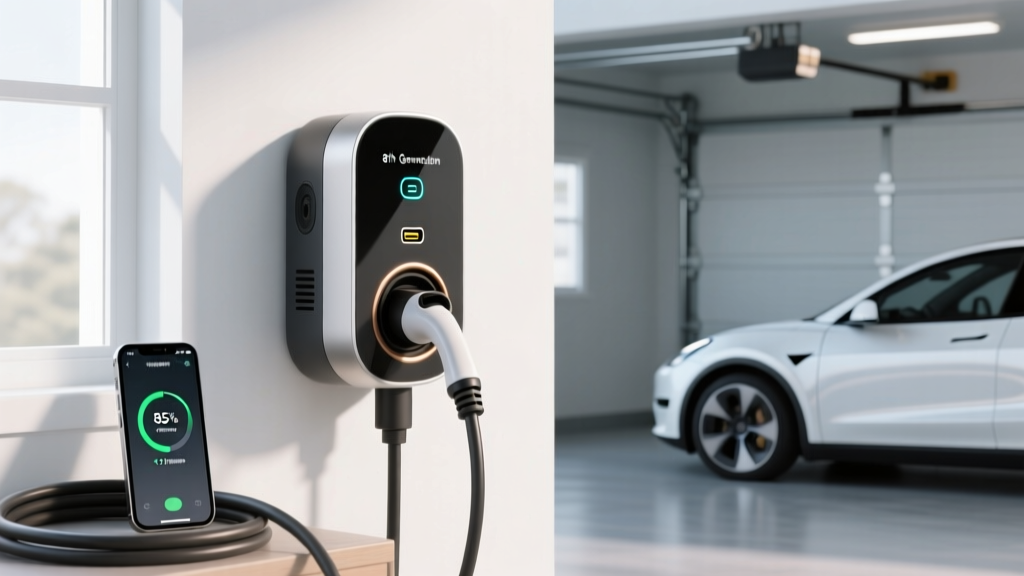
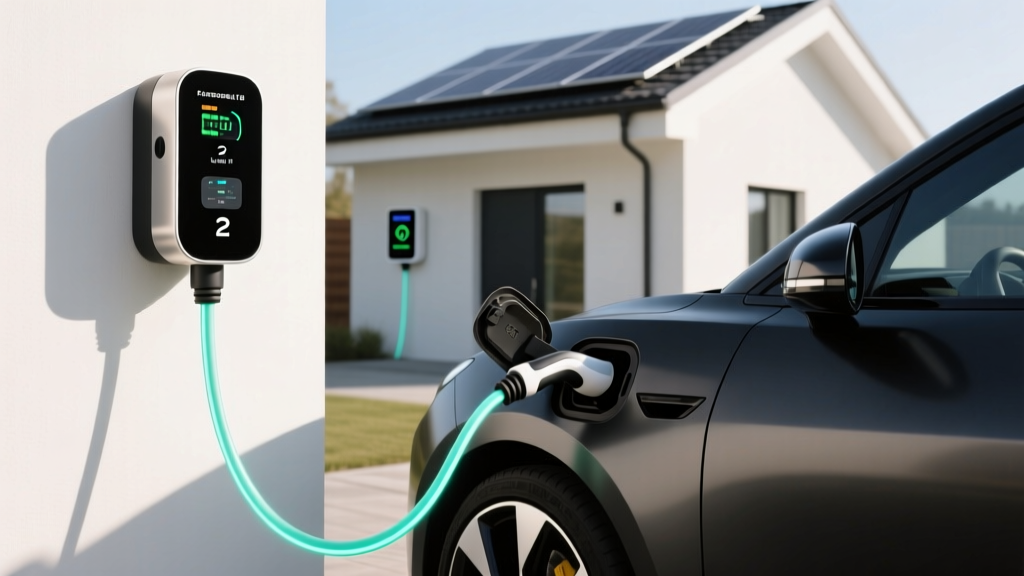
Tesla's own Wall Connector is the default choice, but it's not the only option. Here are the top Level 2 chargers compatible with NACS-equipped Teslas, evaluated on power output, cable length, smart features, and value.
Tesla Wall Connector (Gen 3)
Power: Up to 11.5 kW (48A)
Connector: NACS (native)
Cable: 24 ft
Smart features: Wi-Fi, OTA updates, power sharing (multiple units on one circuit), access control
Price: ~$475
Verdict: Best for Tesla-only households. Seamless integration, clean design, and the power-sharing feature lets you install two connectors on a single 60A circuit.
ChargePoint Home Flex (NACS)
Power: Up to 12 kW (50A, adjustable down to 16A)
Connector: NACS (2025+ model)
Cable: 23 ft
Smart features: App scheduling, Alexa integration, detailed energy tracking, flexible amperage
Price: ~$550–$600
Verdict: Best if you also own a non-Tesla EV (J1772 version available) or want granular amperage control for older electrical panels.
Emporia Vue Level 2 (NACS)
Power: Up to 11.5 kW (48A)
Connector: NACS
Cable: 24 ft
Smart features: Energy monitoring with whole-home panel integration, solar-aware scheduling, app control
Price: ~$400–$450
Verdict: Best value pick. If you have solar panels or want to monitor exactly how much energy your EV consumes relative to your home, the Emporia ecosystem is unmatched at this price.
Grizzl-E Smart (NACS)
Power: Up to 10 kW (40A)
Connector: NACS
Cable: 24 ft
Smart features: Basic app, OCPP compatibility, extreme cold rating (-40°F)
Price: ~$450
Verdict: Best for cold climates. Built in Canada with industrial-grade components. Less polished app, but the hardware is bulletproof in harsh winters.
All chargers listed above are UL-listed (or equivalent certified), which is non-negotiable for safety and may be required for utility rebates. Avoid uncertified chargers from online marketplaces — they lack proper safety protections and can void insurance coverage in the event of an electrical fire.
Safety, Electrical Code, and Installation Considerations
Home EV charging involves continuous high-amperage electrical loads — the same category as running your electric oven for 8 hours straight. Proper installation isn't optional. Here's what the National Electrical Code (NEC) and best practices require:
- Dedicated circuit: Your Level 2 charger must be on its own dedicated breaker — not shared with other appliances. A 60A breaker supports 48A continuous charging.
- GFCI protection: NEC 2020 and later requires GFCI (Ground Fault Circuit Interrupter) protection for EV charging outlets. Hardwired installations may have different requirements depending on local code — your electrician will determine this.
- Outdoor rating: If your charger is installed outside (garage exterior, carport, driveway), the EVSE must carry a NEMA 4 or NEMA 4X weather rating. All four chargers recommended above are rated for outdoor use.
- Wire gauge: A 60A circuit requires 6 AWG copper wire (or 4 AWG aluminum). Undersized wiring is a fire hazard. This is why a licensed electrician is essential — not a handyman.
- Permit and inspection: Most jurisdictions require an electrical permit for a new 240V circuit. The inspection ensures the work meets code and protects your home insurance coverage. Budget $50-$200 for the permit fee.
One often-overlooked consideration: if you install a NEMA 14-50 outlet rather than hardwiring, the outlet itself should be a high-quality, industrial-grade receptacle (Hubbell or Bryant brand recommended by electricians). Cheap 14-50 outlets from big-box stores have been linked to overheating under continuous EV charging loads.
Frequently Asked Questions
How fast will each charging level add range to my Tesla?
Level 1 (120V) adds roughly 3-5 miles of range per hour — enough for a plug-in hybrid but impractical for a Tesla. Level 2 at 48A/11.5 kW adds 35-44 miles per hour, which is more than sufficient for daily driving. A 250 kW V4 Supercharger can add up to 200 miles of range in approximately 15 minutes under ideal conditions (low SoC, preconditioned battery, moderate temperature).
Should I charge my Tesla to 100% every night?
Tesla recommends setting your daily charge limit to 80% for vehicles with NMC (nickel manganese cobalt) battery chemistry, which includes the Long Range Model 3 and Model Y. Regularly charging to 100% accelerates degradation in NMC cells. The Standard Range (RWD) Model 3 uses LFP (lithium iron phosphate) chemistry, which Tesla recommends charging to 100% regularly. Check your vehicle's battery type in the Tesla app under Battery Settings.
What electrical upgrades might I need for a home charger?
The most common upgrade is a panel capacity increase from 100A or 150A to 200A service, costing $1,500-$3,500. You might also need to upgrade the service drop wire from your utility or add a sub-panel if the charger is far from the main panel (e.g., a detached garage). An electrician's load calculation will determine this before work begins.
How much does Tesla Supercharging cost compared to home charging?
As of 2026, Tesla Supercharger rates average $0.28-$0.36/kWh in the US, varying by location and time of day. That's roughly 2-3x the cost of home off-peak electricity at $0.13/kWh. For a Model Y, a typical Supercharger session from 20-80% costs $12-$18, while the same energy at home costs $4-$6. Supercharging is convenient for road trips, but daily reliance on it erodes the EV cost advantage.
Can I use a non-Tesla charger with my Tesla?
Yes. Every Tesla includes a J1772 adapter for public Level 2 stations. For CCS1 DC fast chargers, you'll need a CCS-to-NACS adapter (Tesla sells one for ~$250). Tesla has also opened many Superchargers to non-Tesla EVs via the Magic Dock adapter built into select stalls, though this doesn't change anything for Tesla owners — you still plug in natively.
Does cold weather affect Tesla charging speed?
Significantly. Below freezing, a cold battery cannot accept charge at peak rates until it warms up. Tesla's navigation system handles this automatically by preconditioning the battery when you navigate to a Supercharger — it begins heating the pack miles before arrival. If you arrive at a Supercharger without preconditioning (e.g., you just started driving in cold weather), expect 10-80% charge times to increase by 5-15 minutes. According to Tesla's official charging guide, preconditioning is one of the most impactful steps you can take for fast charging efficiency.
Understanding your Tesla's full charge time isn't about memorizing a single number — it's about matching the right charging level to your daily routine. Install a Level 2 charger at home, plug in each night, and the question of "how long does a full charge take" becomes largely irrelevant. You'll wake up every morning with a full battery and a fuel cost of roughly four cents per mile.