You've spotted a listing for a Tesla with free supercharging for sale — maybe a 2017 Model S P100D, a 2018 Model X, or a rare 2019 Model 3 Performance with transferable credits. Unlimited free DC fast charging sounds like a golden ticket in an era where public charging averages $0.35–$0.48/kWh. But before you wire the deposit, you need to understand what that perk actually covers, what your home charging setup will cost, and how the math works when the Supercharger network is your primary fueling stop.
This guide breaks down the real economics of owning a Tesla with free Supercharging in 2026, then pivots to the home charging installation, connector compatibility, and equipment decisions every Tesla buyer faces — whether your car came with free electrons or not.
What "Free Supercharging" Actually Means in 2026
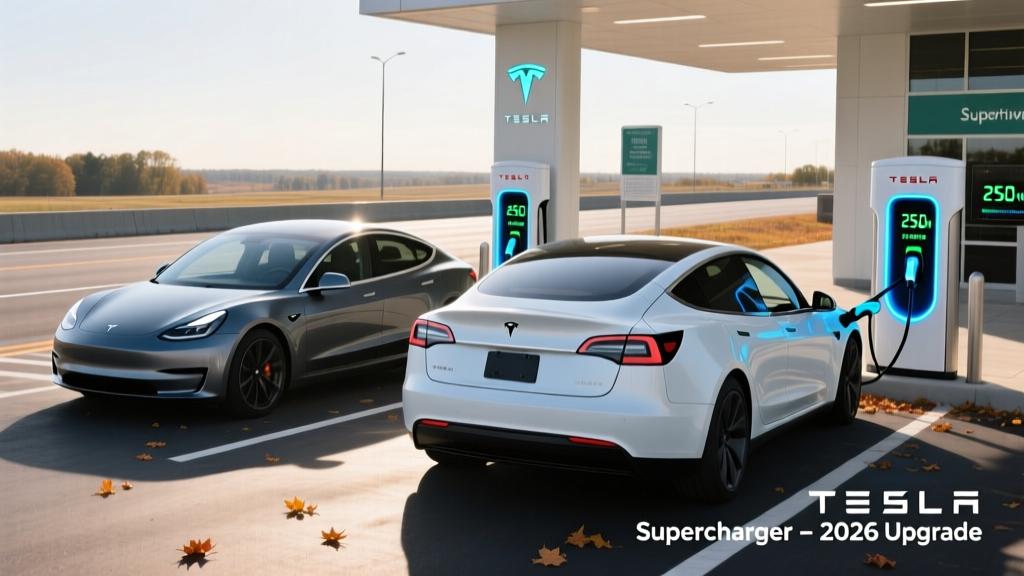
Tesla offered free unlimited Supercharging as a promotional incentive on vehicles delivered primarily between 2012 and 2019. The terms vary significantly by era and transfer policy:
- 2012–2016 Model S/X: Free unlimited Supercharging tied to the VIN (vehicle), transferable to subsequent owners. These are the most valuable listings.
- 2017–mid-2019 Model S/X: Free unlimited Supercharging tied to the original owner, not transferable on resale. Some exceptions exist for Tesla-certified transfers during promotional windows.
- 2019 Model 3 Performance: A small batch received transferable free Supercharging as a referral promotion — extremely rare and heavily sought after.
- Post-2019: Tesla shifted to limited-time referral credits (e.g., 10,000 miles or 1 year), not lifetime unlimited.
Charging Levels Explained: Speeds, Costs, and Range Added
Whether you're topping off at home or relying on Superchargers, understanding the three charging levels is essential. Power is measured in kW (kilowatts) — the rate of energy delivery. Energy stored in the battery is measured in kWh (kilowatt-hours) — the total capacity. A 100 kWh battery charged at 10 kW takes roughly 10 hours from empty to full.
| Level | Voltage / Amperage | Power (kW) | Miles of Range / Hour | Typical Use Case |
|---|---|---|---|---|
| Level 1 | 120V / 12A | 1.4 kW | 3–5 mi/hr | Overnight trickle; emergency top-off |
| Level 2 | 240V / 32–48A | 7.7–11.5 kW | 25–44 mi/hr | Home daily charging; workplace |
| DC Fast (Supercharger V3/V4) | 400–800V DC | 150–250 kW (peak) | ~200–750 mi/hr (peak) | Road trips; rapid top-ups |
Real-world charging time examples (10–80% SoC):
- Model 3 Long Range (82 kWh usable, NMC): ~25–28 minutes on a 250 kW V3 Supercharger; ~7–8 hours on a 48A Level 2 home charger.
- Model S (100 kWh usable): ~30–35 minutes on V3 Supercharger; ~9–10 hours on 48A Level 2.
- Model Y Long Range (75 kWh usable, LFP in some trims): ~22–25 minutes on V3 Supercharger; ~6.5–7 hours on 48A Level 2.
Note that DC fast charging follows a charge curve: peak kW is only sustained between roughly 10–50% State of Charge. Above 80%, the rate tapers significantly to protect battery health. A "250 kW" Supercharger does not deliver 250 kW for the entire session.
Cost to Charge: Free Supercharging vs. Home vs. Paid Public
Here's where the economics of a Tesla with free Supercharging for sale become concrete. Let's compare cost-per-mile across scenarios using a Model 3 Long Range averaging 26 kWh/100 miles (approximately 3.85 miles/kWh) — a realistic combined figure from fueleconomy.gov EPA data.
| Scenario | Rate ($/kWh) | Cost per 100 mi | Cost per Mile | Annual Cost (12,000 mi) |
|---|---|---|---|---|
| Home (off-peak utility rate) | $0.12 | $3.12 | $0.031 | $374 |
| Home (average US residential) | $0.17 | $4.42 | $0.044 | $530 |
| Paid Supercharger (avg 2026) | $0.38 | $9.88 | $0.099 | $1,186 |
| Electrify America / third-party DCFC | $0.48 | $12.48 | $0.125 | $1,498 |
| Free Supercharging (transferable) | $0.00 | $0.00 | $0.00 | $0 |
| Gas car (25 MPG, $3.40/gal) | $0.136/mi equiv. | $13.60 | $0.136 | $1,632 |
Home Charger Installation: Requirements, Costs, and Panel Upgrades
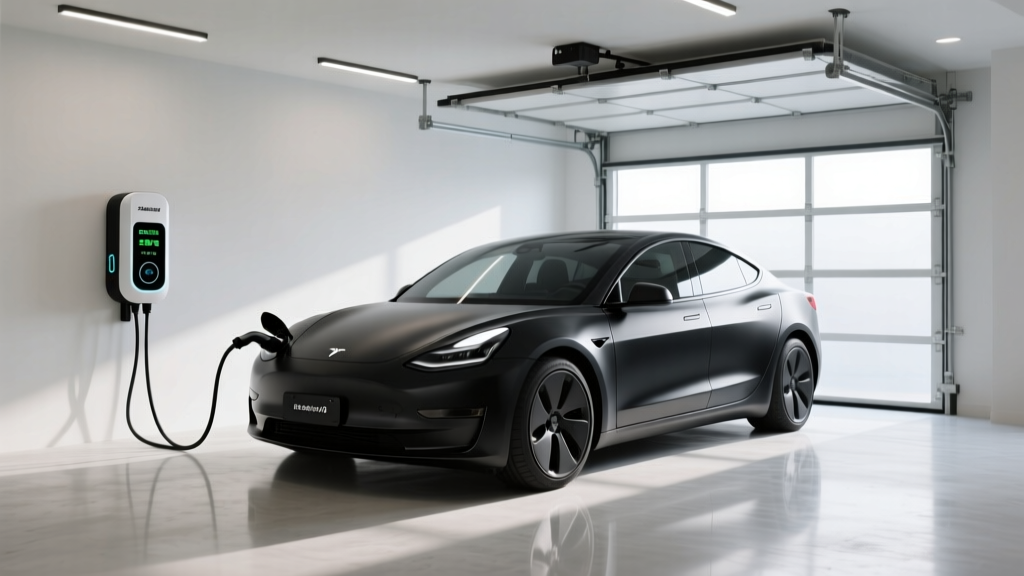
Even with free Supercharging, you'll want a Level 2 home charger for daily convenience. Most Tesla owners charge at home 80–90% of the time, using Superchargers primarily for road trips. Here's what a professional installation requires.
Electrical Requirements
- Circuit: Dedicated 240V circuit on a NEMA 14-50 outlet (50A breaker, 40A continuous draw) or hardwired connection for 48–60A chargers.
- Wire gauge: 6 AWG copper for 50A circuits; 4 AWG for 60A.
- Panel capacity: Your main electrical panel must have sufficient spare amperage. A 200A panel is standard for modern homes; older homes may have 100A or 150A panels that cannot support a 50A EV circuit without an upgrade.
| Component | Simple Install (near panel) | Complex Install (long run / conduit) | With Panel Upgrade |
|---|---|---|---|
| Level 2 charger (equipment) | $400–$700 | $400–$700 | $400–$700 |
| Electrician labor | $300–$600 | $800–$2,000 | $1,500–$3,000 |
| Permit & inspection | $50–$200 | $100–$300 | $150–$500 |
| Panel upgrade (if needed) | — | — | $1,500–$4,000 |
| Materials (wire, conduit, outlet) | $50–$150 | $200–$600 | $200–$600 |
| TOTAL RANGE | $800–$1,650 | $1,500–$3,600 | $3,750–$8,800 |
Panel upgrade reality check: If your home has a 100A panel and you're running central AC, an electric dryer, and an electric oven, adding a 50A EV circuit will likely exceed your panel's capacity. A licensed electrician will perform a load calculation per NEC Article 220. If an upgrade is required, expect to pay $1,500–$4,000 for a 200A panel replacement — this is the single biggest variable in home charging cost and the most commonly underestimated expense.
Safety and Code Requirements
- Dedicated circuit: Your EV charger must be on its own dedicated breaker — never shared with other appliances.
- GFCI protection: NEC 2020 and later require GFCI protection for all 240V receptacles in garages. Hardwired installations may be exempt depending on local code.
- Outdoor rating: If installing outside, the charger must carry a NEMA 4 (weatherproof) rating. The Tesla Wall Connector Gen 3 is rated for indoor/outdoor use.
- Permit: Most jurisdictions require an electrical permit and post-installation inspection. Skipping this can void homeowner's insurance claims related to electrical fires.
Connector Compatibility: NACS, CCS, and Adapter Needs for Used Teslas
All Teslas use the NACS (North American Charging Standard) connector — Tesla's proprietary plug, which was adopted as an industry standard in 2023 and is now being integrated into Ford, GM, Rivian, Volvo, and other 2025+ models. Here's how connector compatibility works for a used Tesla in 2026:
| Network / Connector | Tesla Compatibility | Adapter Required? |
|---|---|---|
| Tesla Supercharger (NACS) | Native — direct plug-in | No |
| Tesla Destination Charger (NACS/J1772) | Native — most include NACS connector | No (usually) |
| CCS1 (Electrify America, EVgo, etc.) | Yes — with Tesla CCS Adapter | Yes ($175–$250, Tesla or third-party) |
| CHAdeMO (Nissan Leaf network) | Not recommended — requires expensive adapter, slow | Yes ($300+, limited availability) |
| J1772 (public Level 2) | Yes — Tesla includes J1772 adapter in trunk | Included with vehicle |
Key note for used Tesla buyers: Free Supercharging applies only to Tesla Supercharger stalls. If you need to use Electrify America or other CCS networks (for example, in areas with sparse Supercharger coverage), you'll pay standard rates at those stations regardless of your free Supercharging status. The CCS adapter is a worthwhile $175–$250 investment for road-trip redundancy.
Recommended Home Charging Equipment for Tesla Owners
Here are proven Level 2 chargers compatible with Tesla's NACS connector, ranked by real-world suitability. Tesla's onboard charger accepts up to 11.5 kW (48A) on Model S/X and 11.5 kW on Model 3/Y Long Range, so a 48A charger maximizes your vehicle's charging capability.
Tesla Wall Connector (Gen 3)
- Power: 11.5 kW (48A)
- Connector: NACS native
- Cable: 24 ft
- Smart features: Wi-Fi, OTA updates, power sharing between two units, load management
- Price: ~$475
- Best for: Tesla-only households wanting seamless integration
ChargePoint Home Flex (NACS)
- Power: Up to 12 kW (50A)
- Connector: NACS (2025+ models)
- Cable: 23 ft
- Smart features: Wi-Fi, app scheduling, Alexa, adjustable amperage (16–50A)
- Price: ~$599
- Best for: Multi-EV households, flexible amperage for older panels
Grizzl-E Smart (NACS)
- Power: 10 kW (40A)
- Connector: NACS
- Cable: 24 ft
- Smart features: Wi-Fi, OCPP compatible, extreme cold rated (-40°F)
- Price: ~$449
- Best for: Cold-climate garages, budget-conscious buyers
Emporia Vue Level 2 (NACS)
- Power: 11.5 kW (48A)
- Connector: NACS
- Cable: 24 ft
- Smart features: Wi-Fi, energy monitoring, solar integration, EV/Solar bundle
- Price: ~$399
- Best for: Solar-panel households wanting energy tracking
Does Free Supercharging Make a Used Tesla a Better Buy?
The answer depends on your driving profile and the vehicle's condition. Here's a practical decision framework:
Choose the Tesla with free Supercharging if:
- You drive 15,000+ miles/year and can use Superchargers as your primary charging method (apartment dwellers, frequent road-trippers).
- The vehicle has verified transferable free Supercharging (VIN-confirmed with Tesla).
- The battery State of Health (SoH) is above 85% — request a battery health report from Tesla Service.
- You've budgeted $2,000–$5,000 for potential out-of-warranty repairs on an 8–14 year old vehicle.
- The price premium over a comparable Tesla without free Supercharging is under $5,000.
Skip it and buy a newer used Tesla (or install home charging) if:
- You have access to home Level 2 charging — at $0.12–$0.17/kWh, home charging costs $374–$530/year for 12,000 miles. The savings from free Supercharging shrink dramatically.
- The free Supercharging is non-transferable (tied to original owner) — this is common on 2017–2019 Model S/X.
- The vehicle shows more than 15% battery degradation — replacement costs $12,000–$20,000 for Model S/X and $8,000–$14,000 for Model 3.
- You prioritize modern safety features (AEB, updated Autopilot hardware HW4), which older models lack.
Frequently Asked Questions
How do I verify if a used Tesla has free Supercharging that transfers to me?
Get the VIN from the seller and contact Tesla directly at 1-800-613-8840 or through a Tesla Service Center. Ask specifically: "Is unlimited free Supercharging attached to this VIN, and does it transfer on private-party sale?" Tesla's policy has changed over the years, and the in-car display can be misleading — always verify before purchase.
How much does it cost to install a home EV charger for a Tesla?
A straightforward installation (panel nearby, short wire run, no panel upgrade) typically costs $800–$1,650 including equipment, electrician labor, and permit. Complex installations with long conduit runs cost $1,500–$3,600. If your electrical panel needs upgrading from 100A to 200A, total costs can reach $3,750–$8,800. Always get a load calculation from a licensed electrician before committing.
How fast will each charging level add range to my Tesla?
Level 1 (120V standard outlet): 3–5 miles per hour — suitable only for overnight trickle charging. Level 2 (240V, 48A): 30–44 miles per hour depending on the model — a full overnight charge adds 200–300+ miles. DC Fast Charging (250 kW V3 Supercharger): up to 200 miles in 15 minutes at peak rate, but expect a full 10–80% session to take 25–35 minutes due to the charge curve taper above 50% SoC.
Can I use non-Tesla chargers with a used Tesla?
Yes. All Teslas come with a J1772 adapter for public Level 2 stations (ChargePoint, Blink, etc.). For CCS DC fast chargers (Electrify America, EVgo), you'll need a Tesla CCS Adapter ($175–$250). However, free Supercharging only applies to Tesla's own Supercharger network — you'll pay standard rates at third-party stations.
Is home charging cheaper than free Supercharging?
Free Supercharging is obviously $0, but home charging at off-peak rates ($0.12/kWh) costs only $0.031/mile — roughly $374/year for 12,000 miles. The convenience of waking up to a full battery every morning, avoiding Supercharger detours, and reducing battery wear from frequent DC fast charging makes home Level 2 the superior daily strategy. Reserve Superchargers for road trips.
What electrical upgrades might I need for a home charger?
The most common upgrade is a panel replacement from 100A to 200A ($1,500–$4,000) if your existing panel lacks spare capacity. Other potential needs include: a new dedicated 50A or 60A breaker slot, upgraded service wire from the utility, or a sub-panel installation if your garage is far from the main panel. A licensed electrician's load calculation per NEC Article 220 will determine exactly what's required.
Sources: fueleconomy.gov (EPA efficiency data), IRS §30D Clean Vehicle Credit rules, Tesla Owner's Manual and Supercharger network documentation. Pricing and tax credit rules reflect 2026 data; verify current rates before purchase.