If you've been researching used Tesla listings and wondering which Teslas have free Supercharging for life, the answer is narrower than most forum posts suggest — and the landscape has shifted considerably as we move through 2026. Unlimited free Supercharging was Tesla's original customer-acquisition tool, but the program has been discontinued, reinstated, and modified multiple times over the last decade. Understanding exactly which vehicles carry this perk (and which don't) is essential before you sign a purchase agreement.
This guide covers every model and year eligible for free Supercharging for life, explains how transferability works in 2026, and then pivots to the broader charging picture: what home Level 2 installation actually costs, how fast each charging level adds range, and what you'll pay per mile compared to gasoline.
Which Teslas Have Free Supercharging for Life? The Complete Breakdown
Free unlimited Supercharging for life was never a universal Tesla feature. It was tied to specific model years, promotional windows, and — critically — whether the benefit was attached to the vehicle or the original owner. Here is the definitive list based on Tesla's historical program terms and subsequent policy updates:
Model S and Model X: The Original Beneficiaries
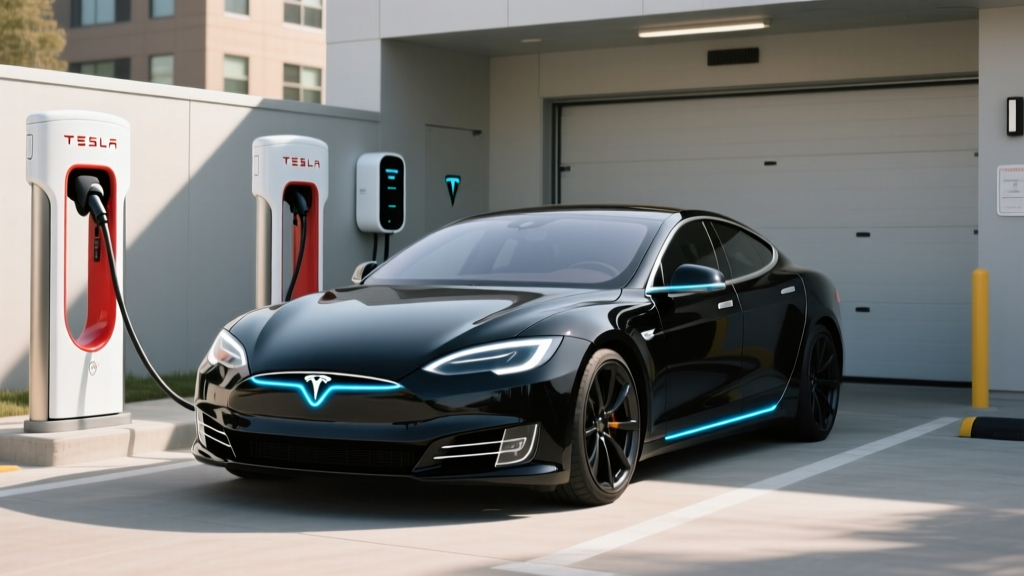
- Model S (2012–2017): All Model S vehicles ordered before January 15, 2017, and delivered before April 1, 2017, received free unlimited Supercharging for life. This benefit is transferable with the vehicle — meaning if you buy one used in 2026, the free Supercharging should still be active.
- Model X (2015–2017): Same cutoff dates as the Model S. Early Model X orders placed before January 15, 2017, carry transferable free Supercharging for life.
- Model S/X (2017–2019 promotional windows): Tesla periodically reinstated free Supercharging as a sales incentive. Vehicles ordered during specific promotional periods (e.g., late 2017 through early 2019) received free Supercharging, but in many cases the benefit was non-transferable — tied to the original owner only. If that original owner sold the car, the free Supercharging expired.
- Model S/X (2019–present): Tesla eliminated free unlimited Supercharging as a standard feature. Some limited-time referral promotions offered a year or two of free Supercharging, but no new Model S or Model X sold from 2020 onward carries a lifetime free Supercharging entitlement.
Model 3 and Model Y: Never Eligible
No Model 3 or Model Y has ever received free unlimited Supercharging for life as a standard feature. Tesla positioned these as mass-market vehicles from launch and did not bundle the perk. Occasional promotional credits (e.g., 1,000 free Supercharger miles via referral codes) were offered, but these were finite, not lifetime benefits. As of 2026, every Model 3 and Model Y owner pays per kWh at Superchargers.
Cybertruck: Not Included
The Cybertruck, which began deliveries in late 2023, has never included free Supercharging for life. All Cybertruck owners pay standard Supercharger rates.
Current 2026 Supercharger Pricing
For Teslas without free Supercharging, typical rates in 2026 range from $0.25 to $0.50 per kWh depending on location, time of day, and whether you're a Tesla owner or using the network via the NACS adapter in a non-Tesla EV. Peak urban rates in California and New York can exceed $0.55/kWh, while off-peak rural stations may dip to $0.22/kWh. Tesla's Supercharger page provides station-specific pricing in the app.
Understanding EV Charging Levels: kW Speeds and Miles Per Hour
Before we get to installation costs, you need a firm grasp of the three charging levels and what they actually deliver. The critical distinction: kW (kilowatts) measures power — how fast energy flows into your battery. kWh (kilowatt-hours) measures energy — the total capacity of your battery. Think of kW as the width of a pipe and kWh as the size of the tank you're filling.
| Level | Voltage | Power (kW) | Miles of Range Added Per Hour | Typical Use Case |
|---|---|---|---|---|
| Level 1 | 120V AC | 1.0–1.4 kW | 3–5 miles/hr | Overnight top-ups, PHEVs, emergency |
| Level 2 | 240V AC | 3.3–19.2 kW | 12–75 miles/hr | Home daily charging, workplace, public L2 |
| DC Fast Charging | 400V–800V DC | 50–350 kW | 150–1,000+ miles/hr (peak) | Road trips, highway corridors |
A few real-world notes on these figures:
- Level 1 is adequate for plug-in hybrids with small batteries (10–18 kWh) but painfully slow for a full EV. A 75 kWh Tesla Model 3 Long Range battery would take over 60 hours from empty on Level 1.
- Level 2 at 11.5 kW (48A) is the sweet spot for home charging. It adds roughly 44 miles of range per hour, meaning a 310-mile EPA-rated Model 3 Long Range can fully replenish overnight in about 7 hours.
- DC fast charging speeds are peak, not sustained. A Tesla V4 Supercharger rated at 250 kW will only deliver that peak between roughly 10–30% state of charge. Above 50%, the charge curve tapers significantly. Expect a 10–80% charge in approximately 25–35 minutes depending on battery temperature, preconditioning, and pack size.
Charging Time Examples: 10–80% for Common Battery Sizes
| Vehicle | Battery (kWh usable) | Max DC Charge Rate | 10–80% Time (preconditioned) |
|---|---|---|---|
| Tesla Model 3 RWD | 57.5 kWh (LFP) | 170 kW | ~28 minutes |
| Tesla Model Y Long Range | 75 kWh (NMC) | 250 kW | ~25 minutes |
| Tesla Model S Plaid | 95 kWh (NMC) | 250 kW | ~30 minutes |
| Ford F-150 Lightning Ext. Range | 131 kWh (NMC) | 150 kW | ~45 minutes |
| Hyundai Ioniq 5 | 77.4 kWh (NMC) | 238 kW (800V) | ~18 minutes |
Notice the Hyundai Ioniq 5's 800V architecture allows it to sustain higher charge rates deeper into the session — a real advantage on road trips. Tesla's 400V architecture tapers more aggressively past 60% SoC.
Home EV Charger Installation: Electrical Requirements and Real Costs
Installing a Level 2 home charger is the single most impactful upgrade an EV owner can make. But costs vary enormously depending on your electrical panel's capacity, the distance from panel to charger location, and local permitting requirements.
What You Need Electrically
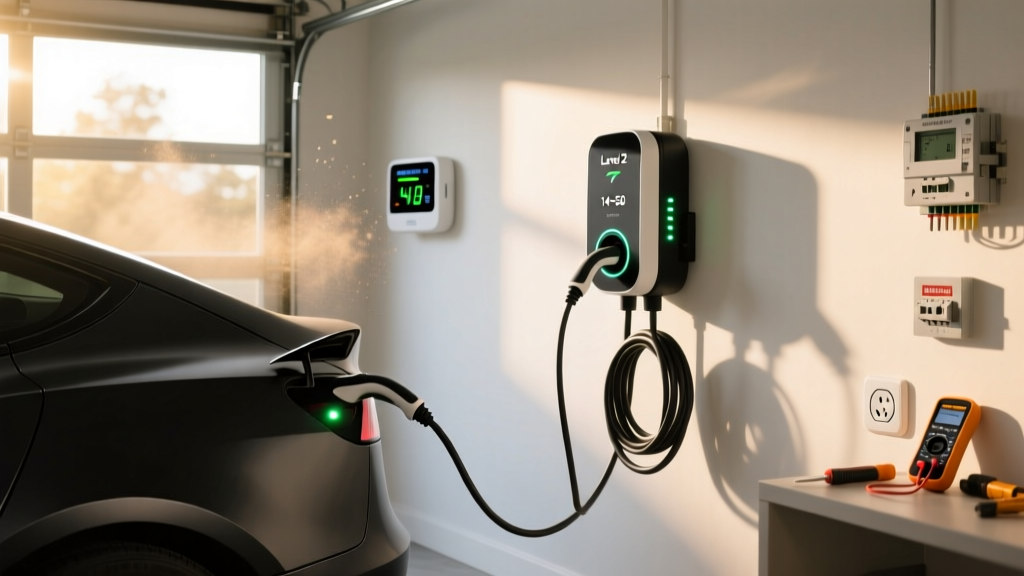
A typical Level 2 home charger requires a dedicated 240V circuit. The most common configurations:
- NEMA 14-50 outlet (50A circuit, 40A continuous): Delivers up to 9.6 kW. This is the most popular setup and works with most Level 2 chargers using a 14-50 plug.
- Hardwired 60A circuit (48A continuous): Delivers up to 11.5 kW. Required for higher-output chargers like the Tesla Wall Connector at max settings. Hardwired connections avoid the GFCI breaker issues that sometimes plague NEMA 14-50 installations.
- NEMA 6-50 outlet (50A circuit): Less common but functional for 240V charging. Found in some older homes with workshop setups.
Installation Cost Breakdown
| Cost Component | Simple Install (panel nearby) | Moderate Install (50–80 ft run) | Complex Install (panel upgrade needed) |
|---|---|---|---|
| Level 2 charger unit | $350–$600 | $350–$600 | $350–$600 |
| Electrical permit | $50–$150 | $50–$150 | $50–$150 |
| Electrician labor (2–4 hrs simple / 6–10 hrs complex) | $300–$600 | $600–$1,500 | $1,500–$3,000 |
| Conduit, wire, connectors | $50–$150 | $200–$500 | $300–$800 |
| Panel upgrade (if needed) | $0 | $0 | $1,500–$3,500 |
| Total | $750–$1,500 | $1,200–$2,750 | $3,700–$8,050 |
These figures assume a licensed electrician pulling proper permits. Unpermitted work may save money upfront but can void your homeowner's insurance in the event of an electrical fire. The U.S. Department of Energy recommends always using a licensed professional.
Federal Tax Credit for Home Charging Equipment
The IRS §30C Alternative Fuel Vehicle Refueling Property Credit covers 30% of home charging equipment and installation costs, up to $1,000. This credit is available for equipment installed at your primary residence and is subject to income limitations. Check current-year IRS guidance for eligibility details, as sourcing and census-tract requirements may apply.
Connector Compatibility: NACS, CCS, and CHAdeMO in 2026
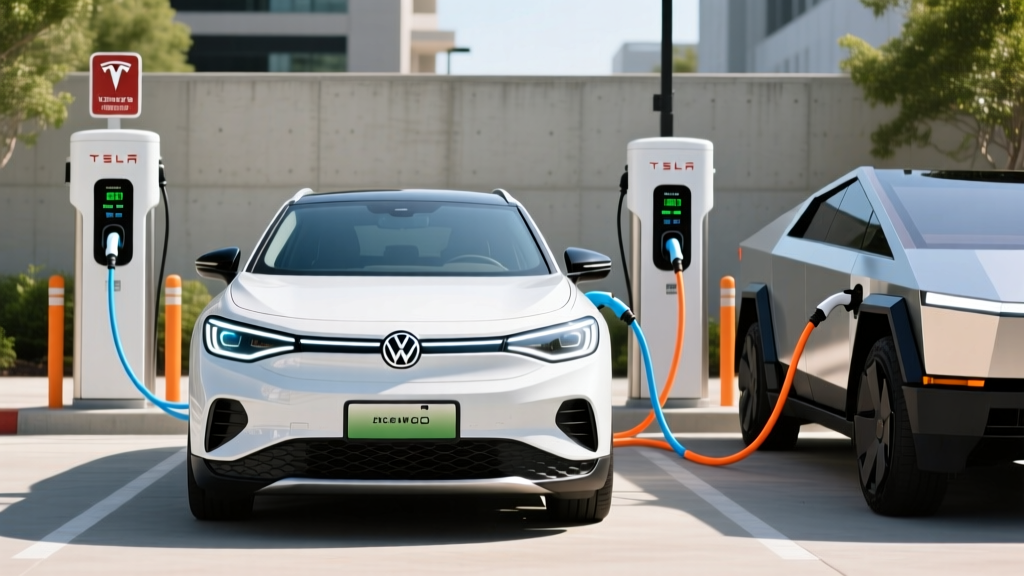
The connector landscape has consolidated dramatically since Ford, GM, Rivian, Volvo, and nearly every major automaker adopted Tesla's North American Charging Standard (NACS) starting in 2024–2025. Here's where things stand in 2026:
| Connector | Brands Using It (Native) | DC Fast Charge Networks | Adapter Needed? |
|---|---|---|---|
| NACS (Tesla) | Tesla, Ford, GM, Rivian, Volvo, Polestar, Mercedes (new), Honda (upcoming) | Tesla Supercharger, Electrify America (NACS stalls), EVgo, ChargePoint | CCS-to-NACS adapters available (~$150–$250) for older CCS vehicles |
| CCS1 | Hyundai/Kia (2025 and earlier), VW/ID.4 (pre-NACS transition), BMW iX/i4 (pre-2026) | Electrify America, EVgo, ChargePoint | NACS-to-CCS adapter needed for Tesla Superchargers (~$200) |
| CHAdeMO | Nissan Leaf (legacy only — discontinued) | Limited legacy stations | No practical adapter; network shrinking |
If you're buying a new EV in 2026, NACS is the default for most brands. If you own a CCS-equipped vehicle from 2023–2025, you'll likely need a NACS adapter to access Tesla Superchargers — which now number over 30,000 stalls in North America and represent the most reliable DC fast-charging network available.
Cost to Charge: Per-Mile Economics vs. Gasoline
Charging cost is where EV ownership either shines or disappoints — depending entirely on where and when you charge. Here's a realistic comparison using a 2026 Tesla Model Y Long Range (EPA 320 miles, ~75 kWh usable battery, ~4.0 miles/kWh efficiency):
| Charging Scenario | Rate ($/kWh) | Cost for Full Charge (75 kWh) | Cost Per Mile | Annual Cost (12,000 mi) |
|---|---|---|---|---|
| Home off-peak (utility time-of-use) | $0.08–$0.12 | $6.00–$9.00 | $0.02–$0.03 | $240–$360 |
| Home standard rate (no TOU plan) | $0.14–$0.20 | $10.50–$15.00 | $0.03–$0.04 | $360–$480 |
| Public Level 2 (workplace/mall) | $0.20–$0.35 | $15.00–$26.25 | $0.05–$0.07 | $600–$840 |
| Tesla Supercharger (DC fast) | $0.28–$0.48 | $21.00–$36.00 | $0.07–$0.09 | $840–$1,080 |
| Gasoline equivalent (28 MPG, $3.50/gal) | — | — | $0.125 | $1,500 |
The takeaway is clear: home charging on an off-peak rate plan delivers 75–85% savings per mile compared to gasoline. Exclusive Supercharger reliance narrows the gap to 35–50% savings. If your daily driving is under 50 miles and you charge at home nightly, your fuel cost drops to a few hundred dollars per year.
For owners with free Supercharging for life (those early Model S/X buyers), the road-trip fuel cost drops to zero — but remember, you still pay for electricity at home unless you also charge exclusively on Superchargers, which is impractical for daily use and accelerates battery degradation due to repeated high-rate DC charging.
Recommended Home Level 2 Chargers for 2026
Not all Level 2 chargers are equal. Here are three well-regarded options across different budgets, each with specific power output, connector type, and smart features:
Tesla Wall Connector
- Power: Up to 11.5 kW (48A, hardwired 60A circuit)
- Connector: NACS native
- Cable length: 24 ft
- Smart features: Wi-Fi, OTA updates, load sharing (multiple units on one circuit), Tesla app integration
- Price: ~$475
- Best for: Tesla owners who want seamless integration and max home charging speed
ChargePoint Home Flex
- Power: Up to 12 kW (50A, NEMA 14-50 or hardwired 60A)
- Connector: NACS (2025+ models) or J1772 with NACS adapter
- Cable length: 23 ft
- Smart features: Wi-Fi, Alexa integration, scheduling, ChargePoint app, flexible amperage settings (16A–50A)
- Price: ~$550–$700
- Best for: Multi-EV households or owners wanting adjustable amperage for panel-limited homes
Emporia Level 2 EV Charger
- Power: Up to 11.5 kW (48A, hardwired)
- Connector: NACS (2025+ models)
- Cable length: 24 ft
- Smart features: Wi-Fi, solar integration, energy monitoring via Emporia app, scheduling
- Price: ~$350–$400
- Best for: Budget-conscious buyers who want smart features and energy tracking without premium pricing
Safety and Electrical Code Considerations
EV charging involves sustained high-current draw — often for 6–10 hours at a stretch. This is fundamentally different from the intermittent loads of a dryer or oven. Code compliance and safety are non-negotiable:
- Dedicated circuit: Your EV charger must be on its own dedicated circuit — never shared with other appliances. The National Electrical Code (NEC) requires continuous loads to use only 80% of a circuit's rated capacity (hence a 50A breaker supports 40A continuous charging).
- GFCI protection: NEC 2020 and later require GFCI protection for EV charging outlets. Hardwired chargers with built-in ground-fault protection may exempt the need for a GFCI breaker (which can cost $80–$150 and is prone to nuisance tripping with some EVSE units).
- Outdoor rating: If your charger is installed outdoors (garage-adjacent carport, driveway), ensure the unit carries a NEMA 4 rating for weather resistance. All three chargers recommended above meet this standard.
- Wire gauge: A 50A circuit requires minimum 6 AWG copper wire; a 60A circuit requires 4 AWG. Undersized wire creates fire risk. Your electrician will spec this correctly, but it's worth verifying.
- Permit and inspection: Most jurisdictions require an electrical permit and post-installation inspection for EV charger circuits. Skipping this step risks insurance claim denial in the event of an electrical incident.
Frequently Asked Questions
Can I buy a used Tesla and get free Supercharging for life?
Only if the vehicle is a 2012–2017 Model S or Model X with transferable free Supercharging still active on the account. Verify the benefit through Tesla directly using the VIN before purchasing. Most 2018+ vehicles with free Supercharging have non-transferable benefits that expire on resale.
How much does it cost to install a home EV charger?
A straightforward Level 2 installation with the electrical panel nearby typically costs $750–$1,500 including equipment, labor, and permit. Longer wire runs push costs to $1,200–$2,750. If your home needs a 200A panel upgrade, total costs can reach $3,700–$8,050.
How fast will each charging level add range?
Level 1 (120V) adds 3–5 miles per hour. Level 2 (240V at 11.5 kW) adds approximately 44 miles per hour. DC fast charging at 150–250 kW can add 150–250+ miles in 15–25 minutes, though speed tapers significantly above 80% state of charge.
Which connector is compatible with my EV?
All Teslas use NACS natively. Most 2025–2026 models from Ford, GM, Rivian, and Volvo also use NACS. Hyundai, Kia, and some BMW models still use CCS1 but can access Tesla Superchargers via a NACS-to-CCS adapter (~$200). CHAdeMO is effectively discontinued in North America.
How much does charging cost per mile vs gas?
Home charging on an off-peak rate costs $0.02–$0.03 per mile — roughly 75–85% less than gasoline at $3.50/gallon and 28 MPG. Exclusive Supercharger use costs $0.07–$0.09 per mile, still 25–45% cheaper than gas.
What electrical upgrades might I need?
If your home has a 100A electrical panel and you already run electric appliances (range, dryer, HVAC), you may need a panel upgrade to 200A — costing $1,500–$3,500. A licensed electrician should perform a load calculation to determine whether your existing panel can support a 50A or 60A dedicated EV circuit.
Does free Supercharging mean I should never charge at home?
No. Even with free Supercharging, home Level 2 charging is more convenient (plug in overnight, wake up full) and gentler on your battery. Repeated DC fast charging accelerates battery degradation. Most owners with free Supercharging use it exclusively for road trips and charge at home daily.