Search for "how long do Superchargers take" and you'll find marketing claims of 15-minute top-ups alongside forum posts lamenting 45-minute waits. The truth depends on your vehicle's battery chemistry, state of charge, ambient temperature, and the specific charger's power output. This guide cuts through the noise with exact numbers — charge times, speeds, costs, and home installation requirements — so you can plan your charging strategy around data, not guesswork.
The kW vs. kWh Distinction You Must Know First
Before comparing charge times, nail down the single most confused concept in EV ownership:
- kW (kilowatt) = power, or the rate of energy delivery. Think of it as the width of the hose. A 250 kW Supercharger delivers energy faster than a 50 kW charger.
- kWh (kilowatt-hour) = energy, or the amount stored in your battery. A Tesla Model Y Long Range has roughly 75 kWh of usable battery capacity.
Charging time is a function of how many kWh you need to add divided by the kW rate — but with a major caveat: no EV sustains peak kW for the entire session. Charge curves taper significantly above 80% state of charge (SoC) to protect battery longevity. That's why manufacturers and charging networks quote 10-80% times rather than 0-100% times.
Charging Levels Explained: Speeds in kW and Miles Per Hour
Every EV charging scenario falls into one of three levels. Here's what each delivers in real-world terms:
| Level | Voltage | Power (kW) | Miles of Range Added Per Hour | Typical Use Case |
|---|---|---|---|---|
| Level 1 | 120V AC | 1.0–1.4 kW | 3–5 mi/hr | Overnight trickle; PHEV top-ups; emergency backup |
| Level 2 | 240V AC | 3.3–19.2 kW | 12–75 mi/hr | Home daily charging; workplace; shopping centers |
| DC Fast Charging | 400–800V DC | 50–350 kW | 150–1,200+ mi/hr (peak) | Road trips; highway corridors; Tesla Superchargers |
A few clarifications on those numbers:
- Level 1 uses a standard household 120V outlet. For a 75 kWh battery, a full charge from empty takes 50+ hours — impractical for BEVs but workable for PHEVs with 10–15 kWh batteries.
- Level 2 at home typically runs at 7.7–11.5 kW (32A–48A on a 240V circuit). An overnight session of 8–10 hours easily replenishes 200+ miles of range.
- DC Fast Charging — including Tesla Superchargers, Electrify America, and EVgo stations — bypasses the vehicle's onboard charger and feeds DC current directly to the battery. Peak speeds are dramatic, but sustained averages are lower.
So, How Long Do Superchargers Actually Take?
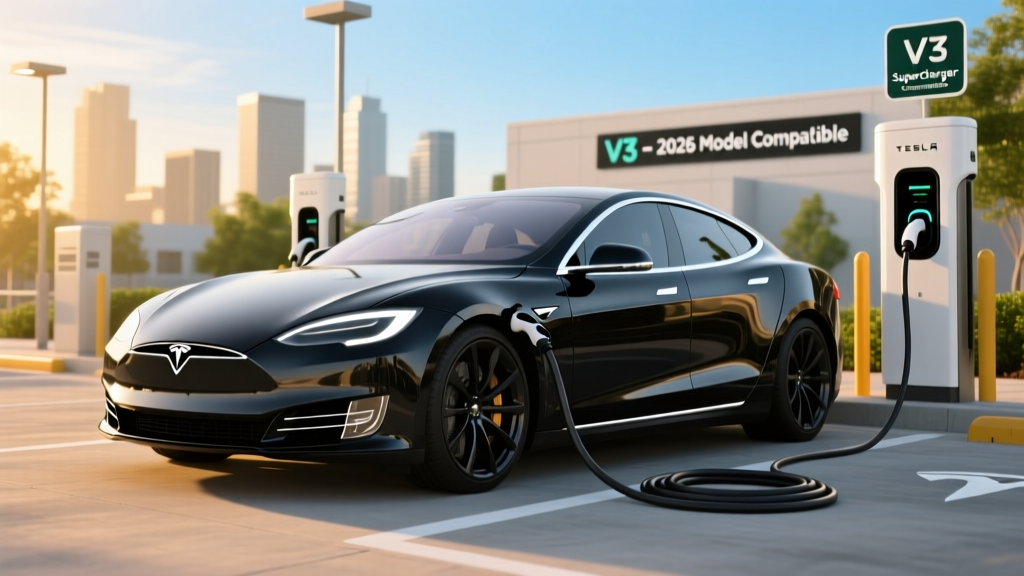
Tesla's Supercharger network currently spans V2 (150 kW peak), V3 (250 kW peak), and the newest V4 (up to 350 kW peak) stations. Here's what 10-80% charge sessions look like for popular 2025–2026 EVs at a V3 Supercharger (250 kW peak):
| Vehicle | Usable Battery (kWh) | Peak Charge Rate (kW) | 10–80% Time (min) | Notes |
|---|---|---|---|---|
| Tesla Model 3 Long Range (2025) | ~75 kWh (NMC) | 250 | ~25–28 | Strong curve to 80%; preconditioning critical |
| Tesla Model Y Long Range (2025) | ~75 kWh (NMC) | 250 | ~25–30 | Similar pack to Model 3; slight thermal variance |
| Hyundai Ioniq 5 (2025, 800V) | ~77.4 kWh (NMC) | ~240 | ~18–22 | 800V architecture sustains peak longer |
| Ford F-150 Lightning Ext. Range | ~131 kWh (NMC) | ~155 | ~38–44 | Large pack = longer absolute time despite decent rate |
| Chevrolet Equinox EV (2025) | ~85 kWh (NMC) | ~150 | ~30–35 | 400V architecture; tapers earlier |
Why Peak kW Is Misleading
A Supercharger rated at 250 kW does not deliver 250 kW for your entire session. Here's a typical charge curve for an NMC battery at a V3 Supercharger:
- 10–30% SoC: Near peak rate (200–250 kW)
- 30–55% SoC: Gradual taper (150–200 kW)
- 55–80% SoC: Significant taper (60–120 kW)
- 80–100% SoC: Trickle (10–30 kW) — avoid unless necessary
This is why charging from 10–80% is the practical standard. Pushing from 80–100% can add another 20–30 minutes for just ~20% more range. On road trips, the fastest strategy is to arrive at each charger at 10–15% SoC and leave at 70–80%, making shorter, more frequent stops rather than waiting for a full charge.
Preconditioning: The Hidden Variable
If you navigate to a Supercharger using your Tesla's built-in navigation, the car automatically preconditions the battery — warming it to the optimal temperature for fast charging. Without preconditioning (for example, if you drive to a Supercharger using a third-party app or without navigation routing), your first 5–10 minutes of charging may happen at dramatically reduced power, especially in cold weather. The difference can be 5–10 extra minutes on a single session.
Home Charger Installation: Costs, Electrical Requirements, and Gotchas
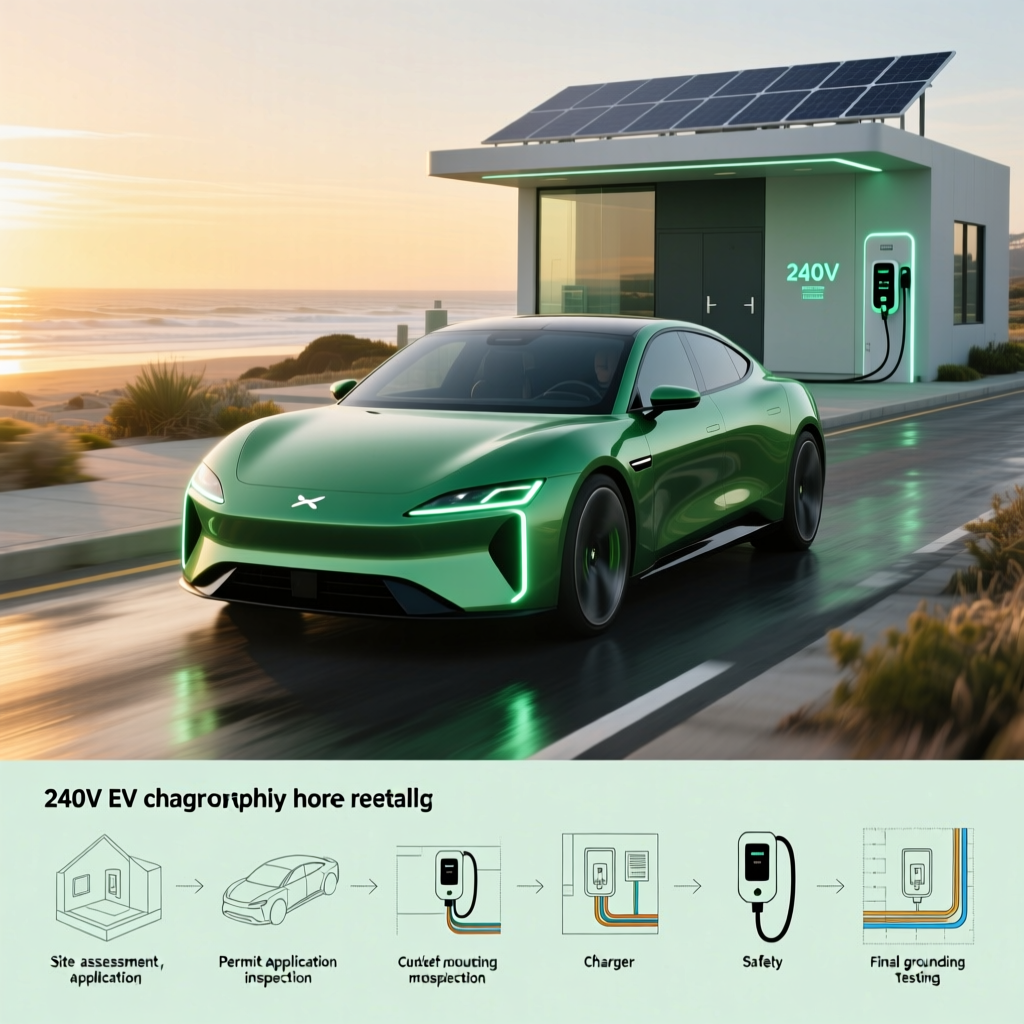
Public DC fast charging is essential for road trips, but 80–90% of EV charging happens at home. Here's what a Level 2 home installation actually involves and costs in 2026.
Electrical Requirements
A typical home Level 2 charger requires:
- Voltage: 240V (same as your electric dryer or oven)
- Amperage: 40A circuit for a 32A charger, or 60A circuit for a 48A charger (the National Electrical Code requires circuits rated at 125% of the continuous load)
- Dedicated circuit: Your charger must have its own breaker — no sharing with other appliances
- GFCI protection: Required by NEC 2020 and later for EV supply equipment
- Outdoor rating: If installing outside, the charger and outlet must carry a NEMA 4 or NEMA 4X weatherproof rating
Panel Upgrade: The Cost Surprise
Most modern homes with 200A electrical panels can accommodate a 40A–60A EV circuit without issue. However, older homes with 100A panels — common in homes built before the 1990s — may require a panel upgrade to 200A before an electrician will sign off on a Level 2 install. This is the single biggest variable in home charging cost.
Have an electrician perform a load calculation on your panel before committing. This evaluates your existing electrical loads (HVAC, water heater, dryer, etc.) against your panel's total capacity with the EV circuit added.
| Component | Typical Cost Range | Notes |
|---|---|---|
| Level 2 Charger (Equipment) | $350–$750 | Varies by power output, cable length, smart features |
| Electrician Labor (standard install) | $500–$1,500 | Depends on run length from panel to garage/carport |
| Electrical Permit | $50–$200 | Required in most jurisdictions; varies by municipality |
| Panel Upgrade (if needed) | $1,500–$3,500 | 100A → 200A upgrade; not required for most modern homes |
| Total (no panel upgrade) | $900–$2,450 | Most common scenario for homes built after 2000 |
| Total (with panel upgrade) | $2,400–$5,950 | Older homes or high-load households |
Federal incentive: The IRS §30D alternative fuel vehicle refueling property credit covers 30% of home charger equipment and installation costs, up to $1,000, for installations in eligible census tracts. Check IRS guidelines for current eligibility, as tract designations and rules are subject to change. Consult a tax professional before claiming.
Connector Compatibility: NACS, CCS1, CHAdeMO, and Adapters
The North American charging connector landscape has consolidated dramatically since 2023, when Ford, GM, Rivian, and most other automakers adopted Tesla's North American Charging Standard (NACS). Here's where things stand for 2025–2026 model-year vehicles:
| Connector | Brands Using It (Native) | DC Fast Charge Networks | Adapter Needed? |
|---|---|---|---|
| NACS (Tesla standard) | Tesla (all), Ford (2025+), GM (2025+), Rivian (2025+), Hyundai/Kia (2026+), others | Tesla Supercharger, Electrify America (partial), EVgo (partial) | CCS→NACS adapters available for legacy CCS vehicles ($150–$300) |
| CCS1 | Legacy: VW ID.4 (pre-2025), older BMW i4/iX, some Stellantis models | Electrify America, EVgo, ChargePoint DC | NACS→CCS1 adapters for newer NACS vehicles at CCS stations |
| CHAdeMO | Nissan Leaf (discontinued 2025), older Mitsubishi Outlander PHEV | Limited; being phased out | No widely available adapter; network declining |
Practical advice for 2026 buyers: If you're purchasing a new EV, prioritize a native NACS port. The Supercharger network remains the most reliable DC fast charging infrastructure in the U.S., with over 25,000 stalls and growing. CCS1 is still well-supported but losing ground. CHAdeMO is effectively legacy-only — avoid it unless you're buying a used Nissan Leaf at a steep discount and plan to charge primarily at home.
Charging Cost Per Mile: Home vs. Public vs. Gas
One of the strongest economic arguments for EV ownership is fuel cost savings, but the math varies dramatically depending on where and when you charge.
| Scenario | Rate | Vehicle Efficiency | Cost Per Mile |
|---|---|---|---|
| Home Level 2 (national avg. electricity, 13.5¢/kWh) | $0.135/kWh | 3.5 mi/kWh (~120 MPGe) | $0.039 |
| Home Level 2 (off-peak utility rate, 8¢/kWh) | $0.08/kWh | 3.5 mi/kWh | $0.023 |
| Public Level 2 (ChargePoint, EVgo typical) | $0.25–$0.40/kWh | 3.5 mi/kWh | $0.071–$0.114 |
| DC Fast Charging (Tesla Supercharger avg.) | $0.28–$0.36/kWh | 3.5 mi/kWh | $0.080–$0.103 |
| DC Fast Charging (Electrify America peak) | $0.48–$0.58/kWh | 3.5 mi/kWh | $0.137–$0.166 |
| Gasoline car (25 MPG combined, $3.40/gal) | $3.40/gallon | 25 MPG | $0.136 |
The takeaway: home charging is the cheapest option by far, at roughly $0.03–$0.04 per mile — a 70–75% savings versus a 25 MPG gas car. Public DC fast charging narrows the gap, and at premium networks during peak hours, you may actually pay more per mile than a fuel-efficient hybrid. This is why home Level 2 installation pays for itself quickly for most owners.
For a driver covering 12,000 miles per year, home charging at the national average saves roughly $1,160 annually compared to a 25 MPG gas car at $3.40/gallon. Over five years, that's $5,800 in fuel savings — enough to offset most of the EV price premium and the home charger installation cost combined.
Recommended Home Level 2 Chargers (2026)
Not all Level 2 chargers are equal. Here are four proven units across different budgets, all hardwired or NEMA 14-50 plug compatible:
Tesla Wall Connector (Gen 3)
- Power: Up to 11.5 kW (48A)
- Connector: NACS native
- Cable: 24 ft
- Smart features: Wi-Fi, OTA updates, load sharing with second unit, access control
- Price: ~$475
- Best for: Tesla owners; excellent power-to-price ratio
ChargePoint Home Flex
- Power: Up to 12 kW (50A) — configurable down to 16A
- Connector: NACS or CCS1 (select at purchase)
- Cable: 23 ft
- Smart features: App scheduling, Alexa/Google integration, energy tracking
- Price: ~$550–$650
- Best for: Non-Tesla EVs; flexible amperage for older panels
Emporia Level 2 Smart Charger
- Power: Up to 11.5 kW (48A)
- Connector: NACS or J1772
- Cable: 24 ft
- Smart features: Real-time energy monitoring, solar integration, TOU scheduling
- Price: ~$350–$400
- Best for: Budget-conscious buyers; solar panel owners
Grizzl-E Smart
- Power: Up to 10 kW (40A)
- Connector: NACS or J1772
- Cable: 24 ft
- Smart features: OCPP protocol, app control, extreme cold rated (-40°F)
- Price: ~$450–$550
- Best for: Cold-climate installations; outdoor mounting
Selection tip: Match your charger's amperage to your circuit. A 48A charger needs a 60A breaker; a 40A charger needs a 50A breaker. If your panel is tight on capacity, a configurable unit like the ChargePoint Home Flex lets you dial down to 32A (40A breaker) without replacing the hardware.
Safety and Electrical Code Essentials
EV charging involves sustained high-current draw — often 8+ hours at 32A–48A. This is not a DIY project. Key safety and code requirements include:
- Dedicated circuit: NEC Article 625 requires EVSE to be on a dedicated branch circuit with no other outlets or loads.
- GFCI protection: Required for all EV supply equipment per NEC 2020+. Your electrician will install a GFCI breaker or use a GFCI-integrated charger.
- Hardwired vs. plug: Hardwired installations (no plug) are preferred for 48A+ chargers, as NEMA 14-50 receptacles are rated for 50A and some jurisdictions restrict plug-in EVSE above 40A. Hardwired also eliminates the receptacle as a potential failure point.
- Outdoor installations: Must use NEMA 4X-rated enclosures and outdoor-rated cable/conduit. The charger itself should carry UL or ETL listing for outdoor use.
- Permit and inspection: Most jurisdictions require an electrical permit and post-installation inspection. Skipping this can void your homeowner's insurance coverage for electrical fires.
Always hire a licensed electrician familiar with NEC Article 625 (EV charging). Ask for their experience with EVSE specifically — the continuous-load requirements differ from standard appliance circuits.
Frequently Asked Questions
How much does it cost to install a home EV charger?
Expect $900–$2,450 for a standard Level 2 installation (equipment + electrician + permit) in a home with an adequate 200A panel. If your home needs a panel upgrade from 100A to 200A, add $1,500–$3,500. The federal alternative fuel refueling credit can offset 30% of costs up to $1,000 if you're in an eligible census tract.
How fast will each charging level add range?
Level 1 (120V): 3–5 miles per hour. Level 2 (240V, 48A): 30–45 miles per hour depending on vehicle efficiency. DC Fast Charging (150–250 kW): 150–400+ miles in a 20–30 minute session, though actual speed depends on your battery's charge curve and current SoC.
Which connector/charger is compatible with my EV?
For 2025–2026 models: Tesla, Ford, GM, Rivian, and most new Hyundai/Kia models use NACS. Older VW, BMW, and Stellantis EVs may use CCS1. The Nissan Leaf (now discontinued) used CHAdeMO. Check your vehicle's charge port or owner's manual. Adapters exist for cross-compatibility but add $150–$300 and may slightly reduce peak charge rates.
How much does charging cost per mile vs. gas?
Home charging at the national average electricity rate costs roughly $0.039 per mile (about $0.023 on off-peak rates). A comparable 25 MPG gas car at $3.40/gallon costs $0.136 per mile. DC fast charging on the road ranges from $0.08–$0.17 per mile depending on the network. Home charging delivers the greatest savings.
What electrical upgrades might I need?
The most common upgrade is a panel capacity increase from 100A to 200A, needed in older homes with high existing electrical loads. You'll also need a dedicated 240V circuit with appropriate breaker size (50A or 60A), GFCI protection, and potentially new conduit runs from your panel to the charger location. A licensed electrician's load calculation will determine exactly what's required.
Should I charge to 100% on road trips?
For NMC batteries (most long-range EVs), it's faster to charge from 10–80% at multiple stops than to wait for a single 10–100% session. The 80–100% phase can take as long as the 10–80% phase due to charge curve tapering. If you have an LFP battery (some Tesla Model 3 RWD, base Model Y), Tesla recommends charging to 100% regularly — LFP chemistry tolerates full charges better and needs periodic full charges for accurate SoC calibration.