Do Any Teslas Still Come With Free Charging?
Short answer: almost none of them. Tesla has systematically retired the unlimited free Supercharging perks that early adopters enjoyed. If you're shopping for a new or used Tesla in 2026 and wondering what Teslas get free charging, the reality is that free miles are now the exception, not the rule. But there are still a few narrow pathways to score complimentary electrons — and understanding them could save you hundreds of dollars a year.
This guide maps every active free-charging program, explains what's been discontinued, and then walks you through the real cost of keeping a Tesla charged at home and on the road — including installation, electrical upgrades, and cost-per-mile math that beats gasoline.
Free Supercharging Programs Still Active in 2026
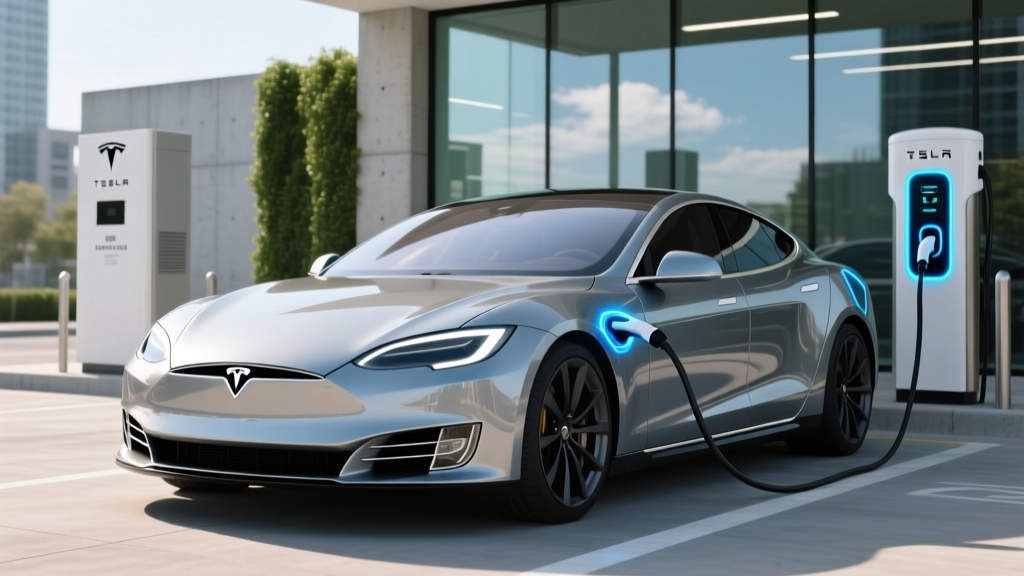
Tesla's free Supercharging landscape has shrunk considerably since the company ended its most generous referral and loyalty programs. Here is what remains available and who qualifies.
Tesla Referral Program Credits
Tesla periodically restructures its referral program. As of early 2026, owners who refer new buyers can earn Tesla Credits, which can be applied toward Supercharging. Referred buyers may also receive a small Supercharging credit (historically around $500 in credits, though this fluctuates by quarter). These credits are not unlimited free charging — they are a fixed dollar amount that typically covers 2,000–4,000 miles of Supercharger use depending on regional electricity rates.
Legacy Unlimited Free Supercharging
Some early Model S and Model X vehicles (primarily 2012–2017 builds) were sold with unlimited free Supercharging for the life of the car. This perk is tied to the original vehicle, not the owner. Key details:
- Transferable (some): Vehicles ordered before April 2017 with free Supercharging that was explicitly marked as transferable retain the benefit through ownership changes.
- Non-transferable (most): Cars where Tesla later re-attached free Supercharging to the original owner lose the perk upon resale.
- How to verify: Check the Tesla app or the vehicle's charging screen — it will display "Free Supercharging" if active. Always confirm with Tesla support before purchasing a used vehicle based on this claim.
Promotional and Fleet Credits
Tesla occasionally offers limited-time Supercharging credits as purchase incentives — for example, 10,000 free Supercharger miles on end-of-quarter inventory. Corporate fleet buyers and Tesla employees may also receive charging credits. These are time-limited and not standard trim features.
Destination Charging (Always Free at Participating Locations)
Tesla's Destination Charging network — Level 2 chargers at hotels, restaurants, and resorts — remains free for patrons. These chargers typically deliver 11–22 kW, adding roughly 30–60 miles of range per hour. This is not a substitute for road-trip fast charging, but it eliminates charging costs during overnight stays.
Understanding Charging Levels: Speed, Cost, and Range Added
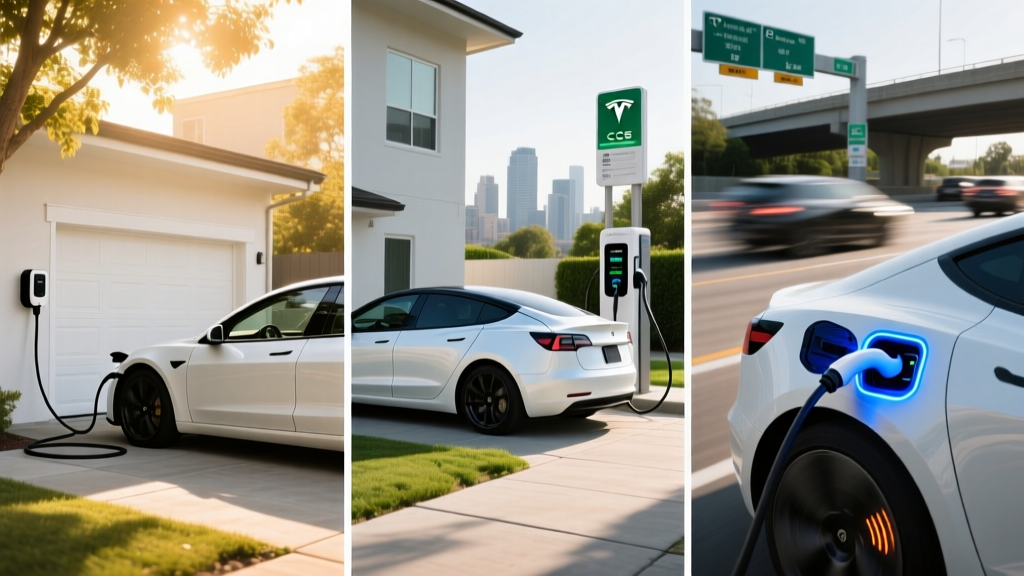
Before calculating what you'll actually spend, you need to understand the three charging tiers and what each delivers. Here's where the kW vs kWh distinction matters most: kW (kilowatts) measures the rate of power delivery — how fast energy flows into your battery. kWh (kilowatt-hours) measures total energy stored — the size of your battery tank. A 75 kWh battery charged at 11.5 kW takes roughly 6.5 hours from empty to full.
| Level | Voltage | Power (kW) | Miles of Range Added/Hour | Best For |
|---|---|---|---|---|
| Level 1 | 120V AC | 1.0–1.9 kW | 3–5 miles | Overnight trickle, PHEVs, emergencies |
| Level 2 | 240V AC | 7.2–19.2 kW | 25–65 miles | Daily home charging, workplace |
| DC Fast Charging | 400–800V DC | 50–350 kW | 150–1,000+ miles (equivalent/hr) | Road trips, rapid top-ups |
Charging Time Examples for Tesla Battery Sizes
Real-world charging times depend on your battery size, state of charge, and ambient temperature. Tesla's battery management system tapers charge speed significantly above 80% state of charge to protect battery longevity — so the 10–80% metric is what actually matters for road trips.
- Model 3 RWD (57.5 kWh LFP battery): 10–80% at a V3 Supercharger (250 kW peak) in approximately 25 minutes. Level 2 at 11.5 kW: 0–100% in ~5 hours.
- Model Y Long Range (78.1 kWh NMC battery): 10–80% at a V4 Supercharger (up to 250 kW peak, sustained ~170 kW average) in approximately 27 minutes.
- Model S (100 kWh battery): 10–80% at a V3 Supercharger in approximately 35 minutes. Level 2 at 11.5 kW: ~8.5 hours from empty.
Home Charger Installation: Electrical Requirements and Cost Breakdown
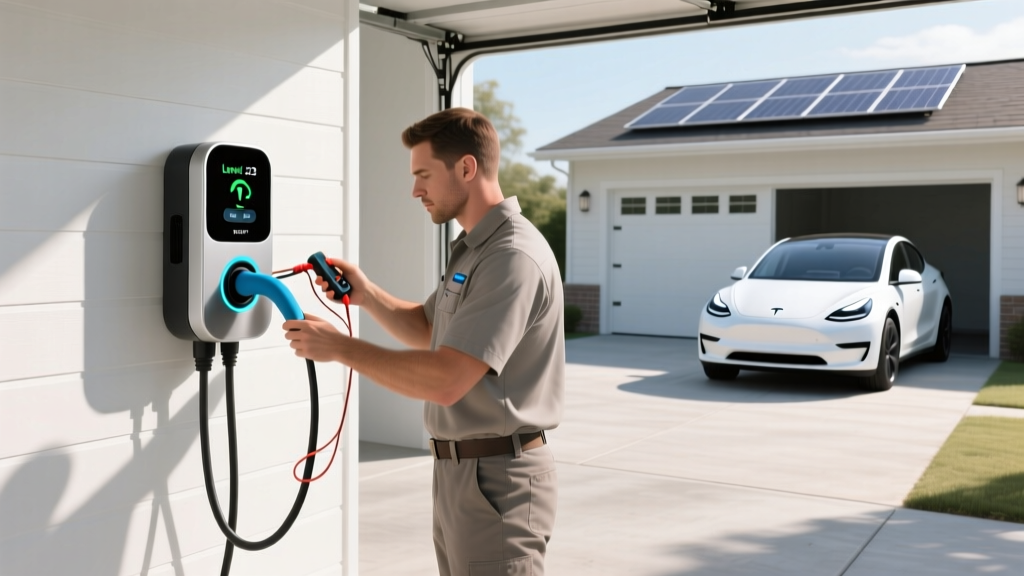
How much does it cost to install a home EV charger? The honest answer is $500 on the very low end for a simple plug-in setup, and $3,000–$5,000+ if your home needs a panel upgrade. Here's what drives that range.
Electrical Requirements
A typical Level 2 home charger for a Tesla requires a 240V circuit. The most common configurations are:
- NEMA 14-50 outlet (50A circuit, 40A continuous): Delivers up to 9.6 kW. This is the sweet spot for most homes and supports the Tesla Mobile Connector or any third-party Level 2 unit.
- Hardwired 60A circuit (48A continuous): Delivers up to 11.5 kW, which is the maximum the Tesla Wall Connector supports. Requires a dedicated circuit run directly to the charger — no outlet.
- Existing dryer outlet (NEMA 10-30 or 14-30, 30A circuit): Delivers up to 5.8 kW (24A continuous). Sufficient for overnight charging if your daily drive is under 60 miles.
Panel Upgrade Reality
Homes built before 1990 often have 100A electrical panels. Adding a 50A EV circuit to a 100A panel that's already near capacity requires a panel upgrade to 200A — a significant expense. What electrical upgrades might I need? Here are the common scenarios:
- 200A panel with spare capacity: No upgrade needed. Electrician runs a new circuit from the panel to your garage or parking spot.
- 200A panel near capacity: May need a load calculation. Solutions include a smart panel splitter (like the Span drive panel or Emporia smart breaker) that shares capacity with other circuits, or a dedicated sub-panel.
- 100A panel: Full upgrade to 200A typically costs $1,500–$3,500 depending on your utility and local code requirements.
| Component | Simple Install (panel has capacity) | Complex Install (panel upgrade needed) |
|---|---|---|
| Level 2 Charger Equipment | $250–$500 | $250–$500 |
| Electrician Labor (circuit run + outlet/hardwire) | $300–$800 | $800–$1,500 |
| Permit and Inspection | $50–$200 | $50–$200 |
| Electrical Panel Upgrade (if needed) | $0 | $1,500–$3,500 |
| Conduit, Wiring, and Materials | $100–$300 | $200–$500 |
| Total Estimated Cost | $700–$1,800 | $2,800–$6,200 |
Safety and Code Considerations
Any Level 2 installation must comply with the National Electrical Code (NEC) and local amendments. Critical requirements include:
- Dedicated circuit: Your EV charger must have its own breaker — never share a circuit with other appliances.
- GFCI protection: NEC 2020 and later requires Ground Fault Circuit Interrupter protection for all EV charging outlets. Hardwired units may have GFCI built in.
- Outdoor rating: If your charger is mounted outside, both the unit and the outlet must carry a NEMA 3R or NEMA 4 weather-resistance rating. The Tesla Wall Connector is rated for outdoor use.
- Permit required: Nearly all jurisdictions require an electrical permit for new 240V circuits. Skip the permit and you risk voiding your homeowner's insurance if a fire occurs.
Always hire a licensed electrician and verify they have EV charger installation experience. Tesla maintains a list of certified installers on their website, and many utilities offer rebates that offset installation costs.
Connector Compatibility: NACS, CCS, and Adapter Needs
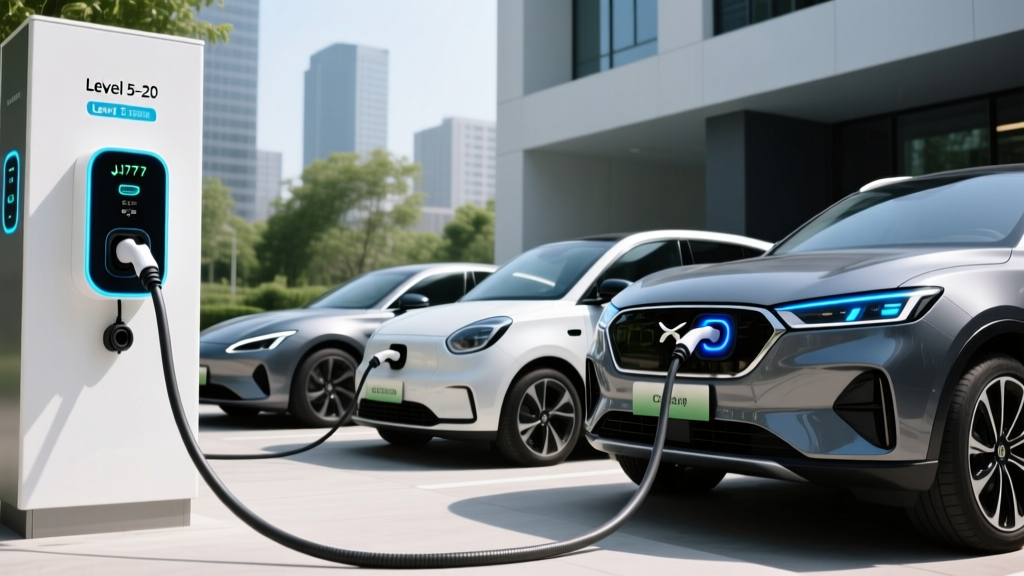
Tesla's North American Charging Standard (NACS) connector has become the dominant EV charging standard in North America. As of 2026, Ford, GM, Rivian, Volvo, BMW, and most major automakers have adopted NACS for new vehicles. But the transition is still underway, and connector compatibility depends on your vehicle's model year.
| Connector | Standard On | Tesla Supercharger Access | Adapter Needed? |
|---|---|---|---|
| NACS (Tesla) | All Teslas; 2025+ Ford, GM, Rivian, Volvo, BMW, and others | Native — no adapter | No |
| CCS1 | Most non-Tesla EVs through 2024; some 2025 models | Requires Tesla CCS adapter or third-party network | Yes — Tesla sells a CCS-to-NACS adapter (~$175) |
| CHAdeMO | Nissan Leaf, Mitsubishi Outlander PHEV (legacy) | Limited — CHAdeMO stations declining | No direct Tesla adapter available |
Which Connector/Charger Is Compatible With My EV?
Every Tesla sold in North America uses the NACS connector natively. This means you can plug directly into any Tesla Supercharger, Tesla Destination Charger, and Tesla Wall Connector without adapters. If you own a non-Tesla EV with a CCS1 port, you'll need an adapter to access Tesla's Supercharger network (now open to non-Tesla vehicles at many locations via the Tesla app).
For home charging, the Tesla Wall Connector includes a NACS plug. If you drive a CCS-equipped non-Tesla EV and want to use a Tesla Wall Connector, you'll need a NACS-to-CCS adapter. Third-party chargers like the ChargePoint Home Flex ship with either NACS or CCS connectors depending on your selection at purchase.
Cost to Charge: Home vs. Public vs. Gasoline
How much does charging cost per mile vs gas? The answer depends heavily on where and when you charge. Here's the real math.
| Charging Scenario | Rate ($/kWh) | Cost Per Mile (Tesla Model Y, 3.5 mi/kWh) | Equivalent Gas Cost (30 MPG) |
|---|---|---|---|
| Home — Off-Peak (Time-of-Use rate) | $0.08–$0.12 | $0.023–$0.034 | Gas at $0.70–$1.00/gallon |
| Home — Standard Residential | $0.14–$0.18 | $0.040–$0.051 | Gas at $1.20–$1.55/gallon |
| Public Level 2 (ChargePoint, EVgo) | $0.25–$0.49 | $0.071–$0.140 | Gas at $2.15–$4.20/gallon |
| Tesla Supercharger (V3/V4) | $0.25–$0.45 | $0.071–$0.129 | Gas at $2.15–$3.85/gallon |
| National Gas Average | — | — | $3.50/gallon = $0.117/mile |
The takeaway: home charging on a time-of-use plan delivers fuel costs equivalent to paying under $1 per gallon of gasoline. Even at public DC fast chargers, Tesla owners typically pay less per mile than a 30 MPG gas car at current fuel prices. According to fueleconomy.gov, the average EV driver saves $800–$1,300 annually on fuel compared to a comparable gasoline vehicle.
Recommended Home Charging Equipment
Which Level 2 charger should you buy? Here are three proven options with their specifications, all compatible with Tesla's NACS connector.
Tesla Wall Connector
- Power Output: Up to 11.5 kW (48A on a 60A circuit)
- Connector: NACS (native Tesla plug)
- Cable Length: 24 feet
- Smart Features: Wi-Fi connectivity, over-the-air updates, power sharing between multiple units, load management
- Price: ~$450
- Best For: Tesla-only households wanting maximum charge speed and seamless integration
ChargePoint Home Flex
- Power Output: Up to 12 kW (50A on a 65A circuit) — configurable down to 16A
- Connector: Available in NACS or CCS1 at time of purchase
- Cable Length: 23 feet
- Smart Features: App scheduling, Alexa integration, energy tracking, flexible amperage to match your panel capacity
- Price: ~$550–$650
- Best For: Multi-EV households or homes with limited panel capacity (can be set to lower amperage)
Emporia Level 2 EV Charger
- Power Output: Up to 11.5 kW (48A)
- Connector: NACS or J1772 (with adapter)
- Cable Length: 24 feet
- Smart Features: Energy monitoring with whole-home integration via Emporia Vue, solar-aware charging, scheduling
- Price: ~$400
- Best For: Budget-conscious buyers or homes with solar panels seeking integrated energy management
Frequently Asked Questions
What Teslas get free Supercharging in 2026?
Only early Model S and Model X vehicles (2012–2017) with transferable unlimited free Supercharging retain this perk. New Teslas do not include free Supercharging as standard. Referral credits and limited-time promotions may provide a fixed dollar amount of free charging, but these are not ongoing benefits.
How much does it cost to install a home EV charger?
A straightforward Level 2 installation on an existing 200A panel with available capacity typically costs $700–$1,800, including equipment, electrician labor, and permits. If your home requires a panel upgrade from 100A to 200A, expect total costs of $2,800–$6,200.
How fast will each charging level add range to my Tesla?
Level 1 (120V) adds 3–5 miles per hour. Level 2 (240V at 11.5 kW) adds approximately 37–44 miles per hour on a Model 3 or Model Y. DC fast charging at a V3 Supercharger (250 kW peak) adds up to 200 miles in 15 minutes under ideal conditions, though the charge curve tapers significantly above 80% state of charge.
Which connector is compatible with my Tesla?
All Teslas use the NACS connector natively. For home charging, the Tesla Wall Connector, ChargePoint Home Flex (NACS version), and Emporia charger all plug directly in. No adapter is required for Tesla Superchargers or Destination Chargers.
How much does charging cost per mile vs. gasoline?
Charging at home on a standard residential rate ($0.14–$0.18/kWh) costs approximately $0.04–$0.05 per mile in a Model Y — equivalent to paying $1.20–$1.55 per gallon of gasoline. Home off-peak rates drop this to $0.02–$0.03 per mile. Public DC fast charging costs $0.07–$0.13 per mile, still competitive with gasoline at current prices.
What electrical upgrades might I need for a home charger?
If your home has a 200A electrical panel with spare breaker slots and load capacity, you likely need only a new dedicated 240V circuit. Homes with 100A panels or panels near capacity may require a panel upgrade ($1,500–$3,500), a smart load-management device, or a sub-panel. A licensed electrician should perform a load calculation before installation.
Can I use a Tesla Supercharger with a non-Tesla EV?
Yes. Tesla has opened many Supercharger stations to non-Tesla vehicles equipped with CCS1 or NACS connectors. Access requires the Tesla app, and pricing may be higher for non-Tesla vehicles. Stations with integrated CCS cables or Magic Dock adapters enable CCS1 vehicles to charge without a separate adapter.
Sources: Tesla Supercharger network information via tesla.com/supercharger; EV efficiency and cost data via fueleconomy.gov; IRS residential energy credit guidance via irs.gov.