The Truth About Tesla Free Charging for Life
If you've seen listings for used Teslas advertising "free Supercharging for life" or heard early adopters rave about never paying to charge, you're not imagining things — but you may be looking at a benefit that's largely extinct. Tesla's free unlimited Supercharging program was a launch-era incentive that the company has progressively walked back, and as of 2026, it survives only in narrow legacy scenarios. This guide breaks down exactly who still qualifies, what happened to the program, and how to set up cost-effective charging at home and on the road today.
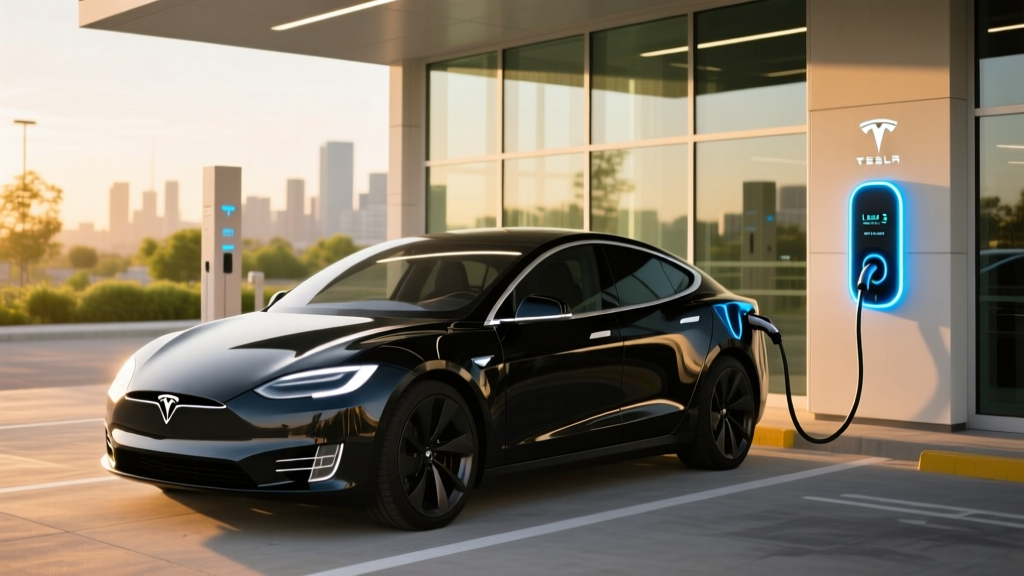
Who Actually Still Has Free Tesla Supercharging?
Tesla introduced free unlimited Supercharging as a perk for early Model S buyers starting around 2012. The program evolved through several phases:
- Pre-January 2017 Model S/X: Free unlimited Supercharging tied to the vehicle (VIN). Transfers with resale in most cases.
- January 2017 – September 2018: Free Supercharging tied to the original owner. Does NOT transfer on resale.
- Late 2018 onward: Program discontinued for new orders. Tesla has occasionally offered limited-time promotional credits (e.g., 10,000 free Supercharger miles) as sales incentives, but these expire.
- 2024–2025 referral program: Tesla offered Supercharger credits through referrals, but these are finite, time-limited, and non-permanent.
If you're shopping for a used Model S or Model X and the seller claims "free Supercharging for life," demand documentation. Check the vehicle's Tesla app account or contact Tesla support with the VIN to confirm whether the benefit is vehicle-bound (transferable) or owner-bound (expires on transfer). This distinction can affect resale value by $3,000–$7,000 based on used-market pricing patterns.
Charging Levels Explained: Speeds, Power, and Range Added
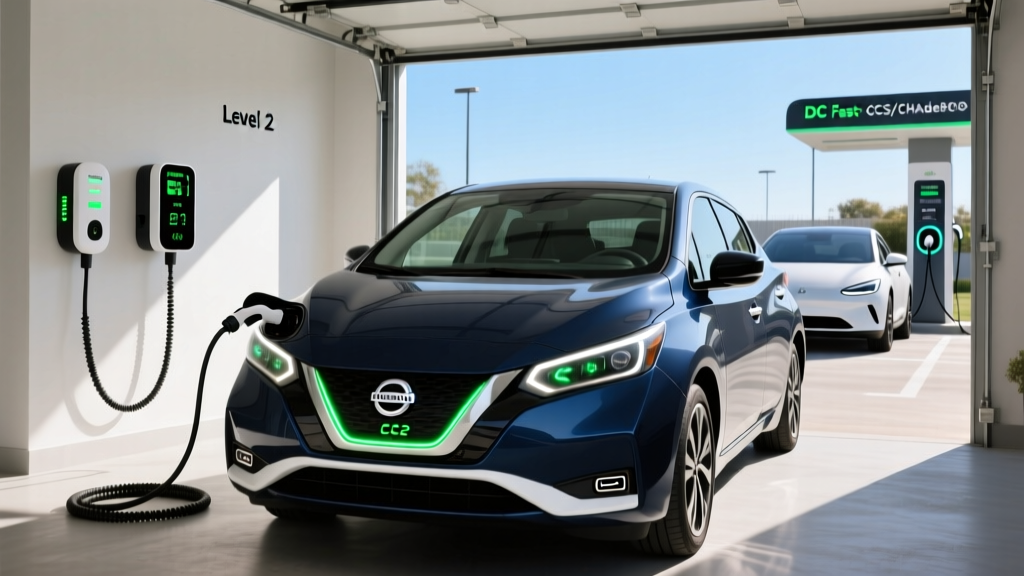
Before we talk cost, let's clarify the three charging levels every EV owner needs to understand. The critical distinction: kW (kilowatts) measures power — how fast energy flows into your car. kWh (kilowatt-hours) measures energy — the total capacity of your battery, like gallons in a tank.
| Level | Voltage / Amps | Power (kW) | Miles of Range Added per Hour | Best For |
|---|---|---|---|---|
| Level 1 | 120V / 12A | ~1.4 kW | 3–5 mi/hr | Overnight trickle, PHEVs, emergency |
| Level 2 | 240V / 32–48A | 7.7–11.5 kW | 25–44 mi/hr | Daily home charging (the standard) |
| DC Fast Charging | 400–800V DC | 50–350 kW | 150–1,000+ mi/hr (peak) | Road trips, rapid top-ups |
Real-world charging time examples:
- Tesla Model Y (75 kWh usable battery): Level 2 at 11.5 kW → 0–100% in ~7 hours. DC fast charge at V3 Supercharger (250 kW peak) → 10–80% in ~25 minutes (note: charge rate tapers significantly above 80% to protect battery health).
- Ford F-150 Lightning Extended Range (131 kWh usable): Level 2 at 11.5 kW → 0–100% in ~12 hours. DC fast at 150 kW → 15–80% in ~45 minutes.
- Hyundai Ioniq 5 (77.4 kWh usable): Level 2 at 10.9 kW → 0–100% in ~7.5 hours. DC fast at 350 kW (800V architecture) → 10–80% in ~18 minutes.
How Much Does Charging Cost Per Mile vs. Gas?
This is where EV ownership economics either shine or disappoint, depending entirely on where and when you charge. Let's run real numbers using a 2026 Tesla Model Y Long Range (EPA-rated 320 miles, ~75 kWh usable battery, ~4.0 mi/kWh efficiency) as our baseline.
| Scenario | Rate ($/kWh) | Cost for Full 75 kWh Charge | Cost Per Mile | Annual Cost (12,000 mi) |
|---|---|---|---|---|
| Home off-peak (utility TOU rate) | $0.08 | $6.00 | $0.02 | $240 |
| Home standard rate | $0.16 | $12.00 | $0.04 | $480 |
| Tesla Supercharger V3/V4 (avg) | $0.30 | $22.50 | $0.075 | $900 |
| Electrify America / EVgo (peak) | $0.48 | $36.00 | $0.12 | $1,440 |
| Gas equivalent (28 MPG avg, $3.40/gal) | — | — | $0.121 | $1,457 |
The takeaway is stark: home charging at off-peak rates delivers fuel costs at roughly one-sixth the price of gasoline. But exclusive reliance on DC fast charging at peak public rates can actually exceed gasoline costs per mile. This is why home Level 2 installation isn't a luxury — it's the economic foundation of EV ownership.
How Much Does It Cost to Install a Home EV Charger?
Installation costs vary enormously based on your home's electrical panel, the distance from panel to charger location, and local permitting requirements. Here's a realistic breakdown based on 2026 electrician rates and equipment pricing:
| Component | Basic Install (Panel Adjacent) | Standard Install (50–80 ft run) | Complex Install (Panel Upgrade + Long Run) |
|---|---|---|---|
| Level 2 Charger (hardware) | $350–$650 | $350–$650 | $350–$650 |
| Electrician labor (licensed) | $300–$600 | $600–$1,400 | $1,500–$3,000 |
| Electrical permit | $50–$150 | $50–$200 | $100–$300 |
| Panel upgrade (100A → 200A, if needed) | Not needed | Not needed | $1,500–$3,500 |
| Conduit, wiring (6 AWG copper), misc. | $50–$100 | $200–$500 | $400–$800 |
| Total Estimated Range | $750–$1,500 | $1,200–$2,750 | $3,850–$8,250 |
Electrical Requirements: What Your Panel Needs to Handle
A 48-amp Level 2 charger requires a dedicated 60-amp circuit (the National Electrical Code requires circuits to be rated at 125% of continuous load). This means:
- Voltage: 240V (same as your dryer or oven outlet)
- Amperage: 60A breaker for a 48A charger; 50A breaker for a 40A charger
- Wire gauge: 6 AWG copper for 60A; 8 AWG for 50A (THHN in conduit)
- Panel capacity: Your main panel must have sufficient spare amperage. A 200A panel with 160A of existing loads can accommodate a 60A circuit. A 100A panel in an older home with electric heat, dryer, and range may be maxed out — requiring a panel upgrade or a lower-amperage charger (e.g., 32A on a 40A circuit).
Safety and Code Considerations
- Dedicated circuit: Your EV charger must have its own dedicated breaker — never share a circuit with other appliances.
- GFCI protection: NEC 2020 and later require GFCI protection for outdoor receptacles. Hardwired installations (recommended for 48A+) bypass the receptacle and are often more reliable.
- Outdoor rating: If mounting outdoors, ensure the charger carries a NEMA 4 or NEMA 4X rating for weather resistance.
- Permit and inspection: Most jurisdictions require an electrical permit and post-installation inspection. Skipping this can void homeowner's insurance coverage for electrical fires.
- Hardwired vs. plug: Chargers above 40A are best hardwired (no plug/receptacle). This eliminates the NEMA 14-50 receptacle as a potential failure point and is required by code in some areas for continuous loads above 40A.
Which Connector Is Compatible with My EV?
The connector landscape has consolidated significantly since Tesla opened its Supercharger network and the industry adopted the North American Charging Standard (NACS). Here's the current state as of 2026:
| Connector | Brands Using It (2026) | Adapter Needed? |
|---|---|---|
| NACS (Tesla) | Tesla (all), Ford, GM, Rivian, Volvo, Polestar, Hyundai/Kia (2025+), BMW, Mercedes (2025+) | CCS→NACS adapter ($150–$230) for older non-Tesla EVs at Superchargers |
| CCS1 | Legacy vehicles (pre-2025 VW ID.4, older Bolt EV/EUV, older Ioniq 5) | NACS→CCS adapter for Tesla Superchargers; native CCS at EA, EVgo stations |
| CHAdeMO | Nissan Leaf (legacy only — discontinued), Mitsubishi Outlander PHEV | CHAdeMO→NACS adapters exist but are rare and expensive ($300+) |
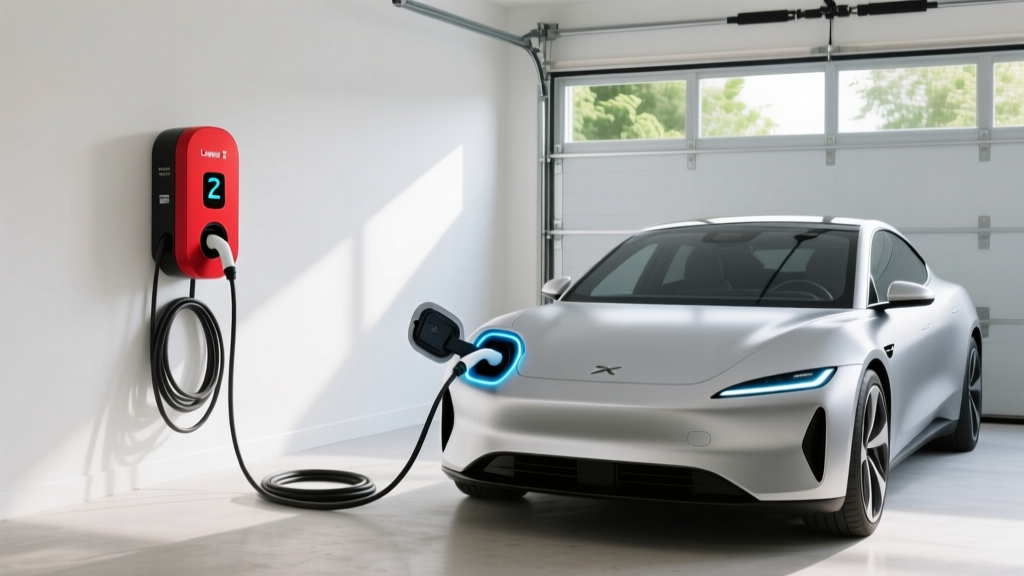
For home Level 2 charging, most chargers ship with a J1772 connector (the universal Level 2 standard). Tesla vehicles include a J1772-to-NACS adapter in the glovebox. Non-Tesla NACS-equipped vehicles (2025+ Fords, GMs, etc.) may also include one, or you can purchase one separately.
Level 2 Home Charger Recommendations (2026)
Here are three proven Level 2 chargers spanning different budgets and feature sets. All support the J1772 connector (compatible with every EV via included adapters) and are UL-listed for safety.
Tesla Wall Connector (Gen 3)
- Power: Up to 11.5 kW (48A on 60A circuit)
- Connector: NACS native; J1772 adapter included
- Cable length: 24 ft
- Smart features: Wi-Fi, OTA updates, power sharing (link two units on one circuit), Tesla app integration
- Price: ~$475
- Best for: Tesla owners who want seamless integration
ChargePoint Home Flex
- Power: Up to 12 kW (50A, configurable from 16A–50A)
- Connector: J1772 (NACS adapter available separately)
- Cable length: 23 ft
- Smart features: Wi-Fi, ChargePoint app, scheduled charging, Alexa integration, amperage adjustable via app
- Price: ~$599
- Best for: Multi-EV households, flexible amperage for older panels
Emporia Level 2 EV Charger
- Power: Up to 11.5 kW (48A on 60A circuit)
- Connector: J1772
- Cable length: 24 ft
- Smart features: Wi-Fi, Emporia energy monitoring integration, scheduled charging, solar-aware charging
- Price: ~$399
- Best for: Budget-conscious buyers who want smart scheduling and energy tracking
Public Charging Costs in 2026: What to Expect on the Road
Public DC fast charging pricing has stabilized but remains significantly more expensive than home charging. Here's what major networks charge per kWh in 2026 (prices vary by state, time of day, and membership tier):
- Tesla Supercharger V3/V4: $0.25–$0.36/kWh (varies by location; idle fees of $0.50–$1.00/min if you stay plugged in after reaching your limit)
- Electrify America: $0.36–$0.52/kWh (Pass+ membership at $4/month reduces rates to ~$0.31/kWh)
- EVgo: $0.34–$0.48/kWh (membership plans reduce rates; Peak Saver rates available off-peak)
- ChargePoint (Level 2 public): $0.10–$0.30/kWh (set by property owner — highly variable)
Pro tip: Many utilities offer time-of-use (TOU) plans that drop electricity rates to $0.05–$0.10/kWh between 10 PM and 6 AM. If you charge at home overnight on a TOU plan, your effective fuel cost drops to roughly $0.015–$0.025 per mile — a fraction of any public charging option and about 80% cheaper than gasoline.
Frequently Asked Questions
Can I still get free Tesla Supercharging by buying a used Model S or Model X?
Only if the specific vehicle has transferable free Supercharging tied to its VIN (typically pre-January 2017 vehicles). Verify directly with Tesla using the VIN before purchase — seller claims are unreliable. Even with free Supercharging, expect to pay for home charging, which is where 80–90% of EV charging happens.
How fast will each charging level add range to my Tesla Model Y?
At Level 1 (120V), expect roughly 3–4 miles per hour — impractical for daily use. At Level 2 (240V, 48A), you'll add approximately 40–44 miles per hour, fully replenishing overnight. At a V3 Supercharger (250 kW peak), you can add up to 200 miles in about 20 minutes, though the charge curve tapers significantly after 80% State of Charge.
Do I need a panel upgrade for a home EV charger?
Not always, but possibly. If your home has a 200A panel with available capacity, you likely won't need one. If you have a 100A panel (common in pre-1990 homes), your electrician's load calculation may show the need for an upgrade — adding $1,500–$3,500 to the project. An alternative is installing a lower-amperage charger (32A on a 40A circuit), which still delivers ~25 miles of range per hour.
Is the federal tax credit available for home charger installation?
The Alternative Fuel Vehicle Refueling Property Credit (IRS §30C) offers up to 30% of the cost of home EV charging equipment and installation, capped at $1,000. However, eligibility depends on whether your census tract qualifies as a "non-urbanized area" or a low-income community under current IRS guidance. Consult a tax professional and check the IRS website for the latest qualifying tract maps.
How much does EV charging cost per mile compared to gas?
At home on off-peak utility rates (~$0.08/kWh), a Tesla Model Y costs roughly $0.02 per mile. On standard residential rates (~$0.16/kWh), it's about $0.04 per mile. At public DC fast chargers ($0.30–$0.48/kWh), it ranges from $0.075–$0.12 per mile. A comparable gas vehicle at 28 MPG and $3.40/gallon costs approximately $0.12 per mile. Home charging delivers the best economics; exclusive public fast-charging narrows or eliminates the cost advantage.
What connector do I need for a non-Tesla EV at a Tesla Supercharger?
If your EV has a CCS1 port (most non-Tesla EVs built before 2025), you'll need a CCS-to-NACS adapter, typically $150–$230 from Tesla or third-party manufacturers like Lectron or A2Z. Tesla's app will guide you to Supercharger stalls that support non-Tesla vehicles. Vehicles built in 2025+ from Ford, GM, Rivian, Hyundai, and others ship with native NACS ports and need no adapter.
Sources: EPA Fuel Economy for vehicle efficiency data; IRS §30C Refueling Property Credit for charger installation tax credit rules; Tesla Supercharger support for network pricing and compatibility information.