If you own a Tesla—or are about to buy one—the single most common question is deceptively simple: how long to charge a Tesla at a charging station? The answer depends entirely on which station you mean. A Supercharger can add 200 miles in 15 minutes, while a standard Level 2 destination charger needs 8+ hours for a full battery. Understanding the difference between charging levels, connectors, and real-world charge curves is the gap between confident EV ownership and frustrating guesswork.
This guide covers every charging scenario a Tesla owner in 2026 will encounter—from home Level 2 installation to public DC fast charging—including exact times, costs, equipment recommendations, and the electrical upgrades you might need before plugging in at home.
Charging Levels Explained: kW Speeds and Miles Added Per Hour
EV charging is measured in kW (kilowatts), which represents power—the rate at which energy flows into your battery. Your battery's capacity is measured in kWh (kilowatt-hours), which represents energy—the total amount of electricity stored. Think of kW as the width of a hose and kWh as the size of the bucket. Confusing these two is the most common EV literacy mistake, and it leads to wildly wrong expectations at the charger.
Here's how each level performs in practice with Tesla vehicles:
| Level | Voltage | Power (kW) | Miles of Range/Hour | Typical Use Case |
|---|---|---|---|---|
| Level 1 (120V) | 120V | 1.0–1.4 kW | 3–5 mi/hr | Emergency/overnight trickle |
| Level 2 (240V) | 240V | 7.2–19.2 kW | 25–55 mi/hr | Home daily charging, workplaces |
| DC Fast Charging | 400–800V DC | 50–250+ kW | 180–1,000+ mi/hr | Road trips, Superchargers |
For context, a Tesla Model Y Long Range (AWD) has an 82 kWh usable battery and an EPA-rated range of 310 miles. Charging that battery from 10% to 80% at a V3 Supercharger (250 kW peak) takes roughly 25–28 minutes in ideal conditions. The same 10–80% session on a Level 2 home charger at 11.5 kW takes approximately 5–6 hours.
How Long to Charge a Tesla at a Charging Station: DC Fast Charging Times
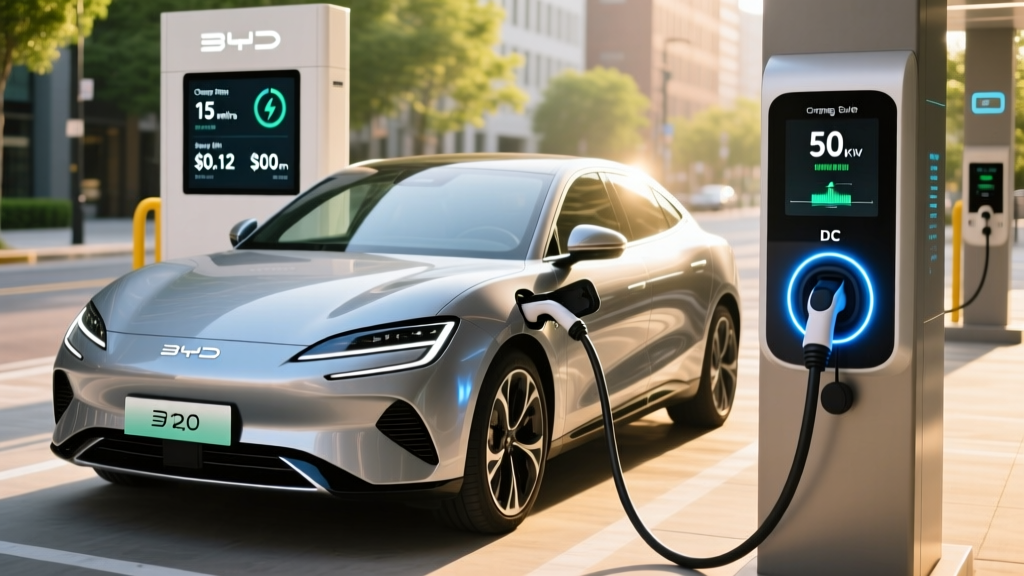
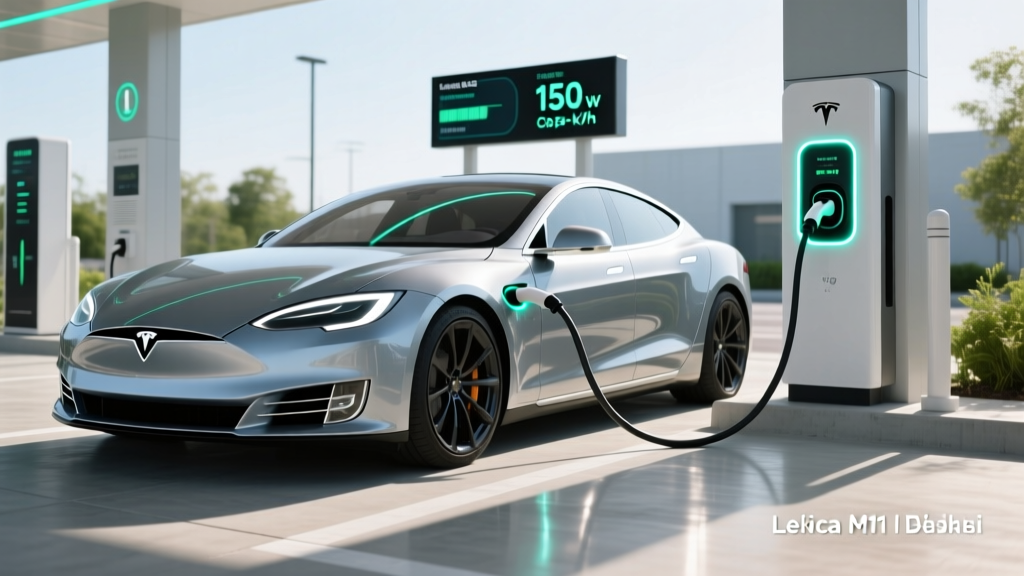
Tesla's Supercharger network remains the gold standard for public DC fast charging. As of 2026, Tesla operates V3 (250 kW peak) and V4 (up to 350 kW peak on compatible vehicles) Superchargers across North America. The Tesla Model 3 and Model Y can accept up to 250 kW on V3 stalls; the refreshed Model S and Model X can peak at 250 kW as well.
However, peak kW is not sustained kW. Every EV battery follows a charge curve: the charge rate is highest at low states of charge (SoC) and tapers significantly as the battery fills. Here's what 10–80% charging looks like across popular Tesla models at a V3 Supercharger:
| Model | Battery (kWh usable) | Peak Charge Rate | 10–80% Time | Miles Added in 15 Min |
|---|---|---|---|---|
| Model 3 Long Range | 79 kWh (LFP variant: 60 kWh) | 250 kW | ~25 min | ~175 mi |
| Model Y Long Range | 82 kWh | 250 kW | ~27 min | ~162 mi |
| Model S Plaid | 100 kWh | 250 kW | ~30 min | ~200 mi |
| Cybertruck AWD | 123 kWh | 250 kW | ~38 min | ~135 mi |
Home Charging Setup: Electrical Requirements and Installation Costs
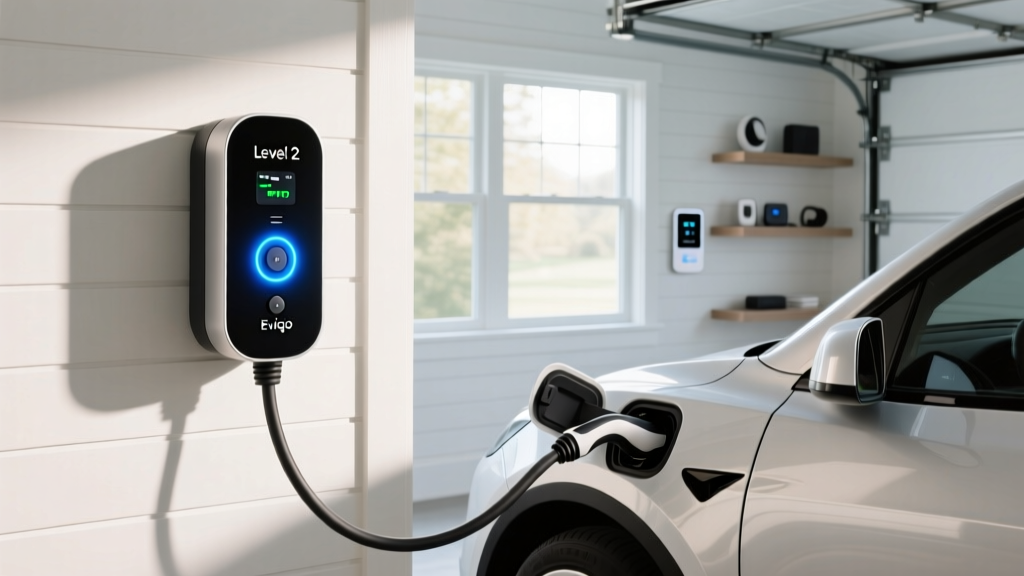
Most Tesla owners do 80–90% of their charging at home on a Level 2 charger. A proper home setup means waking up every morning with a full battery—eliminating the "gas station" routine entirely. But installation isn't plug-and-play; it requires electrical planning and, in many cases, a licensed electrician.
Electrical Requirements for Level 2 Home Charging
A Level 2 charger requires a 240V dedicated circuit—the same voltage as your electric dryer or oven. The amperage depends on the charger:
- 32A circuit (40A breaker): Delivers 7.7 kW. Adds ~28 miles/hour to a Model Y. Adequate for most daily driving (under 60 miles/day).
- 48A circuit (60A breaker): Delivers 11.5 kW. Adds ~42 miles/hour. Recommended for Tesla's Wall Connector and heavy commuters.
- 80A circuit (100A breaker): Delivers 19.2 kW. Adds ~55 miles/hour. Overkill for most homes; requires a 200A+ electrical panel.
The National Electrical Code (NEC) requires that continuous loads (like EV charging) not exceed 80% of the circuit breaker rating. So a 48A charger needs a 60A breaker, and a 60A breaker needs wiring rated for that load (typically 6 AWG copper).
What Electrical Upgrades Might I Need?
Before installing a Level 2 charger, assess your home's electrical panel. Here are common scenarios:
- 200A panel with spare capacity: Most straightforward install. An electrician runs a dedicated 240V line from the panel to your garage or parking spot. Cost: $500–$1,500 for labor and materials.
- 100A panel (older homes): You likely need a panel upgrade to 200A before adding a 48A EV circuit. Panel upgrades cost $1,500–$3,500 and may require utility coordination.
- No garage or parking near panel: Longer wire runs (50+ feet) increase material costs. Trenching for outdoor runs adds $500–$2,000.
- Smart panel or load-management device: If your panel is near capacity but you want to avoid a full upgrade, devices like the Emporia Smart Panel or Tesla's built-in load-sharing can dynamically limit charger draw. Cost: $200–$500 for the device.
| Component | Simple Install (panel nearby) | Complex Install (panel upgrade / long run) |
|---|---|---|
| Level 2 Charger Equipment | $350–$600 | $350–$600 |
| Electrician Labor | $400–$1,000 | $1,500–$3,500 |
| Electrical Permit | $50–$200 | $50–$200 |
| Panel Upgrade (if needed) | $0 | $1,500–$3,500 |
| Wire / Conduit Materials | $100–$300 | $300–$800 |
| Total Estimated Cost | $900–$2,100 | $3,700–$8,600 |
Always hire a licensed electrician and pull a permit. Unpermitted electrical work can void your homeowner's insurance and create fire hazards. Many utilities offer rebates of $200–$500 for permitted Level 2 installations—check with your local provider.
Connector Compatibility: NACS, CCS, and Adapter Needs
Tesla uses the North American Charging Standard (NACS) connector natively on all its vehicles. As of 2025–2026, NACS has become the dominant connector standard in North America, adopted by Ford, GM, Rivian, Hyundai, and most major automakers. However, older public charging stations may still use CCS1 or CHAdeMO connectors.
| Connector Type | Tesla Native? | Adapter Needed? | Where You'll Find It |
|---|---|---|---|
| NACS (Tesla) | Yes | No | All Superchargers, most new public stations |
| CCS1 | No | Yes (Tesla CCS Adapter, ~$175) | Electrify America, older ChargePoint/EVgo stations |
| CHAdeMO | No | Yes (third-party, ~$300+) | Rare; legacy Nissan Leaf stations (phasing out) |
| J1772 (Level 2) | No | Yes (included with Tesla mobile connector) | Destination chargers, workplaces, older L2 stations |
Tesla includes a J1772 adapter with every new vehicle, and the Tesla CCS Adapter is available from Tesla's shop for non-Tesla DC fast-charging compatibility. For 2026, the practical reality is that nearly every new public fast-charging installation uses NACS, so adapter needs are diminishing rapidly.
Cost to Charge: Per-Mile Comparison vs. Gas
One of the strongest arguments for EV ownership is fuel cost savings—but the actual savings depend heavily on where and when you charge. Electricity pricing varies enormously between home off-peak rates and public DC fast charging.
| Charging Scenario | Rate ($/kWh) | Full Charge Cost (0–100%) | Cost Per Mile |
|---|---|---|---|
| Home Off-Peak (utility rate) | $0.08–$0.14 | $6.56–$11.48 | $0.023–$0.040 |
| Home Peak (utility rate) | $0.18–$0.30 | $14.76–$24.60 | $0.051–$0.085 |
| Public Level 2 (ChargePoint, etc.) | $0.25–$0.49 | $20.50–$40.18 | $0.071–$0.139 |
| Tesla Supercharger (V3/V4) | $0.28–$0.48 | $22.96–$39.36 | $0.080–$0.136 |
| Gas Equivalent (25 MPG avg, $3.50/gal) | $3.50/gallon | $43.12 (for 308 mi) | $0.140 |
At home off-peak rates, a Tesla Model Y costs roughly $0.03 per mile to "fuel"—about 78% cheaper than a comparable gas vehicle at $3.50/gallon and 25 MPG combined. Even at Supercharger rates, the per-mile cost is competitive with or cheaper than gas.
The critical caveat: if you rely exclusively on public DC fast charging at peak rates ($0.40+/kWh), your cost per mile approaches or exceeds that of a fuel-efficient hybrid. Home charging access is the single biggest determinant of EV economics. According to the IRS §30D guidelines, some homeowners can also claim a 30% tax credit (up to $1,000) on home charging equipment installation under the Alternative Fuel Vehicle Refueling Property Credit—check current eligibility with a tax professional.
Recommended Home Charging Equipment for Tesla Owners
Not all Level 2 chargers are equal. For Tesla owners in 2026, the best options prioritize NACS native compatibility, smart scheduling features (to charge during off-peak utility hours), and sufficient power output. Here are the top picks:
Tesla Wall Connector (Gen 4)
Power: Up to 11.5 kW (48A)
Connector: Native NACS
Cable Length: 24 ft
Smart Features: Wi-Fi updates, load sharing between two units, Tesla app integration
Price: ~$475
Best For: Tesla-only households. Seamless integration, excellent build quality, and the fastest Level 2 charge your Tesla can accept.
Emporia Level 2 EV Charger
Power: Up to 11.5 kW (48A)
Connector: NACS (2025+ models) or J1772 with adapter
Cable Length: 24 ft
Smart Features: Energy monitoring, solar integration, time-of-use scheduling, works with Emporia Vue panel monitor
Price: ~$399
Best For: Budget-conscious owners who want granular energy tracking and solar-optimized charging.
ChargePoint Home Flex (NACS)
Power: Up to 12 kW (50A, configurable down to 16A)
Connector: NACS (2025+ update) or J1772
Cable Length: 23 ft
Smart Features: Alexa integration, flexible amperage dial, ChargePoint app scheduling
Price: ~$599
Best For: Multi-EV households or those wanting adjustable amperage to match panel capacity.
Tesla Mobile Connector
Power: Up to 7.7 kW (32A) with NEMA 14-50 adapter; 1.4 kW on 120V
Connector: Native NACS
Cable Length: 20 ft
Smart Features: Basic; no Wi-Fi or scheduling
Price: ~$200 (included with some Tesla trims)
Best For: Backup/travel charging. Not recommended as primary home charger due to lower max power and lack of hardwired safety.
Safety, Code, and Installation Best Practices
EV charging draws sustained high current for hours—unlike most household appliances. This makes proper installation critical. Key safety and code requirements include:
- Dedicated circuit: Your Level 2 charger must have its own dedicated breaker. Never share a circuit with other high-draw appliances.
- GFCI protection: The 2020 NEC requires GFCI protection for all EV charging outlets. Hardwired installations (like the Tesla Wall Connector) typically have GFCI built into the unit; receptacle-based installs need a GFCI breaker.
- Outdoor rating: If your charger is installed outdoors (carport, driveway), the unit must carry a NEMA 4 or IP65 weather rating. All recommended chargers above meet this standard.
- Wire gauge: A 48A/60A circuit requires 6 AWG copper wire minimum. Longer runs (75+ feet) may need 4 AWG to prevent voltage drop.
- Permit and inspection: Most jurisdictions require an electrical permit for new 240V circuits. The inspection ensures code compliance and protects your insurance coverage. Permits typically cost $50–$200.
- Hardwired vs. plug: Hardwired chargers (no plug) allow 48A+ on a 60A circuit. NEMA 14-50 receptacles are limited to 40A continuous (on a 50A breaker) per NEC, though many electricians install 60A breakers with 14-50 outlets—verify local code. Hardwired is generally preferred for permanent installations.
Frequently Asked Questions
How much does it cost to install a home EV charger?
A straightforward Level 2 home charger installation (240V, panel nearby, no upgrade needed) costs between $900 and $2,100 including equipment, electrician labor, and permit. If your home needs an electrical panel upgrade (common in pre-2000 homes with 100A service), total costs can reach $3,700–$8,600. Always get 2–3 quotes from licensed electricians.
How fast will each charging level add range to my Tesla?
Level 1 (120V) adds 3–5 miles per hour—suitable only for overnight trickle charging if you drive under 40 miles daily. Level 2 (240V, 48A) adds 35–42 miles per hour, fully replenishing a Model Y overnight. DC fast charging at a Supercharger adds up to 175 miles in 15 minutes at peak rate, though the charge curve tapers significantly above 50% SoC.
Which connector is compatible with my Tesla?
All Tesla vehicles use the NACS connector natively. This works at every Tesla Supercharger and an increasing number of third-party stations (Electrify America, EVgo, and ChargePoint are adding NACS cables). For legacy CCS1 stations, Tesla sells a CCS adapter for ~$175. A J1772 adapter (for Level 2 destination chargers) is included with every new Tesla.
How much does charging cost per mile vs. gas?
At home off-peak rates ($0.10/kWh), a Tesla Model Y costs approximately $0.03 per mile—roughly 78% less than a 25 MPG gas car at $3.50/gallon ($0.14/mile). Even at public Supercharger rates ($0.35/kWh), the cost is ~$0.10/mile, still below the gas equivalent. The savings are largest for home chargers with time-of-use utility plans.
What electrical upgrades might I need for home charging?
The most common upgrade is a panel upgrade from 100A to 200A ($1,500–$3,500) in older homes. You may also need a longer wire run (adding $200–$800 in materials), a sub-panel for a detached garage, or a load-management device if your panel is near capacity but you want to avoid a full upgrade. An electrician can assess your panel's spare capacity during a site visit—many offer free estimates.
Does Tesla precondition the battery for faster charging?
Yes. When you navigate to a Supercharger using your Tesla's built-in navigation, the car automatically preconditions the battery—warming it to the optimal temperature for fast charging. This can reduce your 10–80% charge time by 5–10 minutes, especially in cold weather. Always navigate to the Supercharger rather than driving there manually to benefit from preconditioning.
Sources: EPA Fuel Economy, IRS §30D EV Tax Credit, Tesla Owner's Manuals and specification pages. Pricing and tax credit rules reflect 2026 data and are subject to change. Consult a licensed electrician for installation specifics and a tax professional for credit eligibility.