What Does a Tesla Charging Station Installation Cost in 2026?
If you've ordered a Tesla Model Y, Model 3, Cybertruck, or any other EV with the North American Charging Standard (NACS) port, home charging is where 80–90% of your electrons will flow. Getting the setup right saves thousands in public-charging fees over the vehicle's life — but the upfront bill varies enormously depending on your home's electrical infrastructure.
The short answer: a straightforward Tesla Wall Connector installation on an existing 240V/60A circuit typically runs $1,200–$2,100 total (equipment + licensed electrician + permit). If your electrical panel needs an upgrade to 200A service, add $1,500–$4,000+. And if you're running a new 60A circuit more than 50 feet from the panel, wire costs alone can push the total past $3,000.
This guide breaks down every cost layer, the electrical requirements, connector compatibility, and real-world charging speeds — with the exact numbers you need to budget accurately.
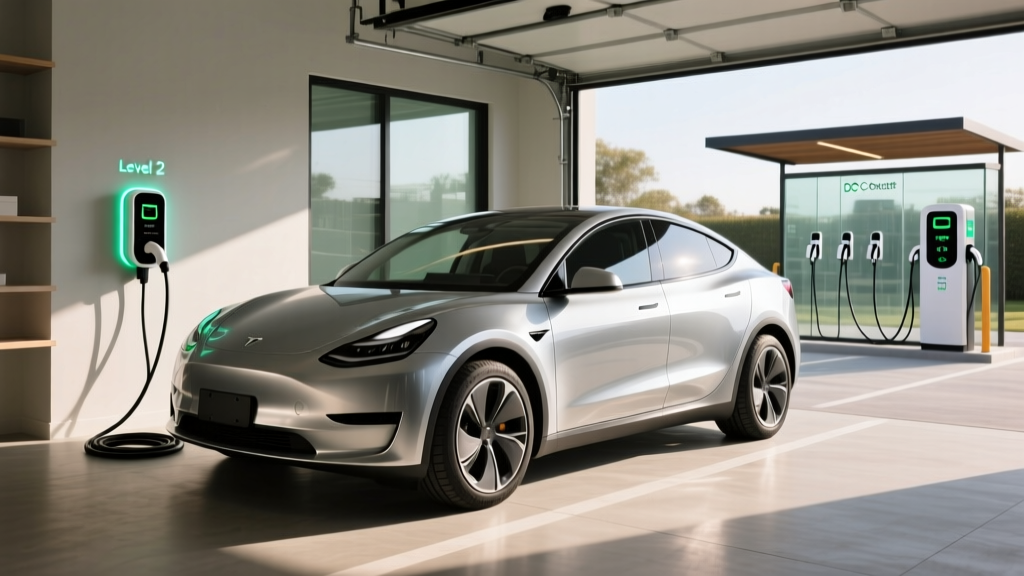
Charging Levels Explained: Speeds, Power, and Real-World Range Added
Before quoting an installation, you need to understand what each charging level actually delivers. The critical distinction: kW (kilowatts) measures power — the rate energy flows into your battery. kWh (kilowatt-hours) measures energy — the total capacity stored. Think of kW as the width of a hose and kWh as the size of the bucket.
| Level | Voltage | Max Power (kW) | Miles of Range/Hour | Typical Use Case |
|---|---|---|---|---|
| Level 1 (120V) | 120V / 12A | 1.4 kW | 3–5 mi/hr | Overnight top-up, PHEVs, low-mileage drivers |
| Level 2 (240V) | 240V / 48A–80A | 11.5–19.2 kW | 30–56 mi/hr | Home daily charging, workplace, hotels |
| DC Fast Charging | 400V–800V DC | 150–350+ kW | 300–1,200+ mi/hr | Road trips, Tesla Superchargers, public networks |
For a Tesla Model Y Long Range (81 kWh usable battery, ~320 miles EPA range), a Level 2 Wall Connector at 11.5 kW (48A) will fully replenish the battery in roughly 7 hours — ideal for overnight charging. At Level 1 (1.4 kW via a standard 120V outlet), that same charge takes over 57 hours, making it impractical for anything beyond a plug-in hybrid or emergency trickle charge.
- Tesla Model 3 RWD (57.5 kWh LFP) on 11.5 kW Level 2: ~3.5 hours
- Tesla Model Y LR (81 kWh NMC) on 11.5 kW Level 2: ~5 hours
- Tesla Model Y LR on 250 kW DC Supercharger: ~22–25 minutes (charge curve tapers sharply above 80%)
- Cybertruck AWD (123 kWh) on 11.5 kW Level 2: ~8.5 hours
Tesla Wall Connector vs. Universal Charger: Equipment Options and Pricing
Tesla's own Wall Connector is a strong default choice for Tesla owners, but the expanding NACS ecosystem means universal charglers now serve Tesla and non-Tesla EVs equally. Here's how the top options compare:
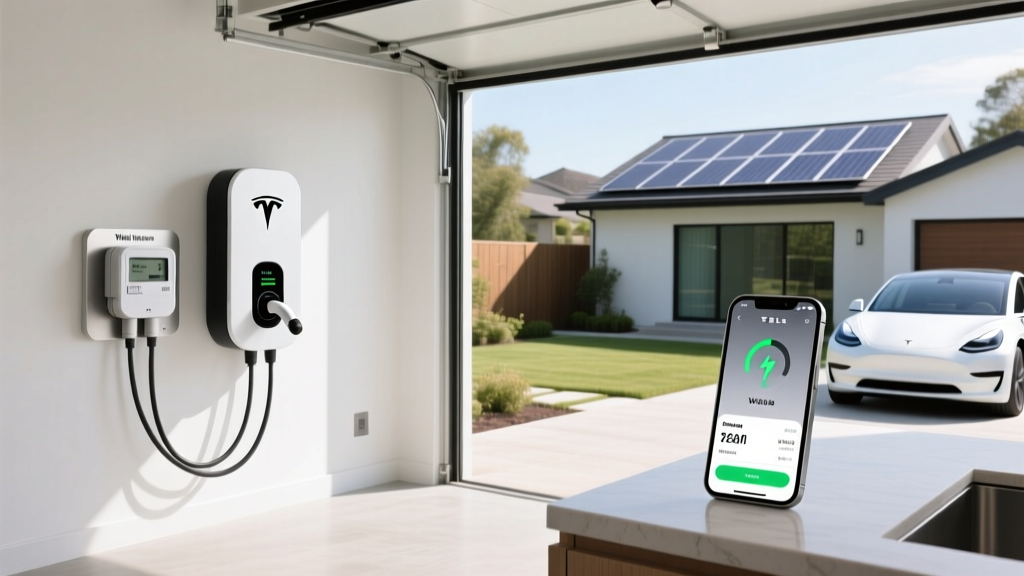
Tesla Wall Connector (Gen 4)
- Power Output: Up to 11.5 kW (48A) on a 60A circuit
- Connector: NACS (native Tesla)
- Cable Length: 24 ft
- Smart Features: Wi-Fi, OTA firmware updates, Tesla app integration, load-sharing with up to 6 units, power-sharing for multi-stall setups
- Price: ~$475
- Best For: Tesla-only households wanting seamless app integration
Emporia Vue EV Charger
- Power Output: Up to 11.5 kW (48A)
- Connector: NACS (2025+ models) or J1772 with adapter
- Cable Length: 24 ft
- Smart Features: Energy monitoring, solar integration, scheduling, circuit-load management
- Price: ~$399
- Best For: Solar-panel owners wanting to charge only on excess production
ChargePoint Home Flex (NACS Edition)
- Power Output: Up to 12 kW (50A) on a 60A circuit; configurable down to 16A for lower-capacity panels
- Connector: NACS native (2025+ refresh)
- Cable Length: 23 ft
- Smart Features: Alexa integration, detailed session history, flexible amperage dip-switch settings
- Price: ~$599
- Best For: Mixed-EV households or renters wanting portable flexibility
One practical note: the Tesla Mobile Connector (included with some trims, ~$200 separately) with the NEMA 14-50 adapter delivers up to 7.7 kW (32A) on a 240V/40A dryer-style outlet. This is a legitimate budget option if you don't want a hardwired unit — but it charges roughly 30% slower than a full 48A Wall Connector and you'll need to plug/unplug each session.
Electrical Requirements: What Your Home Actually Needs
A Tesla Wall Connector at full 48A output requires a dedicated 60A, 240V circuit using 6 AWG copper wire (or 4 AWG aluminum). This is a non-negotiable electrical-code requirement per NEC Article 625 — EV charging is classified as a continuous load, meaning the circuit must be rated for 125% of the charger's maximum draw.
Panel Capacity: The Make-or-Break Variable
Before scheduling an electrician, check your main service panel's amperage rating. Most homes built after 1990 have 200A service, which usually supports a 60A EV circuit alongside existing loads. Older homes (pre-1980s) may have 100A or even 60A service — insufficient for a full-power Wall Connector without an upgrade.
An electrician will perform a load calculation (NEC Article 220) summing your home's existing circuits, HVAC, water heater, dryer, and range. If the calculation shows you're near your panel's limit, you have three options:
- Reduce charger amperage: Configure the Wall Connector to 32A (requiring only a 40A circuit) — this drops power to 7.7 kW but still adds ~28 miles/hour, adequate for most daily driving.
- Install a smart load-management device: Products like the Emporia Smart Load Center or Tesla's built-in load-sharing dynamically reduce EV charging when other high-draw appliances kick on. Cost: $200–$500 added to the install.
- Upgrade to 200A service: A full panel upgrade from 100A to 200A typically costs $1,500–$4,000 depending on utility requirements, conduit runs, and local permit fees.
Permit and Inspection Requirements
Virtually every US jurisdiction requires an electrical permit for a new 240V EV circuit. Permit fees range from $50–$300 depending on your city/county. A licensed electrician typically handles the permit application and schedules the inspection. Skipping the permit risks insurance claim denials and code violations at resale.
Tesla Charging Station Installation Cost: Full Breakdown
Here's a realistic cost matrix based on 2025–2026 electrician quotes and equipment pricing across US markets:
| Cost Component | Simple Install (Panel Nearby) | Moderate Install (50–100 ft Run) | Complex Install (Panel Upgrade Needed) |
|---|---|---|---|
| Tesla Wall Connector (equipment) | $475 | $475 | $475 |
| Electrician labor (2–8 hrs @ $100–$175/hr) | $400–$700 | $800–$1,400 | $1,500–$2,500 |
| Wire, conduit, breaker, misc materials | $100–$200 | $300–$600 | $400–$800 |
| Electrical permit | $50–$150 | $100–$200 | $150–$300 |
| Panel upgrade (if needed) | — | — | $1,500–$4,000 |
| Smart load-management add-on (optional) | $0–$300 | $0–$300 | $0–$300 |
| Total Estimated Cost | $1,025–$1,825 | $1,675–$2,975 | $4,025–$8,375 |
Several factors push costs toward the higher end:
- Distance from panel to garage/driveway: Every foot of 6 AWG copper wire costs $3–$6 installed. A 100-foot run adds $300–$600 in wire alone.
- Conduit requirements: Outdoor runs or runs through finished walls require EMT or PVC conduit, adding labor and material.
- Wall material: Running wire through brick, stucco, or concrete requires specialized drilling and patching.
- Trenching: Detached garages may need underground conduit trenching ($15–$30/linear foot).
- Local labor rates: Electrician rates vary from ~$85/hr in rural Midwest markets to $175+/hr in the San Francisco Bay Area or New York metro.
Federal incentive note: The IRS §30C Alternative Fuel Vehicle Refueling Property Credit offers up to 30% of equipment and installation costs, capped at $1,000 for residential EV charging hardware. This applies to the Wall Connector and the electrical work directly associated with it. Eligibility depends on your census tract meeting certain income or rural criteria. Always verify current-year rules with a tax professional before claiming.
Connector Compatibility: NACS, CCS, and Adapter Requirements
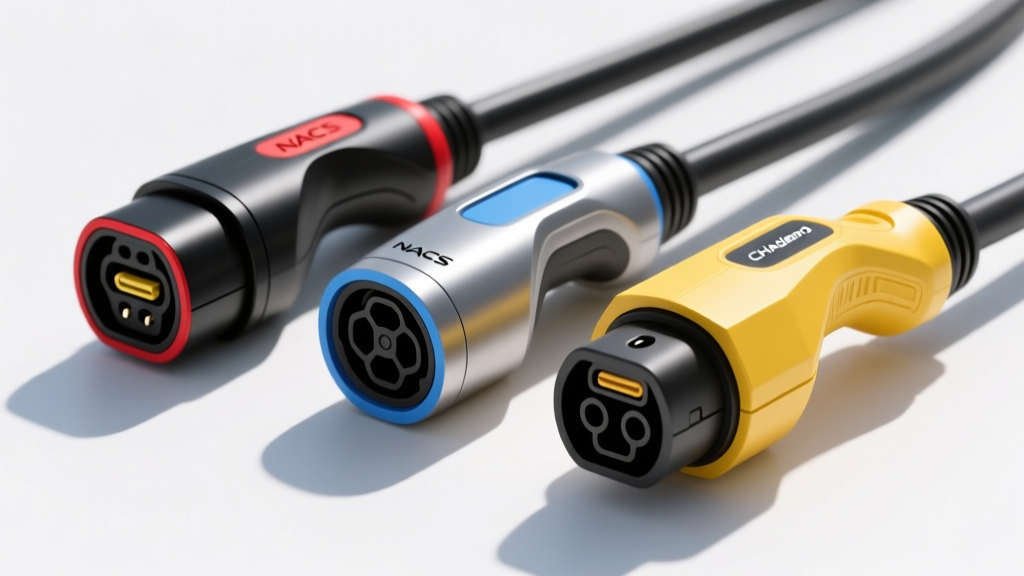
The connector landscape has consolidated dramatically. As of 2025, nearly every major automaker — Ford, GM, Rivian, Volvo, Polestar, BMW, Mercedes-Benz, Hyundai, Kia — has adopted the NACS (North American Charging Standard) connector originally designed by Tesla. This means Tesla owners can use any NACS-equipped public charger, and non-Tesla EVs can access Tesla Superchargers.
| Connector Type | Native Vehicles | Home Charging? | Adapter Needed For Tesla? |
|---|---|---|---|
| NACS (Tesla) | Tesla (all), Ford, GM, Rivian, Volvo, Polestar, BMW, Mercedes, Hyundai, Kia (2025+) | Yes — native on Tesla Wall Connector | No adapter needed |
| CCS1 | Legacy VW ID.4, older BMW i4, some 2022–2024 models | Yes — requires CCS1 charger or adapter | Tesla sells a CCS adapter (~$175) |
| CHAdeMO | Nissan Leaf (discontinued), Mitsubishi Outlander PHEV (older) | Rarely for home | No official Tesla adapter; legacy standard |
| J1772 (Level 2) | All non-Tesla EVs (pre-2025) | Yes — universal Level 2 standard | Tesla Mobile Connector includes J1772 adapter |
For home installation, the decision is straightforward: if you currently own a Tesla and plan to stay in the Tesla ecosystem, the NACS-native Tesla Wall Connector is the cleanest choice. If your household has (or will have) both Tesla and non-Tesla EVs, consider a universal NACS charger — nearly all new EVs from 2025 onward ship with NACS ports, so a NACS-equipped home charger is future-proof.
Cost Per Mile: Home Charging vs. Public Charging vs. Gas
The financial case for home charging hinges on your local electricity rates. Here's a realistic comparison using a Tesla Model Y Long Range (averaging 3.5 miles/kWh or ~120 MPGe combined):
| Charging Scenario | Rate ($/kWh) | Cost for 300 Miles | Cost Per Mile |
|---|---|---|---|
| Home — off-peak TOU rate (national avg) | $0.12 | $10.29 | $0.034 |
| Home — flat rate (national avg) | $0.17 | $14.57 | $0.049 |
| Tesla Supercharger (avg 2026) | $0.30 | $25.71 | $0.086 |
| Electrify America / 3rd-party DCFC | $0.40–$0.55 | $34.29–$47.14 | $0.114–$0.157 |
| Gas equivalent (28 MPG avg, $3.40/gal) | — | $36.43 | $0.121 |
Home off-peak charging at $0.12/kWh delivers fuel costs roughly 3.5× cheaper per mile than gasoline. Even at a flat residential rate of $0.17/kWh, you're saving about 60% compared to a 28 MPG gas car. However, exclusive reliance on DC fast charging at $0.40–$0.55/kWh erases most of the savings — which is precisely why home Level 2 installation pays for itself within 12–24 months for most drivers.
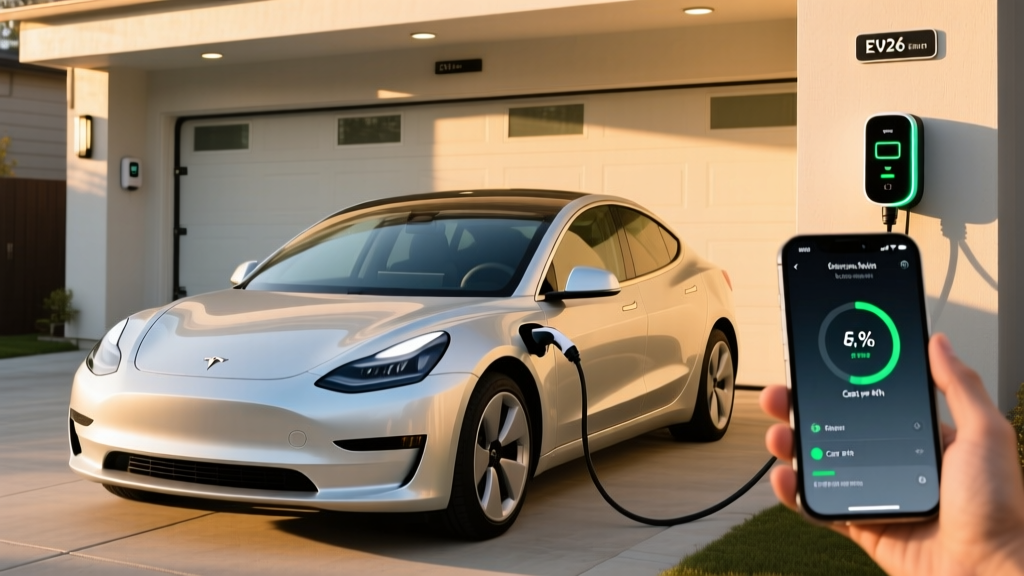
Pro tip: most utilities offer time-of-use (TOU) plans with overnight rates as low as $0.06–$0.10/kWh. The Tesla app lets you schedule charging to start at, say, 11 PM when off-peak rates begin. Over a year of 12,000 miles of driving, the difference between flat-rate and TOU charging can save $150–$300 annually.
Safety, Code Compliance, and Installation Best Practices
EV charging circuits carry significant current for extended durations — the NEC classifies EVSE as a continuous load, meaning it may run at full draw for 3+ hours. This makes proper installation non-negotiable for fire safety and insurance compliance.
Key Code Requirements (NEC Article 625)
- Dedicated circuit: The EV charger must have its own breaker — no sharing with other outlets or appliances.
- GFCI protection: 2023 NEC revision requires ground-fault circuit-interrupter protection for all EV receptacles rated 60A or less. Hardwired units like the Wall Connector have built-in ground-fault protection, eliminating the need for a GFCI breaker (which can nuisance-trip on some EV loads).
- Outdoor rating: If your charger is mounted outdoors, it must carry a NEMA 3R or NEMA 4 rating. The Tesla Wall Connector is rated NEMA 4 (weatherproof), suitable for exposed exterior walls.
- Cable management: NEC requires that the charging cable not create a trip hazard. Wall-mounted cord organizers or retractors are recommended.
- Disconnect: A service disconnect within sight of the charger is required for hardwired installations over 60A (not applicable to the standard 48A Wall Connector).
Choosing the Right Electrician
Always hire a licensed, insured electrician — not a general handyman. Request at least three quotes and verify:
- State/local electrical license number (verifiable through your state licensing board)
- Proof of general liability and workers' compensation insurance
- Experience with EV charger installations specifically (ask for references or photos of past installs)
- Willingness to pull a permit and schedule inspection (any electrician who suggests skipping the permit is a red flag)
Tesla also maintains a certified installer network on their website, which can simplify the process — though independent electricians often provide competitive or lower pricing.
Frequently Asked Questions
How much does it cost to install a Tesla home charger?
A straightforward Tesla Wall Connector installation on an existing 240V circuit with adequate panel capacity costs $1,025–$1,825 in most US markets. This includes the $475 charger, $400–$700 in electrician labor, $100–$200 in materials, and a $50–$150 permit. Complex installs requiring panel upgrades or long wire runs can reach $4,000–$8,000+.
Can I install a Tesla charger on a 100A electrical panel?
Possibly, but with limitations. A 100A panel may not have capacity for a full 60A EV circuit alongside your existing loads. Your electrician will perform a NEC Article 220 load calculation. Solutions include configuring the Wall Connector to 32A (40A circuit), installing a smart load-management device, or upgrading to 200A service.
Do I need a permit to install a Tesla Wall Connector?
Yes, virtually all US jurisdictions require an electrical permit for a new 240V EV charging circuit. Permit fees typically run $50–$300. The permit ensures the work is inspected for safety and code compliance. Skipping the permit can void homeowner's insurance coverage for related claims and create issues during a future home sale.
Is the Tesla Wall Connector worth it over a cheaper third-party charger?
For Tesla-only households, the Wall Connector offers the tightest integration — seamless app control, OTA updates, and power-sharing with additional units. At $475, it's competitively priced. Third-party chargers like the Emporia Vue ($399) or ChargePoint Home Flex ($599) offer comparable power output and add features like solar integration or Alexa control. The performance difference is negligible; the decision comes down to ecosystem preference and smart-home integration.
How fast does a Tesla Wall Connector charge compared to a Supercharger?
A Wall Connector at 11.5 kW adds roughly 35–44 miles of range per hour, fully charging a Model Y Long Range overnight (~5 hours from 10–80%). A 250 kW Tesla Supercharger adds the same 10–80% charge in roughly 22–25 minutes — about 12× faster. However, daily home Level 2 charging is gentler on battery longevity and dramatically cheaper per mile ($0.03–$0.05/mi vs. $0.08–$0.15/mi at public DC fast chargers).
Does the federal tax credit cover home charger installation?
The IRS §30C Alternative Fuel Vehicle Refueling Property Credit covers 30% of equipment and installation costs, up to a maximum credit of $1,000 for residential property. Eligibility depends on your home being in a qualifying census tract (low-income or non-urban). This is separate from the §30D new-vehicle tax credit. Verify your eligibility with a tax professional, as census-tract qualifications and credit rules may change year to year.
Can I use a NEMA 14-50 outlet instead of hardwiring the Wall Connector?
Yes, and this is a common budget-friendly approach. A NEMA 14-50 receptacle on a 50A circuit allows you to plug in the Tesla Mobile Connector (up to 7.7 kW / 32A) or a plug-in version of the Wall Connector. The advantage is portability — you can take the charger when you move. The trade-off is slightly slower charging versus a hardwired 48A installation, and NEC 2023+ requires GFCI protection on the receptacle, which adds $80–$150 in breaker cost.