If you're shopping for your first EV or planning a home charging setup, the variety of electric car charging plugs on the market can feel bewildering. Tesla uses one connector, legacy Japanese EVs use another, and most of the industry is migrating to a third standard. Get the plug wrong, and you'll be stranded at a charger you can't use — or paying for an adapter you shouldn't need.
This guide breaks down every major plug type sold in North America, maps each connector to the vehicles and networks that support it, and walks through the real numbers behind charging speeds, home installation costs, and per-mile energy expenses. All figures reflect current 2026 model-year vehicles and IRS/EPA data.
The Three Electric Car Charging Plugs in North America
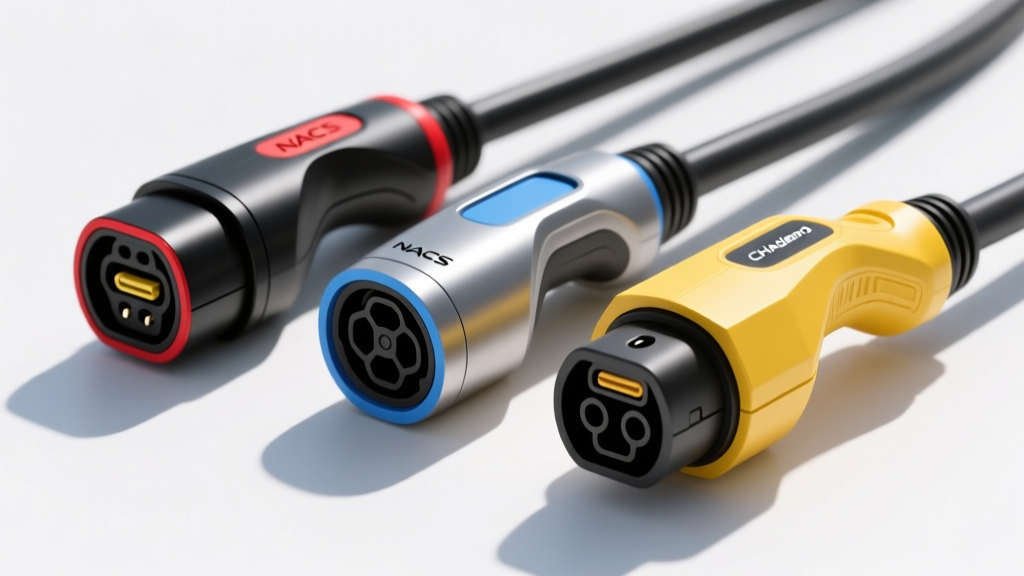
North American EV drivers encounter three primary connector families. Understanding which one your vehicle uses — and which networks support it — is the single most important charging decision you'll make.
| Connector | Full Name | AC Level 2? | DC Fast? | Key Vehicles (2026) | Major Networks |
|---|---|---|---|---|---|
| NACS | North American Charging Standard (Tesla) | Yes | Yes | Tesla Model 3/Y/S/X, Ford F-150 Lightning, GM Ultium models (Equinox EV, Blazer EV, Silverado EV), Rivian R1T/R1S, Hyundai Ioniq 5 (2025+), Volvo EX30/EX90 | Tesla Supercharger, Electrify America (NACS stalls), EVgo, ChargePoint |
| CCS1 | Combined Charging System (Combo 1) | Yes (J1772 upper) | Yes | Hyundai Ioniq 6, VW ID.4 (pre-2025), BMW iX (legacy), some Stellantis models | Electrify America, EVgo, ChargePoint, Blink |
| CHAdeMO | Charge de Move | No (uses J1772 for AC) | Yes only | Nissan Leaf (legacy), Mitsubishi Outlander PHEV (DC) | Limited — Electrify America phasing out |
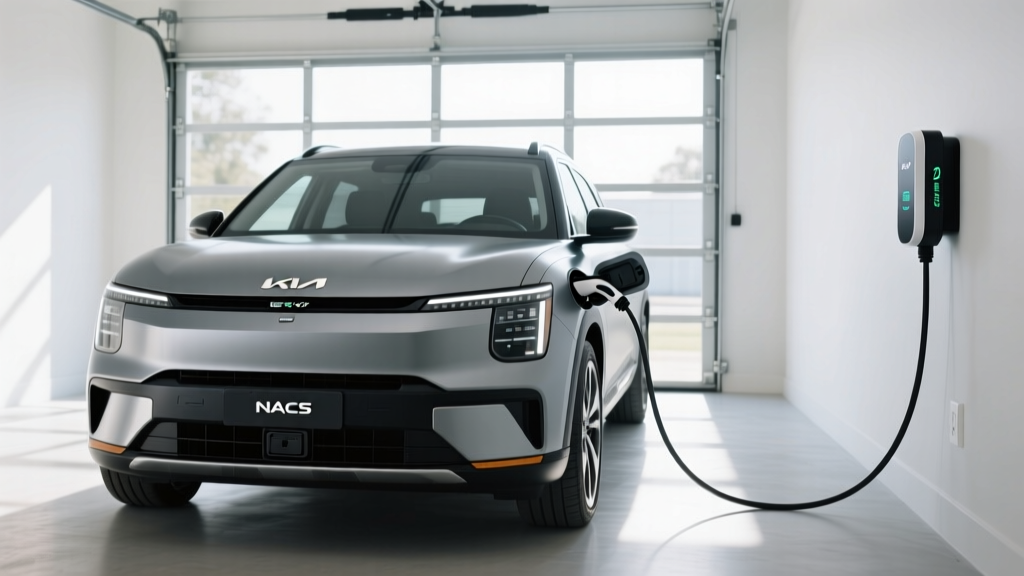
The big picture: The SAE J3400 standard (formally codifying Tesla's NACS connector) has become the dominant plug for new EVs starting with the 2025–2026 model years. Ford, GM, Rivian, Hyundai, Volvo, Polestar, and others have adopted NACS on new vehicles. CCS1 remains on many 2023–2024 models still on the road, so public CCS1 chargers aren't disappearing overnight — but new installations overwhelmingly favor NACS. CHAdeMO is effectively a legacy connector; if you drive a Nissan Leaf, plan your DC fast-charging around existing infrastructure, as new CHAdeMO stalls are rare.
Charging Levels: Speeds, kW Ratings, and Miles Per Hour
Before plugging in anywhere, you need to understand the three charging levels — and critically, the difference between kW (kilowatts), which measures charging power (the rate of energy flow), and kWh (kilowatt-hours), which measures battery energy capacity (the total fuel in the tank). A 75 kWh battery charged at 11.5 kW takes roughly 6.5 hours from empty to full. Confusing these two units is the most common EV mistake.
| Level | Voltage | Typical Power (kW) | Miles of Range Added Per Hour | Best For |
|---|---|---|---|---|
| Level 1 | 120V AC | 1.0–1.4 kW | 3–5 miles | Overnight top-ups, PHEVs, emergency backup |
| Level 2 | 240V AC | 7.2–19.2 kW | 20–60 miles | Daily home charging, workplace, hotels |
| DC Fast Charge | 400–800V DC | 50–350 kW | 150–800+ miles (equivalent) | Road trips, quick top-ups, commercial fleets |
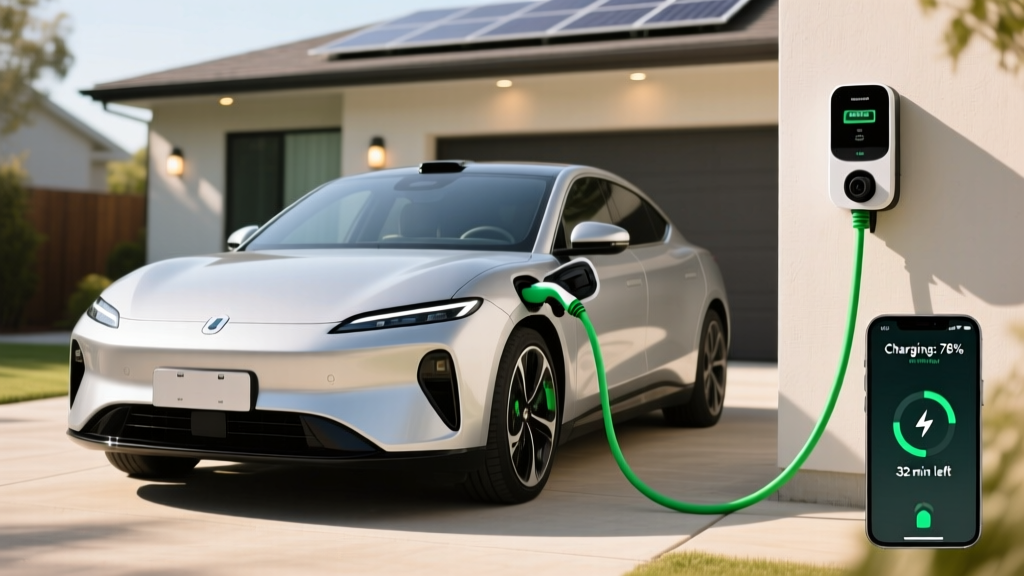
Real-world context: A 2026 Tesla Model Y Long Range (78 kWh usable battery, ~320 miles EPA) charging on Level 1 at 1.4 kW gains roughly 4 miles of range per hour — enough for a 40-mile daily commute if parked for 10+ hours. The same vehicle on a 11.5 kW Level 2 home charger recovers about 33 miles per hour, easily replenishing a full day's driving overnight. On a 250 kW DC fast charger, that Model Y can add 175 miles in roughly 15 minutes during the peak portion of its charge curve.
Charge curve reality: DC fast chargers don't sustain peak kW across the entire session. A vehicle rated at 250 kW peak may only hold that rate from roughly 10–30% state of charge (SoC), then taper progressively. This is why manufacturers quote 10–80% charge times rather than 0–100%. Above 80%, charging slows dramatically to protect battery chemistry — plan to unplug at 80% on road trips unless you genuinely need the final 20%.
Home Charger Installation: Electrical Requirements and Costs
Installing a Level 2 home charger is the single biggest quality-of-life upgrade an EV owner can make. But costs vary enormously depending on your home's electrical panel, the distance from the panel to the charger location, and local permit requirements.
Electrical Requirements
Most Level 2 home chargers require a 240V dedicated circuit, similar to an electric dryer or oven. The most common configurations:
- 40-amp circuit / 32-amp continuous draw: Delivers 7.7 kW — adequate for most EVs with overnight charging. This is the sweet spot for cost and capability.
- 50-amp circuit / 40-amp continuous draw: Delivers 9.6 kW — charges faster, recommended for larger batteries (100+ kWh trucks like the F-150 Lightning or Silverado EV).
- 60-amp circuit / 48-amp continuous draw: Delivers 11.5 kW — maximum for most residential chargers. Ideal for high-capacity batteries or households with two EVs sharing one charger on a schedule.
Panel upgrade reality: Most homes built after 1990 have a 200-amp main electrical panel, which can usually accommodate a 40–60 amp EV circuit without issue. Older homes with 100-amp panels often need a panel upgrade to 200 amps before adding a Level 2 charger — this is the single largest variable in installation cost and can add $1,500–$3,500 to the project.
Installation Cost Breakdown
| Component | Low-End Cost | High-End Cost | Notes |
|---|---|---|---|
| Level 2 charger hardware | $300 | $750 | Smart Wi-Fi chargers (ChargePoint, Emporia, Wallbox) |
| Electrician labor (standard install) | $500 | $1,500 | Varies by distance from panel, wall type, conduit run |
| Electrical permit | $50 | $300 | Required in most jurisdictions; varies by city/county |
| Panel upgrade (if needed) | $1,500 | $3,500 | 100A → 200A upgrade for older homes |
| Total (no panel upgrade) | $850 | $2,550 | Most common scenario for modern homes |
| Total (with panel upgrade) | $2,350 | $6,050 | Older homes or high-draw setups |
Federal incentive: The IRS Residential Clean Energy Credit (IRC §25D) covers 30% of home EV charger equipment and installation costs up to $1,000 for charger hardware (through 2032). This is separate from the §30D vehicle tax credit. Consult a tax professional for your specific eligibility — income caps and property requirements apply.
Safety and Code Considerations
- Dedicated circuit: NEC code requires EV chargers to be on a dedicated circuit — it cannot share a breaker with other appliances.
- GFCI protection: Outdoor installations and garage outlets in many jurisdictions require Ground Fault Circuit Interrupter protection. Hardwired chargers often have built-in GFCI; plug-in units may need a GFCI breaker.
- NEMA 14-50 vs hardwired: A NEMA 14-50 outlet gives you portability (take the charger when you move), but a hardwired connection eliminates the outlet as a potential failure point and often allows higher amperage.
- Outdoor rating: If your charger mounts outside, confirm it carries an IP65 or higher weatherproof rating. Most major brands (ChargePoint, Wallbox, Emporia) are rated for outdoor use.
How Much Does EV Charging Cost Per Mile vs Gas?
Electricity pricing varies dramatically by location, time of day, and whether you're charging at home or on a public DC fast network. Here's a realistic comparison using a mid-size electric SUV (3.0 miles/kWh efficiency, similar to a 2026 Hyundai Ioniq 5 or Tesla Model Y) versus a comparable 28 MPG gas SUV at $3.40/gallon.
| Charging Scenario | Rate ($/kWh) | Cost Per Mile | vs 28 MPG Gas SUV ($3.40/gal) |
|---|---|---|---|
| Home — off-peak utility rate | $0.08–$0.12 | $0.03–$0.04 | 70–75% cheaper |
| Home — standard residential rate | $0.14–$0.18 | $0.05–$0.06 | 50–60% cheaper |
| Public Level 2 (workplace/mall) | $0.20–$0.35 | $0.07–$0.12 | 10–45% cheaper |
| DC Fast Charge (Electrify America, EVgo) | $0.35–$0.55 | $0.12–$0.18 | Roughly equal to 10–15% more expensive |
| Gas SUV (28 MPG combined) | $3.40/gallon | $0.12 | Baseline |
Key takeaway: Home charging is where EVs deliver massive fuel savings — typically 50–75% less per mile than gasoline. Public DC fast charging, however, can equal or exceed the cost of gas on a per-mile basis. The financial case for an EV depends heavily on your access to affordable home or workplace charging. If you rely exclusively on public DC fast chargers, the cost advantage narrows significantly.
Time-of-use rates: Many utilities offer EV-specific time-of-use (TOU) plans with off-peak rates as low as $0.06–$0.09/kWh between 10 PM and 6 AM. If your utility offers a TOU plan, scheduling overnight charging can cut your fuel cost to roughly $0.02–$0.03 per mile — a fraction of gasoline.
Charging Time Examples: How Long to Charge Common EV Batteries
Charge times depend on battery size (kWh), the charger's power output (kW), and the vehicle's onboard charger capacity (for AC) or charge-curve profile (for DC). Here are real-world estimates for popular 2026 models:
| Vehicle | Battery (kWh usable) | Level 2 at 11.5 kW (0–100%) | DC Fast 10–80% | Peak DC kW |
|---|---|---|---|---|
| Tesla Model Y Long Range | 78 kWh | ~7 hours | ~22 min (250 kW peak) | 250 kW |
| Hyundai Ioniq 5 (NACS) | 77.4 kWh | ~7 hours | ~18 min (800V, 240 kW) | 240 kW |
| Ford F-150 Lightning Ext. Range | 131 kWh | ~12 hours | ~41 min (150 kW peak) | 150 kW |
| Chevrolet Equinox EV 3RS | 85 kWh | ~8 hours | ~30 min (150 kW peak) | 150 kW |
| BMW iX xDrive50 | 105.2 kWh | ~10 hours | ~31 min (150 kW peak) | 150 kW |
Cold-weather caveat: Lithium-ion batteries charge significantly slower when cold. In sub-freezing temperatures, expect DC fast-charge sessions to take 20–40% longer unless your vehicle has an active battery preconditioning system. Tesla, Hyundai (Ioniq 5/6), and GM Ultium vehicles precondition the battery when you navigate to a charger — this warms the cells for optimal charge acceptance. Always enable preconditioning before arriving at a DC fast charger in cold weather.
Equipment Recommendations: Best Home Level 2 Chargers for 2026
These are proven, UL-listed smart chargers widely available in the US. All support Wi-Fi scheduling, charge monitoring, and utility TOU integration.
ChargePoint Home Flex (NACS or CCS/J1772)
- Power output: Up to 12 kW (50A circuit) — adjustable down to 16A
- Connector: Available in NACS or J1772 (CCS-compatible with adapter)
- Cable length: 23 feet
- Smart features: Wi-Fi scheduling, Alexa integration, Alexa/Google Home, detailed app analytics
- Price: ~$550–$650
- Best for: Flexible amperage adjustment if your panel has limited capacity
Emporia Vue Level 2 Charger
- Power output: Up to 11.5 kW (48A on 60A circuit)
- Connector: J1772 (NACS adapter included or available)
- Cable length: 24 feet
- Smart features: Integrates with Emporia energy monitoring for whole-home solar/EV optimization
- Price: ~$350–$400
- Best for: Budget-conscious buyers; solar households already using Emporia monitoring
Wallbox Pulsar Plus
- Power output: Up to 11.5 kW (48A)
- Connector: J1772 (NACS version available for 2025+ vehicles)
- Cable length: 25 feet
- Smart features: Wi-Fi + Bluetooth, Eco-Smart mode for solar integration, Power Sharing for dual-charger setups
- Price: ~$550–$650
- Best for: Dual-EV households (Power Sharing splits one circuit between two chargers)
Tesla Wall Connector (NACS)
- Power output: Up to 11.5 kW (48A on 60A circuit)
- Connector: NACS (native Tesla plug)
- Cable length: 24 feet
- Smart features: Wi-Fi updates, Tesla app integration, Power Sharing with second Wall Connector
- Price: ~$475
- Best for: Tesla-only households; also works with NACS-equipped Ford, GM, Rivian, and Hyundai vehicles
Adapter note: If you drive a CCS1 vehicle (older VW ID.4, BMW iX) but want a NACS home charger, a CCS-to-NACS adapter (~$150–$250 from Lectron or A2Z) allows you to use NACS chargers at home and on Tesla Superchargers with CCS vehicles. Verify adapter UL-listing and warranty before purchasing. Conversely, NACS-equipped vehicles can use CCS public chargers with a NACS-to-CCS adapter — essential for road trips in areas where CCS chargers still outnumber NACS.
Frequently Asked Questions
How much does it cost to install a home EV charger?
Expect $850–$2,550 for a standard installation in a home with a 200-amp panel, including the charger hardware ($300–$750), electrician labor ($500–$1,500), and permit ($50–$300). If your home has an older 100-amp panel and needs a 200-amp upgrade, add $1,500–$3,500. Always get quotes from licensed electricians and verify they have EV charger installation experience.
How fast will each charging level add range?
Level 1 (120V) adds 3–5 miles per hour. Level 2 (240V) adds 20–60 miles per hour depending on amperage and vehicle efficiency. DC fast charging can add 150–300+ miles in 15–30 minutes at peak power, but the charge curve tapers significantly above 80% SoC. See the charging levels table above for exact figures.
Which connector/charger is compatible with my EV?
Check your vehicle's charge port. If you bought a 2025 or 2026 model from Tesla, Ford, GM, Rivian, Hyundai, Volvo, or Polestar, you likely have NACS. Vehicles from 2023–2024 may have CCS1. The Nissan Leaf uses CHAdeMO for DC fast charging and J1772 for AC Level 2. When in doubt, check your owner's manual or the manufacturer's spec page — never assume.
How much does charging cost per mile vs gas?
Home charging at off-peak rates costs roughly $0.03–$0.04 per mile — about 70% cheaper than a 28 MPG gas vehicle at $3.40/gallon. Standard residential rates bring it to $0.05–$0.06/mile (50–60% savings). Public DC fast charging at $0.35–$0.55/kWh costs $0.12–$0.18/mile, which is roughly equal to or slightly more than gasoline. The economic case for an EV depends heavily on reliable access to home or workplace charging.
What electrical upgrades might I need?
Most homes with a 200-amp panel can add a 40–60 amp dedicated EV circuit without upgrades. Older homes with 100-amp service often need a panel upgrade ($1,500–$3,500). Other potential costs include running new conduit over long distances (garage detached from the main panel), upgrading aluminum wiring to copper, or adding a sub-panel. A licensed electrician should perform a load calculation before you commit to a charger amperage.
Can I use a Tesla Supercharger with a non-Tesla EV?
Yes — Tesla has opened its Supercharger network to NACS-equipped vehicles from Ford, GM, Rivian, and other manufacturers. CCS1 vehicles can access select Tesla Superchargers using a Tesla-approved CCS adapter (available through the Tesla app for supported vehicles). Check the Tesla app or in-vehicle navigation for compatible Supercharger locations in your area.
Is a smart charger worth the extra cost?
For most EV owners, yes. Smart chargers ($350–$650) let you schedule charging during off-peak utility hours, monitor energy consumption, and integrate with solar panels or home energy systems. The scheduling feature alone can save $200–$400 per year on electricity if your utility offers time-of-use rates. Dumb chargers ($200–$300) work fine but forfeit these savings and monitoring capabilities.
Sources: EPA Fuel Economy for vehicle efficiency data; IRS Residential Clean Energy Credit (IRC §25D) for charger tax credit rules; U.S. Department of Energy Home Charging Guide for installation best practices.