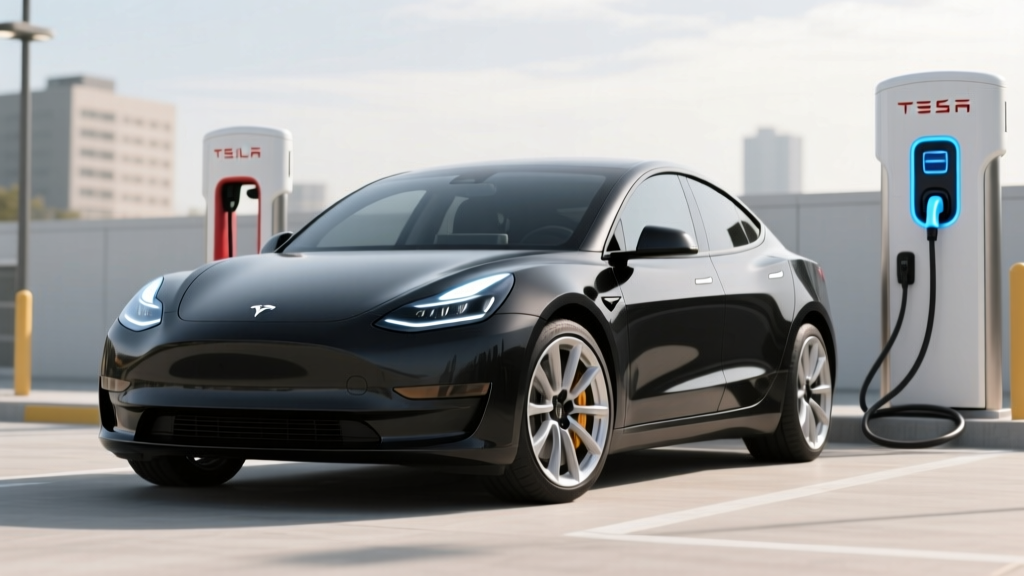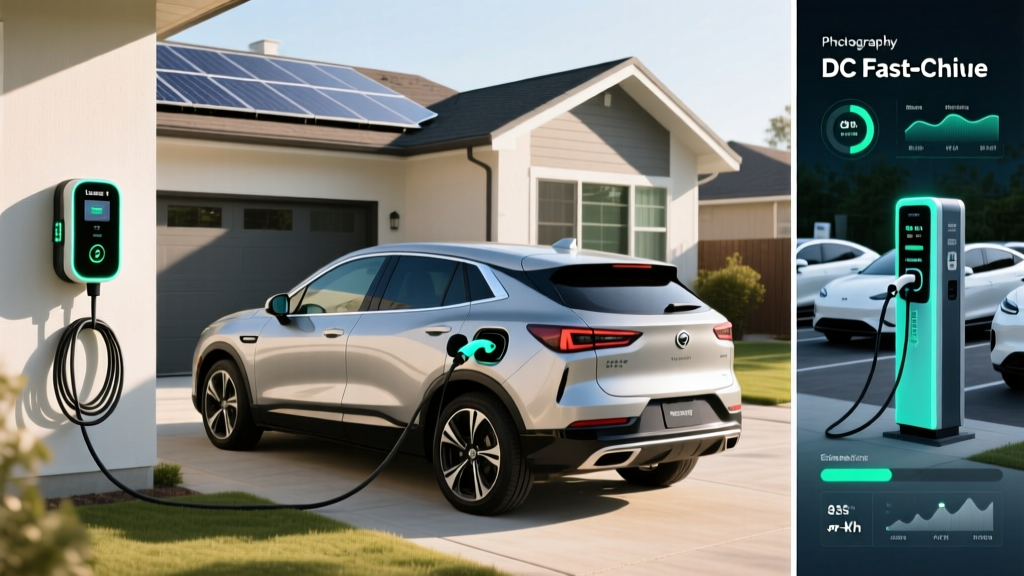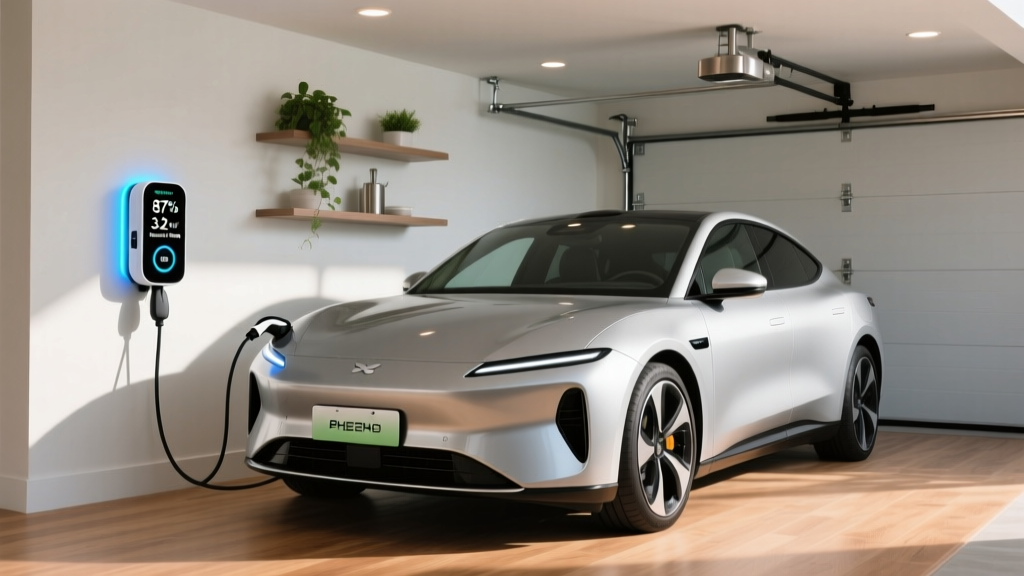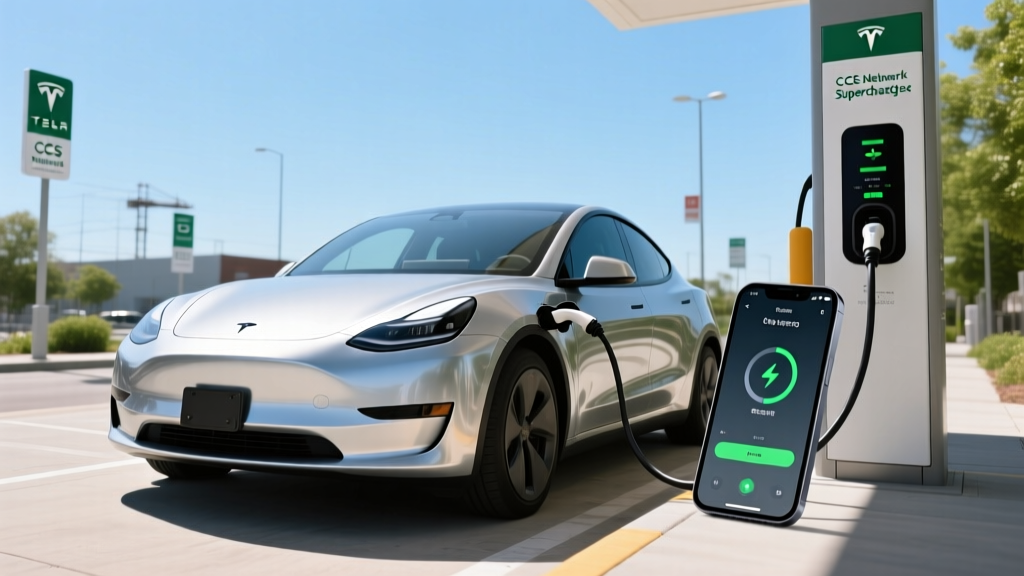
If you've searched for a Tesla charging station free of charge, you've probably hit a wall of outdated forum posts and clickbait. The short answer in 2026: Tesla Superchargers are not free for new owners, and truly free public charging is the exception, not the rule. But the economics of EV charging still beat gasoline — if you understand where your money actually goes.
This guide breaks down the real cost of every charging scenario Tesla owners (and drivers of any NACS-equipped EV) face: home Level 2 installation, Supercharger network pricing, public DC fast charging, and the occasional free station. We'll also cover the electrical work behind a home setup, connector compatibility as the industry shifts to NACS, and exactly how many cents per mile you're paying compared to a gas car.
Where Tesla Charging Is Actually Free (And Where It Isn't)
Tesla eliminated its free unlimited Supercharging referral perk for most new vehicle deliveries years ago. As of 2026, the only ways you'll encounter a free Tesla charging station are:
- Legacy referral credits: Some older Model S and Model X vehicles (typically 2017-era or earlier) retain transferable or non-transferable free Supercharging. These are tied to the VIN, not the owner, and are increasingly rare on the used market.
- Destination charging at hotels and businesses: Tesla Destination Chargers (Level 2, typically 11.5 kW / 48A) at hotels, restaurants, and resorts are sometimes offered free to patrons. You're paying for the room or the meal — the electrons are a perk.
- Workplace charging: A growing number of employers offer complimentary Level 2 charging as an employee benefit, though many are now implementing nominal fees or session limits.
- Promotional credits: Tesla occasionally bundles Supercharging credits (e.g., 10,000 miles) with new vehicle deliveries or referral programs. These expire and are not permanent.
- Municipal or utility-sponsored stations: A small number of cities and electric utilities still operate free Level 2 chargers to encourage EV adoption, but these are disappearing as EV market share grows.
For the vast majority of Tesla owners in 2026, every charging session — whether at a Supercharger, a third-party DC fast charger, or at home — costs money. The variable is how much.
Charging Levels Explained: Speed, Power, and What They Cost
Before comparing prices, you need to understand the three charging tiers. Note the critical distinction: kW (kilowatts) measures power — how fast energy flows into your battery. kWh (kilowatt-hours) measures energy — the total amount stored. A 75 kWh battery charged at 7.5 kW takes roughly 10 hours; charged at 150 kW, it takes about 30 minutes to 80%.
| Level | Voltage / Amperage | Power (kW) | Miles of Range Added Per Hour | Typical Use Case |
|---|---|---|---|---|
| Level 1 | 120V / 12A | ~1.4 kW | 3–5 mi/hr | Overnight trickle; emergency top-up |
| Level 2 | 240V / 32–48A | 7.7–11.5 kW | 25–44 mi/hr | Home daily charging; workplace; hotels |
| DC Fast Charge | 400–800V DC | 50–350 kW | 150–1,000+ mi/hr (peak) | Road trips; Superchargers; public fast networks |
A few real-world charging time examples for common Tesla battery sizes:
- Model 3 RWD (57.5 kWh usable, LFP): Level 2 at 11.5 kW — 0 to 100% in ~5 hours. Supercharger V4 (peak ~250 kW) — 10 to 80% in ~22 minutes, tapering significantly above 80%.
- Model Y Long Range (75 kWh usable, NMC): Level 2 at 11.5 kW — 0 to 100% in ~6.5 hours. Supercharger V3/V4 (peak 250 kW) — 10 to 80% in ~25 minutes.
- Model S (100 kWh usable): Level 2 at 11.5 kW — 0 to 100% in ~8.7 hours. Supercharger (peak 250 kW) — 10 to 80% in ~30 minutes.
Charging curves are not linear. A Tesla peaking at 250 kW may only sustain that rate between roughly 10% and 30% State of Charge (SoC). Above 60%, the rate tapers; above 80%, it drops sharply to protect battery longevity. This is why manufacturers quote 10–80% times rather than 0–100%.
Home Level 2 Charger Installation: Requirements, Costs, and Gotchas
Home charging is where the economics overwhelmingly favor EVs. But the upfront installation cost varies enormously depending on your home's electrical panel.
Electrical Requirements
A standard home Level 2 setup requires a 240V dedicated circuit — the same voltage as your electric dryer or oven. Common configurations:
- NEMA 14-50 outlet (50A circuit, 40A continuous): Delivers up to 9.6 kW. The most popular residential option. Requires a 50A double-pole breaker.
- Hardwired 60A circuit (48A continuous): Delivers up to 11.5 kW. Required for the Tesla Wall Connector at maximum output. No outlet — the charger wires directly into your panel.
- NEMA 6-20 outlet (20A circuit, 16A continuous): Delivers ~3.8 kW. A budget option for smaller batteries or low daily mileage. Slower but cheaper to install.
Installation Cost Breakdown
| Component | Simple Install (Panel Adjacent) | Complex Install (Panel Upgrade / Long Run) |
|---|---|---|
| Level 2 Charger Equipment | $350 – $500 | $350 – $700 |
| Electrician Labor (2–4 hrs simple; 6–12 hrs complex) | $500 – $1,200 | $1,500 – $4,000 |
| Electrical Permit | $50 – $150 | $100 – $300 |
| Panel Upgrade (100A → 200A, if needed) | N/A | $1,500 – $3,500 |
| Conduit, Wire, Miscellaneous | $100 – $300 | $400 – $1,200 |
| Total Estimated Range | $1,000 – $2,150 | $3,850 – $9,700 |
The single biggest cost variable is whether your electrical panel has spare capacity. A modern 200A panel with open breaker slots can usually accommodate a 50A or 60A circuit without issue. Older homes with 100A service — or panels already near capacity from HVAC, electric range, and dryer loads — may require a panel upgrade or a load-management device that throttles charger amperage when other major appliances are running.
Safety and Code Considerations
Any Level 2 installation must comply with NEC (National Electrical Code) Article 625 and your local jurisdiction's amendments. Key requirements:
- Dedicated circuit: Your EV charger cannot share a breaker with other outlets or appliances.
- GFCI protection: NEC 2020 and later require GFCI protection for all EV charging outlets (hardwired units are typically exempt from the GFCI requirement but must still meet ground-fault standards).
- Outdoor rating: If your charger is mounted outside, both the unit and the outlet (if applicable) must carry a NEMA 4 or IP65 weather-resistance rating.
- Permit and inspection: Most jurisdictions require a pulled permit and post-installation inspection. Skipping this risks insurance claim denial if an electrical fire occurs.
Always hire a licensed electrician. Ask for a load calculation before committing to a circuit size — this determines whether you can run 48A or need to step down.
Supercharger and Public Charging: What You'll Actually Pay
Tesla Supercharger pricing varies by location, time of day, and local electricity rates. As of early 2026, typical U.S. Supercharger rates fall in the $0.28 – $0.48 per kWh range, with urban California stations at the high end and rural Midwest stations at the low end.
Third-party DC fast networks (Electrify America, EVgo, ChargePoint) now widely support NACS connectors or provide adapters, and their pricing is comparable: $0.30 – $0.55 per kWh, sometimes with idle fees of $0.50–$1.00 per minute if you remain plugged in after reaching your target SoC.
| Scenario | Rate ($/kWh) | Cost for 60 kWh (≈200 mi in a Model Y) | Cost Per Mile |
|---|---|---|---|
| Home (national avg. residential, ~$0.16/kWh) | $0.16 | $9.60 | $0.048 |
| Home (off-peak TOU rate, ~$0.08/kWh) | $0.08 | $4.80 | $0.024 |
| Tesla Supercharger (avg. ~$0.35/kWh) | $0.35 | $21.00 | $0.105 |
| Third-party DC Fast (avg. ~$0.43/kWh) | $0.43 | $25.80 | $0.129 |
| Gasoline equivalent (25 MPG avg., $3.30/gal) | — | $26.40 | $0.132 |
The numbers tell a clear story: home charging is roughly one-third to one-quarter the per-mile cost of gasoline, even at national average electricity rates. Supercharging approaches gas parity in expensive markets — which is why home Level 2 installation pays for itself within 1–3 years for most drivers.
According to fueleconomy.gov, a 2026 Tesla Model Y Long Range achieves 111 MPGe combined, consuming roughly 30 kWh per 100 miles. Use your local electricity rate and that efficiency figure to estimate your personal cost per mile.
Connector Compatibility: NACS, CCS1, and Adapter Realities
The connector landscape has consolidated dramatically. Tesla's North American Charging Standard (NACS) is now the dominant connector for new EVs sold in North America, with Ford, GM, Rivian, Volvo, Hyundai, and most other manufacturers adopting it for 2025–2026 model-year vehicles.
| Connector | Native Vehicles | DC Fast Network Access |
|---|---|---|
| NACS (Tesla) | Tesla (all), Ford, GM, Rivian, Volvo, Polestar, Hyundai/Kia (2025+), Mercedes, BMW (2025+) | Tesla Superchargers (open to all NACS), Electrify America, EVgo, ChargePoint (NACS stalls expanding) |
| CCS1 | Legacy VW ID.4, older Bolt EV/EUV, pre-2025 Hyundai/Kia, BMW i4 (pre-2025) | Electrify America, EVgo, ChargePoint; Tesla Superchargers via Magic Dock adapter |
| CHAdeMO | Nissan Leaf (discontinued), Mitsubishi Outlander PHEV (older) | Limited and declining; some EA and EVgo stations retain CHAdeMO connectors |
If you drive a CCS1-equipped EV and want Supercharger access, Tesla's Magic Dock adapter (built into select Supercharger stalls) enables CCS1-to-NACS connection. Alternatively, aftermarket CCS-to-NACS adapters from Tesla's accessories store and approved third parties are available for roughly $200–$250.
For Level 2 home and destination charging, all modern EVs use the J1772 connector — except Tesla, which uses a proprietary NACS connector for AC as well. Tesla ships a J1772-to-NACS adapter with every vehicle, so you can use any public Level 2 station.
Recommended Home Level 2 Chargers for Tesla and NACS Vehicles
Here are three proven Level 2 chargers we recommend for Tesla and NACS-equipped EVs in 2026:
Tesla Wall Connector (Gen 4)
- Power Output: Up to 11.5 kW (48A on a 60A hardwired circuit)
- Connector: Native NACS
- Cable Length: 24 feet
- Smart Features: Wi-Fi firmware updates, load sharing between two units, Power Sharing for multi-charger setups, integrated cable management
- Price: ~$450
- Best For: Tesla owners wanting seamless integration and maximum Level 2 speed
ChargePoint Home Flex (NACS variant)
- Power Output: Up to 12 kW (50A on a 60A circuit, adjustable down to 16A)
- Connector: Available in NACS and J1772 configurations
- Cable Length: 23 feet
- Smart Features: Alexa integration, scheduled charging via app, detailed energy tracking, utility demand-response compatibility
- Price: ~$550–$650
- Best For: Multi-EV households or drivers wanting granular app control and utility program integration
Emporia Vue Level 2 Charger
- Power Output: Up to 11.5 kW (48A on a 60A circuit)
- Connector: J1772 (NACS adapter included for Tesla vehicles)
- Cable Length: 24 feet
- Smart Features: Integrated energy monitoring (pairs with Emporia Vue home energy panel), solar-aware charging, scheduling, EV-only energy tracking
- Price: ~$350–$400
- Best For: Budget-conscious buyers and solar-panel owners who want energy-usage visibility
All three units carry a NEMA 4 outdoor rating, UL listing, and a minimum 3-year manufacturer warranty. We recommend hardwiring over a NEMA 14-50 outlet when possible — hardwired installations eliminate the GFCI breaker requirement (which can nuisance-trip with some chargers) and allow full 48A output.
Frequently Asked Questions
How much does it cost to install a home EV charger?
A straightforward Level 2 installation on a 200A panel with short wire runs typically costs $1,000–$2,150 including the charger, electrician labor, permit, and materials. If your home needs a panel upgrade from 100A to 200A service, expect the total to reach $3,850–$9,700. Always get a load calculation from a licensed electrician before committing.
How fast will each charging level add range?
Level 1 (120V) adds roughly 3–5 miles per hour — enough for a plug-in hybrid but impractical for a full BEV. Level 2 (240V) adds 25–44 miles per hour depending on amperage, replenishing most EVs overnight. DC fast charging adds 150–1,000+ miles per hour at peak, but tapers significantly above 80% SoC — realistic road-trip stops are 15–30 minutes for 10–80%.
Which connector and charger is compatible with my EV?
All 2026 Tesla vehicles use the native NACS connector for both AC Level 2 and DC fast charging. Most non-Tesla EVs from 2025 onward are also adopting NACS. Older CCS1 vehicles can access Tesla Superchargers via the Magic Dock adapter or an aftermarket CCS-to-NACS adapter. CHAdeMO is effectively deprecated for new vehicles.
How much does charging cost per mile versus gas?
At the U.S. residential average of ~$0.16/kWh, a Tesla Model Y (consuming ~30 kWh/100 mi) costs about $0.048 per mile to charge at home. A comparable gas SUV at 25 MPG and $3.30/gallon costs $0.132 per mile. Home charging saves roughly $0.08 per mile — or about $960 per year at 12,000 miles driven. Supercharger costs are higher ($0.10–$0.13/mi) and approach gas parity.
What electrical upgrades might I need?
Homes with 100A service or panels already near capacity may need a panel upgrade to 200A ($1,500–$3,500) before adding a 50A or 60A EV circuit. Alternatively, a smart load-management device (such as the Emporia VUE with automatic load shedding) can allow a 40A charger to coexist with existing loads without a panel upgrade. Your electrician's load calculation will determine which path is necessary. Per the IRS §30D rules, the federal clean vehicle credit does not cover home charger installation for most taxpayers — though the separate §30C alternative fuel infrastructure credit (up to $1,000 for residential) may apply if you live in an eligible census tract.